The Benchmark

“Coppélia”
Bolshoi Ballet
Bolshoi Theatre (New Stage)
Moscow, Russia
February 21, 2026 (evening performance)

by Ilona Landgraf
Copyright © 2026 by Ilona Landgraf
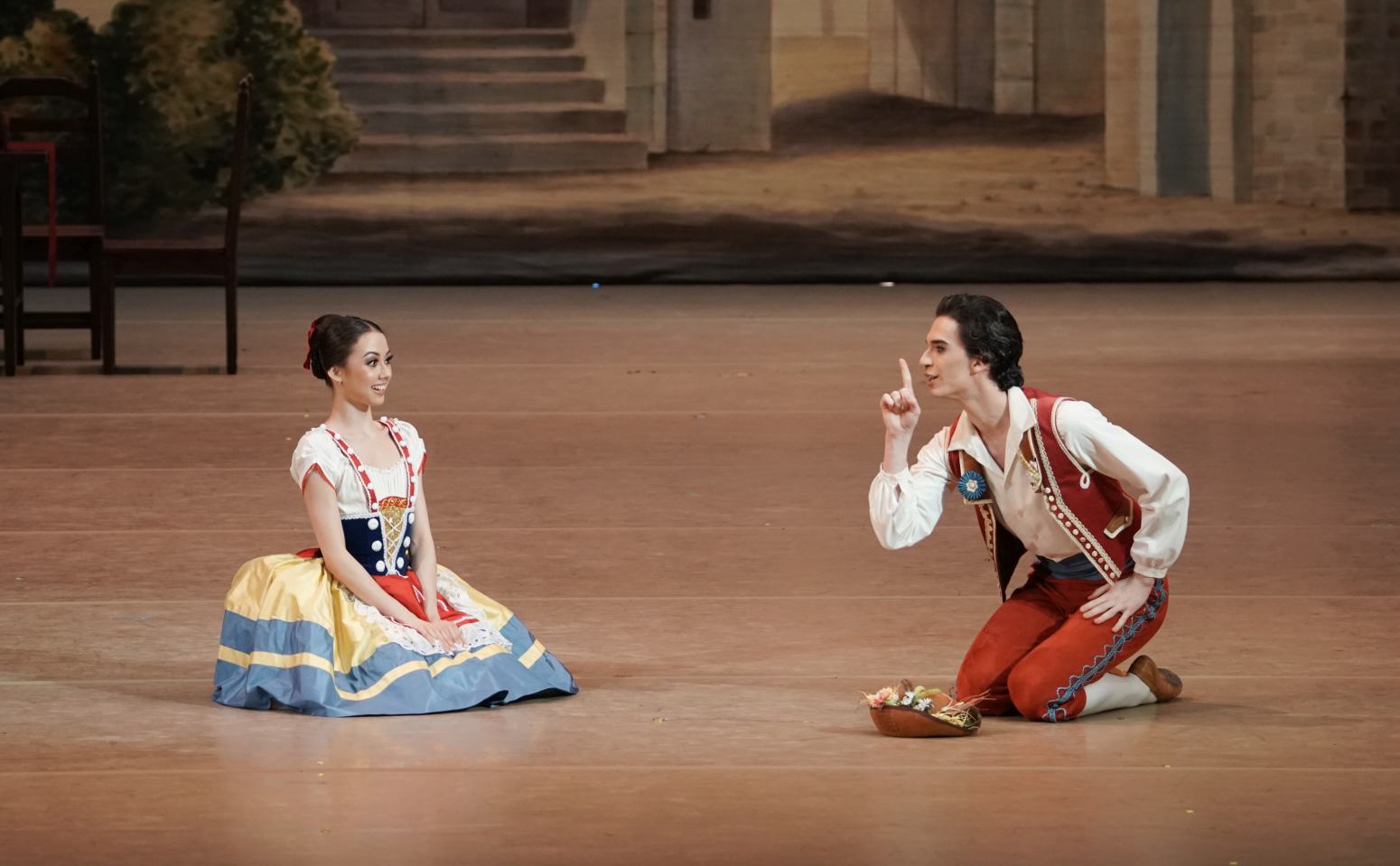
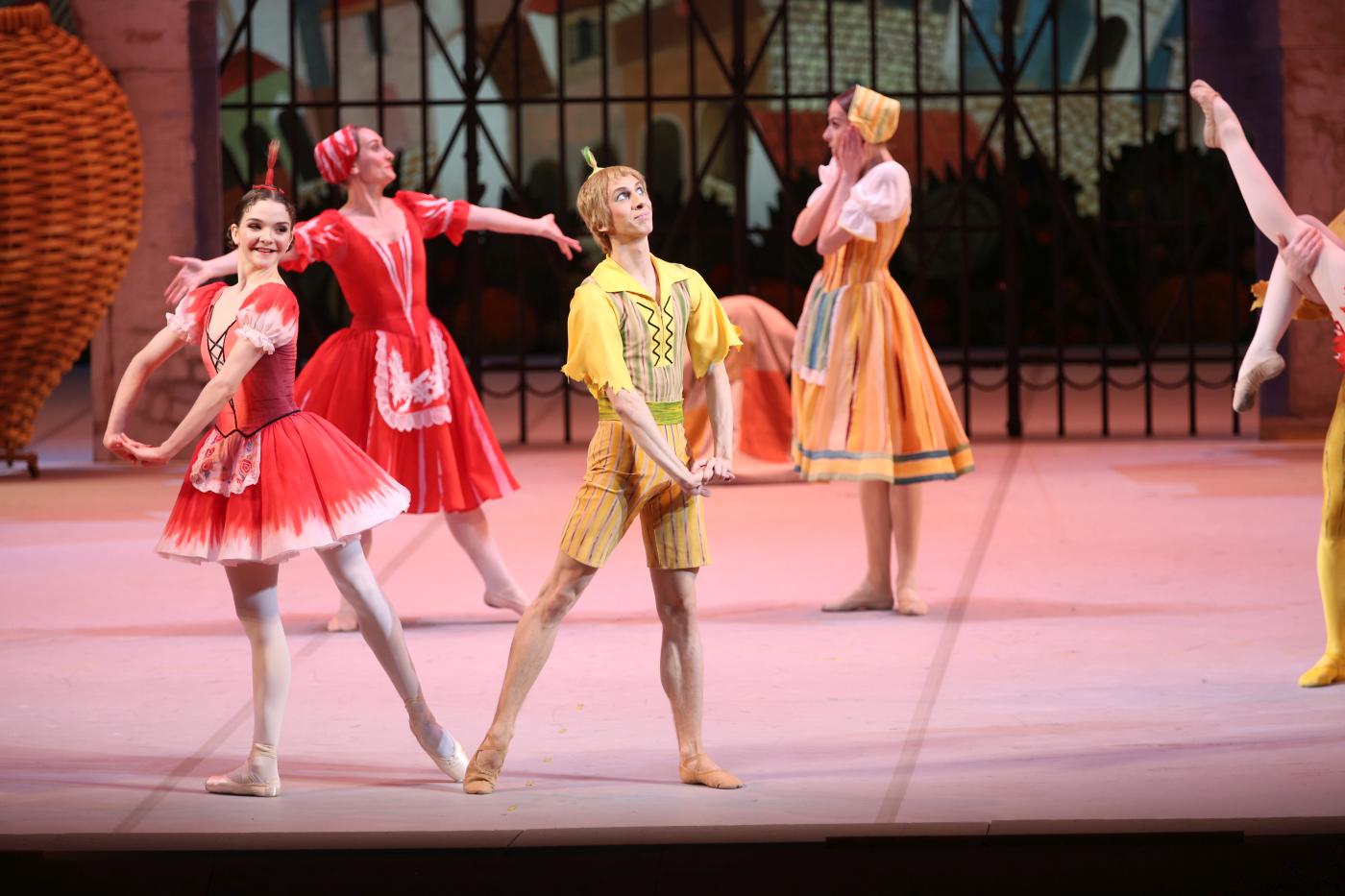
1. E.Kokoreva (Swanilda) and D.Zakharov (Frantz), “Coppélia” by S.Vikharev after M.Petipa and E.Cecchetti, Bolshoi Ballet 2026 © Bolshoi Theatre/P.RychkovMy hopes on a new video release were raised when I noticed the cameraman at the Bolshoi Ballet’s performance of Coppélia, until he explained that the recording was for internal use only. It’ll set the bar high for future generations of dancers.

Sergei Vikharev’s production, which he said is the most complete and exact rendition of what Nicholas Sergeyev noted from his St. Petersburg memories (his manuscripts are stored at Harvard University), has been in the Bolshoi’s repertory since 2009. It preserves all the details that fell victim to artistic, financial, and producing conditions in many Western stagings. As designated by the original creators, Marius Petipa and Enrico Cecchetti, the Bolshoi’s Swanilda has eight girlfriends, and Act III’s Waltz of the Hours is danced by twenty-four ballerinas, one for each hour of the day. 2. D.Zakharov (Frantz), E.Kokoreva (Swanilda), and ensemble; “Coppélia” by S.Vikharev after M.Petipa and E.Cecchetti, Bolshoi Ballet 2026 © Bolshoi Theatre/P.RychkovThe order of their four lines of six dancers each (which represent dawn, morning, twilight, and night) is overseen by the old, bearded Chronos (Dmitry Grishin), who rests atop a huge clock that has to stand exactly center stage. The Royal Ballet’s Coppélia, by comparison, employs only eight dancers in the waltz, which subverts the scene’s meaning.

Each time I see a performance of Coppélia at the Bolshoi, the artistic director, Makhar Vaziev, is in the rear auditorium during Act III’s Fete of the Bell, his eyes scrutinizing the corps’ unity, the clarity of its patterns, and the purity of the variations. As tiny as they may be, he usually finds details to hone.
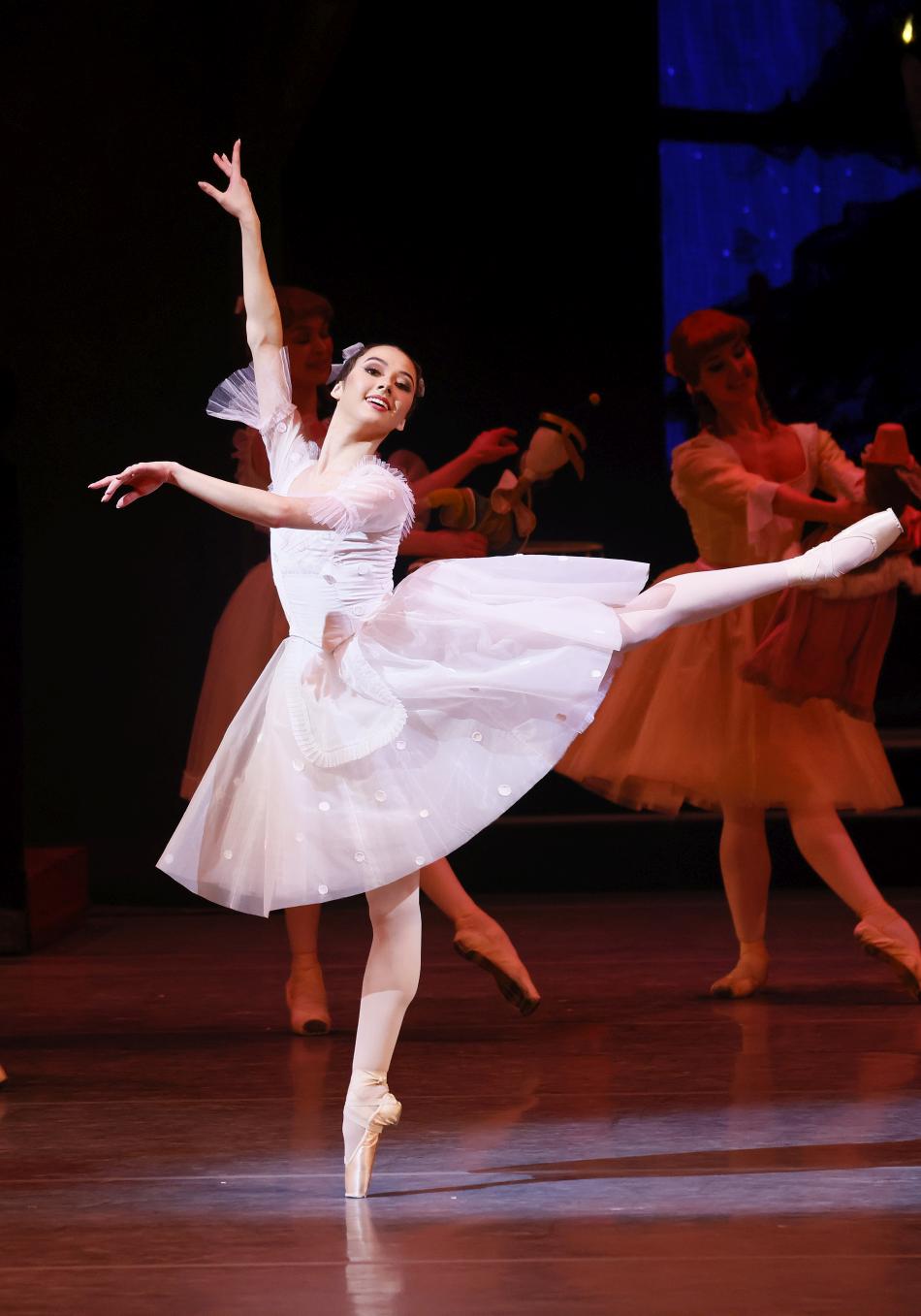
The leading couple, Swanilda (Elizaveta Kokoreva) and Frantz (Denis Zakharov), had nothing to perfect. Each step, each port de 3. E.Kokoreva (Swanilda) and D.Zakharov (Frantz), “Coppélia” by S.Vikharev after M.Petipa and E.Cecchetti, Bolshoi Ballet 2026 © Bolshoi Theatre/P.Rychkovbras, each jump, and each turn of Kokoreva represented the ideal of classical ballet and was imbued with meaning. Her acting was fresh and convincing, her pantomime unambiguous, and the show she delivered at Coppélius’s (Gennady Yanin) workshop terrific. Her fiancé, Frantz, was an unreliable lover, though. Once unobserved, he eagerly climbed through another sweetheart’s (i.e., Coppélia’s (Maria Rasskazova)) balcony door. Worse, even as he was caught red-handed by Coppélius, he affirmed his intention to marry her. What a wretch of a swain!


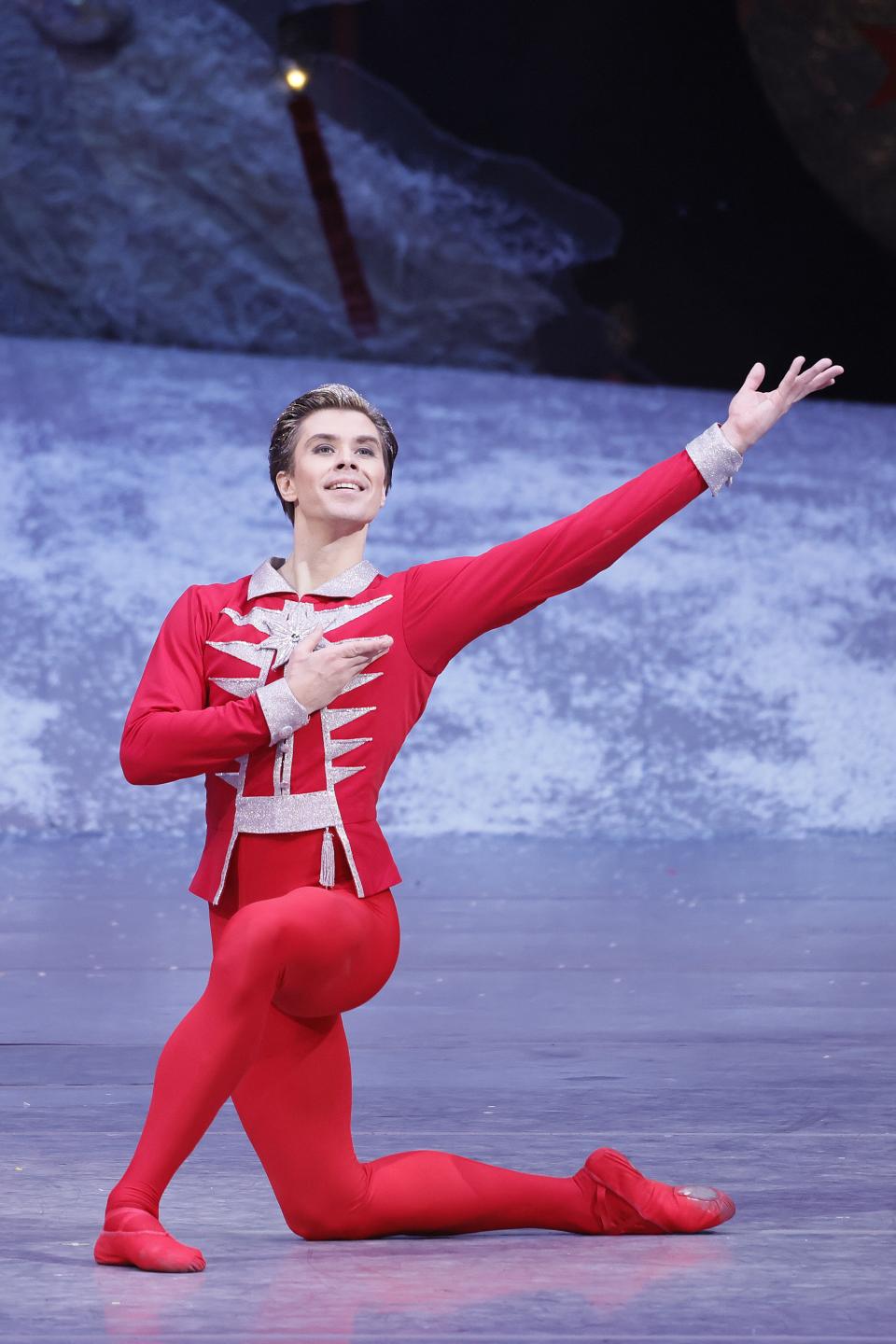
4. E.Kokoreva (Swanilda) and ensemble, “Coppélia” by S.Vikharev after M.Petipa and E.Cecchetti, Bolshoi Ballet 2026 © Bolshoi Theatre/P.RychkovOnly after Swanilda got him off the hook from Coppélius’s alchemic experiments did Frantz man up. His time had come for their wedding pas de deux, with both dressed in majestic red and the cleanest of white and with jewels sparkling at Swanilda’s décolleté and in her tiara (costumes by Tatiana Noginova). A brilliant solo, including spick and span legwork and pinpoint landings, testified to Frantz’s qualities. A gem of a woman, Swanilda sped through pirouettes, landed from split jumps in stupendous balances, and masterfully played with the tempo, smiling all the while, as if excelling on stage was exactly what she relished most. The beauty that Kokoreva and Zakharov brought to life was the performance’s most precious takeaway.

5. E.Kokoreva (Swanilda), D.Zakharov (Frantz), and ensemble; “Coppélia” by S.Vikharev after M.Petipa and E.Cecchetti, Bolshoi Ballet 2026 © Bolshoi Theatre/P.Rychkov In Act III, Elizaveta Kruteleva’s L’Aurore solo became more fluid over time as if warmed by the rising sun. Antonina Chapkina delivered a solemn, graceful La Prière solo, and Ekaterina Varlamova a zippy one as Folie. Maria Mishina led the pas de cinq Le Travail. The corps’ czardas and mazurka had verve, and Swanilda’s friends seemed ready to follow in her footsteps.

The orchestra of the Bolshoi Theatre played under the baton of Pavel Klinichev. Their rendition of Leo Delibes’s score was vibrant, creamy, and perfectly in tune with the dancers.

Link: Website of the Bolshoi Theatre
Photos: 1. Elizaveta Kokoreva (Swanilda) and Denis Zakharov (Frantz), “Coppélia” by Sergei Vikharev after Marius Petipa and Enrico Cecchetti, Bolshoi Ballet 2026
2. Denis Zakharov (Frantz), Elizaveta Kokoreva (Swanilda), and ensemble; Coppélia” by Sergei Vikharev after Marius Petipa and Enrico Cecchetti, Bolshoi Ballet 2026
3. Elizaveta Kokoreva (Swanilda) and Denis Zakharov (Frantz), “Coppélia” by Sergei Vikharev after Marius Petipa and Enrico Cecchetti, Bolshoi Ballet 2026
4. Elizaveta Kokoreva (Swanilda) and ensemble, “Coppélia” by Sergei Vikharev after Marius Petipa and Enrico Cecchetti, Bolshoi Ballet 2026
5. Elizaveta Kokoreva (Swanilda), Denis Zakharov (Frantz), and ensemble;Coppélia” by Sergei Vikharev after Marius Petipa and Enrico Cecchetti, Bolshoi Ballet 2026
all photos © Bolshoi Theatre/Pavel Rychkov
Editing: Kayla Kauffman


Someone is in Control

“Master and Margarita”
Bolshoi Ballet
Bolshoi Theatre (New Stage)
Moscow, Russia
February 18/19, 2026

by Ilona Landgraf
Copyright © 2026 by Ilona Landgraf

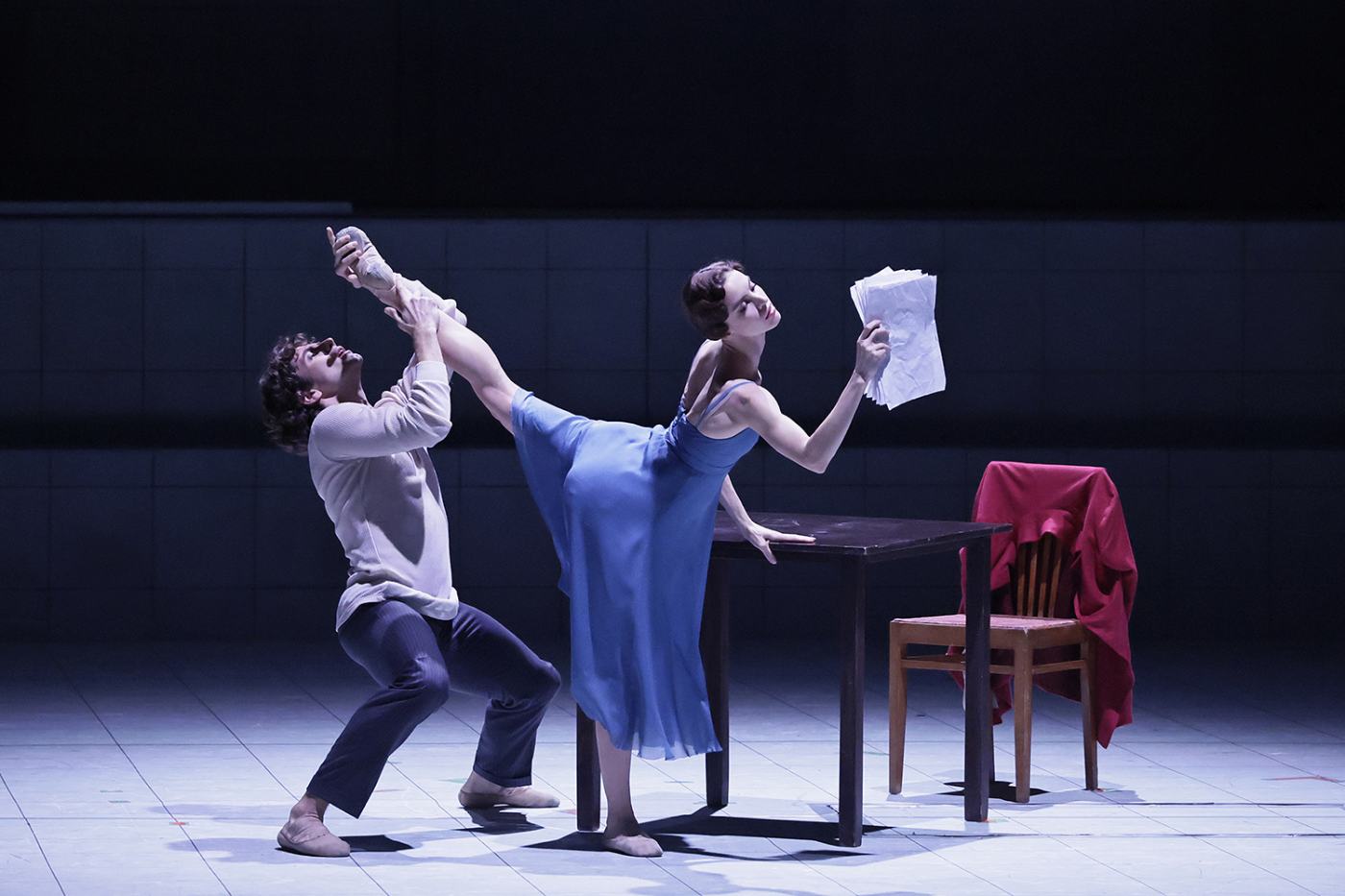
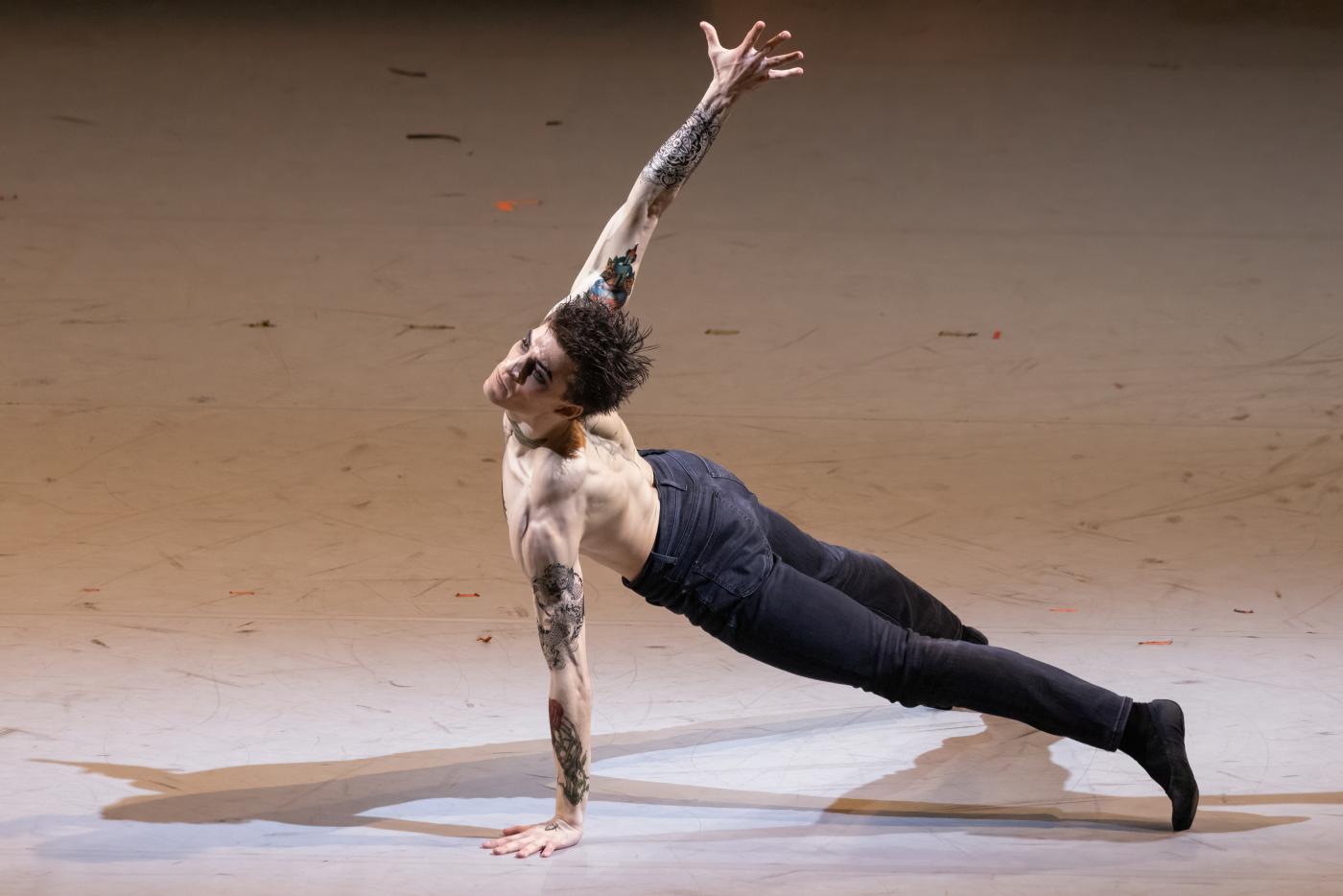
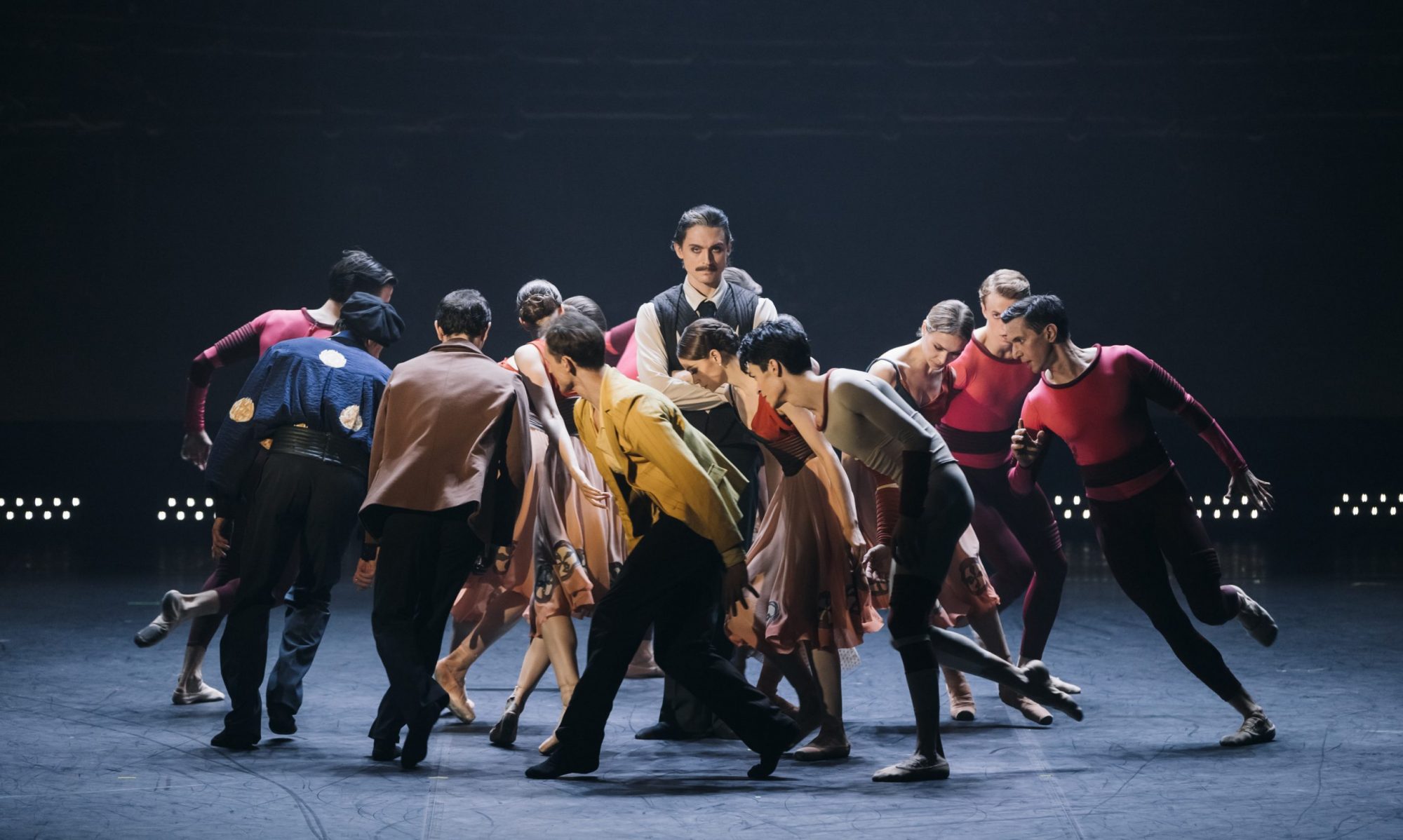
1. I.Tsvirko (Master) and M.Vinogradova (Margarita), “Master and Margarita” by E.Clug, Bolshoi Ballet 2026 © Bolshoi Theatre/D.YusupovAround two years ago, I saw Edward Clug’s ballet adaptation of Mikhail Bulgakov’s novel The Master and Margarita at the Bolshoi Theatre and found it fabulous. Last week’s two performances corroborated my impression. They also reminded me that, however chaotic the world might get, there’s no need to worry; someone is in control. In Clug’s version, it’s the Satan alias Woland and his accomplices. That hell and heaven commonly coordinate their actions went by the board.

Bulgakov intertwined two storylines (one deals with the absurd mayhem caused by Woland and his entourage on a 1930 visit to Moscow, the other is an eyewitness account of the trial of Jesus of Nazareth under Pontius Pilate’s governance), which are connected by the Master (an unrecognized Muskovit author, i.e., Bulgakov’s alter ego) and his muse, Margarita. Continue reading “Someone is in Control”

“I’m a supporter of talented people”

“Marco Spada”
Bolshoi Ballet
Bolshoi Theatre (Historic Stage)
Moscow, Russia
February 15, 2026

by Ilona Landgraf
Copyright © 2026 by Ilona Landgraf

The Bolshoi Ballet has two choreographies by Pierre Lacotte (1932-2023) in its repertory: his recreation of Petipa’s La Fille du Pharaon (which he entrusted to no other company) and Marco Spada, a 1857 ballet d’action for the Paris Opéra by Joseph Mazilier to music by Daniel Auber, which was lost except for a few sketches and reviews. In 1981, Lacotte choreographed and staged it from scratch for the Teatro Dell’Opera di Roma with Rudolf Nureyev in the title role. Despite being peripatetic, Nureyev was so eager to participate in the production that he signed a contract on the tablecloth during a restaurant outing with Lacotte. “I, Rudolf Nureyev, guarantee that for the duration of a month I will attend daily rehearsals in Rome for the ballet Marco Spada,” he wrote.

Continue reading ““I’m a supporter of talented people””

Believe in Miracles

“The Nutcracker. Waiting for a Miracle”
Bolshoi Ballet
Bolshoi Theatre
Moscow, Russia
December 29, 2025 (documentary)

by Ilona Landgraf
Copyright © 2026 by Ilona Landgraf

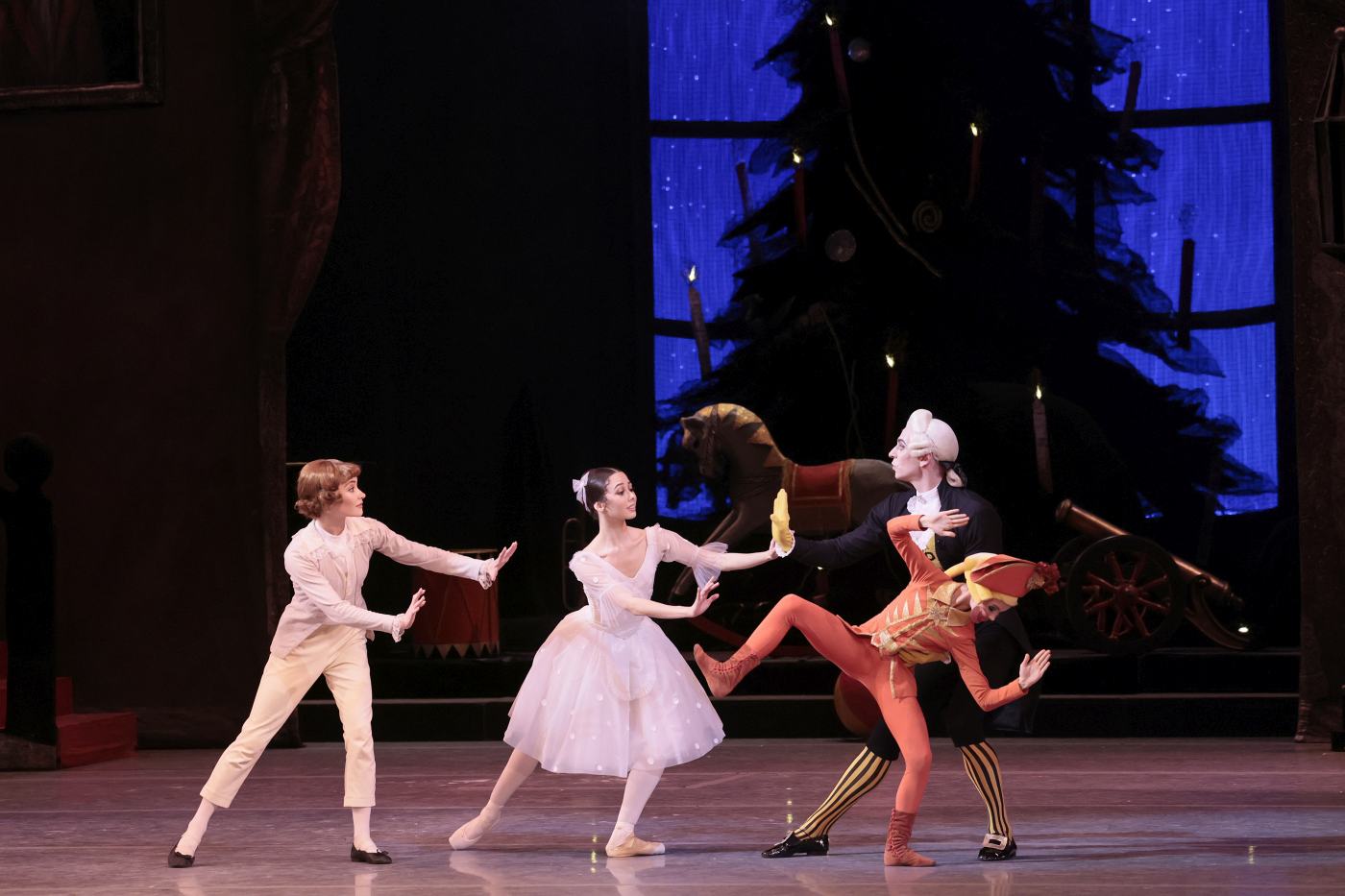
1. E.Kokoreva (Marie), D.Savin (Drosselmeier), and ensemble, “The Nutcracker” by Y.Grigorovich, Bolshoi Ballet 2025 © Bolshoi Theatre/D.YusupovOf the many special moments in Yuri Grigorovich’s The Nutcracker, there’s one you shouldn’t miss: when the Christmas tree is growing, and Marie’s transformation takes place. Then you need to make a wish. At least, that’s the insiders’ tip from the Bolshoi Ballet’s artists involved in the production.

Grigorovich’s The Nutcracker premiered at the Bolshoi Theatre in 1966 and was performed for the eight hundredth time earlier in December. Perhaps that’s why the Russian Channel One broadcast a one-hour documentary about The Nutcracker at the end of December. The film outlines the plot, provides insight into the music, set, and costumes, and looks at sixty years of performance history, during which nothing changed. Numerous coaches and ballet masters guarantee that Grigorovich’s legacy is preserved and kept alive. Continue reading “Believe in Miracles”

“We Need Him”

“Diaghilev”
Dancers of the Bolshoi Ballet
Bolshoi Theatre (New Stage)
Moscow, Russia
June 24, 2025 (video)

by Ilona Landgraf
Copyright © 2025 by Ilona Landgraf

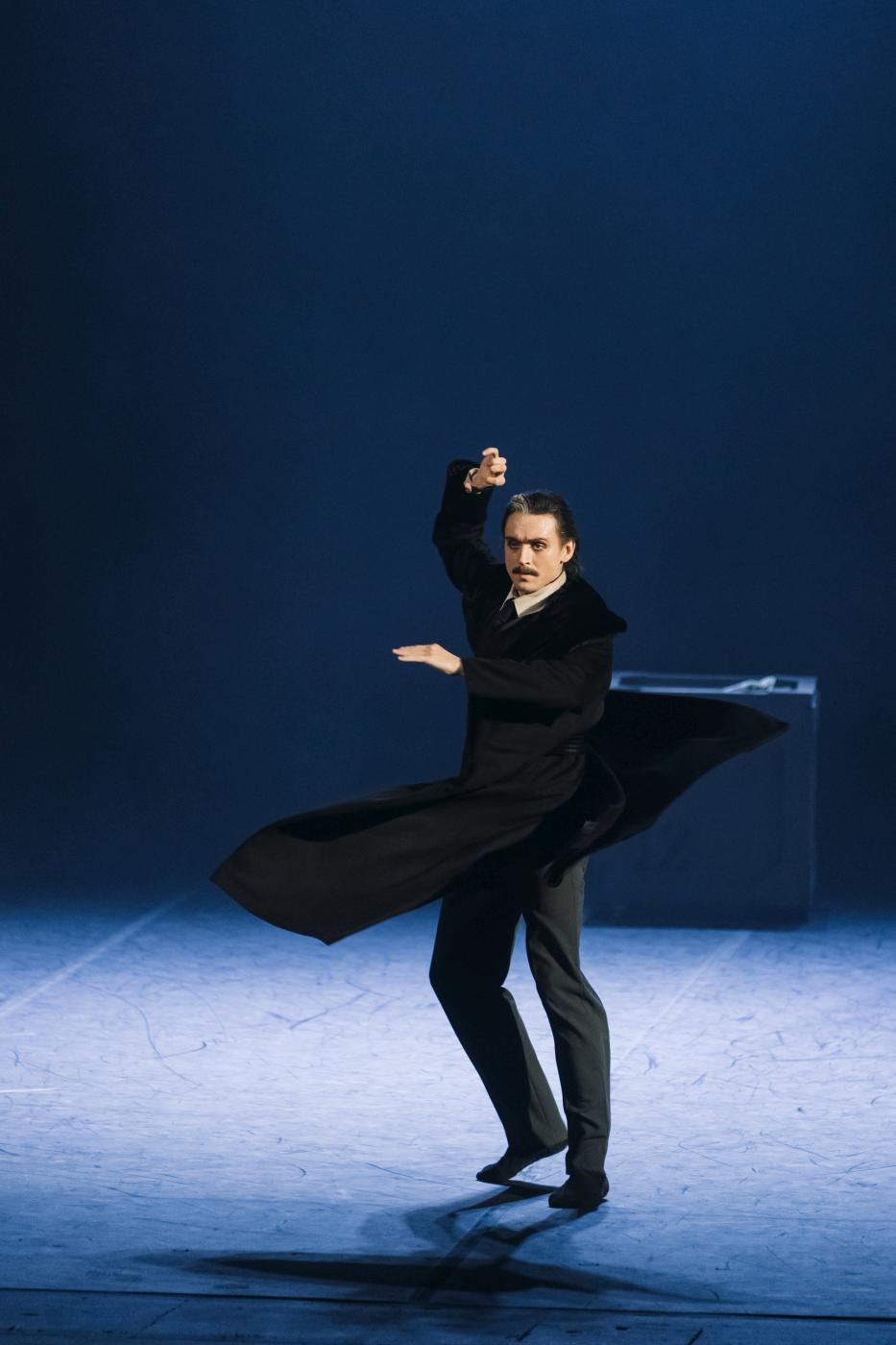
1. A.Meskova (Gypsy Woman) and D.Rodkin (Sergei Diaghilev), “Diaghilev” by A.Kaggedzhi, Dancers of the Bolshoi Ballet 2025 © G.Galantnyi  2. D.Rodkin (Sergei Diaghilev), “Diaghilev” by A.Kaggedzhi, Dancers of the Bolshoi Ballet 2025 © G.Galantnyi  The man in need whom Sergei Lifar wrote about in 1939 was Sergei Diaghilev (1872-1929), impresario of the Ballets Russes and a revolutionist of ballet. Diaghilev’s burning passion to discover and promote creative beauty is unequaled. He shaped the perception of Russian culture in the West and, like a virus, changed the DNA of twentieth-century art. Without him, Vaslav Nijinsky, Tamara Karsavina, Ida Rubinstein, Feodor Chaliapin, and Igor Stravinsky wouldn’t have become known to the world, and the careers of choreographers, such as Michel Fokine, Bronislava Nijinska, Léonide Massine, and George Balanchine, might have taken another path. Ten years after Diaghilev’s death, no one had filled the void he had left behind.

Ninety-six years later, a new Diaghilev has yet to be found, but—as Russia and the West separated again—the need for a bridge-building spirit and culture that unites people across borders is more pressing than ever. That’s why Russia launched the cultural search festival We Need Diaghilev last year, which features various expositions, lectures, and performances at Russian and foreign venues. Continue reading ““We Need Him””

Prix Benois Laureates 2025

Prix Benois de la Danse
Bolshoi Theatre (Historic Stage)
Moscow, Russia
June 17, 2025

by Ilona Landgraf
Copyright © 2025 by Ilona Landgraf

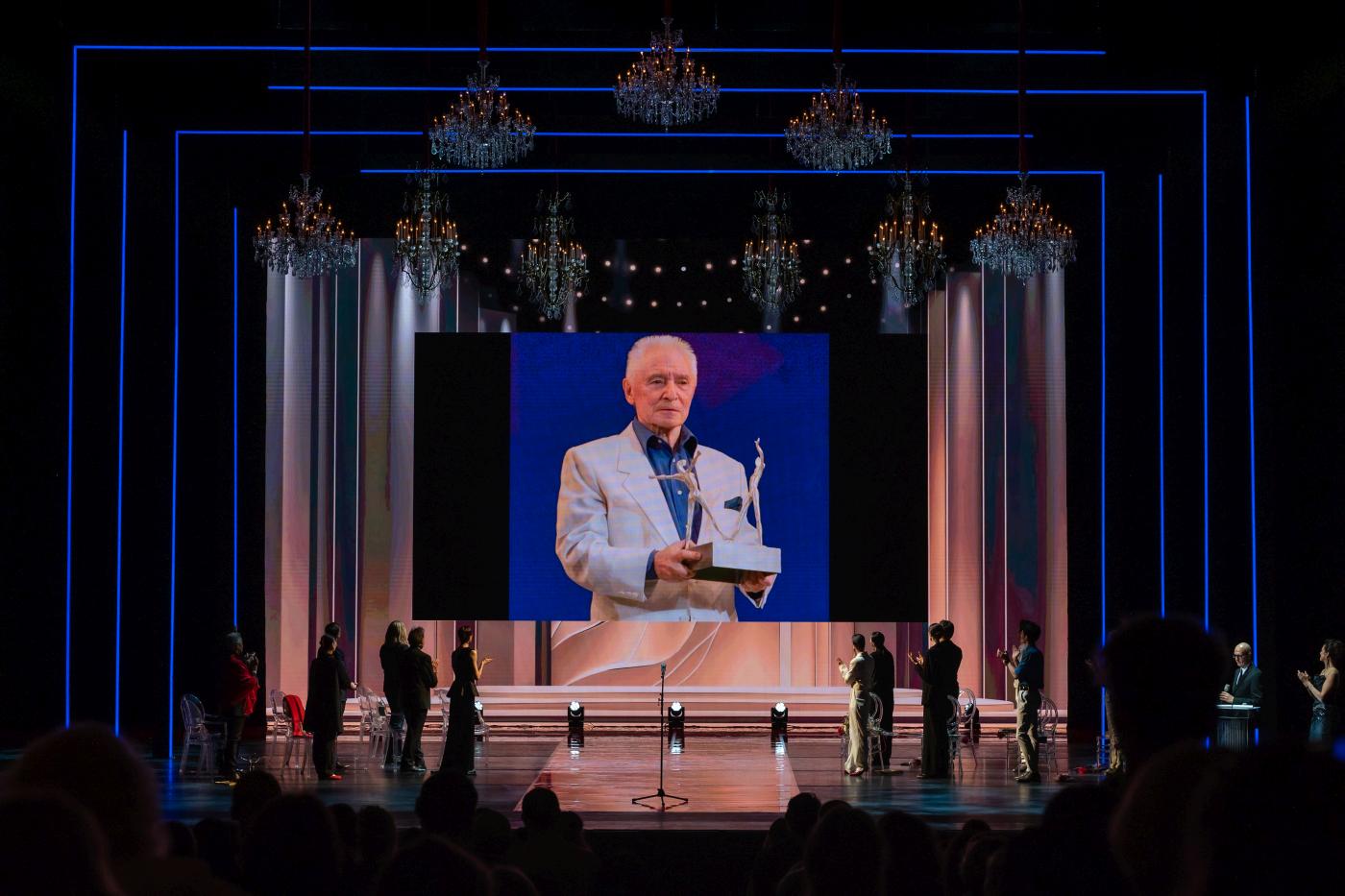
1. Y.Grigorovich, Prix Benois Award Ceremony, Bolshoi Theatre 2025 © B.AnnadurdyevYesterday evening, the Prix Benois laureates were announced on the Bolshoi Theatre’s historic stage for the 33rd time.

Mthuthuzeli November won the prize for best choreography in absentia for Chapter Two, a creation for Cape Ballet Africa in South Africa. The Mariinsky Ballet’s Renata Shakirova won the best female dancer prize for her performance as Swanilda in Alexander Sergeev’s new Coppélia. Like last year, the prize for the best male dancer was awarded twice. Joshua Williams received the Prix Benois for his performance in November’s Chapter Two; Dmitry Smilevsky (Bolshoi Ballet) was awarded for his performances as Mercutio in Leonid Lavrovsky’s version of Romeo and Juliet and Prince Désiré in Yuri Grigorovich’s version of The Sleeping Beauty. Continue reading “Prix Benois Laureates 2025”

Dancer Nominees for the Prix Benois 2025

Prix Benois de la Danse
Bolshoi Theatre (Historic Stage)
Moscow, Russia
June 2025

by Ilona Landgraf
Copyright © 2025 by Ilona Landgraf

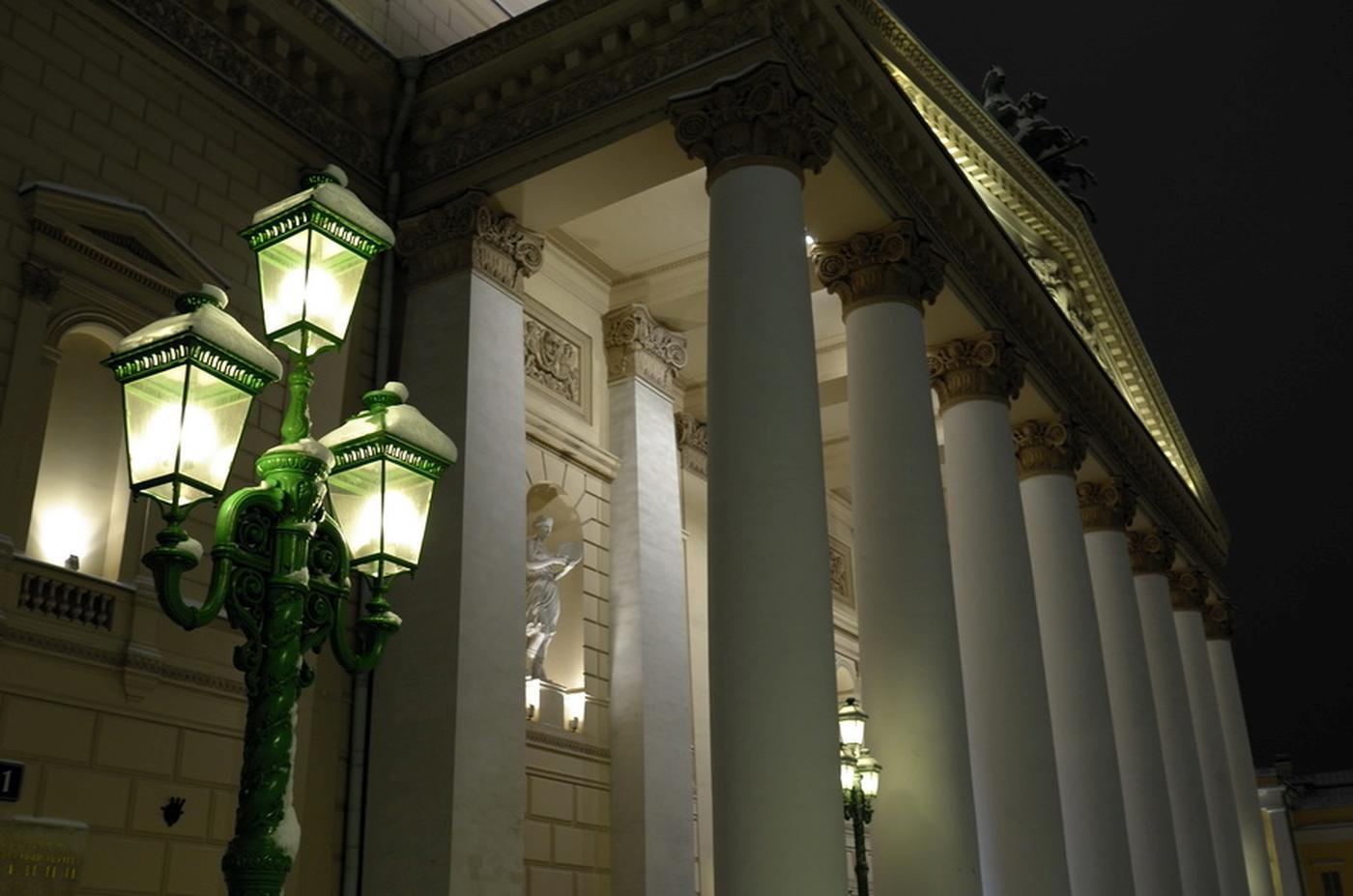
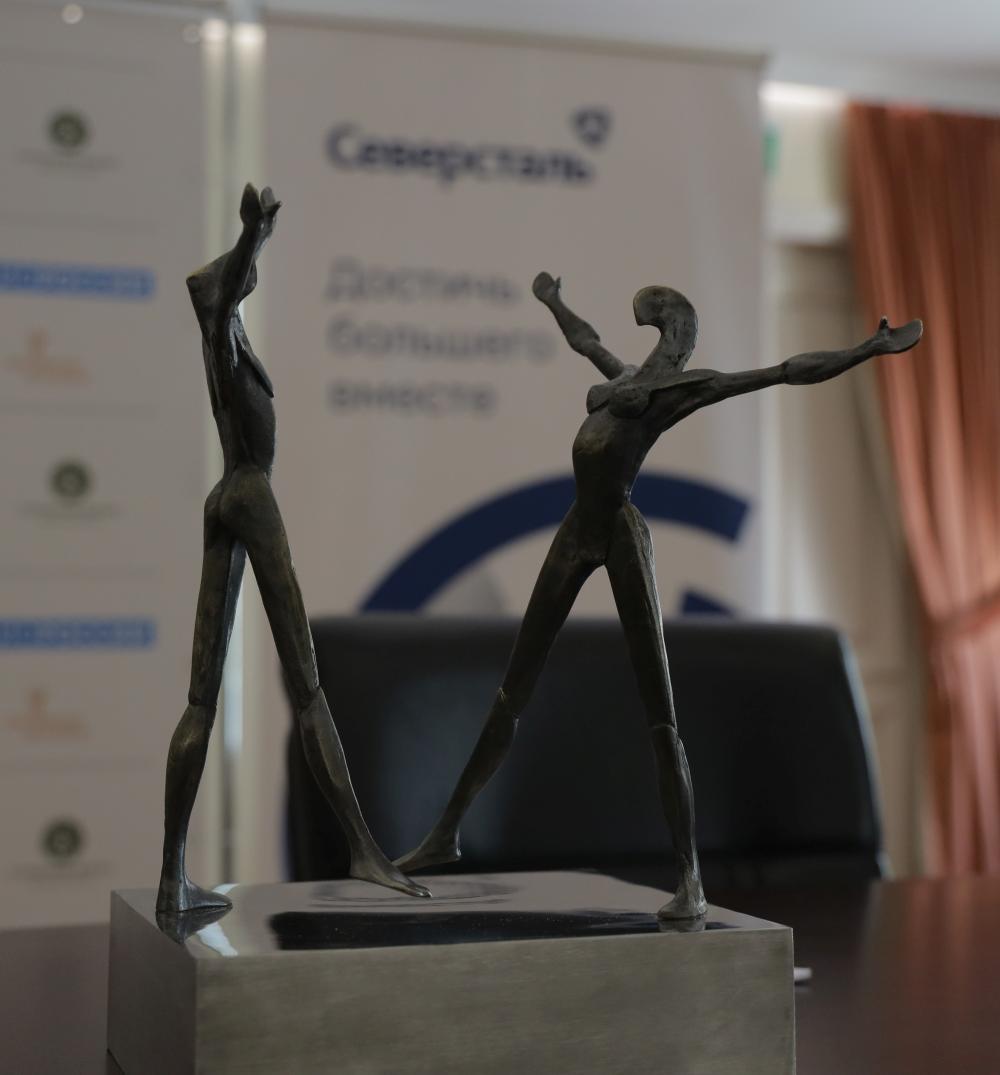
1. Bolshoi Theatre © Bolshoi Theatre/D.Yusupov2. Statuette of the Prix Benois de la Danse, design by I.Ustinov © Benois Center As in 2024, the Prix Benois jury nominated thirteen dancers from eight companies for this season’s award. Of the six women and seven men, two dance in China, France, and South Africa; one dances in Kazakhstan; and six, Russia. Next Tuesday, the laureates will be announced at an award ceremony at the Bolshoi Theatre, Moscow.

Here’s a short overview of the nominees in alphabetical order by company name: Continue reading “Dancer Nominees for the Prix Benois 2025”

Full of Spirits

“The Tempest”
Bolshoi Ballet
Bolshoi Theatre (New Stage)
Moscow, Russia
April 22, 2025

by Ilona Landgraf
Copyright © 2025 by Ilona Landgraf

1. D.Savin (Prospero), “The Tempest” by V.Samodurov, Bolshoi Ballet 2025 © Bolshoi Theatre/E.Fetisova For his latest choreography for the Bolshoi Ballet in 2024—The Tempest (after Shakespeare’s play)—Vyacheslav Samodurov again teamed up with composer Yuri Krasavin. Both had already collaborated on the one-act ballet Dancemania in 2022. This time, their cooperation must have been tempestuous. “Vyacheslav Samodurov and I did not get along right away…I still see this play completely different,” Krasavin stated in an interview. While Krasavin believed that he accompanied rather than led the artistic process, for Samodurov, “Music comes always first and the composer is the boss in many ways.” But whoever was the boss, the score (played by the Bolshoi Orchestra under the baton of Pavel Klinichev) was mesmerizing. Continue reading “Full of Spirits”

Brimful

“Cipollino”
Bolshoi Ballet
Bolshoi Theatre (New Stage)
Moscow, Russia
March 08, 2025 (matinee and evening performance)

by Ilona Landgraf
Copyright © 2025 by Ilona Landgraf

 1. S.Maymula (Little Radish), I.Sorokin (Cipollino), A.Vinokur (Mother Radish), and E.Besedina (Mother Cipolla), “Cipollino” by G.Mayorov, Bolshoi Ballet 2025 © Bolshoi Theatre/E.FetisovaThe boy Cippolino (Little Onion), the hero of Gianni Rodari’s 1957 children’s book Adventures of Cipollino, enjoyed an international career. He was especially popular in eastern countries and a famous cartoon and film figure in the Soviet Union. A ballet adaption by Genrikh Mayorov (1936-2022) entered the Bolshoi Ballet’s repertory three years after its Kiev premiere. Cipollino was revived at the Bolshoi earlier this season and still attracts crowds. Though a children’s fairy tale, adults can appreciate the production, especially when danced at top quality. I saw a matinee attended primarily by children and their parents as well as a sold-out evening performance.

The young Cipollino and his family are members of jovial townsfolk who are anthropomorphic fruits and vegetables—Cobbler Grape, Professor Pear, Godfather Pumpkin, and the Radish family, whose daughter, Little Radish, becomes Cipollino’s best buddy. They’re ruled by the high-handed, eccentric Prince Lemon whose court includes an acerbic guard, ludicrous knights, and the two overexcited Countesses Cherry. Continue reading “Brimful”

Dreams versus Reality

“The Seagull”
Bolshoi Ballet
Bolshoi Theatre (New Stage)
Moscow, Russia
March 06, 2025

by Ilona Landgraf
Copyright © 2025 by Ilona Landgraf

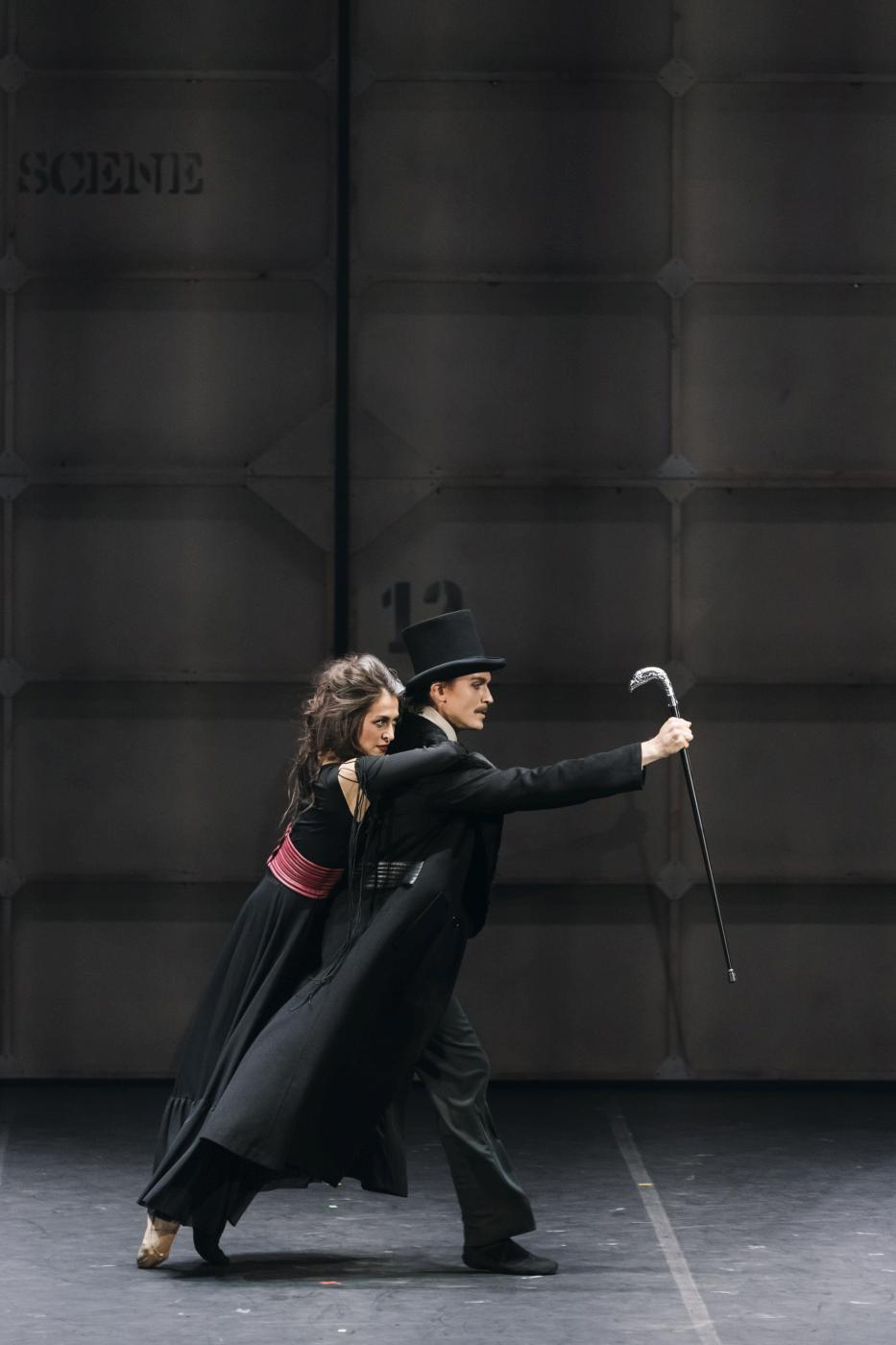
1. A.Putintsev (Konstantin Treplev), “The Seagull” by Y.Possokhov, Bolshoi Ballet 2025 © Bolshoi Theatre/M.Logvinov Almost four years after its premiere in summer 2021, I finally saw Yuri Possokhov’s The Seagull at the Bolshoi Theatre. It was his sixth creation for the company (his seventh and latest, The Queen of Spades, premiered in 2023), and the fourth time, he teamed up with composer Ilya Demutsky. The artistic team included costume designer Emma Ryott (a longstanding collaborator of choreographer Christian Spuck) and set designer Tom Pye (who also created the designs for Possokhov’s Anna Karenina). David Finn contributed the lighting, Sergei Rylko the video design.

Chekhov’s The Seagull is labeled as a comedy, but its humor is bitter at best. Not a single protagonist leads a fulfilled life. Everybody runs after a dream world or tries to construct their realities. Family relationships are strained, and love is unrequited, quickly exhausted, or phony. Possokhov’s interpretation throws more light on some characters, and less on others, and differs in some respects from the original. Irina Arkadina (Kristina Kretova)—an actress in Chekhov’s version, a renowned ballerina in Possokhov’s—is not merely a fashionable yet greedy diva and dysfunctional mother. She shows her empathetic side when she recalls childhood memories with her elderly brother, Pyotr Sorin (Mikhail Lobukhin), whose unrealized dreams of marriage and artistic career Possokhov omitted. Like in the text, events largely unfolded at Sorin’s country estate. Continue reading “Dreams versus Reality”

The Hub

“The Nutcracker”
Bolshoi Ballet
Bolshoi Theatre
Moscow, Russia
December 31, 2024 (live stream)

by Ilona Landgraf
Copyright © 2025 by Ilona Landgraf

1. E.Kokoreva (Marie) and ensemble, “The Nutcracker” by Y.Grigorovich, Bolshoi Ballet 2024 © Bolshoi Ballet/D.Yusupov2. A.Ovcharenko (Nutcracker Prince), “The Nutcracker” by Y.Grigorovich, Bolshoi Ballet 2024 © Bolshoi Ballet/D.Yusupov During this year’s Christmas sermon, my pastor asked which moment should best represent Christmas. The Christmas dinner? The lighting of the candles? Or, perhaps, unwrapping the presents? For me, this moment was the moment during the Bolshoi Ballet’s performance of The Nutcracker when the newlywed Marie (Elizaveta Kokoreva) and the Nutcracker Prince (Artem Ovcharenko) were lifted by their court toward the star at the top of the Christmas tree. It was the climax of their spiritual journey and of Yuri Grigorovich’s choreography for which I had been waiting since I last saw his Nutcracker live in Moscow in 2022.

Two live streams on December 30th (evening performance) and December 31st (matinee) enabled a vast audience to follow the heroes’ journey. To meet the demand, the number of cinemas offering live broadcasts grew from one hundred to three hundred in December. Most were located in Russia, but cinemas in Belarus, Armenia, and the United Arab Emirates also participated. I was able to watch the matinee on the Bolshoi’s vk video platform. Continue reading “The Hub”

An Opening Salute

“The Sleeping Beauty”
Bolshoi Ballet
Bolshoi Theatre
Moscow, Russia
September 07, 2024 (live stream)

by Ilona Landgraf
Copyright © 2024 by Ilona Landgraf

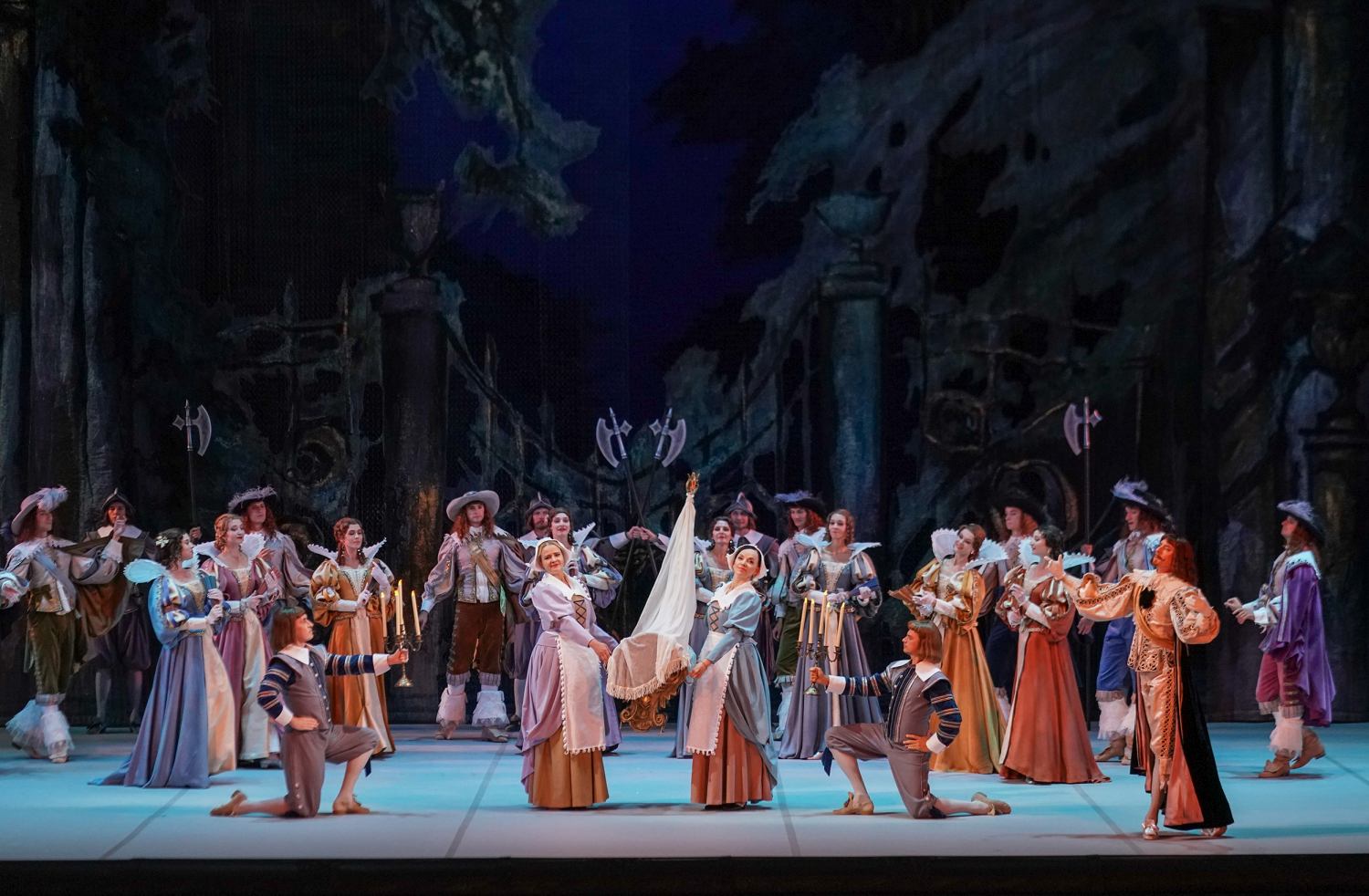
 1. Y.Ostrovsky (Catalabutte) and ensemble, “The Sleeping Beauty” by Y.Grigorovich after M.Petipa, Bolshoi Ballet 2024 © Bolshoi Theatre/P.Rychkov The Bolshoi Ballet opened its 249th season with a revival of Yuri Grigorovich’s The Sleeping Beauty, which has been absent from the stage for four years. Because of the thorough change of décor, the production was announced as a premiere. It swapped the opulent (and often criticized) sets and costumes that Ezio Frigerio and Franca Squarciapino designed for the 2011 revival (celebrating the reopening of the theater’s Historic Stage after six years of refurbishment) for the restrained décor that Simon Virsaladze (1909–1989) created for Grigorovich’s second version of the ballet in 1973. The subdued hues and aquarelle-ish style of its courtly surroundings direct the gaze toward the colorful costumes (recalling French court fashion from King Louis XIII’s to the Sun King, Louis XIV’s, reign), beautiful flower garlands and bouquets at Aurora’s birthday party, and, most importantly, the dancers and their performances. Raising the curtain didn’t elicit oohs and aahs from the audience as, for example, Jürgen Rose’s décor for Marcia Haydée’s Sleeping Beauty regularly has done on Western stages. Continue reading “An Opening Salute”

Reassuring

Sochi Olympics 2014
Sochi, Russia
August 2024

by Ilona Landgraf
Copyright © 2024 by Ilona Landgraf

Given the nauseating freak show at the opening of the Paris Olympics last week, re-watching the ceremony held ten years ago at the 2014 Winter Olympics in Sochi helps to restore belief in culture. It included the mini-ballet Natasha Rostov’s First Ball (choreographed by Radu Poklitaru, Andriy Musorin, and Oleksandr Leshchenko), which was based on Leo Tolstoy’s War and Peace. Russia’s finest dancers were featured next to the two hundred couples waltzing to Eugen Doga’s film music for A Hunting Accident (Russian title: Мой ласковый и нежный зверь, meaning, My Sweet and Tender Beast). The Bolshoi Ballet’s Svetlana Zakharova danced the young, romantic beauty, Natasha Rostova; ballet legend Vladimir Vasiliev played her father, Count Rostov.

The Mariinsky Ballet’s Danila Korsuntsev performed the role of Prince Andrei Bolkonsky; Alexander Petukhov portrayed Pierre Bezukhov; as the dashing hussar, Anatoly Kuragin, Ivan Vasiliev delivered breathtaking jumps that made the audience cheer. The ball came to an abrupt end when Alfred Schnittke’s Concerto Grosso No. 1 ushered in the dark times that subsequently swept over Russia. Continue reading “Reassuring”

Prix Benois Laureates 2024

Prix Benois de la Danse
Bolshoi Theatre (Historic Stage)
Moscow, Russia
June 25, 2024

by Ilona Landgraf
Copyright © 2024 by Ilona Landgraf

1. Jurors, S.Zakharova, nominees, and laureates, Prix Benois 2024 © Benois Center On Tuesday evening, this year’s Prix Benois laureates were announced on the Historic Stage of the Bolshoi Theatre.
The Mariinsky Ballet’s Olesya Novikova won the prize for best female dancer for her performance as Aspiccia in La Fille du Pharaon (Marius Petipa’s version as reconstructed by Toni Candeloro). Gergő Ármin Balázsi (Hungarian National Ballet) and Artemy Belyakov (Bolshoi Ballet) shared the prize for best male dancer. Balázsi was nominated for his performance as Leon in Boris Eifman’s The Pygmalion Effect and Belyakov for his performance as Ivan IV in Yuri Grigorovich’s Ivan the Terrible. Marco Goecke was awarded the prize for best choreography in absentia for In the Dutch Mountains, a creation for the Nederlands Dans Theater. Continue reading “Prix Benois Laureates 2024”

Dancer Nominees for the Prix Benois 2024

Prix Benois de la Danse
Bolshoi Theatre (Historic Stage)
Moscow, Russia
June 2024

by Ilona Landgraf
Copyright © 2024 by Ilona Landgraf

1. Bolshoi Theatre © D.Yusupov/Bolshoi Theatre 2. Statuette of the Prix Benois de la Danse, design by Igor Ustinov © Benois Center Thirteen dancers from eight companies are nominated for this year’s Prix Benois. Of the seven women and six men, two dance in China, Hungary, and Italy; one dances in Japan, and six in Russia. Next week, the laureates will be announced in an award ceremony at the Bolshoi Theatre, Moscow.

Here’s a short overview of the nominees in alphabetical order by company names:
Continue reading “Dancer Nominees for the Prix Benois 2024”