Squandered

“Scirocco” (“Death in Venice”/“Bridge of Sighs”)
WINNDance
Teatro Malibran
Venice, Italy
August 01, 2026

by Ilona Landgraf
Copyright © 2026 by Ilona Landgraf

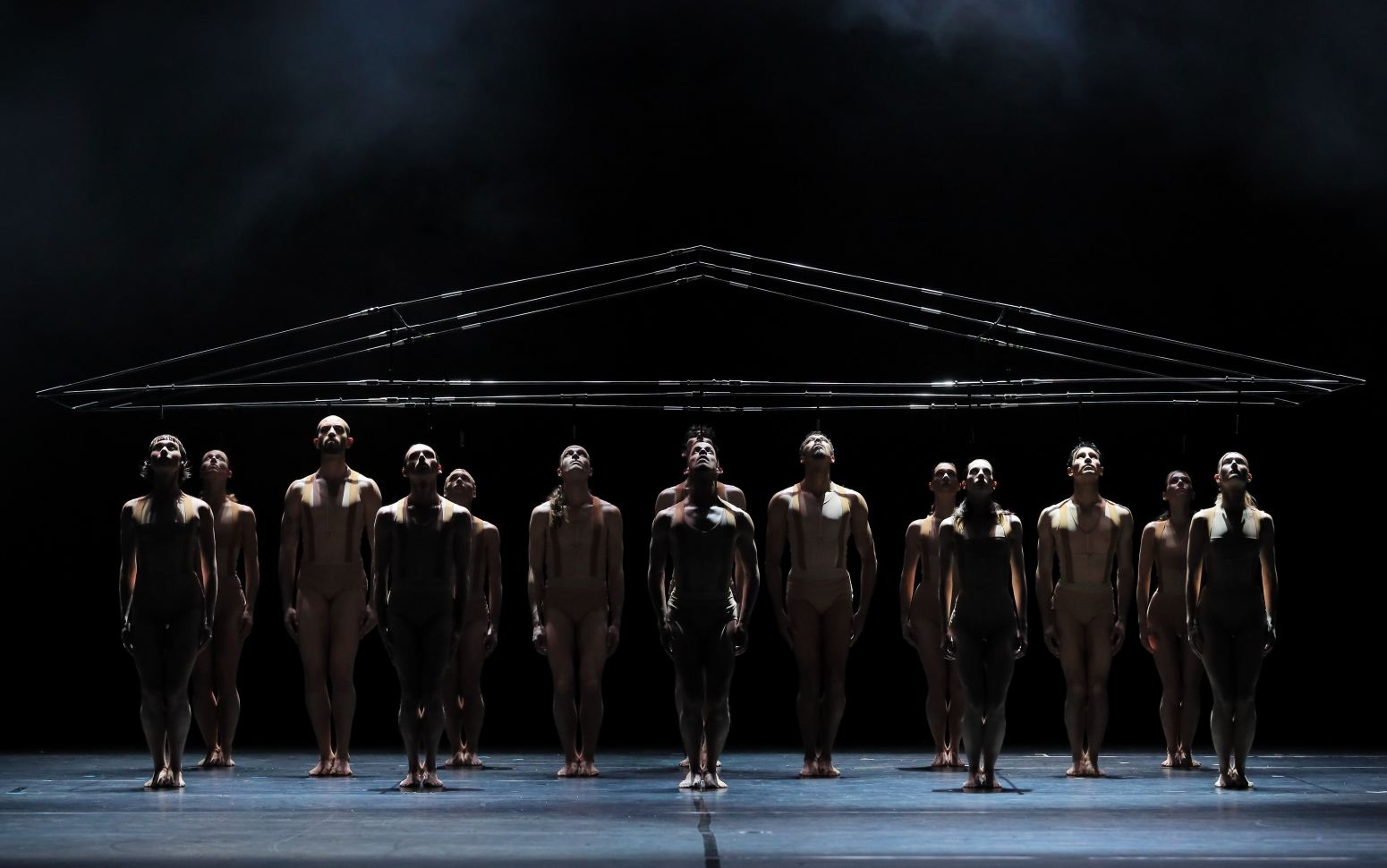
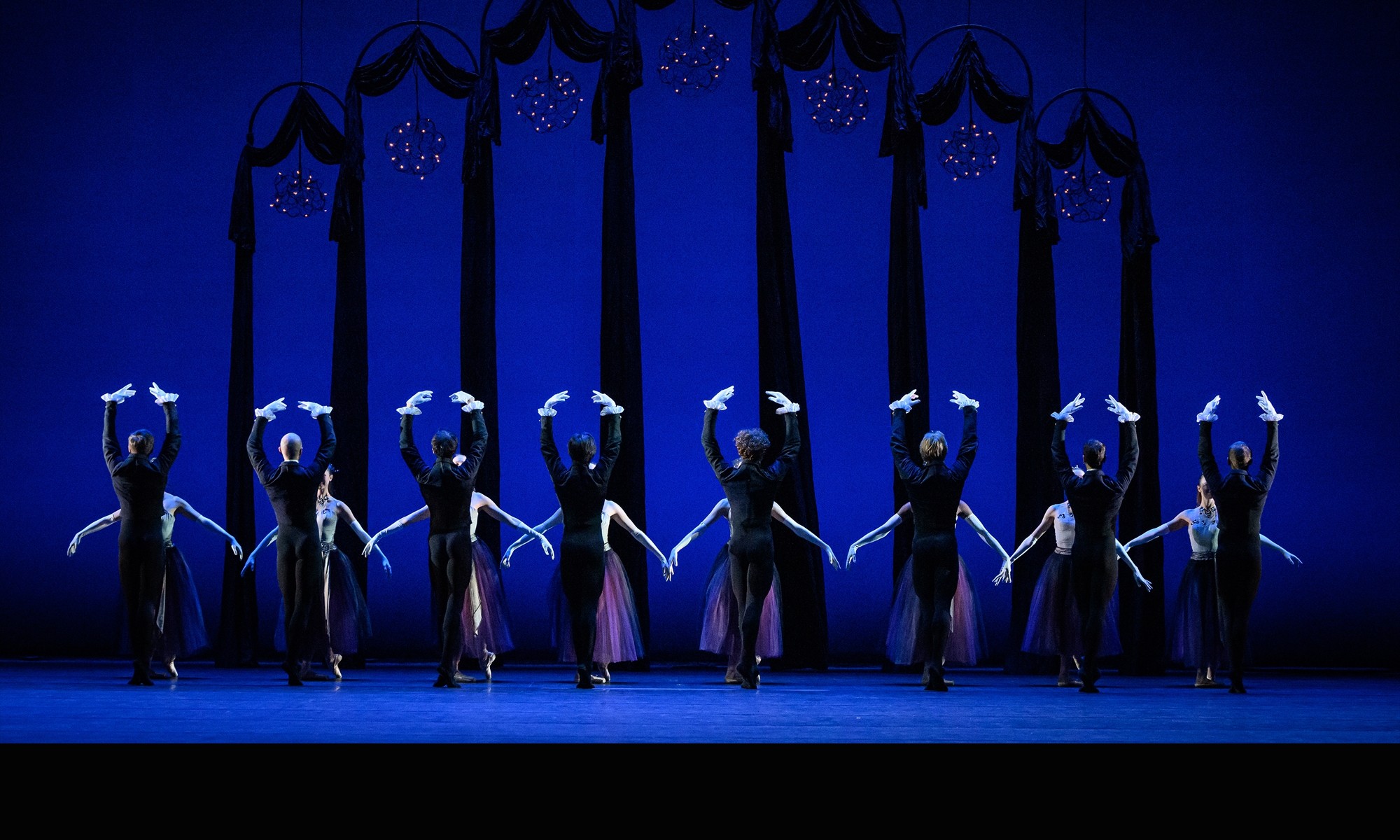
 1. M.Rademaker, M.Galeazzi, D.Vishneva, S.Henriksen, and K.Everhart; “Death in Venice” by I. and M.van Opstal, O.R. De Jesús, and R.Behr; WINNDance 2026, photo courtesy of La Biennale di Venezia © A.AvezzùWhen if not now” (WINN) is the attitude of movers and shakers. Earlier this year, two such movers and shakers, Slava Tutukin (former soloist of the Mikhailovsky Ballet, St. Petersburg, and the Aalto Ballet, Essen) and Marijn Rademaker (choreographer and ex-principal of Stuttgart Ballet and Dutch National Ballet) founded WINNDance, a Stuttgart-based dance company for dancers forty years old and older. It attracted renowned names: People’s Artist of Russia, Diana Vishneva; the late Hans van Manen’s muse, Igone de Jongh; Hamburg Ballet’s Ivan Urban, Silvia Azzoni, and Oleksandr Ryabko; the Royal Ballet’s former principal, Mara Galeazzi; and Polina Semionova (who didn’t perform in Venice). The new enterprise includes an educational platform (WINN&Learn) and an exploratory platform for collaboration with different industries (WINNLab).

3. D.Vishneva and S.Henriksen, “Death in Venice” by I. and M.van Opstal, O.R.De Jesús, and R.Behr; WINNDance 2026, photo courtesy of La Biennale di Venezia © A.Avezzù2. D.Vishneva and S.Henriksen, “Death in Venice” by I. and M.van Opstal, O.R.De Jesús, and R.Behr; WINNDance 2026, photo courtesy of La Biennale di Venezia © A.AvezzùLast weekend, WINNDance’s inaugural performance took place at Venice’s Teatro Malibran as part of the Biennale di Venezia 2026. The double bill included Death in Venice (based on Thomas Mann’s eponymous 1911 novel) and Bridge of Sighs (named after a famous Venice bridge that connects the Doge’s Palace to the New Prison across a small canal; the “sighs” belonged to the prisoners glimpsing Venice one last time before confinement). Therefore, there could be no better location for the performance than the lagoon city. Even the torrid, humid, and stagnant weather matched the program’s overriding title, Scirocco (the hot Mediterranean wind originating from the Sahara). Renowned sponsors and patrons supported Scirocco; BOSS designed the costumes. But, for different reasons, both ballets failed.

4. Ensemble, “Death in Venice” by I. and M.van Opstal, O.R.De Jesús, and R.Behr; WINNDance 2026, photo courtesy of La Biennale di Venezia © A.AvezzùDeath in Venice opened with Javier De Frutos’s black and white video in which Paul Chantry played alternately a TV news anchor of the 50s and Thomas Mann who soliloquized or talked with the novella’s main figure, Gustav von Aschenbach (also played by Chantry). Charles Hagerty contributed English voice acting, which was translated into Italian supertitles. As a news anchor wearing a suit and tie, the mustachioed Chantry looked like Thomas Mann in his late forties, though he spoke with biting sarcasm and, at times, through clenched teeth, undermining his favorite statement, “You can ask me anything.” The casual white outfit he wore while playing Thomas Mann or von Aschenbach gave him a Freddy Mercury appearance. Fading in and out from white like a heat-induced hallucination, Chantry cautioned against the weather and plague and recited passages from the novel with odd, full-body sign language.

5. S.Henriksen and K.Everhart, “Death in Venice” by I. and M.van Opstal, O.R.De Jesús, and R.Behr; WINNDance 2026, photo courtesy of La Biennale di Venezia © A.AvezzùI had begun to wonder about the whereabouts of Imre and Marne van Opstal’s, Omar Román De Jesús’s, and Rainer Behr’s joint choreography when the video ended with pedestrians’ chatter and the curtain rose on the first dance section, subtitled Obsession and choreographed by the van Opstals. The five silhouettes that slowly approached in a line from the dark, foggy rear stage surrounded the sacral aura of reverberating ecclesiastical chants. Boxy suits and ties blurred the distinction between men and women except for Kayoko Everhart (a principal from Madrid’s Compañia Nacional de Danza), whose white blazer had a feminine cut. All of them seemed to portray von Aschenbach. They moved composedly and slowly or walked busily, though aimlessly, with hands folded behind their backs or at their hips. Emotions boiled beneath the surface. Rademaker burst into a solo like a valve releasing pressure; Silas Henriksen (a principal of the Norwegian National Ballet) rubbed his chest as if hot from his emotions. His jacket felt too tight, the tie was confining, his feet were restless, and his hands were frantic.

6. G.Roman, S.Azzoni, and D.Vishneva; “Death in Venice” by I. and M.van Opstal, O.R.De Jesús, and R.Behr; WINNDance 2026, photo courtesy of La Biennale di Venezia © A.Avezzù When the noisy electronics quieted briefly, Henriksen left. Right away, thumping rhythms dictated a synchronous routine in front of a yellow backdrop that probably symbolized a sunset at the Lido. Again, sudden silence stopped the pounding feet. Breathing heavily, the dancers stared at the audience as if it were a dangerous beast to carefully retreat from. I couldn’t find a correlation between the choreography and the novella anymore, but I liked the intensity and aesthetic of Henriksen’s and Everhart’s pas de deux. The manner in which Henriksen wiped his hands across the floor indicated that he was still on a sandy beach.

Video and dance sequences continued to alternate. De Jesús’s choreography, Identity, opened with a guitar as searing as Prince’s and jingling bells. It included an intimate pas de trois in which the yearning Gil Roman (former artistic director of the Béjart Ballet Lausanne) was torn between Azzoni and Vishneva, both of whom ditched him. According to the program book, Identity reflects upon the contradiction between a person’s external role and inner truth.
8. Ensemble, “Death in Venice” by I. and M.van Opstal, O.R.De Jesús, and R.Behr; WINNDance 2026, photo courtesy of La Biennale di Venezia © A.Avezzù7. O.Ryabko, “Death in Venice” by I. and M.van Opstal, O.R.De Jesús, and R.Behr; WINNDance 2026, photo courtesy of La Biennale di Venezia © A.AvezzùThe final dance part, Behr’s Horizon, featured Ryabko as a struggling von Achenbach on his sacred final path. The scene made me think back to John Neumeier’s version of Death in Venice, in which Ryabko used to portray von Aschenbach’s concepts. Eight dancers accompanied him as he walked toward the glaring light reflected from the surf. Although their white costumes resembled nightgowns and pajamas, the group presumably represented angels.
Thomas Mann and the novella remained the main topics of the other two videos. Like poles in a sea of abstract dance, they intermittently anchored the piece. The concept could have worked if the running time had been right. But Death in Venice dragged on for more than an hour. Its disruption by a power outage was unfortunate, but not the reason for its lack of momentum.

9. M.Rademaker and ensemble, “Bridge of Sighs” by J.Neumeier, WINNDance 2026, photo courtesy of La Biennale di Venezia © A.AvezzùBridge of Sighs, by John Neumeier, is dedicated to his mother and was created for WINNDance for free. Its bridge was a high-folding ladder (the production’s only set element) upon which Rademaker stood. Still a blonde sunny boy, he was the one “falling in love again” about whom Friedrich Hollaender sang. Rademaker’s love interest was Henriksen, but Henriksen embraced Ryabko instead. Ridden with melancholy, Rademaker sat down at the front stage and then clambered about the ladder like a boy on a playground and called for mama. She appeared as de Jongh, whose ankles Rademaker clasped. Both spoke Dutch at times, but for whatever reason, there were no English supertitles.

11. S.Henriksen, M.Rademaker, and O.Ryabko; “Bridge of Sighs” by J.Neumeier, WINNDance 2026, photo courtesy of La Biennale di Venezia © A.Avezzù10. M.Galeazzi, I.de Jongh, S.Azzoni, D.Vishneva, M.Rademaker, and S.Henriksen; “Bridge of Sighs” by J.Neumeier, WINNDance 2026, photo courtesy of La Biennale di Venezia © A.Avezzù Whether Rademaker’s infatuation was answered when he hung headlong at Henriksen’s back was unclear. Shostakovich’s String Quartet No. 13 suggested a difficult if not depressing romance. In any event, St. Augustine’s quote, “I was not yet in love, but, I was in love with loving (…),” which had inspired Neumeier and played via voiceover, encouraged Rademaker to redirect his fondness toward Vishneva. The little boy, who climbed the other side of the ladder, portrayed their son (in real life, he is Vishneva’s son, Rudolf Selinevich). He left with his mother once Henriksen’s reappearance broke up the couple. But again, Henriksen ignored Rademaker. Kurt Weill’s September, interpreted by Bryan Ferry, heralded an end to the sunny boy-time.

12. S.Azzoni, O.Ryabko, I.de Jongh, D.Vishneva, M.Galeazzi, M.Rademaker, and S.Henriksen; “Bridge of Sighs” by J.Neumeier, WINNDance 2026, photo courtesy of La Biennale di Venezia © A.Avezzù 13. M.Rademaker and D.Vishneva, “Bridge of Sighs” by J.Neumeier, WINNDance 2026, photo courtesy of La Biennale di Venezia © A.Avezzù As in previous ballets, Neumeier employed angular, jerky movements often stopping midway like a stutter and worn-out stereotypes. How often have we seen a Neumeier dancer, holding his mouth shut to drown a scream of horror? Most of the time, his dancers moved at a soporific pace, and to express dynamism, they did not quicken their steps but swiveled their lower arms like propellers. I thought of a seniors’ ballet, and that is neither what these dancers deserve nor what does them justice.

Links: Website of WINNDance
Biennale Danza 2026
Website of the Teatro Malibran
Scirocco—Teaser 1    Scirocco—Teaser 2
Creation of Bridge of Sighs (1)    Creation of Bridge of Sighs (2)    Creation of Bridge of Sighs (3)
Photos: 1. Marijn Rademaker, Mara Galeazzi, Diana Vishneva, Silas Henriksen, and Kayoko Everhart; “Death in Venice” by Imre and Marne van Opstal, Omar Román De Jesús, and Rainer Behr; WINNDance 2026
2. Diana Vishneva and Silas Henriksen, Death in Venice” by Imre and Marne van Opstal, Omar Román De Jesús, and Rainer Behr; WINNDance 2026
3. Diana Vishneva and Silas Henriksen, “Death in Venice” by Imre and Marne van Opstal, Omar Román De Jesús, and Rainer Behr; WINNDance 2026
4. Ensemble, “Death in Venice” by Imre and Marne van Opstal, Omar Román De Jesús, and Rainer Behr; WINNDance 2026
5. Silas Henriksen and Kayoko Everhart, “Death in Venice” by Imre and Marne van Opstal, Omar Román De Jesús, and Rainer Behr; WINNDance 2026
6. Gil Roman, Silvia Azzoni, and Diana Vishneva; “Death in Venice” by Imre and Marne van Opstal, Omar Román De Jesús, and Rainer Behr; WINNDance 2026
7. Oleksandr Ryabko, “Death in Venice” by Imre and Marne van Opstal, Omar Román De Jesús, and Rainer Behr; WINNDance 2026
8. Ensemble, “Death in Venice” by Imre and Marne van Opstal, Omar Román De Jesús, and Rainer Behr; WINNDance 2026
9. Marijn Rademaker and ensemble, “Bridge of Sighs” by John Neumeier, WINNDance 2026
10. Mara Galeazzi, Igone de Jongh, Silvia Azzoni, Diana Vishneva, Marijn Rademaker, and Silas Henriksen; “Bridge of Sighs” by John Neumeier, WINNDance 2026
11. Silas Henriksen, Marijn Rademaker, and Oleksandr Ryabko; “Bridge of Sighs” by John Neumeier, WINNDance 2026
12. Silvia Azzoni, Oleksandr Ryabko, Igone de Jongh, Diana Vishneva, Mara Galeazzi, Marijn Rademaker, and Silas Henriksen; “Bridge of Sighs” by John Neumeier, WINNDance 2026
13. Marijn Rademaker and Diana Vishneva, “Bridge of Sighs” by John Neumeier, WINNDance 2026
all photos courtesy of La Biennale di Venezia © Andrea Avezzù
Editing: Kayla Kauffman


Ambitious but Not Gripping

“Wonderland” (“Alice in Wonderland”/“Through the Looking-Glass”)
Hamburg Ballet 
Hamburg State Opera
Hamburg, Germany
June 20, 2026

by Ilona Landgraf
Copyright © 2026 by Ilona Landgraf
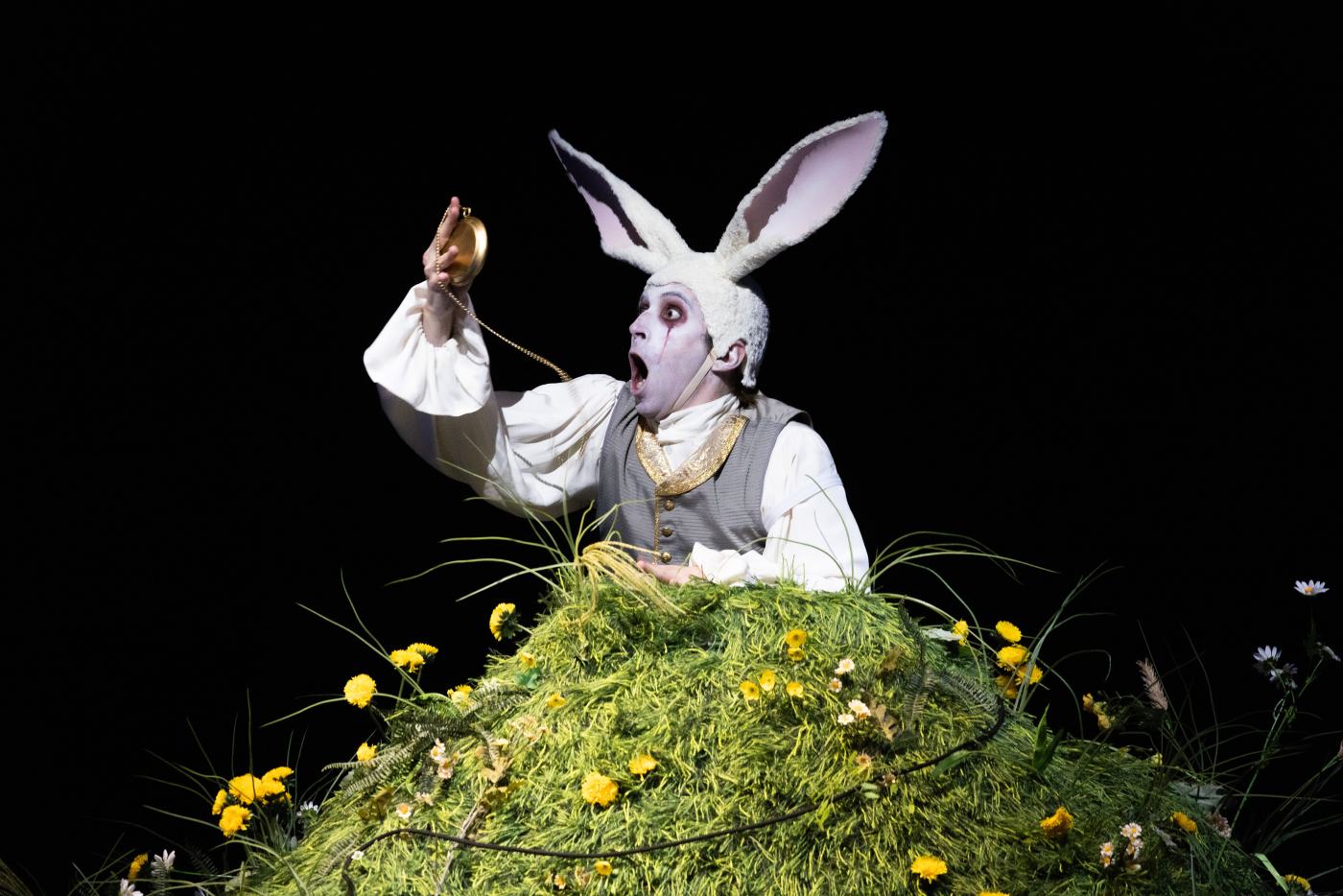
1. A.Martínez (The White Rabbit), “Wonderland” by A.Ratmansky, Hamburg Ballet 2026 © K.WestCompared to Alexei Ratmansky’s recent choreography, Callirhoe, for the Vienna State Ballet, his new creation, Wonderland, for the Hamburg Ballet feels empty. It combines two dance adaptations of Lewis Carroll’s most notable novels, Alice’s Adventures in Wonderland (1865) and its sequel Through the Looking-Glass (1871), each of which is presented in a one-hour act.

No doubt, the production is ambitious and elaborate. Ratmansky and his son, Vasyl, assembled different music for each of the no fewer than twenty-eight scenes, which Philip Feeney merged into a score. Erik Satie’s Three Gnossiennes, no.3, for example, lulls Alice (Olivia Betteridge) into her dream journey down the rabbit hole. Percy Grainger’s Molly on the Shore (amended by a cock-crow) gives the cackling animals at the Caucus race—among them a crab, mouse, dodo, and eaglet—a voice, Continue reading “Ambitious but Not Gripping”
Retrospection

“Tribute to Tetley”
Stuttgart Ballet
Stuttgart State Opera
Stuttgart, Germany
April 25, 2026

by Ilona Landgraf
Copyright © 2026 by Ilona Landgraf

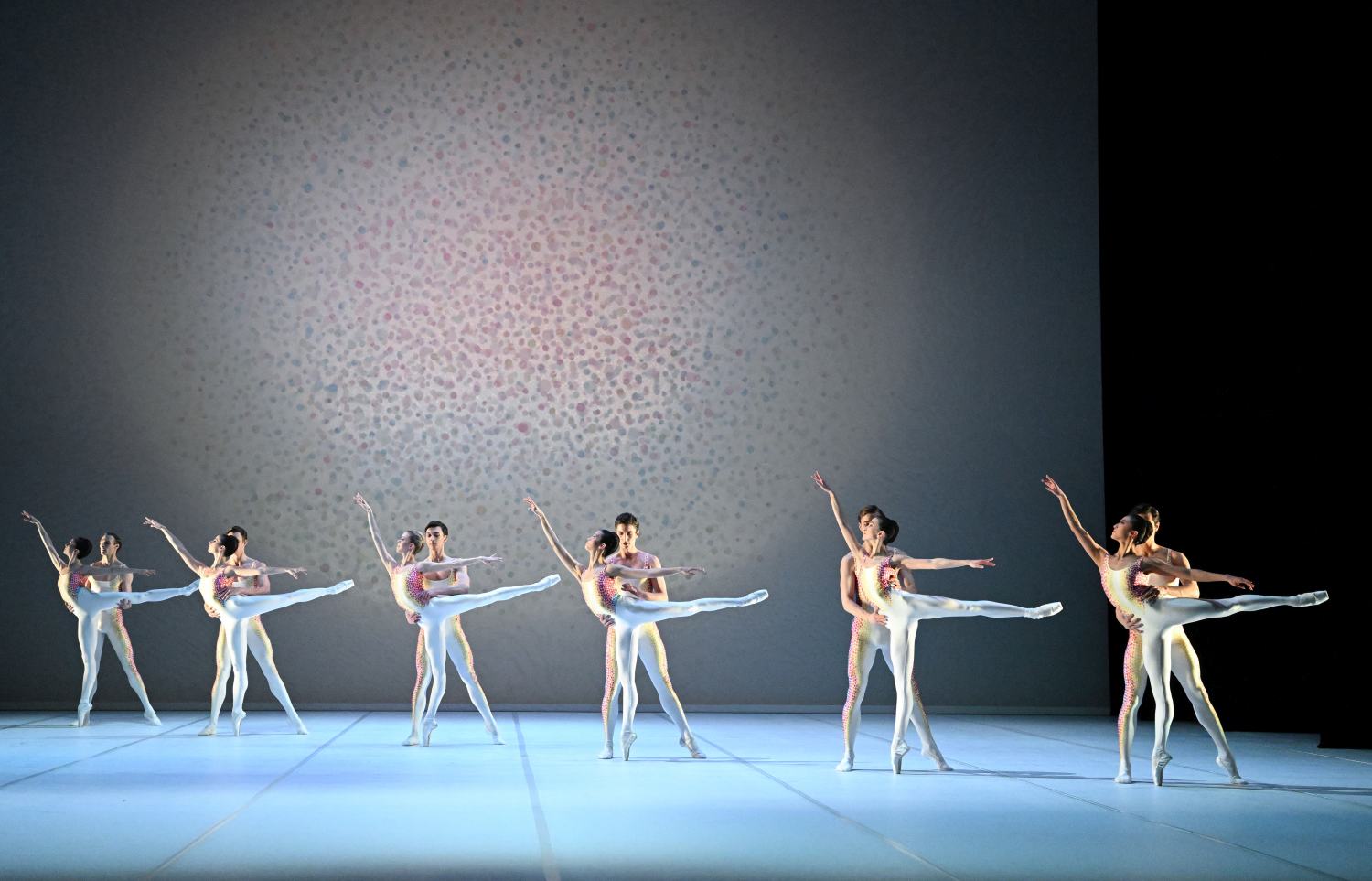
1. Ensemble, “Voluntaries” by G.Tetley © Glen Tetley Legacy, Stuttgart Ballet 2026 © Stuttgart BalletIn 1972, no one foresaw how fateful Glen Tetley’s (1926-2007) invitation to stage his 1965 piece, The Mythical Hunter, for Stuttgart’s junior company would be. He and the artistic director, John Cranko, got along, and Tetley was commissioned to create a new ballet for the main company. It was June 1973, and Voluntaries wasn’t yet finished when news of Cranko’s sudden death on a transatlantic flight reached Stuttgart. At the request of Marcia Haydée and Cranko’s heir, the late Dieter Graefe, Tetley subsequently took over as the company’s artistic director. But administrative work burdened him. After two seasons, he passed the reins to Haydée, relieved to renew his focus on choreography. Yet fate had something else in store. In 1986, just as Tetley agreed to become Erik Bruhn’s artistic associate at the National Ballet of Canada, Bruhn died. Tetley kept his word, took up the post, and stayed for five years. Continue reading “Retrospection”

Unrealistic

“Nureyev”
State Ballet Berlin
Deutsche Oper
Berlin, Germany
March 21, 2026

by Ilona Landgraf
Copyright © 2026 by Ilona Landgraf

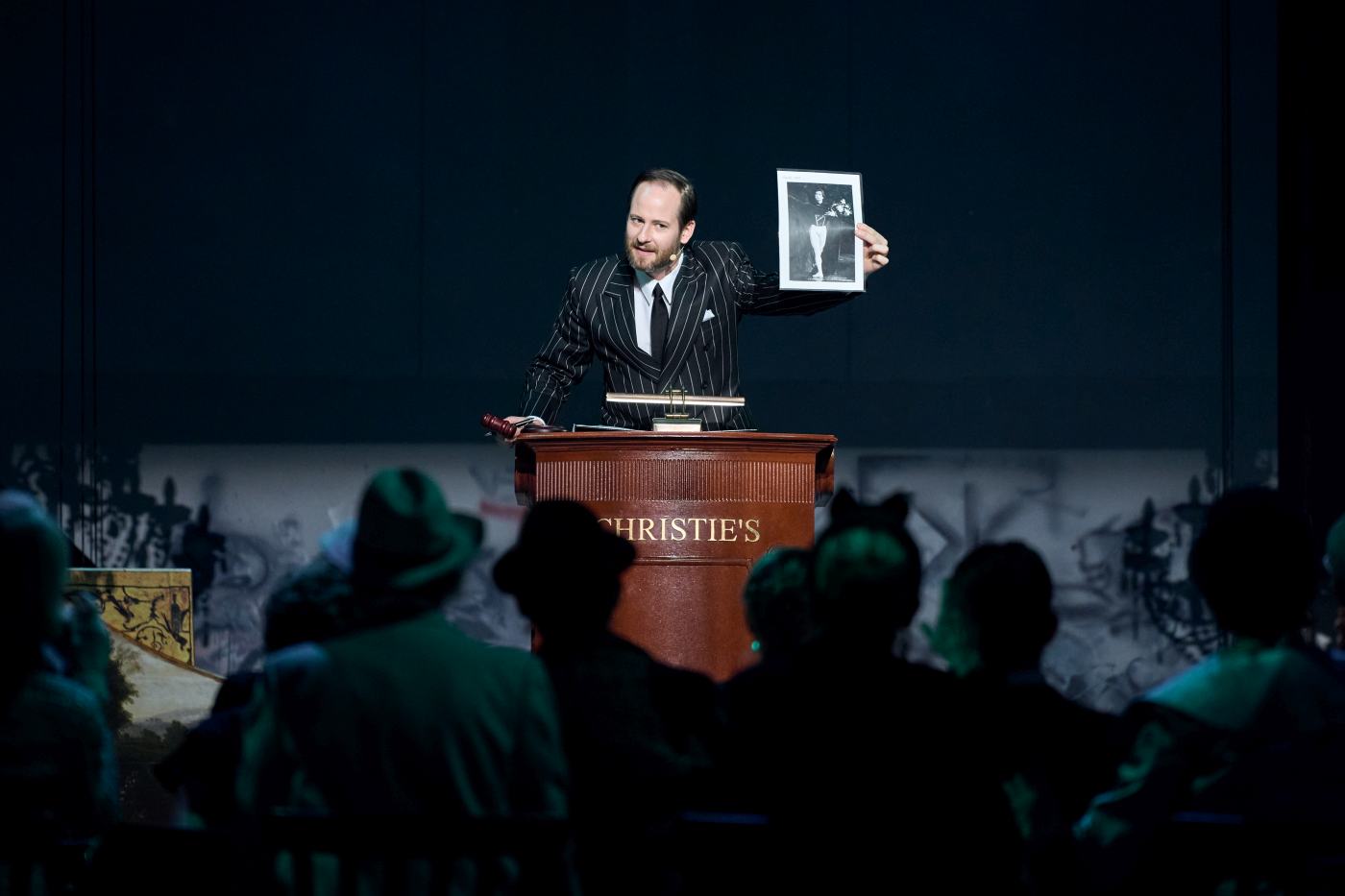
1. O.L.Biron (Christie’s auctioneer) and ensemble, “Nureyev” by Y.Possokhov and K.Serebrennikov, State Ballet Berlin 2026 © C.Quezada Last weekend, Yuri Possokhov’s and Kirill Serebrennikov’s joint production Nureyev premiered with the State Ballet Berlin. I remember well the piece’s 2017 world premiere at the Bolshoi Theatre and the troubles preceding it. In 2022, Nureyev was removed from the Bolshoi’s repertory following new Russian anti-LGBTQ+ legislation that made it illegal to promote the success and power of queer personalities, per Serebrennikov’s explanation.

Bringing this ballet back to life could have been a tribute to not only Rudolf Nureyev but also Russian ballet as well as a gift to the Bolshoi, which celebrates its 250th anniversary this year. Continue reading “Unrealistic”

The Art of Embarrassing Oneself

“Stravinsky in Paris” (“Farewell in Paris”/“Le Sacre du Printemps”)
State Ballet of the Gärtnerplatztheater, Munich
Forum Ludwigsburg
Ludwigsburg, Germany
July 30, 2025

by Ilona Landgraf
Copyright © 2025 by Ilona Landgraf

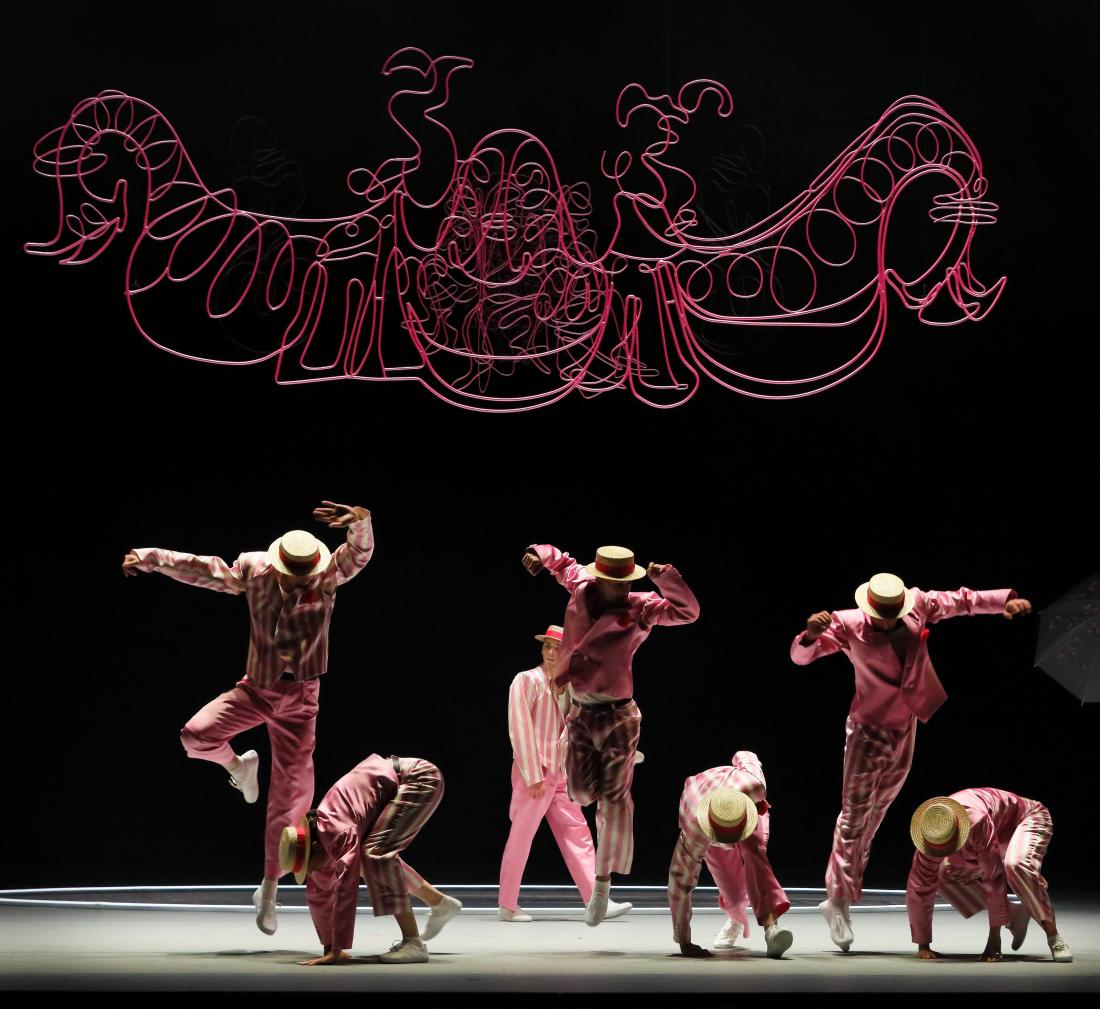
1. M.J.Perko (Jerry) and ensemble, “Farewell in Paris” by J.Verbruggen, State Ballet of the Gärtnerplatztheater 2025 © M.-L.Briane Since 1932, the city of Ludwigsburg in Baden-Württemberg has hosted an annual summer festival featuring various cultural genres. Many events are held at the Ludwigsburg Palace, a vast complex that served as the Duke of Württemberg’s residence after its completion in 1733. Munich’s State Ballet of the Gärtnerplatztheater, whose Stravinsky in Paris marked the festival’s final dance event, performed at the Ludwigsburg Forum near the palace. Last October, the Gärtnerplatztheater showed Troja (“Troy”) by the Greek-born Andonis Foniadakis on its tour to Ludwigsburg. Its display of sexist abuse was annoying. As the press praised Stravinsky in Paris as a “confetti rocket,” I was curious about its “sophisticated dance and music.”
Stravinsky in Paris, a co-production of the Gärtenerplatztheater and the Ludwigsburg Festival, recently premiered in Munich. The double bill combines Jeroen Verbruggen’s Farewell in Paris and Marco Goecke’s Le Sacre du Printemps.
The nonchalant steps of the straw-hatted men who opened Farewell to Paris seemed inspired by a blend of Broadway style and Parisian savoir vivre. In their pale pink of their blazers and pants, they seemed to belong in a little girl’s dream (costumes by Emmanuel Maria). Continue reading “The Art of Embarrassing Oneself”

A Recap

“Malditos Benditos”
Ballet of the State Theater Nuremberg
State Theater
Nuremberg, Germany
July 10, 2025

by Ilona Landgraf
Copyright © 2025 by Ilona Landgraf

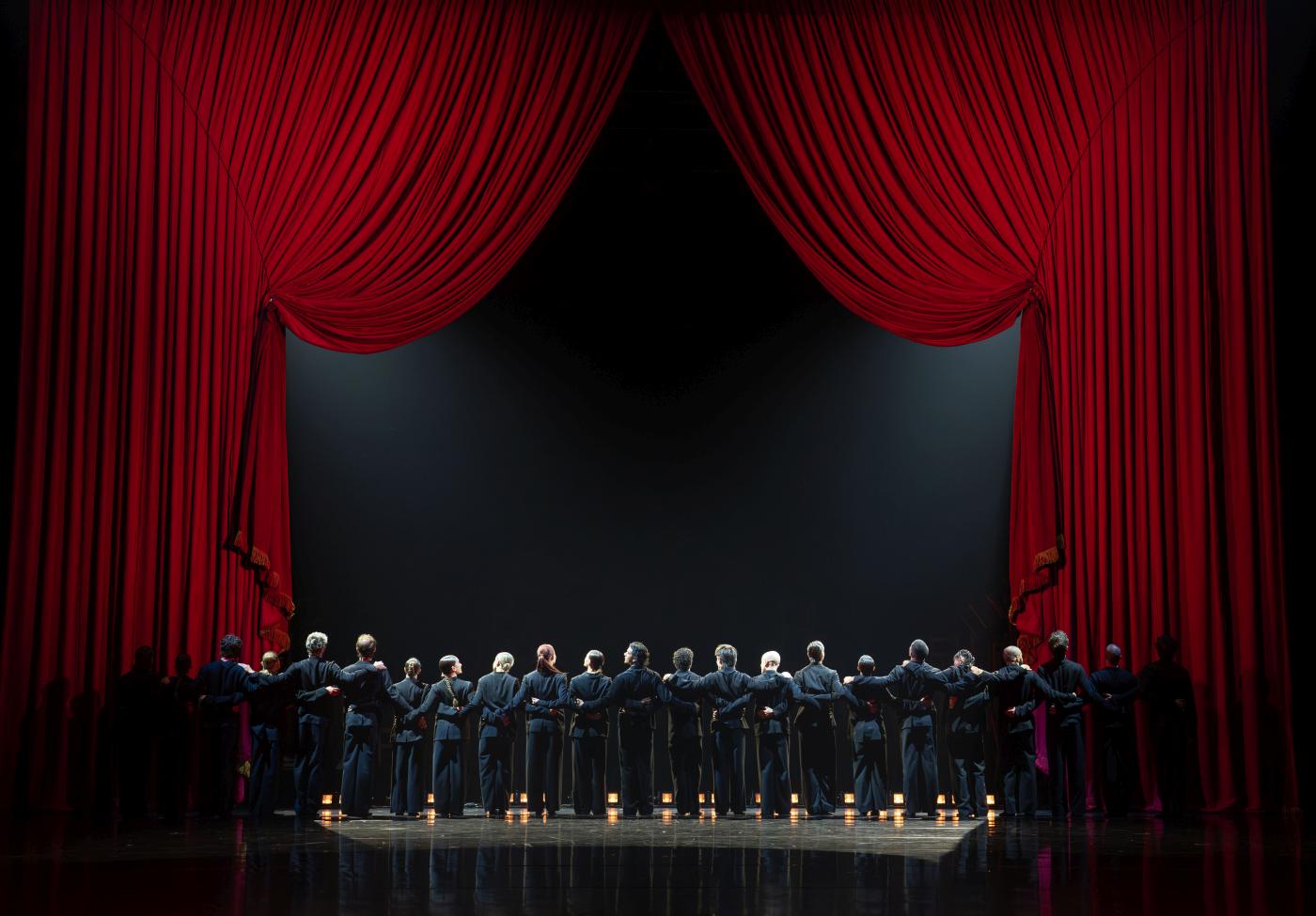
1. Ensemble, “Malditos Benditos” by G.Montero, Ballet of the State Theater Nuremberg 2025 © J.VallinasMalditos Benditos (“Damned Blessed Ones”) is Goyo Montero’s farewell piece to Nuremberg. After seventeen years as artistic director of the State Theater’s ballet company, the Spaniard will leave for the State Ballet Hanover this autumn to take up the reins Marco Goecke was forced to give up in 2023. Richard Siegal, director of the Cologne-based Ballet of Difference, will succeed Montero in Nuremberg and bring his dancers along. They will merge with their Nuremberg colleagues into the State Theater Nuremberg Ballet of Difference.
Malditos Benditos is the counterpart to Benditos Malditos, Montero’s first creation in Nuremberg in 2008. Many of the intervening twenty-five productions are reflected in Malditos Benditos. Applause blended into the medley of musical snippets and electronic noise as the black curtain rose. The black-suited dancers (costumes by Goyo Montero and Margaux Manns) bowed to the applause of an imaginary audience at the rear stage, framed by a bright red curtain. Continue reading “A Recap”

Quarrel in Hamburg

The Hamburg Ballet
Hamburg State Opera
Hamburg, Germany
June 2025

by Ilona Landgraf
Copyright © 2025 by Ilona Landgraf

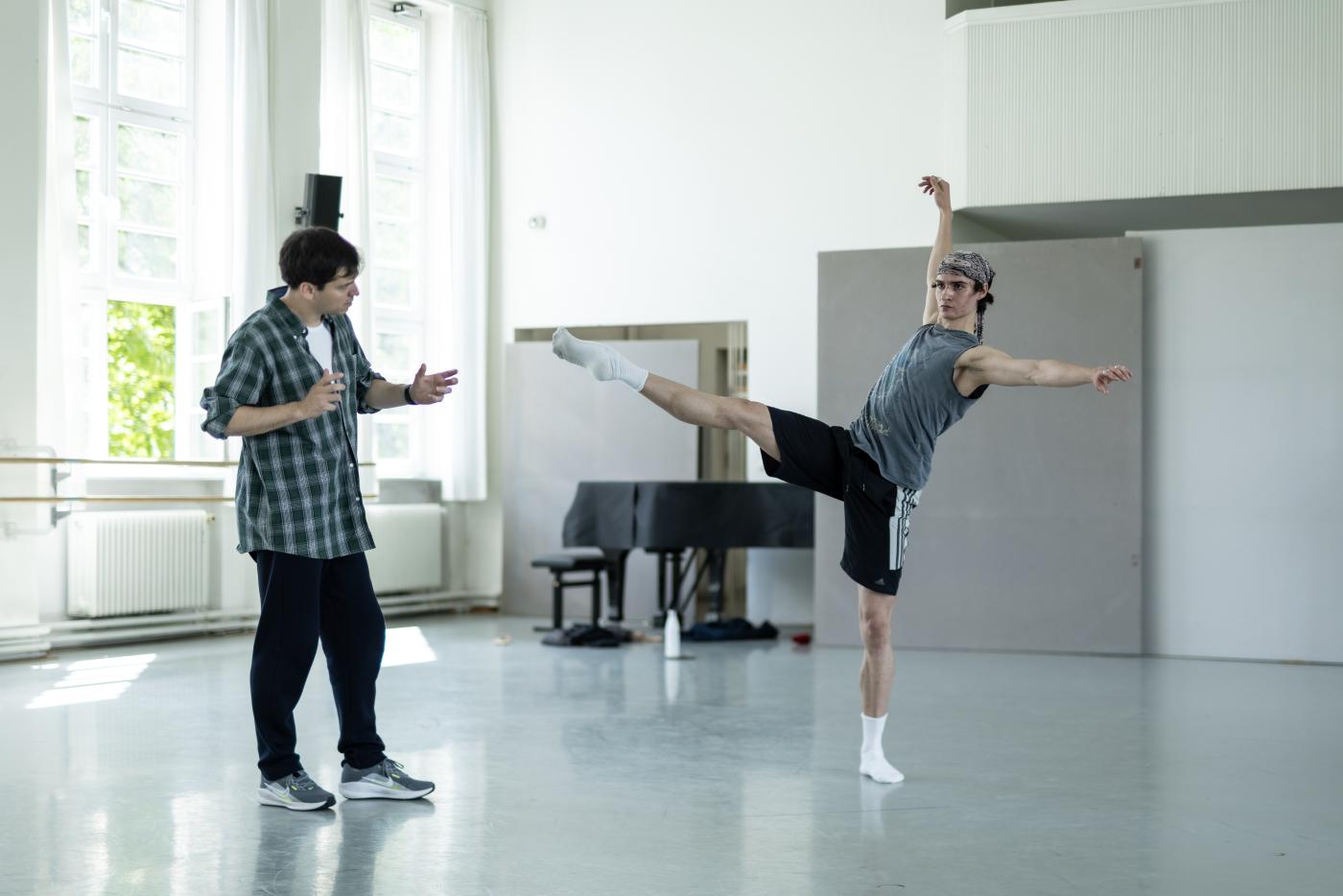
D.Volpi and L.Haslach rehearsing “Demian” by D.Volpi, The Hamburg Ballet 2025 © K.WestAfter John Neumeier handed over the artistic reins of the Hamburg Ballet to Demis Volpi, a smooth transition process seemed underway. Volpi, whose career as a dancer and choreographer began in Stuttgart, was artistic director of the Ballett am Rhein when Neumeier’s successor came into question. A selection committee of eleven (including Ted Brandsen, Dutch National Ballet; Tamas Detrich, Stuttgart Ballet; Brigitte Lefèvre, Paris Opera Ballet; and Ashley Wheater, Joeffrey Ballet) recommended Volpi to the Hamburg State Opera board of directors. As it happens, he was Neumeier’s desired candidate. In 2022, the then thirty-seven-year-old Volpi was unanimously elected as Hamburg Ballet’s new artistic director as of August 2024. Continue reading “Quarrel in Hamburg”

Family Feeling

“Dream Team” (“Jardi Tancat”/“The Blue Brides”/“Lickety-Split”/“High Moon”)
Gauthier Dance Juniors
Theaterhaus Stuttgart
Stuttgart, Germany
March 15, 2025

by Ilona Landgraf
Copyright © 2025 by Ilona Landgraf

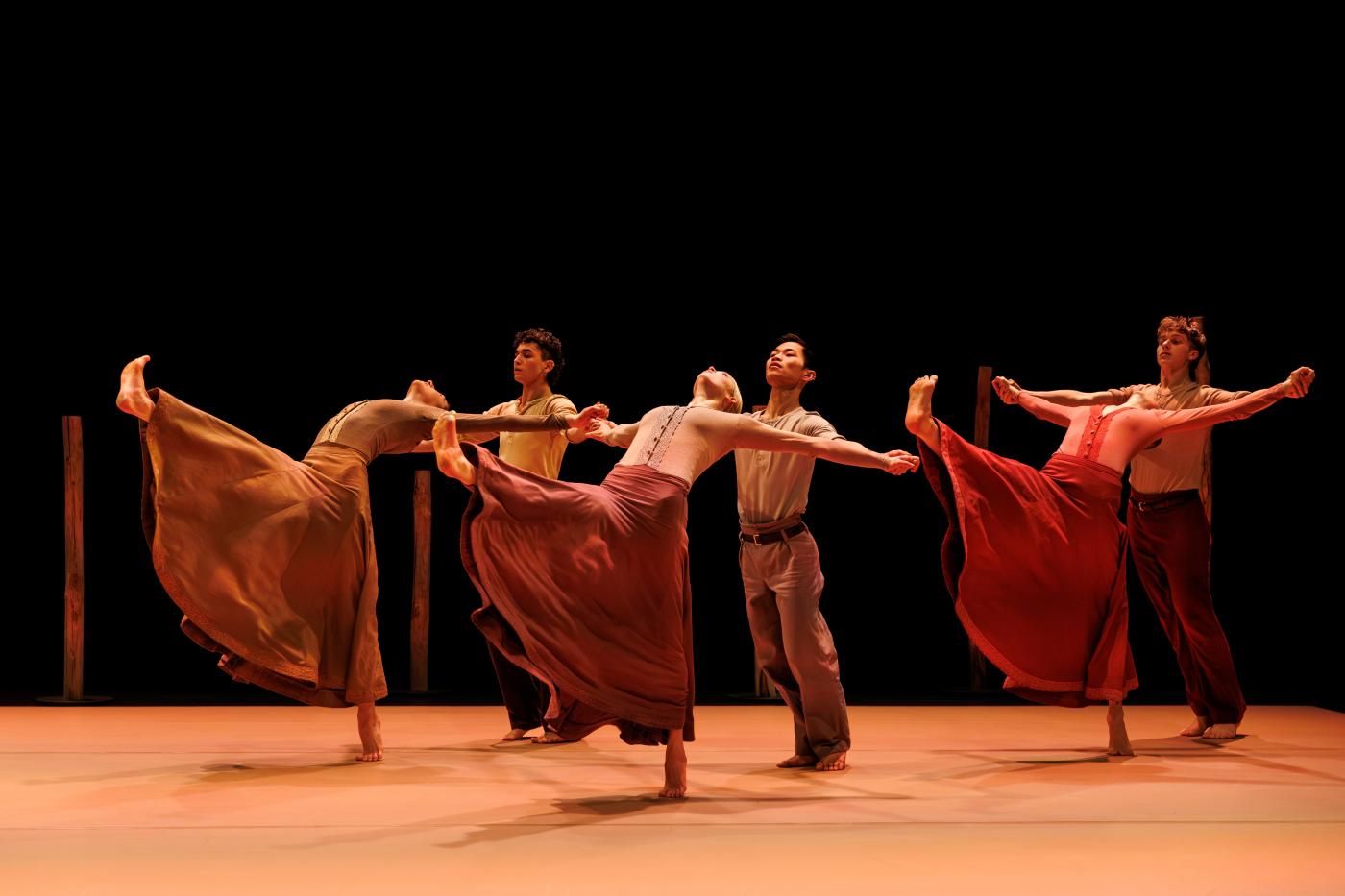
1. Ensemble, “Jardí Tancat” by N.Duato, Gauthier Dance Juniors 2025 © J.BakIs it the laid-back, feel-good attitude of Eric Gauthier, director and choreographer of Gauthier Dance, that makes his company’s performances feel like family gatherings? A sense of family also unites his junior company, which was founded in 2022 and comprises six dancers (three men and three women) from Australia, Canada, France, Italy, Spain, and Taiwan. Their latest mixed bill, Dream Team, premiered in January. It includes two podcasts that fill the breaks the performers take to change costumes. In them, Gauthier chats with his juniors and the choreographers. When talking about their group spirit, the young dancers call Gauthier their boss whereas Gauthier seems like a proud daddy.

The original title of the program (Something Old, Something New, Something Borrowed, Something Blue—quoting a traditional English wedding rhyme that details what a bride should wear for good luck) referred to the selection of pieces. Continue reading “Family Feeling”

Human Striving

“Homage to Uwe Scholz”
Leipzig Ballet
Forum Ludwigsburg
Ludwigsburg, Germany
February 15, 2025

by Ilona Landgraf
Copyright © 2025 by Ilona Landgraf

1. Ensemble, “Seventh Symphony” by U.Scholz, Leipzig Ballet 2025 © I.Zenna The Stuttgart-bred Uwe Scholz was in his early thirties when he became the Leipzig Ballet’s artistic director and chief choreographer in 1991. Scholz’s ballets were substantial and had depth, but the extent of his choreographic talent has been undiscovered due to his premature death in 2004. Last weekend, the Leipzig Ballet toured Homage to Uwe Scholz at the Forum Ludwigsburg. The double bill comprised two of Scholz’s symphonic pieces, Seventh Symphony, set to Beethoven’s Symphony No. 7 (1811-1812), and Second Symphony, set to Robert Schumann’s Symphony No. 2 (1847).

For the first time, Leipzig Ballet isn’t led by a choreographer, but by artistic director Rémy Fichet. Fichet, who took the reins from Mario Schröder just this season, danced in Leipzig under Scholz and intends to keep his ballets in the repertory. However, he’s realistic. The company’s standard does not yet meet the requirements of every Scholz piece, he admitted, and the dancers will need time to hone their technique. Perhaps, Fichet can prevent Scholz’s work from sinking deeper into oblivion. Continue reading “Human Striving”

The Abuse of Women

“Troja” (“Troy”)
State Ballet of the Gärtnerplatztheater, Munich
Forum Ludwigsburg
Ludwigsburg, Germany
October 12, 2024

by Ilona Landgraf
Copyright © 2024 by Ilona Landgraf

1. Ensemble, “Troja” by A.Foniadakis, State Ballet of the Gärtnerplatztheater 2024 © M.-L.Briane As in previous years, the Forum Ludwigsburg has made an effort to invite a wide range of dance companies to Ludwigsburg (which is about seven and a half miles north of Stuttgart) during this season. Munich’s State Ballet of the Gärtnerplatztheater was the first troupe to pay a visit. They presented their recently premiered one-act piece Troja (Troy) by Andonis Foniadakis. The Greek-born Foniadakis danced with the Béjart Ballet and the Ballet de l’Opéra de Lyon during which time he also began to choreograph. In 2003 he founded his own company, Apotosoma, and from 2016 to 2018 he was the artistic director of the Greek National Opera.
Troja is based on Euripides’s tragedy, The Trojan Women, the intricate plot of which Foniadakis distilled to two overarching themes: the aftermath of war in general and the fate of the women—on the loser’s side in particular. Continue reading “The Abuse of Women”

Fifty-Fifty

“Maillot/León & Lightfoot”
Ballet of the State Theater Nuremberg
State Theater
Nuremberg, Germany
May 04, 2024

by Ilona Landgraf
Copyright © 2024 by Ilona Landgraf

1. Jean-Christophe Maillot © Felix Dol Maillot 2. Sol León © Tommy Pascal 3. Paul Lightfoot © Elena Lekhova The Ballet of the State Theater Nuremberg’s new double bill combines Jean-Christophe Maillot’s Les Noces (2022 version) with Stop-Motion (2014) by Sol León and Paul Lightfoot. Both pieces have now entered the repertory of a German company for the first time. Continue reading “Fifty-Fifty”

A Showpiece

“A Swan Lake”
Semperoper Ballet
Semperoper
Dresden, Germany
December 17, 2023 (online since December 28, 2023)

by Ilona Landgraf
Copyright © 2024 by Ilona Landgraf

1. Ensemble, “A Swan Lake” by J.Inger, Semperoper Ballet 2023 © Semperoper Dresden/N.MacKayDo not expect the Semperoper Ballet’s new A Swan Lake to be the well-known classical swan story. True, it’s still danced to Tchaikovsky’s score, but it eschews the greatest part of its traditional personage. Vladimir Begichev’s original libretto of Swan Lake (1877) wasn’t what the Swedish choreographer Johan Inger had in mind. He took inspiration from the German author Johann Karl August Musäus’s folk tale The Stolen Veil (1784), which is considered to be one of several possible sources that Begichev used.

For those familiar with a traditional Swan Lake, a few names of the characters, Inger included, ring a bell. One of them is Benno, the original Prince Siegfried’s friend. Dresden’s version has no Prince Siegfried, and Benno is the lover of Queen Zoe, the unhappy spouse of King Zeno. Thanks to a magic veil, she’s able to transform into a swan and fly to a faraway lake. There, she takes a rejuvenating bath once a year and lives out her secret love affair with Benno. Zeno, however, finds out about it and, tearing up the veil, puts an end to further escapes for Queen Zoe. Act II features Zoe twenty years later. Continue reading “A Showpiece”

Lacking Punch (and more)

“The Nutcracker”
Stuttgart Ballet
Stuttgart State Opera
Stuttgart, Germany
December 19, 2023

by Ilona Landgraf
Copyright © 2023 by Ilona Landgraf

1. A.Su (Clara), D.Ionescu (Mrs. Stahlbaum), H.Erikson (Fritz), F.Puthenpurayil (Mr. Stahlbaum), and ensemble; “The Nutcracker” by E.Clug, Stuttgart Ballet 2023 © R.Novitzky/Stuttgart BalletAfter half a century without a family-friendly “Nutcracker”, the Stuttgart Ballet decided last year to fill the vacuum with a new version by Edward Clug. Clug, artistic director of the Maribor Ballet/Slovenia, had already contributed several short pieces to the Stuttgart company’s repertory, but “The Nutcracker” was his first full-evening story ballet for them. Stuttgart Ballet’s artistic director, Tamas Detrich, took the set and costume design choices into his own hands and commissioned a longstanding collaborator of the troupe – Jürgen Rose – to team up with Clug.

Rose’s design for the Stahlbaums’ Christmas celebration and their daughter Clara’s dream journey into a magical realm is a medley of old and new styles. The costumes and Clara’s bed are Biedermeier-ish, and the Stahlbaums’ mansion is ultra-modern. Its plain, washy-brown walls create a claustrophobic atmosphere. Walnuts of different sizes connect the scenes like a visual leitmotiv. Continue reading “Lacking Punch (and more)”

Customized

“Jane Eyre”
Hamburg Ballet – John Neumeier
Hamburg State Opera
Hamburg, Germany
December 09, 2023

by Ilona Landgraf
Copyright © 2023 by Ilona Landgraf

1. M.Sugai (Jane Eyre), “Jane Eyre” by C.Marston, Hamburg Ballet 2023 © K.WestLast December, John Neumeier announced that his then-new “Dona Nobis Pacem” would be his last choreography for the Hamburg Ballet. I was rightfully doubtful because the eighty-four-year-old did indeed schedule the premiere of yet another new creation – Epilogue” – for July 2024. With very few exceptions, the Hamburg Ballet’s purpose has been to present its artistic director’s oeuvre. In his farewell season, he at least allocated the other premiere to a foreign choreographer, the Zurich Ballet’s new artistic director, Cathy Marston. Her “Jane Eyre” received its Hamburg debut earlier this December. It’s an adaptation of Charlotte Brontë’s eponymous 1847 novel and was created for Northern Ballet in 2016 and later developed into a big-scale production for American Ballet Theatre and the Joffrey Ballet.

In an interview printed in the program booklet, Marston reports having been surprised about the unexpected assignment by Neumeier and also hints as to why Neumeier might have chosen “Jane Eyre”. Continue reading “Customized”

Trashy

“Triple”
Richard Siegal – Ballet of Difference
Forum Ludwigsburg
Ludwigsburg, Germany
January 21, 2023

by Ilona Landgraf
Copyright © 2023 by Ilona Landgraf

 1. E.Supple and M.Manning, “All For One” by R.Siegal, Richard Siegal – Ballet of Difference 2023 © T.Schermer Last weekend, the Cologne-based troupe Richard Siegal – Ballet of Difference toured the Forum Ludwigsburg. The American-born Siegal founded the company in 2016 in Munich. He also serves as its artistic director and has choreographed nearly all of their repertoire. The triple bill in Ludwigsburg combined twenty-or-so minute-long pieces created between 2014 – 2021.

In a recent interview, Siegal revealed that “All For One” is a “reaction to the modes of digital spectatorship that emerged during the beginning of the pandemic.” The piece premiered online in fall 2021 with a set (an organ made from tall tubes of light arranged in a cylindrical semicircle) designed, perhaps, to appeal to an online audience. In Ludwigsburg, the murky illumination often hid the eleven dancers in twilight that obscured their pants, skirts, and bustiers (decorated with bulky silver folds that resembled supersized shreds of paper). Continue reading “Trashy”