“I’m a supporter of talented people”

“Marco Spada”
Bolshoi Ballet
Bolshoi Theatre (Historic Stage)
Moscow, Russia
February 15, 2026

by Ilona Landgraf
Copyright © 2026 by Ilona Landgraf

The Bolshoi Ballet has two choreographies by Pierre Lacotte (1932-2023) in its repertory: his recreation of Petipa’s La Fille du Pharaon (which he entrusted to no other company) and Marco Spada, a 1857 ballet d’action for the Paris Opéra by Joseph Mazilier to music by Daniel Auber, which was lost except for a few sketches and reviews. In 1981, Lacotte choreographed and staged it from scratch for the Teatro Dell’Opera di Roma with Rudolf Nureyev in the title role. Despite being peripatetic, Nureyev was so eager to participate in the production that he signed a contract on the tablecloth during a restaurant outing with Lacotte. “I, Rudolf Nureyev, guarantee that for the duration of a month I will attend daily rehearsals in Rome for the ballet Marco Spada,” he wrote.

At Nureyev’s request, Lacotte staged Marco Spada at the Paris Opéra in 1985. In 1988, Nureyev came to Les Ballets de Monte-Carlo, then directed by Lacotte and his wife, Ghislaine Thesmar, to dance the title role again. In 2013, Marco Spada premiered at the Bolshoi Theatre, starring David Hallberg, Evgenia Obraztsova, Olga Smirnova, Semyon Chudin, and Igor Tsvirko (a recording of the performance is available on DVD). The then eighty-one-year-old Lacotte personally supervised rehearsals. His fast, intricate choreographies with their clean, French-style legwork require talented dancers with a refined technique. I saw two such casts, one at a matinee, the other in the evening.

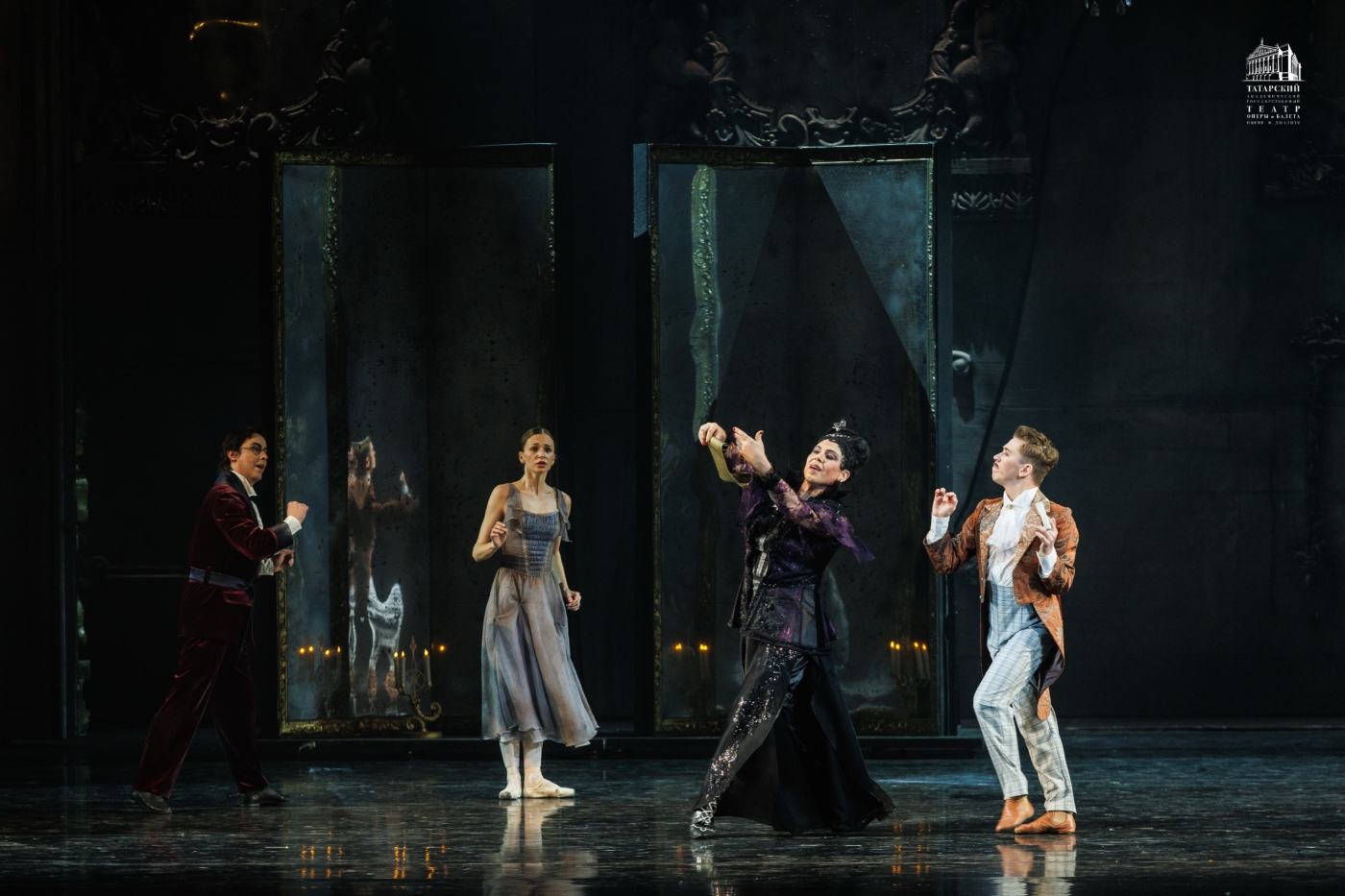
Marco Spada is a love and crime tragicomedy. Its title hero is a thief who loots Roman villages with his gang but remains incognito as he poses as an aristocrat. Not even his daughter, Angela, knows about her father’s clandestine activities. Only by accident, when a friar robbed of the collection identifies him as the culprit, does she learn the truth. Being a gangster’s daughter compromises her marriage plans with Prince Federici, whose proposal she consequently and sadly denies. Unaware of Angela’s true motive, the piqued prince instantly advances his marriage to Marquise Sampietri, daughter of the Governor of Rome, to whom he was already betrothed. But the Marquise has another fervent admirer, Count Pepinelli, the captain of the dragoon regiment. He doesn’t give up and ultimately benefits from Marco Spada’s resolve to restore his daughter’s happiness. In a bold coup, Spada’s men kidnap Count Pepinelli and the Marquise and compel the said friar to marry them. Likewise, kidnapped and without his bride, Prince Federici realizes that he actually loves Angela. Spada, meanwhile, mortally shot by the dragoons, uses a bit of cunning for the last time when he pretends that Angela isn’t his daughter, thus clearing the way for her wedding to Federici.

The complex story unfolded at five venues: a bustling Italian village square (where the peasants complained about Marco Spada’s thievery as he brazenly did exactly that right under their noses), Spada’s spacious palazzo (where all other protagonists sought shelter from the rain unaware of being in the home of a wanted bandit), the Governor of Rome’s palace (in whose grand hall at the sidelines of a splendid ball the friar exposed Spada, whereupon Angela refused Federici, and the latter asked for the Marquise’s hand), the Marquise’s boudoir (where Count Pepinelli tried in vain to prevent the Marquise from marrying Federici until both where abducted by Spada’s cronies), and the gangsters’ cavernous lair (where Spada died and each lover was united with their true match).

All sets and costumes were designed by Lacotte and represented his exquisite taste. At the Governor’s ball, for example, cream-white, champagne-colored, and soft green billowing satin evening dresses, along with dark green and black velvet cloaks and justacorpses, complemented the French chic of the columned hall with a painted, distant cupola that directed the gaze toward divine heights. Similar-looking wigs added to the confusion of who loved whom and to Spada’s perfect cover.
The multi-layered rose-colored curtain that hid the Marquise’s boudoir was of a fabric as delicate as the matters of the heart that would play out behind it. Pepinelli’s heart lost a beat at the sight of the Marquise sitting in front of her vanity table, applying powder with a huge puff, her large veil stretched across the entire floor. Seeing that she was already wearing a wedding dress, he swooned.

As the matinee’s Marco Spada, Denis Zakharov was a perfidious shammer. Lithe and sneaky like a cat, he struck with razor-sharp precision and mind-boggling speed. Robbing a cleric didn’t bother his conscience; it pumped his adrenaline to a level that made him whirl through the trickiest variations so lightning fast that a stolen necklace flung from his pocket. The mere abruptness of his head turns indicated his cunning and unpredictability.
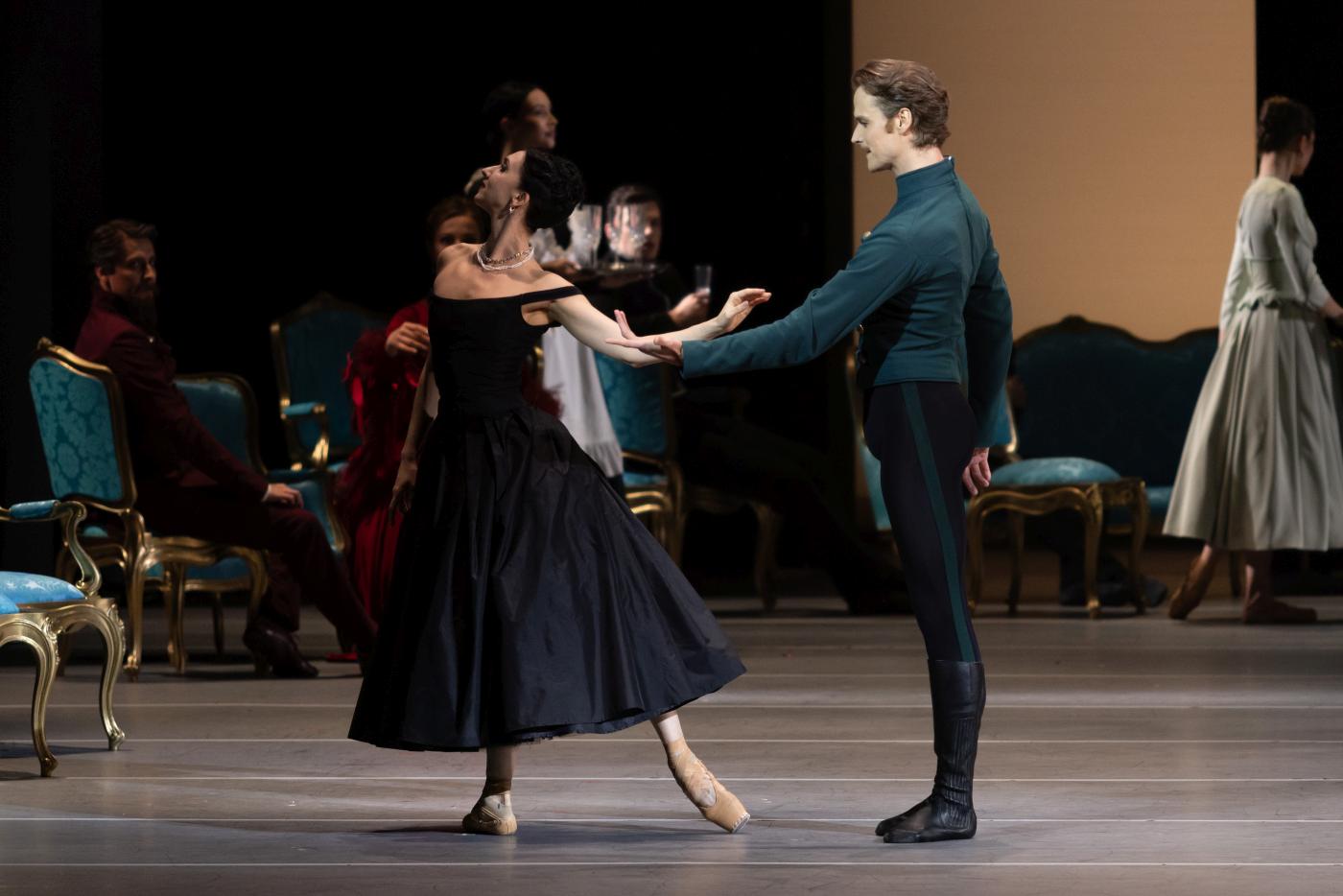
His daughter, Angela (Kristina Kretova), welcomed Federici (Klim Efimov) as proper etiquette demanded. Although deeply in love with him, she reigned in her heart. Her refinement and demeanor were natural, whereas the Marquise’s (Eva Sergeyenkova) pinpoint perfection was meant to stress her status. In public, the Marquise played cat and mouse with Count Pepinelli (Alexei Putintsev, standing in for Ratmir Dzhumaliev on short notice), alluring him and parading his childish assertions of love. Ultimately, though, she seemed very glad to marry him. Despite being snappy and very correct, Putintsev’s Pepinelli was quite ineffective as a law enforcer. His dragoons marched with tiny steps like cute tin soldiers, chased the peasants instead of the bandits, and failed to detect the secret doors in Spada’s palazzo, behind which the scoundrels hid. Finally, though, when hunting down Spada, their steely determination paid off.
Efimov’s Federici’s flurry of steps as he entered the village square, quill and paper in hand, must have correlated with the abundance of his scribblings (the content of which remained unclear). His solo during the tête-à-tête with Angela was fine but not sparkling. Yet the pas de deux (one of several choreographic amendments Lacotte made for the Bolshoi) he danced with her at the ball was mesmerizing. Its elegance and esprit were food for the soul.

The evening’s Marco Spada (Artem Ovcharenko) quickly changed faces. As a thief, his life revolved around only himself. Toward whatever direction his legs darted or arms reached, their focus always came back to the same point, which in a metaphorical sense was his coffers. He seemed high on forays and, when successful, boisterously dived off the crime scene. Barely at home, a firework of steps relieved him from bursting from cockiness. Spada’s terrific turns a la seconde after taking out Count Pepinelli (Filippo Ferdinando Pagani) with some generous drinks made me think of a roulette game he feverishly controlled. At his core, however, Ovcharenko’s Spada was a loving father. His daughter (Elizaveta Kokoreva) combined everything one could wish for in a child. Charming and graceful at heart, she was playful yet also serious, bursting with energy, and an inborn leader. The entire robber gang bent their knees to her. Prince Federici (Dmitry Vyskubenko) made her fly like a feather. At the ball, Vyskubenko’s jumps briefly lacked power, but then he soared again through his next diagonal. I especially liked his sharp, angry jumps in the village square, which seemed to compensate for his displeasure at finding his fiancée (Maria Vinogradova) with Pepinelli. He had reason indeed. Pepinelli and the Marquise went together as smoothly as cream, and Pepinelli’s skyrocketing pirouettes and vigorous jumps testified to his potency. The force of his love declaration made the Marquise cover her ears. She wanted to hear nothing of the sort. It made her heart ache.

The unfortunate Friar Borromeo was played by Yuri Ostrovski and Denis Savin; Nikita Elikarov and Andrei Sitnokov portrayed the Governor of Rome. Of the couple (Uliyana Moksheva and Akib Anvar/Sofia Maymula and Ivan Sorokin) whose wedding was part of the village bustle, Anvar’s imposing jumps stuck with me. He was a groom as proud as a peacock. Many buoyant children (students of the Moscow State Academy of Choreography) participated in the festivities along with a good-tempered dog and an obedient donkey that pulled the wedding cart.
Although a known asset of the Bolshoi, the corps’ impeccable unity again impressed me. It showed the beauty of Lacotte’s movement patterns to the fullest.

Alexey Bogorad conducted the Bolshoi Orchestra on both occasions, keeping his baton finely in tune with the dancers.

Links: Website of the Bolshoi Theatre
Marco Spada—The Return
A Ticket to the Bolshoi— The Return of Marco Spada
David Hallberg about Marco Spada
Editing: Kayla Kauffman


Traumata

“Planida” (“Russian Character”/“Nerve”/“Francesca da Rimini”)
MuzArts
Maly Theatre/Alexandrinsky Theatre
Moscow/St. Petersburg, Russia
September/November 2025 (video)

by Ilona Landgraf
Copyright © 2026 by Ilona Landgraf

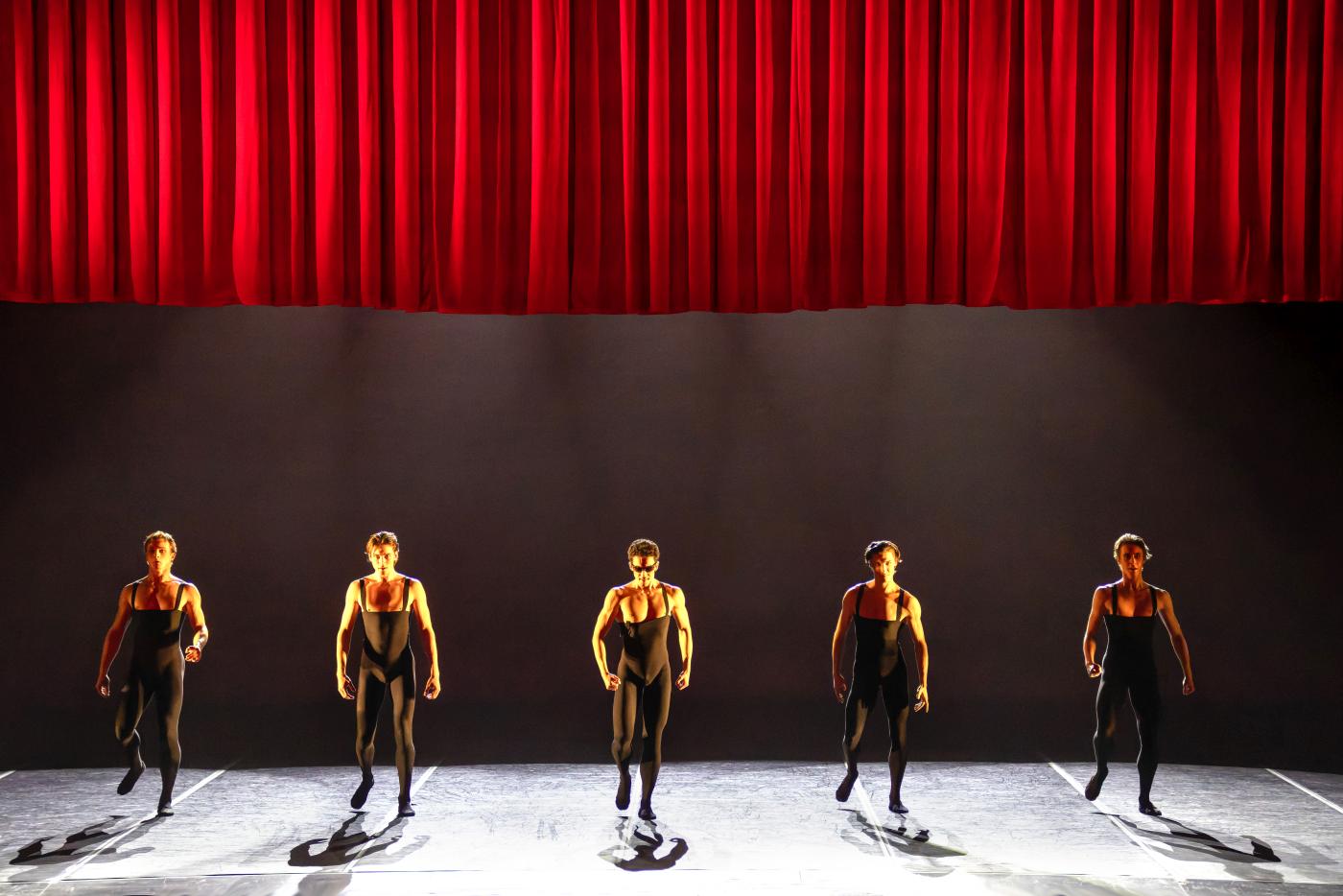
1. A.Putintsev (Yegor Dryomov), “Russian Character” by P.Glukhov, MuzArts 2026 © MuzArts/B.Annadurdiev2. A.Putintsev (Yegor Dryomov), “Russian Character” by P.Glukhov, MuzArts 2026 © MuzArts/B.Annadurdiev Tomorrow, MuzArts’ triple bill Planida returns to Moscow’s Maly Theatre where it premiered in September 2025. It combines two old pieces—Nerve by Anna Shchekleina and Francesca da Rimini by Yuri Possokhov—along with Russian Character, a then-new creation by Pavel Glukhov. As in previous productions, dancers of the Bolshoi Ballet will be on stage. Thanks to MuzArts’ executive producer, Daria Faezova, I was able to watch videos of the program recorded at the Maly Theatre and St. Petersburg’s Alexandrinsky Theatre. Continue reading “Traumata”

Live Life to the Fullest

“Zorba the Greek”
Tartar State Academic Ballet
Jalil Opera and Ballet Tartar State Academic Theatre
Kazan, Russia
November 2025 (video)

by Ilona Landgraf
Copyright © 2026 by Ilona Landgraf

1. “Zorba the Greek” by L.Massine, Tartar State Academic Ballet 2025 © Tartar State Academic Ballet “A man needs a little madness or never dares to cut his ropes and be free,” urged Zorba the buttoned-up aristocrat Basil, in Michael Cacoyannis’s 1964 film Zorba the Greek. The film is based on Nikos Kazantzakis’s 1946 novel Life and Times of Alexis Zorbas, won three Academy Awards, and featured Anthony Quinn as Zorba and Alan Bates as Basil. Zorba, an earthy and boisterous peasant, had this kind of madness and, on their venture to Crete, instilled it in Basil as well.
In addition to the film, the novel inspired a musical, radio play, telemovie, and ballet, which was choreographed by Lorca Massine (Léonide Massine’s son), includes music by Mikis Theodorakis, and premiered at the Arena di Verona in 1988. Vladimir Vasiliev and Gheorghe Iancu danced the leading roles. Continue reading “Live Life to the Fullest”

Believe in Miracles

“The Nutcracker. Waiting for a Miracle”
Bolshoi Ballet
Bolshoi Theatre
Moscow, Russia
December 29, 2025 (documentary)

by Ilona Landgraf
Copyright © 2026 by Ilona Landgraf

1. E.Kokoreva (Marie), D.Savin (Drosselmeier), and ensemble, “The Nutcracker” by Y.Grigorovich, Bolshoi Ballet 2025 © Bolshoi Theatre/D.YusupovOf the many special moments in Yuri Grigorovich’s The Nutcracker, there’s one you shouldn’t miss: when the Christmas tree is growing, and Marie’s transformation takes place. Then you need to make a wish. At least, that’s the insiders’ tip from the Bolshoi Ballet’s artists involved in the production.

Grigorovich’s The Nutcracker premiered at the Bolshoi Theatre in 1966 and was performed for the eight hundredth time earlier in December. Perhaps that’s why the Russian Channel One broadcast a one-hour documentary about The Nutcracker at the end of December. The film outlines the plot, provides insight into the music, set, and costumes, and looks at sixty years of performance history, during which nothing changed. Numerous coaches and ballet masters guarantee that Grigorovich’s legacy is preserved and kept alive. Continue reading “Believe in Miracles”

Flimsy

“Marie Antoinette”
Vienna State Ballet & Volksoper Wien
Volksoper Wien
Vienna, Austria
December 20, 2025

by Ilona Landgraf
Copyright © 2025 by Ilona Landgraf

1. E.Bottero (Marie Antoinette) and A.Garcia Torres (Ludwig XVI), “Marie Antoinette” by T.Malandain, Vienna State Ballet 2025 © Vienna State Ballet/A.Taylor2. R.Horner (Queen Mother), “Marie Antoinette” by T.Malandain, Vienna State Ballet 2025 © Vienna State Ballet/A.TaylorThierry Malandain’s Marie Antoinette was the Vienna State Ballet’s second premiere under Alessandra Ferri’s directorship. The one-act piece, created for the Malandain Ballet Biarritz, received its premiere in 2019 at the Palace of Versailles’s Opéra Royal. Its stage was inaugurated in 1770 during Marie Antoinette’s lavish wedding to Louis Auguste, heir to the throne.
Marie Antoinette follows the life of the then only fourteen-year-old Dauphine of France until her execution by guillotine in 1793. That’s twenty-three years of life (nineteen of which Marie Antoinette was Queen consort) to narrate. But Malandain tells little, and the ninety minutes of Marie Antoinette dragged on. Continue reading “Flimsy”

Doing the Company Proud

“Gala pour les 50 ans de l’Académie Princess Grace”
L’Académie Princesse Grace
Salle Prince Pierre, Grimaldi Forum
Monte Carlo, Monaco
December 19, 2025

by Ilona Landgraf
Copyright © 2025 by Ilona Landgraf

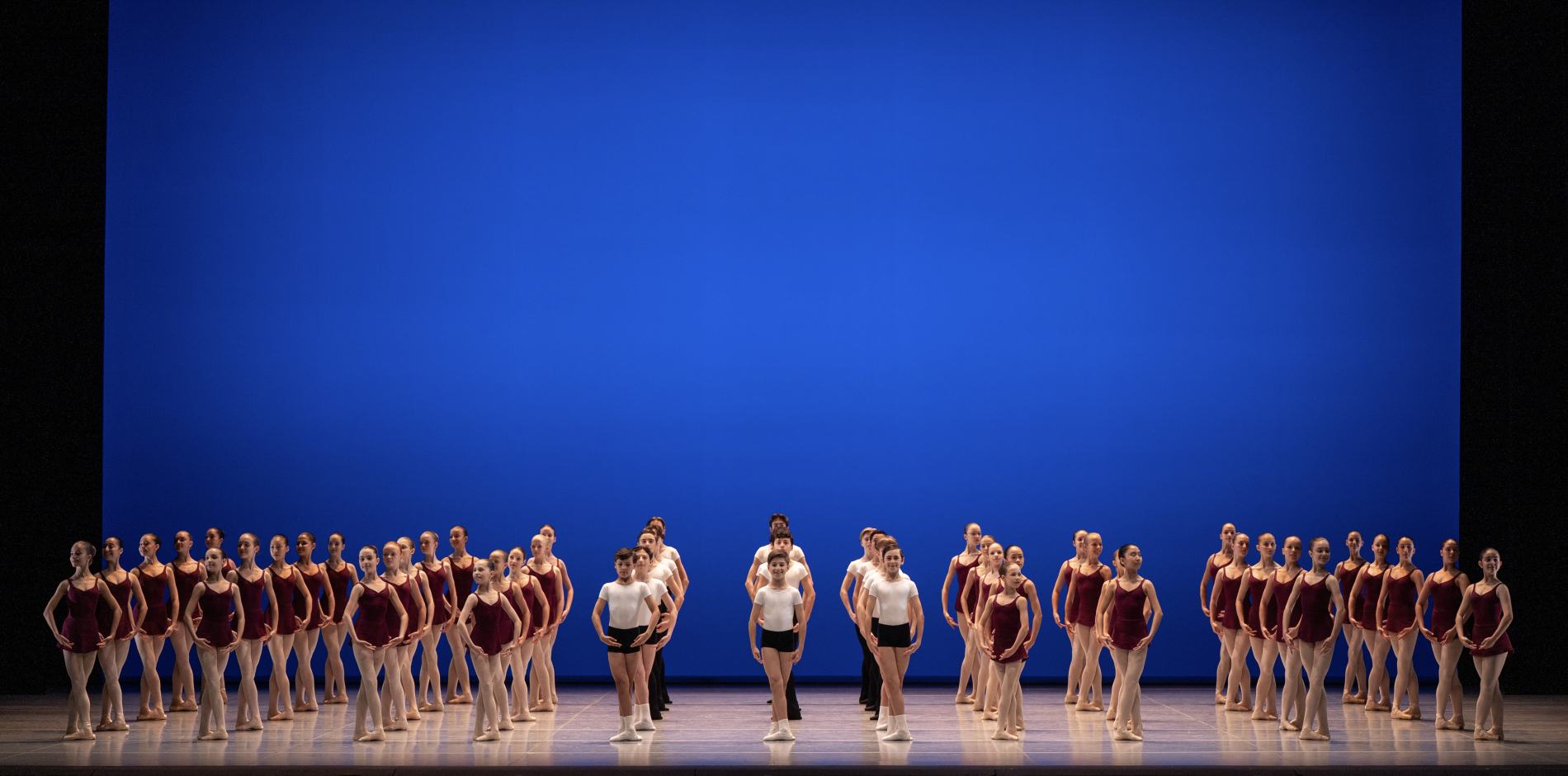
1. Students of the Academy Princess Grace, “We’ve Got Rhythm!” by M.Rahn, L’Académie Princess Grace 2025 © A.BlangeroLes Ballets de Monte-Carlo has much to celebrate this season: the company’s fortieth anniversary and the associated Academy Princess Grace’s fiftieth anniversary. The company will host a gala in July 2026, and the Academy’s gala took place last Friday. It combined a “best of” selection of works performed by the Academy during the past sixteen years. Princess Caroline of Hanover, president of Les Ballet de Monte-Carlo, attended the gala.

The legs of seven girls flew high to George Gershwin’s I’ve got Rhythm, and the joy and confidence in their faces, as well as the freedom, dash, and buoyancy of their movements, left no doubt that this would be a pleasant evening. Michel Rahn’s 2011 neoclassical choreography of almost the same title, We’ve Got Rhythm!, looked Balanchine-esque and employed a large group of male and female students. Continue reading “Doing the Company Proud”

“A Splendor for the Eyes”

“The Sleeping Beauty”
The Australian Ballet
Sydney Opera House/Joan Sutherland Theatre
Sydney, Australia
December 16, 2025 (live stream)

by Ilona Landgraf
Copyright © 2025 by Ilona Landgraf

1. B.Bemet (Princess Aurora) and ensemble, “The Sleeping Beauty” by D.McAllister after M.Petipa, The Australian Ballet 2025 © D.Boud According to the Australian Ballet’s artistic director, David Hallberg, The Sleeping Beauty is “a splendor for the eyes.” The production, which originated ten years ago under the directorship of Hallberg’s predecessor, David McAllister (who also contributed choreography based on Petipa’s original), is more; it is food for the soul.

As if zooming in on the painting of a distant palace projected on the curtain, the first scene showed the royal writing cabinet, where the whimsical Catalabutte (Jarryd Madden) omitted Carabosse from the list of invitees to Princess Aurora’s christening party. The curve of the painting’s frame recurred in the shape of the banisters that led down to the royal hall. Jon Buswell’s lighting increased the impression of paintings in motion. Continue reading ““A Splendor for the Eyes””

Lasting Icons

“Two Annas”
MuzArts
Tovstonogov Bolshoi Drama Theatre
St. Petersburg, Russia
December 2025 (video)

by Ilona Landgraf
Copyright © 2025 by Ilona Landgraf

 1. P.Malikova (Anna Akhmatova), E.Sevenard (Anna Akhmatova), and D.Potaptsev (Nikolai Gumilev), “Akhmatova” by Y.Possokhov, MuzArts 2025 © Diaghilev P.S. Festival/M.Vilchuk The production company MuzArts, founded in 2014 to showcase the Bolshoi Ballet’s prima ballerina, Svetlana Zakharova, has grown into a vital force of Russia’s ballet scene. Their recent production, Two Annas, was supported by the Diaghilev P.S. International Festival of Arts, a prominent, intercultural, cross-genre event that has been held in St. Petersburg since 2009. Two Annas premiered at St. Petersburg’s Tovstonogov Bolshoi Drama Theatre this February and received its Moscow premiere at the Maly Theatre. Thanks to the MuzArts’s director, Yuri Baranov, I was able to watch a video of the production. Continue reading “Lasting Icons”

Adventurous

“Peter Pan”
Vienna State Ballet & Volksoper Wien
Volksoper Wien
Vienna, Austria
November 22, 2025

by Ilona Landgraf
Copyright © 2025 by Ilona Landgraf

1. Ensemble, “Peter Pan” by V.Orlić, Vienna State Ballet/Volksoper Wien 2025 © A.Taylor Vienna’s Volksoper buzzed with excitement shortly before the performance of Vesna Orlić’s dance adaptation of Peter Pan. The great many children in the auditorium fell into eager silence when a rousing fanfare opened the ballet.

Orlić, leading ballet master of the Volksoper ensemble, began choreographing in 2006. For her 2019 Peter Pan, she was justifiably awarded Austria’s music theater prize. The production, which is based on James Matthew Barrie’s 1911 novel Peter and Wendy (known as Peter Pan), is witty, gripping, and great entertainment for the young and the old. I don’t know why the company’s former artistic director, Martin Schläpfer, shelved it. His successor, Alessandra Ferri, instantly decided on a revival. Continue reading “Adventurous”

Mockery

“Die Fledermaus” (“The Bat”)
Vienna State Ballet
Vienna State Opera
Vienna, Austria
November 21, 2025

by Ilona Landgraf
Copyright © 2025 by Ilona Landgraf

1. T.Afshar (Johann) and O.Esina (Bella), “Die Fledermaus” by R.Petit, Vienna State Ballet 2025 © Vienna State Ballet/A.Taylor2. T.Afshar (Johann) and O.Esina (Bella), “Die Fledermaus” by R.Petit, Vienna State Ballet 2025 © Vienna State Ballet/A.Taylor For Johann Strauss II’s bicentennial, the Vienna State Ballet revived Roland Petit’s 1979 ballet adaptation of Strauss’s famous operetta, Die Fledermaus (The Bat). It’s accompanied by a “best of” selection of compositions by Johann Strauss II, his father, Johann Strauss I, and his brother, Josef. The score’s oomph and gaiety are infectious. Strauss’ music, particularly the Viennese waltzes (of which Die Fledermaus has plenty), is part of the DNA of the Vienna State Opera’s orchestra, and under Luciano Di Martino’s baton, it fizzed like champagne. Melodies rose boisterously to a tipping point, balanced provocatively on the edge, and rippled down with relish as if on a rollercoaster ride. Continue reading “Mockery”

Applied Faith

“Romeo and Juliet”
Hungarian National Ballet
Hungarian State Opera
Budapest, Hungary
November 8-9, 2025 (evening performance and matinee)

by Ilona Landgraf
Copyright © 2025 by Ilona Landgraf

 1. M.Yakovleva (Juliet), L.Scrivener (Romeo), and ensemble; “Romeo and Juliet” by L.Seregi, Hungarian National Ballet 2025 © A.Nagy/Hungarian State OperaMost ballet companies have a version of Romeo and Juliet. The Hungarian National Ballet’s version, by László Seregi (1929-2012), has been on the program regularly since its premiere in 1985. A crowd puller, the opera house was sold out at both performances I watched.

Seregi’s name is well known to Hungarian ballet lovers. Initially trained as a folk dancer, he joined the opera’s corps de ballet when it was short on artists during the 1956 revolution. In 1977, he became the company’s director but, feeling burdened by his duties, suffered from an enduring artistic crisis. Continue reading “Applied Faith”

Reborn

“Callirhoe”
Vienna State Ballet
Vienna State Opera
Vienna, Austria
October 19, 2025 (live stream)

by Ilona Landgraf
Copyright © 2025 by Ilona Landgraf

1. M.Young (Callirhoe) and ensemble, “Callirhoe” by A.Ratmansky, Vienna State Ballet 2025 © Vienna State Ballet/A.Taylor 2. V.Caixeta (Chaireas) and ensemble, “Callirhoe” by A.Ratmansky, Vienna State Ballet 2025 © Vienna State Ballet/A.TaylorThe title of Martin Schläpfer’s farewell choreography, Pathétique, summarized the condition of the Vienna State Ballet he left behind after five years as its artistic director. His successor, Alessandra Ferri, restructured the company. Some dancers left, and others joined, some of whom were returnees. Last weekend, she presented the first premiere under her reign, Alexei Ratmansky’s Callirhoe (which he choreographed for ABT in 2020 under the title Of Love and Rage). It felt like the rebirth of the company. I cannot remember when I last saw the Vienna State Ballet perform with such force. Congratulations! Continue reading “Reborn”

Watered Down

“Le Corsaire”
Korean National Ballet
Forum Ludwigsburg
Ludwigsburg, Germany
October 18, 2025

by Ilona Landgraf
Copyright © 2025 by Ilona Landgraf

1. Ensemble, “Le Corsaire” by J.Song, Korean National Ballet 2025 © Korean National BalletLast weekend, the Korean National Ballet presented Le Corsaire at the Forum Ludwigsburg. The tour stopped at Suejin Kang’s, the company’s artistic director, former home in the Stuttgart region, where she is a cherished former principal of Stuttgart Ballet. The senior guard of Stuttgart’s ballet circle therefore flocked to the performance as if it were a family gathering.

The Koreans’ Le Corsaire premiered in 2020 and is by Jungbin Song, a soloist of the company who began choreographing in 2016. He kept some of Petipa’s signature choreography (such as the tender pas de deux of Medora and Conrad in Act II; the pas de trois of Medora, Conrad, and Ali; and the Grand Pas de Trois des Odalisques) but rewrote the plot significantly. Continue reading “Watered Down”

The Art of Embarrassing Oneself

“Stravinsky in Paris” (“Farewell in Paris”/“Le Sacre du Printemps”)
State Ballet of the Gärtnerplatztheater, Munich
Forum Ludwigsburg
Ludwigsburg, Germany
July 30, 2025

by Ilona Landgraf
Copyright © 2025 by Ilona Landgraf

1. M.J.Perko (Jerry) and ensemble, “Farewell in Paris” by J.Verbruggen, State Ballet of the Gärtnerplatztheater 2025 © M.-L.Briane Since 1932, the city of Ludwigsburg in Baden-Württemberg has hosted an annual summer festival featuring various cultural genres. Many events are held at the Ludwigsburg Palace, a vast complex that served as the Duke of Württemberg’s residence after its completion in 1733. Munich’s State Ballet of the Gärtnerplatztheater, whose Stravinsky in Paris marked the festival’s final dance event, performed at the Ludwigsburg Forum near the palace. Last October, the Gärtnerplatztheater showed Troja (“Troy”) by the Greek-born Andonis Foniadakis on its tour to Ludwigsburg. Its display of sexist abuse was annoying. As the press praised Stravinsky in Paris as a “confetti rocket,” I was curious about its “sophisticated dance and music.”
Stravinsky in Paris, a co-production of the Gärtenerplatztheater and the Ludwigsburg Festival, recently premiered in Munich. The double bill combines Jeroen Verbruggen’s Farewell in Paris and Marco Goecke’s Le Sacre du Printemps.
The nonchalant steps of the straw-hatted men who opened Farewell to Paris seemed inspired by a blend of Broadway style and Parisian savoir vivre. In their pale pink of their blazers and pants, they seemed to belong in a little girl’s dream (costumes by Emmanuel Maria). Continue reading “The Art of Embarrassing Oneself”

Something Is Going On

“Twilight”/“Bronia”
Les Ballets de Monte Carlo
Salle Garnier Opéra de Monte-Carlo
Monte Carlo, Monaco
July 18, 2025

by Ilona Landgraf
Copyright © 2025 by Ilona Landgraf

1. Ensemble, “Twilight” by L.Timulak, Les Ballets de Monte-Carlo 2025 © A.BlangeroLes Ballets de Monte-Carlo closed the season with two new creations: Twilight by Lukáš Timulak and Bronia by Mattia Russo and Antonio de Rosa. So far, all productions I’ve seen in Monaco have been performed at the Grimaldi Forum, a modern glass and steel complex whose Salle des Princes lies below sea level. The new double bill was, however, presented at the Salle Garnier at the Opéra de Monte-Carlo, which is next door to the famous casino. A miniature replica of the Paris Opera, the Salle Garnier is a red and gold Italian theater built in the Second Empire style. It was here that Sergei Diaghilev’s Ballets Russes took up residence in 1911. Until the First World War, Diaghilev’s company rehearsed, prepared new productions, and stored sets and props in Monte-Carlo. On April 9, 1911, the Ballets Russes gave its first performance, which featured Scheherazade and Giselle. On April 19th, Nijinsky and Karsavina gave their debut in Fokine’s Le Spectre de la Rose. This history was significant in the context of the recent premiere. Continue reading “Something Is Going On”