Resilient

“Masurca Fogo”
Tanztheater Wuppertal
Opera House
Wuppertal, Germany
October 02, 2026

by Ilona Landgraf
Copyright © 2026 by Ilona Landgraf
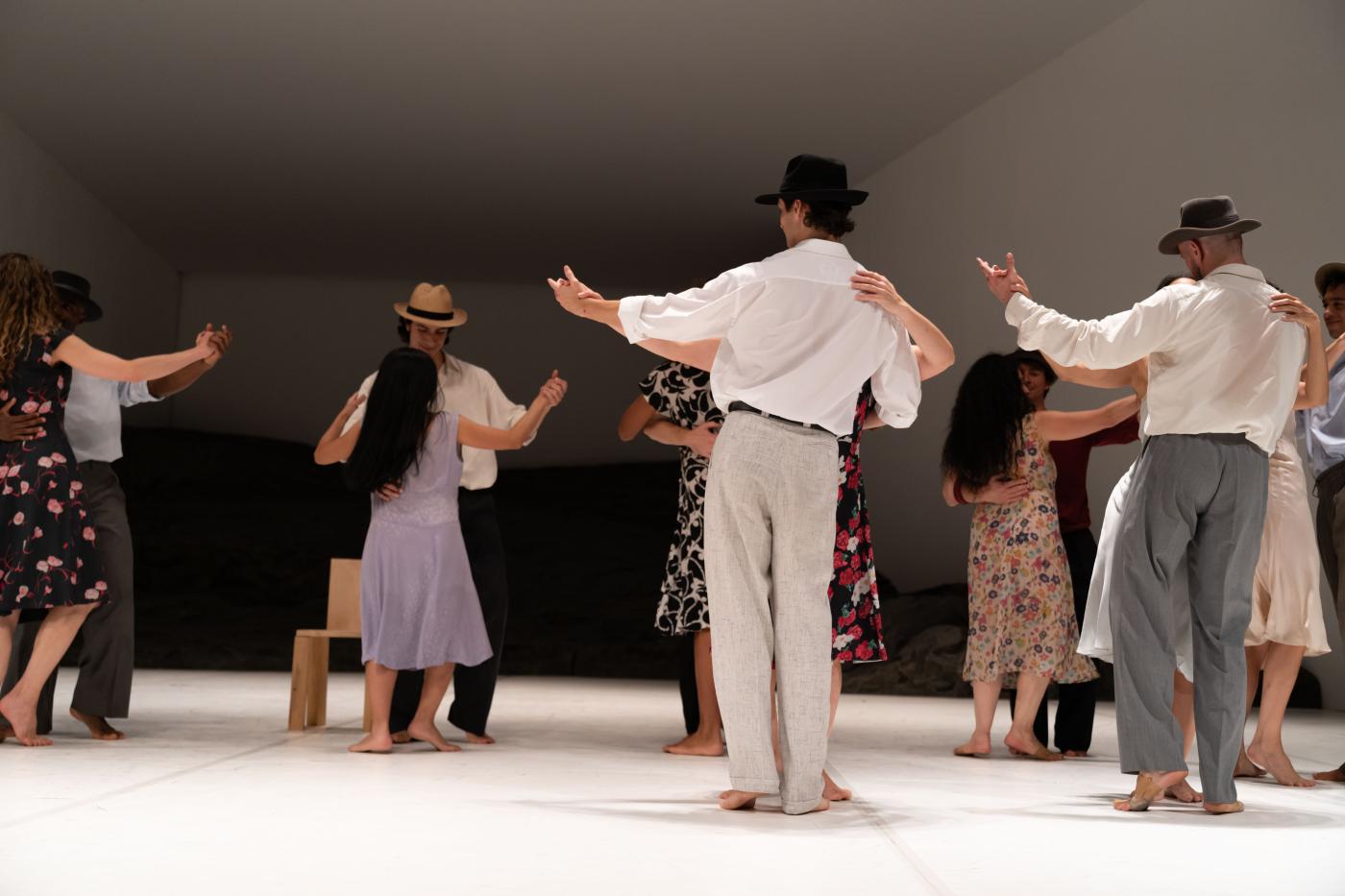
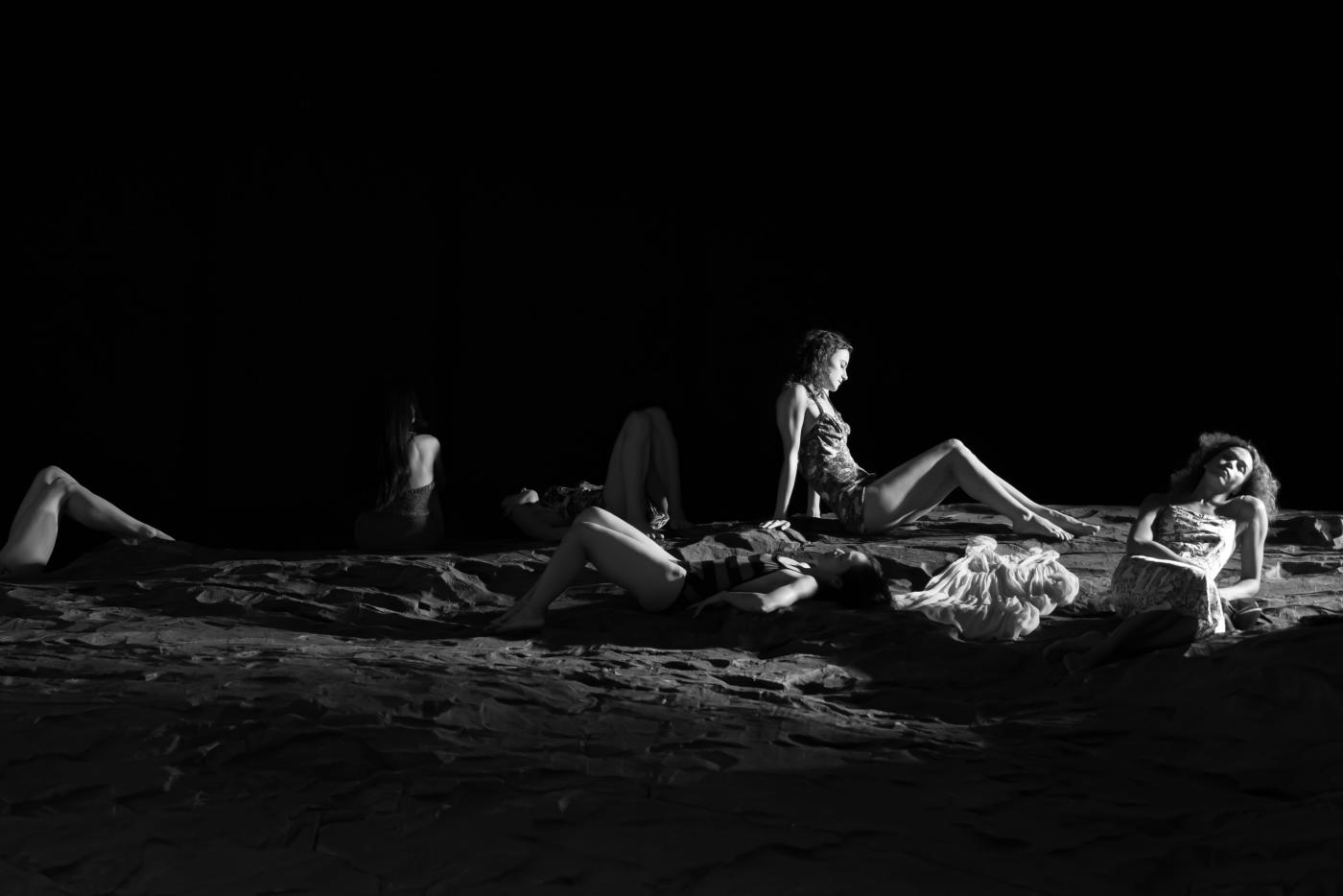
1. Ensemble, “Masurca Fogo” by P.Bausch, Tanztheater Wuppertal 2026 © A.BarbariniThe last time I saw the Tanztheater Wuppertal on their home stage was in 2014, five years after Pina Bausch’s untimely death. Gloom weighed on the Opera House. Its artistic heart had stopped beating, and tight finances worsened the outlook.

Longstanding members kept the company going; Dominique Mercy and Robert Sturm, and later Lutz Förster, stepped in as interim artistic directors. In 2017, outside expertise should have revived the company. Adolphe Binder, former artistic director of the Komische Oper Berlin’s dance theater and the Danskompanie Göteborg, was engaged but left after only one year due to differences with management. She was followed by Bettina Wagner-Bergelt, the former right-hand woman of the Bavarian State Ballet’s artistic director, Ivan Liška. Wagner-Bergelt spearheaded the inclusion of a Bausch piece (Für die Kinder von gestern, heute und morgen) in the Bavarian State Ballet’s repertory. It was the second company, after the Ballet de l’Opéra de Paris, that was allowed to dance Bausch choreography. The piece was the highlight of Liška’s farewell season and paved the way for Wagner-Bergelt’s subsequent assignment to Wuppertal.
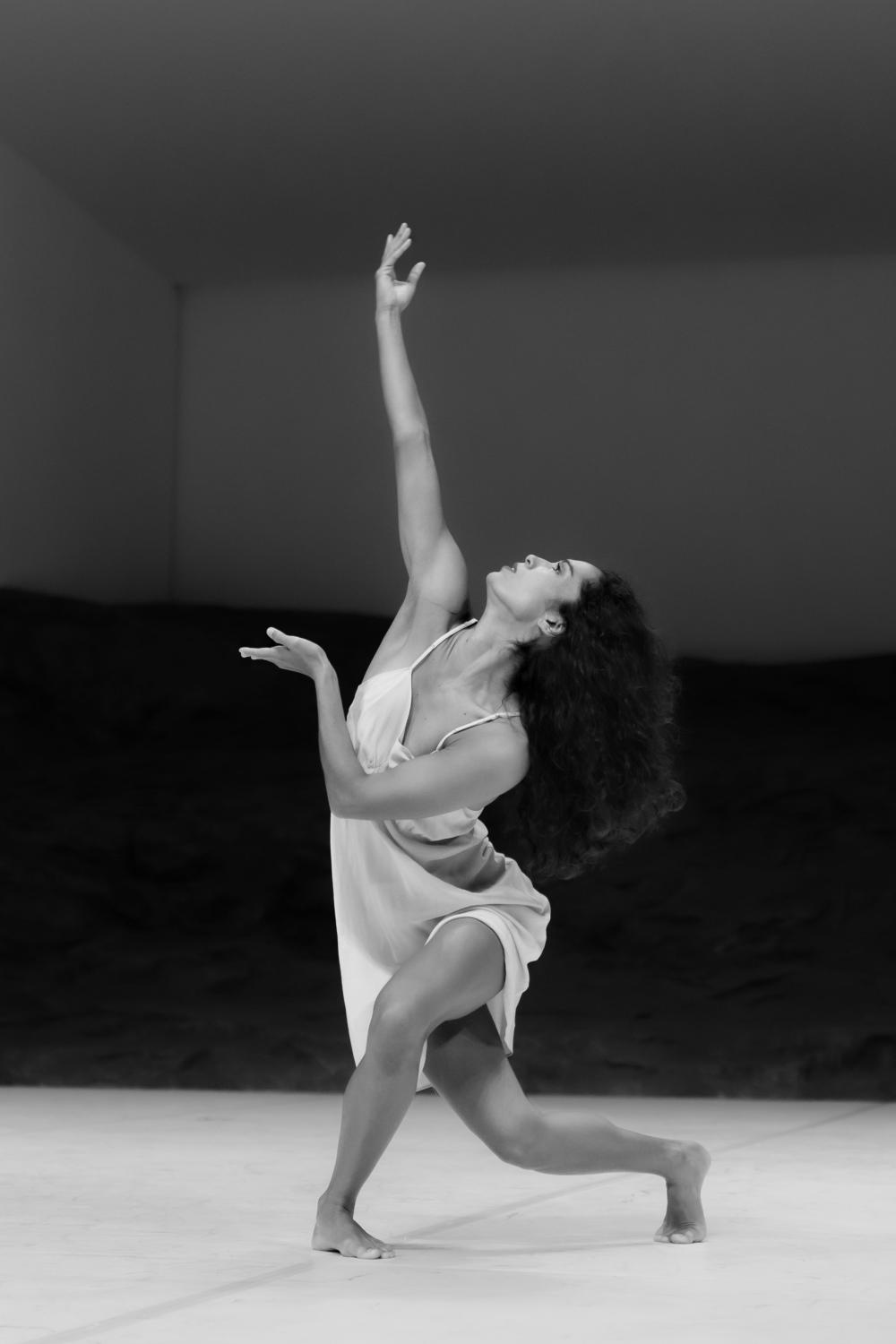
3. C.Ortiz Arraiza, “Masurca Fogo” by P.Bausch, Tanztheater Wuppertal 2026 © A.Barbarini 2. Ensemble, “Masurca Fogo” by P.Bausch, Tanztheater Wuppertal 2026 © A.BarbariniIn any case, she did a good job there and stayed three seasons instead of the planned two. Without her infusion of fresh energy, the company might not have endured what came next: Boris Charmatz’s double tenure as intendant and artistic director. Although chosen for the long run, the French choreographer left by mutual consent three years into his eight-year contract. Behind the scenes, it’s said that he was more interested in self-promotion than in Bausch’s oeuvre. During Charmatz’s era, Tanztheater Wuppertal’s general manager, Daniel Siekhaus, stepped in, but the artistic director position remains vacant until the future of the new Pina Bausch Center is decided. Funds for its construction should be approved this autumn, but money is tight again.

Times are anything but rosy, but the atmosphere at last weekend’s revival of Masurca Fogo (Portuguese for “Mazurka of Fire”) was effervescent. The piece emerged from the company’s residence in Lisbon during the EXPO 98 as a co-production of the EXPO, the Goethe-Institut Lisbon, and the company.
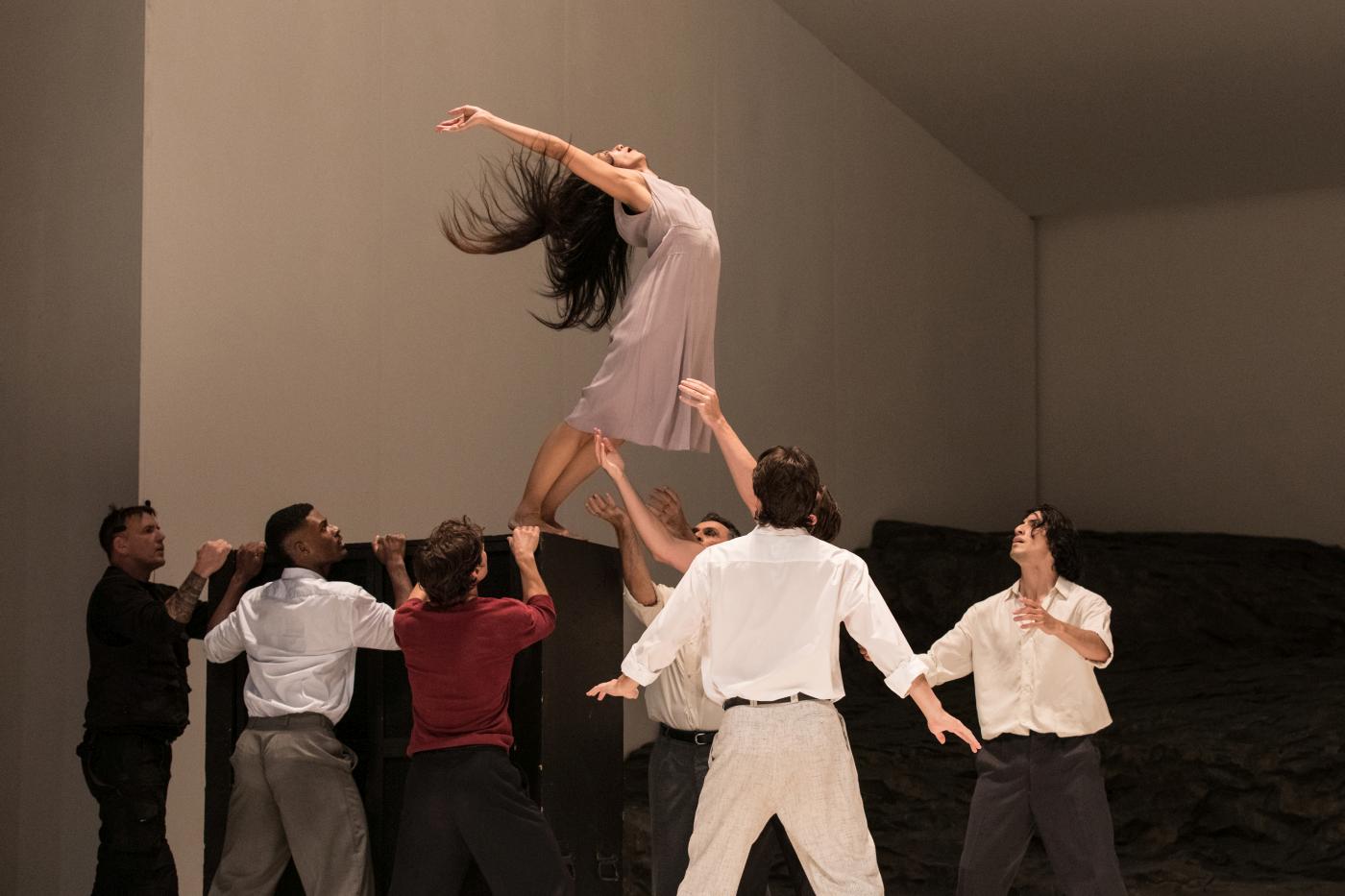
4. Ensemble, “Masurca Fogo” by P.Bausch, Tanztheater Wuppertal 2026 © E.RodoulisAlthough the bare rock of Peter Pabst’s set design at the rear stage recalls a solidified lava stream rather than the rock formations of Lisbon’s coast, there’s no doubt that Masurca Fogo’s climate is hot and the sea lies behind the white, box-like backdrop. (In a video, a high surf surged at the rock.) Barefoot dancers climb downhill or nimbly spurt uphill to disappear in an opening at the rock plateau’s right corner. They sunbathe, rehearse mermaid-like syn-swimming, or stretch on the rock for a smoke. One woman, balancing a red plastic bucket on her head (a nod to the huge flower baskets women carry as headdresses at the Festa das Rosas in northern Portugal?), steps down gracefully, her outstretched arms draped with more plastic buckets and bowls. She smiles like a composed queen as a man lifts her, keeping the buckets and bowls perfectly still.
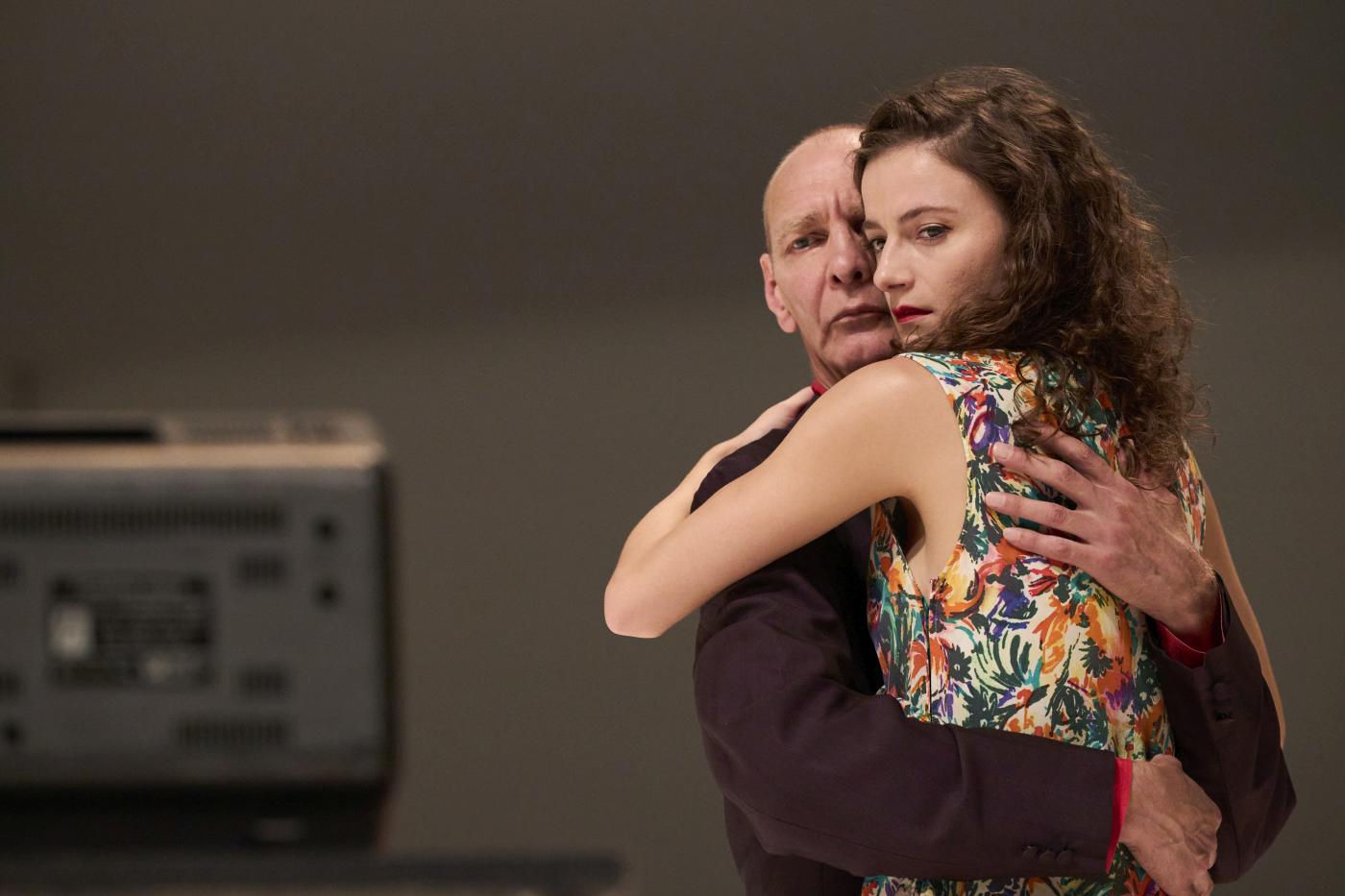
5. A.Berezin and T.Drury, “Masurca Fogo” by P.Bausch, Tanztheater Wuppertal 2026 © E.Rodoulis Water is a key element, whether spouted from mouths like living fountains, poured from a vase into a spread skirt (along with the flowers), or thrown from drinking glasses like balls in a game. Giddy giggles accompany the splishing and splashing. One woman has to pick fruits from a water-filled bowl with her mouth; another splashes her armpits and crotch with water from a wash bowl, enjoying the refreshment. Men hold a transparent plastic foil that turns into an impromptu, one-lane swimming pool with a water level so low it can only be used for belly skidding. Nevertheless (or for this very reason?), the bathers have fabulous fun. Next to them, a woman lounging in a bathtub behind a mountain of foam only becomes noticeable when she hands washed dishes to a diligent man to dry them. After everyone parts, a walrus stays behind, breathing heavily and disregarding the fodder fish a man scattered (other animals included a real hen with fletched legs that picked watermelon, a small, green toy animal I couldn’t identify, and videos of flamingo flocks and galloping cattle herds, whose backs merged to a torrent.
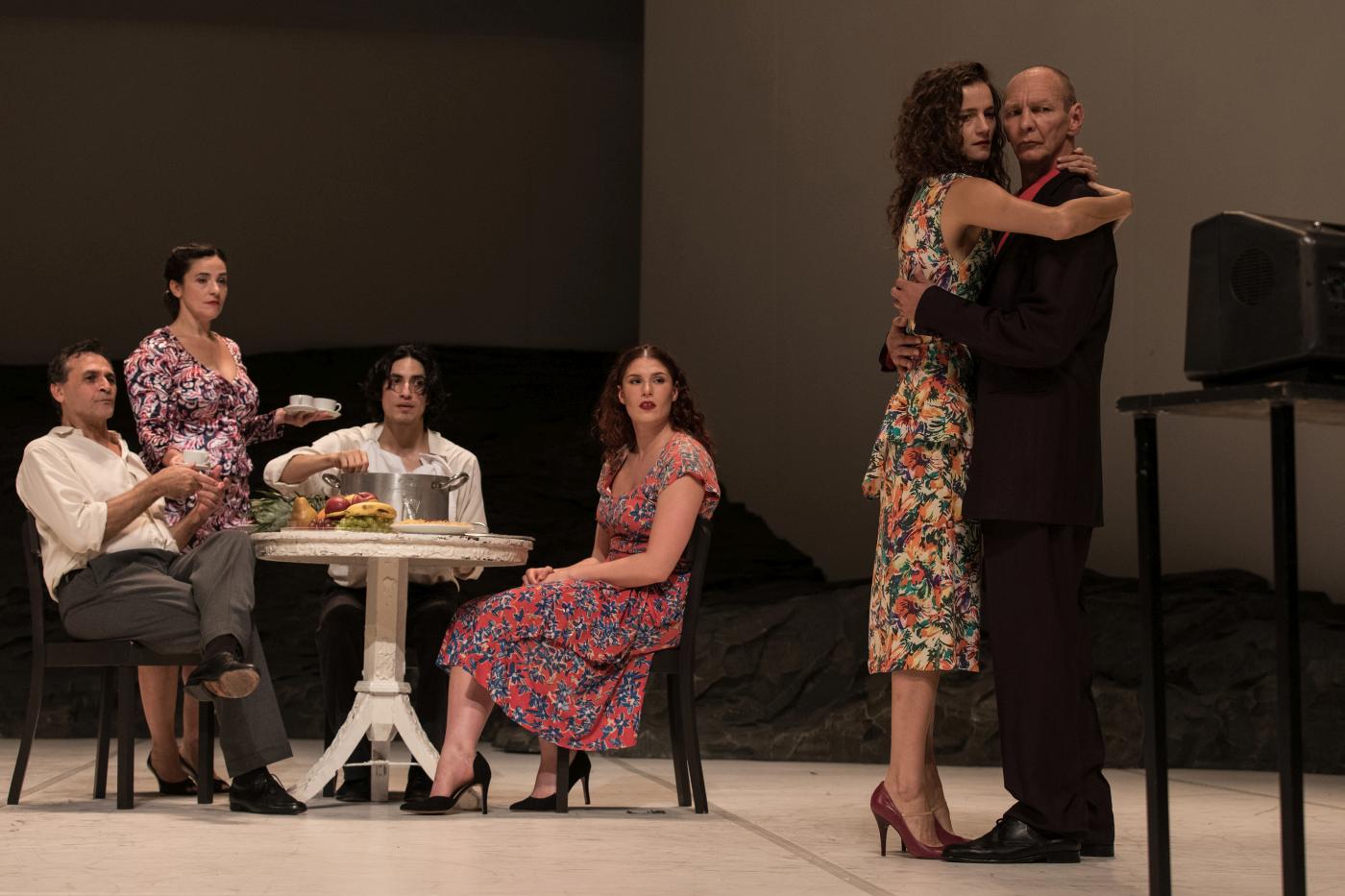
6. Ensemble, “Masurca Fogo” by P.Bausch, Tanztheater Wuppertal 2026 © E.RodoulisExcept for one frantically screaming man who hurls a roll of toilet paper and attempts to strangle a front row audience member, life is carefree and, most importantly, sensual. A mic amplifies a woman’s velvety “Ah” as she is handed over a row of men lying on the floor or soars like an icon when carried by two men. Two other women scream as if intensely aroused by sitting on a chair that was swiveled like a carousel.
Apart from a man’s explicit lecture on the three phases of an orgasm—a negative (“Oh no!”), a positive (“Oh yes!”), and a metaphysical (“Oh my god!”)—fantasy further develops the insinuations on stage. Unbuttoning a man’s shirt excites a woman to an extent that she runs offstage, moaning with lust once out of sight. A man’s cigarette hanging limply after it is accidentally dipped in water is suddenly reminiscent of a fading erection. Couples dance in close embraces on stage as well as in the auditorium, spreading erotic vibes. Twice they come to the stage in a line, their hips swaying in the rhythm of a slow mazurka. (Pedro Almodóvar borrowed the scene for his 2002 movie Talk to Her.) The second time, their intimacy is such that summer dress straps gradually drop and naked chests slip out of shirts. Then the scene loses momentum. For much too long, the lovers snuggle up to one another on the floor while flowers blossom above their heads in close-up videos. The Hollies’ All the Air That I Breathe didn’t help maintain the romance but rather sounded kitschy.
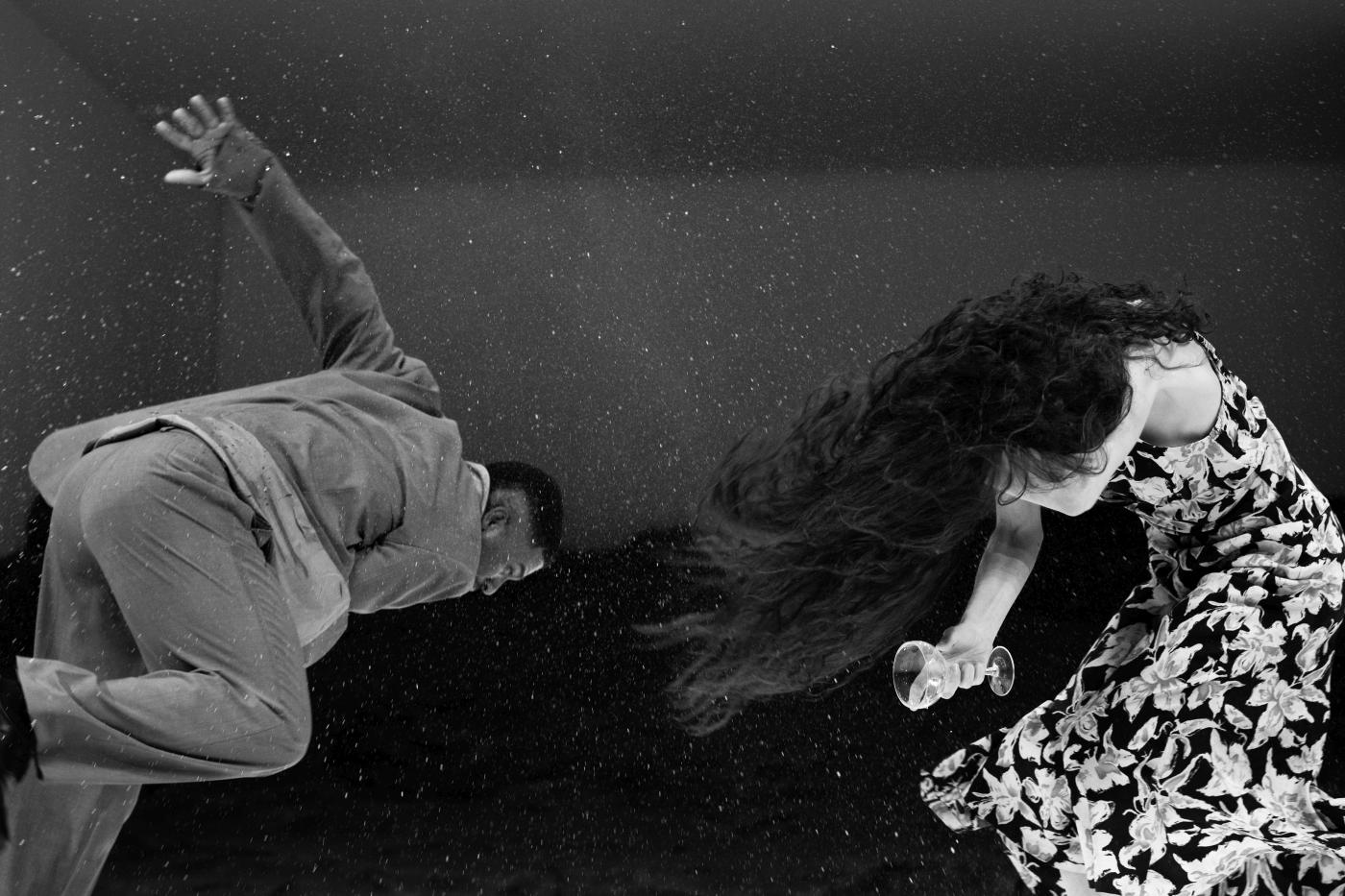
7. W.Lima de Alcantara and M.G.Delle Donne, “Masurca Fogo” by P.Bausch, Tanztheater Wuppertal 2026 © E.Rodoulis Absurdity is a common thread throughout the kaleidoscope of scenes. “Dienst ist Dienst” (“You shouldn’t mix business with pleasure”), explains a voluptuous, Venus-like redhead while distributing smacking kisses on men’s foreheads. “Meine Omma sacht…” (“My grandmother said…”), she continues in a broad Ruhr-area dialect, that she had been such a beautiful young woman that the men hid behind trees and moaned upon seeing her. For lack of trees, they now scatter on stage, intonating all kinds of “Ohhs.” Seconds later, and for inexplicable reasons, a curly-haired man talks about his grandmother’s black beans from Colombia, which he didn’t want to cook anymore.
A sexy beauty in black high heels and covered with nothing but plump red balloons tells of her former teacher’s idiosyncrasies and tense relationship with the students. As her story nears a climactic clash, the smoking men surrounding her pop the balloons with their cigarettes.

A scene at the table shows that the paradise of youth gets stuffy with age. While a mother with a stiff back mollycoddles her grown son (he obediently spoons his soup and still has a mountain of spaghetti and fruit to devour), an elderly couple secretly exchange a set of teeth under the table to bite into an apple.
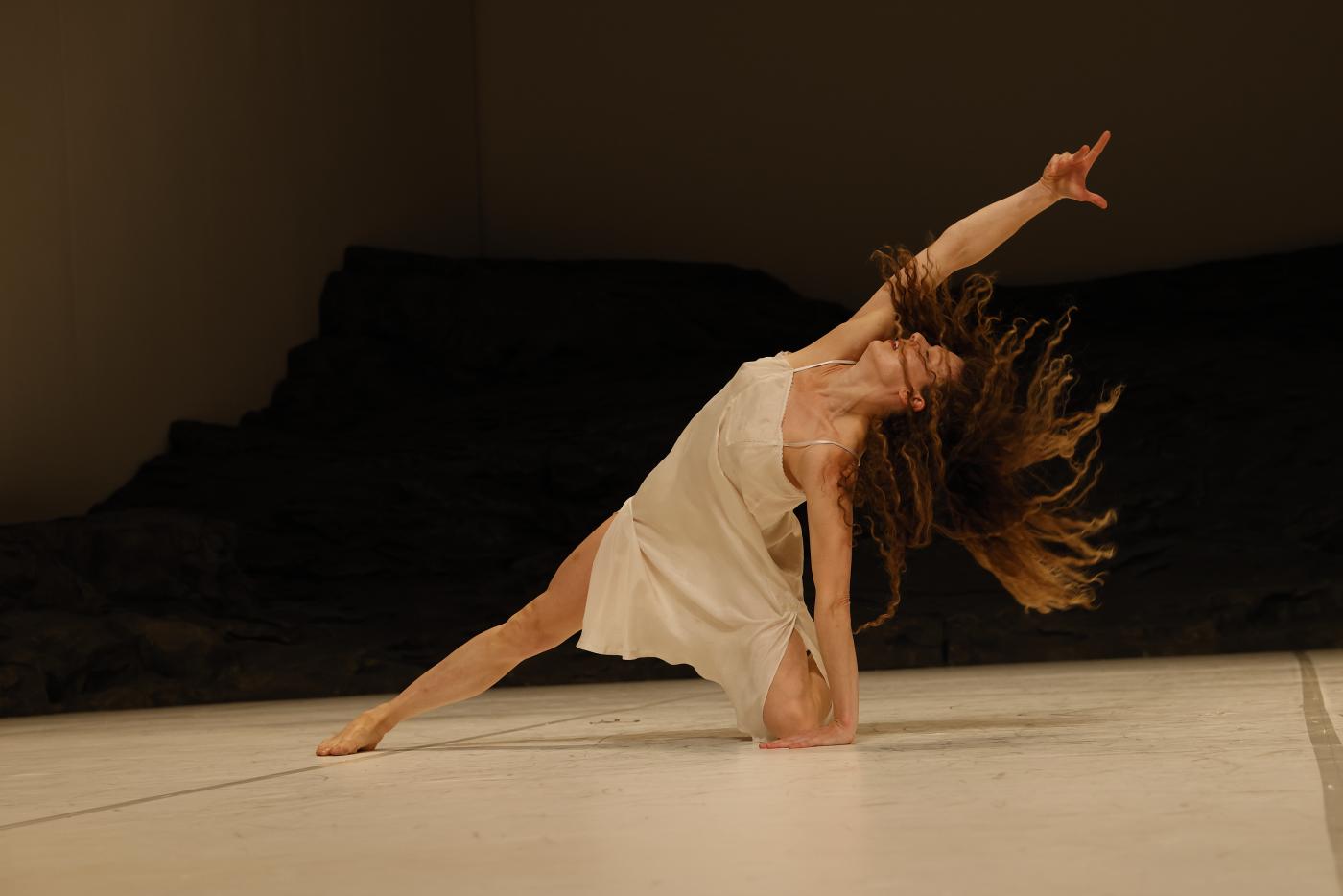
8. E.Barrowman, “Masurca Fogo” by P.Bausch, Tanztheater Wuppertal 2026 © L.Szito A few abrupt set changes disturbed the overall flow. I wondered about the close-up videos of tropical plantations and the African-sounding folk music until I realized that they might have been filmed in Madeira. In any case, their intense colors drained the accompanying dance solos. Other solos felt like islands of calm as they allowed the focus to be on only one person. When the tempo needed to be geared up, chaos broke loose. In one such chaos scene, a man and a woman pulled a table toward opposites sides while she trashed him with her handbag. Next to her, a man flung roses at a woman as if playing darts. At the front stage, a group of men vociferously played some sort of boules. In the midst of the turmoil, a woman crouched on a bucket and slowly toppled over with it.

Masurca Fogo is repetitive and lengthy at times, but that doesn’t matter. It feels nostalgic, not only because of its costumes in the style of the thirties and forties but because it is full of what our times have forfeited: real life, joy, and the realization of being human.

Links: Website of the Tanztheater Wuppertal
Masurca Fogo—Trailer (Sadler’s Wells, 2017)
Photos: 1. Ensemble, “Masurca Fogo” by Pina Bausch, Tanztheater Wuppertal 2026 © Agnese Barbarini
2. Ensemble, “Masurca Fogo” by Pina Bausch, Tanztheater Wuppertal 2026 © Agnese Barbarini
3. Claudia Ortiz Arraiza, “Masurca Fogo” by Pina Bausch, Tanztheater Wuppertal 2026 © Agnese Barbarini
4. Ensemble, “Masurca Fogo” by Pina Bausch, Tanztheater Wuppertal 2026 © Evangelos Rodoulis
5. Andrey Berezin and Taylor Drury, “Masurca Fogo” by Pina Bausch, Tanztheater Wuppertal 2026 © Evangelos Rodoulis
6. Ensemble, “Masurca Fogo” by Pina Bausch, Tanztheater Wuppertal 2026 © Evangelos Rodoulis
7. Wendel Lima de Alcantara and Maria Giovanna Delle Donne, “Masurca Fogo” by Pina Bausch, Tanztheater Wuppertal 2026 © Evangelos Rodoulis
8. Emma Barrowman, “Masurca Fogo” by Pina Bausch, Tanztheater Wuppertal 2026 © Laszlo Szito
Editing: Kayla Kauffman


Squandered

“Scirocco” (“Death in Venice”/“Bridge of Sighs”)
WINNDance
Teatro Malibran
Venice, Italy
August 01, 2026

by Ilona Landgraf
Copyright © 2026 by Ilona Landgraf

 1. M.Rademaker, M.Galeazzi, D.Vishneva, S.Henriksen, and K.Everhart; “Death in Venice” by I. and M.van Opstal, O.R. De Jesús, and R.Behr; WINNDance 2026, photo courtesy of La Biennale di Venezia © A.Avezzù“When if not now” (WINN) is the attitude of movers and shakers. Earlier this year, two such movers and shakers, Slava Tutukin (former soloist of the Mikhailovsky Ballet, St. Petersburg, and the Aalto Ballet, Essen) and Marijn Rademaker (choreographer and ex-principal of Stuttgart Ballet and Dutch National Ballet) founded WINNDance, a Stuttgart-based dance company for dancers forty years old and older. It attracted renowned names: People’s Artist of Russia, Diana Vishneva; the late Hans van Manen’s muse, Igone de Jongh; Hamburg Ballet’s Ivan Urban, Silvia Azzoni, and Oleksandr Ryabko; the Royal Ballet’s former principal, Mara Galeazzi; and Polina Semionova (who didn’t perform in Venice). The new enterprise includes an educational platform (WINN&Learn) and an exploratory platform for collaboration with different industries (WINNLab). Continue reading “Squandered”

The Art of Embarrassing Oneself

“Stravinsky in Paris” (“Farewell in Paris”/“Le Sacre du Printemps”)
State Ballet of the Gärtnerplatztheater, Munich
Forum Ludwigsburg
Ludwigsburg, Germany
July 30, 2025

by Ilona Landgraf
Copyright © 2025 by Ilona Landgraf

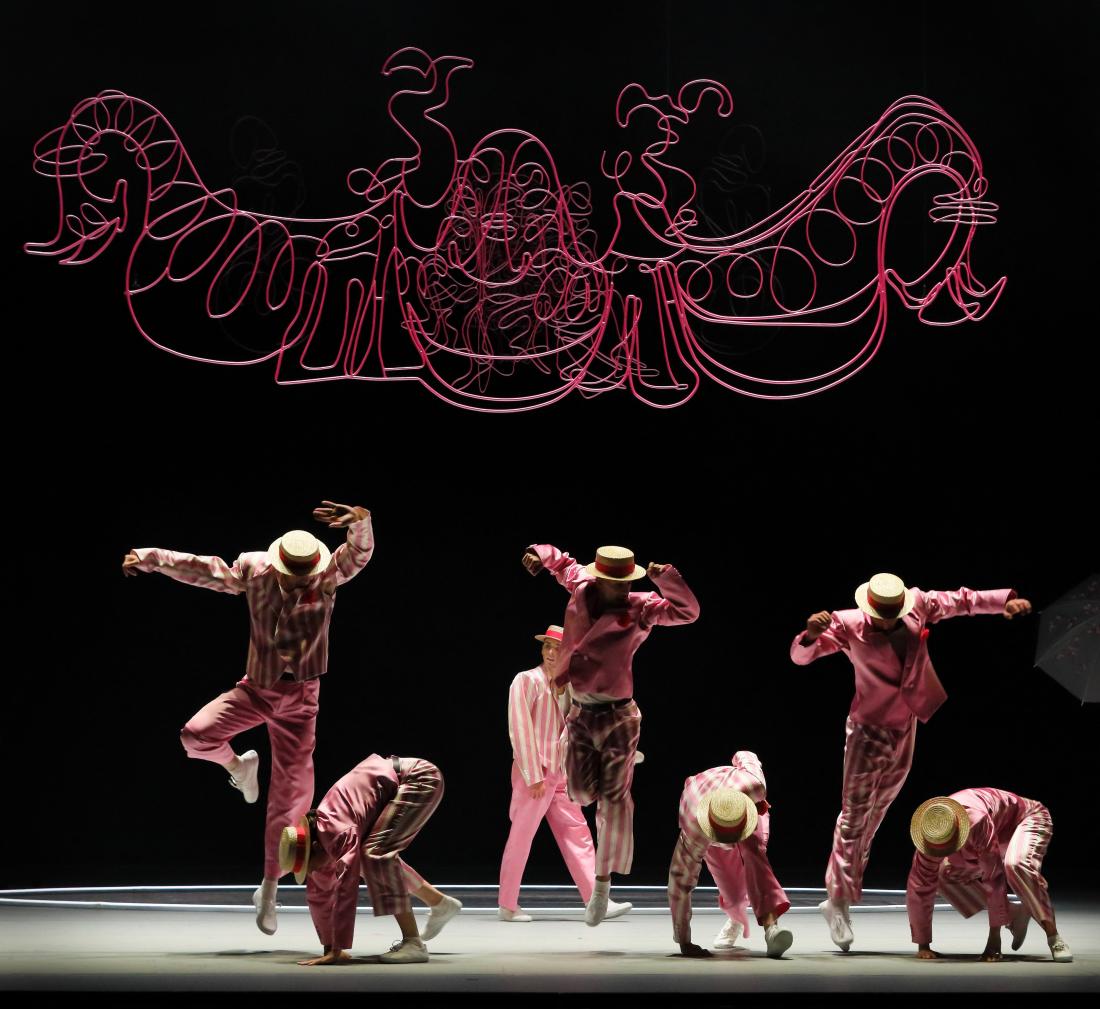
1. M.J.Perko (Jerry) and ensemble, “Farewell in Paris” by J.Verbruggen, State Ballet of the Gärtnerplatztheater 2025 © M.-L.Briane Since 1932, the city of Ludwigsburg in Baden-Württemberg has hosted an annual summer festival featuring various cultural genres. Many events are held at the Ludwigsburg Palace, a vast complex that served as the Duke of Württemberg’s residence after its completion in 1733. Munich’s State Ballet of the Gärtnerplatztheater, whose Stravinsky in Paris marked the festival’s final dance event, performed at the Ludwigsburg Forum near the palace. Last October, the Gärtnerplatztheater showed Troja (“Troy”) by the Greek-born Andonis Foniadakis on its tour to Ludwigsburg. Its display of sexist abuse was annoying. As the press praised Stravinsky in Paris as a “confetti rocket,” I was curious about its “sophisticated dance and music.”
Stravinsky in Paris, a co-production of the Gärtenerplatztheater and the Ludwigsburg Festival, recently premiered in Munich. The double bill combines Jeroen Verbruggen’s Farewell in Paris and Marco Goecke’s Le Sacre du Printemps.
The nonchalant steps of the straw-hatted men who opened Farewell to Paris seemed inspired by a blend of Broadway style and Parisian savoir vivre. In their pale pink of their blazers and pants, they seemed to belong in a little girl’s dream (costumes by Emmanuel Maria). Continue reading “The Art of Embarrassing Oneself”

Human Striving

“Homage to Uwe Scholz”
Leipzig Ballet
Forum Ludwigsburg
Ludwigsburg, Germany
February 15, 2025

by Ilona Landgraf
Copyright © 2025 by Ilona Landgraf

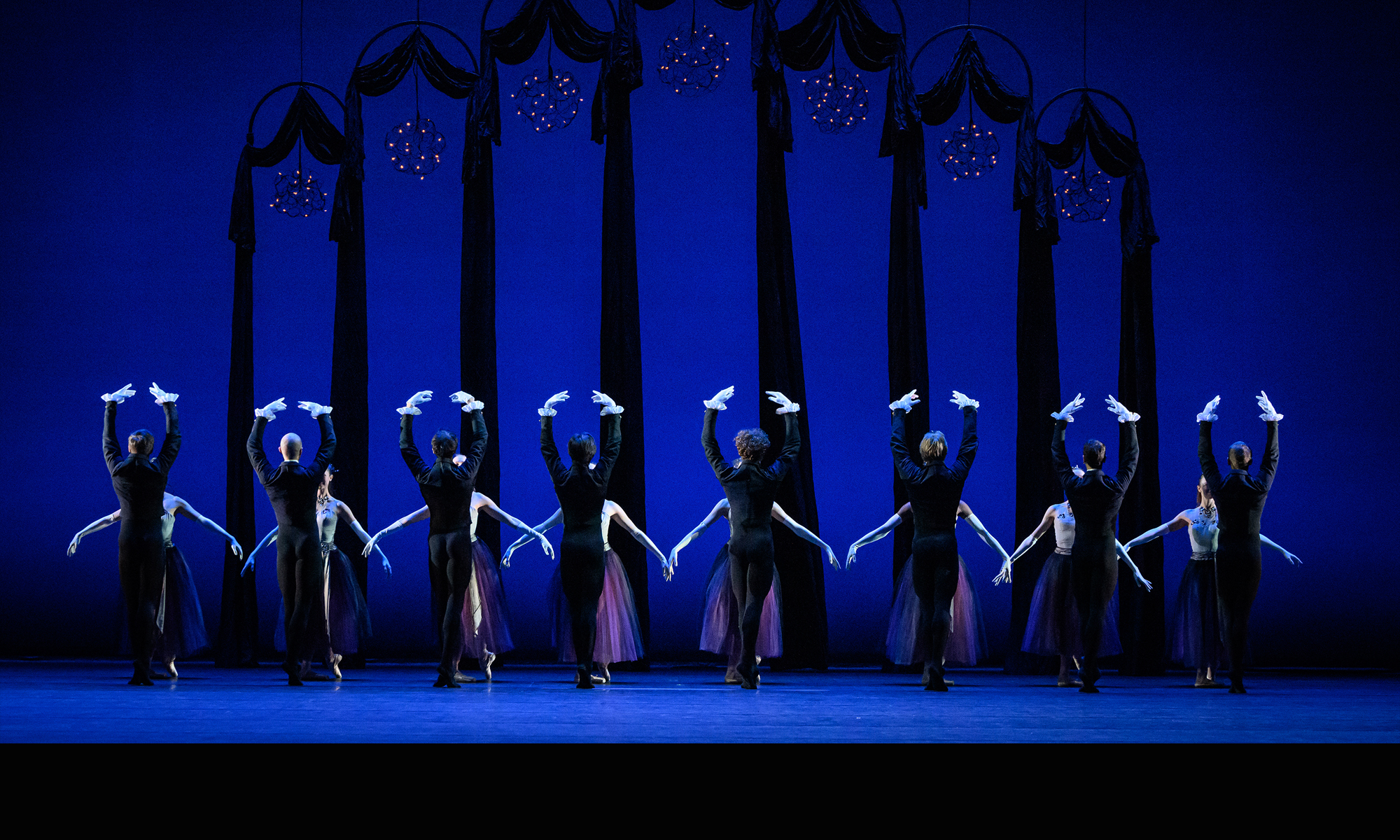
1. Ensemble, “Seventh Symphony” by U.Scholz, Leipzig Ballet 2025 © I.Zenna The Stuttgart-bred Uwe Scholz was in his early thirties when he became the Leipzig Ballet’s artistic director and chief choreographer in 1991. Scholz’s ballets were substantial and had depth, but the extent of his choreographic talent has been undiscovered due to his premature death in 2004. Last weekend, the Leipzig Ballet toured Homage to Uwe Scholz at the Forum Ludwigsburg. The double bill comprised two of Scholz’s symphonic pieces, Seventh Symphony, set to Beethoven’s Symphony No. 7 (1811-1812), and Second Symphony, set to Robert Schumann’s Symphony No. 2 (1847).

For the first time, Leipzig Ballet isn’t led by a choreographer, but by artistic director Rémy Fichet. Fichet, who took the reins from Mario Schröder just this season, danced in Leipzig under Scholz and intends to keep his ballets in the repertory. However, he’s realistic. The company’s standard does not yet meet the requirements of every Scholz piece, he admitted, and the dancers will need time to hone their technique. Perhaps, Fichet can prevent Scholz’s work from sinking deeper into oblivion. Continue reading “Human Striving”

The Abuse of Women

“Troja” (“Troy”)
State Ballet of the Gärtnerplatztheater, Munich
Forum Ludwigsburg
Ludwigsburg, Germany
October 12, 2024

by Ilona Landgraf
Copyright © 2024 by Ilona Landgraf

1. Ensemble, “Troja” by A.Foniadakis, State Ballet of the Gärtnerplatztheater 2024 © M.-L.Briane As in previous years, the Forum Ludwigsburg has made an effort to invite a wide range of dance companies to Ludwigsburg (which is about seven and a half miles north of Stuttgart) during this season. Munich’s State Ballet of the Gärtnerplatztheater was the first troupe to pay a visit. They presented their recently premiered one-act piece Troja (Troy) by Andonis Foniadakis. The Greek-born Foniadakis danced with the Béjart Ballet and the Ballet de l’Opéra de Lyon during which time he also began to choreograph. In 2003 he founded his own company, Apotosoma, and from 2016 to 2018 he was the artistic director of the Greek National Opera.
Troja is based on Euripides’s tragedy, The Trojan Women, the intricate plot of which Foniadakis distilled to two overarching themes: the aftermath of war in general and the fate of the women—on the loser’s side in particular. Continue reading “The Abuse of Women”

Trashy

“Triple”
Richard Siegal – Ballet of Difference
Forum Ludwigsburg
Ludwigsburg, Germany
January 21, 2023

by Ilona Landgraf
Copyright © 2023 by Ilona Landgraf

 1. E.Supple and M.Manning, “All For One” by R.Siegal, Richard Siegal – Ballet of Difference 2023 © T.Schermer Last weekend, the Cologne-based troupe Richard Siegal – Ballet of Difference toured the Forum Ludwigsburg. The American-born Siegal founded the company in 2016 in Munich. He also serves as its artistic director and has choreographed nearly all of their repertoire. The triple bill in Ludwigsburg combined twenty-or-so minute-long pieces created between 2014 – 2021.

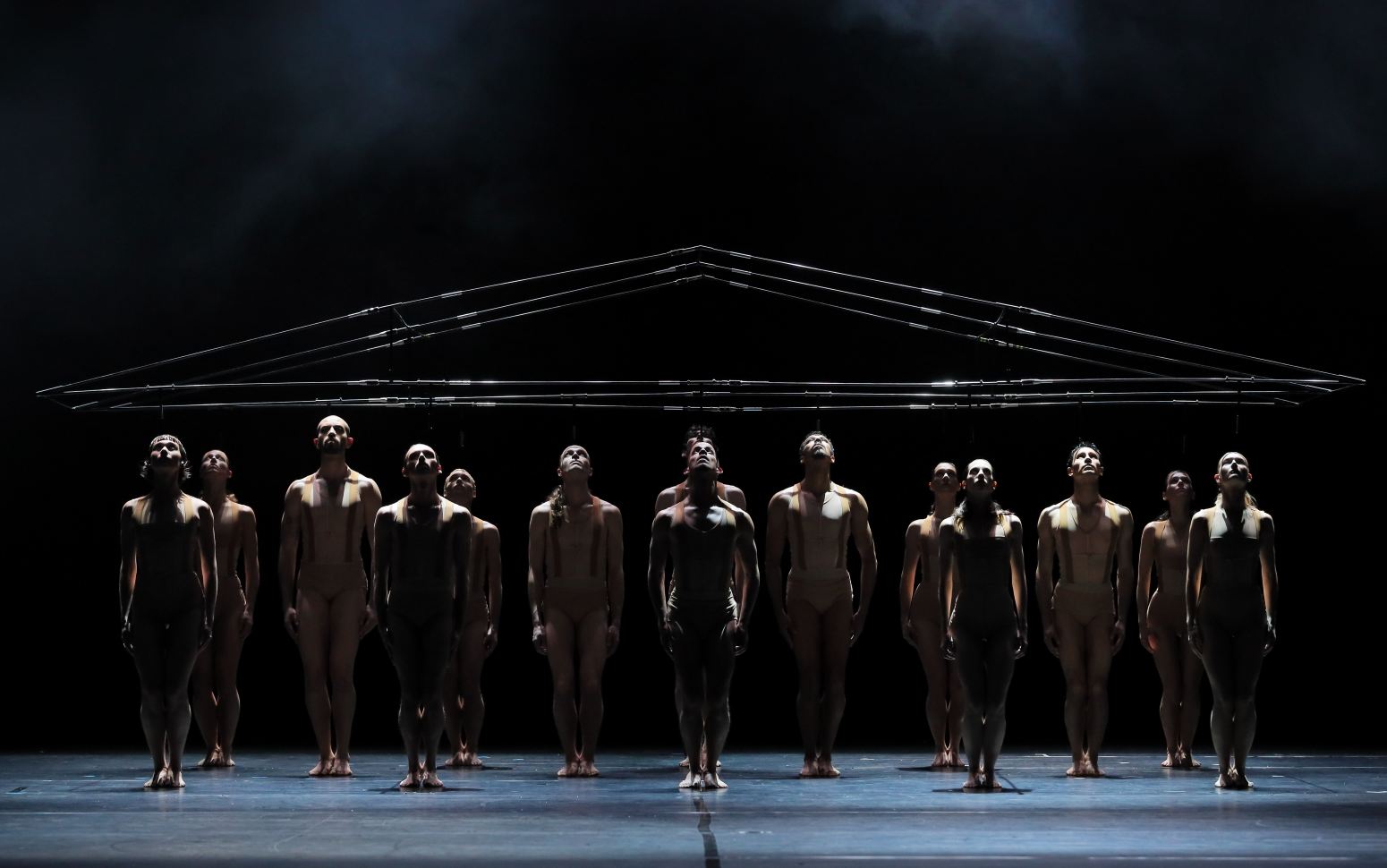
In a recent interview, Siegal revealed that “All For One” is a “reaction to the modes of digital spectatorship that emerged during the beginning of the pandemic.” The piece premiered online in fall 2021 with a set (an organ made from tall tubes of light arranged in a cylindrical semicircle) designed, perhaps, to appeal to an online audience. In Ludwigsburg, the murky illumination often hid the eleven dancers in twilight that obscured their pants, skirts, and bustiers (decorated with bulky silver folds that resembled supersized shreds of paper). Continue reading “Trashy”

Jittery

“A Wilde Story”
State Ballet Hanover
Opera House Hanover
Hanover, Germany
November 20, 2022

by Ilona Landgraf
Copyright © 2022 by Ilona Landgraf

1. M.Chelucci (The Art of Writing), “A Wilde Story” by M.Goecke, State Ballet Hanover 2022 © B.Stöß2. C.Francis-Martin (Oscar Wilde), “A Wilde Story” by M.Goecke, State Ballet Hanover 2022 © B.StößMarco Goecke recently added the German magazine tanz’s “Choreographer of 2021” award and the 2022 German Dance Prize to his collection. Last month, he presented a new ballet at the State Ballet Hanover, which he has helmed as artistic director since 2019. “A Wilde Story” plays with the life and work of Oscar Wilde. I was curious to see whether or not the story was, in fact, wild.

The evening opens not with Wilde, but with a bare-chested Michelangelo Chelucci, who jerks open and closes off his muscular torso, arms plowing through the air. His feet scurry zealously this way and that as he elegantly lifts his black, floor-length skirt. A glance at the program book reveals that Chelucci personifies the art of writing. Behind him, black-clad dancers hustle from one side of the stage to the other, comic figures in fast-forward, shaking their fists. Their steps stir up dust that gradually blurs our view of the grainy facade of a stately gray mansion (set and costumes by Marvin Ott). Though the pulsing rock of The Smashing Pumpkins’ “Tonight Tonight” suggests otherwise, we’re in Victorian England. “Believe in me,” they sing – but at whom does this line aim? Continue reading “Jittery”

“And I Have So Much to Say, But…”

“Sleeping Woman”
Tanztheater Wuppertal Pina Bausch
Opera House
Wuppertal, Germany
July 02, 2021 (online)

by Ilona Landgraf
Copyright © 2021 by Ilona Landgraf

1. T.-C.Yu and ensemble, “Sleeping Woman” by R.Behr, Tanztheater Wuppertal Pina Bausch 2021 © E.RodoulisPina Bausch was the heart of Tanztheater Wuppertal – and since her premature death in 2009, the company has struggled to find new leadership to shape its artistic future. The termination of Adolphe Binder’s contract as intendant and artistic director in 2018 – after only one year in office – was followed by a two-year lawsuit between her and the theater. Although Binder won the suit (and the matter was settled out of court), Binder waived her claim to the post, making way for Bettina Wagner-Bergelt. Continue reading ““And I Have So Much to Say, But…””

Meager Substance

“Dance Gala Baden-Wuerttemberg”
Theater and Orchestra Heidelberg
Heidelberg, Germany
June 06, 2021 (online)

by Ilona Landgraf
Copyright © 2021 by Ilona Landgraf

1. I.Pérez, artistic director of the Dance Biennial Heidelberg and the Dance Theater Heidelberg © S.Reichardt“Everybody Can Dance” was the motto of this year’s Dance Biennial Heidelberg, the fourth since the event’s inception. Pandemic-related restrictions pared down the three-day festival’s schedule to a few online events, crowned by a dance gala on Sunday, June 6th. Nine of Baden-Wuerttemberg’s dance companies were represented there, together contributing thirteen short pieces – nine digital and four danced live.

The Unterwegstheater Heidelberg, a small touring company whose work spans multiple genres opened the program with the video “Die nackte Wahrheit” (“The Naked Truth”). Continue reading “Meager Substance”

Riding the Wild Surf

“Anita Berber – Goddess of the Night”
Ballet of the Theater and Philharmonic Orchestra Thuringia
Theater Gera
Gera, Germany
June 17, 2016

by Ilona Landgraf
copyright © 2016 by Ilona Landgraf

1. A.Kuzina and P.Jovicic, “Anita Berber – Goddess of the Night” by J.Bubeníček, Theater and Philharmonic Orchestra Thuringia © S.Ballone 2016Two months ago Jiří and Otto Bubeníček mounted the ballet “Doctor Zhivago” in Ljubljana. Last week the Czech Republic, their home country, honored them with the Gratias Agit for promoting the nation’s reputation abroad. Just this Friday the brothers gave their country a further reason for being proud of them: the premiere of “Anita Berber – Goddess of the Night” in Gera, Thuringia. This ballet traces the life and character of the scandalous German dancer, actress and self-promoter, a phenomenon of the “golden 1920s”. Choreography for the production is Jiří’s. Otto designed the set and costumes. Both brothers are responsible for the staging. This one acter, “Anita Berber”, again showed the Bubeniceks’ gift for storytelling. Continue reading “Riding the Wild Surf”

An Indomitable Woman

“Charlotte Salomon: Death and the Painter”
Ballett im Revier
Musiktheater im Revier
Gelsenkirchen, Germany
November 20, 2015

by Ilona Landgraf
Copyright © 2015 by Ilona Landgraf

1. K.Alexi, “Charlotte Salomon: Death and the Painter” by B.Breiner, photo C.RaduIt is just Bridget Breiner’s third season at the helm of the Ballett im Revier in Gelsenkirchen. But for the second time she has already been awarded the German theater prize “Faust” for best choreography. Breiner, who started her career as a dancer with the Bavarian State Ballet, later joined the Semperoper Ballet Dresden before dancing several years as principal with Stuttgart Ballet. In 2012 she took over as artistic director of the Ballett im Revier following Bernd Schindowski who had held the post for more than thirty years.

Getting the “Faust” twice is quite an achievement as Breiner’s company is small: around fifteen dancers including guests. “Ruß”, Breiner’s version of the Cinderella story, was the first work awarded in 2013. Just recently her latest work, “Charlotte Salomon: Death and the Painter”, received its laurels as well. Continue reading “An Indomitable Woman”

Storytellers

“Drei Streifen:Tanz”, Choreographies by Benjamin Millepied, Demis Volpi and Jiří Bubeníček
Ballet Dortmund
Opernhaus Dortmund
Dortmund, Germany
March 07, 2015

by Ilona Landgraf
Copyright © 2015 by Ilona Landgraf

1. A.Mehrabyan and E.Nguyen, “The Piano” by J.Bubeníček, Ballet Dortmund © B.Stöß 2015“Drei Streifen: Tanz”, Ballet Dortmund’s new triple bill, allows insight into the work of three different choreographers. The pas de deux “Closer” offers a glance into Benjamin Millepied’s artistic work. Stuttgart Ballet’s resident choreographer Demis Volpi presents himself with three short duos. The evening’s second half was reserved for Jiří Bubeníček’s new creation “The Piano”.

“The Piano” is based on the movie of the same name by the New Zealand film director Jane Campion and has been awarded with – amongst others – the Golden Palm in Cannes in 1993 and an Oscar in 1994. Set in mid-19th century it is about a Scotswoman Ada McGrath, who, for whatever reason, has been mute since her sixth year of age. She expresses her inner life mainly through playing the piano. When Ada and her daughter Flora are forced into a marriage with the Britishman Alistair Stewart, a plantation owner living in New Zealand, the piano is the most important part of the luggage. The to-be-wed couple, however, has never met before. Alistair, at first disenchanted by his future wife’s appearance, doesn’t understand the piano’s importance. Seeming to be an unpractical object, it is left at the beach where Ada and Flora had come ashore.

Continue reading “Storytellers”

A Colorless Mix

“Gala 2014”
Dance Foundation Birgit Keil
Forum Ludwigsburg
Ludwigsburg, Germany
November 07, 2014

by Ilona Landgraf
Copyright © 2014 by Ilona Landgraf

1. B.Andrade, Kt. F.Salamanka and ensemble, “Presente” by R.Oliveira, State Ballet Karlsruhe © J.Klenk 2014Birgit Keil, ex-prima ballerina of Stuttgart Ballet, regularly tours nearby Ludwigsburg to present her work to her former home audience. Since 1997 Keil is director and professor of Mannheim’s Academy of Dance, six years later she also took over the helm of the Baden State Ballet Karlsruhe.

The gala presented both troupes, the Karlsruhe company as well as talented dancers of the Academy. A huge part of the program was reserved for the usual array of guest artists. Continue reading “A Colorless Mix”

Light in the Province

“Ballet Gala 2014”
Mainfranken Theater
Wuerzburg, Germany
July 07, 2014

by Ilona Landgraf
Copyright © 2014 by Ilona Landgraf

1. O.Bubenicek, J.Bubenicek, J.Vallejo, Souffle de l'Esprit by J.Bubenicek, National Theater Prague Halfway between Frankfurt and Nuremberg lies Wuerzburg, a medium-scale town in Lower Franconia. It happens to be my seat of residence but it’s not a Mecca for dance. That’s why I usually head elsewhere to see performances. This year’s Ballet Gala at the Mainfranken Theater, however, offered some highlights I didn’t want to miss.
The Mainfranken Theater’s own ensemble presented only one piece. The rest of the program was left to guest artists from smaller companies all over Germany and to a duo from the Czech National Ballet in Prague. Anna Vita, artistic director of Wuerzburg’s ballet company, and her dramaturge, Christoph Blitt, moderated the evening – basically a good idea if it had set the right tone. But to start by naming all the sponsors and relate what is in the program notes was a mood killer and rendered the playbill’s description of the pieces unnecessary. We are capable of reading! Continue reading “Light in the Province”

What’s gone is gone

“Café Müller”, “The Rite of Spring”
Tanztheater Wuppertal Pina Bausch
Opera House
Wuppertal, Germany
May 02, 2014

by Ilona Landgraf
Copyright © 2014 by Ilona Landgraf

1. Tanztheater Wuppertal, pina40, copyright Maarten Vanden Abeele WEBThis season marks the 40th anniversary of Pina Bausch’s Tanztheater Wuppertal. To celebrate this jubilee the company has already toured extensively. Bordeaux, London, Hong Kong were only some of the stops. In the upcoming months, it will head to Toronto and Paris. More performances are being given in the Ruhr region too, and they include an additional program. I saw two of Bausch’s signature pieces, “Café Müller” and “The Rite of Spring” at the company’s traditional home base of Wuppertal.

“Café Müller”, a 1978 production, depicts the encounters of six people in a somewhat shabby cafe, which is—like its guests—past its best years. The decor as well as the costumes are by Rolf Borzik. He lined several mirrors up along the side walls. A revolving door at the rear is the cafe’s main entrance. Wooden tables and chairs stand around in disorder and during the following three-quarters of an hour the café becomes even more messy. Continue reading “What’s gone is gone”