The Benchmark

“Coppélia”
Bolshoi Ballet
Bolshoi Theatre (New Stage)
Moscow, Russia
February 21, 2026 (evening performance)

by Ilona Landgraf
Copyright © 2026 by Ilona Landgraf

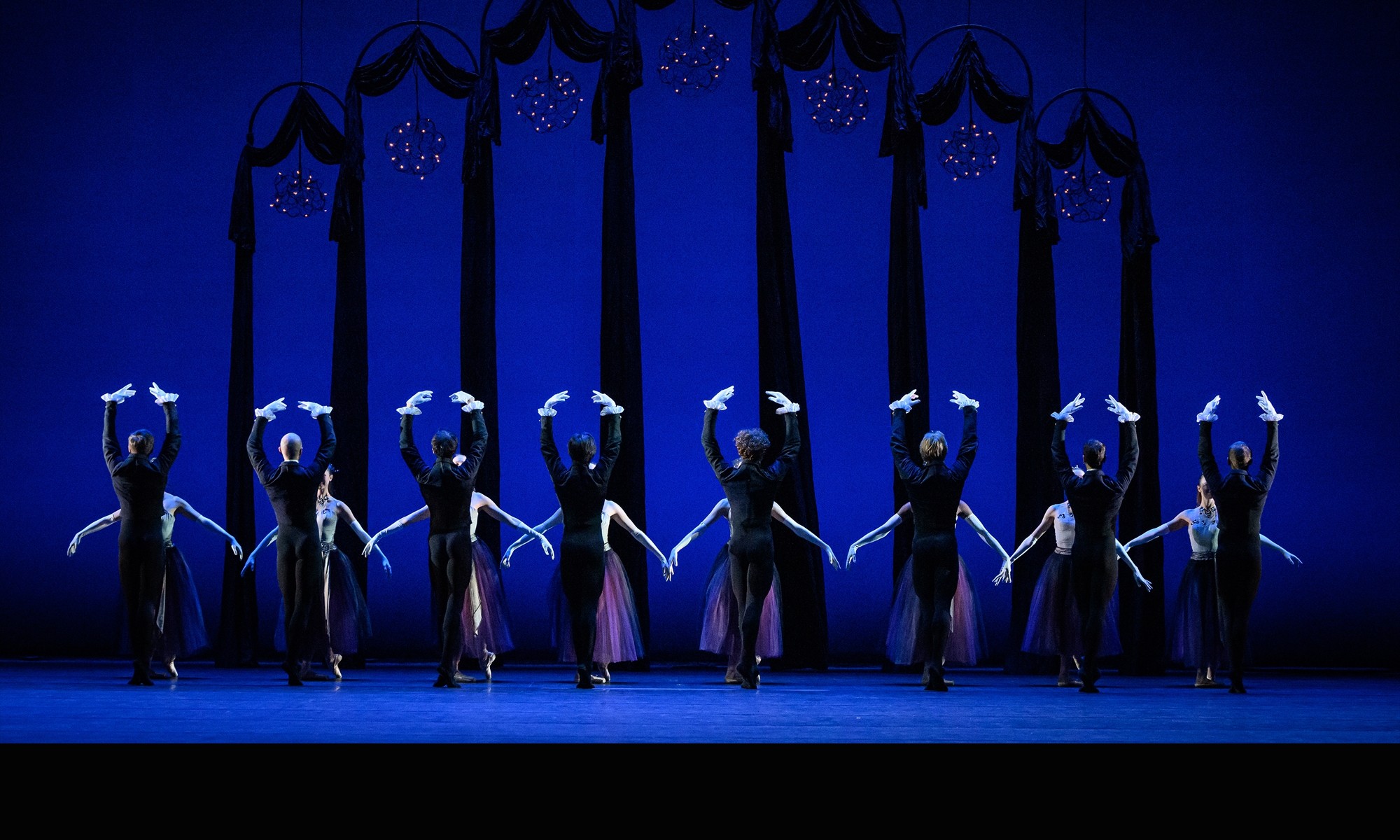
1. E.Kokoreva (Swanilda) and D.Zakharov (Frantz), “Coppélia” by S.Vikharev after M.Petipa and E.Cecchetti, Bolshoi Ballet 2026 © Bolshoi Theatre/P.RychkovMy hopes on a new video release were raised when I noticed the cameraman at the Bolshoi Ballet’s performance of Coppélia, until he explained that the recording was for internal use only. It’ll set the bar high for future generations of dancers.

Sergei Vikharev’s production, which he said is the most complete and exact rendition of what Nicholas Sergeyev noted from his St. Petersburg memories (his manuscripts are stored at Harvard University), has been in the Bolshoi’s repertory since 2009. It preserves all the details that fell victim to artistic, financial, and producing conditions in many Western stagings. As designated by the original creators, Marius Petipa and Enrico Cecchetti, the Bolshoi’s Swanilda has eight girlfriends, and Act III’s Waltz of the Hours is danced by twenty-four ballerinas, one for each hour of the day. 2. D.Zakharov (Frantz), E.Kokoreva (Swanilda), and ensemble; “Coppélia” by S.Vikharev after M.Petipa and E.Cecchetti, Bolshoi Ballet 2026 © Bolshoi Theatre/P.RychkovThe order of their four lines of six dancers each (which represent dawn, morning, twilight, and night) is overseen by the old, bearded Chronos (Dmitry Grishin), who rests atop a huge clock that has to stand exactly center stage. The Royal Ballet’s Coppélia, by comparison, employs only eight dancers in the waltz, which subverts the scene’s meaning.

Each time I see a performance of Coppélia at the Bolshoi, the artistic director, Makhar Vaziev, is in the rear auditorium during Act III’s Fete of the Bell, his eyes scrutinizing the corps’ unity, the clarity of its patterns, and the purity of the variations. As tiny as they may be, he usually finds details to hone.
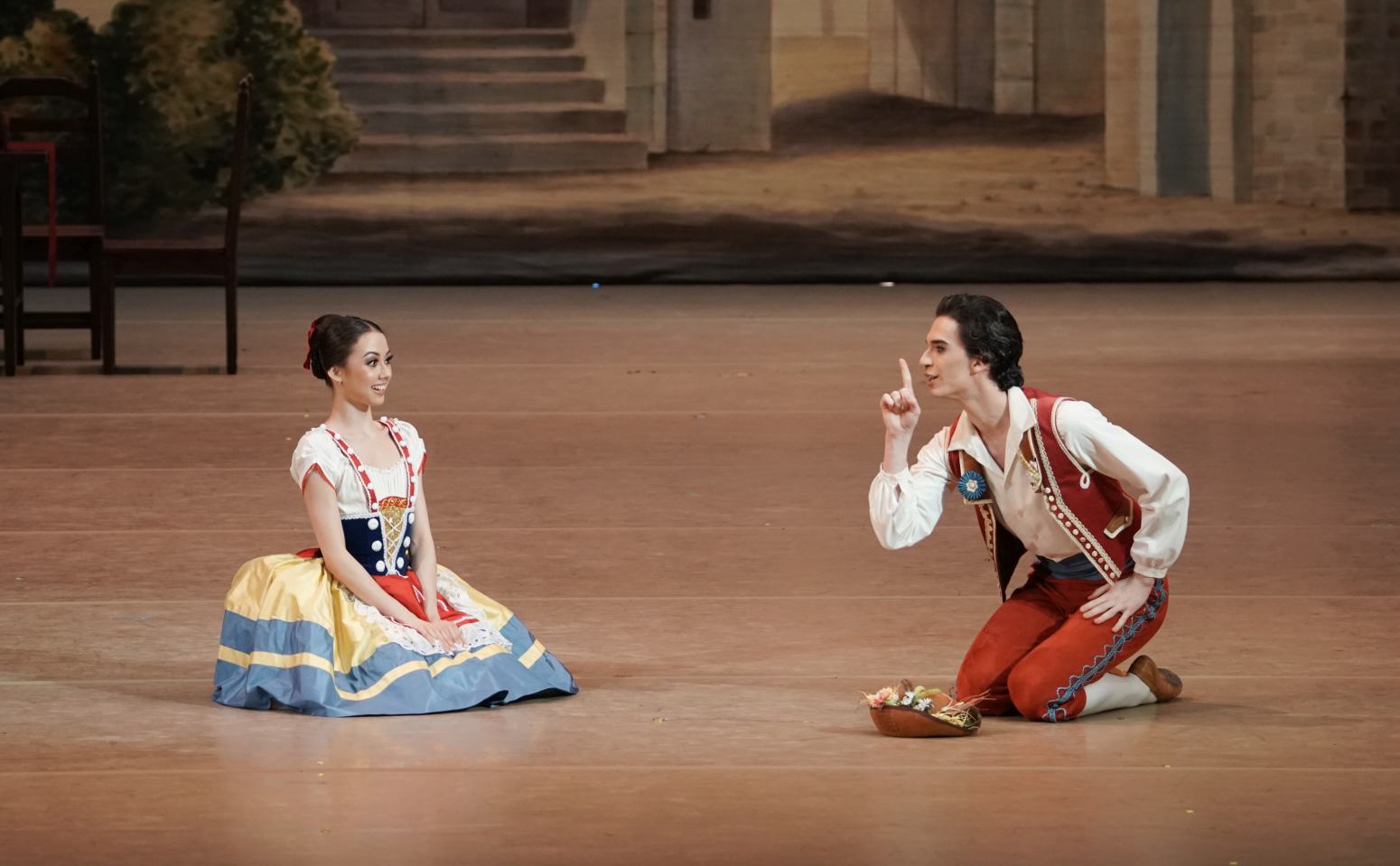
The leading couple, Swanilda (Elizaveta Kokoreva) and Frantz (Denis Zakharov), had nothing to perfect. Each step, each port de 3. E.Kokoreva (Swanilda) and D.Zakharov (Frantz), “Coppélia” by S.Vikharev after M.Petipa and E.Cecchetti, Bolshoi Ballet 2026 © Bolshoi Theatre/P.Rychkovbras, each jump, and each turn of Kokoreva represented the ideal of classical ballet and was imbued with meaning. Her acting was fresh and convincing, her pantomime unambiguous, and the show she delivered at Coppélius’s (Gennady Yanin) workshop terrific. Her fiancé, Frantz, was an unreliable lover, though. Once unobserved, he eagerly climbed through another sweetheart’s (i.e., Coppélia’s (Maria Rasskazova)) balcony door. Worse, even as he was caught red-handed by Coppélius, he affirmed his intention to marry her. What a wretch of a swain!


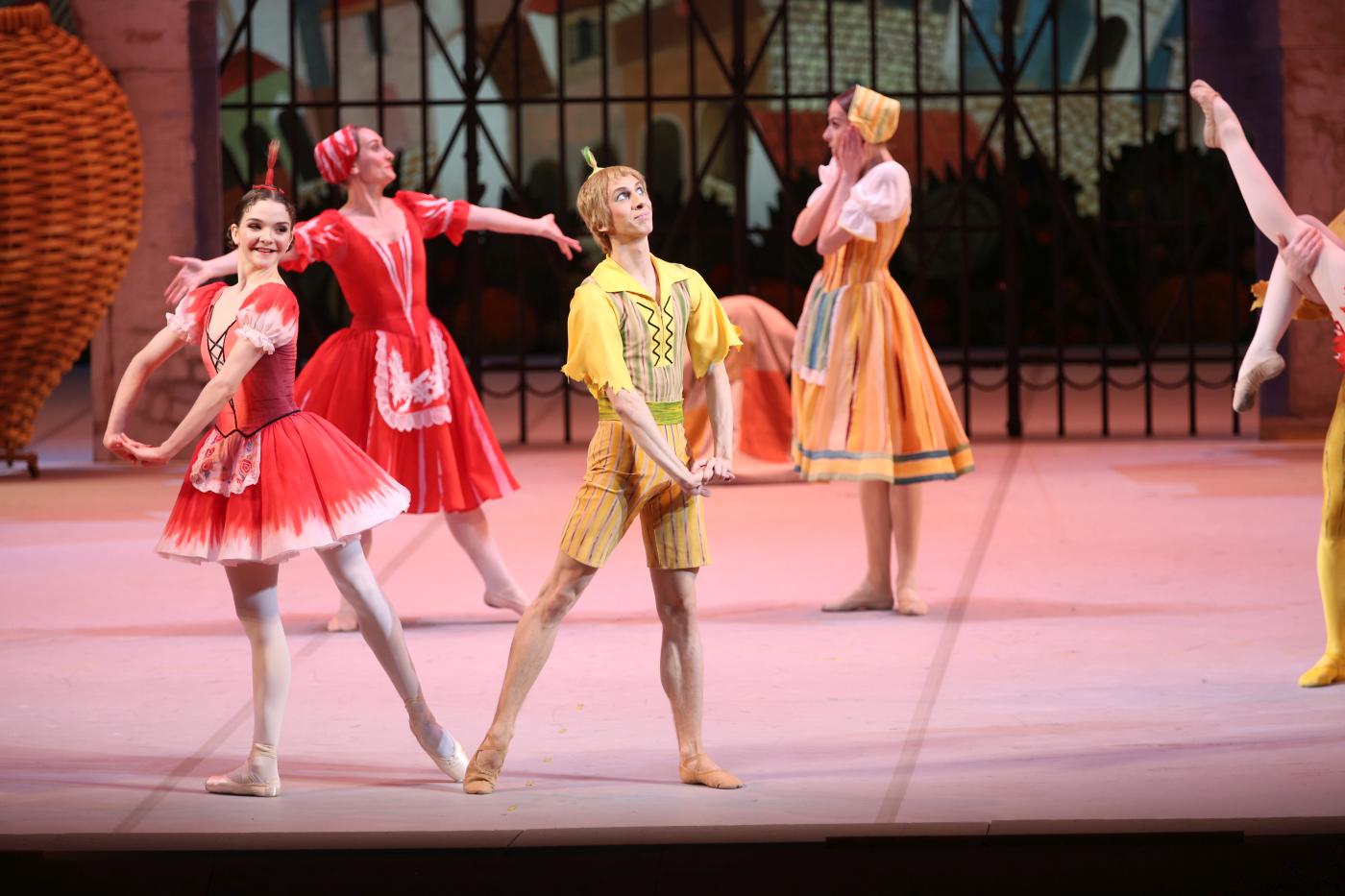
4. E.Kokoreva (Swanilda) and ensemble, “Coppélia” by S.Vikharev after M.Petipa and E.Cecchetti, Bolshoi Ballet 2026 © Bolshoi Theatre/P.RychkovOnly after Swanilda got him off the hook from Coppélius’s alchemic experiments did Frantz man up. His time had come for their wedding pas de deux, with both dressed in majestic red and the cleanest of white and with jewels sparkling at Swanilda’s décolleté and in her tiara (costumes by Tatiana Noginova). A brilliant solo, including spick and span legwork and pinpoint landings, testified to Frantz’s qualities. A gem of a woman, Swanilda sped through pirouettes, landed from split jumps in stupendous balances, and masterfully played with the tempo, smiling all the while, as if excelling on stage was exactly what she relished most. The beauty that Kokoreva and Zakharov brought to life was the performance’s most precious takeaway.

5. E.Kokoreva (Swanilda), D.Zakharov (Frantz), and ensemble; “Coppélia” by S.Vikharev after M.Petipa and E.Cecchetti, Bolshoi Ballet 2026 © Bolshoi Theatre/P.Rychkov In Act III, Elizaveta Kruteleva’s L’Aurore solo became more fluid over time as if warmed by the rising sun. Antonina Chapkina delivered a solemn, graceful La Prière solo, and Ekaterina Varlamova a zippy one as Folie. Maria Mishina led the pas de cinq Le Travail. The corps’ czardas and mazurka had verve, and Swanilda’s friends seemed ready to follow in her footsteps.

The orchestra of the Bolshoi Theatre played under the baton of Pavel Klinichev. Their rendition of Leo Delibes’s score was vibrant, creamy, and perfectly in tune with the dancers.

Link: Website of the Bolshoi Theatre
Photos: 1. Elizaveta Kokoreva (Swanilda) and Denis Zakharov (Frantz), “Coppélia” by Sergei Vikharev after Marius Petipa and Enrico Cecchetti, Bolshoi Ballet 2026
2. Denis Zakharov (Frantz), Elizaveta Kokoreva (Swanilda), and ensemble; Coppélia” by Sergei Vikharev after Marius Petipa and Enrico Cecchetti, Bolshoi Ballet 2026
3. Elizaveta Kokoreva (Swanilda) and Denis Zakharov (Frantz), “Coppélia” by Sergei Vikharev after Marius Petipa and Enrico Cecchetti, Bolshoi Ballet 2026
4. Elizaveta Kokoreva (Swanilda) and ensemble, “Coppélia” by Sergei Vikharev after Marius Petipa and Enrico Cecchetti, Bolshoi Ballet 2026
5. Elizaveta Kokoreva (Swanilda), Denis Zakharov (Frantz), and ensemble;Coppélia” by Sergei Vikharev after Marius Petipa and Enrico Cecchetti, Bolshoi Ballet 2026
all photos © Bolshoi Theatre/Pavel Rychkov
Editing: Kayla Kauffman


“I’m a supporter of talented people”

“Marco Spada”
Bolshoi Ballet
Bolshoi Theatre (Historic Stage)
Moscow, Russia
February 15, 2026

by Ilona Landgraf
Copyright © 2026 by Ilona Landgraf

The Bolshoi Ballet has two choreographies by Pierre Lacotte (1932-2023) in its repertory: his recreation of Petipa’s La Fille du Pharaon (which he entrusted to no other company) and Marco Spada, a 1857 ballet d’action for the Paris Opéra by Joseph Mazilier to music by Daniel Auber, which was lost except for a few sketches and reviews. In 1981, Lacotte choreographed and staged it from scratch for the Teatro Dell’Opera di Roma with Rudolf Nureyev in the title role. Despite being peripatetic, Nureyev was so eager to participate in the production that he signed a contract on the tablecloth during a restaurant outing with Lacotte. “I, Rudolf Nureyev, guarantee that for the duration of a month I will attend daily rehearsals in Rome for the ballet Marco Spada,” he wrote.

Continue reading ““I’m a supporter of talented people””

Brimful

“Cipollino”
Bolshoi Ballet
Bolshoi Theatre (New Stage)
Moscow, Russia
March 08, 2025 (matinee and evening performance)

by Ilona Landgraf
Copyright © 2025 by Ilona Landgraf

 1. S.Maymula (Little Radish), I.Sorokin (Cipollino), A.Vinokur (Mother Radish), and E.Besedina (Mother Cipolla), “Cipollino” by G.Mayorov, Bolshoi Ballet 2025 © Bolshoi Theatre/E.FetisovaThe boy Cippolino (Little Onion), the hero of Gianni Rodari’s 1957 children’s book Adventures of Cipollino, enjoyed an international career. He was especially popular in eastern countries and a famous cartoon and film figure in the Soviet Union. A ballet adaption by Genrikh Mayorov (1936-2022) entered the Bolshoi Ballet’s repertory three years after its Kiev premiere. Cipollino was revived at the Bolshoi earlier this season and still attracts crowds. Though a children’s fairy tale, adults can appreciate the production, especially when danced at top quality. I saw a matinee attended primarily by children and their parents as well as a sold-out evening performance.

The young Cipollino and his family are members of jovial townsfolk who are anthropomorphic fruits and vegetables—Cobbler Grape, Professor Pear, Godfather Pumpkin, and the Radish family, whose daughter, Little Radish, becomes Cipollino’s best buddy. They’re ruled by the high-handed, eccentric Prince Lemon whose court includes an acerbic guard, ludicrous knights, and the two overexcited Countesses Cherry. Continue reading “Brimful”

Mighty

“Ivan the Terrible”
Bolshoi Ballet
Bolshoi Theatre (Historic Stage)
Moscow, Russia
June 06, 2023

by Ilona Landgraf
Copyright © 2023 by Ilona Landgraf

1. E.Obraztsova (Anastasia) and I.Vasiliev (Ivan the Terrible), “Ivan the Terrible” by Y.Grigorovich, Bolshoi Ballet 2023 © Bolshoi Ballet / D.Yusupov For Yuri Grigorovich’s “Ivan the Terrible” at the Bolshoi Ballet I needed some preparation. The biography by the late Ruslan Skrynnikov (1931 – 2009), a research professor at St. Petersburg State University and a leading historian of early modern Russia, seemed useful. Although it was instructive, the reading was tedious. Skrynnikov is a painstaking sociopolitical analyst, an expert in imparting the cruelty of medieval life, but I learned little about the person Ivan the Terrible (1530 – 1584). Interestingly, his nickname terrible results from a misleading translation of the actual epithet Грозный (grozny) which – according the Russian lexicographer Vladimir Dal (1801 – 1872) – can be translated as “courageous, magnificent, magisterial and keeping enemies in fear, but people in obedience”. A “tsar who managed to keep everything under control” – that’s how ballet legend Ivan Vasiliev (who’s regularly performed the role) describes Ivan the Terrible in an interview (subtitled in English and very much worth seeing), adding that “when you bear responsibility for such a huge country, you cannot lose control.” Continue reading “Mighty”

Growing With the Legacy

Coppélia”
Bolshoi Ballet

Bolshoi Theatre
Moscow, Russia
March 23, 2019 (matinee)

by Ilona Landgraf
Copyright © 2019 by Ilona Landgraf

1. A. Loparevich, “Coppélia” by M. Petipa and E. Cecchetti, revival and new choreographic version by S. Vikharev, Bolshoi Ballet 2019 © Bolshoi Ballet / E. FetisovaWhat would Sergei Vikharev have thought of his “Coppélia” if he had watched the matinee on March 23? For one thing, he wouldn’t appreciate my calling the work “his”, as it is Petipa’s and his assistant Cecchetti’s 1884 choreography that Vikharev, together with ballet scholar Pavel Gershenzon, meticulously revived from Nicholas Sergeiev’s notation. Vikharev’s reconstruction premiered in 2009 with the Bolshoi Ballet with an updated revival planned for 2018/19. However, fate struck in the summer of 2017 when Vikharev, only fifty-five years old, died from an adverse reaction to anesthetic during a dental treatment. As a result, the company re-staged the 2009 version. Continue reading “Growing With the Legacy”

Pipe Dreams

“La Fille du Pharaon”
Bolshoi Ballet
Bolshoi Theatre
Moscow, Russia
March 08, 2019 (matinee and evening performance)

by Ilona Landgraf
Copyright © 2019 by Ilona Landgraf

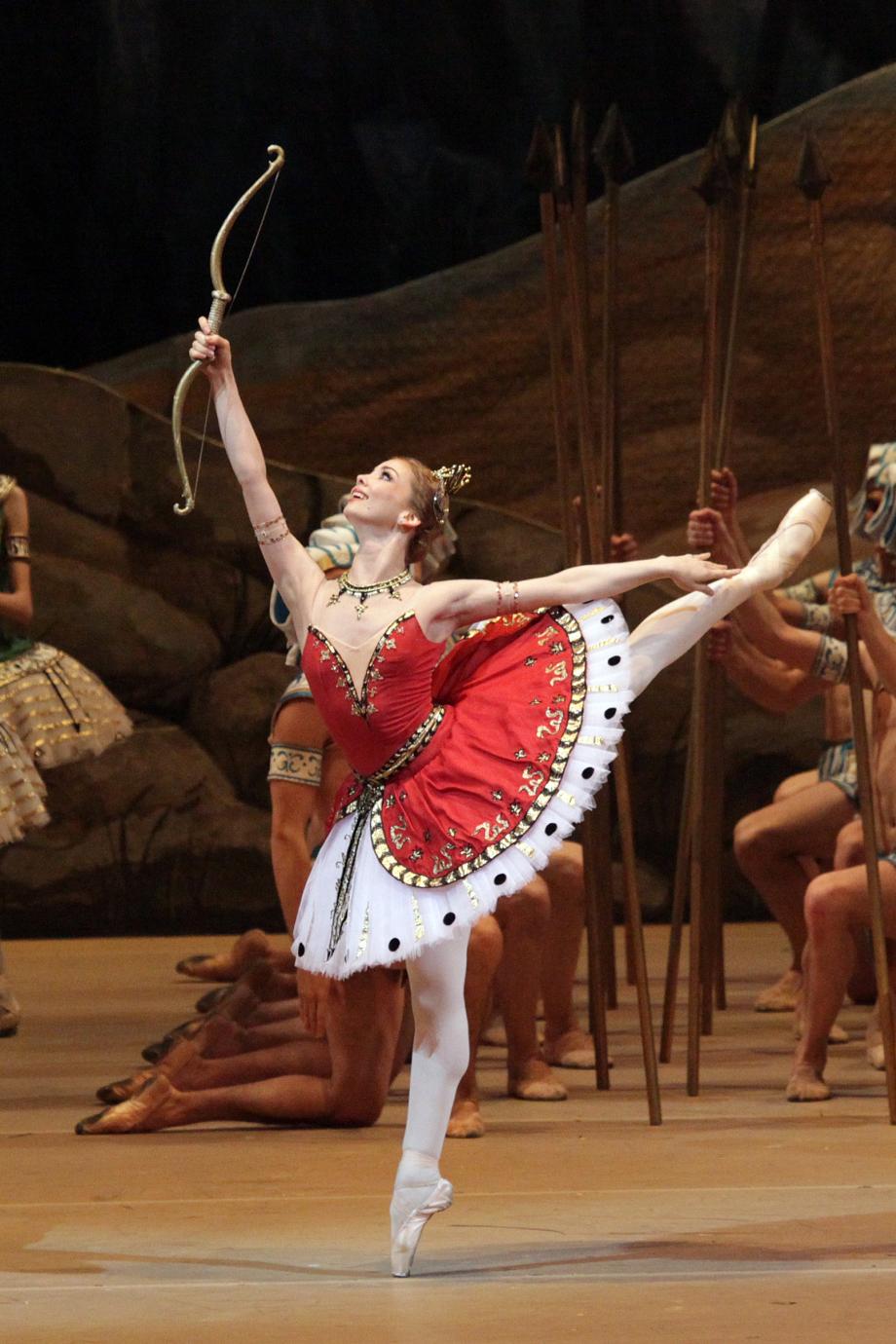
1. E. Obraztsova, “La Fille du Pharaon” by P. Lacotte, Bolshoi Ballet 2019 © Bolshoi Ballet / D. Yusupov Aspicia, the heroine in Petipa’s “La Fille du Pharaon”, was a highly coveted role among ballerinas. Carolina Rosati, an Italian ballerina whose insistence propelled the ballet to creation, danced Aspicia at the world premiere in St. Petersburg in 1862. Mathilde Kschessinska, the unofficial queen of St. Petersburg’s Imperial Theatres, claimed the role as hers at the 1898 revival – meaning that it was like a revolution when the role was given to Anna Pavlova in 1906. “La Fille du Pharaon” was Petipa’s first significant choreographic success. Pierre Lacotte’s take on the ballet for the Bolshoi Ballet in 2000 was a tribute to Petipa and to the famous ballerinas who had shared their knowledge about Aspicia with Lacotte: Lyubov Egorova, Mathilde Kschessinska, and Olga Spesivtseva.

The ballet’s rambling narrative is loosely based on Théophile Gautier’s 1857 novel “The Romance of a Mummy”. Fueled by opium, an English explorer imagines a slew of adventures with Aspicia, the daughter of an Egyptian pharaoh. Aspicia, a mummy, resurrected from her sarcophagus, goes hunting and is saved from a lion’s wrath by the heroic Egyptian Taor (the Englishman), with whom she naturally falls in love. The duo, contending with Aspicia’s forced marriage to the King of Nubia, elopes to an idyllic fishing village. There, they are met by further hazards: suicide attempts, a detour to the underwater realm of the God of the river Nile, and more. Finally, Aspicia and Taor are reunited and happily married – until at the height of the rejoicing, the Englishman awakes from his dream. Continue reading “Pipe Dreams”