Lasting Icons

“Two Annas”
MuzArts
Tovstonogov Bolshoi Drama Theatre
St. Petersburg, Russia
December 2025 (video)

by Ilona Landgraf
Copyright © 2025 by Ilona Landgraf

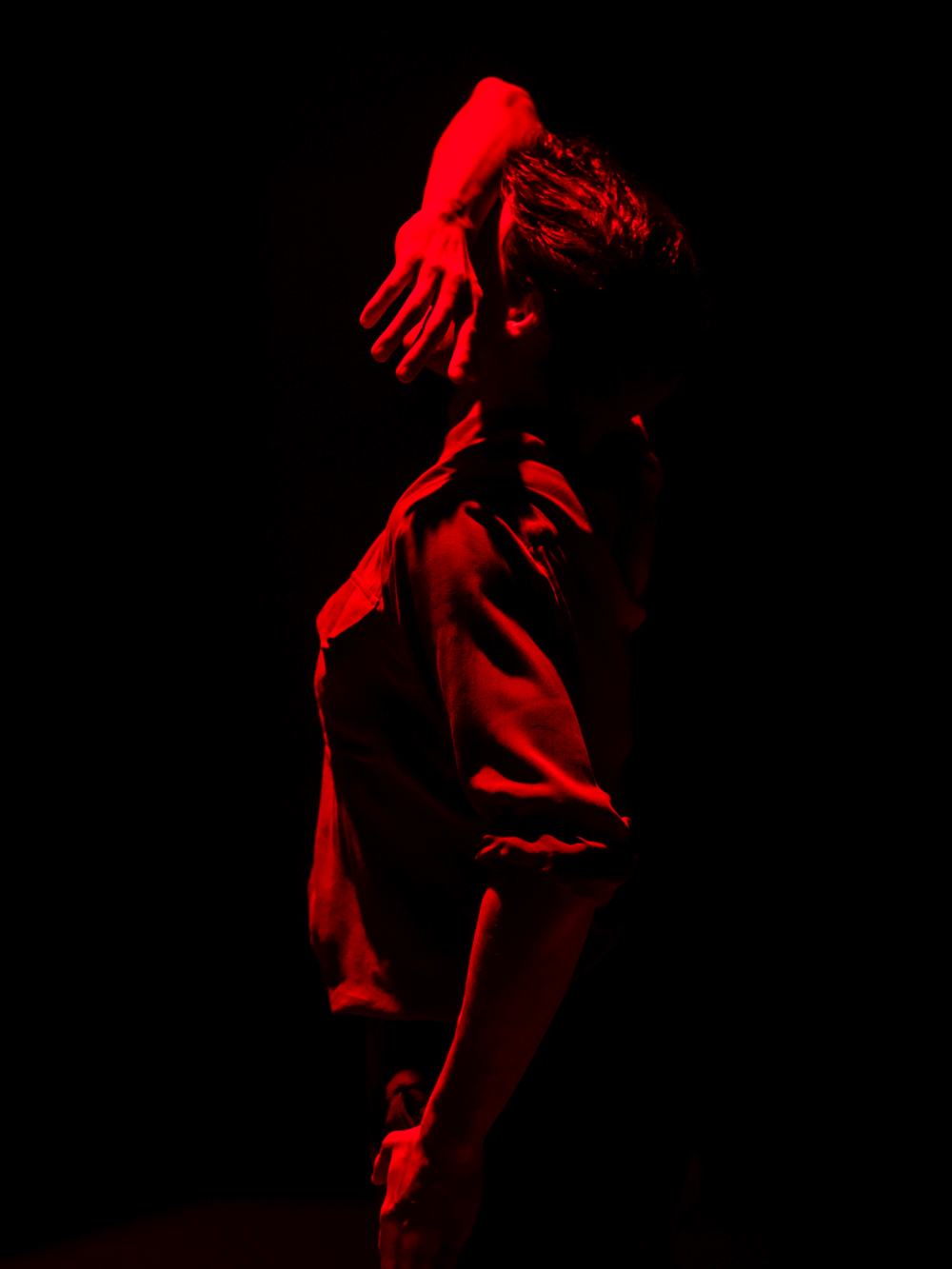
 1. P.Malikova (Anna Akhmatova), E.Sevenard (Anna Akhmatova), and D.Potaptsev (Nikolai Gumilev), “Akhmatova” by Y.Possokhov, MuzArts 2025 © Diaghilev P.S. Festival/M.Vilchuk The production company MuzArts, founded in 2014 to showcase the Bolshoi Ballet’s prima ballerina, Svetlana Zakharova, has grown into a vital force of Russia’s ballet scene. Their recent production, Two Annas, was supported by the Diaghilev P.S. International Festival of Arts, a prominent, intercultural, cross-genre event that has been held in St. Petersburg since 2009. Two Annas premiered at St. Petersburg’s Tovstonogov Bolshoi Drama Theatre this February and received its Moscow premiere at the Maly Theatre. Thanks to the MuzArts’s director, Yuri Baranov, I was able to watch a video of the production.

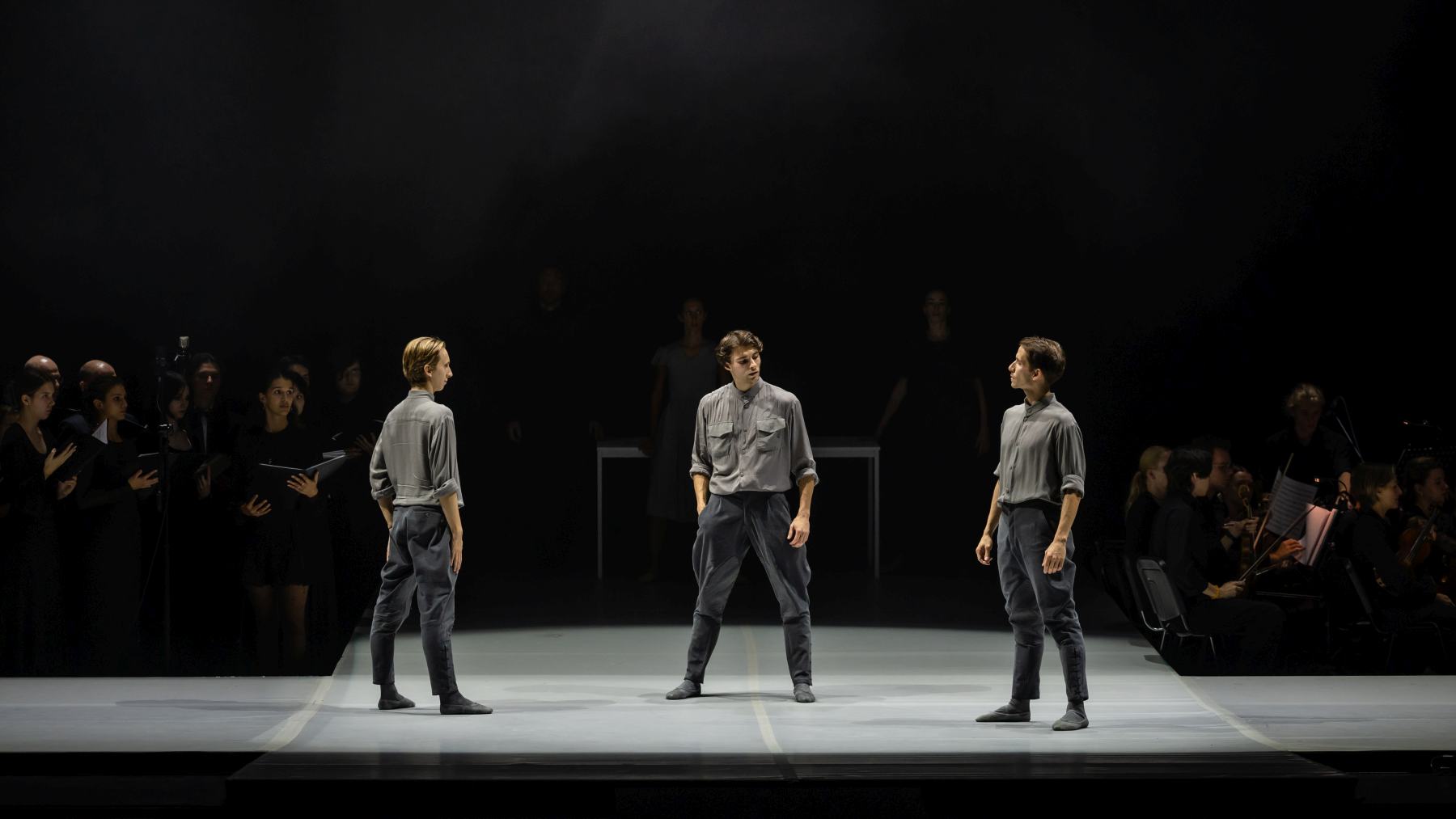
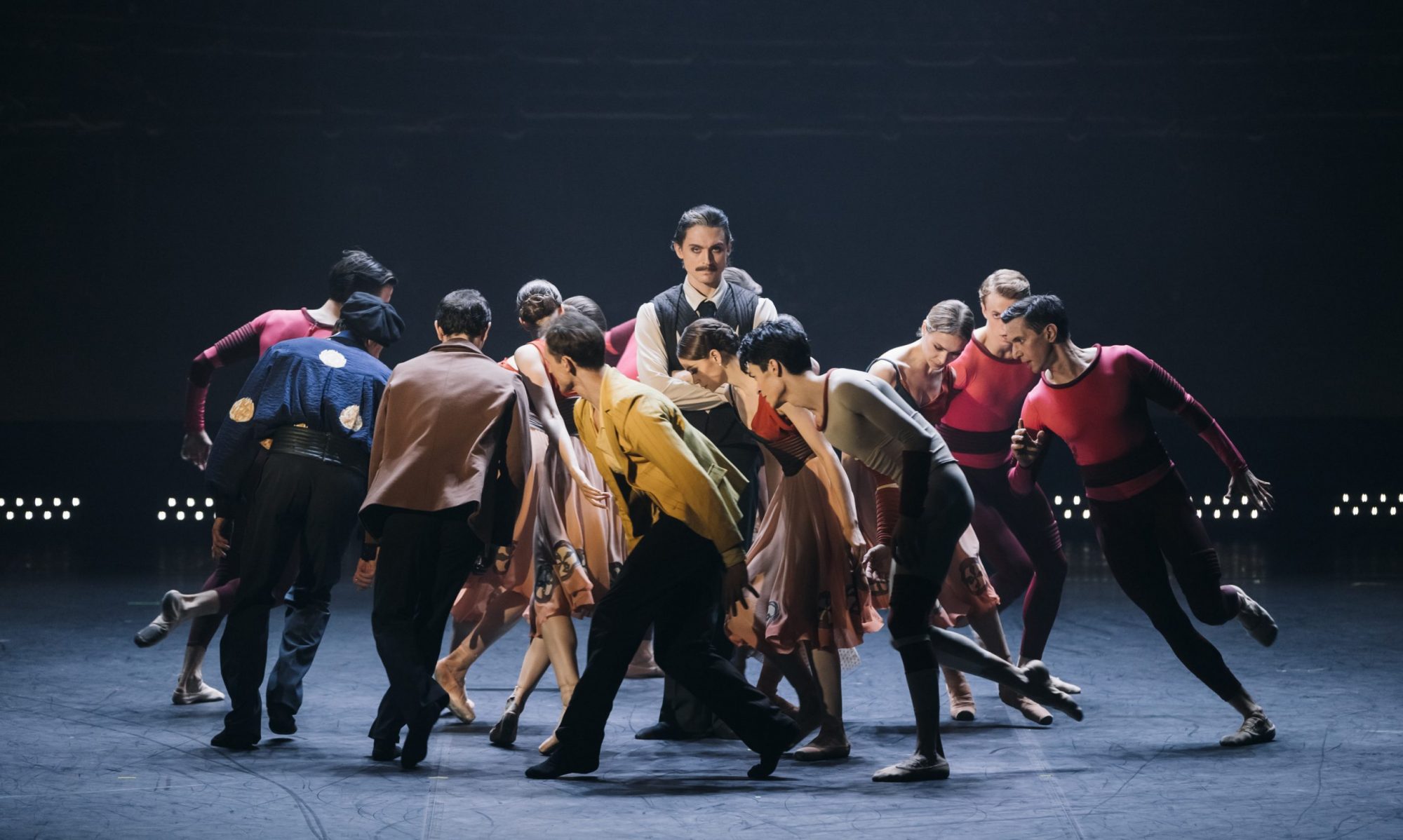
 3. D.Potaptsev (Nikolai Gumilev) and ensemble, “Akhmatova” by Y.Possokhov, MuzArts 2025 © Diaghilev P.S. Festival/M.Vilchuk 2. P.Malikova (Anna Akhmatova) and E.Sevenard (Anna Akhmatova), “Akhmatova” by Y.Possokhov, MuzArts 2025 © Diaghilev P.S. Festival/M.Vilchuk The title’s Annas are the Russian and Soviet poetess, Anna Akhmatova (1889-1966), and Anna Pavlova (1881-1931), both symbols of the Silver Age. I can’t say for certain, but presumably they never met in person, as Two Annas is a double bill of two separate ballets: Akhmatova by Yuri Possokhov and Pavlova by Pavel Glukhov. The artistic team included set designer Maria Tregubova, costume designer Svetlana Tegin, and lighting expert Ivan Vinogradov.
4. E.Sevenard (Anna Akhmatova), “Akhmatova” by Y.Possokhov, MuzArts 2025 © Diaghilev P.S. Festival/M.Vilchuk 5. E.Sevenard (Anna Akhmatova), A.Putintsev (Amedeo Modigliani), P.Malikova (Anna Akhmatova), and ensemble; “Akhmatova” by Y.Possokhov, MuzArts 2025 © Diaghilev P.S. Festival/M.Vilchuk Felix Mikhailov wrote the libretto and acted as the production’s director. Music by César Franck accompanied Akhmatova; Ilya Demutsky composed the score for Pavlova. Both were played by the Opensound Orchestra at whose piano sat Andrei Korobeinikov. Except for Ildar Gainutdinov, who performed with Pavlova, all dancers are on the Bolshoi Ballet’s roster.

6. E.Sevenard (Anna Akhmatova), “Akhmatova” by Y.Possokhov, MuzArts 2025 © Diaghilev P.S. Festival/M.Vilchuk Akhmatova features the love triangle between Akhmatova, her husband, Nikolai Gumilev, and the Italian painter and sculptor, Amedeo Modigliani, whom she met in 1910 on her honeymoon in Paris. Memories and many of Akhmatova’s poems (spoken by Polina Malikova, a drama actress of the Tovstonogov Drama Theatre who portrayed Akhmatova) added context to happenings on stage.

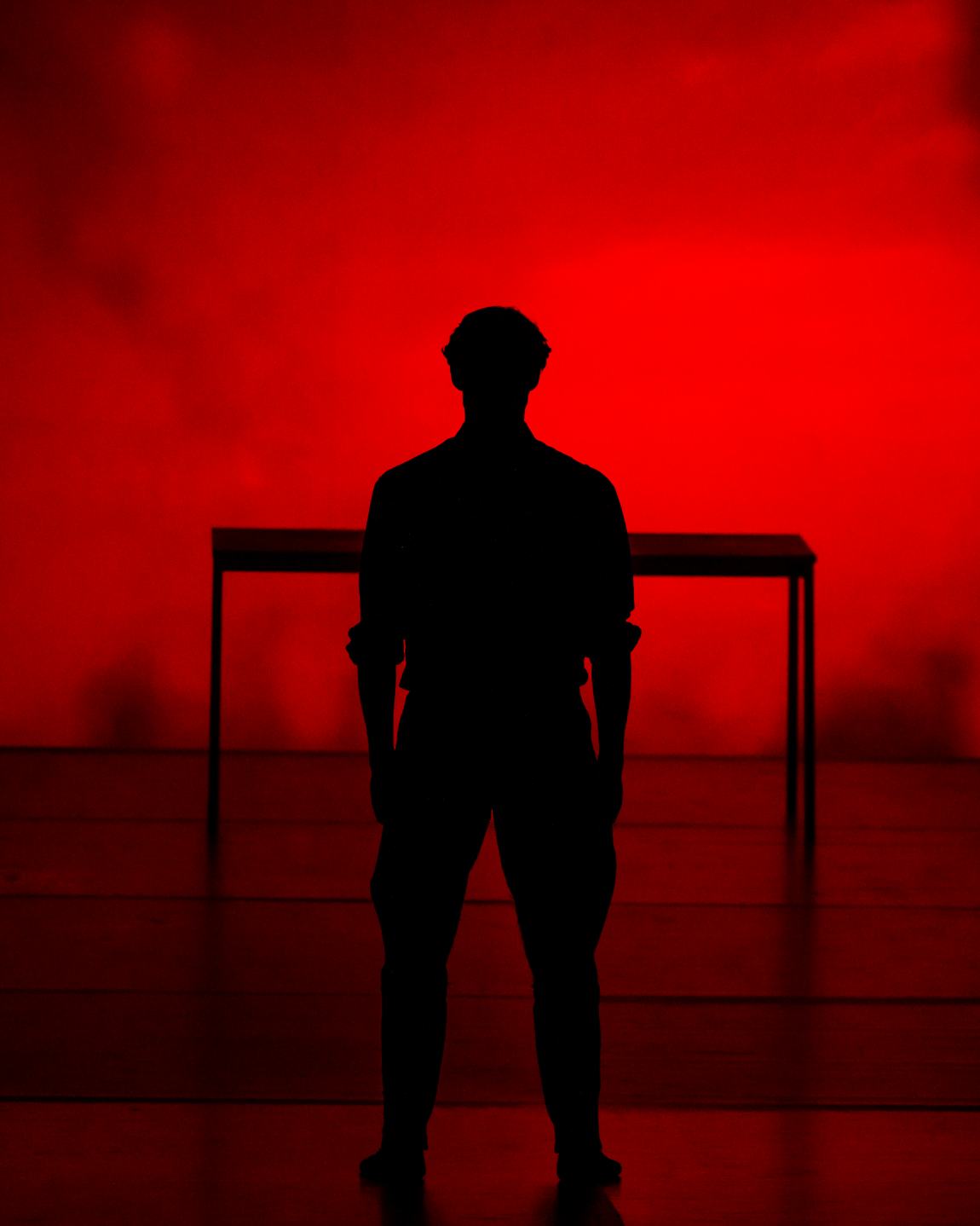
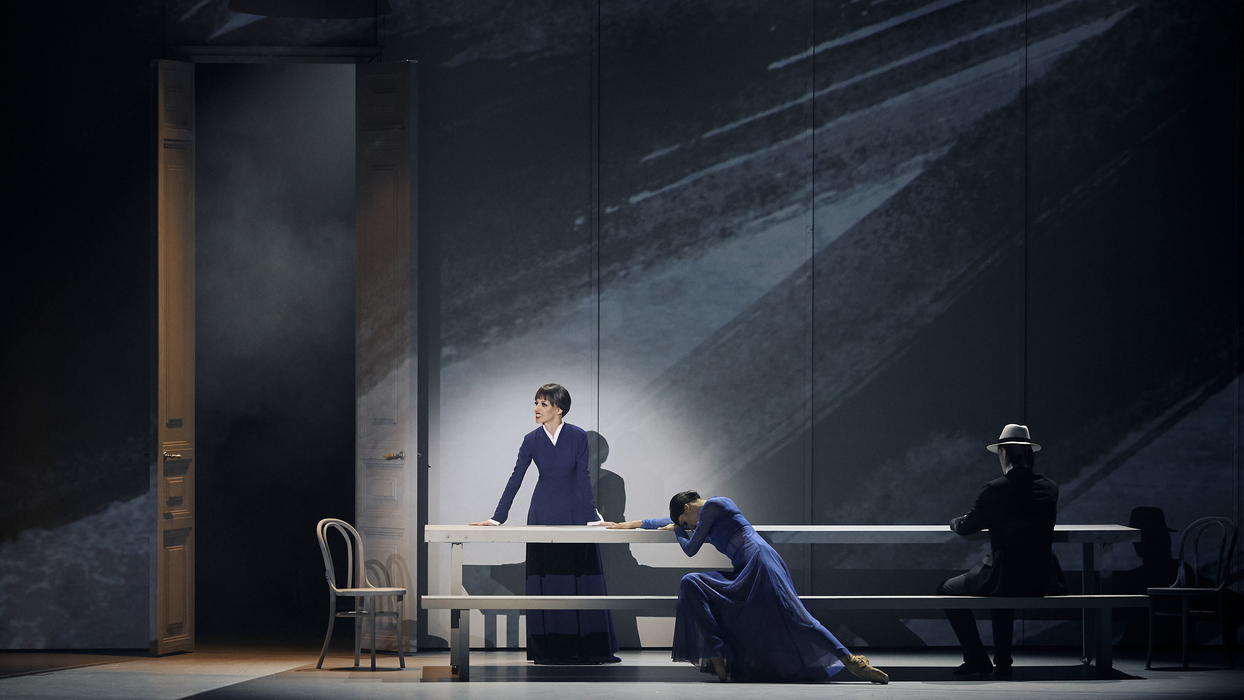
Malikova’s Akhmatova stood in the doorway of a high double door accompanied by a metronome, the quick tick-tock of which sounded like time flying by. The rectangle of light that shone through the door onto the gloomily gray stage resembled a catwalk. It led Akhmatova, who was reciting “There are three epochs to reminiscences…” back in time and down her memory lane.

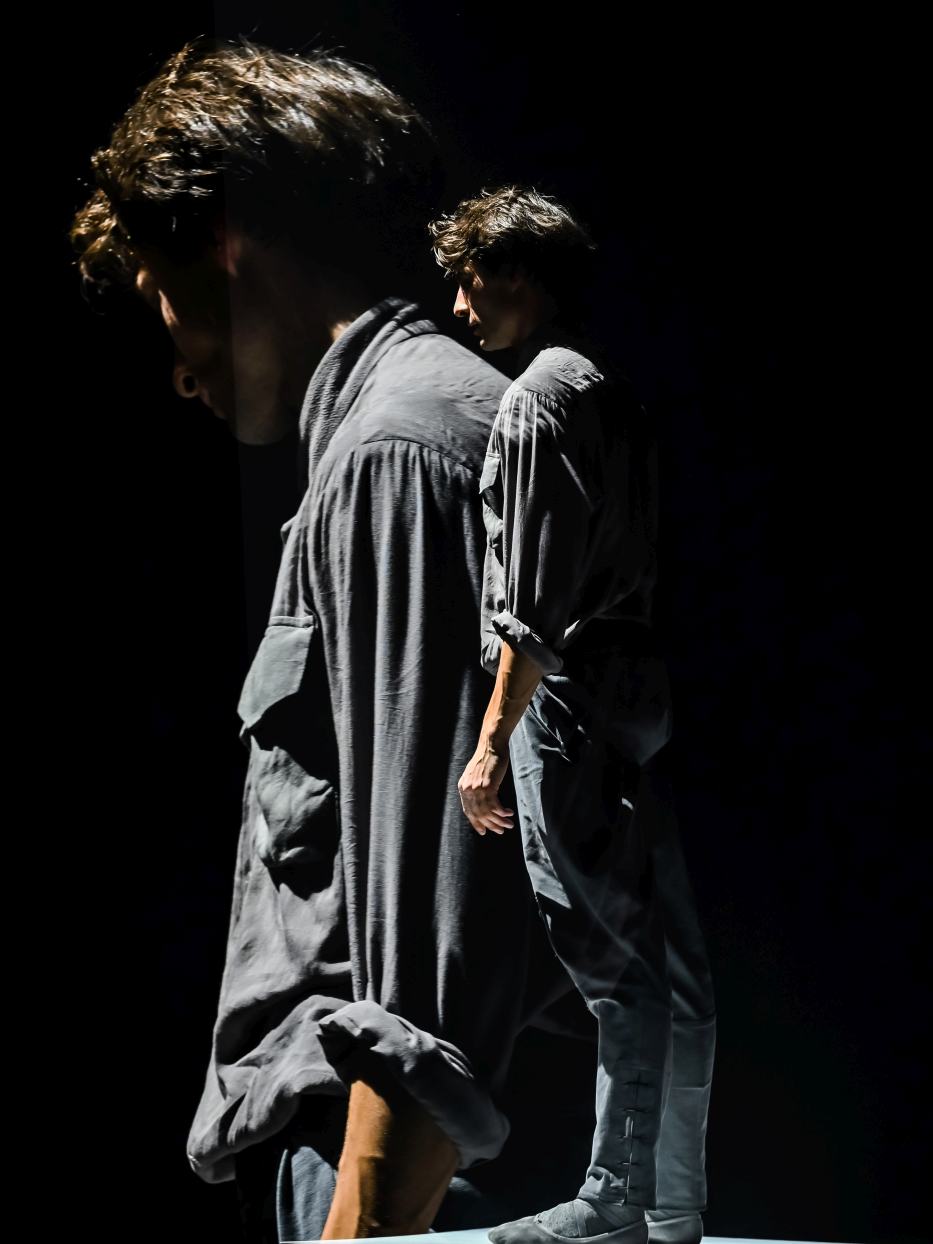
7. A.Putintsev (Amedeo Modigliani), E.Sevenard (Anna Akhmatova), D.Potaptsev (Nikolai Gumilev), and ensemble; “Akhmatova” by Y.Possokhov, MuzArts 2025 © Diaghilev P.S. Festival/M.Vilchuk 8. A.Putintsev (Amedeo Modigliani), “Akhmatova” by Y.Possokhov, MuzArts 2025 © Diaghilev P.S. Festival/M.Vilchuk Gradually, light fell on a plain table and a bench, upon which her younger self (danced by Eleonora Sevenard) rested. Sevenard’s light blue dress and Malikova’s floor-length, ink-blue, white collared dress were the only splashes of vibrant color on an otherwise gray stage. The man sitting motionless next to Akhmatova was Gumilev (Daniil Potaptsev). Slowly coming to life, Akhmatova sat up like a diva. Her languid elegance looked pretentious. She took some probing steps, then twirled toward the darkness, curious to explore its depth. Strength and sensuality combined in her.
9. E.Sevenard (Anna Akhmatova), “Akhmatova” by Y.Possokhov, MuzArts 2025 © Diaghilev P.S. Festival/M.Vilchuk A gently singing violin, soft piano music, and the voice of Malikova accompanied Akhmatova’s blossoming romance with Gumilev. They had just met when a second double door opened and a group of artists, among them Modigliani (Alexei Putintsev), entered. Laid back and bohemian, he instantly attracted Akhmatova and vice versa. The reserved Gumilev did not impress him in the least and was sidelined. Emotional turmoil ensued. Every glance from Modigliani burnt Akhmatova like a flame. Obedience fought the wish to break free. Then Gumilev left through one of the doors. The small strip of light that shone through the door signaled that he hadn’t parted forever.
Modigliani fueled Akhmatova’s femininity, but her nature was erratic. “Off you went as if you had not heard, And the soul got empty and clear again,” recited Malikova as the lovers separated. Soon, they were magnetically drawn back to one another. Gumilev returned furious, desperate, and helpless. For the time being, he kept his composure, but it crumbled as his wife abandoned and then returned to him. “Nothing chains a heart to heart,” seemed to be her motto.
10. P.Malikova (Anna Akhmatova), “Akhmatova” by Y.Possokhov, MuzArts 2025 © Diaghilev P.S. Festival/M.Vilchuk 11. A.Putintsev (Amedeo Modigliani) and E.Sevenard (Anna Akhmatova), “Akhmatova” by Y.Possokhov, MuzArts 2025 © Diaghilev P.S. Festival/M.VilchukOn one occasion, after Akhmatova had left Modigliani for Gumilev, Modigliani rolled across the floor like a nerve-racked, anguished bundle. In her memories, Akhmatova wrote that “Obviously [Modigliani] began drinking at a later stage, but hashish had already made its appearance in the stories he told.” A “certain madame” (Yaroslavna Kuprina) appeared in his life and exerted a great influence on him. Because of her, Akhmatova lamented that “No letter came for me today.”
12. Ensemble, “Akhmatova” by Y.Possokhov, MuzArts 2025 © Diaghilev P.S. Festival/M.Vilchuk Contrary to her earlier lines (i.e. “The two of us won’t share a glass together”), she did reunite with Modigliani, who seemed eternally grateful but suddenly looked vulnerable. Gumilev must have learned about his wife’s latest departure from the letter he crumpled up. He then lay flat as a pancake on the table and curled up like a lost child.
As Akhmatova continued to feel torn between two men, Gumilev’s contempt grew. He dumped his wife into Modigliani’s arms, his limbs thrashing in the air. It wasn’t clear whether he was angry about Akhmatova or about having cleared things up. From that moment, the color of Sevenard’s dress was muted.

13. Y.Kuprina (Jeanne) and E.Sevenard (Anna Akhmatova), “Akhmatova” by Y.Possokhov, MuzArts 2025 © Diaghilev P.S. Festival/M.Vilchuk 14. E.Sevenard (Anna Akhmatova), “Akhmatova” by Y.Possokhov, MuzArts 2025 © Diaghilev P.S. Festival/M.Vilchuk Akhmatova later lost sight of Modigliani. No one knew him, Malikova said, and “Someone described him as a ‘drunken monster’ or something of the sort.” Perhaps the many pages that flew onto the stage from the left wing like fallen leaves in autumn symbolized the end of their romance. Perhaps they testified to Akhmatova’s success as an author.
The three nameless couples that intermingled with the main protagonists several times knelt in line with them in a final arm 15. P.Malikova (Anna Akhmatova) and E.Sevenard (Anna Akhmatova), “Akhmatova” by Y.Possokhov, MuzArts 2025 © Diaghilev P.S. Festival/M.Vilchuk movement routine, the intention of which I failed to grasp. As Malikova and Sevenard each walked toward opposite doors, Modigliani’s 1911 drawing of Akhmatova hung above their heads. The last poem Malikova recited was “Twenty-First. Night. Monday.” It mentioned a secret that reveals itself to some, “And on them silence settles down.” Together with Malikova, this secret vanished behind the slowly closing door.

Unlike in The Seagull or The Queen of Spades, for example, Possokhov’s choreography lacked intensity and clarity, but was similar to memories gilded by time. The many poems provided a strong framework, especially since Malikova was almost constantly on stage. César Franck’s Piano Quintet in F minor added acoustic depth.

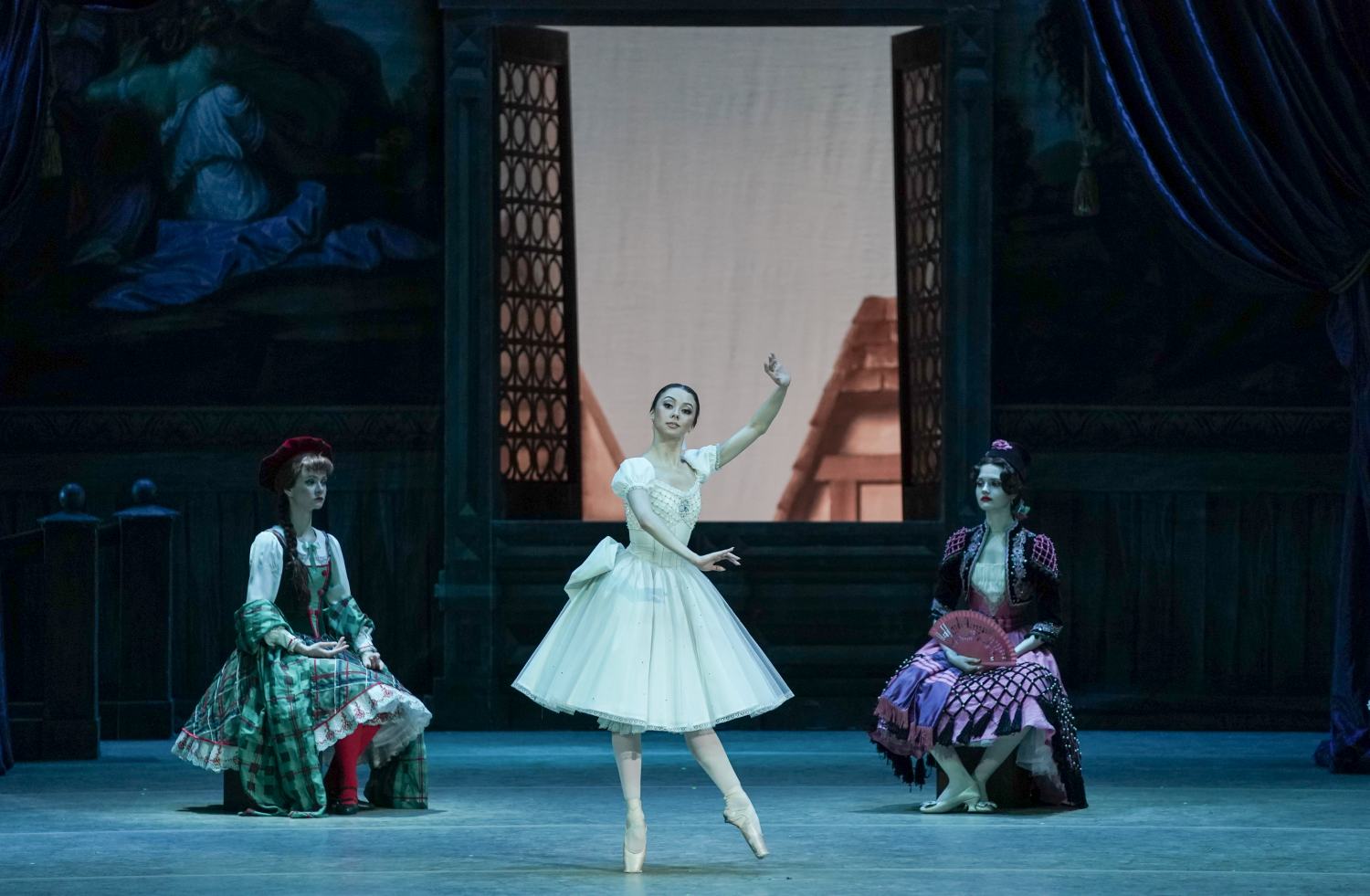
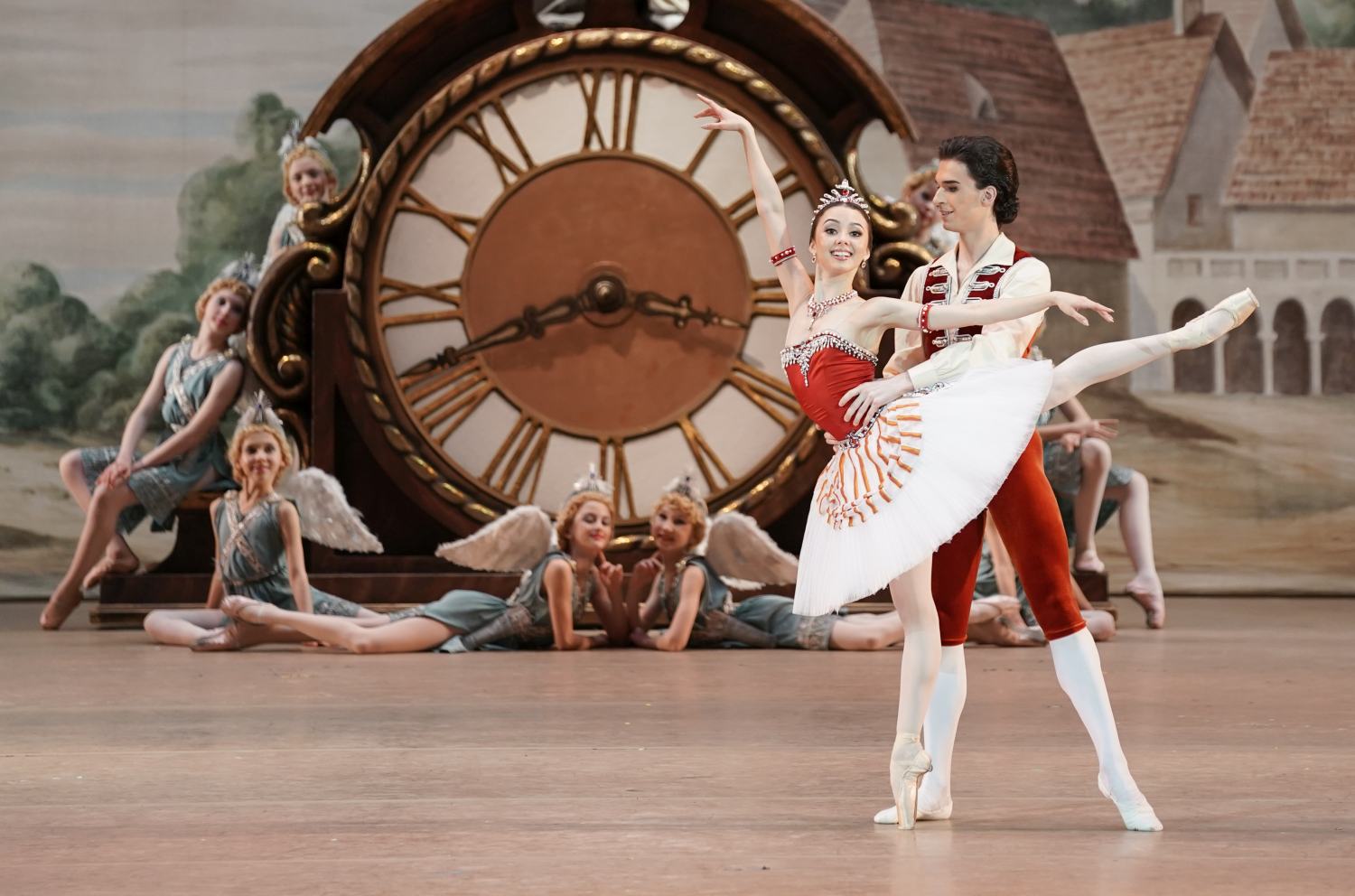
16. Scene from “Pavlova” by P.Glukhov, MuzArts 2025 © Diaghilev P.S. Festival/M.Vilchuk Pavlova opened with a sound by Ignat Krasikov’s clarinet that must have tapped an old underground pipeline. Once surfaced, it developed into a melody that fizzed and warbled like a cheeky bird. Tongue-in-cheek humor immediately filled the air. Lush red drapery and a semicircular spotlight turned the stage into an intimate cabaret. Apparently, one ballerina wasn’t enough to portray an artist as scintillating as Pavlova, so Glukhov employed six. Three of them (Anastasia Stashkevich, Yaroslavna Kuprina, and Elizaveta Kokoreva) performed solos and pas de deux, and the other three joined them in the final scene. Kokoreva in particular danced a great deal (and superbly conveyed Pavlova’s charm and esprit).

18. V.Lopatin (Enrico Cecchetti) and A.Stashkevich (Anna Pavlova), “Pavlova” by P.Glukhov, MuzArts 2025 © Diaghilev P.S. Festival/M.Vilchuk 17. V.Lopatin (Enrico Cecchetti) and A.Stashkevich (Anna Pavlova), “Pavlova” by P.Glukhov, MuzArts 2025 © Diaghilev P.S. Festival/M.Vilchuk Walking across the stage as if lost, Stashkevich, Kuprina, and Kokoreva curtseyed (either modestly, coquettishly, or with the grandeur of a seasoned artist) and disappeared behind the curtain. Only a plush swan peeped out from behind, but it quickly ducked its head backstage. Cecchetti (Vyacheslav Lopatin), who strode on stage as if he were a caricature of the Legat brothers, lured the swan back, resolutely clutched its neck, and pulled it on stage.
19. V.Lopatin (Enrico Cecchetti) and A.Stashkevich (Anna Pavlova), “Pavlova” by P.Glukhov, MuzArts 2025 © Diaghilev P.S. Festival/M.Vilchuk 20. A.Gainutdinov (Vaslav Nijinsky), E.Kokoreva (Anna Pavlova), and A.Gainutdinov (Igor Stravinsky); “Pavlova” by P.Glukhov, MuzArts 2025 © Diaghilev P.S. Festival/M.Vilchuk 21. E.Kokoreva (Anna Pavlova), “Pavlova” by P.Glukhov, MuzArts 2025 © Diaghilev P.S. Festival/M.Vilchuk The puppeteer attached to the swan’s neck was Pavlova. Cecchetti’s cane worked like a magic wand on her. Its slap urged her to the barre, where it honed her line. It manipulated Pavlova like a puppet rod, supported and flirted with her, and, once in her hands, turned against its owner.

23. E.Kokoreva (Anna Pavlova) and I.Gainutdinov (Mikhail Mordkin), “Pavlova” by P.Glukhov, MuzArts 2025 © Diaghilev P.S. Festival/M.Vilchuk 22. E.Kokoreva (Anna Pavlova), “Pavlova” by P.Glukhov, MuzArts 2025 © Diaghilev P.S. Festival/M.Vilchuk The white swan feather that floored Michel Fokine (Makar Mikhalkin, who wore striped pants, suspenders, and a white bow tie) inspired him to perform a lightweight, acrobatic solo from which the idea for The Swan emerged. An innovative choreographer, Fokine brimmed over with novelties. How Pavlova absorbed the swan nature was unclear, but her arms undulated perfectly at the end of their rehearsal. She didn’t dance the swan with Mikhail Mordkin (Ildar Gainutdinov), though. He was a straddle-legged muscleman with a pirate-like headscarf who grimaced like a surprised comic figure, and he propelled her around, lifted her like barbells, and twisted and 24. M.Orlov (Victor Dandré) and Y.Kuprina (Anna Pavlova), “Pavlova” by P.Glukhov, MuzArts 2025 © Diaghilev P.S. Festival/M.Vilchuk folded her in every direction imaginable. It’s said that Mordkin’s sheer physicality brought out the vamp in Pavlova. Obviously, this was the only way to handle him.

The top-hatted Diaghilev (Mark Orlov), whose overlong arms and hunched posture emulated a gorilla, was busy pacifying the constantly quarreling Nijinsky (Alexei Gainutdinov, who wore a white version of Nijinsky’s Le Spectre de la rose costume) and Stravinsky (Anton Gainutdinov). They chased one another in a boxing fight. In a quiet moment, the first tunes of The Rite of Spring came into Stravinsky’s mind, and once written down, he handed them to Korobeinikov in the orchestra pit. Tied up in knots and terribly punctilious, Stravinsky turned ecstatic while listening to Korobeinikov hammering the staccato rhythm.

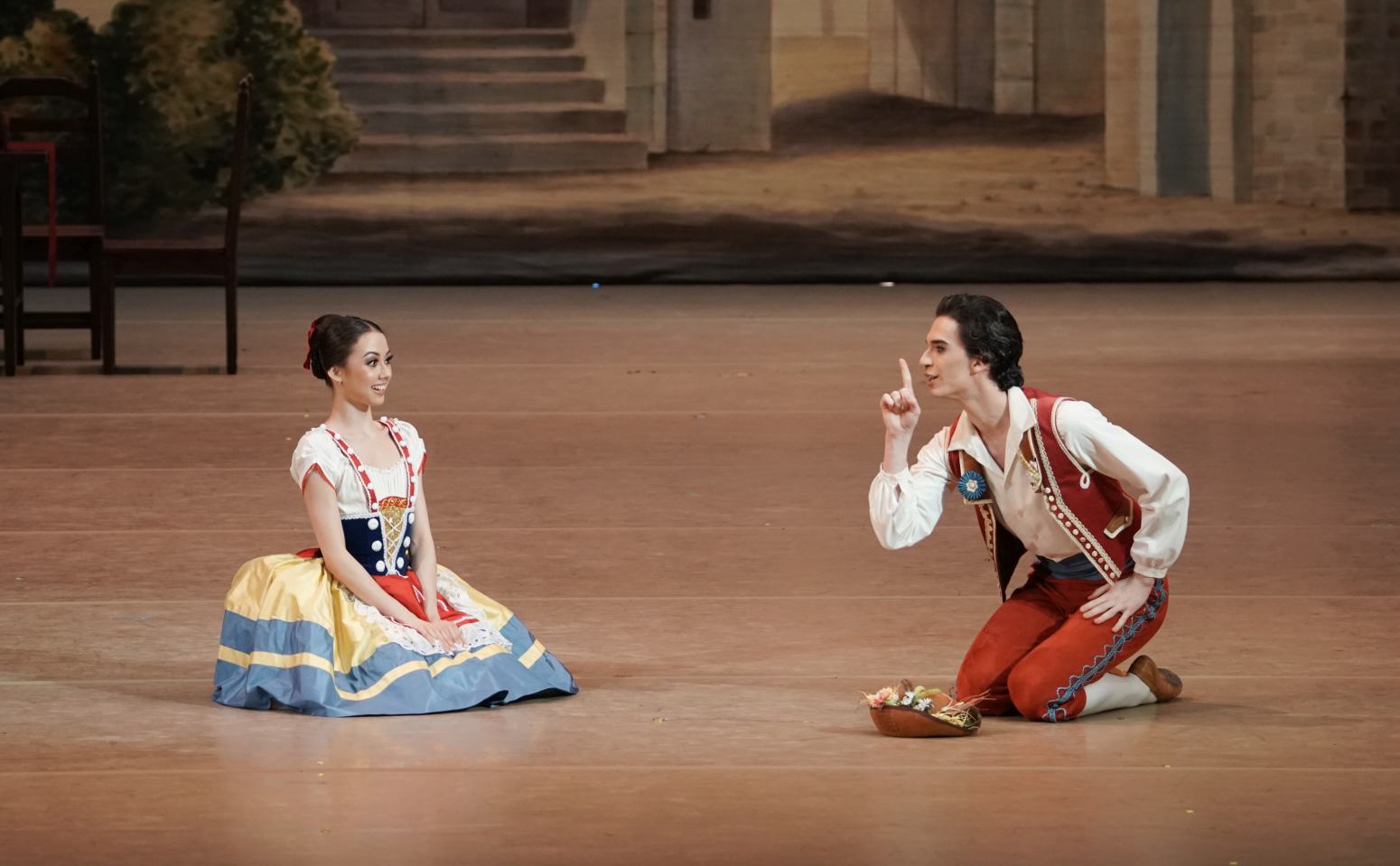
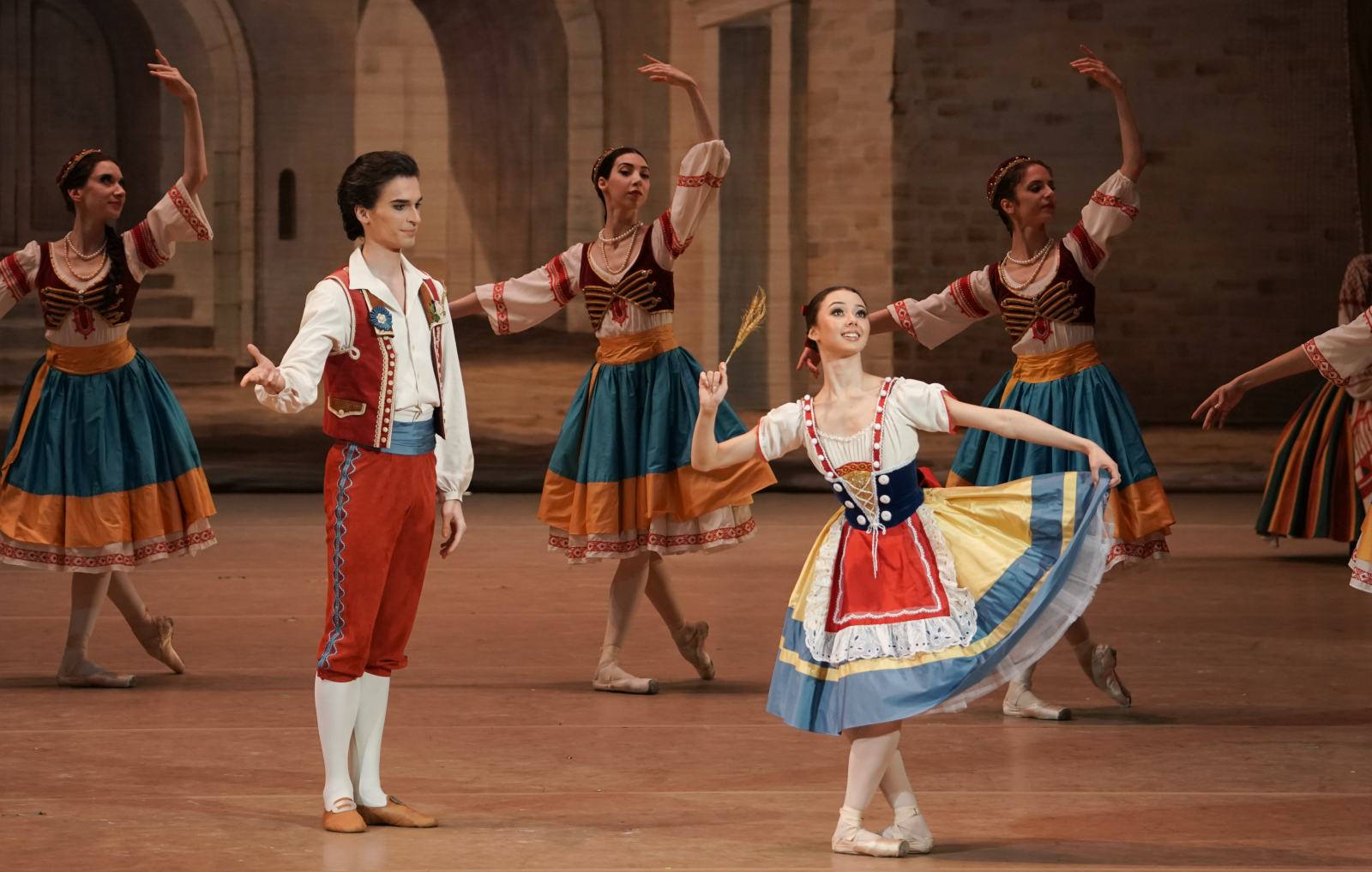
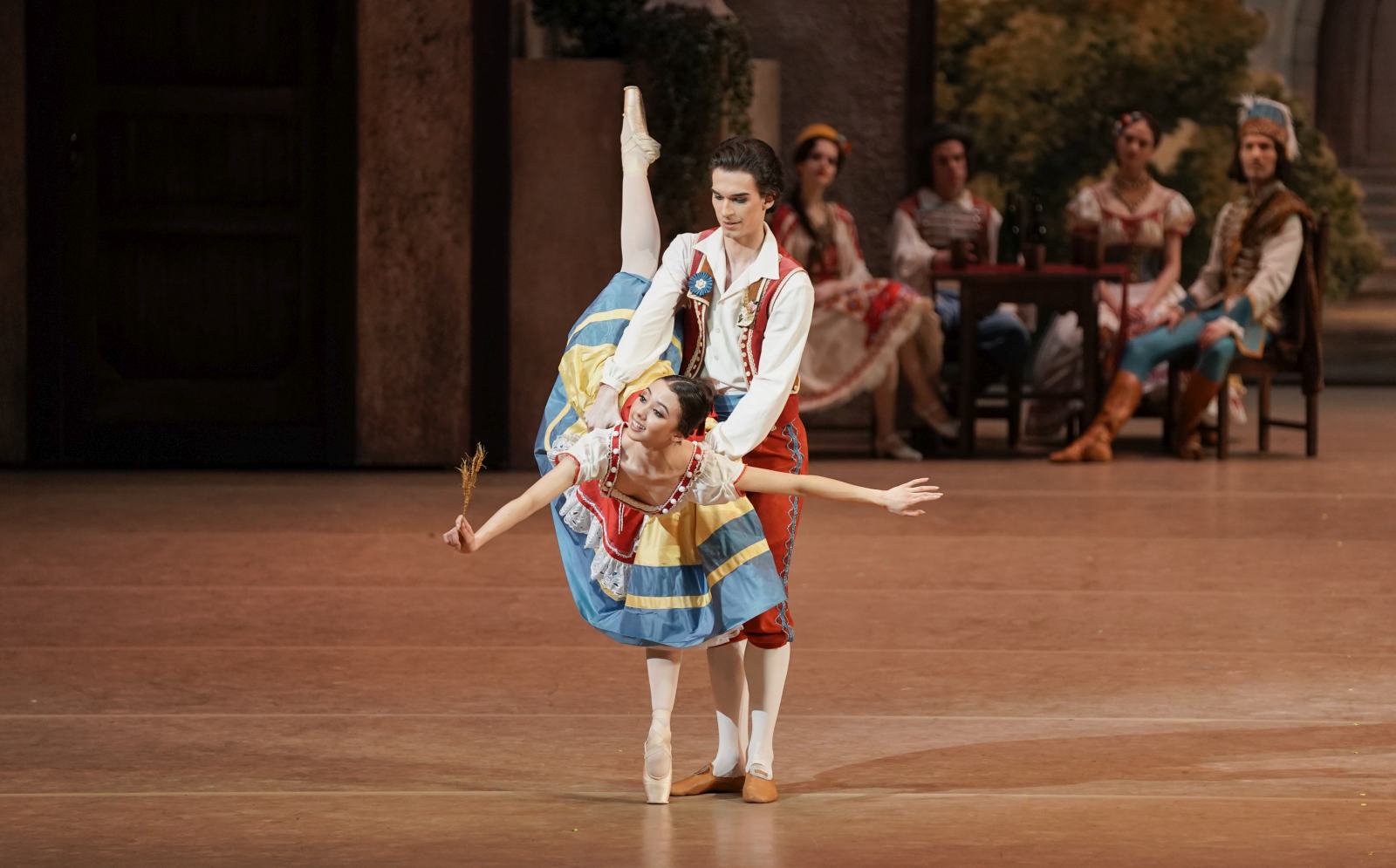
27. A.Putintsev (Charlie Chaplin) and E.Kokoreva (Anna Pavlova), “Pavlova” by P.Glukhov, MuzArts 2025 © Diaghilev P.S. Festival/M.Vilchuk 26. E.Kokoreva (Anna Pavlova) and A.Putintsev (Charlie Chaplin), “Pavlova” by P.Glukhov, MuzArts 2025 © Diaghilev P.S. Festival/M.Vilchuk 25. Marc Orlov (Victor Dandré) and Yaroslavna Kuprina (Anna Pavlova), “Pavlova” by Pavel Glukhov, MuzArts 2025 © Diaghilev P.S. Festival/M.Vilchuk Of all the men, Victor Dandré (Mark Orlov), Pavlova’s husband, was the least eccentric, and their wedding pas de deux was calm and poetic. Irresistible sweet, by comparison, was the sight of Kokoreva’s Pavlova next to Alexei Putintsev’s Charlie Chaplin. In real life, Pavlova and Chaplin met at his Hollywood Studio in Los Angeles. A photograph shows them sitting hand in hand on a bench. On stage, Pavlova and Chaplin sat on red chairs playing a “going-to-Jerusalem”-esque game, although there was no shortage of chairs. Spellbound by a film we couldn’t see, they constantly pushed, nudged, climbed across, and accidentally groped one another. A black-and-white clip of Chaplin’s waddling gait, followed by a steam engine that sped toward Pavlova, added a grave overtone.

28.A.Stashkevich (Anna Pavlova) and V.Lopatin (Alexander Vertinsky), “Pavlova” by P.Glukhov, MuzArts 2025 © Diaghilev P.S. Festival/M.Vilchuk 29. A.Stashkevich (Anna Pavlova) and V.Lopatin (Alexander Vertinsky), “Pavlova” by P.Glukhov, MuzArts 2025 © Diaghilev P.S. Festival/M.Vilchuk Warmth, trust, and playfulness characterized Pavlova’s friendship with Alexander Vertinsky (Vyacheslav Lopatin). Sitting together, they reminded me of an ageing couple recalling the good old days. Vertinsky stayed back while Pavlova traveled the world (a huge elephant represented her trip to India). As he sat in the semi-darkness wearing a white ruff and a narrow, black cap, he looked like the melancholic Pierrot of his own stage career.

31. Ensemble, “Pavlova” by P.Glukhov, MuzArts 2025 © Diaghilev P.S. Festival/M.Vilchuk 30. Ensemble, “Pavlova” by P.Glukhov, MuzArts 2025 © Diaghilev P.S. Festival/M.Vilchuk Countless numbers of pointe shoes were scattered on stage when all six Pavlovas joined for their final swan dance. Dissonant piano chords accompanied them as they bouréed in line toward a spotlight. Against the blazing light, their undulating arms seemed to belong to a single body. For a moment, they looked like Shiva surrounded by a bright aura. A spotlight that searched the stage afterward lit nothing but used pointe shoes.

Link: Diaghilev P.S. International Festival of Arts
Photos: 1. Polina Malikova (Anna Akhmatova), Eleonora Sevenard (Anna Akhmatova), and Daniil Potaptsev (Nikolai Gumilev), “Akhmatova” by Yuri Possokhov, MuzArts 2025
2. Polina Malikova (Anna Akhmatova) and Eleonora Sevenard (Anna Akhmatova), “Akhmatova” by Yuri Possokhov, MuzArts 2025
3. Daniil Potaptsev (Nikolai Gumilev) and ensemble, “Akhmatova” by Yuri Possokhov, MuzArts 2025
4. Eleonora Sevenard (Anna Akhmatova), “Akhmatova” by Yuri Possokhov, MuzArts 2025
5. Eleonora Sevenard (Anna Akhmatova), Alexei Putintsev (Amedeo Modigliani), Polina Malikova (Anna Akhmatova), and ensemble; “Akhmatova” by Yuri Possokhov, MuzArts 2025
6. Eleonora Sevenard (Anna Akhmatova), “Akhmatova” by Yuri Possokhov, MuzArts 2025
7. Alexei Putintsev (Amedeo Modigliani), Eleonora Sevenard (Anna Akhmatova), Daniil Potaptsev (Nikolai Gumilev), and ensemble; “Akhmatova” by Yuri Possokhov, MuzArts 2025
8. Alexei Putintsev (Amedeo Modigliani), “Akhmatova” by Yuri Possokhov, MuzArts 2025
9. Eleonora Sevenard (Anna Akhmatova), “Akhmatova” by Yuri Possokhov, MuzArts 2025
10. Polina Malikova (Anna Akhmatova), “Akhmatova” by Yuri Possokhov, MuzArts 2025
11. Alexei Putintsev (Amedeo Modigliani) and Eleonora Sevenard (Anna Akhmatova), “Akhmatova” by Yuri Possokhov, MuzArts 2025
12. Ensemble, “Akhmatova” by Yuri Possokhov, MuzArts 2025
13. Yaroslavna Kuprina (Jeanne) and Eleonora Sevenard (Anna Akhmatova), “Akhmatova” by Yuri Possokhov, MuzArts 2025
14. Eleonora Sevenard (Anna Akhmatova), “Akhmatova” by Yuri Possokhov, MuzArts 2025
15. Polina Malikova (Anna Akhmatova) and Eleonora Sevenard (Anna Akhmatova), “Akhmatova” by Yuri Possokhov, MuzArts 2025
16. Scene from “Pavlova” by Pavel Glukhov, MuzArts 2025
17. Vyacheslav Lopatin (Cecchetti) and Anastasia Stashkevich (Anna Pavlova), “Pavlova” by Pavel Glukhov, MuzArts 2025
18. Vyacheslav Lopatin (Cecchetti) and Anastasia Stashkevich (Anna Pavlova), “Pavlova” by Pavel Glukhov, MuzArts 2025
19. Vyacheslav Lopatin (Enrico Cecchetti) and Anastasia Stashkevich (Anna Pavlova), “Pavlova” by Pavel Glukhov, MuzArts 2025
20. Alexei Gainutdinov (Vaslav Nijinsky), Elizaveta Kokoreva (Anna Pavlova), and Anton Gainutdinov (Igor Stravinsky); “Pavlova” by Pavel Glukhov, MuzArts 2025
21. Elizaveta Kokoreva (Anna Pavlova), “Pavlova” by Pavel Glukhov, MuzArts 2025
22. Elizaveta Kokoreva (Anna Pavlova), “Pavlova” by Pavel Glukhov, MuzArts 2025
23. Elizaveta Kokoreva (Anna Pavlova) and Ildar Gainutdinov (Mikhail Mordkin), “Pavlova” by Pavel Glukhov, MuzArts 2025
24. Marc Orlov (Victor Dandré) and Yaroslavna Kuprina (Anna Pavlova), “Pavlova” by Pavel Glukhov, MuzArts 2025
25. Marc Orlov (Victor Dandré) and Yaroslavna Kuprina (Anna Pavlova), “Pavlova” by Pavel Glukhov, MuzArts 2025
26. Elizaveta Kokoreva (Anna Pavlova) and Alexei Putintsev (Charlie Chaplin), “Pavlova” by Pavel Glukhov, MuzArts 2025
27. Alexei Putintsev (Charlie Chaplin) and Elizaveta Kokoreva (Anna Pavlova), “Pavlova” by Pavel Glukhov, MuzArts 2025
28. Anastasia Stashkevich (Anna Pavlova) and Vyacheslav Lopatin (Alexander Vertinsky), “Pavlova” by Pavel Glukhov, MuzArts 2025
29. Anastasia Stashkevich (Anna Pavlova) and Vyacheslav Lopatin (Alexander Vertinsky), “Pavlova” by Pavel Glukhov, MuzArts 2025
30. Ensemble, “Pavlova” by Pavel Glukhov, MuzArts 2025
31. Ensemble, “Pavlova” by Pavel Glukhov, MuzArts 2025
all photos © Diaghilev P.S. Festival/Mikhail Vilchuk
Editing: Kayla Kauffman


Dreams versus Reality

“The Seagull”
Bolshoi Ballet
Bolshoi Theatre (New Stage)
Moscow, Russia
March 06, 2025

by Ilona Landgraf
Copyright © 2025 by Ilona Landgraf

1. A.Putintsev (Konstantin Treplev), “The Seagull” by Y.Possokhov, Bolshoi Ballet 2025 © Bolshoi Theatre/M.Logvinov Almost four years after its premiere in summer 2021, I finally saw Yuri Possokhov’s The Seagull at the Bolshoi Theatre. It was his sixth creation for the company (his seventh and latest, The Queen of Spades, premiered in 2023), and the fourth time, he teamed up with composer Ilya Demutsky. The artistic team included costume designer Emma Ryott (a longstanding collaborator of choreographer Christian Spuck) and set designer Tom Pye (who also created the designs for Possokhov’s Anna Karenina). David Finn contributed the lighting, Sergei Rylko the video design.

Chekhov’s The Seagull is labeled as a comedy, but its humor is bitter at best. Not a single protagonist leads a fulfilled life. Everybody runs after a dream world or tries to construct their realities. Family relationships are strained, and love is unrequited, quickly exhausted, or phony. Possokhov’s interpretation throws more light on some characters, and less on others, and differs in some respects from the original. Irina Arkadina (Kristina Kretova)—an actress in Chekhov’s version, a renowned ballerina in Possokhov’s—is not merely a fashionable yet greedy diva and dysfunctional mother. She shows her empathetic side when she recalls childhood memories with her elderly brother, Pyotr Sorin (Mikhail Lobukhin), whose unrealized dreams of marriage and artistic career Possokhov omitted. Like in the text, events largely unfolded at Sorin’s country estate. Continue reading “Dreams versus Reality”

The Hub

“The Nutcracker”
Bolshoi Ballet
Bolshoi Theatre
Moscow, Russia
December 31, 2024 (live stream)

by Ilona Landgraf
Copyright © 2025 by Ilona Landgraf

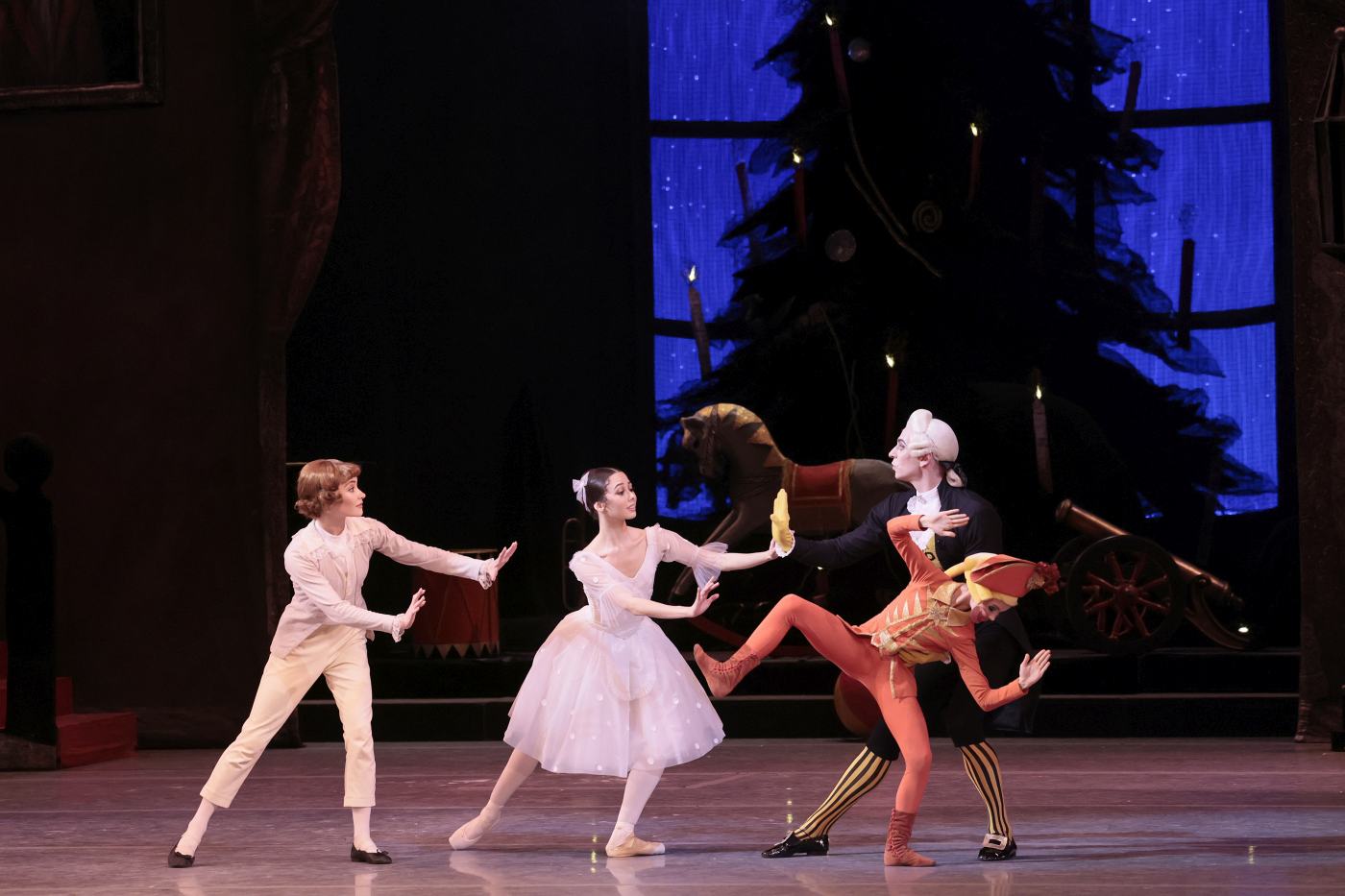
1. E.Kokoreva (Marie) and ensemble, “The Nutcracker” by Y.Grigorovich, Bolshoi Ballet 2024 © Bolshoi Ballet/D.Yusupov2. A.Ovcharenko (Nutcracker Prince), “The Nutcracker” by Y.Grigorovich, Bolshoi Ballet 2024 © Bolshoi Ballet/D.Yusupov During this year’s Christmas sermon, my pastor asked which moment should best represent Christmas. The Christmas dinner? The lighting of the candles? Or, perhaps, unwrapping the presents? For me, this moment was the moment during the Bolshoi Ballet’s performance of The Nutcracker when the newlywed Marie (Elizaveta Kokoreva) and the Nutcracker Prince (Artem Ovcharenko) were lifted by their court toward the star at the top of the Christmas tree. It was the climax of their spiritual journey and of Yuri Grigorovich’s choreography for which I had been waiting since I last saw his Nutcracker live in Moscow in 2022.

Two live streams on December 30th (evening performance) and December 31st (matinee) enabled a vast audience to follow the heroes’ journey. To meet the demand, the number of cinemas offering live broadcasts grew from one hundred to three hundred in December. Most were located in Russia, but cinemas in Belarus, Armenia, and the United Arab Emirates also participated. I was able to watch the matinee on the Bolshoi’s vk video platform. Continue reading “The Hub”

An Opening Salute

“The Sleeping Beauty”
Bolshoi Ballet
Bolshoi Theatre
Moscow, Russia
September 07, 2024 (live stream)

by Ilona Landgraf
Copyright © 2024 by Ilona Landgraf

 1. Y.Ostrovsky (Catalabutte) and ensemble, “The Sleeping Beauty” by Y.Grigorovich after M.Petipa, Bolshoi Ballet 2024 © Bolshoi Theatre/P.Rychkov The Bolshoi Ballet opened its 249th season with a revival of Yuri Grigorovich’s The Sleeping Beauty, which has been absent from the stage for four years. Because of the thorough change of décor, the production was announced as a premiere. It swapped the opulent (and often criticized) sets and costumes that Ezio Frigerio and Franca Squarciapino designed for the 2011 revival (celebrating the reopening of the theater’s Historic Stage after six years of refurbishment) for the restrained décor that Simon Virsaladze (1909–1989) created for Grigorovich’s second version of the ballet in 1973. The subdued hues and aquarelle-ish style of its courtly surroundings direct the gaze toward the colorful costumes (recalling French court fashion from King Louis XIII’s to the Sun King, Louis XIV’s, reign), beautiful flower garlands and bouquets at Aurora’s birthday party, and, most importantly, the dancers and their performances. Raising the curtain didn’t elicit oohs and aahs from the audience as, for example, Jürgen Rose’s décor for Marcia Haydée’s Sleeping Beauty regularly has done on Western stages. Continue reading “An Opening Salute”

Intense

“Romeo and Juliet”
Bolshoi Ballet
Bolshoi Theatre (Historic Stage)
Moscow, Russia
April 04, 2024 (video)

by Ilona Landgraf
Copyright © 2024 by Ilona Landgraf

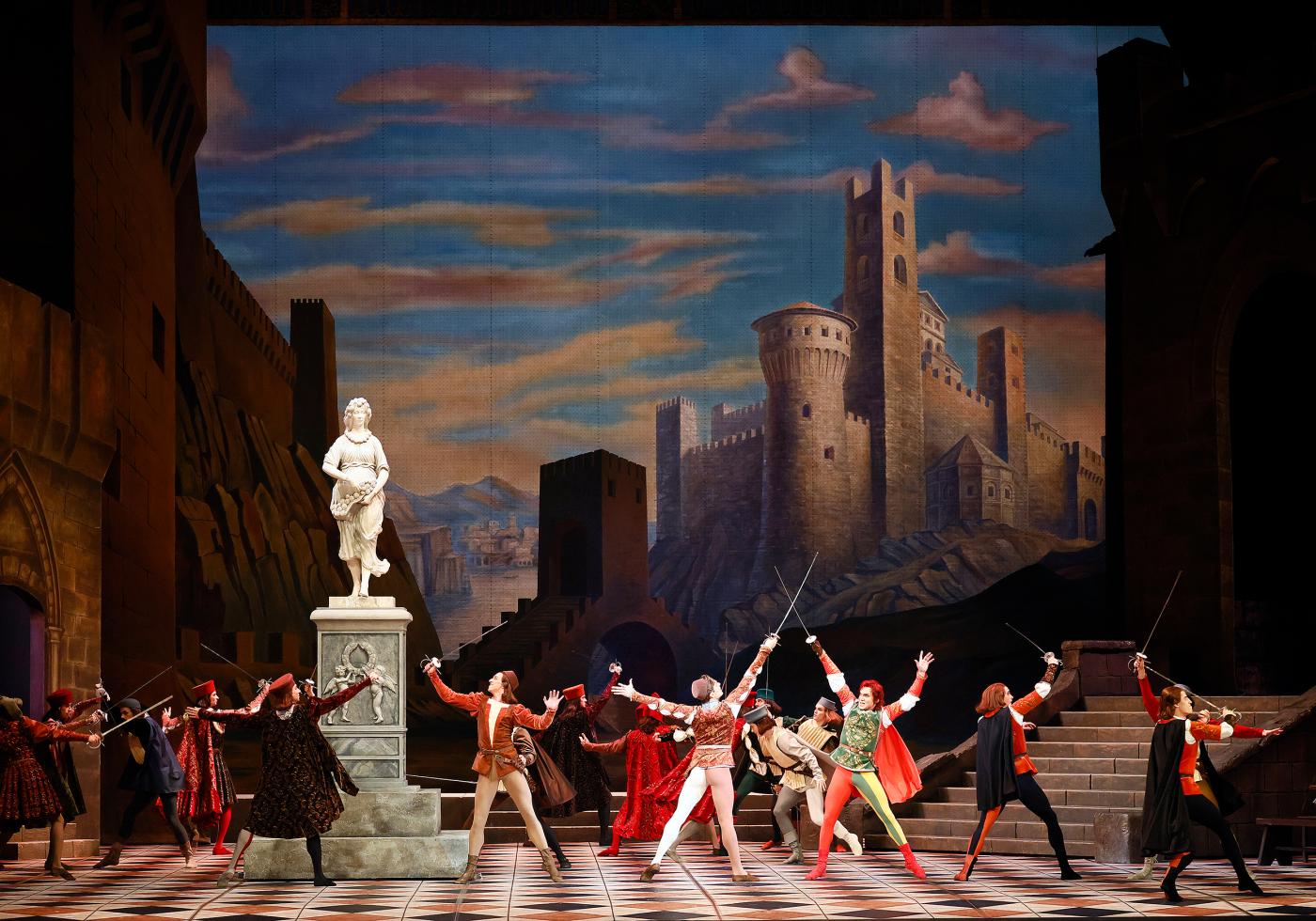
1. D.Efremov (Montague's Servant), I.Alexeyev (Benvolio), M.Lobukhin (Tybalt), and ensemble; “Romeo and Juliet” by L.Lavrovsky, Bolshoi Ballet 2024 © Bolshoi Ballet / D.YusupovIn early April, the Bolshoi Ballet revived Leonid Lavrovsky’s Romeo and Juliet, which senior balletomanes may remember from the company’s famous tours of London and the Met in the 1950s and ‘60s. Galina Ulanova, Raisa Strutchkova, Vladimir Vasiliev, Maris Liepa, and many others wrote ballet history dancing the leading roles. I couldn’t attend the premiere in Moscow but was finally able to watch a video of the opening night. It made me wonder why the production had been dropped from the schedule. Continue reading “Intense”

In Commemoration of Ekaterina Maximova

“Fragments of One Biography”
Bolshoi Ballet and Guests
Bolshoi Theatre
Moscow, Russia
February 01, 2024 (video)

by Ilona Landgraf
Copyright © 2024 by Ilona Landgraf

1. Ensemble, “Fragments of One Biography” staged by V.Vasiliev, Bolshoi Ballet 2024 © Bolshoi Ballet / E.FetisovaOn February 1st, the Bolshoi Ballet’s prima ballerina, Ekaterina Maximova (1939-2009), would have celebrated her 85th birthday. A phenomenally successful (and multi-decorated) artist, Maximova’s fame reached far beyond Russia’s borders. After retiring from the stage of the Bolshoi in 1988, she continued to dance with other Russian and international companies—and sometimes even returned home to the Bolshoi. From 1990 on, Maximova worked as a coach, teacher, and member of several arts councils and committees. Every five years, Maximova’s husband, Vladimir Vasiliev, stages a gala at the Bolshoi in honor of his late wife. I was able to watch this year’s event on video. Continue reading “In Commemoration of Ekaterina Maximova”

A Grand Spectacle

“La Fille du Pharaon”
Bolshoi Ballet
Bolshoi Theatre
Moscow, Russia
February 16, 2024

by Ilona Landgraf
Copyright © 2024 by Ilona Landgraf

1. M.Mishina (Ramze), E.Kokoreva (Aspicia), and ensemble; “La Fille du Pharaon” by P.Lacotte, Bolshoi Ballet 2024 © Bolshoi Ballet / D.Yusupov The Bolshoi Ballet’s La Fille du Pharaon is about an Egyptian pipe dream—and it felt like a dream indeed. I was already impressed in 2019 when I watched it for the first time. Five years later, the cultural landscape has changed so much that its magnificence seems surreal. It highlights the extent to which the paths of Western and Russian cultures have diverged. While European culture finds itself on shaky grounds, the Bolshoi stands firm as a rock. The critics who argue that Pierre Lacotte’s recreation of Marius Petipa’s La Fille du Pharaon (1862) is like unearthing a dusty ballet mummy are wrong. True, the piece’s libretto (which is based on Theophile Gautier’s 1857 Le Roman de la Momie and was edited by Lacotte) is flimsy. Hearty drags on an opium pipe transport a traveling Englishman and his servant to the pyramids during the reign of a mighty pharaoh. This pharaoh has a daughter who instantly falls in love with the Englishman. After some adventurous trouble (including the dispatch of a lion, a last-minute escape, a nearly murderous assault, a suicide attempt, and the hero’s near execution), the lovers are happily united. But – alas! Upon awakening, Continue reading “A Grand Spectacle”

Reassuring

“Chopiniana”/“Grand Pas from the Ballet Paquita
Bolshoi Ballet
Bolshoi Theatre (Historic Stage)
Moscow, Russia
February 14, 2024

by Ilona Landgraf
Copyright © 2024 by Ilona Landgraf

 1. A.Denisova, “Chopiniana” by M.Fokine, Bolshoi Ballet 2024 © Bolshoi Ballet / D.Yusupov The musicians of the Bolshoi Orchestra are on their toes. After acknowledging the welcoming applause, conductor, Pavel Klinichev, raised his baton in the same instant that he turned around to face them. The vigorous bars that he prompted belonged to a Polonaise by Chopin. It opened Mikhail Fokine’s romantic Chopiniana (1908), which the Bolshoi Ballet revived in November 2022. It’s the first part of a double bill the second piece of which – the Grand Pas from Petipa’s Paquita – has been a landmark of classical dance since its creation in 1881.

There’s no need to discuss how Fokine’s choreography was performed. The Bolshoi is a guarantor of sublime performances. Indeed, the unity of the corps was nothing less than staggering; every step was measured yet effortless like an outpouring of natural decency. Perfect proportions soothed the eye. As the leading sylphs, Anastasia Stashkevich, Elizaveta Kruteleva, and Anastasia Denisova paid great attention to detail, adding the right tinge of buoyancy, melancholy, or playfulness to their solos. Vyacheslav Lopatin’s poet combined sensitivity and decisiveness. His clean and – at times mighty – jumps earned applause. Alyona Pikalova’s set design – an arch of gnarled treetops opening onto a sunny water meadow – invited the mind to dream.
I’ve watched several companies dance Chopiniana, but no performance was as complete as the Bolshoi’s. Perhaps due to experiencing messy times in my home country of Germany (and in the West in general), the refined order and serenity of Chopiniana felt especially comforting. It seemed like the epitome of civilization. Continue reading “Reassuring”

Dancer Nominees for the Prix Benois 2023

Prix Benois de la Danse
Bolshoi Theatre
Moscow, Russia
June 17, 2023

by Ilona Landgraf
Copyright © 2023 by Ilona Landgraf

Eleven dancers from five nations are nominated for this year’s Prix Benois. Of the six women and five men, one dances in South-Korea, four in Russia, and two each in China, France, and Kazakhstan. This Tuesday the laureates will be announced in an award ceremony at the Bolshoi Theatre, Moscow.

Here’s a short overview on the nominees:
1. M.Elchibayeva, Kazakh National Opera and Ballet Theatre after Abay © Kazakh National Opera and Ballet Theatre after Abay 2. M.Elchibayeva, Kazakh National Opera and Ballet Theatre after Abay © Kazakh National Opera and Ballet Theatre after AbayMalika Elchibayeva, leading soloist of the Kazakh National Opera and Ballet Theatre after Abay in Almaty, Kazakhstan, is nominated for her performance as Queen Shamkhat in “Frescoes” by Zaurbek Raibayev. Gulzhan Tutkibayeva, artistic director of the company, describes Elchibayeva as having “an outstanding appearance, beautiful texture, a professional school, and acting skills. For 5 years in the theater, Elchibayeva has performed almost all the leading parts of the ballet repertoire. In the role of the Queen Shamkhat she is organic, expressive, and managed to fully convey the idea of the ballet master Raibaev.” Continue reading “Dancer Nominees for the Prix Benois 2023”

Invincible

“The Flames of Paris”
Bolshoi Ballet
Bolshoi Theatre (New Stage)
Moscow, Russia
June 04, 2023 (matinee)

by Ilona Landgraf
Copyright © 2023 by Ilona Landgraf

1. E.Kokoreva (Jeanne), V.Lantratov (Philippe), and ensemble; “The Flames of Paris” by V.Vainonen, Bolshoi Ballet 2023 © Bolshoi Ballet / E.Fetisova “A highly unlikely work” – commented the late Clement Crisp in his Financial Times review about “The Flames of Paris”, which the Bolshoi Ballet performed at the Royal Opera House as part of their 2016 London tour. He argued that the dramatic scheme was papery and the chief roles were predictable.
I checked myself, watching the 85th performance of the latest production at the Bolshoi Ballet’s home base in Moscow.

“The Flames of Paris”, first staged in 1932 at the Kirov Theater in Leningrad (today’s Mariinsky Theater in St. Petersburg) is about how French revolutionaries turned politics and society upside down. Its rousing score by Boris Asafiev draws on music by Lully and Rameau, including the Marseillaise, and climaxes in the powerful revolutionary song “Ça ira”. In 2008, the Bolshoi Ballet’s then artistic director Alexey Ratmansky restored and revised Vasily Vainonen’s original choreography. Nikolai Volkov’s and Vladimir Dmitriev’s libretto, initially spanning four acts, was condensed to two acts. It tells the story of the revolutionaries’ march to Paris and their storming of the Bastille in July 1789. Oblivious to the people’s fury, the monarchy and its representatives continue to debauch in festivities (including a court ballet) at Versailles, but eventually apprehend the looming danger. Puppets of King Louis XVI and Queen Marie Antoinette are already mangled by the crowd, soon to seize the palace. Continue reading “Invincible”

Hot!

“Don Quixote”
Bolshoi Ballet
Bolshoi Theatre
Moscow, Russia
April 5, 2023

by Ilona Landgraf
Copyright © 2023 by Ilona Landgraf

1. A.Putintsev (Basilio), E.Kokoreva (Kitri), and ensemble, “Don Quixote” by A.Fadeechev after M.Petipa, Bolshoi Ballet 2023 © Bolshoi Theatre / D.Yusupov “The Bolshoi Ballet” is synonymous with excellence – and if anyone can pull off “Don Quixote”, it’s them. This past Wednesday, though, the company left me flabbergasted. Pavel Klinichev wasted no time at the conductor’s podium, unleashing Ludwig Minkus’s score the instant he turned to face the orchestra. The effervescent pacing of the first few bars made clear that this “Don Quixote” would be a spicy one.
From the first moment that the goateed Don Quixote (Alexey Loparevich) and his loyal, oft-gluttonous squire Sancho Panza (Georgy Gusev) set off on their chivalrous journey, Valeriy Levental’s set transported us to the sizzling cauldron of the jam-packed port of Barcelona. Everything is perfect: the turquoise Mediterranean Sea glints under the bright summer sun; fresh fruit is piled sky-high; and the local youth remain in the merriest of moods. The happiest of all, Kitri (Elizaveta Kokoreva) and Basilio (Alexey Putintsev), quickly bring the scene to a boil. Kokoreva’s Kitri sweeps onstage like a torpedo, her fleet-footed legs and teasing fan leaving a trail of sparks. Klinichev’s brisk conducting seemed to spur rather than challenge her. I especially admired Kokoreva’s rock-solid balances – from which she descended only to hurl herself into a battery of snappy pirouettes. Continue reading “Hot!”

Transcendent

“The Nutcracker”
Bolshoi Ballet
Bolshoi Theatre
Moscow, Russia
December 29, 2022 (matinee and evening performance)

by Ilona Landgraf
Copyright © 2023 by Ilona Landgraf

1. V.Bessonova (Columbine), “The Nutcracker” by Y.Grigorovich, Bolshoi Ballet 2022 © Bolshoi Ballet / M.LogvinovAfter meeting him at a guest performance with Les Ballets de Monte Carlo six years ago, the Bolshoi’s Semyon Chudin suggested that I see their “Nutcracker” in Moscow. Year after year, one thing or another has prevented me from getting to the Bolshoi at Christmastime. Finally, this year, it happened: on the edge of New Year’s Eve, I watched a matinee and an evening performance.

The Bolshoi’s “Nutcracker” dates back to 1966 – qualifying it neither as trendy nor hip by today’s standards. Perhaps Makhar Vaziev, the company’s artistic director, has kept it in the repertoire for a number of reasons: out of respect for tradition; out of respect for the ballet’s choreographer – Yuri Grigorovich – one of the company’s formative figures; and out of respect for the crowd-pleasing nature of the piece that leads to sold out performances now as ever. Continue reading “Transcendent”