The Benchmark

“Coppélia”
Bolshoi Ballet
Bolshoi Theatre (New Stage)
Moscow, Russia
February 21, 2026 (evening performance)

by Ilona Landgraf
Copyright © 2026 by Ilona Landgraf

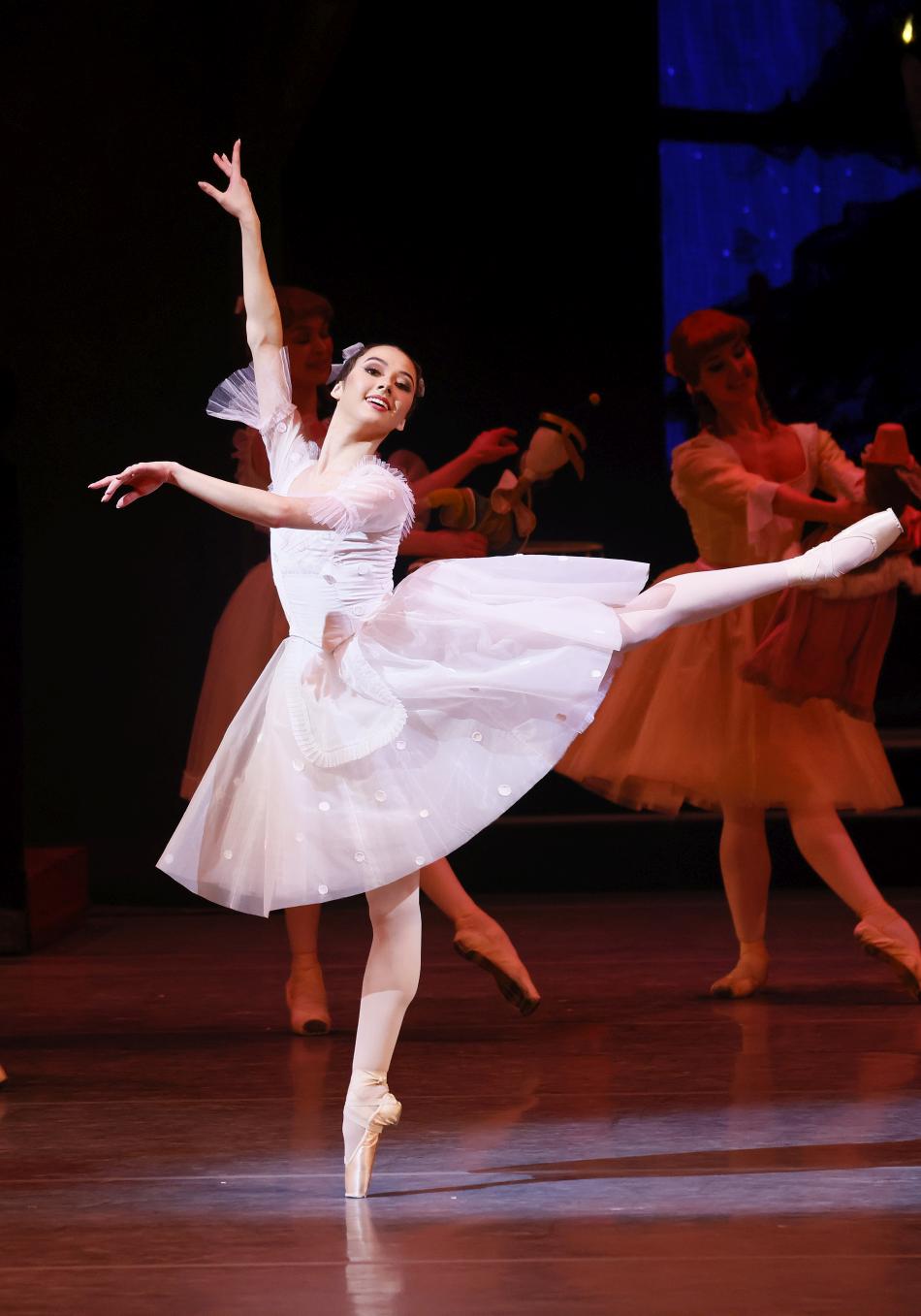
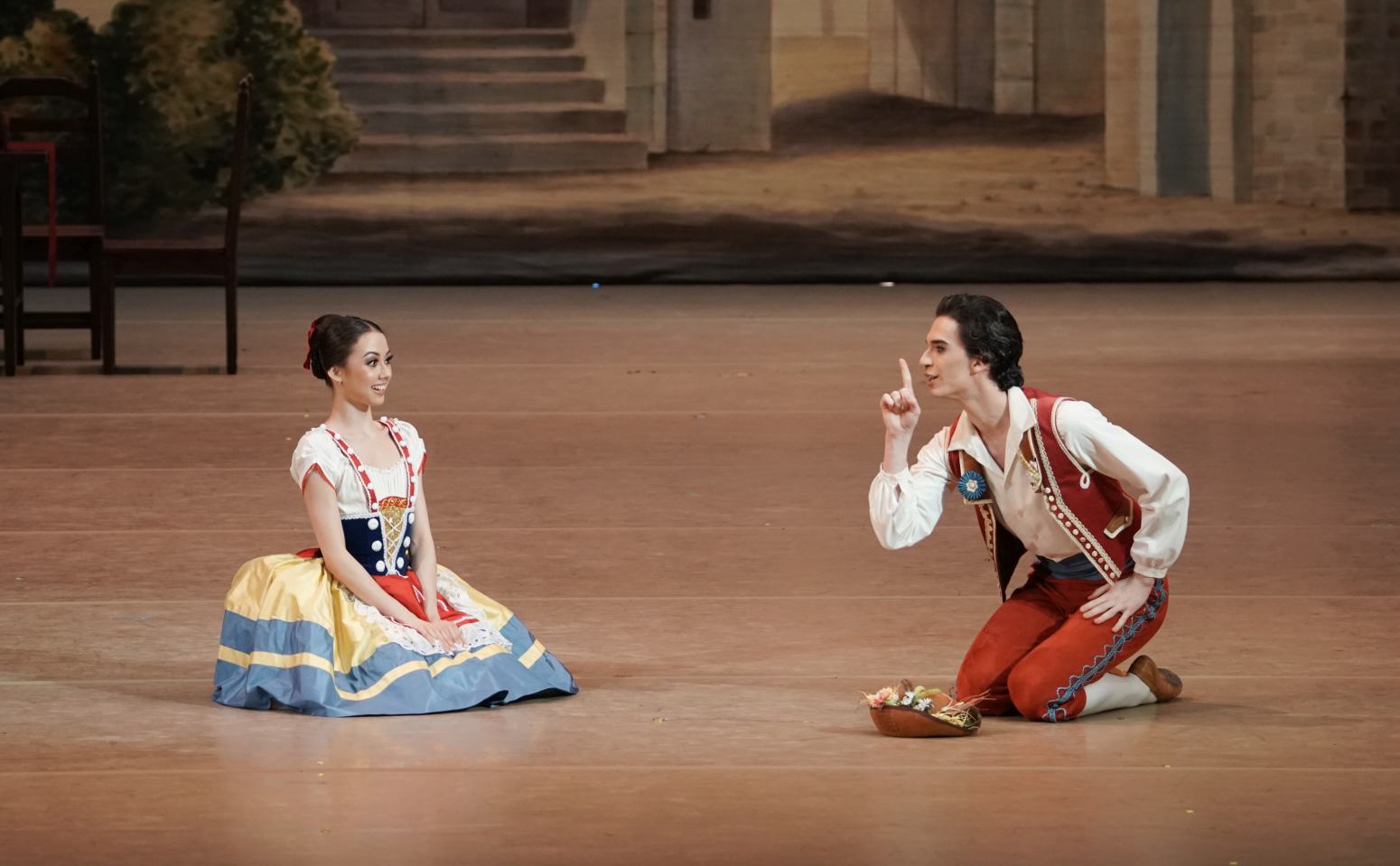
1. E.Kokoreva (Swanilda) and D.Zakharov (Frantz), “Coppélia” by S.Vikharev after M.Petipa and E.Cecchetti, Bolshoi Ballet 2026 © Bolshoi Theatre/P.RychkovMy hopes on a new video release were raised when I noticed the cameraman at the Bolshoi Ballet’s performance of Coppélia, until he explained that the recording was for internal use only. It’ll set the bar high for future generations of dancers.

Sergei Vikharev’s production, which he said is the most complete and exact rendition of what Nicholas Sergeyev noted from his St. Petersburg memories (his manuscripts are stored at Harvard University), has been in the Bolshoi’s repertory since 2009. It preserves all the details that fell victim to artistic, financial, and producing conditions in many Western stagings. As designated by the original creators, Marius Petipa and Enrico Cecchetti, the Bolshoi’s Swanilda has eight girlfriends, and Act III’s Waltz of the Hours is danced by twenty-four ballerinas, one for each hour of the day. 2. D.Zakharov (Frantz), E.Kokoreva (Swanilda), and ensemble; “Coppélia” by S.Vikharev after M.Petipa and E.Cecchetti, Bolshoi Ballet 2026 © Bolshoi Theatre/P.RychkovThe order of their four lines of six dancers each (which represent dawn, morning, twilight, and night) is overseen by the old, bearded Chronos (Dmitry Grishin), who rests atop a huge clock that has to stand exactly center stage. The Royal Ballet’s Coppélia, by comparison, employs only eight dancers in the waltz, which subverts the scene’s meaning.

Each time I see a performance of Coppélia at the Bolshoi, the artistic director, Makhar Vaziev, is in the rear auditorium during Act III’s Fete of the Bell, his eyes scrutinizing the corps’ unity, the clarity of its patterns, and the purity of the variations. As tiny as they may be, he usually finds details to hone.
The leading couple, Swanilda (Elizaveta Kokoreva) and Frantz (Denis Zakharov), had nothing to perfect. Each step, each port de 3. E.Kokoreva (Swanilda) and D.Zakharov (Frantz), “Coppélia” by S.Vikharev after M.Petipa and E.Cecchetti, Bolshoi Ballet 2026 © Bolshoi Theatre/P.Rychkovbras, each jump, and each turn of Kokoreva represented the ideal of classical ballet and was imbued with meaning. Her acting was fresh and convincing, her pantomime unambiguous, and the show she delivered at Coppélius’s (Gennady Yanin) workshop terrific. Her fiancé, Frantz, was an unreliable lover, though. Once unobserved, he eagerly climbed through another sweetheart’s (i.e., Coppélia’s (Maria Rasskazova)) balcony door. Worse, even as he was caught red-handed by Coppélius, he affirmed his intention to marry her. What a wretch of a swain!


4. E.Kokoreva (Swanilda) and ensemble, “Coppélia” by S.Vikharev after M.Petipa and E.Cecchetti, Bolshoi Ballet 2026 © Bolshoi Theatre/P.RychkovOnly after Swanilda got him off the hook from Coppélius’s alchemic experiments did Frantz man up. His time had come for their wedding pas de deux, with both dressed in majestic red and the cleanest of white and with jewels sparkling at Swanilda’s décolleté and in her tiara (costumes by Tatiana Noginova). A brilliant solo, including spick and span legwork and pinpoint landings, testified to Frantz’s qualities. A gem of a woman, Swanilda sped through pirouettes, landed from split jumps in stupendous balances, and masterfully played with the tempo, smiling all the while, as if excelling on stage was exactly what she relished most. The beauty that Kokoreva and Zakharov brought to life was the performance’s most precious takeaway.

5. E.Kokoreva (Swanilda), D.Zakharov (Frantz), and ensemble; “Coppélia” by S.Vikharev after M.Petipa and E.Cecchetti, Bolshoi Ballet 2026 © Bolshoi Theatre/P.Rychkov In Act III, Elizaveta Kruteleva’s L’Aurore solo became more fluid over time as if warmed by the rising sun. Antonina Chapkina delivered a solemn, graceful La Prière solo, and Ekaterina Varlamova a zippy one as Folie. Maria Mishina led the pas de cinq Le Travail. The corps’ czardas and mazurka had verve, and Swanilda’s friends seemed ready to follow in her footsteps.

The orchestra of the Bolshoi Theatre played under the baton of Pavel Klinichev. Their rendition of Leo Delibes’s score was vibrant, creamy, and perfectly in tune with the dancers.

Link: Website of the Bolshoi Theatre
Photos: 1. Elizaveta Kokoreva (Swanilda) and Denis Zakharov (Frantz), “Coppélia” by Sergei Vikharev after Marius Petipa and Enrico Cecchetti, Bolshoi Ballet 2026
2. Denis Zakharov (Frantz), Elizaveta Kokoreva (Swanilda), and ensemble; Coppélia” by Sergei Vikharev after Marius Petipa and Enrico Cecchetti, Bolshoi Ballet 2026
3. Elizaveta Kokoreva (Swanilda) and Denis Zakharov (Frantz), “Coppélia” by Sergei Vikharev after Marius Petipa and Enrico Cecchetti, Bolshoi Ballet 2026
4. Elizaveta Kokoreva (Swanilda) and ensemble, “Coppélia” by Sergei Vikharev after Marius Petipa and Enrico Cecchetti, Bolshoi Ballet 2026
5. Elizaveta Kokoreva (Swanilda), Denis Zakharov (Frantz), and ensemble;Coppélia” by Sergei Vikharev after Marius Petipa and Enrico Cecchetti, Bolshoi Ballet 2026
all photos © Bolshoi Theatre/Pavel Rychkov
Editing: Kayla Kauffman


The Hub

“The Nutcracker”
Bolshoi Ballet
Bolshoi Theatre
Moscow, Russia
December 31, 2024 (live stream)

by Ilona Landgraf
Copyright © 2025 by Ilona Landgraf

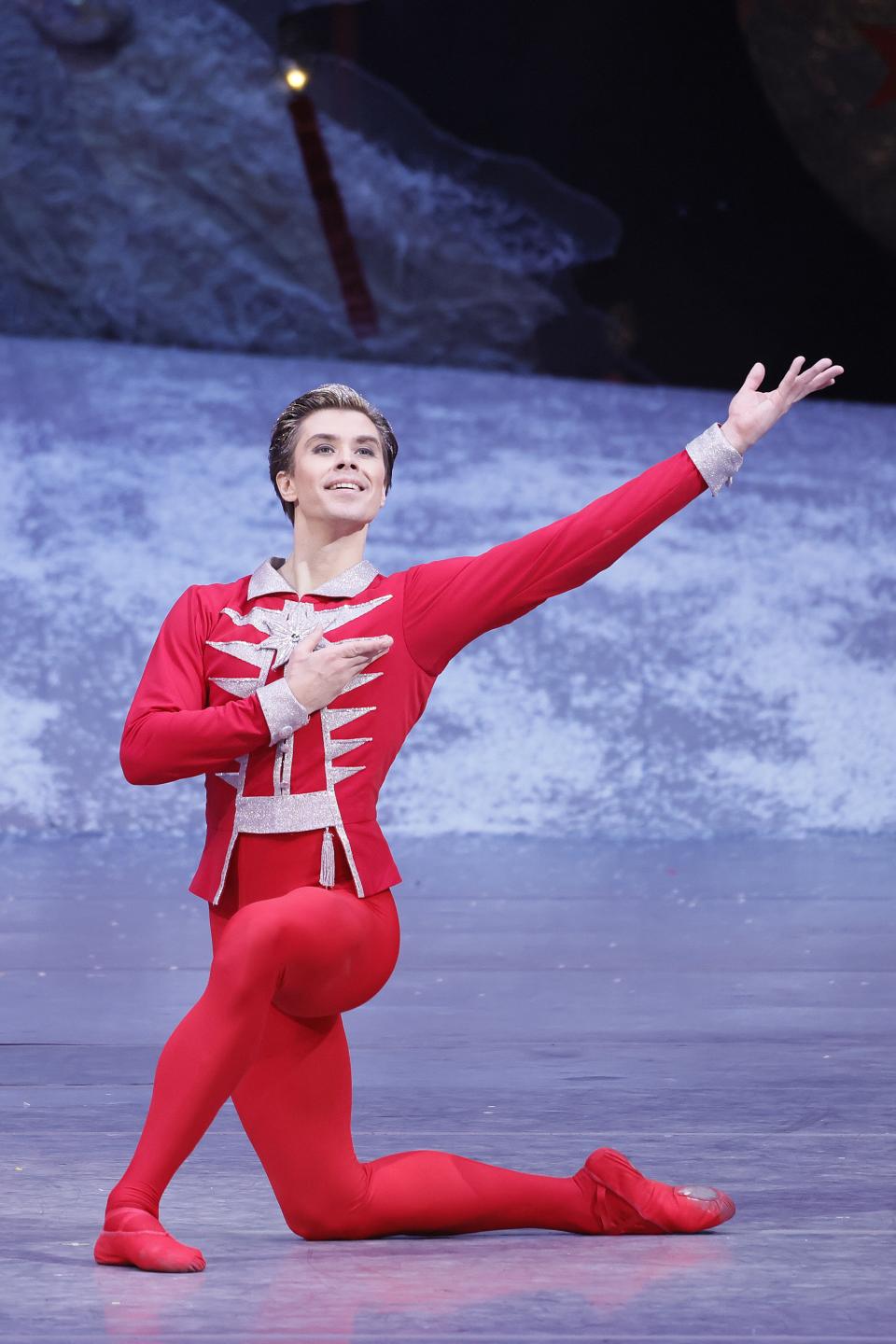
1. E.Kokoreva (Marie) and ensemble, “The Nutcracker” by Y.Grigorovich, Bolshoi Ballet 2024 © Bolshoi Ballet/D.Yusupov2. A.Ovcharenko (Nutcracker Prince), “The Nutcracker” by Y.Grigorovich, Bolshoi Ballet 2024 © Bolshoi Ballet/D.Yusupov During this year’s Christmas sermon, my pastor asked which moment should best represent Christmas. The Christmas dinner? The lighting of the candles? Or, perhaps, unwrapping the presents? For me, this moment was the moment during the Bolshoi Ballet’s performance of The Nutcracker when the newlywed Marie (Elizaveta Kokoreva) and the Nutcracker Prince (Artem Ovcharenko) were lifted by their court toward the star at the top of the Christmas tree. It was the climax of their spiritual journey and of Yuri Grigorovich’s choreography for which I had been waiting since I last saw his Nutcracker live in Moscow in 2022.

Two live streams on December 30th (evening performance) and December 31st (matinee) enabled a vast audience to follow the heroes’ journey. To meet the demand, the number of cinemas offering live broadcasts grew from one hundred to three hundred in December. Most were located in Russia, but cinemas in Belarus, Armenia, and the United Arab Emirates also participated. I was able to watch the matinee on the Bolshoi’s vk video platform. Continue reading “The Hub”

An Opening Salute

“The Sleeping Beauty”
Bolshoi Ballet
Bolshoi Theatre
Moscow, Russia
September 07, 2024 (live stream)

by Ilona Landgraf
Copyright © 2024 by Ilona Landgraf

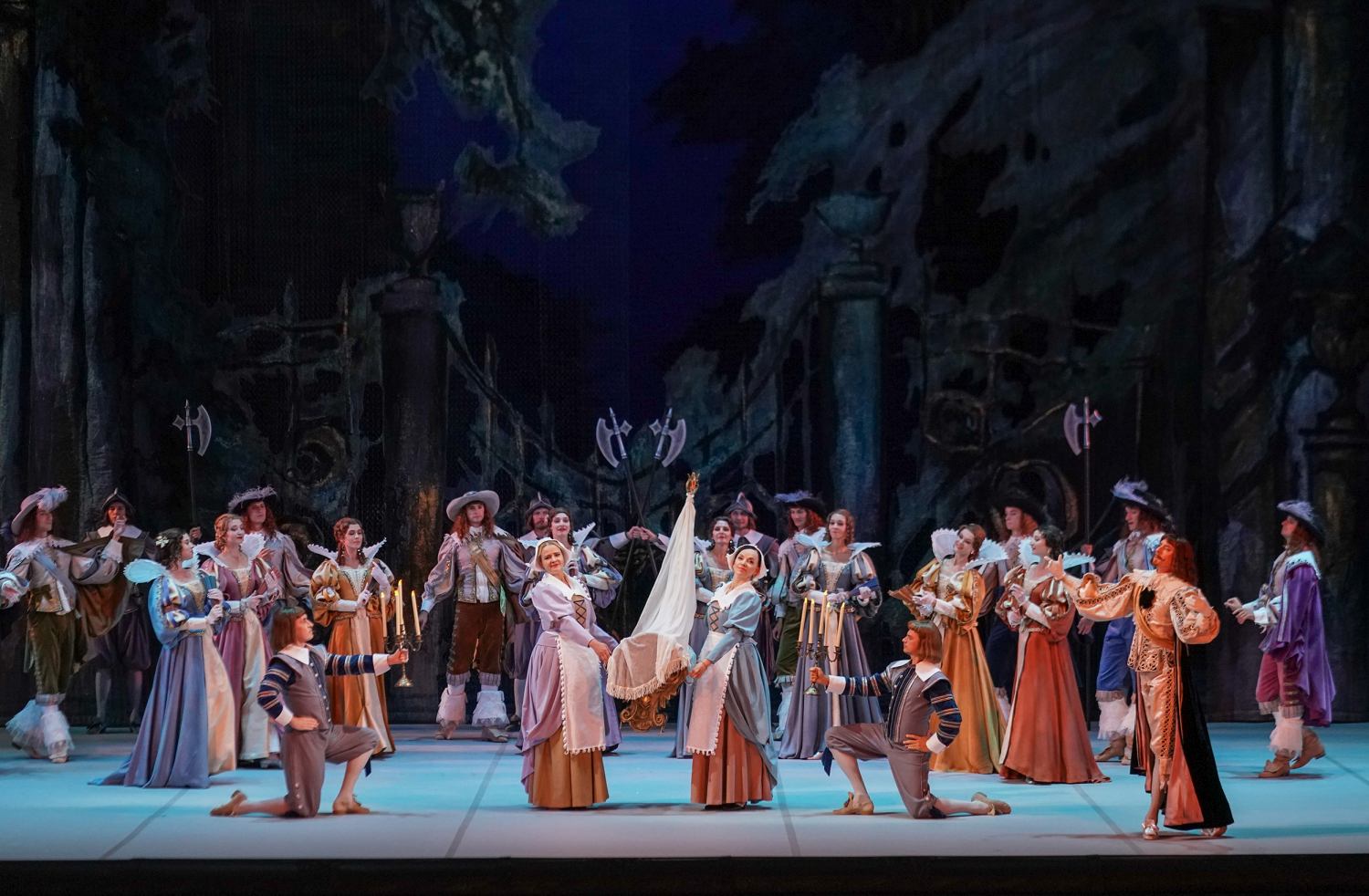
 1. Y.Ostrovsky (Catalabutte) and ensemble, “The Sleeping Beauty” by Y.Grigorovich after M.Petipa, Bolshoi Ballet 2024 © Bolshoi Theatre/P.Rychkov The Bolshoi Ballet opened its 249th season with a revival of Yuri Grigorovich’s The Sleeping Beauty, which has been absent from the stage for four years. Because of the thorough change of décor, the production was announced as a premiere. It swapped the opulent (and often criticized) sets and costumes that Ezio Frigerio and Franca Squarciapino designed for the 2011 revival (celebrating the reopening of the theater’s Historic Stage after six years of refurbishment) for the restrained décor that Simon Virsaladze (1909–1989) created for Grigorovich’s second version of the ballet in 1973. The subdued hues and aquarelle-ish style of its courtly surroundings direct the gaze toward the colorful costumes (recalling French court fashion from King Louis XIII’s to the Sun King, Louis XIV’s, reign), beautiful flower garlands and bouquets at Aurora’s birthday party, and, most importantly, the dancers and their performances. Raising the curtain didn’t elicit oohs and aahs from the audience as, for example, Jürgen Rose’s décor for Marcia Haydée’s Sleeping Beauty regularly has done on Western stages. Continue reading “An Opening Salute”

A Grand Spectacle

“La Fille du Pharaon”
Bolshoi Ballet
Bolshoi Theatre
Moscow, Russia
February 16, 2024

by Ilona Landgraf
Copyright © 2024 by Ilona Landgraf

1. M.Mishina (Ramze), E.Kokoreva (Aspicia), and ensemble; “La Fille du Pharaon” by P.Lacotte, Bolshoi Ballet 2024 © Bolshoi Ballet / D.Yusupov The Bolshoi Ballet’s La Fille du Pharaon is about an Egyptian pipe dream—and it felt like a dream indeed. I was already impressed in 2019 when I watched it for the first time. Five years later, the cultural landscape has changed so much that its magnificence seems surreal. It highlights the extent to which the paths of Western and Russian cultures have diverged. While European culture finds itself on shaky grounds, the Bolshoi stands firm as a rock. The critics who argue that Pierre Lacotte’s recreation of Marius Petipa’s La Fille du Pharaon (1862) is like unearthing a dusty ballet mummy are wrong. True, the piece’s libretto (which is based on Theophile Gautier’s 1857 Le Roman de la Momie and was edited by Lacotte) is flimsy. Hearty drags on an opium pipe transport a traveling Englishman and his servant to the pyramids during the reign of a mighty pharaoh. This pharaoh has a daughter who instantly falls in love with the Englishman. After some adventurous trouble (including the dispatch of a lion, a last-minute escape, a nearly murderous assault, a suicide attempt, and the hero’s near execution), the lovers are happily united. But – alas! Upon awakening, Continue reading “A Grand Spectacle”

Reassuring

“Chopiniana”/“Grand Pas from the Ballet Paquita
Bolshoi Ballet
Bolshoi Theatre (Historic Stage)
Moscow, Russia
February 14, 2024

by Ilona Landgraf
Copyright © 2024 by Ilona Landgraf

 1. A.Denisova, “Chopiniana” by M.Fokine, Bolshoi Ballet 2024 © Bolshoi Ballet / D.Yusupov The musicians of the Bolshoi Orchestra are on their toes. After acknowledging the welcoming applause, conductor, Pavel Klinichev, raised his baton in the same instant that he turned around to face them. The vigorous bars that he prompted belonged to a Polonaise by Chopin. It opened Mikhail Fokine’s romantic Chopiniana (1908), which the Bolshoi Ballet revived in November 2022. It’s the first part of a double bill the second piece of which – the Grand Pas from Petipa’s Paquita – has been a landmark of classical dance since its creation in 1881.

There’s no need to discuss how Fokine’s choreography was performed. The Bolshoi is a guarantor of sublime performances. Indeed, the unity of the corps was nothing less than staggering; every step was measured yet effortless like an outpouring of natural decency. Perfect proportions soothed the eye. As the leading sylphs, Anastasia Stashkevich, Elizaveta Kruteleva, and Anastasia Denisova paid great attention to detail, adding the right tinge of buoyancy, melancholy, or playfulness to their solos. Vyacheslav Lopatin’s poet combined sensitivity and decisiveness. His clean and – at times mighty – jumps earned applause. Alyona Pikalova’s set design – an arch of gnarled treetops opening onto a sunny water meadow – invited the mind to dream.
I’ve watched several companies dance Chopiniana, but no performance was as complete as the Bolshoi’s. Perhaps due to experiencing messy times in my home country of Germany (and in the West in general), the refined order and serenity of Chopiniana felt especially comforting. It seemed like the epitome of civilization. Continue reading “Reassuring”
Transcendent

“The Nutcracker”
Bolshoi Ballet
Bolshoi Theatre
Moscow, Russia
December 29, 2022 (matinee and evening performance)

by Ilona Landgraf
Copyright © 2023 by Ilona Landgraf

1. V.Bessonova (Columbine), “The Nutcracker” by Y.Grigorovich, Bolshoi Ballet 2022 © Bolshoi Ballet / M.LogvinovAfter meeting him at a guest performance with Les Ballets de Monte Carlo six years ago, the Bolshoi’s Semyon Chudin suggested that I see their “Nutcracker” in Moscow. Year after year, one thing or another has prevented me from getting to the Bolshoi at Christmastime. Finally, this year, it happened: on the edge of New Year’s Eve, I watched a matinee and an evening performance.

The Bolshoi’s “Nutcracker” dates back to 1966 – qualifying it neither as trendy nor hip by today’s standards. Perhaps Makhar Vaziev, the company’s artistic director, has kept it in the repertoire for a number of reasons: out of respect for tradition; out of respect for the ballet’s choreographer – Yuri Grigorovich – one of the company’s formative figures; and out of respect for the crowd-pleasing nature of the piece that leads to sold out performances now as ever. Continue reading “Transcendent”

Weighty

“The Winter’s Tale”
Bolshoi Ballet
Bolshoi Theatre
Moscow, Russia
April 06, 2019 (matinee and evening performance)

by Ilona Landgraf
Copyright © 2019 by Ilona Landgraf

1. E. Svolkin, L. Timoshenko, O. Smirnova, and D. Savin, “The Winter's Tale” by C. Wheeldon, Bolshoi Ballet 2019 © Bolshoi Ballet / D. YusupovThe Bolshoi Ballet recently added Christopher Wheeldon’s “The Winter’s Tale” to their repertoire – and what a fortunate choice that was! It is a co-production of the Royal Ballet and the National Ballet of Canada, and premiered in London in 2014. It’s strange that such a strong piece of work is only now being performed by a third company.

The ballet is based on Shakespeare’s play of the same name – one of his intricately-plotted later works, which is classified as a comedy despite its Continue reading “Weighty”

Growing With the Legacy

Coppélia”
Bolshoi Ballet

Bolshoi Theatre
Moscow, Russia
March 23, 2019 (matinee)

by Ilona Landgraf
Copyright © 2019 by Ilona Landgraf

1. A. Loparevich, “Coppélia” by M. Petipa and E. Cecchetti, revival and new choreographic version by S. Vikharev, Bolshoi Ballet 2019 © Bolshoi Ballet / E. FetisovaWhat would Sergei Vikharev have thought of his “Coppélia” if he had watched the matinee on March 23? For one thing, he wouldn’t appreciate my calling the work “his”, as it is Petipa’s and his assistant Cecchetti’s 1884 choreography that Vikharev, together with ballet scholar Pavel Gershenzon, meticulously revived from Nicholas Sergeiev’s notation. Vikharev’s reconstruction premiered in 2009 with the Bolshoi Ballet with an updated revival planned for 2018/19. However, fate struck in the summer of 2017 when Vikharev, only fifty-five years old, died from an adverse reaction to anesthetic during a dental treatment. As a result, the company re-staged the 2009 version. Continue reading “Growing With the Legacy”

From “Ballet Falsity” to Long-Runner

“The Bright Stream”
Bolshoi Ballet
Bolshoi Theatre
Moscow, Russia
February 10 and 11, 2018

by Ilona Landgraf
Copyright © 2018 by Ilona Landgraf

1. Front Curtain, “The Bright Stream” by A.Ratmansky, Bolshoi Ballet © Bolshoi Theatre / D.Yusupov“The Bright Stream” was Shostakovich’s third score for ballet. After his previous ballets, “The Golden Age” (1930) and “Bolt” (1931), were banned from the stage, Shostakovich attempted to create a new composition that would please everyone. Fyodor Lopukhov (1886 – 1973) was in charge of the choreography, the libretto was by Adrian Pyotrovsky and Lopukhov, and indeed, “The Bright Stream” was enthusiastically received at its premiere in Leningrad – today’s St. Petersburg – in 1935. Continue reading “From “Ballet Falsity” to Long-Runner”