A Conversation With Pavel Glukhov

Moscow, Russia
March 16, 2026 (video conference)

by Ilona Landgraf
Copyright © 2026 by Ilona Landgraf

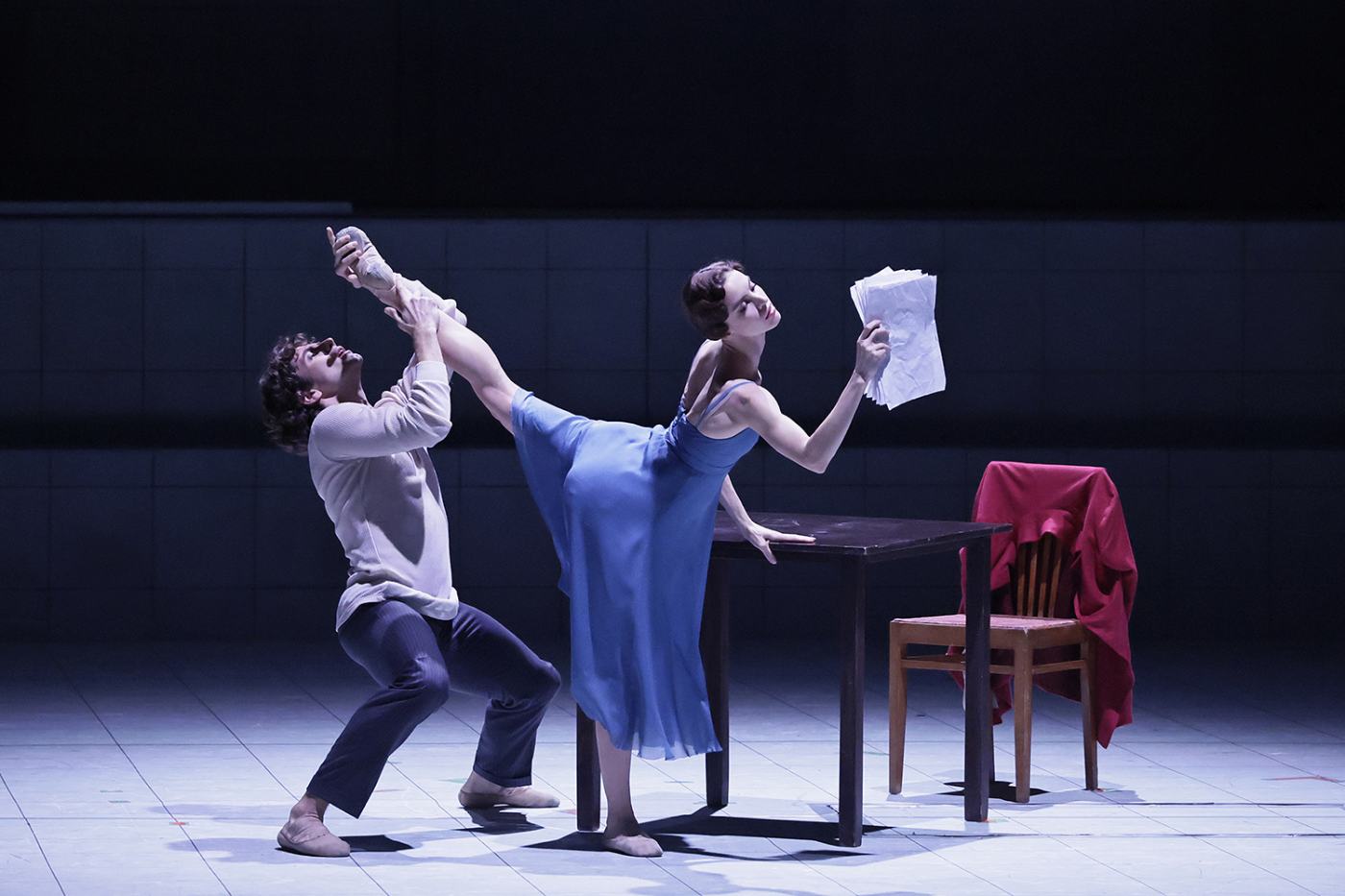
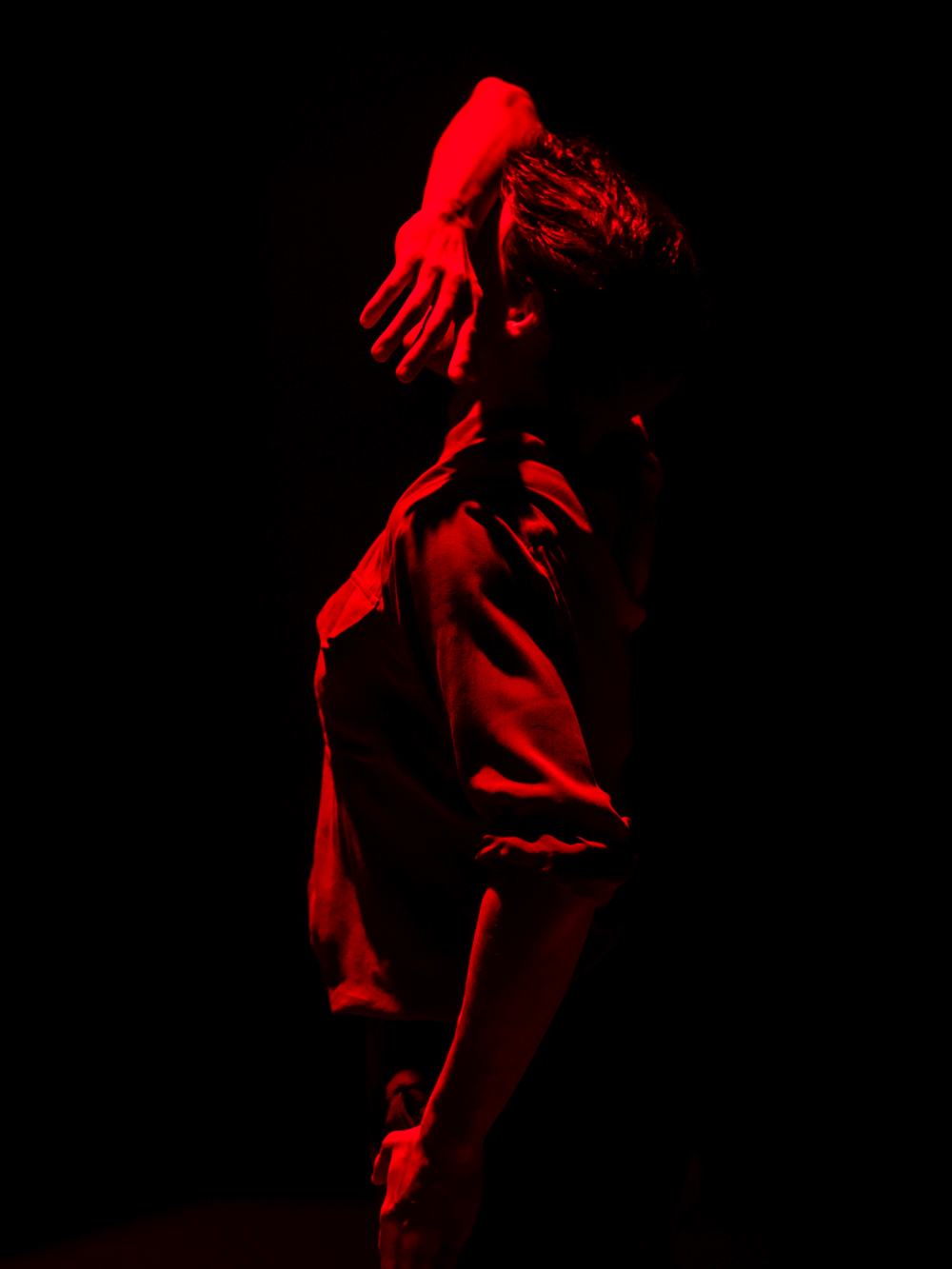
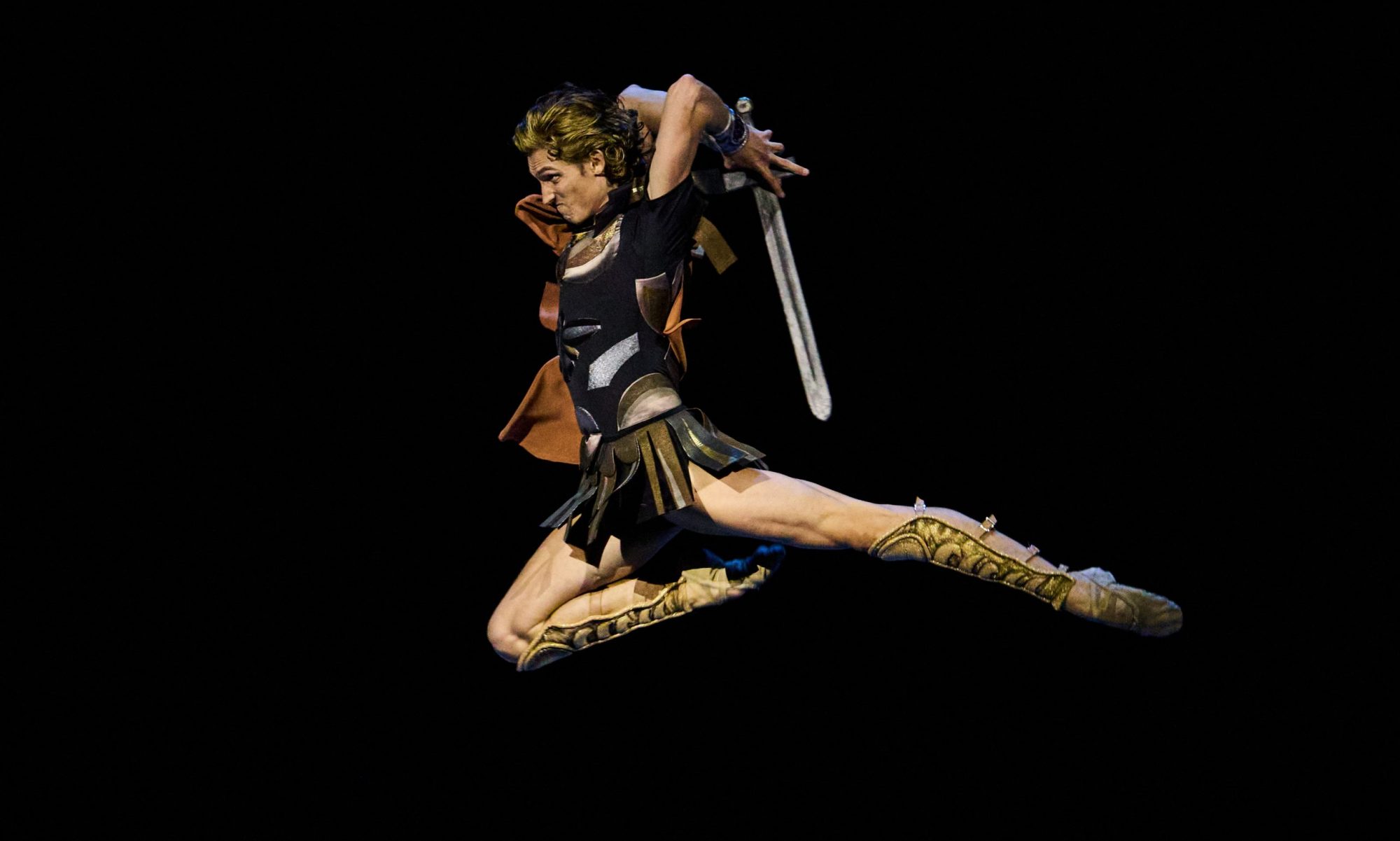
1. Pavel Glukhov © Rust2DIn recent years, Pavel Glukhov has carved out a place for himself at the forefront of contemporary dance in Russia. Two of his latest pieces, Pavlova and Russian Character, were created for MuzArts; The Nutcracker. Not a Fairy Tale premiered with Ballet Moscow. Thanks to MuzArts’s executive producer, Daria Faezova, I was able to talk with him via video conference. Alexei Faezov kindly interpreted from Russian to English and vice versa.

What encouraged you to become a dancer? Were there any role models in your family or other sources of inspiration?
Actually, no one in my family is directly connected to art. I’m the only one. I started dancing around the age of nine. Once, when I was walking with a friend, we entered a culture club, which offered dancing classes, and I stayed there right away. I felt connected to it and liked it very much.
In Russia—and previously in the Soviet Union—we have a very good system of out-of-school education, so one always finds a broad range of additional training, such as culture circles, and as it happens, I got interested in dancing of all things. First, when I was in ninth grade, I started visiting dance training groups, and in the same year, a professional dance teacher noticed me and invited me to a city group in Yegoryevsk [around 100km southeast of Moscow]. At that time, I was living in the suburbs. I was fourteen when I started with professional training, and I got interested in all dance styles, such as classical and folk dance.

After school, I went to college, then to the Moscow State Institute of Culture, and both were connected to dance. Then I enrolled at GITIS [Russian Institute of Theatre Arts], where I graduated in 2013. I studied with Mikhail Lavrovsky, a treasure of Russian ballet.

Regarding Mikhail Lavrovsky, you once said that you didn’t share his artistic idea among others because physical truth was more important for you than acting truth. What do you mean by physical truth and acting truth?
I was different than my teacher because he represented high culture and the old school from academic circles, whereas I came from common people. Higher cultural echelons were closed for me. All the classical ballets, like Romeo and Juliet, which was choreographed by Lavrovsky’s father among others, use classical movements. It’s true the dancers play like actors, but their movements as such are codified and do not correspond to the content of their acting.
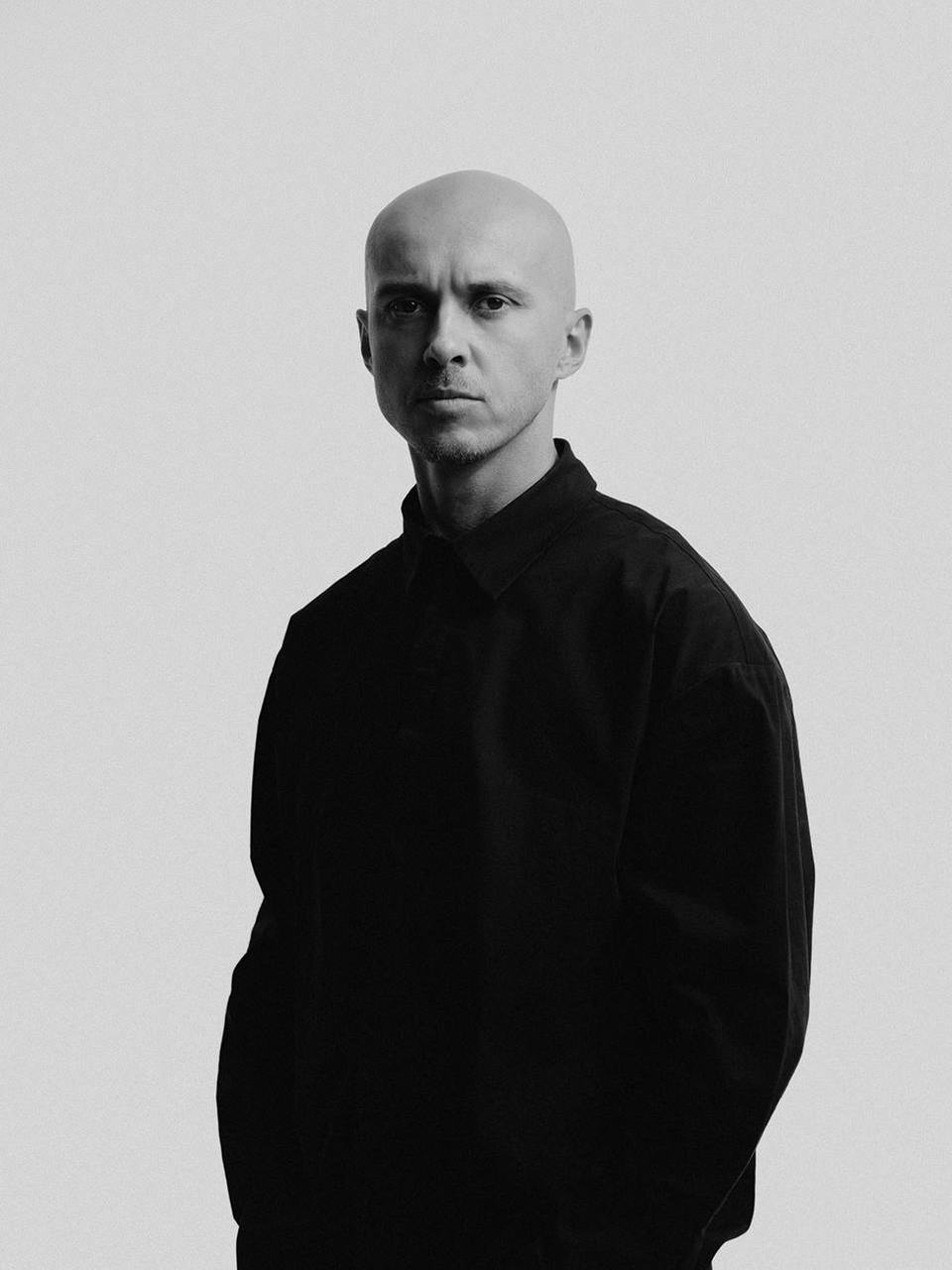
2. Pavel Glukhov © Igor KlepnevIf I understood it right, you danced with Ballet Moscow and later participated in Diana Vishneva’s Context competition for young choreographers. I also read about the 2025 premiere of your The White Room at the Zaryadye Hall. How did your career develop during these years, and what projects occupied you?
After my first year in GITIS, I felt that something was missing. It wasn’t enough for me to develop and foster my interest in choreography. That’s why I started to work with Ballet Moscow. The two-pronged approach was very beneficial because I was growing on two levels simultaneously. At GITIS, I learned the basic subjects, like the history of theatre and the composition of classical or folk dance. We had proficient teachers, and I was very satisfied with their courses. As for contemporary dance, GITIS wasn’t enough, though. Contemporary dance courses were optional. We did some jazz dance, but I had attended master classes in contemporary dance before; I needed more material, more “food,” more information to realize myself on stage. In this respect, the Ballet Moscow helped me a lot. I danced four years with Ballet Moscow.
In 2016, I participated in Diana Vishneva’s competition for young choreographers, and I won the audience choice award for my piece Object of Body. After the competition, a collaboration with the Diana Vishneva Foundation arose that allowed me to develop further and gain more experience.

Till 2025, I worked on many projects. I staged a lot of miniatures for the Context festival in particular and also realized some projects with the Voronzeh State Theatre and dance troupes in Yekaterinburg. Over time, the miniatures grew into bigger performances, and now I almost created a fairy tale.

To come back to The White Room, all I know is that it’s accompanied by an organ score composed by Vladimir Martynov, but what is the piece about?
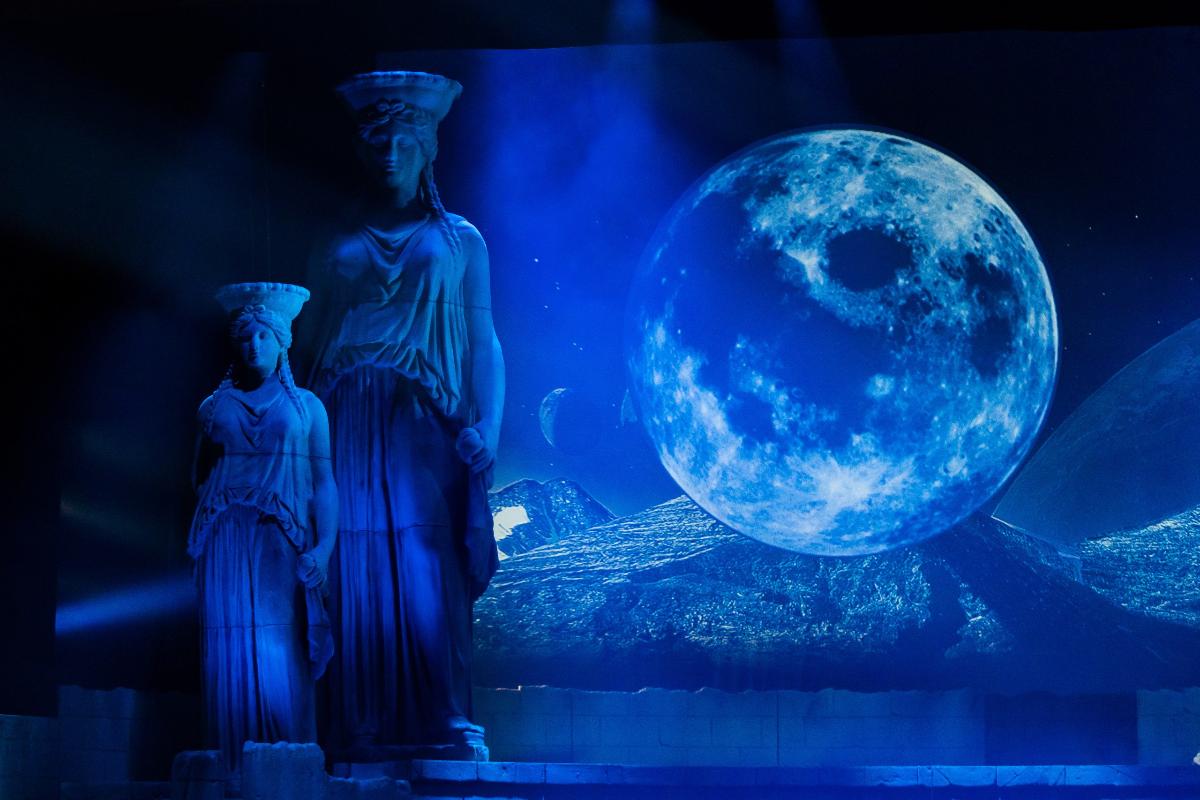
The White Room was especially made for Zaryadye. The Zaryadye Concert Hall has the biggest and best organ in Europe, which became the center of the project. The Zaryadye Hall’s management decided to collaborate with Mr. Martynov on a piece with organ music, percussion, contemporary dance, and some video projections. They chose me as the choreographer. Later, The White Room was performed at the Tchaikovsky Hall, which turned out well too. Working with Mr. Martynov was a great pleasure. The White Room has a plot, but it’s not a story ballet. It’s rather about the philosophy or the dream of a man’s life.
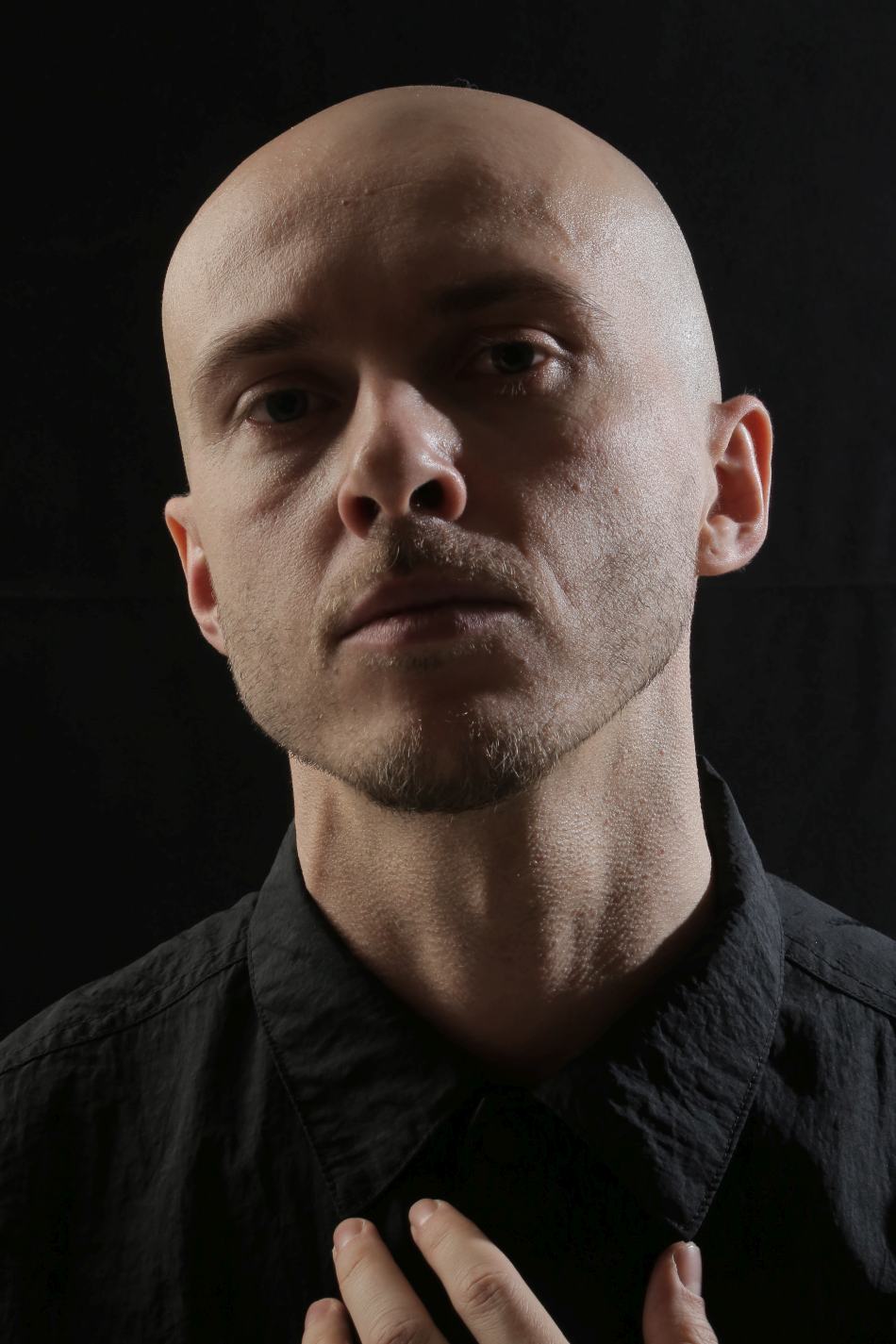
3. Pavel Glukhov © Rust2DI haven’t seen The Last Session (2024) for the Stanislavsky Ballet, but I know that it’s a bloody psychological thriller. What made it a success?
That’s difficult to answer for sure. Maybe, because I was full of energy, had an idea, and a chance to work with professional ballet dancers who gave me the chance to fully express myself. I wanted to create something new for the audience, something they hadn’t seen before, something that would surprise them in every single moment. I created the piece from scratch. At that time, I was interested in Hitchcock’s techniques, in the way he worked in his movies, how he created suspense, and I wanted to see how that could be transferred to the stage

Also, I should mention that, maybe by coincidence, Nastasia Khrushcheva’s composition had exactly this Hitchcockian kind of suspense, which helped me very much.

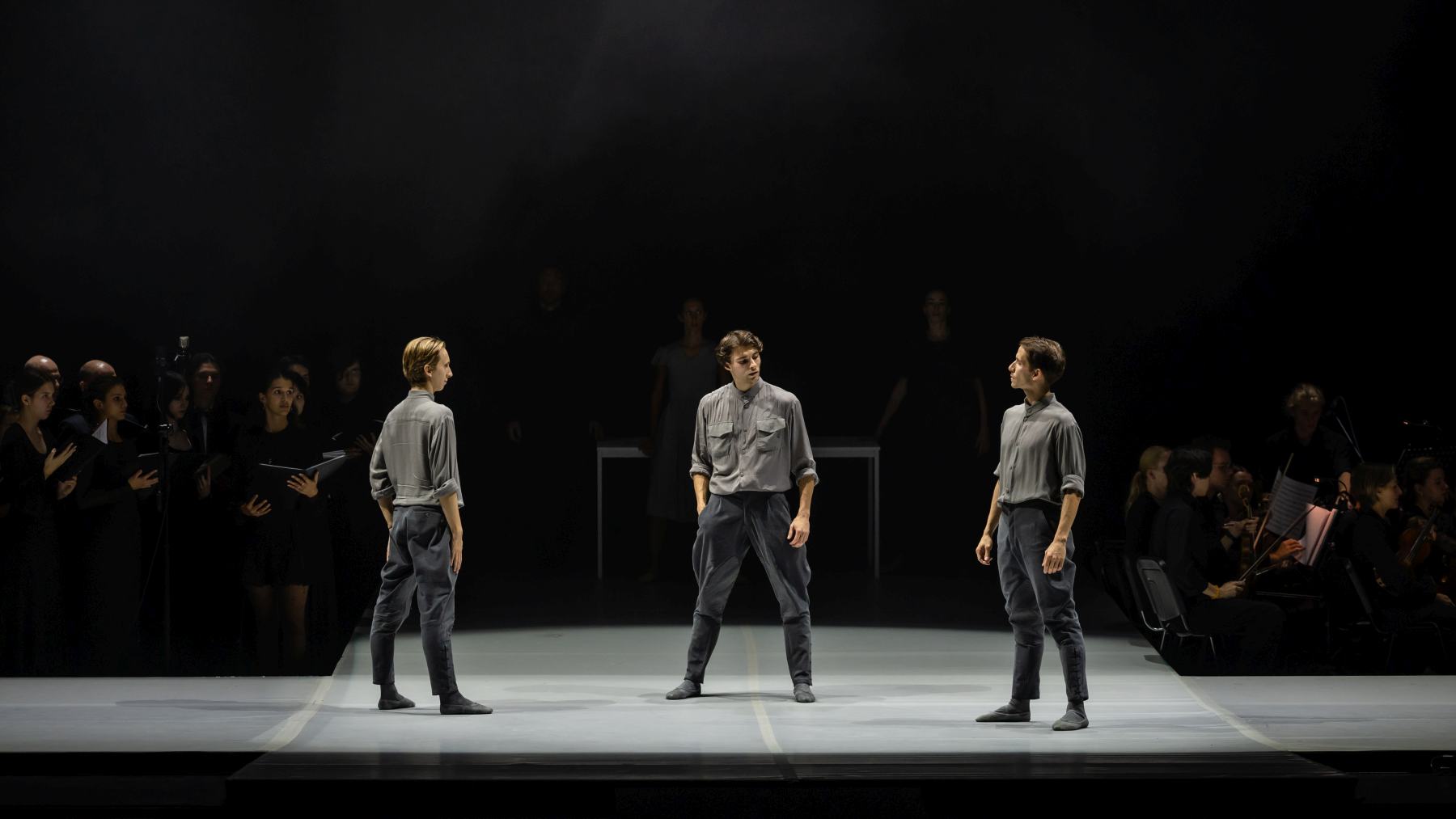
Two of your latest choreographies, Russian Character and The Nutcracker. Not a Fairy Tale, deal with war, Russian Character with World War II, and The Nutcracker. Not a Fairy Tale with World War I. For me, especially Russian Character was hard to digest. What kind of impact does the piece have on you when watching it now?
Honestly, I usually don’t watch my works, but the last time Russian Character was performed at the Maly Theatre, I saw the whole piece. I wasn’t able to rehearse with the guys; they did their own job. I just attended the performance and was pleased as to how good they performed and how free they moved. When I start working on something and immerse myself into the material, I’m living it through and naturally get very emotional. It’s okay with me, although the process feels like going through hell. Afterwards, when the work is finished, I’m calmer. I can connect emotionally, but the piece already has become a closed book, especially as I’m already occupied with another piece. [Details about it will be disclosed at a later time.] But still, even this time, watching Russian Character made me too emotional.

One of your long-time plans is a piece based on Bertolt Brecht’s Mother Courage. What stirred your interest in a German classic?
Mother Courage has complex characters with intricate destinies…extraordinary personalities. And of course, the mother has depth and is challenged by an incredibly interesting fate. It’s a tragic story, but that’s what interests me. I’m principally fascinated by such people, by the hidden layers of their characters. Moreover, it’s not merely me deciding for an author but also the author finding you.

Have you already decided about the music?
It’s too early to talk about the music because I have this idea for almost ten years, but there are no actual plans to realize it. When I was younger, I created pieces offhandedly with my friends, but now my approach is professional. So it’s an idea still waiting to be accomplished.

You have four children. If they were asked about their father’s work, how would they answer?
I think the first thing they would say is that because of his work, they don’t see me at home very often. In that respect, they won’t be positive about my work.

Do they sometimes attend performances?
My children are of different ages. My oldest daughter celebrates her eighteenth birthday tomorrow, and she comes very often and, usually, she likes my pieces. As for my younger children, they come from time to time, given the piece is appropriate for their age. But I should mention that my spouse [Anastasia Glukhova] helps me very much, more than my children. She’s a dance and theater critic, so we work in the same field.

Photos: 1. Pavel Glukhov © Rust2D
2. Pavel Glukhov © Igor Klepnev
3. Pavel Glukhov © Rust2D
Editing: Kayla Kauffman


Unrealistic

“Nureyev”
State Ballet Berlin
Deutsche Oper
Berlin, Germany
March 21, 2026

by Ilona Landgraf
Copyright © 2026 by Ilona Landgraf

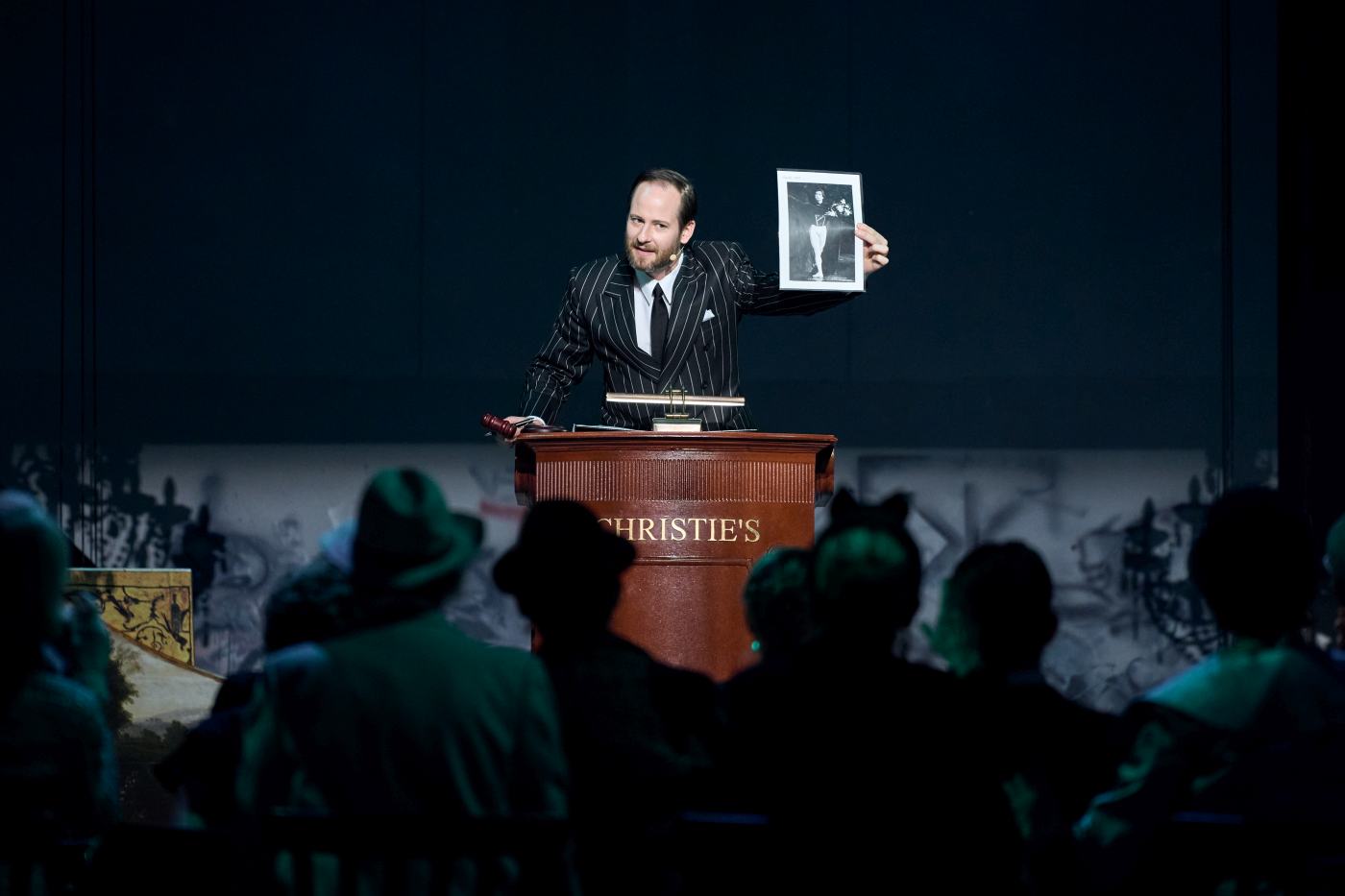
1. O.L.Biron (Christie’s auctioneer) and ensemble, “Nureyev” by Y.Possokhov and K.Serebrennikov, State Ballet Berlin 2026 © C.Quezada Last weekend, Yuri Possokhov’s and Kirill Serebrennikov’s joint production Nureyev premiered with the State Ballet Berlin. I remember well the piece’s 2017 world premiere at the Bolshoi Theatre and the troubles preceding it. In 2022, Nureyev was removed from the Bolshoi’s repertory following new Russian anti-LGBTQ+ legislation that made it illegal to promote the success and power of queer personalities, per Serebrennikov’s explanation.

Bringing this ballet back to life could have been a tribute to not only Rudolf Nureyev but also Russian ballet as well as a gift to the Bolshoi, which celebrates its 250th anniversary this year. Continue reading “Unrealistic”

The Benchmark

“Coppélia”
Bolshoi Ballet
Bolshoi Theatre (New Stage)
Moscow, Russia
February 21, 2026 (evening performance)

by Ilona Landgraf
Copyright © 2026 by Ilona Landgraf

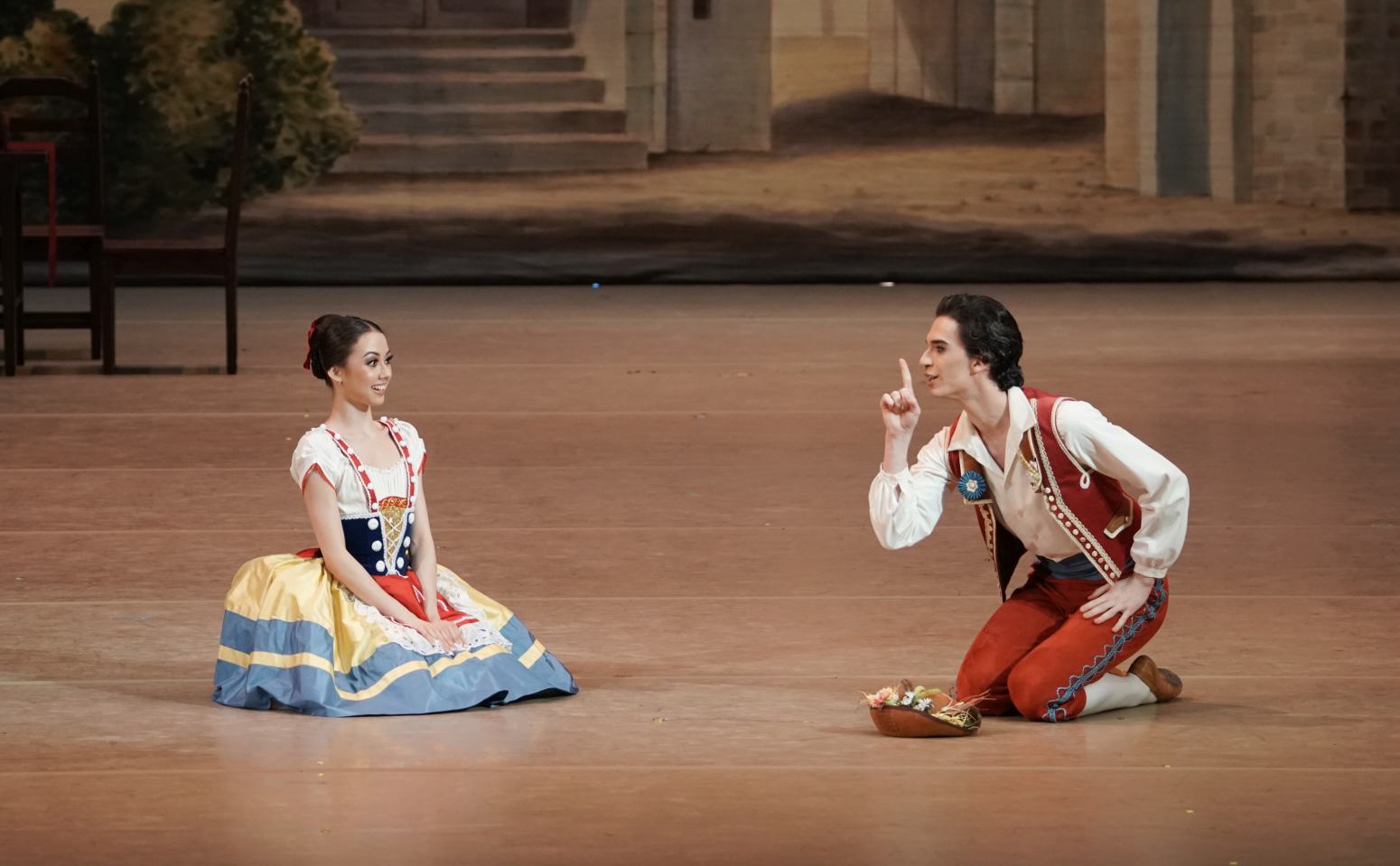
1. E.Kokoreva (Swanilda) and D.Zakharov (Frantz), “Coppélia” by S.Vikharev after M.Petipa and E.Cecchetti, Bolshoi Ballet 2026 © Bolshoi Theatre/P.RychkovMy hopes on a new video release were raised when I noticed the cameraman at the Bolshoi Ballet’s performance of Coppélia, until he explained that the recording was for internal use only. It’ll set the bar high for future generations of dancers.

Sergei Vikharev’s production, which he said is the most complete and exact rendition of what Nicholas Sergeyev noted from his St. Petersburg memories (his manuscripts are stored at Harvard University), has been in the Bolshoi’s repertory since 2009. It preserves all the details that fell victim to artistic, financial, and producing conditions in many Western stagings. Continue reading “The Benchmark”

Restorative

“The Snow Maiden”
Ballet of the Stanislavsky and Nemirovich-Danchenko Moscow Music Theatre
Stanislavsky and Nemirovich-Danchenko Moscow Music Theatre
Moscow, Russia
February 21, 2026 (matinee)

by Ilona Landgraf
Copyright © 2026 by Ilona Landgraf

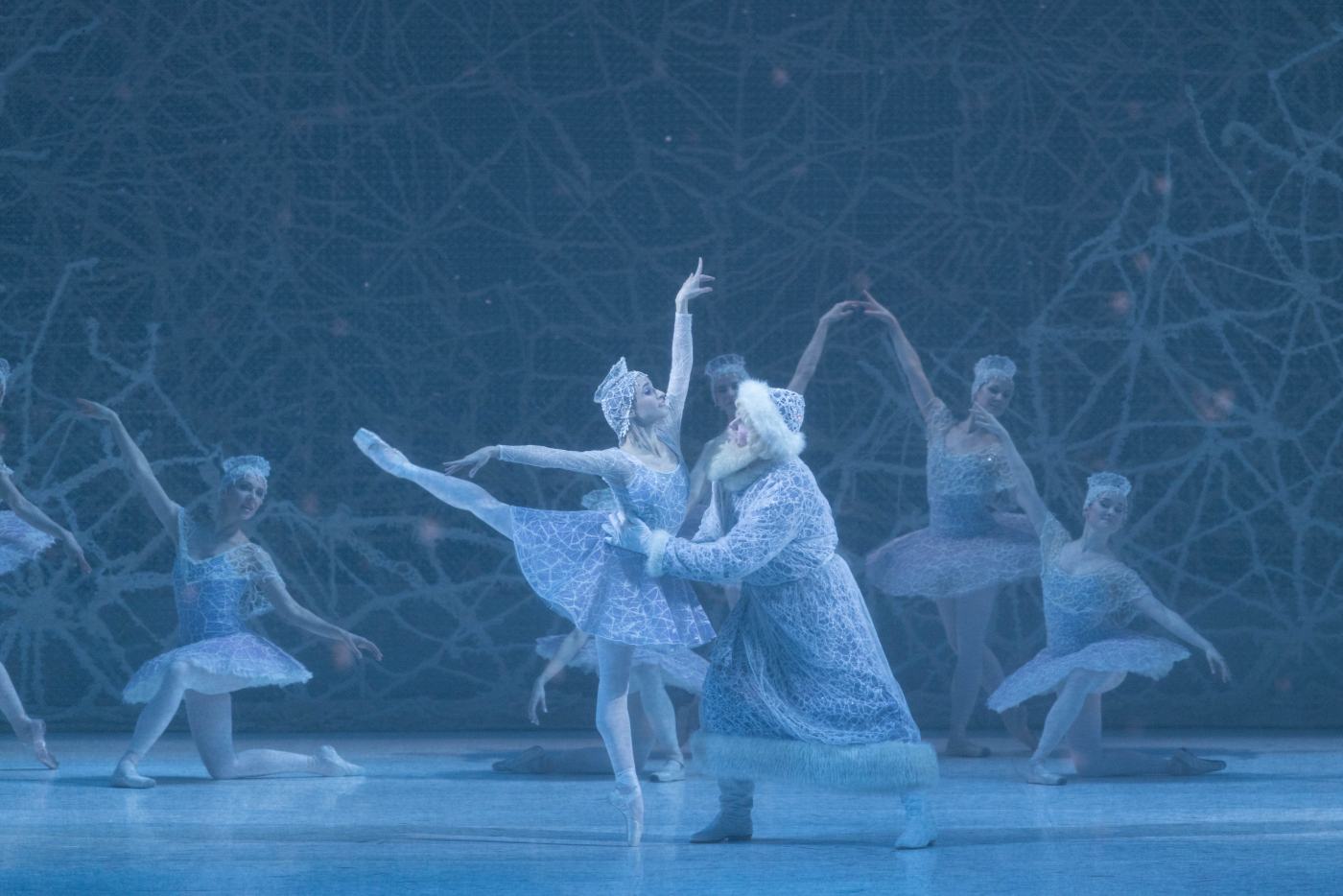
1. K.Ismagilova (Snow Maiden), S.Bukharaev (Father Frost), and ensemble; “The Snow Maiden” by V.Burmeister, Stanislavsky Ballet 2026 © MAMT/K.Zhitkova The legend of a girl made of snow who falls in love with a human but cannot survive the warmth of spring has its roots in Slavic mythology. The fairy tale entered the stage in 1873 when, due to the renovation of Moscow’s Maly Theatre, all three Imperial companies—drama, opera, and ballet—were accommodated by the Bolshoi Theatre. To seize the occasion, the management decided to unite them in a single fairy tale production. The Russian author Alexander Ostrovsky was commissioned for the libretto and Pyotr Tchaikovsky a composition. A few months later, Nikolay Rubinstein conducted the premiere. This marked the stage birth of The Snow Maiden. Nikolay Rimsky-Korsakov’s 1880/81 opera version is also based on Ostrovsky’s libretto. Continue reading “Restorative”

Recovery

“The Nutcracker. Not a Fairy Tale”
Ballet Moscow
Novaya Opera Theatre
Moscow, Russia
February 20, 2026

by Ilona Landgraf
Copyright © 2026 by Ilona Landgraf

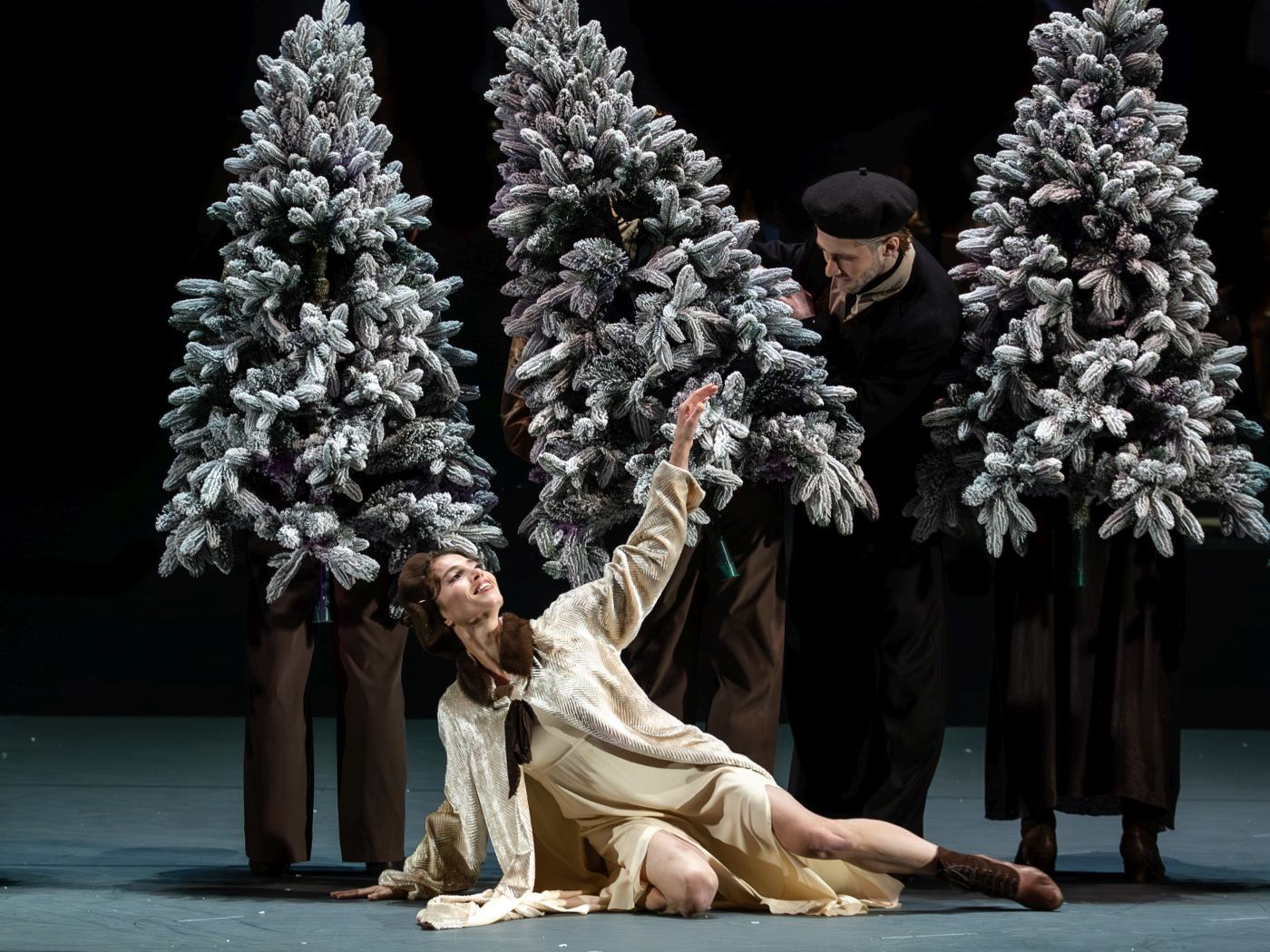
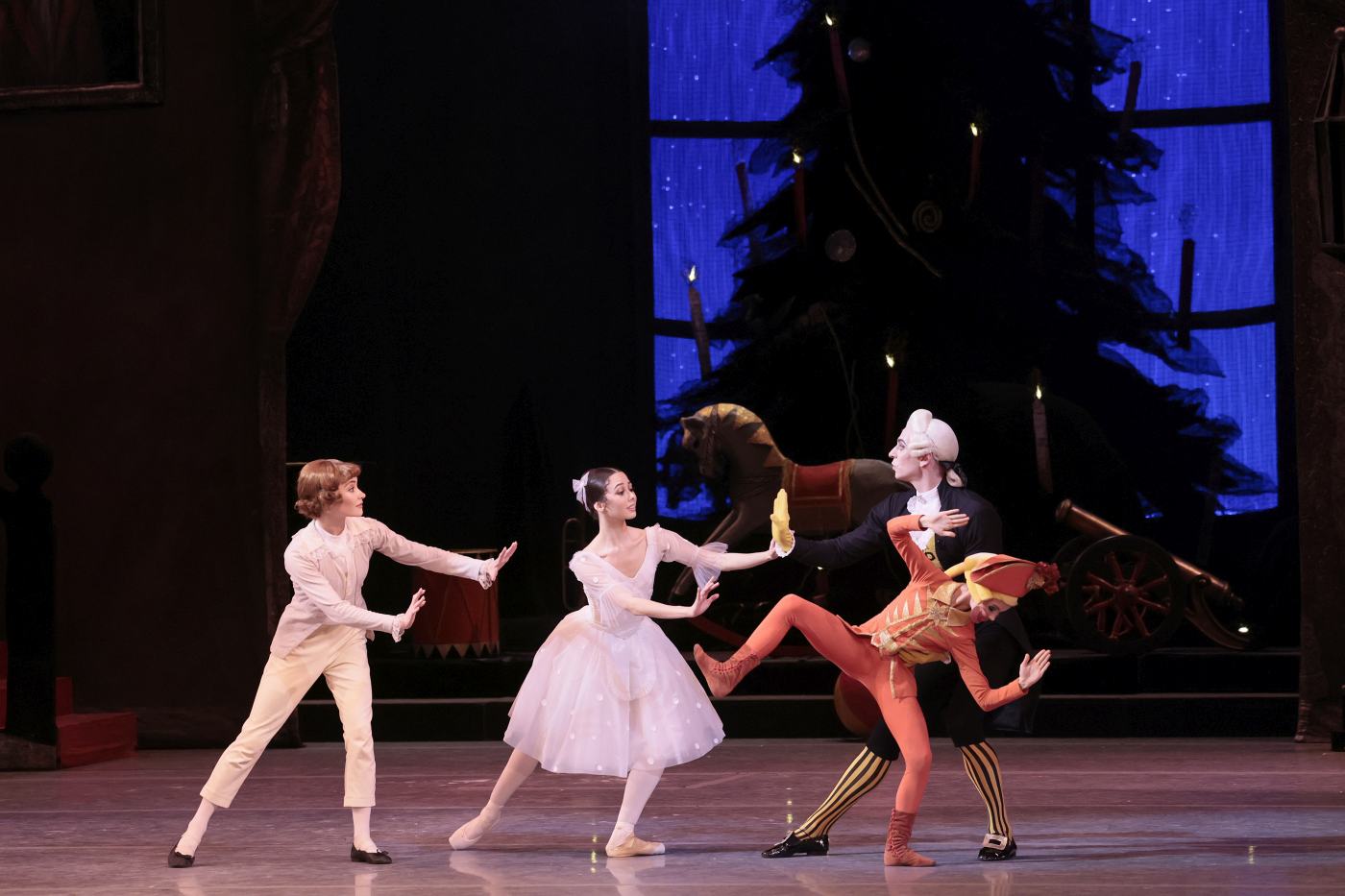
1. D.Komlyakova (Clara), M.Isakov (Nathaniel as an adult), and ensemble, “The Nutcracker. Not a Fairy Tale” by P.Glukhov, Ballet Moscow 2026 © Novaya Opera Theatre/B.Annadurdyev The premiere of a new Nutcracker in late February sounded uncommon to my Western ears until I noticed the still festive decorations of Moscow’s streets and the growing piles of snow lining them. Snow also fell in Pavel Glukhov’s The Nutcracker. Not a Fairy Tale and much more fiercely than outside, as if to herald his version’s chilling content, the First World War. Told with warmth and ending happily, Glukhov’s Nutcracker has characteristics of a fairy tale but is recommended for children aged twelve and older. He choreographed it for Ballet Moscow, the home base of which is the Novaya Opera Theatre in the city center.

The story’s hero is Nathaniel, a figure E.T.A. Hoffmann created not for his The Nutcracker and the Mouse King but for his spooky The Sandman, which later served as the basis for Coppélia. A crossbreed between Coppelius, the Nutcracker, and Drosselmeyer, Glukhov’s Nathaniel is a puppet maker who specializes in wooden nutcrackers in military dress. Continue reading “Recovery”

Someone is in Control

“Master and Margarita”
Bolshoi Ballet
Bolshoi Theatre (New Stage)
Moscow, Russia
February 18/19, 2026

by Ilona Landgraf
Copyright © 2026 by Ilona Landgraf

1. I.Tsvirko (Master) and M.Vinogradova (Margarita), “Master and Margarita” by E.Clug, Bolshoi Ballet 2026 © Bolshoi Theatre/D.YusupovAround two years ago, I saw Edward Clug’s ballet adaptation of Mikhail Bulgakov’s novel The Master and Margarita at the Bolshoi Theatre and found it fabulous. Last week’s two performances corroborated my impression. They also reminded me that, however chaotic the world might get, there’s no need to worry; someone is in control. In Clug’s version, it’s the Satan alias Woland and his accomplices. That hell and heaven commonly coordinate their actions went by the board.

Bulgakov intertwined two storylines (one deals with the absurd mayhem caused by Woland and his entourage on a 1930 visit to Moscow, the other is an eyewitness account of the trial of Jesus of Nazareth under Pontius Pilate’s governance), which are connected by the Master (an unrecognized Muskovit author, i.e., Bulgakov’s alter ego) and his muse, Margarita. Continue reading “Someone is in Control”

Heavy

“Planida” (“Russian Character”/“Nerve”/“Francesca da Rimini”)
MuzArts
Maly Theatre
Moscow, Russia
February 16, 2026

by Ilona Landgraf
Copyright © 2026 by Ilona Landgraf

1. P.Sorokin (Yegor’s comrade), A.Putintsev (Yegor Dryomov), and G.Gusev (Yegor`s comrade); “Russian Character” by P.Glukhov, MuzArts 2026 © MuzArts/B.Annadurdiev 2. A.Putintsev (Yegor Dryomov), “Russian Character” by P.Glukhov, MuzArts 2026 © MuzArts/B.AnnadurdievDue to popular demand, MuzArts’ triple bill Planida returned to the Maly Theatre this Monday. I was previously familiar only with the video production. Seeing it live opened new perspectives.
The cast of Pavel Glukhov’s Russian Character was the same; Alexei Putintsev portrayed the tanker, Yegor Dryomov; Elizaveta Kokoreva danced his bride, Katya; Ekaterina Krysanova and Mikhail Lobukhin played Yegor’s parents; and Georgy Gusev and Ivan Sorokin performed the roles of Yegor’s comrades. Continue reading “Heavy”

“I’m a supporter of talented people”

“Marco Spada”
Bolshoi Ballet
Bolshoi Theatre (Historic Stage)
Moscow, Russia
February 15, 2026

by Ilona Landgraf
Copyright © 2026 by Ilona Landgraf

The Bolshoi Ballet has two choreographies by Pierre Lacotte (1932-2023) in its repertory: his recreation of Petipa’s La Fille du Pharaon (which he entrusted to no other company) and Marco Spada, a 1857 ballet d’action for the Paris Opéra by Joseph Mazilier to music by Daniel Auber, which was lost except for a few sketches and reviews. In 1981, Lacotte choreographed and staged it from scratch for the Teatro Dell’Opera di Roma with Rudolf Nureyev in the title role. Despite being peripatetic, Nureyev was so eager to participate in the production that he signed a contract on the tablecloth during a restaurant outing with Lacotte. “I, Rudolf Nureyev, guarantee that for the duration of a month I will attend daily rehearsals in Rome for the ballet Marco Spada,” he wrote.

Continue reading ““I’m a supporter of talented people””

Traumata

“Planida” (“Russian Character”/“Nerve”/“Francesca da Rimini”)
MuzArts
Maly Theatre/Alexandrinsky Theatre
Moscow/St. Petersburg, Russia
September/November 2025 (video)

by Ilona Landgraf
Copyright © 2026 by Ilona Landgraf

1. A.Putintsev (Yegor Dryomov), “Russian Character” by P.Glukhov, MuzArts 2026 © MuzArts/B.Annadurdiev2. A.Putintsev (Yegor Dryomov), “Russian Character” by P.Glukhov, MuzArts 2026 © MuzArts/B.Annadurdiev Tomorrow, MuzArts’ triple bill Planida returns to Moscow’s Maly Theatre where it premiered in September 2025. It combines two old pieces—Nerve by Anna Shchekleina and Francesca da Rimini by Yuri Possokhov—along with Russian Character, a then-new creation by Pavel Glukhov. As in previous productions, dancers of the Bolshoi Ballet will be on stage. Thanks to MuzArts’ executive producer, Daria Faezova, I was able to watch videos of the program recorded at the Maly Theatre and St. Petersburg’s Alexandrinsky Theatre. Continue reading “Traumata”

Live Life to the Fullest

“Zorba the Greek”
Tartar State Academic Ballet
Jalil Opera and Ballet Tartar State Academic Theatre
Kazan, Russia
November 2025 (video)

by Ilona Landgraf
Copyright © 2026 by Ilona Landgraf

1. “Zorba the Greek” by L.Massine, Tartar State Academic Ballet 2025 © Tartar State Academic Ballet “A man needs a little madness or never dares to cut his ropes and be free,” urged Zorba the buttoned-up aristocrat Basil, in Michael Cacoyannis’s 1964 film Zorba the Greek. The film is based on Nikos Kazantzakis’s 1946 novel Life and Times of Alexis Zorbas, won three Academy Awards, and featured Anthony Quinn as Zorba and Alan Bates as Basil. Zorba, an earthy and boisterous peasant, had this kind of madness and, on their venture to Crete, instilled it in Basil as well.
In addition to the film, the novel inspired a musical, radio play, telemovie, and ballet, which was choreographed by Lorca Massine (Léonide Massine’s son), includes music by Mikis Theodorakis, and premiered at the Arena di Verona in 1988. Vladimir Vasiliev and Gheorghe Iancu danced the leading roles. Continue reading “Live Life to the Fullest”

Believe in Miracles

“The Nutcracker. Waiting for a Miracle”
Bolshoi Ballet
Bolshoi Theatre
Moscow, Russia
December 29, 2025 (documentary)

by Ilona Landgraf
Copyright © 2026 by Ilona Landgraf

1. E.Kokoreva (Marie), D.Savin (Drosselmeier), and ensemble, “The Nutcracker” by Y.Grigorovich, Bolshoi Ballet 2025 © Bolshoi Theatre/D.YusupovOf the many special moments in Yuri Grigorovich’s The Nutcracker, there’s one you shouldn’t miss: when the Christmas tree is growing, and Marie’s transformation takes place. Then you need to make a wish. At least, that’s the insiders’ tip from the Bolshoi Ballet’s artists involved in the production.

Grigorovich’s The Nutcracker premiered at the Bolshoi Theatre in 1966 and was performed for the eight hundredth time earlier in December. Perhaps that’s why the Russian Channel One broadcast a one-hour documentary about The Nutcracker at the end of December. The film outlines the plot, provides insight into the music, set, and costumes, and looks at sixty years of performance history, during which nothing changed. Numerous coaches and ballet masters guarantee that Grigorovich’s legacy is preserved and kept alive. Continue reading “Believe in Miracles”

Flimsy

“Marie Antoinette”
Vienna State Ballet & Volksoper Wien
Volksoper Wien
Vienna, Austria
December 20, 2025

by Ilona Landgraf
Copyright © 2025 by Ilona Landgraf

1. E.Bottero (Marie Antoinette) and A.Garcia Torres (Ludwig XVI), “Marie Antoinette” by T.Malandain, Vienna State Ballet 2025 © Vienna State Ballet/A.Taylor2. R.Horner (Queen Mother), “Marie Antoinette” by T.Malandain, Vienna State Ballet 2025 © Vienna State Ballet/A.TaylorThierry Malandain’s Marie Antoinette was the Vienna State Ballet’s second premiere under Alessandra Ferri’s directorship. The one-act piece, created for the Malandain Ballet Biarritz, received its premiere in 2019 at the Palace of Versailles’s Opéra Royal. Its stage was inaugurated in 1770 during Marie Antoinette’s lavish wedding to Louis Auguste, heir to the throne.
Marie Antoinette follows the life of the then only fourteen-year-old Dauphine of France until her execution by guillotine in 1793. That’s twenty-three years of life (nineteen of which Marie Antoinette was Queen consort) to narrate. But Malandain tells little, and the ninety minutes of Marie Antoinette dragged on. Continue reading “Flimsy”

Doing the Company Proud

“Gala pour les 50 ans de l’Académie Princess Grace”
L’Académie Princesse Grace
Salle Prince Pierre, Grimaldi Forum
Monte Carlo, Monaco
December 19, 2025

by Ilona Landgraf
Copyright © 2025 by Ilona Landgraf

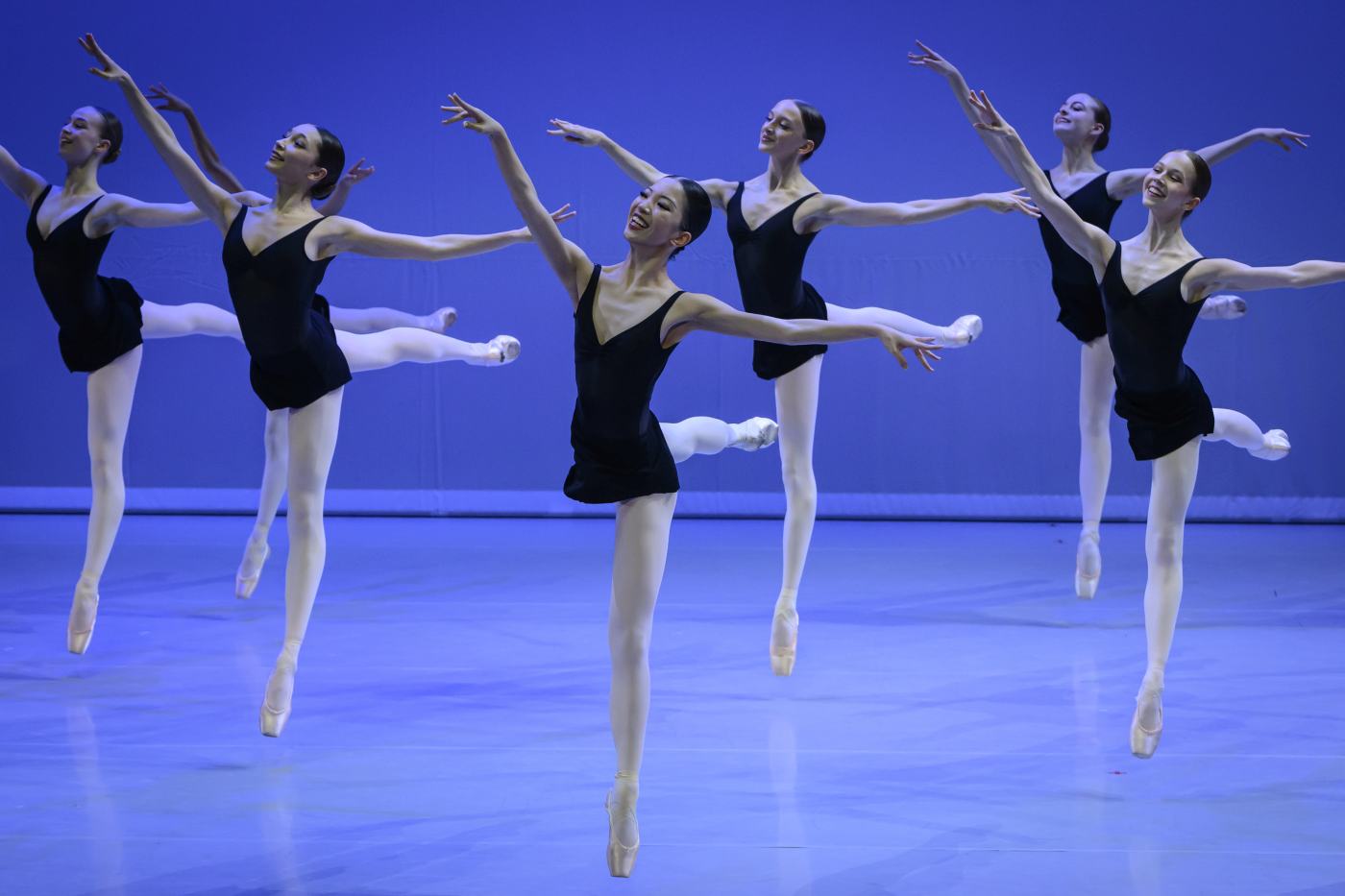
1. Students of the Academy Princess Grace, “We’ve Got Rhythm!” by M.Rahn, L’Académie Princess Grace 2025 © A.BlangeroLes Ballets de Monte-Carlo has much to celebrate this season: the company’s fortieth anniversary and the associated Academy Princess Grace’s fiftieth anniversary. The company will host a gala in July 2026, and the Academy’s gala took place last Friday. It combined a “best of” selection of works performed by the Academy during the past sixteen years. Princess Caroline of Hanover, president of Les Ballet de Monte-Carlo, attended the gala.

The legs of seven girls flew high to George Gershwin’s I’ve got Rhythm, and the joy and confidence in their faces, as well as the freedom, dash, and buoyancy of their movements, left no doubt that this would be a pleasant evening. Michel Rahn’s 2011 neoclassical choreography of almost the same title, We’ve Got Rhythm!, looked Balanchine-esque and employed a large group of male and female students. Continue reading “Doing the Company Proud”

“A Splendor for the Eyes”

“The Sleeping Beauty”
The Australian Ballet
Sydney Opera House/Joan Sutherland Theatre
Sydney, Australia
December 16, 2025 (live stream)

by Ilona Landgraf
Copyright © 2025 by Ilona Landgraf

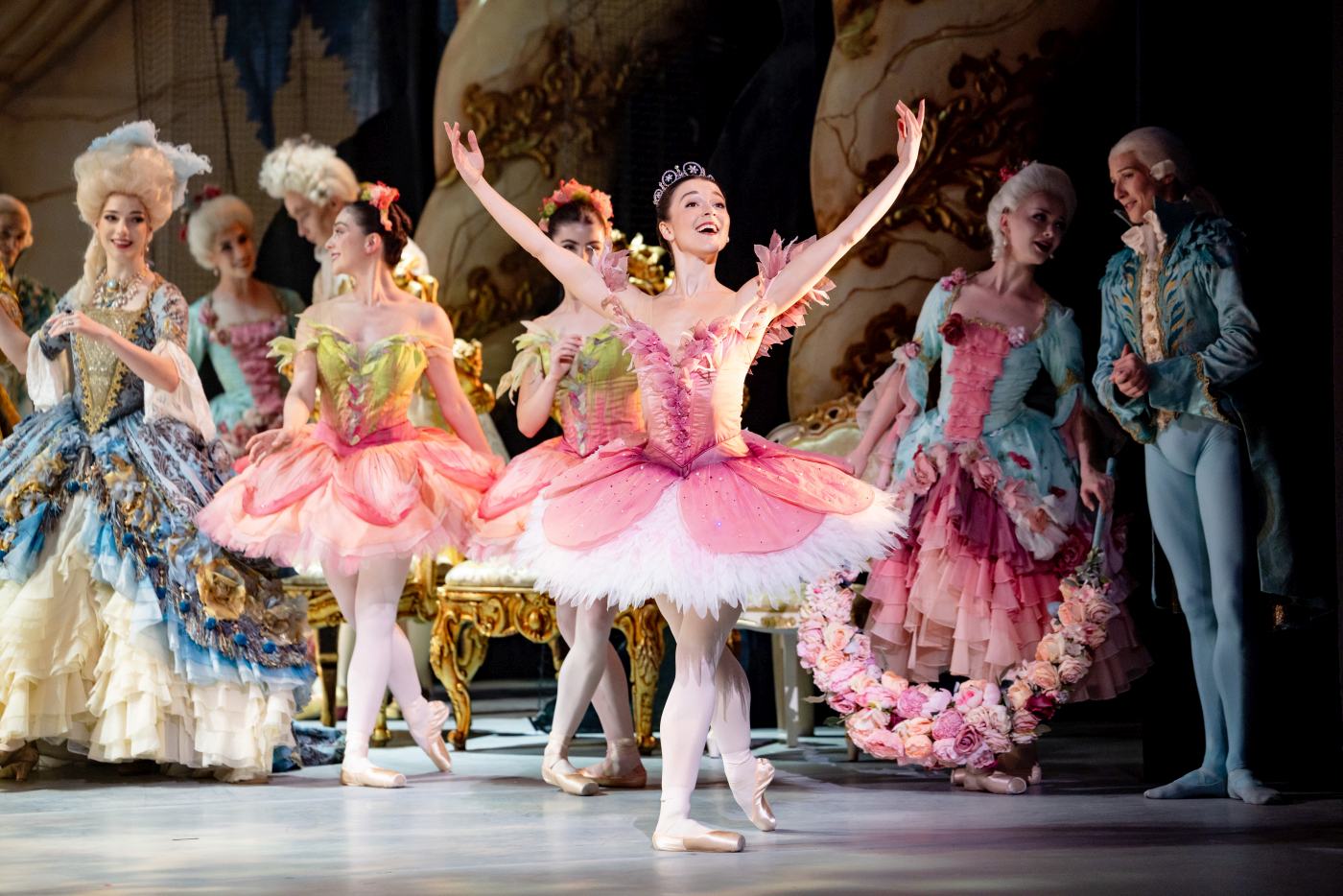
1. B.Bemet (Princess Aurora) and ensemble, “The Sleeping Beauty” by D.McAllister after M.Petipa, The Australian Ballet 2025 © D.Boud According to the Australian Ballet’s artistic director, David Hallberg, The Sleeping Beauty is “a splendor for the eyes.” The production, which originated ten years ago under the directorship of Hallberg’s predecessor, David McAllister (who also contributed choreography based on Petipa’s original), is more; it is food for the soul.

As if zooming in on the painting of a distant palace projected on the curtain, the first scene showed the royal writing cabinet, where the whimsical Catalabutte (Jarryd Madden) omitted Carabosse from the list of invitees to Princess Aurora’s christening party. The curve of the painting’s frame recurred in the shape of the banisters that led down to the royal hall. Jon Buswell’s lighting increased the impression of paintings in motion. Continue reading ““A Splendor for the Eyes””

Lasting Icons

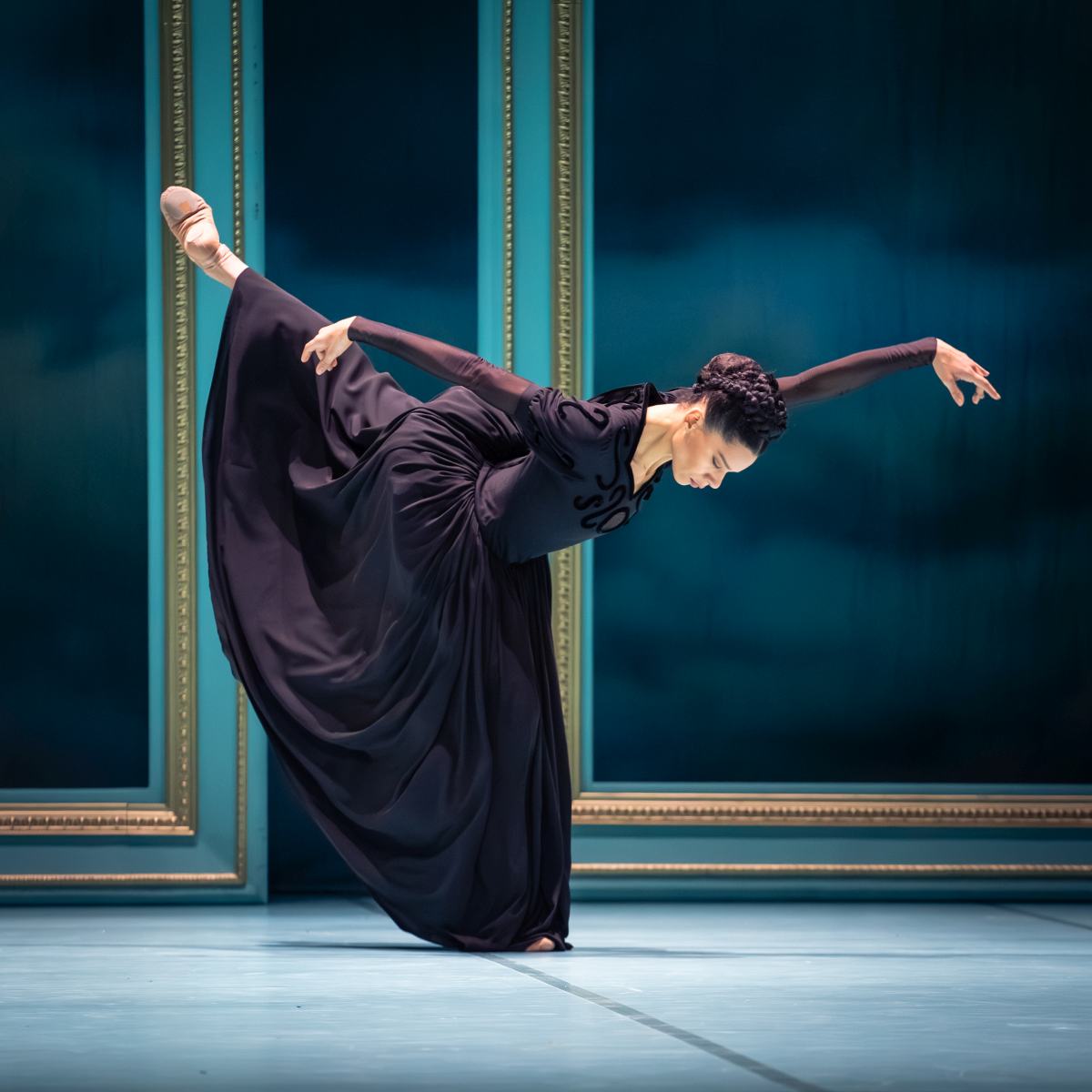
“Two Annas” (“Akhmatova”/”Pavlova”)
MuzArts
Tovstonogov Bolshoi Drama Theatre
St. Petersburg, Russia
December 2025 (video)

by Ilona Landgraf
Copyright © 2025 by Ilona Landgraf

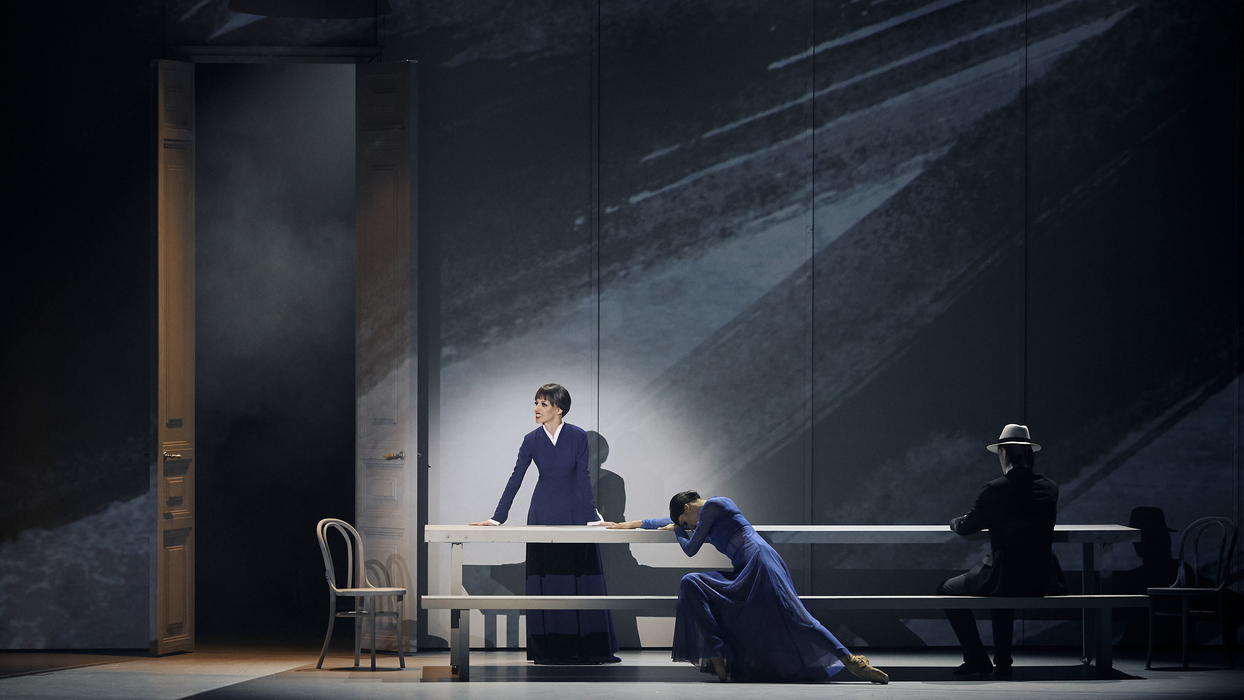
 1. P.Malikova (Anna Akhmatova), E.Sevenard (Anna Akhmatova), and D.Potaptsev (Nikolai Gumilev), “Akhmatova” by Y.Possokhov, MuzArts 2025 © Diaghilev P.S. Festival/M.Vilchuk The production company MuzArts, founded in 2014 to showcase the Bolshoi Ballet’s prima ballerina, Svetlana Zakharova, has grown into a vital force of Russia’s ballet scene. Their recent production, Two Annas, was supported by the Diaghilev P.S. International Festival of Arts, a prominent, intercultural, cross-genre event that has been held in St. Petersburg since 2009. Two Annas premiered at St. Petersburg’s Tovstonogov Bolshoi Drama Theatre this February and received its Moscow premiere at the Maly Theatre. Thanks to the MuzArts’s director, Yuri Baranov, I was able to watch a video of the production. Continue reading “Lasting Icons”