Live Life to the Fullest

“Zorba the Greek”
Tartar State Academic Ballet
Jalil Opera and Ballet Tartar State Academic Theatre
Kazan, Russia
November 2025 (video)

by Ilona Landgraf
Copyright © 2026 by Ilona Landgraf
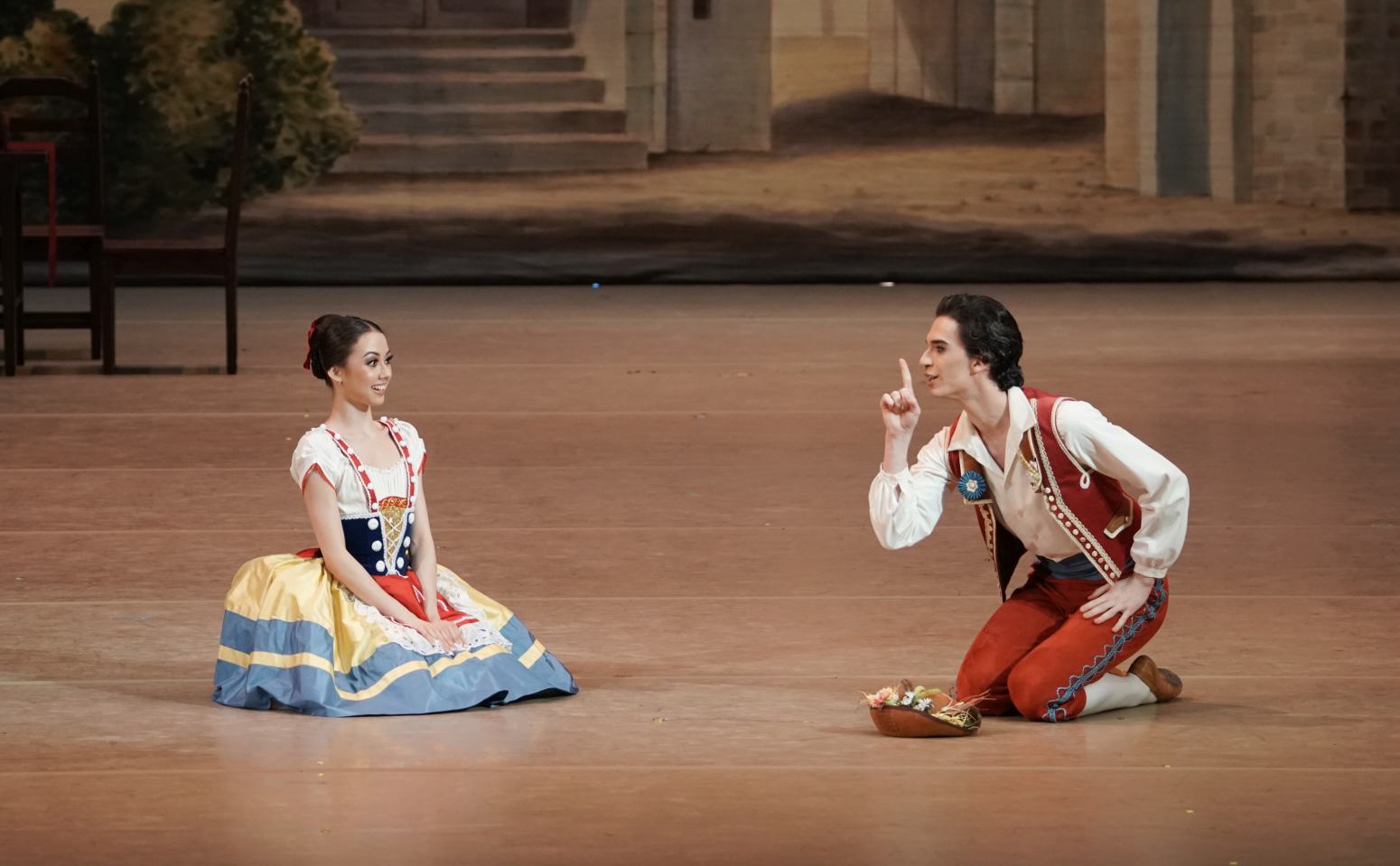
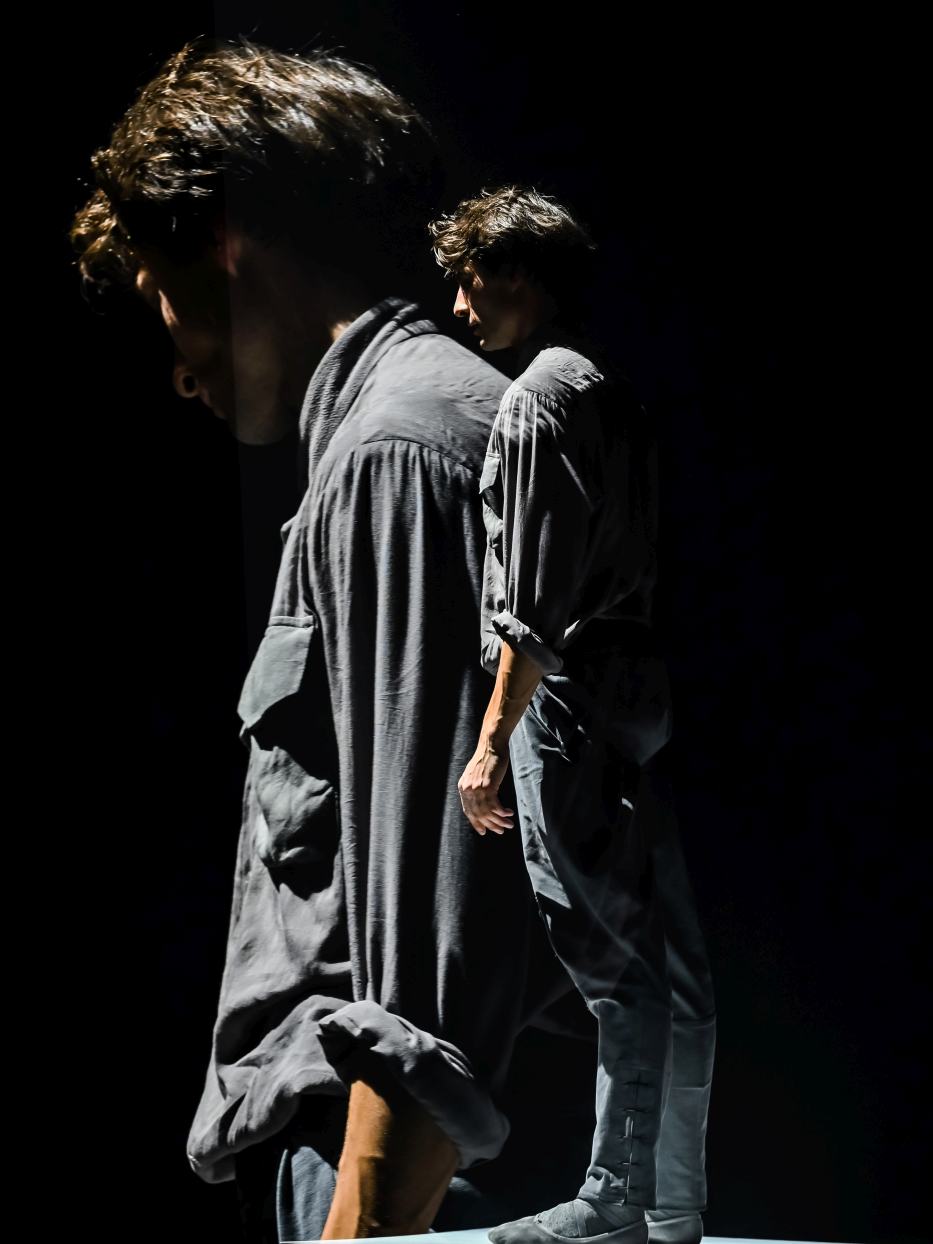
1. “Zorba the Greek” by L.Massine, Tartar State Academic Ballet 2025 © Tartar State Academic Ballet “A man needs a little madness or never dares to cut his ropes and be free,” urged Zorba the buttoned-up aristocrat Basil, in Michael Cacoyannis’s 1964 film Zorba the Greek. The film is based on Nikos Kazantzakis’s 1946 novel Life and Times of Alexis Zorbas, won three Academy Awards, and featured Anthony Quinn as Zorba and Alan Bates as Basil. Zorba, an earthy and boisterous peasant, had this kind of madness and, on their venture to Crete, instilled it in Basil as well.
In addition to the film, the novel inspired a musical, radio play, telemovie, and ballet, which was choreographed by Lorca Massine (Léonide Massine’s son), includes music by Mikis Theodorakis, and premiered at the Arena di Verona in 1988. Vladimir Vasiliev and Gheorghe Iancu danced the leading roles.

2. Ensemble, “Zorba the Greek” by L.Massine, Tartar State Academic Ballet 2025 © Tartar State Academic Ballet In 2024, an updated version of the ballet premiered for the first time in Russia at the 37th Rudolf Nureyev International Classical Ballet Festival in Kazan and was revived at the 2025 festival. On both occasions, the Bolshoi Ballet’s Igor Tsvirko made a guest appearance in the title role. I had the chance to watch a recording of his latest performance on Russia-Culture TV.

Massine changed the name of Basil to John and condensed the story to focus on his friendship with Zorba and the tragic romances of both men at a Greek location. He dropped their enterprise to exploit a fallow lignite mine, shenanigans with some monks, and the “splendiferous crash” of a timber transport contraption designed to deliver wood to support the shaft. Instead, Massine’s John (Oleg Ivenko) burst onto the scene, his white pants and shirt and happy-go-lucky jumps identifying him as an outsider at first sight. 3. Ensemble, “Zorba the Greek” by L.Massine, Tartar State Academic Ballet 2025 © Tartar State Academic Ballet Though soft-shelled and naive, he appeared to be boastful and disgruntled but also impressed the locals. John’s tours en l’air looked out of place amidst daily physical labor. But he was willing to adapt, and the Greek folk dance steps looked decreasingly artificial on him. Perhaps because he was different, the young widow Marina (Kristina Andreeva-Zakharova), coveted by many, especially the locals’ leader, Manolios (Anton Polodyuk), fell in love with him.


Zorba’s (Igor Tsvirko) every step, by contrast, embraced life from deep within. Dancing was his lifeline in bad times and an outlet for exuberant joy in good times. He loved women but also cynically utilized his charms. He 4. W.Carvalho (John) and ensemble, “Zorba the Greek” by L.Massine, Tartar State Academic Ballet 2025 © Tartar State Academic Ballet couldn’t stop fondling the cabaret girls who suddenly turned up like a dispatch of Scheherazade’s harem. Life had taught him a pragmatic sort of wisdom that grounded him. Often, his spread-out arms asked, “What’s up?” or expressed an encouraging “Come on, buddy, do like me!” A clever mediator, he helped John navigate the locals’ rejection, yet he couldn’t prevent them from assassinating Marina since tradition forbade love affairs with outsiders. Thanks to Zorba, John overcame his grief and restored his optimism. Later, when Zorba’s wife—the elderly Madame Hortense (Alexandra Elagina), a lonely, former French cabaret dancer whom Zorba was coaxed to marry—died, it was John who lifted Zorba’s spirits.

5. A.Gomez (Marina) and ensemble, “Zorba the Greek” by L.Massine, Tartar State Academic Ballet 2025 © Tartar State Academic Ballet Although the locals sometimes broke into a dance as joyful as a well in spring, their movements often reminded me of the work-hardened Cretans of Cacoyannis’s film when they cultivated their barren, stony land. The gestures of Massine’s Greek were straightforward and firm, their bodies proud and tense like high voltage wires. The men (wearing brown pants, white shirts, and suspenders) stepped gravely in line, stomped their feet, and hopped. The women (wearing simple, floor-length sundresses with wide skirts in muted brown, turquoise, and blue and matching headbands) walked gravely like sculptures, one arm held back, the other stretched forward. They often bent one knee sideways, their arms plowing the air as if grabbing onto the power of the earth. Arching their chests upward, they seemed to open their souls to heaven.

7. K.Andreeva-Zakharova (Marina) and W.Carvalho (John), “Zorba the Greek” by L.Massine, Tartar State Academic Ballet 2025 © Tartar State Academic Ballet 6. A.Gomez (Marina) and S.Bulatov (John), “Zorba the Greek” by L.Massine, Tartar State Academic Ballet 2025 © Tartar State Academic Ballet Marina was one of them, but her deep blue, subtly shiny dress indicated her depth. Caution and the pressure of traditions kept her sensuality under tight wraps, but her long, expressive arms betrayed her yearning. Every fiber of her body opposed Manolios, but she responded immediately to John’s interested glance. Gradually, her trust in him grew, and the moment she threw her widow’s veil away and changed into a mulberry red dress, it was clear that she had decided on John. The locals, above all Manolios, repeatedly separated them, their arms severing their embraces like a knife or battering ram. Manolios’s wrath was cold and calculating and thus especially dangerous. Marina couldn’t escape the folk who encircled her. She jumped only once, but then her head disappeared amidst the crowd. Her execution and the dissonant music that accompanied it were strongly reminiscent of the Chosen One’s sacrifice in Le Sacre du printemps.

8. A.Polodyuk (Manolios) and ensemble, “Zorba the Greek” by L.Massine, Tartar State Academic Ballet 2025 © Tartar State Academic Ballet 9. K.Andreeva-Zakharova (Marina), “Zorba the Greek” by L.Massine, Tartar State Academic Ballet 2025 © Tartar State Academic Ballet Still dreaming of past glamour, Madame Hortense wore fishnets, a rose feather boa, and a purple hat on her red hair. As long as Zorba and John nurtured her fragile dream, she felt vital. Unlike in the film, where Zorba promised “Twenty meters of white satin covered in pearls” that he never delivered, the ballet’s Madam Hortense was presented with an extra-long, double wedding veil, a long pearl necklace, and a red rose that made her feel beautiful and loved. But the candle-holding procession that followed her and Zorba heralded her funeral. Once death approached, many shadow-like women grabbed Madame Hortense’s gauzy dress, leaving her in underwear (in the film, old, withered village women crouched next to Madame Hortense’s deathbed and grabbed everything that wasn’t nailed down the second she died). Sapped of all energy, she sat motionless, tears running down her huge, sad eyes. The only thing she clung to as she dropped dead in Zorba’s arms was his red handkerchief.

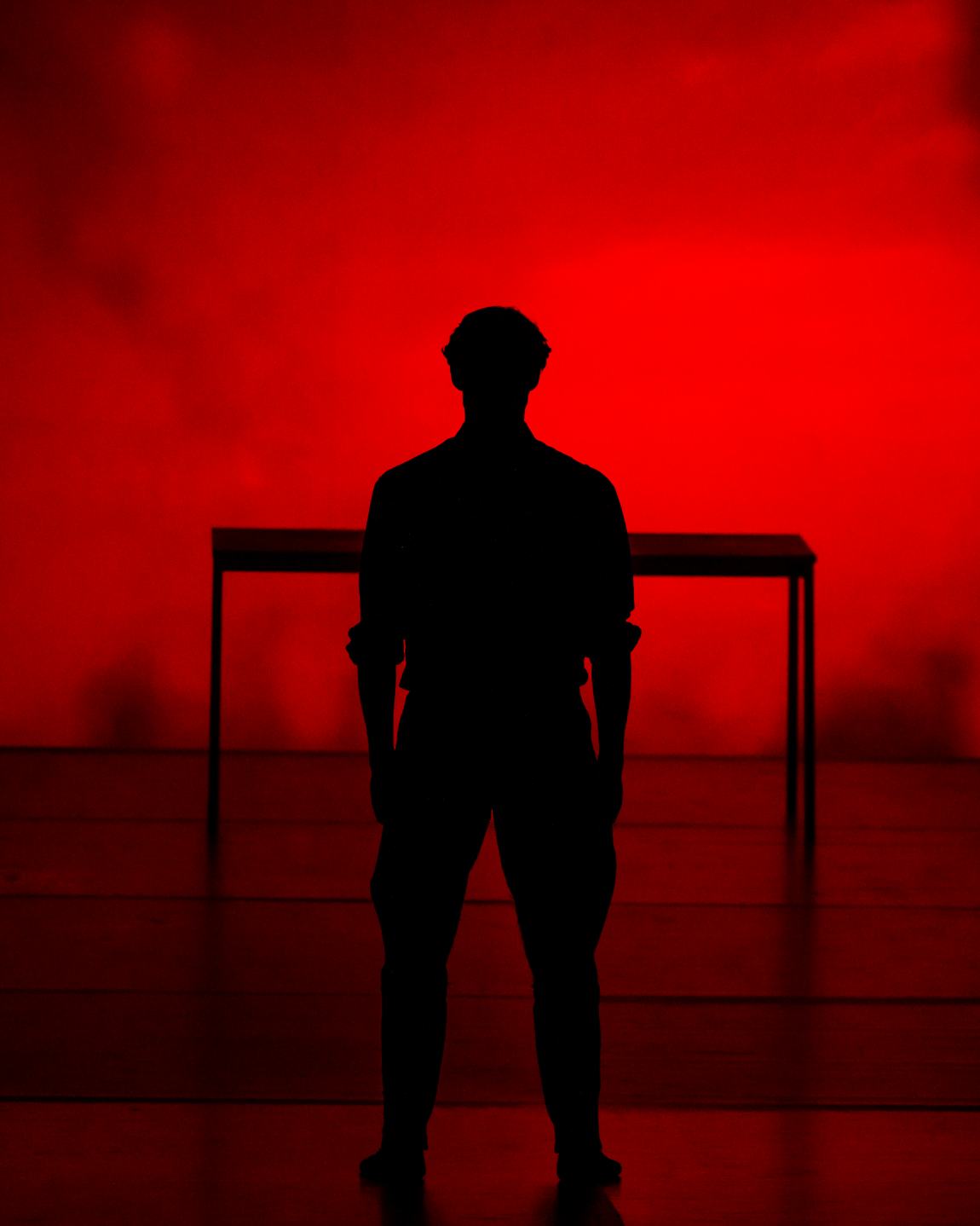
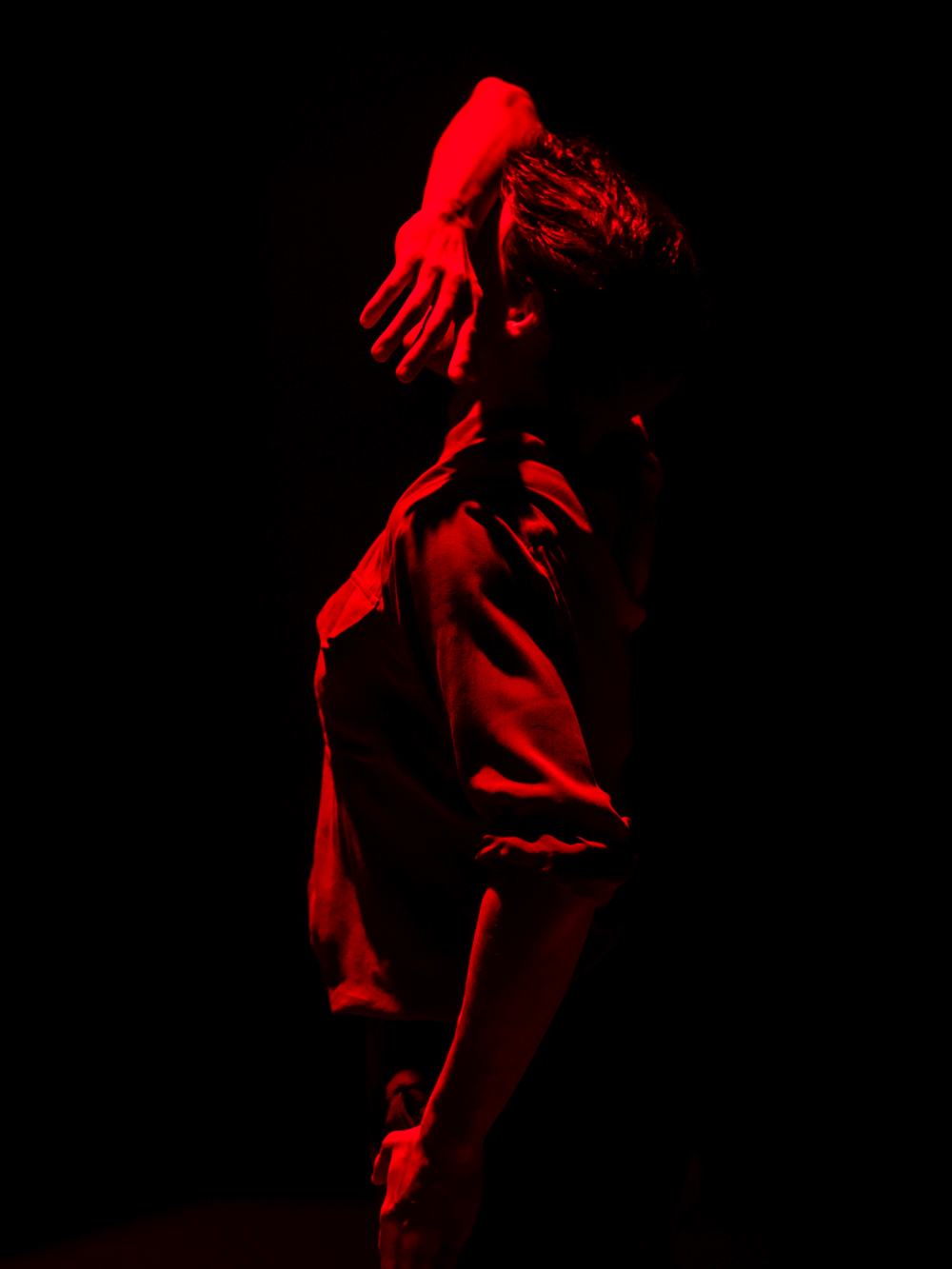
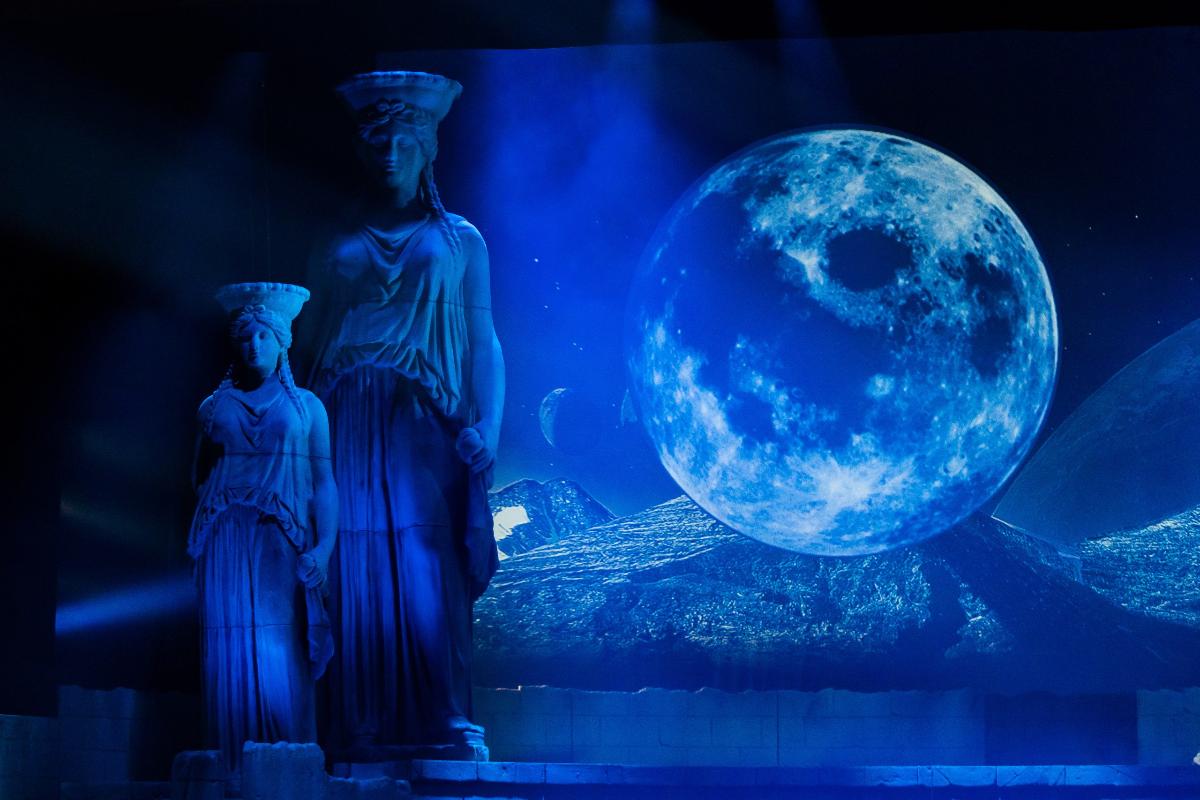
10. A.Elagina (Madame Hortense), “Zorba the Greek” by L.Massine, Tartar State Academic Ballet 2025 © Tartar State Academic Ballet Set designer Viktor Gerasimenko created a Greek town that was by no means as dilapidated as the film’s Cretan mountain village. It lay invisible behind a solid, huge stone wall with three round-arched passages. The square in front of the wall was reserved for the dancers. They were framed by a choir of roughly one-hundred singers who stood on two staircases that connected the square with a catwalk on top of the wall. Imposing Greek statues (resembling the caryatids of Athens’ Erechtheion temple) at the top of the staircases reminded viewers that, however dramatic the goings-on, they would be minuscule compared to history. A huge, changing moon (video design by Dmitry Shamov) indicated the passing of time. At times, galaxies shone in the distance. When the locals blazed with anger, the sky turned burning red.

11. S.Bulatov (John), L.Starkova (Madame Hortense), M.Timaev (Zorba), and ensemble; “Zorba the Greek” by L.Massine, Tartar State Academic Ballet 2025 © Tartar State Academic Ballet Theodorakis’s score was imbued with the passion of Greek folk music. It burst with joy, plunged into gloom, and throbbed with agitation. During its first solemn song, the choir, wearing monastic-like garbs, slowly stepped from the wall’s terrace downstairs and remained on the staircase for the entire performance. The two female protagonists, Marina and Madame Hortense, had singer doubles who accompanied the dancers from the terrace, their black caftans and headscarves almost merging with the darkness. Alina Sharipzhanova sang in Greek, and her voice reverberated with Marina’s inner life, whereas Elmira Kallimulina’s melancholic French love chanson encapsulated the alter ego of Madame Hortense.

12. M.Timaev (Zorba), S.Bulatov (John), and ensemble; “Zorba the Greek” by L.Massine, Tartar State Academic Ballet 2025 © Tartar State Academic Ballet Although both Zorba and John lost their loved ones, they regained their zest for life. Like the refreshing surge that replaced the mountain scenery in the background, their perspectives had changed. Cheered on by the locals, their arms linked for a final sirtaki (which, by the way, was created during the 1964 filming as a substitute for a dance the injured Anthony Quinn couldn’t perform and afterward became a symbol of Greece).
Midway into the curtain calls, Massine left the stage, surrounded the orchestra pit, and, from the first row of the auditorium, conducted an encore. Again, the high spirits from the sirtaki surged toward the audience, and Tsvirko and Ivenko outdid one another in double and triple saut de basque. As Anthony Quinn’s Zorba would have said, “It couldn’t have been more splendiferous!”

Links: Website of the Jalil Opera and Ballet Tartar State Academic Theatre
Interview with Lorca Massine and rehearsals of Zorba the Greek (Television channel Efir, 2024)
Report about Zorba the Greek (Television channel Efir, 2024)
Report about Zorba the Greek at the Rudolf Nureyev International Classical Ballet Festival (Television channel Efir, 2024)
Kristina Andreeva-Zakharova on Zorba the Greek
The music of Zorba the Greek (Television channel Efir, 2024)
 
Photos: (The photos show different casts from other performances.)
1. “Zorba the Greek” by Lorca Massine, Tartar State Academic Ballet 2025
2. Ensemble, “Zorba the Greek” by Lorca Massine, Tartar State Academic Ballet 2025
3. Ensemble, “Zorba the Greek” by Lorca Massine, Tartar State Academic Ballet 2025
4. Wagner Carvalho (John) and ensemble, “Zorba the Greek” by Lorca Massine, Tartar State Academic Ballet 2025
5. Amanda Gomez (Marina) and ensemble, “Zorba the Greek” by Lorca Massine, Tartar State Academic Ballet 2025
6. Amanda Gomez (Marina) and Salavat Bulatov (John), “Zorba the Greek” by Lorca Massine, Tartar State Academic Ballet 2025
7. Kristina Andreeva-Zakharova (Marina) and Wagner Carvalho (John), “Zorba the Greek” by Lorca Massine, Tartar State Academic Ballet 2025
8. Anton Polodyuk (Manolios) and ensemble, “Zorba the Greek” by Lorca Massine, Tartar State Academic Ballet 2025
9. Kristina Andreeva-Zakharova (Marina), “Zorba the Greek” by Lorca Massine, Tartar State Academic Ballet 2025
10. Alexandra Elagina (Madame Hortense), “Zorba the Greek” by Lorca Massine, Tartar State Academic Ballet 2025
11. Salavat Bulatov (John), Lada Starkova (Madame Hortense), Mikhail Timaev (Zorba), and ensemble; “Zorba the Greek” by Lorca Massine, Tartar State Academic Ballet 2025
12. Mikhail Timaev (Zorba), Salavat Bulatov (John), and ensemble; “Zorba the Greek” by Lorca Massine, Tartar State Academic Ballet 2025
all photos © Tartar State Academic Ballet
Editing: Kayla Kauffman

Believe in Miracles

“The Nutcracker. Waiting for a Miracle”
Bolshoi Ballet
Bolshoi Theatre
Moscow, Russia
December 29, 2025 (documentary)

by Ilona Landgraf
Copyright © 2026 by Ilona Landgraf

1. E.Kokoreva (Marie), D.Savin (Drosselmeier), and ensemble, “The Nutcracker” by Y.Grigorovich, Bolshoi Ballet 2025 © Bolshoi Theatre/D.YusupovOf the many special moments in Yuri Grigorovich’s The Nutcracker, there’s one you shouldn’t miss: when the Christmas tree is growing, and Marie’s transformation takes place. Then you need to make a wish. At least, that’s the insiders’ tip from the Bolshoi Ballet’s artists involved in the production.

Grigorovich’s The Nutcracker premiered at the Bolshoi Theatre in 1966 and was performed for the eight hundredth time earlier in December. Perhaps that’s why the Russian Channel One broadcast a one-hour documentary about The Nutcracker at the end of December. The film outlines the plot, provides insight into the music, set, and costumes, and looks at sixty years of performance history, during which nothing changed. Numerous coaches and ballet masters guarantee that Grigorovich’s legacy is preserved and kept alive. Continue reading “Believe in Miracles”

Lasting Icons

“Two Annas”
MuzArts
Tovstonogov Bolshoi Drama Theatre
St. Petersburg, Russia
December 2025 (video)

by Ilona Landgraf
Copyright © 2025 by Ilona Landgraf

 1. P.Malikova (Anna Akhmatova), E.Sevenard (Anna Akhmatova), and D.Potaptsev (Nikolai Gumilev), “Akhmatova” by Y.Possokhov, MuzArts 2025 © Diaghilev P.S. Festival/M.Vilchuk The production company MuzArts, founded in 2014 to showcase the Bolshoi Ballet’s prima ballerina, Svetlana Zakharova, has grown into a vital force of Russia’s ballet scene. Their recent production, Two Annas, was supported by the Diaghilev P.S. International Festival of Arts, a prominent, intercultural, cross-genre event that has been held in St. Petersburg since 2009. Two Annas premiered at St. Petersburg’s Tovstonogov Bolshoi Drama Theatre this February and received its Moscow premiere at the Maly Theatre. Thanks to the MuzArts’s director, Yuri Baranov, I was able to watch a video of the production. Continue reading “Lasting Icons”

“We Need Him”

“Diaghilev”
Dancers of the Bolshoi Ballet
Bolshoi Theatre (New Stage)
Moscow, Russia
June 24, 2025 (video)

by Ilona Landgraf
Copyright © 2025 by Ilona Landgraf

1. A.Meskova (Gypsy Woman) and D.Rodkin (Sergei Diaghilev), “Diaghilev” by A.Kaggedzhi, Dancers of the Bolshoi Ballet 2025 © G.Galantnyi  2. D.Rodkin (Sergei Diaghilev), “Diaghilev” by A.Kaggedzhi, Dancers of the Bolshoi Ballet 2025 © G.Galantnyi  The man in need whom Sergei Lifar wrote about in 1939 was Sergei Diaghilev (1872-1929), impresario of the Ballets Russes and a revolutionist of ballet. Diaghilev’s burning passion to discover and promote creative beauty is unequaled. He shaped the perception of Russian culture in the West and, like a virus, changed the DNA of twentieth-century art. Without him, Vaslav Nijinsky, Tamara Karsavina, Ida Rubinstein, Feodor Chaliapin, and Igor Stravinsky wouldn’t have become known to the world, and the careers of choreographers, such as Michel Fokine, Bronislava Nijinska, Léonide Massine, and George Balanchine, might have taken another path. Ten years after Diaghilev’s death, no one had filled the void he had left behind.

Ninety-six years later, a new Diaghilev has yet to be found, but—as Russia and the West separated again—the need for a bridge-building spirit and culture that unites people across borders is more pressing than ever. That’s why Russia launched the cultural search festival We Need Diaghilev last year, which features various expositions, lectures, and performances at Russian and foreign venues. Continue reading ““We Need Him””

Prix Benois Laureates 2025

Prix Benois de la Danse
Bolshoi Theatre (Historic Stage)
Moscow, Russia
June 17, 2025

by Ilona Landgraf
Copyright © 2025 by Ilona Landgraf

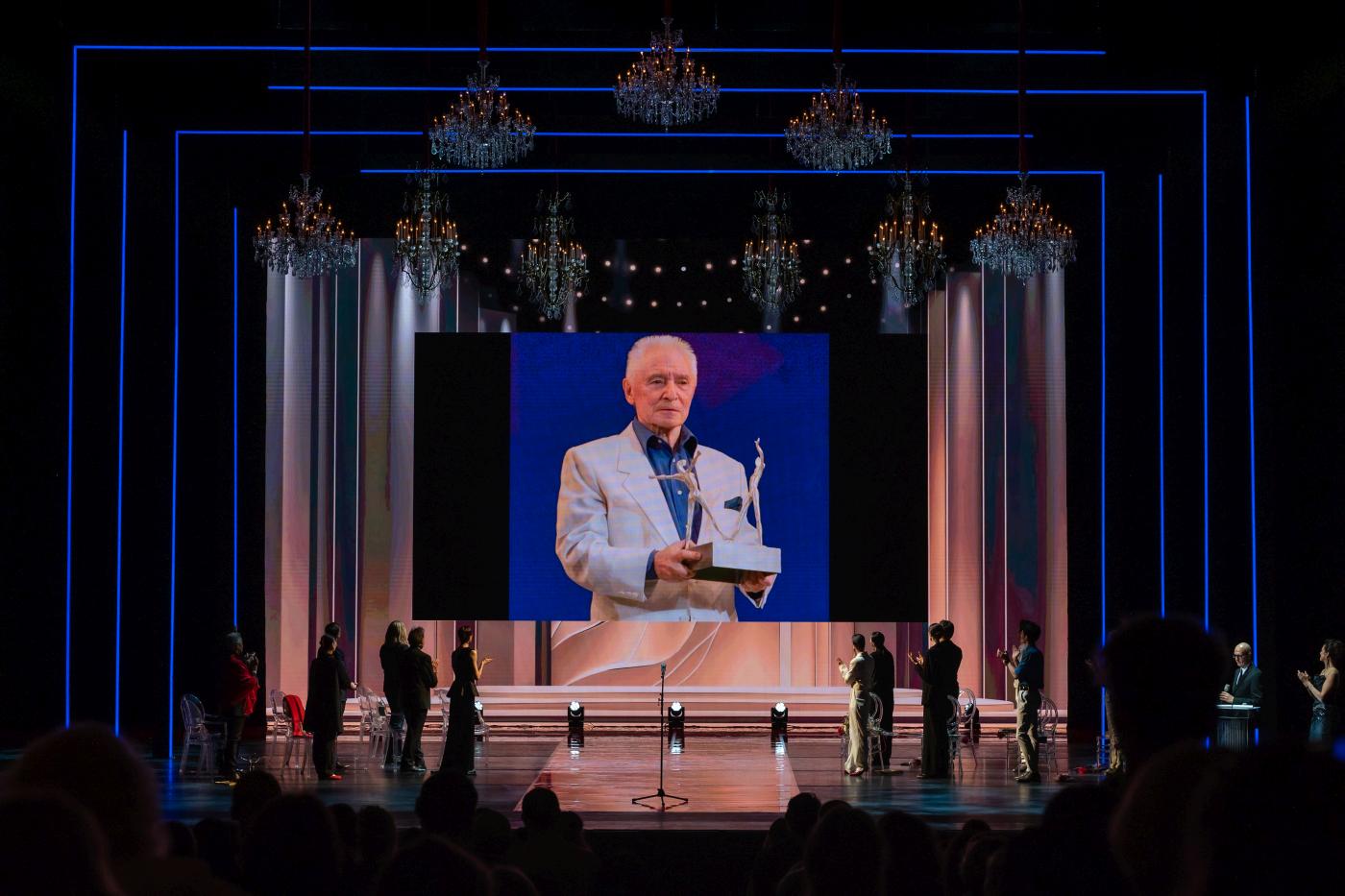
1. Y.Grigorovich, Prix Benois Award Ceremony, Bolshoi Theatre 2025 © B.AnnadurdyevYesterday evening, the Prix Benois laureates were announced on the Bolshoi Theatre’s historic stage for the 33rd time.

Mthuthuzeli November won the prize for best choreography in absentia for Chapter Two, a creation for Cape Ballet Africa in South Africa. The Mariinsky Ballet’s Renata Shakirova won the best female dancer prize for her performance as Swanilda in Alexander Sergeev’s new Coppélia. Like last year, the prize for the best male dancer was awarded twice. Joshua Williams received the Prix Benois for his performance in November’s Chapter Two; Dmitry Smilevsky (Bolshoi Ballet) was awarded for his performances as Mercutio in Leonid Lavrovsky’s version of Romeo and Juliet and Prince Désiré in Yuri Grigorovich’s version of The Sleeping Beauty. Continue reading “Prix Benois Laureates 2025”

Dancer Nominees for the Prix Benois 2025

Prix Benois de la Danse
Bolshoi Theatre (Historic Stage)
Moscow, Russia
June 2025

by Ilona Landgraf
Copyright © 2025 by Ilona Landgraf

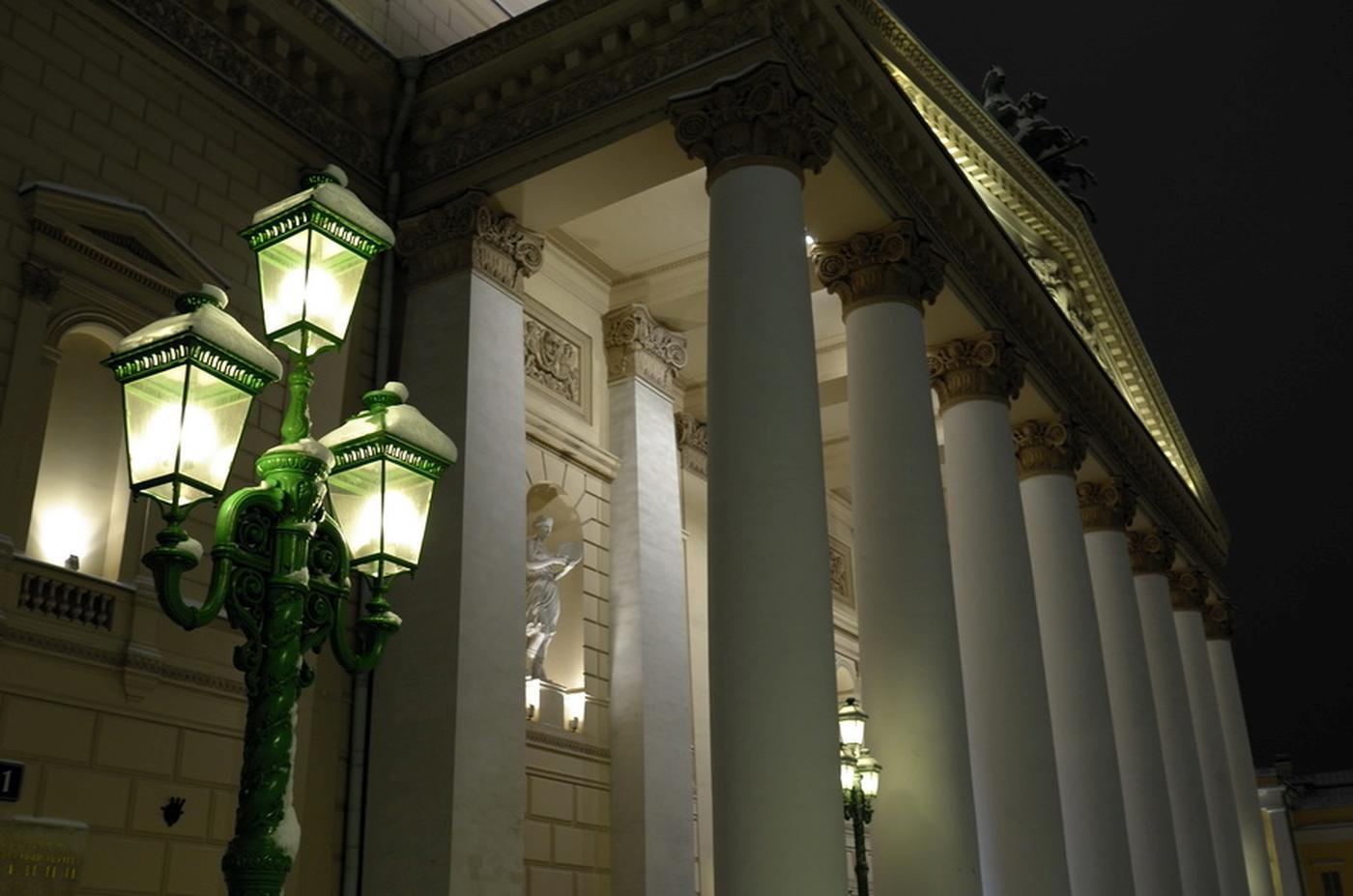
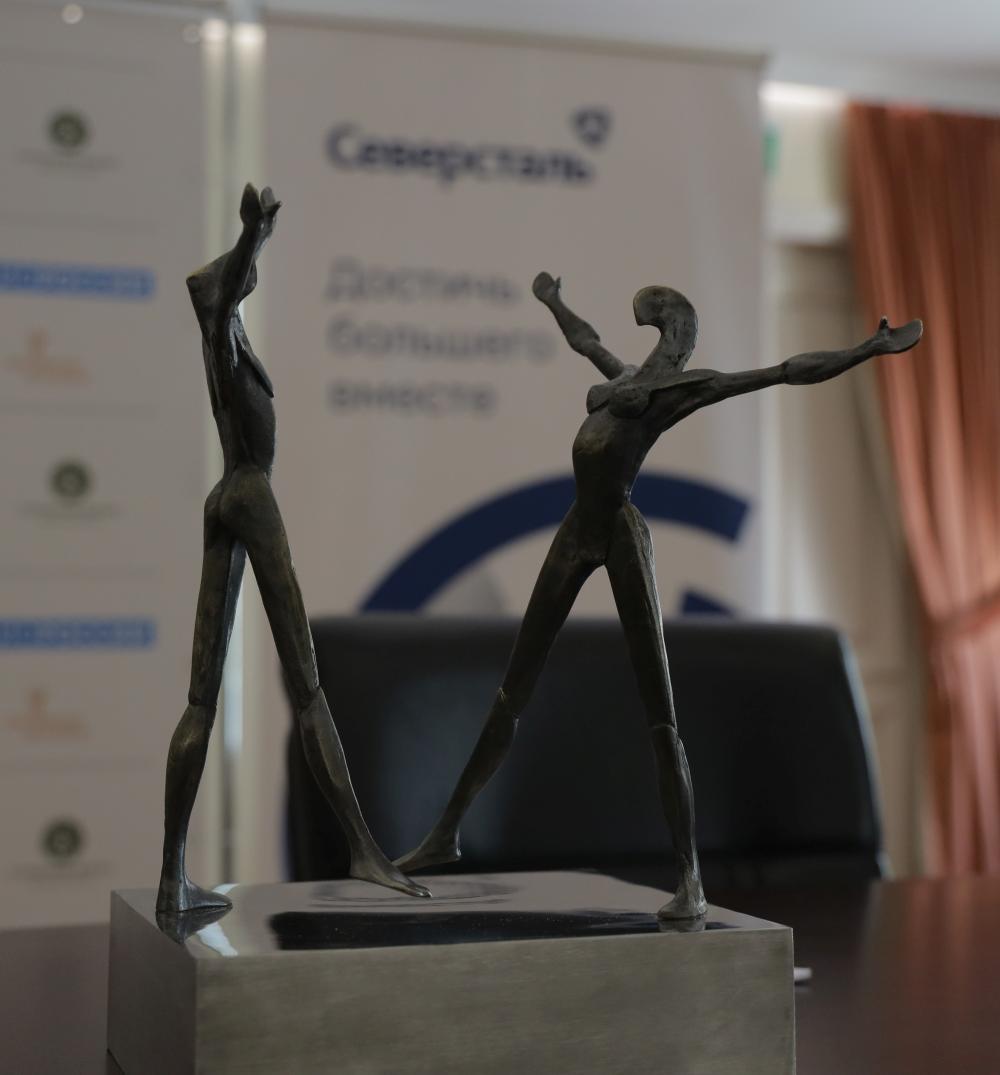
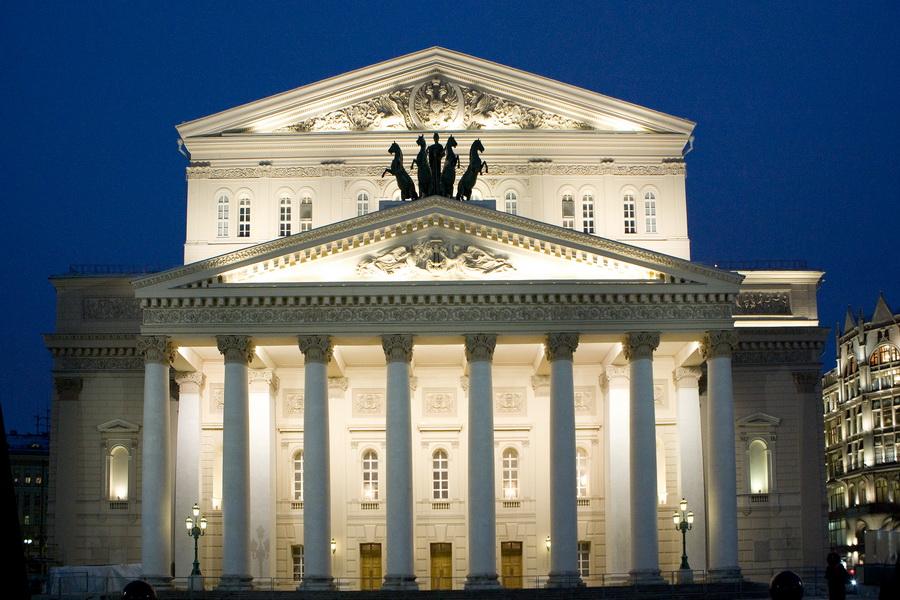
1. Bolshoi Theatre © Bolshoi Theatre/D.Yusupov2. Statuette of the Prix Benois de la Danse, design by I.Ustinov © Benois Center As in 2024, the Prix Benois jury nominated thirteen dancers from eight companies for this season’s award. Of the six women and seven men, two dance in China, France, and South Africa; one dances in Kazakhstan; and six, Russia. Next Tuesday, the laureates will be announced at an award ceremony at the Bolshoi Theatre, Moscow.

Here’s a short overview of the nominees in alphabetical order by company name: Continue reading “Dancer Nominees for the Prix Benois 2025”

Choreographer Nominees for the Prix Benois 2025

Prix Benois de la Danse
Mukaram Avakhri, Wang Ge, Thomas Lebrun, Andrey Merkuriev, Mthuthuzeli November, Alexander Sergeev
Bolshoi Theatre (Historic Stage)

Moscow, Russia
June 2025

by Ilona Landgraf
Copyright © 2025 by Ilona Landgraf

1. Bolshoi Theatre © Bolshoi Theatre/D.Yusupov2. Statuette of the Prix Benois de la Danse, design by I.Ustinov © Benois Center On June 17th, the Bolshoi Theatre’s Historic Stage will host the annual Prix Benois charity gala and awards ceremony. Traditionally, laureates of previous years have performed in a gala concert on the following evening. Prizes will be awarded for the best choreographer, female dancer, and male dancer. This year’s festival will pay tribute to Yuri Grigorovich, who passed away on May 19th. Grigorovich founded the Prix Benois competition in 1991 and served as chairman of the jury, artistic director, and president.
Below is an overview of the six nominated choreographers. A report of the dancer nominees will follow. Continue reading “Choreographer Nominees for the Prix Benois 2025”

Thunderous

Night on the Bald Mountain”
Igor Moiseyev Ballet

Tchaikovsky Concert Hall
Moscow, Russia
April 23, 2025

by Ilona Landgraf
Copyright © 2025 by Ilona Landgraf

1. Ensemble, “Night on the Bald Mountain”, Igor Moiseyev Ballet 2025 © Igor Moiseyev Ballet/ E.MasalkovThe stage shook under the stomping jumps of Roman Gavrilov as if to enforce his courtship with Kristina Kuznetsova in the Russian folk dance, Summer. The couple was the first to step onto the stage of the Tchaikovsky Concert Hall where the Igor Moiseyev company presented its program, Night on the Bald Mountain, on two consecutive days. The twelve couples that framed Kuznetsova and Gavrilov in a V-shape wore vibrant traditional garments, a signature feature of their folk-dance repertory. Compared to the performance of Summer I saw two years ago at another Moscow venue, the dancers seemed even more snappy and vigorous. Each step was clean and decisive, and the pace was mind-boggling. The Hopak sequences went on as if the dancers’ legs were inexhaustible. Calling it a lightning opening would be an understatement. Continue reading “Thunderous”

Full of Spirits

“The Tempest”
Bolshoi Ballet
Bolshoi Theatre (New Stage)
Moscow, Russia
April 22, 2025

by Ilona Landgraf
Copyright © 2025 by Ilona Landgraf

1. D.Savin (Prospero), “The Tempest” by V.Samodurov, Bolshoi Ballet 2025 © Bolshoi Theatre/E.Fetisova For his latest choreography for the Bolshoi Ballet in 2024—The Tempest (after Shakespeare’s play)—Vyacheslav Samodurov again teamed up with composer Yuri Krasavin. Both had already collaborated on the one-act ballet Dancemania in 2022. This time, their cooperation must have been tempestuous. “Vyacheslav Samodurov and I did not get along right away…I still see this play completely different,” Krasavin stated in an interview. While Krasavin believed that he accompanied rather than led the artistic process, for Samodurov, “Music comes always first and the composer is the boss in many ways.” But whoever was the boss, the score (played by the Bolshoi Orchestra under the baton of Pavel Klinichev) was mesmerizing. Continue reading “Full of Spirits”

New Takes

Stravinsky. Puppets. Dances”
Ballet of the Stanislavsky and Nemirovich-Danchenko Moscow Music Theatre
Stanislavsky and Nemirovich-Danchenko Moscow Music Theatre
Moscow, Russia

April 20, 2025

by Ilona Landgraf
Copyright © 2025 by Ilona Landgraf

1. D.Dmitriev (Moor), E.Zhukov (Petrushka), and O.Kardash (Ballerina); “Petrushka” by K.Semenov, Stanislavsky Ballet 2025 © Stanislavsky Ballet/Y.Gubina The Stanislavsky Ballet’s new double bill, Stravinsky. Puppets. Dances, attracted large crowds, especially because they scheduled only five performances over three consecutive days. The two ballets, Petrushka and The Firebird, were originally choreographed by Michel Fokine for Sergei Diaghilev’s Ballets Russes in 1911 and 1910, respectively. Both are set to compositions by Igor Stravinsky. The Stanislavsky Theatre presented new interpretations by Kirill Radev (The Firebird)—a former choreographer of the Barcelona Ballet—and Konstantin Semenov (Petrushka)—a dancer-cum-choreographer from the company’s own ranks, whose one-act piece, Through the Looking-Glass I saw in 2023. Both teamed up with stage director Alexey Frandetti (a Tashkent native who later moved to Moscow) and set designer Viktor Nikonenko. The internationally awarded Nikonenko is a puppet maker at Moscow’s State Academic Central Puppet Theater S.V. Obraztsov, which cooperated with the Stanislavsky Theatre for the first time (an exhibition of puppets and photos from the S.V. Obraztsov museum was shown at the Stanislavsky as well). Continue reading “New Takes”

Brimful

“Cipollino”
Bolshoi Ballet
Bolshoi Theatre (New Stage)
Moscow, Russia
March 08, 2025 (matinee and evening performance)

by Ilona Landgraf
Copyright © 2025 by Ilona Landgraf

 1. S.Maymula (Little Radish), I.Sorokin (Cipollino), A.Vinokur (Mother Radish), and E.Besedina (Mother Cipolla), “Cipollino” by G.Mayorov, Bolshoi Ballet 2025 © Bolshoi Theatre/E.FetisovaThe boy Cippolino (Little Onion), the hero of Gianni Rodari’s 1957 children’s book Adventures of Cipollino, enjoyed an international career. He was especially popular in eastern countries and a famous cartoon and film figure in the Soviet Union. A ballet adaption by Genrikh Mayorov (1936-2022) entered the Bolshoi Ballet’s repertory three years after its Kiev premiere. Cipollino was revived at the Bolshoi earlier this season and still attracts crowds. Though a children’s fairy tale, adults can appreciate the production, especially when danced at top quality. I saw a matinee attended primarily by children and their parents as well as a sold-out evening performance.

The young Cipollino and his family are members of jovial townsfolk who are anthropomorphic fruits and vegetables—Cobbler Grape, Professor Pear, Godfather Pumpkin, and the Radish family, whose daughter, Little Radish, becomes Cipollino’s best buddy. They’re ruled by the high-handed, eccentric Prince Lemon whose court includes an acerbic guard, ludicrous knights, and the two overexcited Countesses Cherry. Continue reading “Brimful”

Dreams versus Reality

“The Seagull”
Bolshoi Ballet
Bolshoi Theatre (New Stage)
Moscow, Russia
March 06, 2025

by Ilona Landgraf
Copyright © 2025 by Ilona Landgraf

1. A.Putintsev (Konstantin Treplev), “The Seagull” by Y.Possokhov, Bolshoi Ballet 2025 © Bolshoi Theatre/M.Logvinov Almost four years after its premiere in summer 2021, I finally saw Yuri Possokhov’s The Seagull at the Bolshoi Theatre. It was his sixth creation for the company (his seventh and latest, The Queen of Spades, premiered in 2023), and the fourth time, he teamed up with composer Ilya Demutsky. The artistic team included costume designer Emma Ryott (a longstanding collaborator of choreographer Christian Spuck) and set designer Tom Pye (who also created the designs for Possokhov’s Anna Karenina). David Finn contributed the lighting, Sergei Rylko the video design.

Chekhov’s The Seagull is labeled as a comedy, but its humor is bitter at best. Not a single protagonist leads a fulfilled life. Everybody runs after a dream world or tries to construct their realities. Family relationships are strained, and love is unrequited, quickly exhausted, or phony. Possokhov’s interpretation throws more light on some characters, and less on others, and differs in some respects from the original. Irina Arkadina (Kristina Kretova)—an actress in Chekhov’s version, a renowned ballerina in Possokhov’s—is not merely a fashionable yet greedy diva and dysfunctional mother. She shows her empathetic side when she recalls childhood memories with her elderly brother, Pyotr Sorin (Mikhail Lobukhin), whose unrealized dreams of marriage and artistic career Possokhov omitted. Like in the text, events largely unfolded at Sorin’s country estate. Continue reading “Dreams versus Reality”

Back in 1892…

“The Nutcracker”
Perm Ballet
Perm Tchaikovsky Opera and Ballet Theatre
Perm, Russia
December 31, 2024 (live stream)

by Ilona Landgraf
Copyright © 2025 by Ilona Landgraf

Like all Russian ballet companies, Perm Ballet, one of the country’s leading troupes, presented The Nutcracker during the Christmas season. Their version is by Alexey Miroshnichenko, artistic director of the Perm Ballet since 2009, and premiered in December 2017. I watched the live stream of the performance on New Year’s Eve.

Miroshnichenko relocated the fairy tale to the St. Petersburg of 1892 (where Petipa’s The Nutcracker had its world premiere at the Imperial Mariinsky Theatre) where the dusky streets were bustling. Traders with vendors’ trays offered hot drinks and sweets, sleighs crossed pedestrians’ paths, and anticipation put a spring in everyone’s step.

Continue reading “Back in 1892…”

The Hub

“The Nutcracker”
Bolshoi Ballet
Bolshoi Theatre
Moscow, Russia
December 31, 2024 (live stream)

by Ilona Landgraf
Copyright © 2025 by Ilona Landgraf

1. E.Kokoreva (Marie) and ensemble, “The Nutcracker” by Y.Grigorovich, Bolshoi Ballet 2024 © Bolshoi Ballet/D.Yusupov2. A.Ovcharenko (Nutcracker Prince), “The Nutcracker” by Y.Grigorovich, Bolshoi Ballet 2024 © Bolshoi Ballet/D.Yusupov During this year’s Christmas sermon, my pastor asked which moment should best represent Christmas. The Christmas dinner? The lighting of the candles? Or, perhaps, unwrapping the presents? For me, this moment was the moment during the Bolshoi Ballet’s performance of The Nutcracker when the newlywed Marie (Elizaveta Kokoreva) and the Nutcracker Prince (Artem Ovcharenko) were lifted by their court toward the star at the top of the Christmas tree. It was the climax of their spiritual journey and of Yuri Grigorovich’s choreography for which I had been waiting since I last saw his Nutcracker live in Moscow in 2022.

Two live streams on December 30th (evening performance) and December 31st (matinee) enabled a vast audience to follow the heroes’ journey. To meet the demand, the number of cinemas offering live broadcasts grew from one hundred to three hundred in December. Most were located in Russia, but cinemas in Belarus, Armenia, and the United Arab Emirates also participated. I was able to watch the matinee on the Bolshoi’s vk video platform. Continue reading “The Hub”

Unstoppable

“Spartacus”
Ballet of the Krasnoyarsk State Opera and Ballet Theatre
Hvorostovsky Krasnoyarsk State Opera and Ballet Theatre
Krasnoyarsk, Russia
October 18, 2024 (video)

by Ilona Landgraf
Copyright © 2024 by Ilona Landgraf

Photos: 1. Y.Kudryavtsev (Crassus) and ensemble, “Spartacus” by Y.Grigorovich, Krasnoyarsk State Opera and Ballet Theatre 2024, photo by E.Koryukin © Krasnoyarsk State Opera and Ballet TheatreThis October, the Krasnoyarsk Ballet revived Yuri Grigorovich’s epic Spartacus, which had been absent from their stage for seventeen years. The production was therefore announced as a premiere. As Spartacus has rarely been danced by Western companies (the Bavarian State Ballet performed it in 2017, and the Ballet of the Teatro dell’Opera di Roma in 2018), I was glad to view a video of the opening night in Krasnoyarsk.

Spartacus is an icon of Russian ballet culture. Its title character, the captive King of Thrace, leads the slave uprising in the Third Servile War (73-71 BC) against the Roman consul Crassus. A man of honor and principles, Spartacus fights for freedom no matter what. But female intrigue undermines the strength of his army and leads to his execution in an unjust one-against-many showdown. Spartacus’s unfaltering—and ultimately self-sacrificial—courage resonates with Russians who have great esteem for their war heroes. Continue reading “Unstoppable”