Torn Between Two

“Elláda” (“Minotaur”/“Leda and the Swans”)
MuzArts
Maly Theatre
Moscow, Russia
June 15 and 22, 2026 (video)

by Ilona Landgraf
Copyright © 2026 by Ilona Landgraf

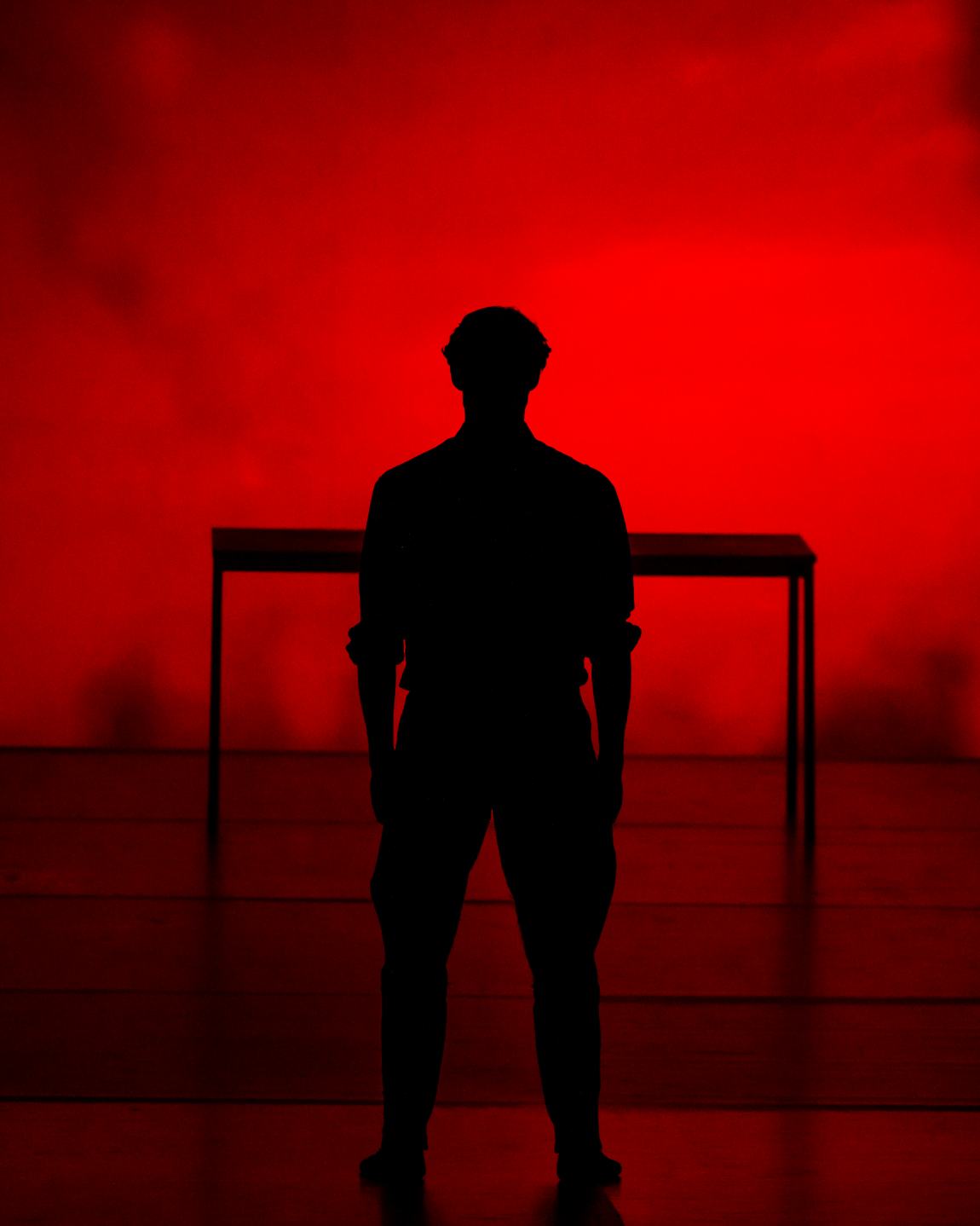
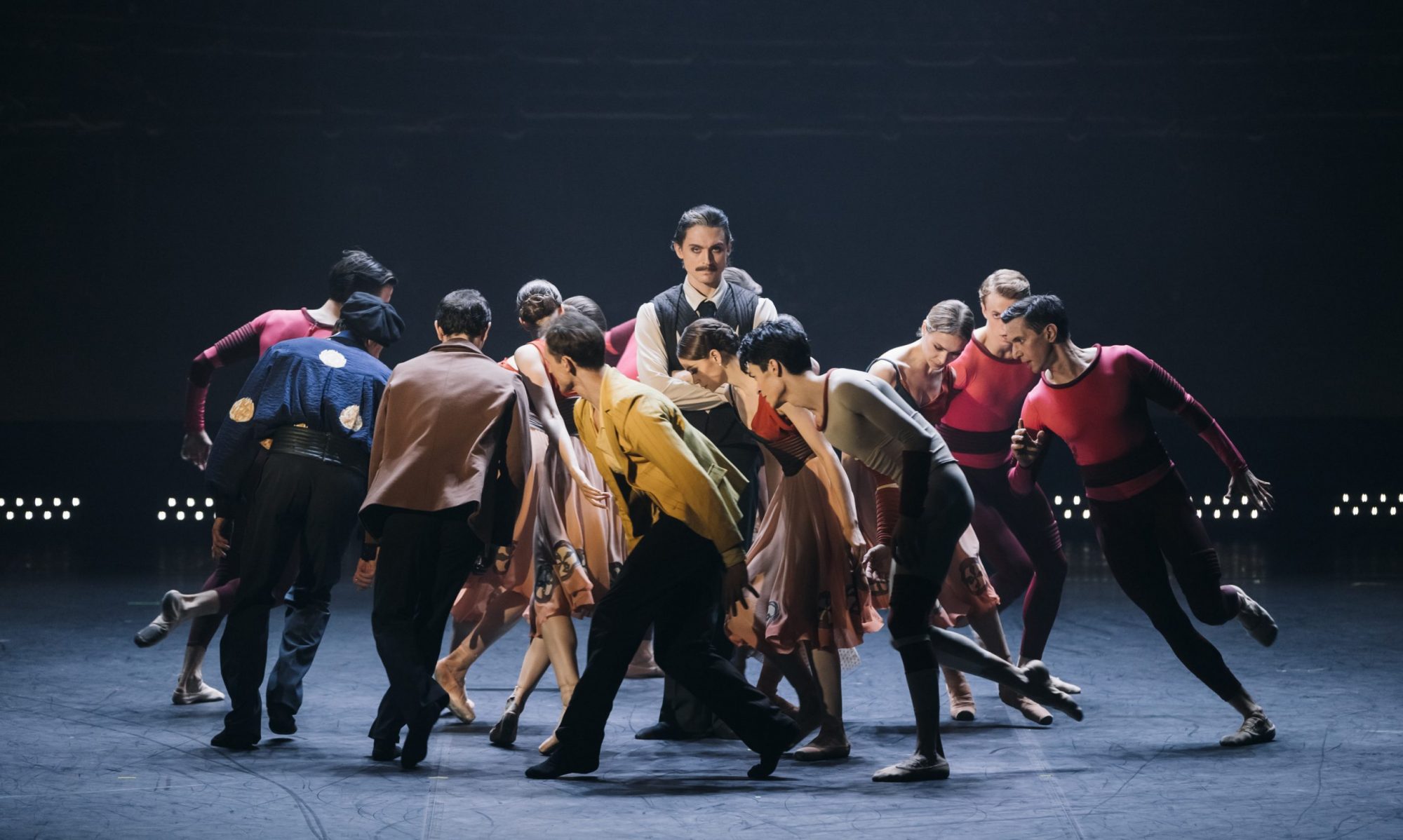
1. D.Potaptsev (Minotaur) and ensemble, “Minotaur” by P.De Bana, MuzArts 2026 © MuzArts/A.StepanovIn mid-June, Moscow’s production company MuzArts premiered the double bill Elláda at the Maly Theatre. Moscow’s local press called MuzArts’ director, Yuri Baranov, “Russia’s current top ballet producer with an excellent grasp on the global ballet scene who knows how to create ideas, discover and recruit talent, and attract sponsors,”—in short, a Diaghilev 2.0. So I was glad that MuzArts’ executive producer, Daria Faezova, sent video recordings of both performances. If a company is in the vanguard of a dance scene as vibrant as Russia’s, you won’t want to miss their productions.

4. D.Potaptsev (Minotaur) and A.Stashkevich (Ariadne), “Minotaur” by P.De Bana, MuzArts 2026 © MuzArts/B.Annadurdiev 3. A.Stashkevich (Ariadne) and D.Potaptsev (Minotaur), “Minotaur” by P.De Bana, MuzArts 2026 © MuzArts/B.Annadurdiev 2. D.Potaptsev (Minotaur) and A.Stashkevich (Ariadne), “Minotaur” by P.De Bana, MuzArts 2026 © MuzArts/B.Annadurdiev Elláda (the native name of Greece in Modern Greek) combines two choreographies by Patrick De Bana, both dealing with Greek mythology: Minotaur, created for MuzArts’ 2022 Labyrinth project, and Leda and the Swans, a newly created pre-anniversary gift for the late Maurice Béjart, who would have celebrated his hundredth birthday next year and in whose company, Béjart Ballet Lausanne, De Bana was a principal dancer. Leda and the Swans pays tribute to Béjart’s 1975 Leda and the Swan (created for Maya Plisetskaya and Jorge Donn) and integrates an unrealized piece about Leda’s sons, Castor and Pollux, commissioned by the late Vladimir Shklyarov. Shklyarov and Kimin Kim intended to star for a private evening at the Mariinsky Theatre but didn’t due to Shklyarov’s premature death.

5. D.Potaptsev (Minotaur), O.Marchenkova (Pasiphaë), and A.Stashkevich (Ariadne); “Minotaur” by P.De Bana, MuzArts 2026 © MuzArts/B.Annadurdiev6. D.Potaptsev (Minotaur) and O.Marchenkova (Pasiphaë), “Minotaur” by P.De Bana, MuzArts 2026 © MuzArts/B.AnnadurdievExcept for Ildar Gainutdinov, a multi-awarded principal soloist of Alla Dukhova’s Russian dance theater, Todes, all of Elláda’s dancers are from the Bolshoi Ballet’s roster.

The protagonists of Minotaur are the half-man, half-bull Minotaur (born from his mother, Pasiphaë, and a bull), Pasiphaë, and her daughter Ariadne. A corps of four men (Vasily Danilchuk, Anton Savichev, Karim Abdullin, and Daniil Babkin) portrayed the Minotaur’s alter ego.

8. O.Marchenkova (Pasiphaë), D.Potaptsev (Minotaur), and A.Stashkevich (Ariadne); “Minotaur” by P.De Bana, MuzArts 2026 © MuzArts/B.Annadurdiev7. O.Marchenkova (Pasiphaë) and D.Potaptsev (Minotaur), “Minotaur” by P.De Bana, MuzArts 2026 © MuzArts/B.Annadurdiev Greek mythology depicts Ariadne as the guardian of the labyrinth in which the Minotaur was caged but not her feelings for the beast. In De Bana’s interpretation, she and her mother lust after it, Ariadne in a painfully intense way and Pasiphaë with tender fondness. Instead of a labyrinth, a circle of light on an otherwise gloomy stage confined the Minotaur as if in a bull ring. Although it opened to stage width at times, it allowed neither the Minotaur nor Ariadne to escape. Only Pasiphaë could enter and leave at will. She and her daughter never shared a glance or bridged the distance separating them.

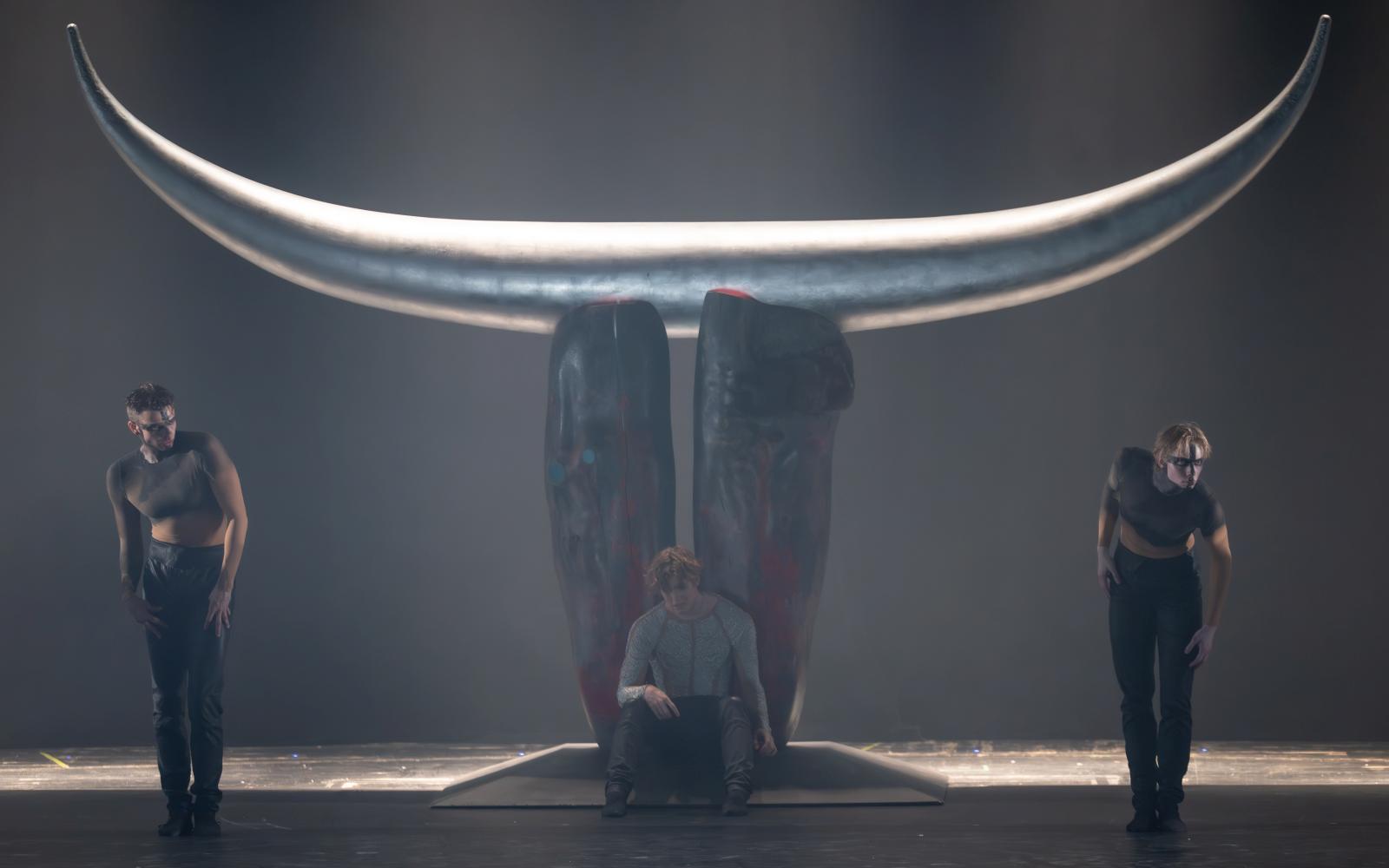
9. A.Stashkevich (Ariadne) and ensemble, “Minotaur” by P.De Bana, MuzArts 2026 © MuzArts/B.Annadurdiev10. D.Potaptsev (Minotaur) and A.Stashkevich (Ariadne), “Minotaur” by P.De Bana, MuzArts 2026 © MuzArts/B.AnnadurdievAn abstract bull’s head in the rear center stage made of ancient, knotty wood symbolized the Minotaur’s beastliness but, with its perfectly shaped horns, also his beauty and might (set design by Dashi Namdakov). Undamaged by time and, thanks to Ivan Vinogradov’s lighting, shining silver or golden, these horns looked like an eternal manifestation of the Minotaur’s fate. At times, a light beamed from the slit between the head’s two sides. Other times, Ariadne retreated inside the head, her hand caressing its surface through the slit.

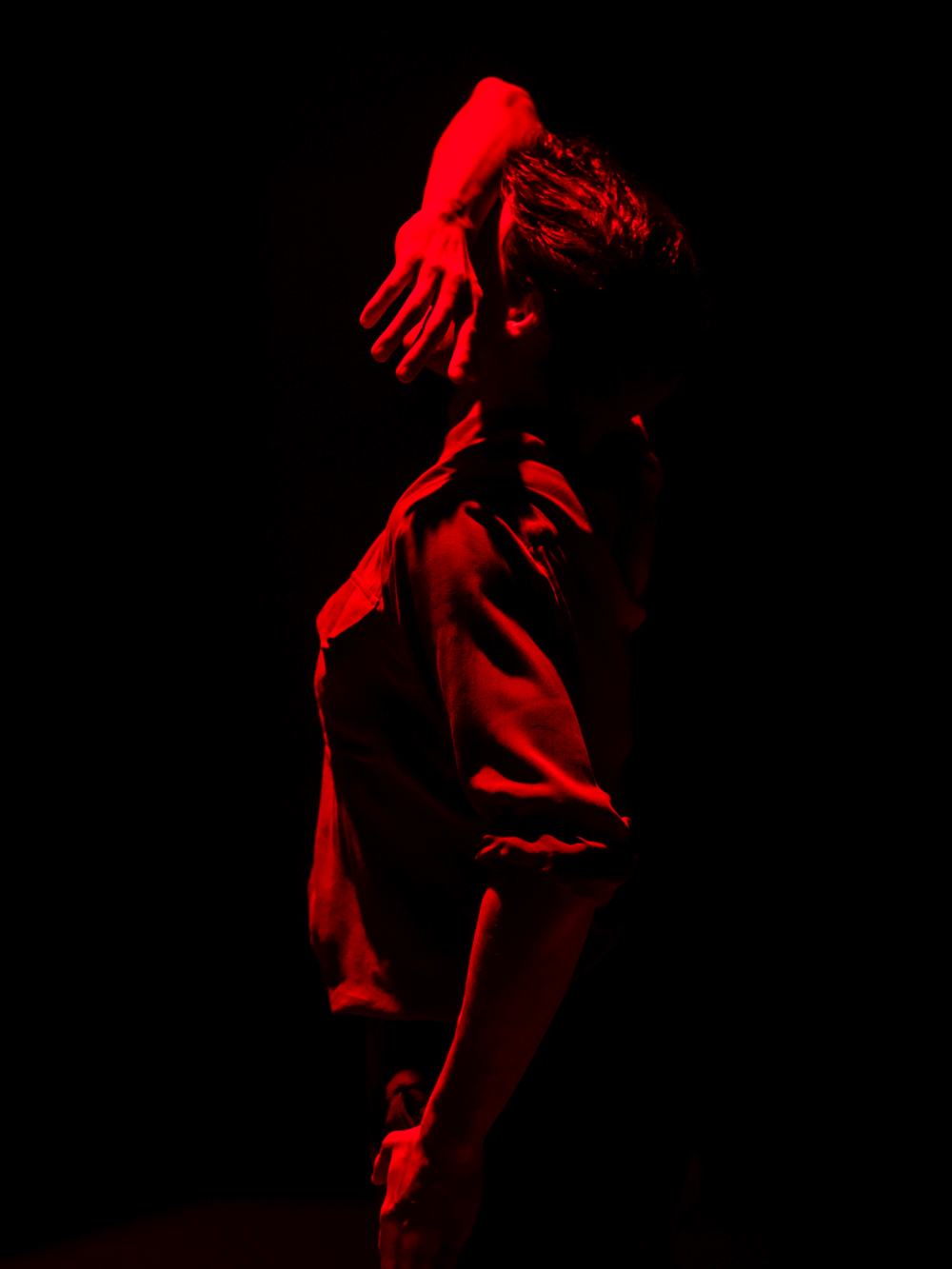
12. M.Bogdanovich (Ariadne), “Minotaur” by P.De Bana, MuzArts 2026 © MuzArts/A.Stepanov 11. I.Gainutdinov (Minotaur), “Minotaur” by P.De Bana, MuzArts 2026 © MuzArts/A.StepanovIn contrast to the mythology, De Bana’s Minotaur (Ildar Gainutdinov) was no ferocious, man-devouring monster, but a creature torn by his two natures. His human half yearned for a love he knew he would never attain. Wearing an ornamental top studded with silver metal and black leather pants (costumes by Igor Chapurin), he stood with his back toward the audience, his torso crouched, and his shoulders hunched like Quasimodo’s. It was silent when he slowly turned, faced the audience, suddenly stretched into a diagonal, and bent into a deep curl. The clarity of his supple, strong movements astounded. Like a galloping bull, his arms plowed through the air. Then he curled again, turned, and stopped partway like a locked flywheel. Holding his belly with one hand as if to calm an inner pain, his other arm stretched sideways and, opening his fist, allowed him to exhale. Only then did Max Richter’s searing music set in.

13. M.Bogdanovich (Ariadne), “Minotaur” by P.De Bana, MuzArts 2026 © MuzArts/A.Stepanov 14. M.Bogdanovich (Ariadne), “Minotaur” by P.De Bana, MuzArts 2026 © MuzArts/B.Annadurdiev15. M.Bogdanovich (Ariadne) and I.Gainutdinov (Minotaur), “Minotaur” by P.De Bana, MuzArts 2026 © MuzArts/A.Stepanov Ariadne (Maria Bogdanovich) stood motionless all the while at the other side of the stage. She wore a bright red, high-slit dress with a light-brown bust, as if she were a toreador’s red rag. The music unfroze her but didn’t mellow her terrified glance. The Minotaur attracted and repelled her. In his presence, her womb tightened up with desire but when she dared to glance at him, her legs stiffened to wood, teetering with horror. She seemed caught in an infinite loop—one of her arms reached out for the Minotaur while the other pulled it back, her elbow bent into a defensive rectangle.
17. M.Bogdanovich (Ariadne) and I.Gainutdinov (Minotaur), “Minotaur” by P.De Bana, MuzArts 2026 © MuzArts/B.Annadurdiev16. M.Bogdanovich (Ariadne) and I.Gainutdinov (Minotaur), “Minotaur” by P.De Bana, MuzArts 2026 © MuzArts/B.AnnadurdievOnly stretching one arm upward gave her a brief pause to breathe. Often, the Minotaur succumbed to the tension, collapsed, and lay emasculated or contorted, hardly able to suppress his convulsions. He approached Ariadne carefully on all fours and slowly stood up, and, with eyes glued on her, exposed his body. She didn’t move an inch as he ran toward her like a bull, his head aimed at her womb. Most of their encounters resembled a hell-bent fight, but none consummated their desire. They couldn’t and mustn’t come together.

18. I.Gainutdinov (Minotaur) and D.Moseyeva (Pasiphaë), “Minotaur” by P.De Bana, MuzArts 2026 © MuzArts/B.Annadurdiev19. I.Gainutdinov (Minotaur) and D.Moseyeva (Pasiphaë), “Minotaur” by P.De Bana, MuzArts 2026 © MuzArts/B.AnnadurdievPasiphaë’s (Darina Moseyeva’s) relationship to the Minotaur wavered between motherly care (which was balm for his soul) and romantic attachment (which always caused him to push her away). Her transparent black dress and the darkness that almost absorbed her body made her and her emotions remnants of the past. She finally sat isolated at the right front stage, looking away from the Minotaur, who collapsed at Ariadne’s feet. Both looked exhausted from fighting an inevitable fate.

20. M.Bogdanovich (Ariadne) and I.Gainutdinov (Minotaur), “Minotaur” by P.De Bana, MuzArts 2026 © MuzArts/A.StepanovThe second performance’s Minotaur, Daniil Potaptsev, lost many details of the choreography and couldn’t match Gainutdinov’s extraordinary stage presence. Anastasia Stashkevich lacked the power and bite to convey Ariadne’s struggle. Olga Marchenkova’s Pasiphaë convinced.

Leda and the Swans complemented Minotaur like flip sides of a coin. In both pieces, the protagonists were tools of a transcendental rule book in which individual fate doesn’t count. Instead of a male hero coveted by two women, one woman—the Spartan queen Leda (Polina Netsvetaeva-Dolgalyova)—was desired by two men, Zeus in a swan’s guise (Mark Orlov) and Pollux (Nikita Kapustin), one of her twin sons. Literature doesn’t corroborate this mother-son romance or name Hades as part of the party. But librettist José Andrade decided otherwise and, like in Minotaur with King Minos, omitted minor characters such as the heroine’s husband, Sparta’s King Tyndareus.

21. P.Netsvetaeva-Dolgalyova (Leda) and M.Orlov (Zeus), “Leda and the Swans” by P.De Bana, MuzArts 2026 © MuzArts/B.Annadurdiev22. M.Orlov (Zeus) and P.Netsvetaeva-Dolgalyova (Leda), “Leda and the Swans” by P.De Bana, MuzArts 2026 © MuzArts/B.Annadurdiev Like in Minotaur, blackouts separated the scenes of Leda and the Swans. Set elements were inversely positioned. Instead of a bull’s head center stage, two thrones (a turquoise-golden one for Zeus and a silver one for Hades) stood in each rear corner (set design by Tatiana Vyushinskaya).

24. P.Netsvetaeva-Dolgalyova (Leda), M.Orlov (Zeus), and D.Potaptsev (Hades); “Leda and the Swans” by P.De Bana, MuzArts 2026 © MuzArts/A.Stepanov23. P.Netsvetaeva-Dolgalyova (Leda) and M.Orlov (Zeus), “Leda and the Swans” by P.De Bana, MuzArts 2026 © MuzArts/A.StepanovLeda and the Swans is less dense than Minotaur and has repetitive choreography. That couldn’t be remedied, but the second performance had more flow. It also had a more effective lighting. White circles of light swiveled across the floor for a much shorter time, and a gentle light wavered across transparent plastic stripes hanging from the ceiling that provided a subtle momentum similar to the sun reflecting on water’s surface.
25. P.Netsvetaeva-Dolgalyova (Leda), M.Orlov (Zeus), and I.Gainutdinov (Hades); “Leda and the Swans” by P.De Bana, MuzArts 2026 © MuzArts/B.Annadurdiev26. I.Gainutdinov (Hades), “Leda and the Swans” by P.De Bana, MuzArts 2026 © MuzArts/B.AnnadurdievDe Bana, moreover, replaced the static blue and gray backdrop with a loosely folded, gold curtain. He dropped the scene in which Hades sneaked onto Zeus’s throne and clarified Leda’s and Pollux’s relationship. She looked for Pollux’s help when gripped by the furious Zeus, whereupon Pollux, grasping his father’s hand, implored him to let her free. Another scene, during which Leda sat at the front stage, became an explicit quotation when she, like Ariadne in Minotaur, undid her hair. The final scene was also reworked. Leda wasn’t sitting at Zeus’s feet anymore, but rather, he sat at hers.

29. I.Gainutdinov (Hades), “Leda and the Swans” by P.De Bana, MuzArts 2026 © MuzArts/B.Annadurdiev28. I.Gainutdinov (Hades) and ensemble, “Leda and the Swans” by P.De Bana, MuzArts 2026 © MuzArts/B.Annadurdiev 27. M.Orlov (Zeus), and I.Gainutdinov (Hades), “Leda and the Swans” by P.De Bana, MuzArts 2026 © MuzArts/B.AnnadurdievLast but not least, the bizarre character of Hades, initially fleshed out by Daniil Potaptsev, evolved into a mesmerizing figure as danced by Ildar Gainutdinov. He writhed spastically on his throne, watching from under a hood, as merciless strings urged Zeus to seduce Leda (music by Ezio Bosso).

30. N.Kapustin (Pollux) and A.Savichev (Castor), “Leda and the Swans” by P.De Bana, MuzArts 2026 © MuzArts/A.Stepanov31. D.Potaptsev (Hades) and A.Savichev (Castor), “Leda and the Swans” by P.De Bana, MuzArts 2026 © MuzArts/A.StepanovOnly when they became intimate did he jump off and throw off his black cape under which he wore a floor-length skirt made of black stripes, a black shoulder strap on an otherwise bare chest, and black wristbands (costumes by Stephanie Bäuerle). He ran in circles as if to mark his arena and, time after time, frantically grabbed threads of a fate that he failed to tie together (and would continue to fail throughout the piece).


33. A.Savichev (Castor) and I.Gainutdinov (Hades), “Leda and the Swans” by P.De Bana, MuzArts 2026 © MuzArts/B.Annadurdiev32. A.Savichev (Castor) and I.Gainutdinov (Hades), “Leda and the Swans” by P.De Bana, MuzArts 2026 © MuzArts/B.AnnadurdievSometimes, Hades obscenely licked his index finger, which worked like a miraculous weapon. He used it cold-bloodedly but also explored it like a wondering child. Pointed toward the lovers, it prompted Zeus to his feet, and pointed toward Zeus’s heart, it pierced his conscience. (Though the king of the gods rebuffed Hades’s reproach, he looked the weaker part.) Nudging Castor (Anton Savichev) as nonchalantly as if dabbing a touchscreen just for fun, the finger sent him to his death. It also revived him like a human guinea pig upon which Hades continued to experiment and explore his capabilities (after overcoming his repulsion by Castor’s smell).

34. A.Savichev (Castor), “Leda and the Swans” by P.De Bana, MuzArts 2026 © MuzArts/B.Annadurdiev35. A.Savichev (Castor) and I.Gainutdinov (Hades), “Leda and the Swans” by P.De Bana, MuzArts 2026 © MuzArts/B.AnnadurdievBut that happened only later. For quite some time, the idyllic family carried on tranquilly, though six female shadows signaled the netherworld’s presence in the rear. Zeus slouched on his throne like a TV addict wishing not to be disturbed, and the twins danced identically or in mirror-image like figures on old Greek vases. Indistinguishable at first sight, nothing betrayed that Castor was Tyndareus’s son and mortal, whereas Pollux was Zeus’s son and hence divine. Upon detecting Pollux’s desire for his mother, Zeus expelled him. (That this wasn’t the reason for Pollux’s subsequent death wasn’t apparent.) Magnetically attracted to Leda, Zeus’s wings spread protectively above her, but his grip also enforced her submission.

37. P.Netsvetaeva-Dolgalyova (Leda), N.Kapustin (Pollux), and M.Orlov (Zeus); “Leda and the Swans” by P.De Bana, MuzArts 2026 © MuzArts/B.Annadurdiev36. M.Orlov (Zeus), N.Kapustin (Pollux), and P.Netsvetaeva-Dolgalyova (Leda); “Leda and the Swans” by P.De Bana, MuzArts 2026 © MuzArts/B.AnnadurdievLeda reminded me of a fragile bird whose behavioral repertory was predetermined by nature. The embodiment of men’s desire, she lay on the floor in a delicate tunic, every fiber eager to be touched. Even when she tried to ward off Zeus, her entire physiology conveyed softness and devotion. Her twins had already entered the afterworld, where they knelt side by side, their fingers pointing toward the starry sky as if searching for their constellation. Towering above Zeus’s head like an icon, she remained an eternal beauty. Hades had won nothing but seemed even more tortured by spasms.
38. P.Netsvetaeva-Dolgalyova (Leda), M.Orlov (Zeus), N.Kapustin (Pollux), A.Savichev (Castor), and I.Gainutdinov (Hades); “Leda and the Swans” by P.De Bana, MuzArts 2026 © MuzArts/B.Annadurdiev

Link: Website of the Maly Theatre
Photos: 1. Daniil Potaptsev (Minotaur) and ensemble, Minotaur” by Patrick De Bana, MuzArts 2026 © MuzArts/Andrei Stepanov
2. Daniil Potaptsev (Minotaur) and Anastasia Stashkevich (Ariadne), Minotaur” by Patrick De Bana, MuzArts 2026 © MuzArts/Batyr Annadurdiev
3. Anastasia Stashkevich (Ariadne) and Daniil Potaptsev (Minotaur), Minotaur” by Patrick De Bana, MuzArts 2026 © MuzArts/Batyr Annadurdiev
4. Daniil Potaptsev (Minotaur) and Anastasia Stashkevich (Ariadne), Minotaur” by Patrick De Bana, MuzArts 2026 © MuzArts/Batyr Annadurdiev
5. Daniil Potaptsev (Minotaur), Olga Marchenkova (Pasiphaë), and Anastasia Stashkevich (Ariadne); Minotaur” by Patrick De Bana, MuzArts 2026 © MuzArts/Batyr Annadurdiev
6. Daniil Potaptsev (Minotaur) and Olga Marchenkova (Pasiphaë), Minotaur” by Patrick De Bana, MuzArts 2026 © MuzArts/Batyr Annadurdiev
7. Olga Marchenkova (Pasiphaë) and Daniil Potaptsev (Minotaur), Minotaur” by Patrick De Bana, MuzArts 2026 © MuzArts/Batyr Annadurdiev
8. Olga Marchenkova (Pasiphaë), Daniil Potaptsev (Minotaur), and Anastasia Stashkevich (Ariadne); Minotaur” by Patrick De Bana, MuzArts 2026 © MuzArts/Batyr Annadurdiev
9. Anastasia Stashkevich (Ariadne) and ensemble, Minotaur” by Patrick De Bana, MuzArts 2026 © MuzArts/Batyr Annadurdiev
10. Daniil Potaptsev (Minotaur) and Anastasia Stashkevich (Ariadne), Minotaur” by Patrick De Bana, MuzArts 2026 © MuzArts/Batyr Annadurdiev
11. Ildar Gainutdinov (Minotaur), Minotaur” by Patrick De Bana, MuzArts 2026 © MuzArts/Andrei Stepanov
12. Maria Bogdanovich (Ariadne), Minotaur” by Patrick De Bana, MuzArts 2026 © MuzArts/Andrei Stepanov
13. Maria Bogdanovich (Ariadne), Minotaur” by Patrick De Bana, MuzArts 2026 © MuzArts/Andrei Stepanov
14. Maria Bogdanovich (Ariadne), Minotaur” by Patrick De Bana, MuzArts 2026 © MuzArts/Batyr Annadurdiev
15. Maria Bogdanovich (Ariadne) and Ildar Gainutdinov (Minotaur), Minotaur” by Patrick De Bana, MuzArts 2026 © MuzArts/Andrei Stepanov
16. Maria Bogdanovich (Ariadne) and Ildar Gainutdinov (Minotaur), Minotaur” by Patrick De Bana, MuzArts 2026 © MuzArts/Batyr Annadurdiev
17. Maria Bogdanovich (Ariadne) and Ildar Gainutdinov (Minotaur), “Minotaur” by Patrick De Bana, MuzArts 2026 © MuzArts/Batyr Annadurdiev
18. Ildar Gainutdinov (Minotaur) and Darina Moseyeva (Pasiphaë), “Minotaur” by Patrick De Bana, MuzArts 2026 © MuzArts/Batyr Annadurdiev
19. Ildar Gainutdinov (Minotaur) and Darina Moseyeva (Pasiphaë), “Minotaur” by Patrick De Bana, MuzArts 2026 © MuzArts/Batyr Annadurdiev
20. Maria Bogdanovich (Ariadne) and Ildar Gainutdinov (Minotaur), “Minotaur” by Patrick De Bana, MuzArts 2026 © MuzArts/Andrei Stepanov
21. Polina Netsvetaeva-Dolgalyova (Leda) and Mark Orlov (Zeus), “Leda and the Swans” by Patrick De Bana, MuzArts 2026 © MuzArts/Batyr Annadurdiev
22. Mark Orlov (Zeus) and Polina Netsvetaeva-Dolgalyova (Leda), “Leda and the Swans” by Patrick De Bana, MuzArts 2026 © MuzArts/Batyr Annadurdiev
23. Polina Netsvetaeva-Dolgalyova (Leda) and Mark Orlov (Zeus), “Leda and the Swans” by Patrick De Bana, MuzArts 2026 © MuzArts/Andrei Stepanov
24. Polina Netsvetaeva-Dolgalyova (Leda), Mark Orlov (Zeus), and Daniil Potaptsev (Hades); “Leda and the Swans” by Patrick De Bana, MuzArts 2026 © MuzArts/Andrei Stepanov
25. Polina Netsvetaeva-Dolgalyova (Leda), Mark Orlov (Zeus), and Ildar Gainutdinov (Hades); “Leda and the Swans” by Patrick De Bana, MuzArts 2026 © MuzArts/Batyr Annadurdiev
26. Ildar Gainutdinov (Hades), “Leda and the Swans” by Patrick De Bana, MuzArts 2026 © MuzArts/Batyr Annadurdiev
27. Mark Orlov (Zeus), and Ildar Gainutdinov (Hades), “Leda and the Swans” by Patrick De Bana, MuzArts 2026 © MuzArts/Batyr Annadurdiev
28. Ildar Gainutdinov (Hades) and ensemble, “Leda and the Swans” by Patrick De Bana, MuzArts 2026 © MuzArts/Batyr Annadurdiev
29. Ildar Gainutdinov (Hades), “Leda and the Swans” by Patrick De Bana, MuzArts 2026 © MuzArts/Batyr Annadurdiev
30. Nikita Kapustin (Pollux) and Anton Savichev (Castor), “Leda and the Swans” by Patrick De Bana, MuzArts 2026 © MuzArts/Andrei Stepanov
31. Daniil Potaptsev (Hades) and Anton Savichev (Castor), “Leda and the Swans” by Patrick De Bana, MuzArts 2026 © MuzArts/Andrei Stepanov
32. Anton Savichev (Castor) and Ildar Gainutdinov (Hades), “Leda and the Swans” by Patrick De Bana, MuzArts 2026 © MuzArts/Batyr Annadurdiev
33. Anton Savichev (Castor) and Ildar Gainutdinov (Hades), “Leda and the Swans” by Patrick De Bana, MuzArts 2026 © MuzArts/Batyr Annadurdiev
34. Anton Savichev (Castor), “Leda and the Swans” by Patrick De Bana, MuzArts 2026 © MuzArts/Batyr Annadurdiev
35. Anton Savichev (Castor) and Ildar Gainutdinov (Hades), “Leda and the Swans” by Patrick De Bana, MuzArts 2026 © MuzArts/Batyr Annadurdiev
36. Mark Orlov (Zeus), Nikita Kapustin (Pollux), and Polina Netsvetaeva-Dolgalyova (Leda); “Leda and the Swans” by Patrick De Bana, MuzArts 2026 © MuzArts/Batyr Annadurdiev
37. Polina Netsvetaeva-Dolgalyova (Leda), Nikita Kapustin (Pollux), and Mark Orlov (Zeus); “Leda and the Swans” by Patrick De Bana, MuzArts 2026 © MuzArts/Batyr Annadurdiev
38. Polina Netsvetaeva-Dolgalyova (Leda), Mark Orlov (Zeus), Nikita Kapustin (Pollux), Anton Savichev (Castor), and Ildar Gainutdinov (Hades); “Leda and the Swans” by Patrick De Bana, MuzArts 2026 © MuzArts/Batyr Annadurdiev
Editing: Kayla Kauffman


Traumata

“Planida” (“Russian Character”/“Nerve”/“Francesca da Rimini”)
MuzArts
Maly Theatre/Alexandrinsky Theatre
Moscow/St. Petersburg, Russia
September/November 2025 (video)

by Ilona Landgraf
Copyright © 2026 by Ilona Landgraf

1. A.Putintsev (Yegor Dryomov), “Russian Character” by P.Glukhov, MuzArts 2026 © MuzArts/B.Annadurdiev2. A.Putintsev (Yegor Dryomov), “Russian Character” by P.Glukhov, MuzArts 2026 © MuzArts/B.Annadurdiev Tomorrow, MuzArts’ triple bill Planida returns to Moscow’s Maly Theatre where it premiered in September 2025. It combines two old pieces—Nerve by Anna Shchekleina and Francesca da Rimini by Yuri Possokhov—along with Russian Character, a then-new creation by Pavel Glukhov. As in previous productions, dancers of the Bolshoi Ballet will be on stage. Thanks to MuzArts’ executive producer, Daria Faezova, I was able to watch videos of the program recorded at the Maly Theatre and St. Petersburg’s Alexandrinsky Theatre. Continue reading “Traumata”

Lasting Icons

“Two Annas” (“Akhmatova”/”Pavlova”)
MuzArts
Tovstonogov Bolshoi Drama Theatre
St. Petersburg, Russia
December 2025 (video)

by Ilona Landgraf
Copyright © 2025 by Ilona Landgraf

 1. P.Malikova (Anna Akhmatova), E.Sevenard (Anna Akhmatova), and D.Potaptsev (Nikolai Gumilev), “Akhmatova” by Y.Possokhov, MuzArts 2025 © Diaghilev P.S. Festival/M.Vilchuk The production company MuzArts, founded in 2014 to showcase the Bolshoi Ballet’s prima ballerina, Svetlana Zakharova, has grown into a vital force of Russia’s ballet scene. Their recent production, Two Annas, was supported by the Diaghilev P.S. International Festival of Arts, a prominent, intercultural, cross-genre event that has been held in St. Petersburg since 2009. Two Annas premiered at St. Petersburg’s Tovstonogov Bolshoi Drama Theatre this February and received its Moscow premiere at the Maly Theatre. Thanks to the MuzArts’s director, Yuri Baranov, I was able to watch a video of the production. Continue reading “Lasting Icons”

An Opening Salute

“The Sleeping Beauty”
Bolshoi Ballet
Bolshoi Theatre
Moscow, Russia
September 07, 2024 (live stream)

by Ilona Landgraf
Copyright © 2024 by Ilona Landgraf

 1. Y.Ostrovsky (Catalabutte) and ensemble, “The Sleeping Beauty” by Y.Grigorovich after M.Petipa, Bolshoi Ballet 2024 © Bolshoi Theatre/P.Rychkov The Bolshoi Ballet opened its 249th season with a revival of Yuri Grigorovich’s The Sleeping Beauty, which has been absent from the stage for four years. Because of the thorough change of décor, the production was announced as a premiere. It swapped the opulent (and often criticized) sets and costumes that Ezio Frigerio and Franca Squarciapino designed for the 2011 revival (celebrating the reopening of the theater’s Historic Stage after six years of refurbishment) for the restrained décor that Simon Virsaladze (1909–1989) created for Grigorovich’s second version of the ballet in 1973. The subdued hues and aquarelle-ish style of its courtly surroundings direct the gaze toward the colorful costumes (recalling French court fashion from King Louis XIII’s to the Sun King, Louis XIV’s, reign), beautiful flower garlands and bouquets at Aurora’s birthday party, and, most importantly, the dancers and their performances. Raising the curtain didn’t elicit oohs and aahs from the audience as, for example, Jürgen Rose’s décor for Marcia Haydée’s Sleeping Beauty regularly has done on Western stages. Continue reading “An Opening Salute”

Prix Benois Laureates 2024

Prix Benois de la Danse
Bolshoi Theatre (Historic Stage)
Moscow, Russia
June 25, 2024

by Ilona Landgraf
Copyright © 2024 by Ilona Landgraf

1. Jurors, S.Zakharova, nominees, and laureates, Prix Benois 2024 © Benois Center On Tuesday evening, this year’s Prix Benois laureates were announced on the Historic Stage of the Bolshoi Theatre.
The Mariinsky Ballet’s Olesya Novikova won the prize for best female dancer for her performance as Aspiccia in La Fille du Pharaon (Marius Petipa’s version as reconstructed by Toni Candeloro). Gergő Ármin Balázsi (Hungarian National Ballet) and Artemy Belyakov (Bolshoi Ballet) shared the prize for best male dancer. Balázsi was nominated for his performance as Leon in Boris Eifman’s The Pygmalion Effect and Belyakov for his performance as Ivan IV in Yuri Grigorovich’s Ivan the Terrible. Marco Goecke was awarded the prize for best choreography in absentia for In the Dutch Mountains, a creation for the Nederlands Dans Theater. Continue reading “Prix Benois Laureates 2024”

In Commemoration of Ekaterina Maximova

“Fragments of One Biography”
Bolshoi Ballet and Guests
Bolshoi Theatre
Moscow, Russia
February 01, 2024 (video)

by Ilona Landgraf
Copyright © 2024 by Ilona Landgraf

1. Ensemble, “Fragments of One Biography” staged by V.Vasiliev, Bolshoi Ballet 2024 © Bolshoi Ballet / E.FetisovaOn February 1st, the Bolshoi Ballet’s prima ballerina, Ekaterina Maximova (1939-2009), would have celebrated her 85th birthday. A phenomenally successful (and multi-decorated) artist, Maximova’s fame reached far beyond Russia’s borders. After retiring from the stage of the Bolshoi in 1988, she continued to dance with other Russian and international companies—and sometimes even returned home to the Bolshoi. From 1990 on, Maximova worked as a coach, teacher, and member of several arts councils and committees. Every five years, Maximova’s husband, Vladimir Vasiliev, stages a gala at the Bolshoi in honor of his late wife. I was able to watch this year’s event on video. Continue reading “In Commemoration of Ekaterina Maximova”

Reassuring

“Chopiniana”/“Grand Pas from the Ballet Paquita
Bolshoi Ballet
Bolshoi Theatre (Historic Stage)
Moscow, Russia
February 14, 2024

by Ilona Landgraf
Copyright © 2024 by Ilona Landgraf

 1. A.Denisova, “Chopiniana” by M.Fokine, Bolshoi Ballet 2024 © Bolshoi Ballet / D.Yusupov The musicians of the Bolshoi Orchestra are on their toes. After acknowledging the welcoming applause, conductor, Pavel Klinichev, raised his baton in the same instant that he turned around to face them. The vigorous bars that he prompted belonged to a Polonaise by Chopin. It opened Mikhail Fokine’s romantic Chopiniana (1908), which the Bolshoi Ballet revived in November 2022. It’s the first part of a double bill the second piece of which – the Grand Pas from Petipa’s Paquita – has been a landmark of classical dance since its creation in 1881.

There’s no need to discuss how Fokine’s choreography was performed. The Bolshoi is a guarantor of sublime performances. Indeed, the unity of the corps was nothing less than staggering; every step was measured yet effortless like an outpouring of natural decency. Perfect proportions soothed the eye. As the leading sylphs, Anastasia Stashkevich, Elizaveta Kruteleva, and Anastasia Denisova paid great attention to detail, adding the right tinge of buoyancy, melancholy, or playfulness to their solos. Vyacheslav Lopatin’s poet combined sensitivity and decisiveness. His clean and – at times mighty – jumps earned applause. Alyona Pikalova’s set design – an arch of gnarled treetops opening onto a sunny water meadow – invited the mind to dream.
I’ve watched several companies dance Chopiniana, but no performance was as complete as the Bolshoi’s. Perhaps due to experiencing messy times in my home country of Germany (and in the West in general), the refined order and serenity of Chopiniana felt especially comforting. It seemed like the epitome of civilization. Continue reading “Reassuring”
Style Over Substance

Modanse”
Svetlana Zakharova Evening/MuzArts

Bolshoi Theatre (Historic Stage)
Moscow, Russia
October 31, 2023

by Ilona Landgraf
Copyright © 2023 by Ilona Landgraf

1. S.Zakharova, “Come un respiro” by M.Bigonzetti; Svetlana Zakharova Evening, MuzArts 2023 © A.Stepanov The title “Modanse” sounds like an à la mode ballet – classy, extravagant, and fashionable. It belongs to a double bill featuring the Bolshoi Ballet’s prima ballerina Svetlana Zakharova. The external production includes dancers of the Bolshoi Ballet’s roster, and since 2019 has guested regularly on the Bolshoi Theatre’s stage and abroad.

As a seasoned artist, Zakharova must have an instinct about what suits her on stage. Hence I’m flabbergasted that she has kept Mauro Bigonzetti’s “Come un respiro” (“Like a Breath”) in the program. The 2009 creation, of which Zakharova acquired a reworked version, is ill-suited to make her and her co-dancers (among them Anastasia Stashkevich, Ana Turazashvili, Mikhail Lobukhin, Vyacheslav Lopatin, and Denis Savin) look good. Moreover, its succession of bland solos, pas de deux, and group dances fails to excite. Continue reading “Style Over Substance”

From “Ballet Falsity” to Long-Runner

“The Bright Stream”
Bolshoi Ballet
Bolshoi Theatre
Moscow, Russia
February 10 and 11, 2018

by Ilona Landgraf
Copyright © 2018 by Ilona Landgraf

1. Front Curtain, “The Bright Stream” by A.Ratmansky, Bolshoi Ballet © Bolshoi Theatre / D.Yusupov“The Bright Stream” was Shostakovich’s third score for ballet. After his previous ballets, “The Golden Age” (1930) and “Bolt” (1931), were banned from the stage, Shostakovich attempted to create a new composition that would please everyone. Fyodor Lopukhov (1886 – 1973) was in charge of the choreography, the libretto was by Adrian Pyotrovsky and Lopukhov, and indeed, “The Bright Stream” was enthusiastically received at its premiere in Leningrad – today’s St. Petersburg – in 1935. Continue reading “From “Ballet Falsity” to Long-Runner”

It’s Done

“Nureyev”
Bolshoi Ballet
Bolshoi Theatre
Moscow, Russia
December 09, 2017

by Ilona Landgraf
Copyright © 2017 by Ilona Landgraf

1. V.Lantratov, “Nureyev”, chor.: Y.Possokhov, dir.: K.Serebrennikov, Bolshoi Ballet 2017 © Bolshoi Ballet / M.LogvinovAfter the Bolshoi Ballet’s July premiere of “Nureyev” was canceled at the last minute, officials doubled down on security efforts for the rescheduled performance on December 9th. Although guards lined the theater’s entrances and the curtain rose behind schedule, the performance was a smooth ride from start to finish.
And yet only those who attended the dress rehearsal this summer can truly asses whether or not the initial version was tweaked to comply with requests from the authorities. One might have noticed, for instance, that Richard Avedon’s photo of the naked Nureyev was not used as a backdrop, but rather was only projected on a screen for a quick second. But given the fact that the work was finally seen by the public – do these minor changes matter?

Choreographer Yuri Possokhov, stage director and set designer Kirill Serebrennikov, and composer Ilya Demutsky are the artistic core team behind “Nureyev”. Interviews with the trio, who had previously collaborated on the Bolshoi’s ballet “A Hero of Our Time”, were printed in the program booklet, which also contains Serebrennikov’s libretto.

Continue reading “It’s Done”

Universal Love

“Romeo and Juliet”
Bolshoi Ballet
Bolshoi Theatre
Moscow, Russia
November 25, 2017

by Ilona Landgraf
Copyright © 2017 by Ilona Landgraf

1. V.Lopatin and A.Stashkevich, "Romeo and Juliet" by A.Ratmansky, Bolshoi Ballet 2017 © Bolshoi Ballet / E.Fetisova Last week the Bolshoi Ballet added a second version of “Romeo and Juliet” to its repertoire. By Alexei Ratmansky, it premiered at the National Ballet of Canada in 2011 and is being performed on the New Stage of the Bolshoi Theatre. As during recent years, Yuri Grigorovich’s adaption will be shown on the Bolshoi’s Historic Stage.
Ratmansky cast three leading couples: Ekaterina Krysanova & Vladislav Lantratov; Anastasia Stashkevich & Vyacheslav Lopatin; and Evgenia Obraztsova & Artemy Belyakov; however the pairings switched in the course of the first run. I saw the fourth performance after the premiere; Stashkevich was Juliet alongside Lopatin’s Romeo. Continue reading “Universal Love”

Bringing “Onegin” Home

“Onegin”
Bolshoi Ballet
Bolshoi Theatre
Moscow, Russia
March 10, 2017

by Ilona Landgraf
Copyright © 2017 by Ilona Landgraf

1. A.Tikhomirova, S.Chudin and ensemble, “Onegin” by J.Cranko, Bolshoi Ballet © Bolshoi Theatre / D.Yusupov“John is here” is a well-known saying within the walls of Stuttgart Ballet. People know what they are talking about. Ever since his untimely death more than forty years ago John Cranko’s spirit has energized his Stuttgart company.
Yet last weekend his presence was strongly palpable elsewhere. The Bolshoi performed his “Onegin” on three consecutive evenings at home in Moscow. On first night not only Cranko seemed close but also Reid Anderson, who had supervised the production at the Bolshoi in 2013, and Jürgen Rose, whose costumes and set design are unvaryingly matchless. The Bolshoi Theatre and Stuttgart State Opera merged into one house on this Friday evening uniting their powers in a performance of overwhelming intensity. Continue reading “Bringing “Onegin” Home”