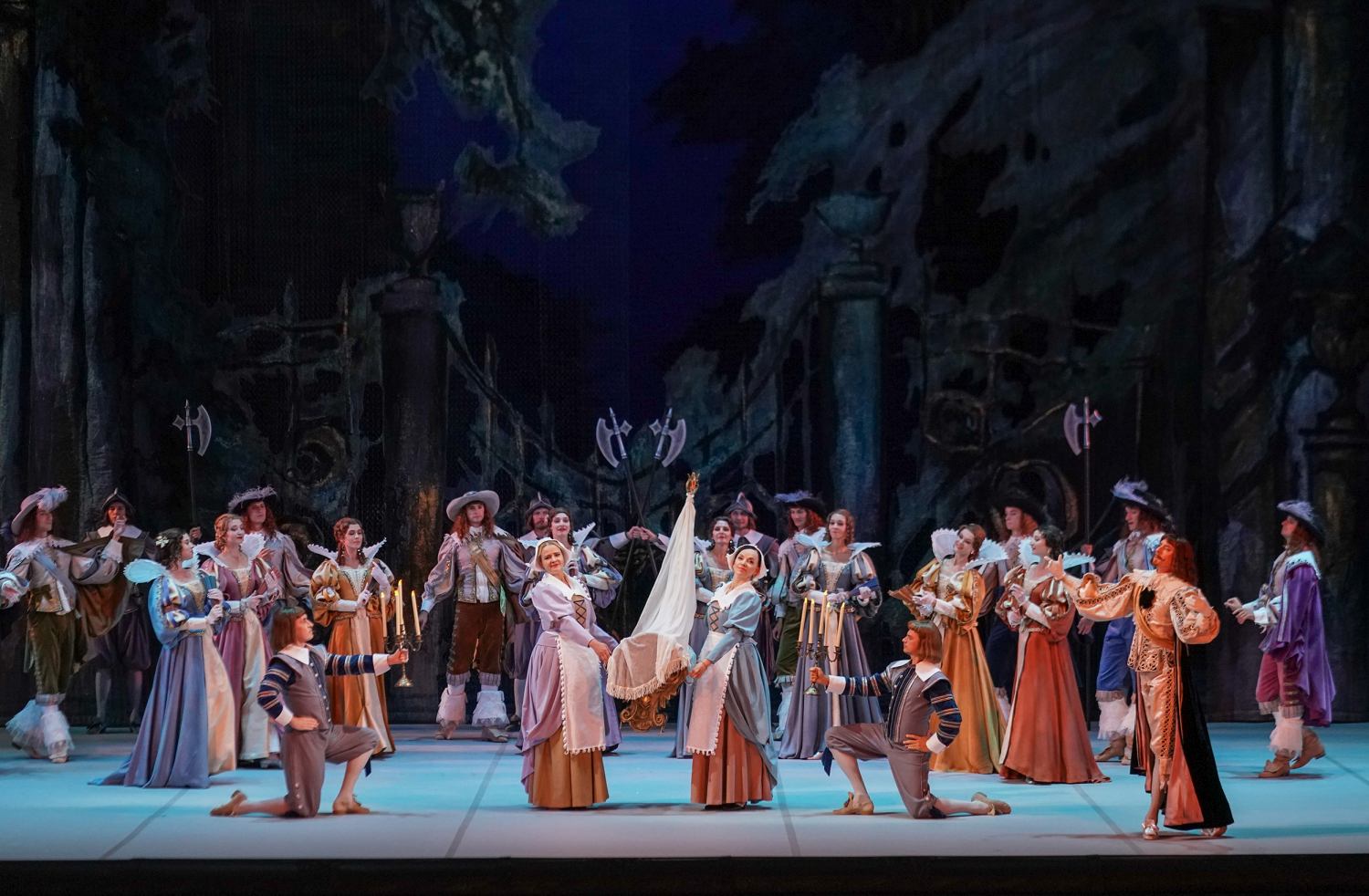
Believe in Miracles

“The Nutcracker. Waiting for a Miracle”
Bolshoi Ballet
Bolshoi Theatre
Moscow, Russia
December 29, 2025 (documentary)

by Ilona Landgraf
Copyright © 2026 by Ilona Landgraf

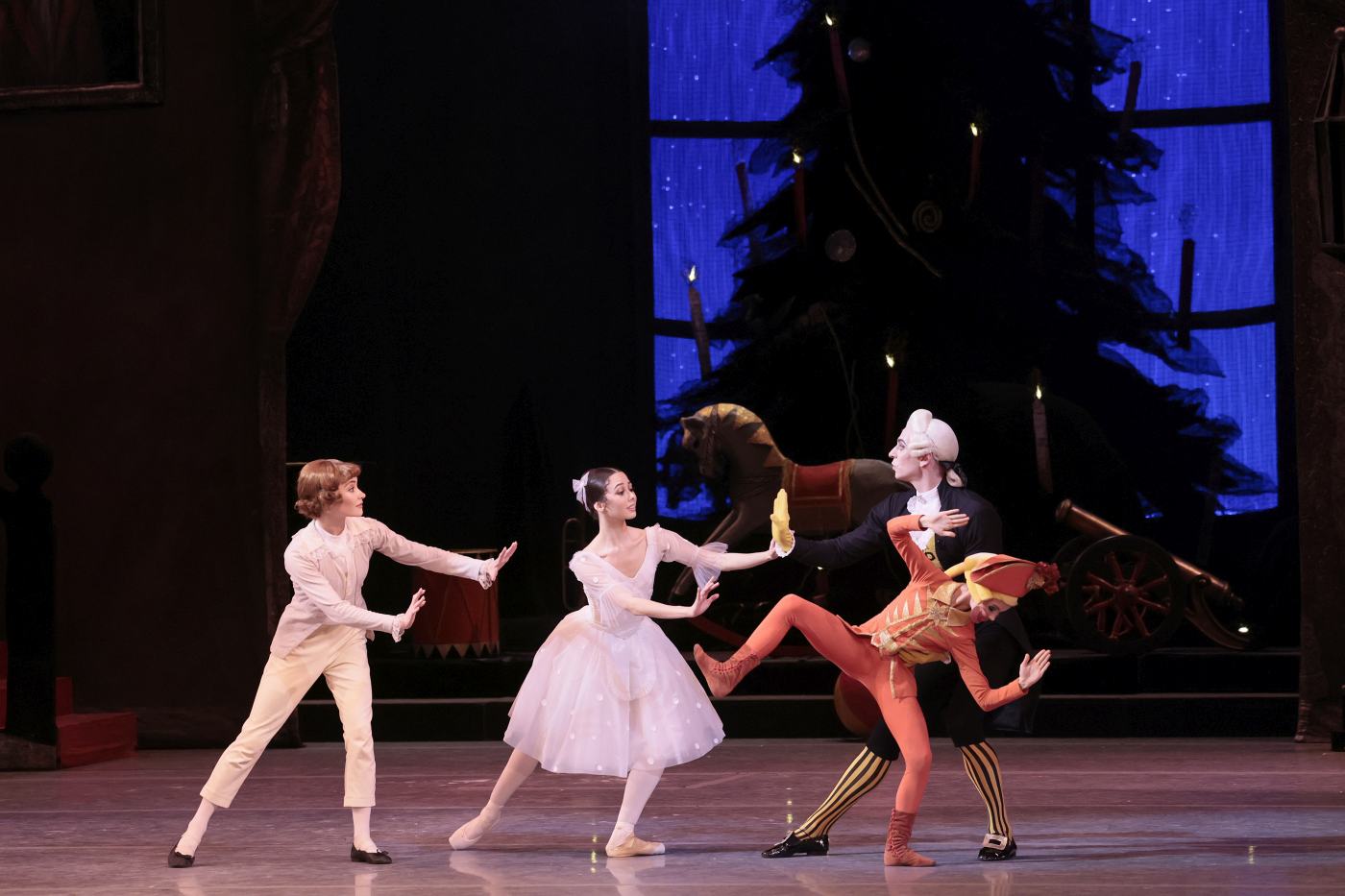
1. E.Kokoreva (Marie), D.Savin (Drosselmeier), and ensemble, “The Nutcracker” by Y.Grigorovich, Bolshoi Ballet 2025 © Bolshoi Theatre/D.YusupovOf the many special moments in Yuri Grigorovich’s The Nutcracker, there’s one you shouldn’t miss: when the Christmas tree is growing, and Marie’s transformation takes place. Then you need to make a wish. At least, that’s the insiders’ tip from the Bolshoi Ballet’s artists involved in the production.

Grigorovich’s The Nutcracker premiered at the Bolshoi Theatre in 1966 and was performed for the eight hundredth time earlier in December. Perhaps that’s why the Russian Channel One broadcast a one-hour documentary about The Nutcracker at the end of December. The film outlines the plot, provides insight into the music, set, and costumes, and looks at sixty years of performance history, during which nothing changed. Numerous coaches and ballet masters guarantee that Grigorovich’s legacy is preserved and kept alive. “Our profession is passed on from hand to hand, from foot to foot,” Maria Allash told. Regina Nikiforova, who has served the Bolshoi Ballet for sixty-five years, added: “Of course, we look at the records and ask the performers of past years what Yuri Nikolaevich told them. Though taking any liberties isn’t allowed, the individuality of each artist still shines through. Their charisma is what catches the audience.”

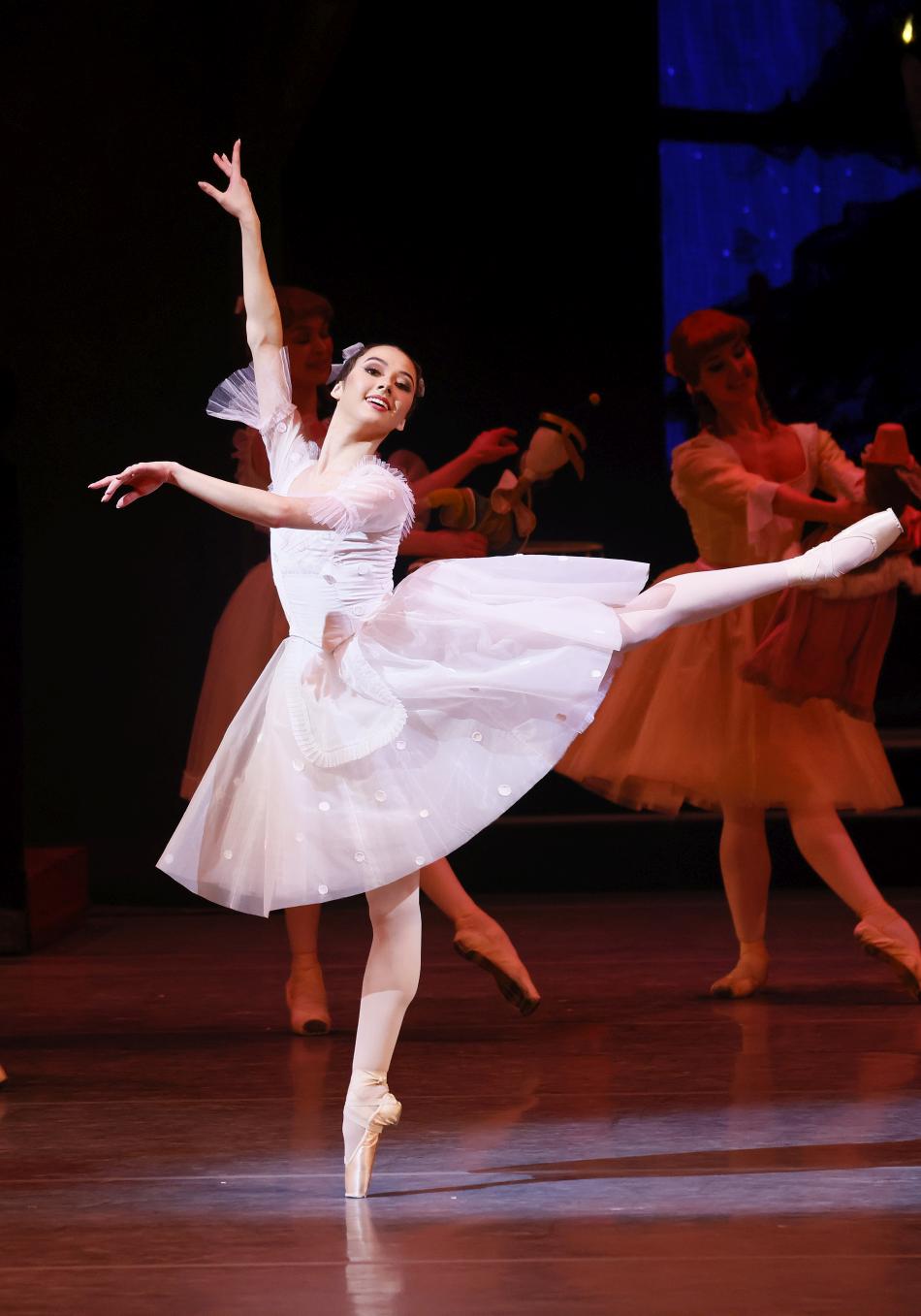
2. A.Ovcharenko (Nutcracker Prince), M.Kryuchkov (Mouse King), and ensemble, “The Nutcracker” by Y.Grigorovich, Bolshoi Ballet 2025 © Bolshoi Theatre/D.YusupovThe Bolshoi’s doyen, Boris Akimov, narrated the film, his voice wavering between excitement and appreciation. Aged seventy-nine, Akimov’s élan and warmth were as intense as always. Among others, he and the company’s artistic director, Makhar Vaziev, touched on one invariable ingredient in all The Nutcrackers: Tchaikovsky’s music. “There are no other composers whose works are performed thousands of times throughout the world per season,” Vaziev said. However, the Bolshoi’s (and presumably the Mariinsky’s) The Nutcracker is played quicker than elsewhere, as general director Valery Gergiev insists on conducting at exactly the pace Tchaikovsky determined.

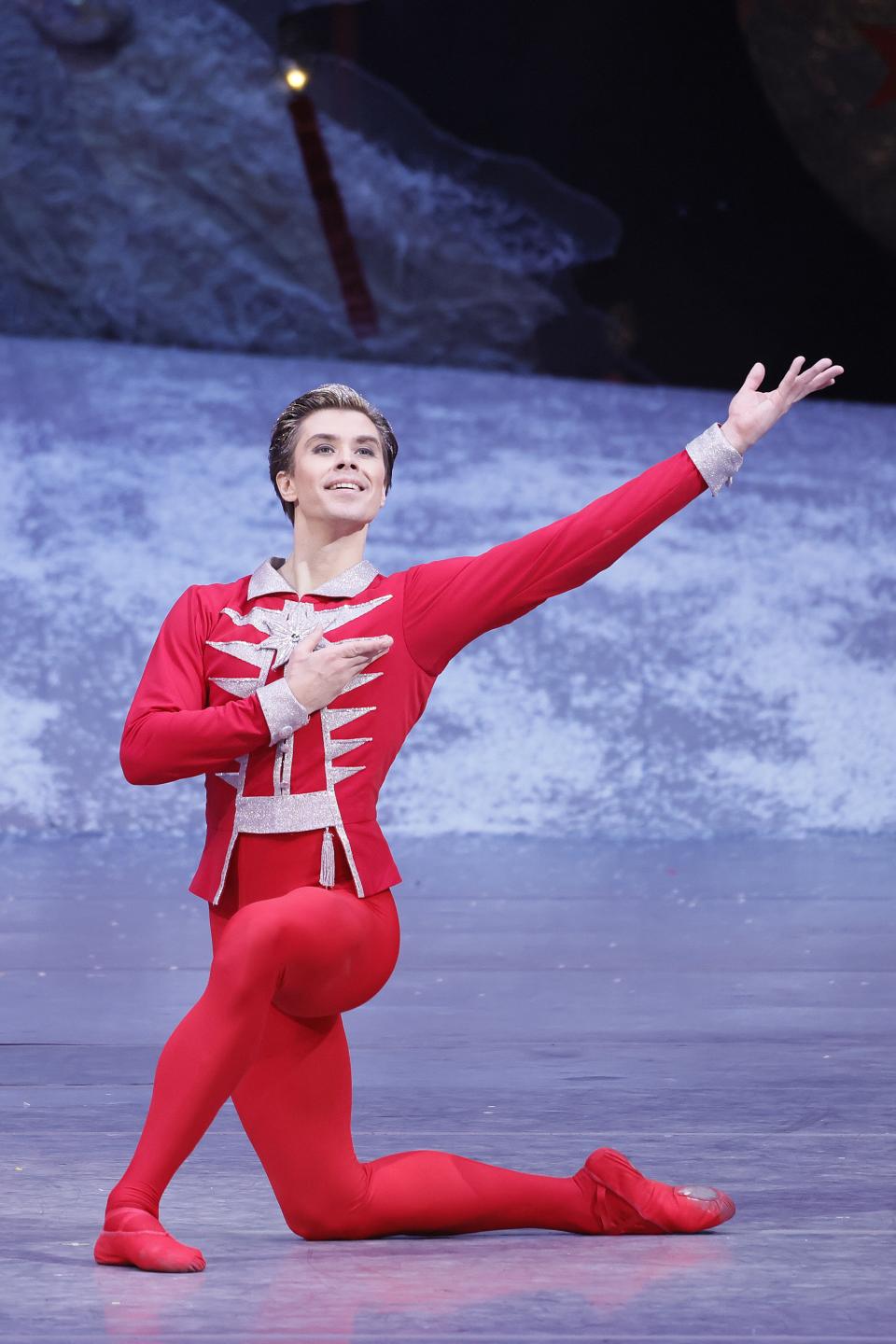
Even its aerial shots of Moscow’s Christmas-lit Theatre Square and the fabulous camera work inside the theater make the film a must-watch. It also pays a visit to Moscow’s Choreographic Academy, where the Bolshoi’s principal, Mikhail Lobukhin, substituting 3. K.Efimov (Nutcracker Prince) and ensemble, “The Nutcracker” by Y.Grigorovich, Bolshoi Ballet 2025 © Bolshoi Theatre/M.Logvinovfor Drosselmeier, assisted in the selection of the youngest performer of the production, the student for the role of the Nutcracker doll. “Usually, the doll is just an ordinary toy in the hands of a dancer, and I’m surprised about the solution Yuri Nikolaevich found, a living doll with a unique dancing technique as the leitmotif of the entire production,” Vaziev explained. When Marie’s naughty brother, Fritz, accidentally breaks the doll, it is the springboard for Marie’s magical dream journey. She dreams the sort of dreams that are so strong that they might become true. Something similar happened to Lyudmila Semenyaka as a young girl in Leningrad when she first saw a photo of a ballerina in a tutu: Alla Sizova as Masha in Vasily Vainonen’s version of The Nutcracker. Semenyaka cut out the photo and pinned it to the piano, where it stayed. Twelve years later, in 1972, the twenty-year-old Semenyaka gave her debut as Marie in Grigorovich’s The Nutcracker on the Bolshoi’s stage.

4. Ensemble, “The Nutcracker” by Y.Grigorovich, Bolshoi Ballet 2025 © Bolshoi Theatre/M.LogvinovOf the many other dancers who shared their thoughts about The Nutcracker, Denis Rodkin revealed that “When watching the performance, you always expect some kind of miracle in your soul,” and Kristina Kretova admitted to getting goosebumps the moment the Nutcracker toy awakens as a real prince. About the same scene, Vladislav Lantratov said, “You know, love is born, and you just want it. Take Marie very carefully and lean her head onto your shoulder—this is the feeling.”

Love is at the core of Grigorovich’s The Nutcracker, and now and then, the dancers in the main roles fell in love with one another. Such was the case for Artem Ovcharenko and Anna Tikhomirova, for example, who got married in 2016. “At some point during the performance, you touch something sacred that you cannot put into words,” Ovcharenko explained. Sometimes, swearing love to each other on stage spurs real-life romances.

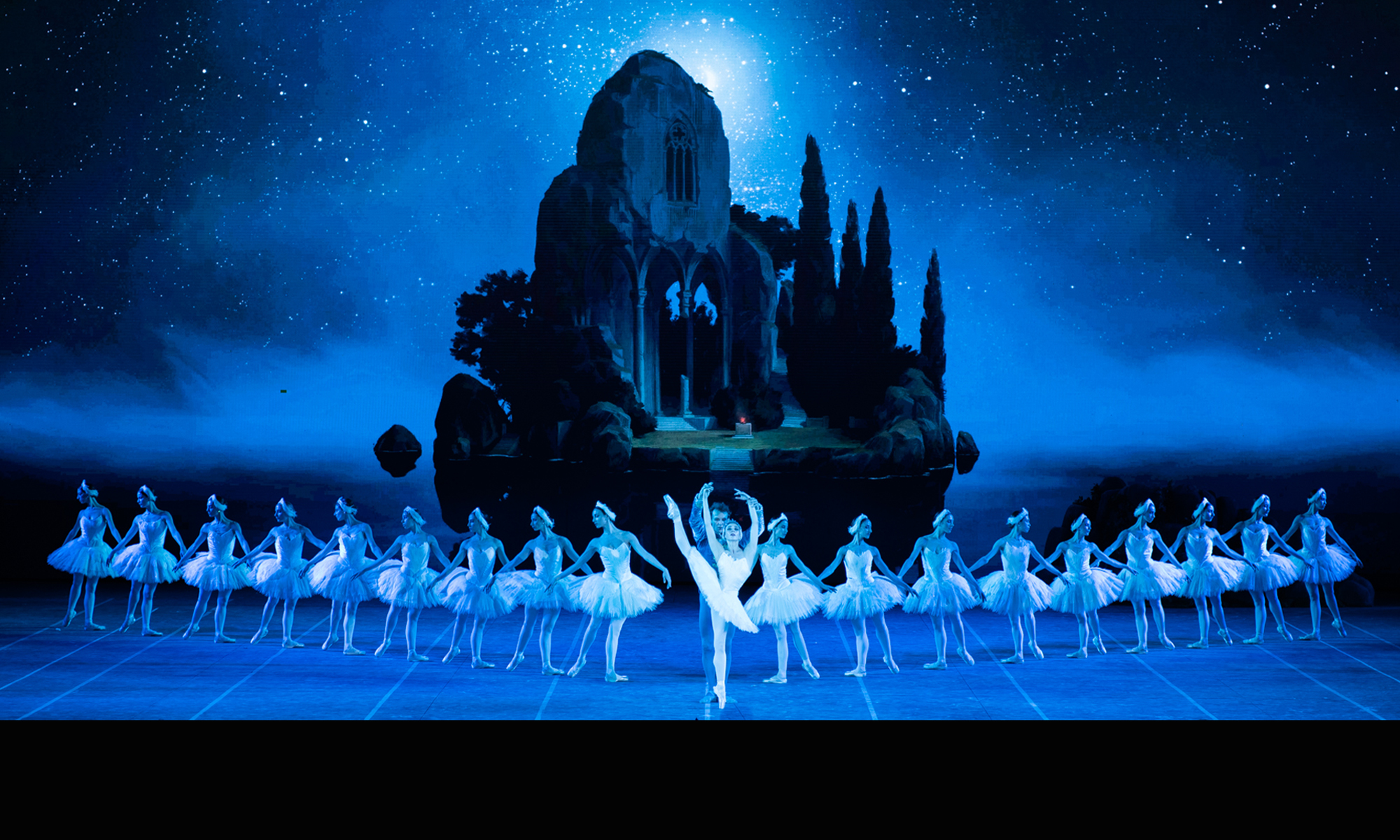
5. Ensemble, “The Nutcracker” by Y.Grigorovich, Bolshoi Ballet 2025 © Bolshoi Theatre/D.YusupovEkaterina Maximova and Vladimir Vasiliev were already a married couple when they danced the lead roles at The Nutcracker’s premiere in 1966. Their performance is the threshold for today’s generation of dancers. Shortly before stepping on stage, Elizaveta Kokoreva and Daniil Potaptsev were lucky enough to be coached by Vasiliev in a masterclass that ran like a golden thread through the documentary. Kokoreva gave her debut as Marie in 2019, and Potaptsev was about to dance the Nutcracker Prince for the first time. It was a pity that I couldn’t see their performances and missed the live stream on December 31 featuring Kokoreva alongside Dmitry Vyskubenko as the prince.

The live stream of December 2024 can be watched on the Bolshoi Theatre’s vimeo site until January 11.

Links: Website of the Bolshoi Theatre
The Nutcracker—live stream December 2024 (online until January 11, 2026)
The Nutcracker. Waiting for a Miracle—Channel One
Photos: 1. Elizaveta Kokoreva (Marie), Denis Savin (Drosselmeier), and ensemble, “The Nutcracker” by Yuri Grigorovich, Bolshoi Ballet 2025 © Bolshoi Theatre/Damir Yusupov
2. Artem Ovcharenko (Nutcracker Prince), Mikhail Kryuchkov (Mouse King), and ensemble, “The Nutcracker” by Yuri Grigorovich, Bolshoi Ballet 2025 © Bolshoi Theatre/Damir Yusupov
3. Klim Efimov (Nutcracker Prince) and ensemble, “The Nutcracker” by Yuri Grigorovich, Bolshoi Ballet 2025 © Bolshoi Theatre/Mikhail Logvinov
4. Ensemble, “The Nutcracker” by Yuri Grigorovich, Bolshoi Ballet 2025 © Bolshoi Theatre/Mikhail Logvinov
5. Ensemble, “The Nutcracker” by Yuri Grigorovich, Bolshoi Ballet 2025 © Bolshoi Theatre/Damir Yusupov
Editing: Kayla Kauffman

The Hub

“The Nutcracker”
Bolshoi Ballet
Bolshoi Theatre
Moscow, Russia
December 31, 2024 (live stream)

by Ilona Landgraf
Copyright © 2025 by Ilona Landgraf

1. E.Kokoreva (Marie) and ensemble, “The Nutcracker” by Y.Grigorovich, Bolshoi Ballet 2024 © Bolshoi Ballet/D.Yusupov2. A.Ovcharenko (Nutcracker Prince), “The Nutcracker” by Y.Grigorovich, Bolshoi Ballet 2024 © Bolshoi Ballet/D.Yusupov During this year’s Christmas sermon, my pastor asked which moment should best represent Christmas. The Christmas dinner? The lighting of the candles? Or, perhaps, unwrapping the presents? For me, this moment was the moment during the Bolshoi Ballet’s performance of The Nutcracker when the newlywed Marie (Elizaveta Kokoreva) and the Nutcracker Prince (Artem Ovcharenko) were lifted by their court toward the star at the top of the Christmas tree. It was the climax of their spiritual journey and of Yuri Grigorovich’s choreography for which I had been waiting since I last saw his Nutcracker live in Moscow in 2022.

Two live streams on December 30th (evening performance) and December 31st (matinee) enabled a vast audience to follow the heroes’ journey. To meet the demand, the number of cinemas offering live broadcasts grew from one hundred to three hundred in December. Most were located in Russia, but cinemas in Belarus, Armenia, and the United Arab Emirates also participated. I was able to watch the matinee on the Bolshoi’s vk video platform. Continue reading “The Hub”

An Opening Salute

“The Sleeping Beauty”
Bolshoi Ballet
Bolshoi Theatre
Moscow, Russia
September 07, 2024 (live stream)

by Ilona Landgraf
Copyright © 2024 by Ilona Landgraf

 1. Y.Ostrovsky (Catalabutte) and ensemble, “The Sleeping Beauty” by Y.Grigorovich after M.Petipa, Bolshoi Ballet 2024 © Bolshoi Theatre/P.Rychkov The Bolshoi Ballet opened its 249th season with a revival of Yuri Grigorovich’s The Sleeping Beauty, which has been absent from the stage for four years. Because of the thorough change of décor, the production was announced as a premiere. It swapped the opulent (and often criticized) sets and costumes that Ezio Frigerio and Franca Squarciapino designed for the 2011 revival (celebrating the reopening of the theater’s Historic Stage after six years of refurbishment) for the restrained décor that Simon Virsaladze (1909–1989) created for Grigorovich’s second version of the ballet in 1973. The subdued hues and aquarelle-ish style of its courtly surroundings direct the gaze toward the colorful costumes (recalling French court fashion from King Louis XIII’s to the Sun King, Louis XIV’s, reign), beautiful flower garlands and bouquets at Aurora’s birthday party, and, most importantly, the dancers and their performances. Raising the curtain didn’t elicit oohs and aahs from the audience as, for example, Jürgen Rose’s décor for Marcia Haydée’s Sleeping Beauty regularly has done on Western stages. Continue reading “An Opening Salute”

In Commemoration of Ekaterina Maximova

“Fragments of One Biography”
Bolshoi Ballet and Guests
Bolshoi Theatre
Moscow, Russia
February 01, 2024 (video)

by Ilona Landgraf
Copyright © 2024 by Ilona Landgraf

1. Ensemble, “Fragments of One Biography” staged by V.Vasiliev, Bolshoi Ballet 2024 © Bolshoi Ballet / E.FetisovaOn February 1st, the Bolshoi Ballet’s prima ballerina, Ekaterina Maximova (1939-2009), would have celebrated her 85th birthday. A phenomenally successful (and multi-decorated) artist, Maximova’s fame reached far beyond Russia’s borders. After retiring from the stage of the Bolshoi in 1988, she continued to dance with other Russian and international companies—and sometimes even returned home to the Bolshoi. From 1990 on, Maximova worked as a coach, teacher, and member of several arts councils and committees. Every five years, Maximova’s husband, Vladimir Vasiliev, stages a gala at the Bolshoi in honor of his late wife. I was able to watch this year’s event on video. Continue reading “In Commemoration of Ekaterina Maximova”

Fiendishly Fine

“Master and Margarita”
Bolshoi Ballet
Bolshoi Theatre (New Stage)
Moscow, Russia
October 29, 2023 (matinee)

by Ilona Landgraf
Copyright © 2023 by Ilona Landgraf

1. A.Ovcharenko (Master) and E.Krysanova (Margarita), “Master and Margarita” by E.Clug, Bolshoi Ballet 2023 © Bolshoi Ballet / Batyr Anadurdiev I was skeptical whether Edward Clug was the right choice to tackle Mikhail Bulgakov’s novel “The Master and Margarita”. A Russian choreographer seemed better equipped to adapt this landmark of Soviet literature for the ballet stage than a Romanian-born working in Maribor, Slovenia. Two years after its premiere at the Bolshoi Theatre, I was able to watch Clug’s “Master and Margarita” – and my reservations were proven thoroughly wrong. It’s a fabulous blend of entertainment and food for thought, brimful of metaphors and allusions. Yuri Possokhov, Clug’s Russian colleague, currently preparing a new piece for the Bolshoi, is full of appreciation for “Master and Margarita” as well. I met him at another performance where he told me that Clug understands the Russian soul perfectly well.

Interestingly, Clug, together with Christian Spuck (then artistic director of Zurich Ballet) intended to stage “Master and Margarita” in Zurich in 2015, but their plan was thwarted when the theater’s research revealed that ticket sales would be uncertain because the Zurich audience wasn’t familiar with Bulgakov’s novel. Destiny brought the Bolshoi Ballet’s artistic director Makhar Vaziev to the scene who decided to stage the piece in Moscow.

A lifetime could be spent exploring Bulgakov’s political and social satire and the biblical questions raised by the novel. In short “The Master and Margarita” (published only after Bulgakov’s death in 1940, first in an edited serial form in 1966/67 and uncensored in 1973) intertwines two plots: (1) the mayhem caused by the Satan (alias Professor Woland) and his entourage when visiting Moscow in the 1930s, and (2) the trial of Jesus of Nazareth in Jerusalem during Pontius Pilate’s governance. The connecting link is the Master, a Muscovite author (and Bulgakov’s alter ego) whose latest manuscript tells the Jerusalem plot. Margarita is the woman who loves him and – unlike Moscow’s critics – his work. Continue reading “Fiendishly Fine”