It Is What It Is

“Nijinsky”
Vienna State Ballet
Vienna State Opera
Vienna, Austria
October 20, 2026 (live stream)

by Ilona Landgraf
Copyright © 2026 by Ilona Landgraf

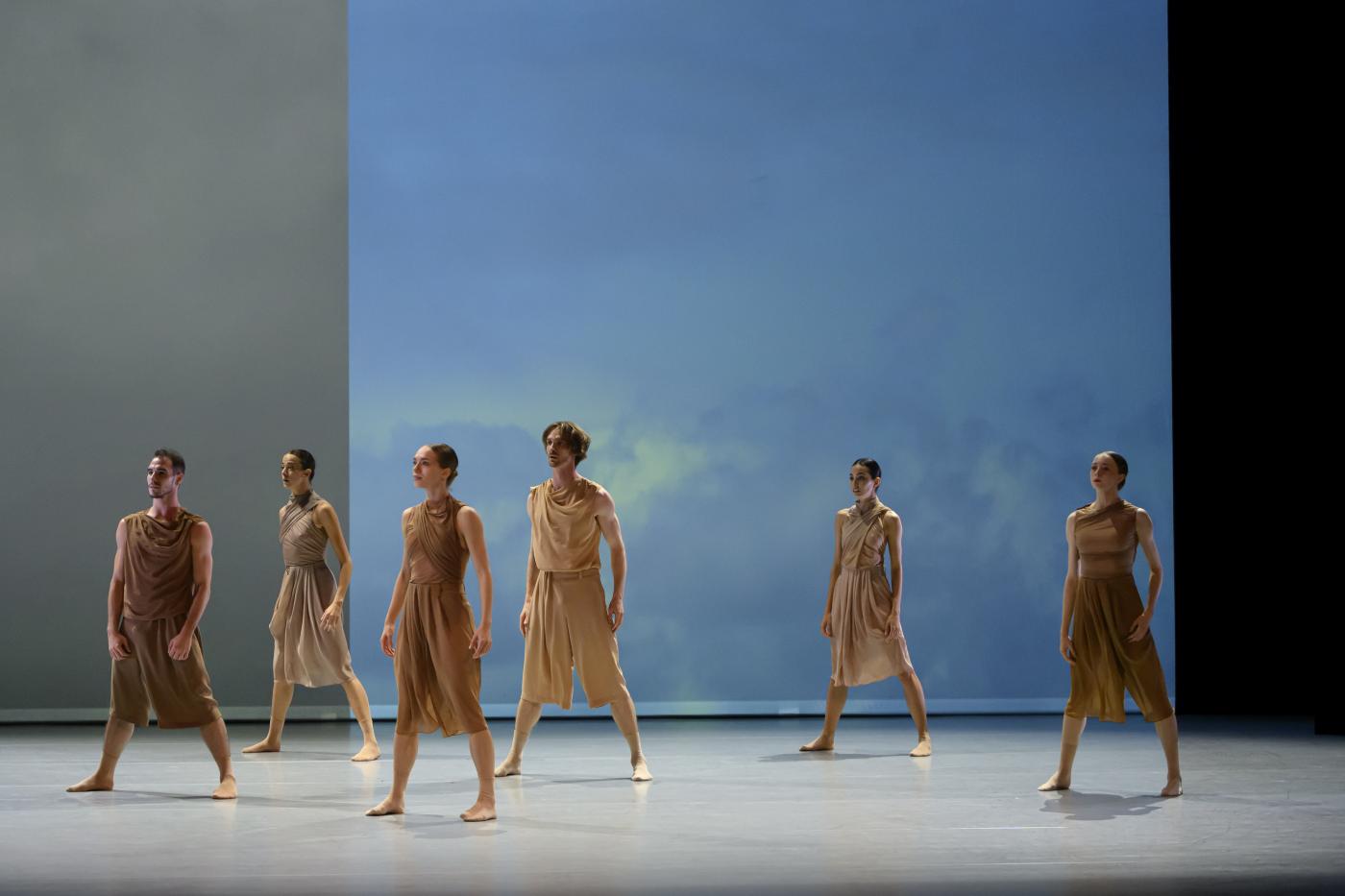
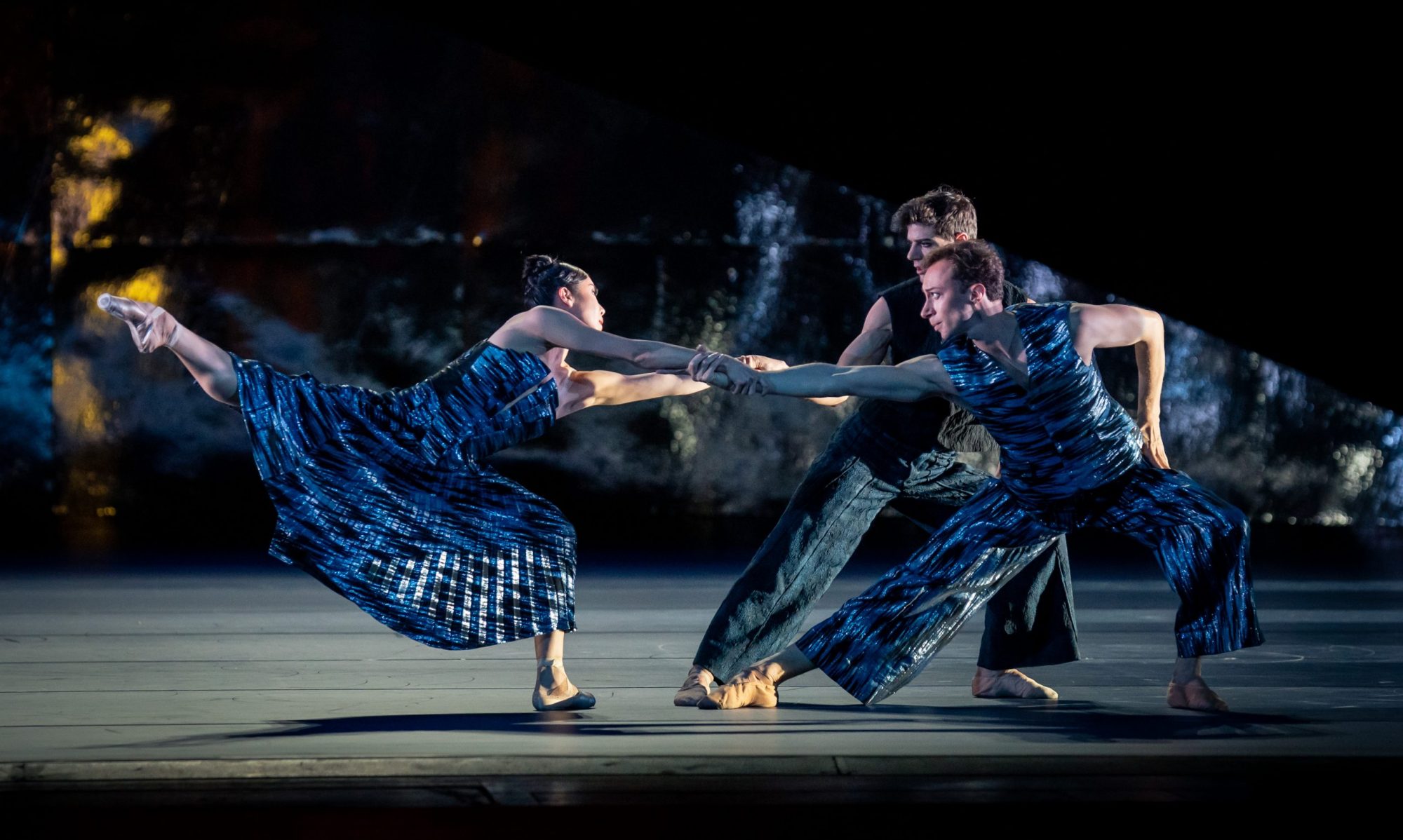
1. A.Frola (Vaslav Nijinsky) and ensemble, “Nijinsky” by J.Neumeier, Vienna State Ballet 2026 © Vienna State Ballet/A.Taylor The insight I gained from the Vienna State Ballet’s premiere of Nijinsky hit me at the curtain call when choreographer John Neumeier took his bow. He looks back on an oeuvre of more than 180 pieces, and though his foundation’s website announces a new choreography for 2027, his career is nearing its end. He held on past his prime and missed the right time to hand over his company. On stage, another career was over: Nijinsky’s. But he certainly hadn’t yet realized his full potential.
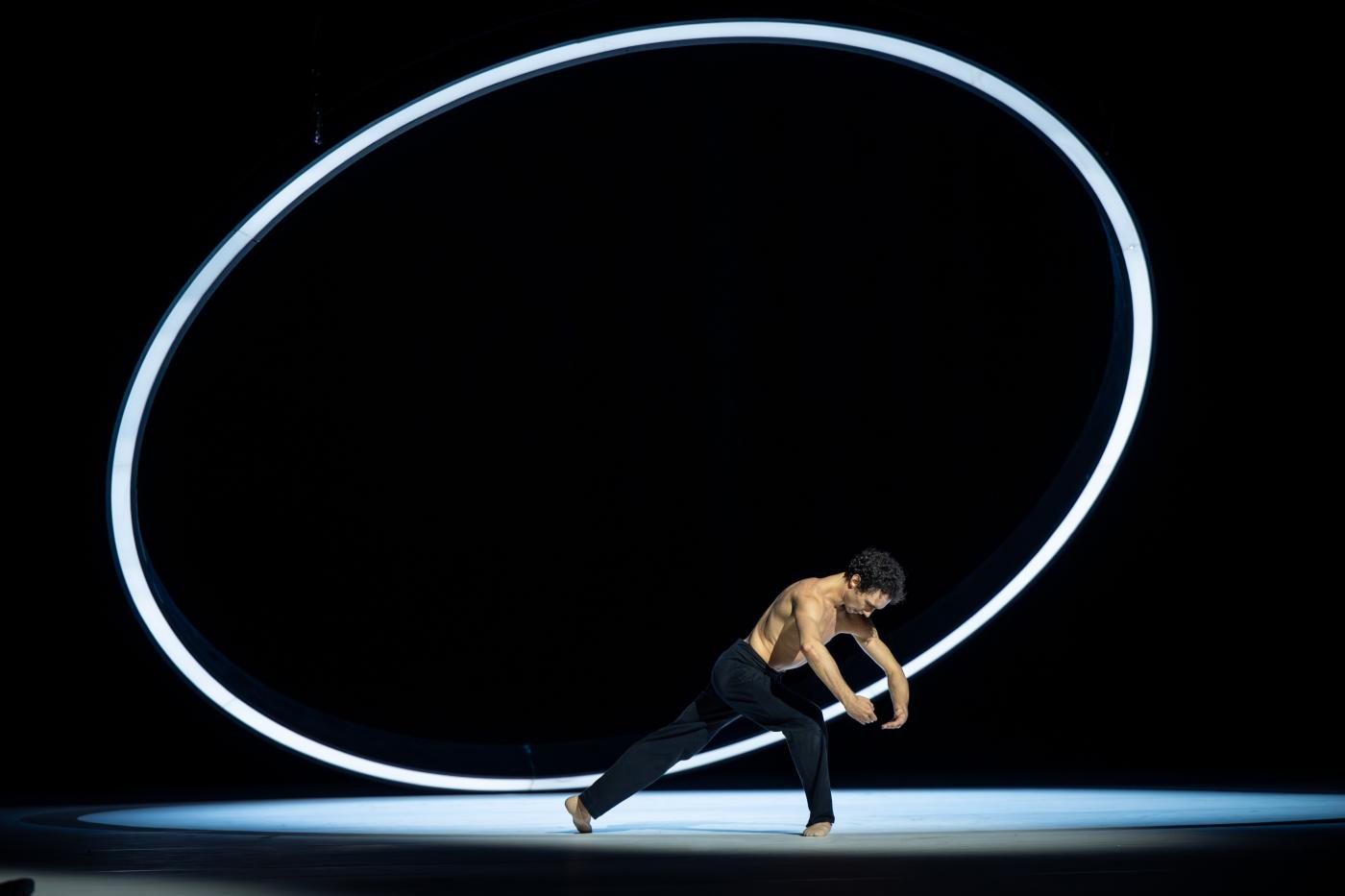
 

3. A.Frola (Vaslav Nijinsky), “Nijinsky” by J.Neumeier, Vienna State Ballet 2026 © Vienna State Ballet/A.Taylor2. A.Frola (Vaslav Nijinsky) and ensemble, “Nijinsky” by J.Neumeier, Vienna State Ballet 2026 © Vienna State Ballet/A.Taylor I saw Nijinsky several times in 2009 and 2011, always danced by Neumeier’s home company, The Hamburg Ballet, and each time Nijinsky’s misery preoccupied me. What was the final straw that shattered his mental health? That both his wife, Romola, and Diaghilev used him? The brutality of World War I? The untimely death of his older brother, Stanislav? Although Nijinsky does not show the hero’s stay at the sanatorium, I wondered what harm the high insulin doses he received there might have done to him.

4. A.Frola (Vaslav Nijinsky) and M.Young (Tamara Karsavina), “Nijinsky” by J.Neumeier, Vienna State Ballet 2026 © Vienna State Ballet/A.Taylor5. V.Caixeta (Faun), “Nijinsky” by J.Neumeier, Vienna State Ballet 2026 © Vienna State Ballet/A.Taylor6. D.Dato (Spirit of the Rose), “Nijinsky” by J.Neumeier, Vienna State Ballet 2026 © Vienna State Ballet/A.Taylor Fifteen years later at the premiere in Vienna, these questions have become secondary. To ruminate on the wherefore of Nijinsky’s sad fate is pointless. Nothing can be fixed anyway. And when watching the eighty-seven-year-old Neumeier, visibly touched and gratefully acknowledging the applause, I recognized that the same applies to Neumeier. He has done his best. The time for changes is over.

8. A.Frola (Vaslav Nijinsky), O.Esina (Eleonore Bereda, Vaslav’s mother), A.Casalinho (Stanislav Nijinsky), and I.Avraam (Bronislava Nijinska); “Nijinsky” by J.Neumeier, Vienna State Ballet 2026 © Vienna State Ballet/A.Taylor7. A.Frola (Vaslav Nijinsky), O.Esina (Eleonore Bereda, Vaslav’s mother), and ensemble, “Nijinsky” by J.Neumeier, Vienna State Ballet 2026 © Vienna State Ballet/A.TaylorNijinsky (2000) is one of his strong pieces. It recaps key moments of Nijinsky’s career in a flashback that lasts from the first bars of his 1919 farewell performance at the Suvretta House, St. Moritz, to its last. He remembers his famous roles and choreographies—L’Après-midi d’un faun, Jeux, Le Sacre du Printemps, and Till Eulenspiegel—the blossoming romance with Romola and her later betrayal, the romantic and professional entanglement with Diaghilev, his brother’s fatal decline, and the relentless approach of a crushing war. Countless associations and thoughts run through his mind, which Neumeier merged into two cleverly constructed acts.

9. A.Frola (Vaslav Nijinsky) and ensemble, “Nijinsky” by J.Neumeier, Vienna State Ballet 2026 © Vienna State Ballet/A.Taylor 10. K.Papava (Romola Nijinska), V.Caixeta (Faun), A.Frola (Vaslav Nijinsky), and M.Kimoto (Doctor Frenkel); “Nijinsky” by J.Neumeier, Vienna State Ballet 2026 © Vienna State Ballet/A.TaylorBack in 2000, he drew on a broader choreographic palette that allowed fascinating characterizations: Nijinsky’s Marriage to God solo, for example, his and Romola’s sultry encounter on a ship to South America, and Diaghilev’s power plays in which seduction and repulsion alternated at whim. I was mesmerized by the Golden Slave’s sensuality, suffered with Petrushka, and shared Nijinsky’s horror at Stanislav losing his mind. But being familiar with the works that followed Nijinsky and the movements and poses Neumeier increasingly used until they became hackneyed is a red rag to me. It’s like spoiling a fine menu with a stale ingredient.

12. L.Seidel (Léonide Massine), E.Peci (Sergey Diaghilev) and A.Frola (Vaslav Nijinsky), “Nijinsky” by J.Neumeier, Vienna State Ballet 2026 © Vienna State Ballet/A.Taylor11. E.Peci (Sergey Diaghilev) and A.Frola (Vaslav Nijinsky), “Nijinsky” by J.Neumeier, Vienna State Ballet 2026 © Vienna State Ballet/A.TaylorCompared with Hamburg Ballet’s doyen, Alexandre Riabko, who frequently danced the title role and set the standard high, Alessandro Frola’s performance in Vienna was impressive. A former principal of Hamburg Ballet, Frola has grown tremendously since he joined the Vienna State Ballet one year ago. Also, Ketevan Papava’s stony-faced Romola was convincing. Nijinsky’s erotically charged roles enamored her more than the man himself, but she deserves credit for taking care of him when his psyche cracked. (Let’s disregard that she later neglected him for years while pursuing her ambitions in the U.S.) Why she would cuckold Nijinsky with the aloof Doctor Frenkel of all people (Masayu Kimoto) was incomprehensible to me.

13. A.Frola (Vaslav Nijinsky) and ensemble, “Nijinsky” by J.Neumeier, Vienna State Ballet 2026 © Vienna State Ballet/A.Taylor14. A.Casalinho (Stanislav Nijinsky), “Nijinsky” by J.Neumeier, Vienna State Ballet 2026 © Vienna State Ballet/A.TaylorIonna Avraam portrayed Nijinsky’s sister, Bronislava (Avraam’s sculpted features made her a perfect cast). Tamara Karsavina (Madison Young) joined her in the dance scenes of Nijinsky’s choreographies and Bronislava’s Les Noces. Karsavina also appeared as the sylph, reminding Nijinsky of his role as the poet. Davide Dato crossed his mind as the Harlequin and the Spirit of the Rose, and Rinaldo Venuti scampered as the tragic Petrushka (but couldn’t match his Hamburg colleagues, Ivan Urban and Lloyd Riggins). Jerking as if electrocuted, António Casalinho’s Stanislav died a terrible death.

16. A.Frola (Vaslav Nijinsky), “Nijinsky” by J.Neumeier, Vienna State Ballet 2026 © Vienna State Ballet/A.Taylor15. K.Papava (Romola Nijinska) and A.Frola (Vaslav Nijinsky), “Nijinsky” by J.Neumeier, Vienna State Ballet 2026 © Vienna State Ballet/A.TaylorThe impenetrable facade and rigidity of Eno Peci’s thin-lipped Diaghilev made it hard to believe that Nijinsky—and later Massine (Laurids Seidel)—gave in to his sexual desires voluntarily. Victor Caixeta’s Faun convinced, but the way his Golden Slave switched between eye-dazzling speed and sensual wriggles looked calculated and lacked the eroticism that Hamburg’s Otto Bubeníček oozed.

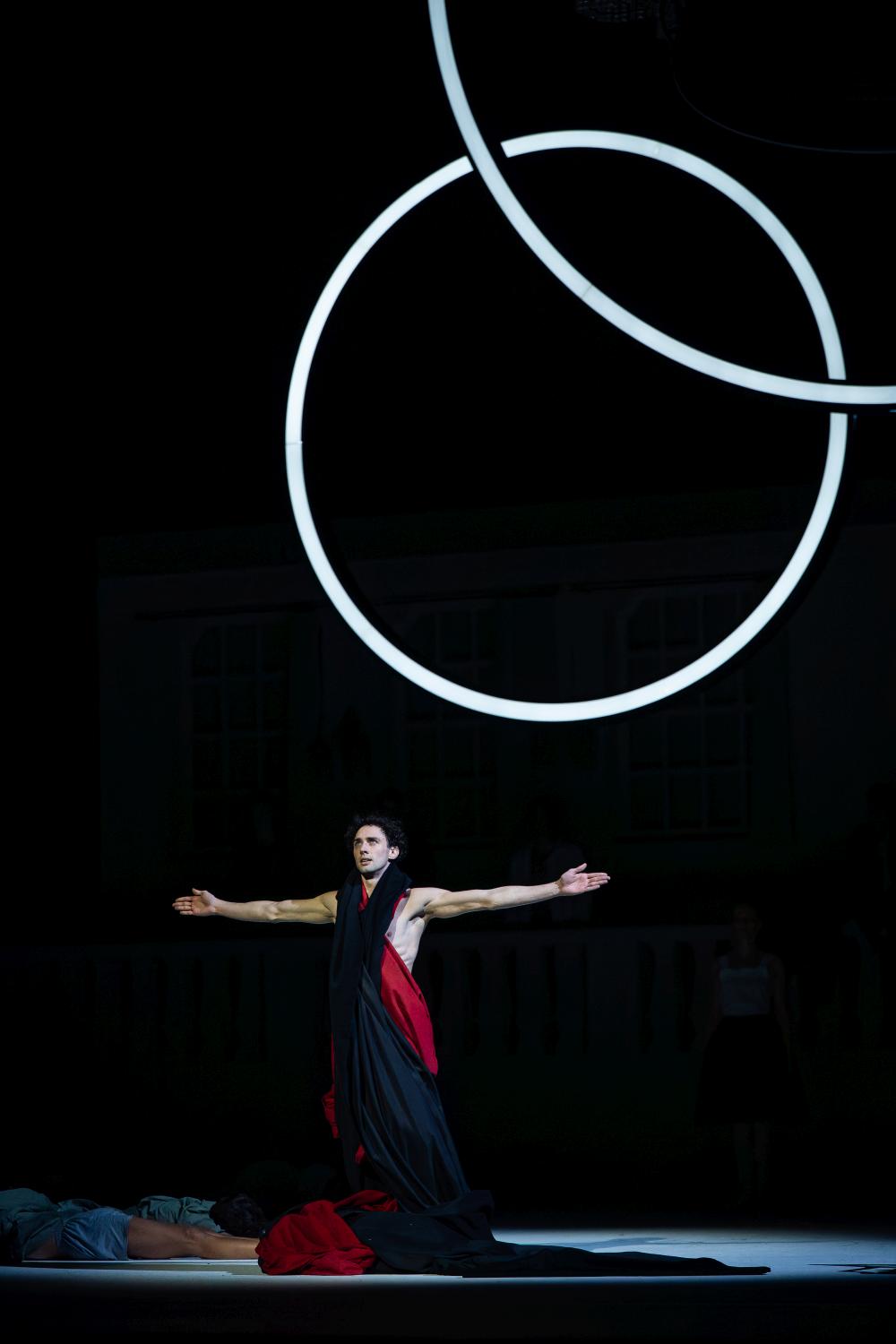
17. R.Venuti (Petrushka), “Nijinsky” by J.Neumeier, Vienna State Ballet 2026 © Vienna State Ballet/A.Taylor 18. A.Frola (Vaslav Nijinsky), “Nijinsky” by J.Neumeier, Vienna State Ballet 2026 © Vienna State Ballet/A.Taylor


The pretentious posturing of the Suvretta House’s audience reminded me of modern-day realities. Nijinsky is, in fact, highly topical. War today feels as close as then, and Nijinsky’s empty glance made me think of a shop owner in last week’s riot-battered Paris. He hunkered on the doorstep of his demolished shop with exactly the same look.


Links: Website of the Vienna State Ballet
Introductory matinée
Nijinsky—rehearsals
Nijinsky—trailer
Photos: 1. Alessandro Frola (Vaslav Nijinsky) and ensemble, “Nijinsky” by John Neumeier, Vienna State Ballet 2026
2. Alessandro Frola (Vaslav Nijinsky) and ensemble, “Nijinsky” by John Neumeier, Vienna State Ballet 2026
3. Alessandro Frola (Vaslav Nijinsky), “Nijinsky” by John Neumeier, Vienna State Ballet 2026
4. Alessandro Frola (Vaslav Nijinsky) and Madison Young (Tamara Karsavina), “Nijinsky” by John Neumeier, Vienna State Ballet 2026
5. Victor Caixeta (Faun), “Nijinsky” by John Neumeier, Vienna State Ballet 2026
6. Davide Dato (Spirit of the Rose), “Nijinsky” by John Neumeier, Vienna State Ballet 2026
7. Alessandro Frola (Vaslav Nijinsky), Olga Esina (Eleonore Bereda, Vaslav’s mother), and ensemble, “Nijinsky” by John Neumeier, Vienna State Ballet 2026
8. Alessandro Frola (Vaslav Nijinsky), Olga Esina (Eleonore Bereda, Vaslav’s mother), António Casalinho (Stanislav Nijinsky), and Ionna Avraam (Bronislava Nijinska); “Nijinsky” by John Neumeier, Vienna State Ballet 2026
9. Alessandro Frola (Vaslav Nijinsky) and ensemble, “Nijinsky” by John Neumeier, Vienna State Ballet 2026
10. Ketevan Papava (Romola Nijinska), Victor Caixeta (Faun), Alessandro Frola (Vaslav Nijinsky), and Masayu Kimoto (Doctor Frenkel); “Nijinsky” by John Neumeier, Vienna State Ballet 2026
11. Eno Peci (Sergey Diaghilev) and Alessandro Frola (Vaslav Nijinsky), “Nijinsky” by John Neumeier, Vienna State Ballet 2026
12. Laurids Seidel (Léonide Massine), Eno Peci (Sergey Diaghilev) and Alessandro Frola (Vaslav Nijinsky), “Nijinsky” by John Neumeier, Vienna State Ballet 2026
13. Alessandro Frola (Vaslav Nijinsky) and ensemble, “Nijinsky” by John Neumeier, Vienna State Ballet 2026
14. António Casalinho (Stanislav Nijinsky), “Nijinsky” by John Neumeier, Vienna State Ballet 2026
15. Ketevan Papava (Romola Nijinska) and Alessandro Frola (Vaslav Nijinsky), “Nijinsky” by John Neumeier, Vienna State Ballet 2026
16. Alessandro Frola (Vaslav Nijinsky), “Nijinsky” by John Neumeier, Vienna State Ballet 2026
17. Rinaldo Venuti (Petrushka), “Nijinsky” by John Neumeier, Vienna State Ballet 2026
18. Alessandro Frola (Vaslav Nijinsky), “Nijinsky” by John Neumeier, Vienna State Ballet 2026
all photos © Vienna State Ballet/Ashley Taylor
Editing: Kayla Kauffman


Something Is Going On

“Twilight”/“Bronia”
Les Ballets de Monte Carlo
Salle Garnier Opéra de Monte-Carlo
Monte Carlo, Monaco
July 18, 2025

by Ilona Landgraf
Copyright © 2025 by Ilona Landgraf

1. Ensemble, “Twilight” by L.Timulak, Les Ballets de Monte-Carlo 2025 © A.BlangeroLes Ballets de Monte-Carlo closed the season with two new creations: Twilight by Lukáš Timulak and Bronia by Mattia Russo and Antonio de Rosa. So far, all productions I’ve seen in Monaco have been performed at the Grimaldi Forum, a modern glass and steel complex whose Salle des Princes lies below sea level. The new double bill was, however, presented at the Salle Garnier at the Opéra de Monte-Carlo, which is next door to the famous casino. A miniature replica of the Paris Opera, the Salle Garnier is a red and gold Italian theater built in the Second Empire style. It was here that Sergei Diaghilev’s Ballets Russes took up residence in 1911. Until the First World War, Diaghilev’s company rehearsed, prepared new productions, and stored sets and props in Monte-Carlo. On April 9, 1911, the Ballets Russes gave its first performance, which featured Scheherazade and Giselle. On April 19th, Nijinsky and Karsavina gave their debut in Fokine’s Le Spectre de la Rose. This history was significant in the context of the recent premiere. Continue reading “Something Is Going On”

Fifty-Fifty

“Maillot/León & Lightfoot”
Ballet of the State Theater Nuremberg
State Theater
Nuremberg, Germany
May 04, 2024

by Ilona Landgraf
Copyright © 2024 by Ilona Landgraf

1. Jean-Christophe Maillot © Felix Dol Maillot 2. Sol León © Tommy Pascal 3. Paul Lightfoot © Elena Lekhova The Ballet of the State Theater Nuremberg’s new double bill combines Jean-Christophe Maillot’s Les Noces (2022 version) with Stop-Motion (2014) by Sol León and Paul Lightfoot. Both pieces have now entered the repertory of a German company for the first time. Continue reading “Fifty-Fifty”

Spoiled

“Timekeepers” (“For Hedy”/”Rhapsodies”/”Les Noces”)
Ballet Zurich
Opernhaus Zurich
Zurich, Switzerland
January 20, 2024

by Ilona Landgraf
Copyright © 2024 by Ilona Landgraf

1. S.Williams, “For Hedy” by M.Tankard, Ballet Zurich 2024 © G.BatardonThe Ballet Zurich’s new triple bill Timekeepers is a testament to a wind of change that has swept through the company since Cathy Marston took the reins as artistic director last August. Twenty new faces joined the company, and many others left to follow the previous artistic director, Christian Spuck, to the State Ballet Berlin. I was told that, despite initial hesitation, the Ballet attracts large audiences to its performances. The premiere of Timekeepers was indeed very well attended. Its program combined two world premieres – Meryl Tankard’s For Hedy and Mthuthuzeli November’s Rhapsodies – with Bronislava Nijinska’s Les Noces (1923). Each of the three pieces comprises music that premiered almost exactly one-hundred years ago.

The Australian Tankard took on the challenge to choreograph George Antheil’s composition Ballet Mécanique, a medley of noises made by mechanical instruments, such as electric bells, propellers, a siren, and sixteen self-playing pianos (or pianolas). It couldn’t be realized in 1926, as synchronizing so many pianolas turned out to be impossible back then. Continue reading “Spoiled”

A Teaser

“Diaghilev. The Dress Rehearsal”
New Tretyakov Gallery
Moscow, Russia
December 2022

by Ilona Landgraf
Copyright © 2023 by Ilona Landgraf

1. M.Larionov (1881-1964), Sergei Diaghilev, 1920 – 1930; paper, black ink, pen, 27 x 20 © Tretyakov Gallery 2. Unknown artist, poster for a performance of the Ballets Russes 1927 © Tretyakov Gallery Sergei Diaghilev’s name is nearly synonymous with the art of ballet. Well-versed in both arts and business, he succeeded not only as a writer and curator, but indelibly as the founder and cunning impresario of the Ballets Russes.
From 1906 onwards, foreseeing political and cultural paralysis at home in Russia, Diaghilev shifted his activities from St. Petersburg to Paris (and later to other European metropolises). Though his first venture (an exhibition of Russian paintings at Paris’s new Salon d’Automne) earned him laurels, he soon turned away from museums towards the ballet stage. The Ballets Russes became the core focus of his life – and it’s because of them that the western art of ballet was reinvigorated. As Stravinsky stated, “it is to [Diaghilev], that we owe the recent development of choreographic art in the entire world.” Continue reading “A Teaser”

The Power of Imagination?

“La Fresque”
Ballet Preljocaj
Forum Ludwigsburg
Ludwigsburg, Germany
January 11, 2019

by Ilona Landgraf
Copyright © 2019 by Ilona Landgraf

1. Ensemble, “La Fresque” by A.Preljocaj, Ballet Preljocaj 2019 © J.-C.CarbonneBallet Preljocaj, Angelin Preljocaj’s Aix-en-Provence-based company, toured Germany in early January with “Le Fresque.” The piece, which features choreography by Preljocaj from 2016, depicts and interprets “The Mural,” a narrative from the collection “Strange Tales From a Chinese Studio” by Chinese author Pu Songling (1640–1715). Two male wayfarers, Chu and Meng, are forced by inclement weather to stop at a dilapidated temple. There, a temple fresco showing a group of young women attracts Chu’s attention. He falls in love with one of the women and, while watching her, suddenly finds himself inside the painting. The painting comes surreally to life, and a romance blossoms between Chu and the woman, climaxing in a consummation of the marriage. Continue reading “The Power of Imagination?”

More, Please!

“Les Ballets Russes”
Bavarian State Ballet
National Theater
Munich, Germany
May 30, 2014

by Ilona Landgraf
Copyright © 2014 by Ilona Landgraf

1. J.Amo, M.Chashchegorov and ensemble, "Les Biches" by B.Nijinska, Bavarian State Ballet Thumbs up for Bavarian State Ballet! Known for their ambitious programs, the troika of artistic director Ivan Liška and his assistant directors Bettina Wagner-Bergelt and Wolfgang Oberender offer their audiences a varied diet, ranging from the classics to brand-new pieces. While Cunningham, Limón and Massine were already part of this season’s menu, some days ago the Munich trio served up a formidable evening of Ballets Russes. If the remaining two premieres – Oskar Schlemmer’s “Triadic Ballet” and Mary Wigman’s “Le Sacre du Printemps” – are danced with the same verve the prospects for ballet aficionados are happy ones. Continue reading “More, Please!”