First Time

“Cinderella”
Bolshoi Ballet
Bolshoi Theatre
Moscow, Russia
September 05, 2026 (Historic Stage)

by Ilona Landgraf
Copyright © 2026 by Ilona Landgraf
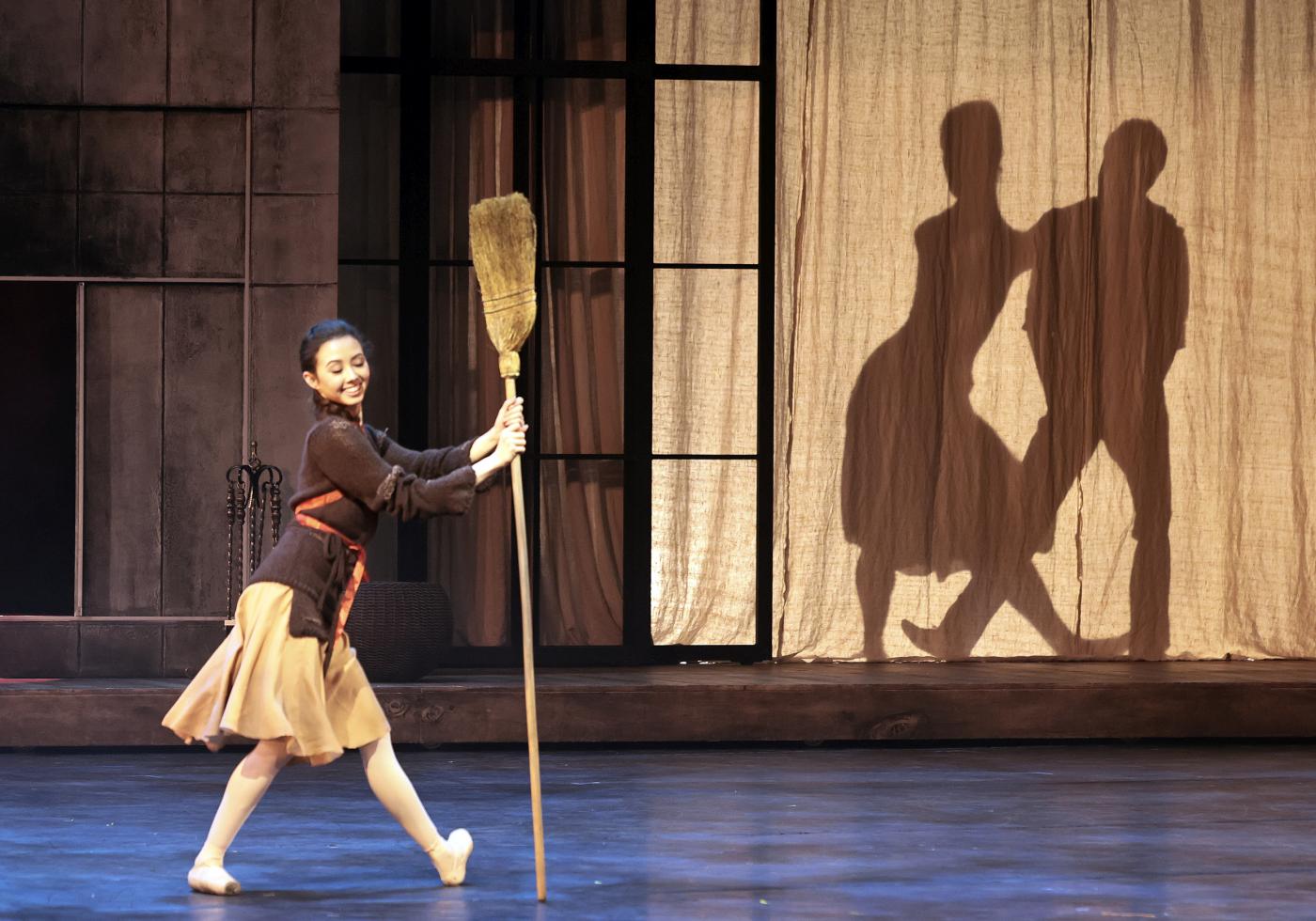
1. E.Kokoreva (Cinderella), “Cinderella” by V.Lopatin, Bolshoi Ballet 2026 © Bolshoi Theatre/D.YusupovOf the two Cinderellas that premiered last May on major Russian stages in celebration of Sergei Prokofiev’s 135th birthday anniversary, I saw Nadezha Kalinina’s version for the Kazan Ballet a few weeks later on video. With some delay, I got to know Vyacheslav Lopatin’s Cinderella for the Bolshoi Ballet last Saturday during the new season’s opening matinee. Lopatin, principal of the company and fledgling ballet master, had never choreographed before. Giving his debut with no less than a full-blown production was due to the artistic director’s, Makhar Vaziev’s, encouragement and support. The outcome isn’t (and realistically couldn’t be) mind-boggling, but it is respectable.
 

Lopatin eschewed old-style fairy-tale elements and presented the story in a modern environment. His Cinderella lives in a mansion with a huge fireplace, wooden wall panels, and glass windows overlooking a coniferous forest (set design by Sergey Ryabov). Tree tops slant the sunlight into beautiful, hazy rays (lighting by Konstantin Binkin). A yellow bike and cozy sun loungers add to the impression of a mountainous idyll (which, as is well known, is spoiled by Cinderella’s two stepsisters and their mother). Her father is present only in an old photo that Cinderella keeps in a cupboard.

3. A.Smoliyaninov (Dancing Master) and D.Taranda (Younger Stepsister), “Cinderella” by V.Lopatin, Bolshoi Ballet 2026 © Bolshoi Theatre/D.Yusupov2. A.Smoliyaninov (Dancing Master), P.Netsvetaeva-Dolgalyova (Older Stepsister), A.Vlashinets (Stepmother), and D.Taranda (Younger Stepsister); “Cinderella” by V.Lopatin, Bolshoi Ballet 2026 © Bolshoi Theatre/D.YusupovThe Prince’s palace resembles a millionaire’s estate with shades and palm trees in planters lining the yard. Cypresses and swimming pool ladders (that lead into the orchestra pit) indicate a warm climate. A rear, metal, double staircase connects the yard to a small theater-like proscenium arch with a silver curtain through which the ball guests make their stylish entrance. The men’s tuxedos and the women’s dresses are black and white, as is the estate’s interior design (costumes by Maya Mayer).

Once Cinderella (Elizaveta Kokoreva) metamorphoses into a shining party beauty (Igor Domashkevich’s video showed the process in superhero action film style, including a gorgeous white dress generated by waves of fire), she leaves for the party through the—4. A.Kovalyova (Fairy/Time) and ensemble, “Cinderella” by V.Lopatin, Bolshoi Ballet 2026 © Bolshoi Theatre/D.Yusupov now blue-framed—fireplace and descends from a distant snowy mountaintop through the proscenium arch right to the Prince’s yard. At midnight, she runs from the party through the same arch back to the mountaintop where she miraculously re-transforms.
Blue was the color of the Fairy Godmother—called “Fairy/Time” in the production—who facilitated (or rather managed) the turn Cinderella’s life took. Alyona Kovalyova’s Fairy casually walked rather than danced, her hands in the pockets of her blue pantsuit, calmly overseeing how her protégé’s fate unrolled.

Compared to the Cinderella in Kalinina’s piece, whose wait to be freed from her stepfamily felt painfully long, Lopatin’s Cinderella suffers less. Neither her dream of finding a partner nor her family’s bullying seriously discomposes her. She has the same laid-back attitude toward time as her Fairy. A core theme of the Cinderella fairy tale is time which is often depicted as something the heroine must endure until a prince magically brings along happiness. Lopatin’s Cinderella is pressed by time only once—when the clock strikes midnight as mercilessly as a metronome, and she must abscond from the ball.

5. D.Potapsev (Prince) and ensemble, “Cinderella” by V.Lopatin, Bolshoi Ballet 2026 © Bolshoi Theatre/D.YusupovHer Prince (Daniil Potapsev) and his three buddies (Ratmir Dzhumaliev, Igor Gorelkin, and Nikita Oparin) sedulously search all over the world for the beauty whose point shoe was the only remnant left at the ball. As adventurous young men, they dart from left to right, but over time, the Prince’s hope dwindles, and sadness spreads. At first, they come across a Spanish tavern that lies hidden behind the silver curtain of a theater’s proscenium, similar to but bigger than the one in the Prince’s yard. It’s populated by five Spanish machos and their perky heroine (Sofia Kurskaya), who flatly refuses to even try on the shoe. At the next stopover (hidden behind the same curtain), an oriental harem lady’s (Valeria Chaplygina’s) foot doesn’t fit into the shoe. Eventually, the Prince and his entourage happen upon Cinderella’s home. There, the lovers recognize each other. From that moment on, everything else becomes irrelevant. Hazy darkness swallows the mansion and everyone present. Alone with her Prince on a dark, empty stage, Cinderella gives the shoes back to the Fairy (a very simple but magical scene), and arm in arm, the lovers walk toward the dark backstage. Both reappear during an epilogue in a blue picture-like frame hanging in an undefined public space. By now, the story has reached the present, and the silent crowd gathered below the frame stands in admiration. Never giving up hope for true love is a key message in life.

6. P.Netsvetaeva-Dolgalyova (Older Stepsister), D.Potapsev (Prince), D.Taranda (Younger Stepsister), A.Vlashinets (Stepmother), and ensemble; “Cinderella” by V.Lopatin, Bolshoi Ballet 2026 © Bolshoi Theatre/D.Yusupov7. D.Potapsev (Prince) and E.Kokoreva (Cinderella), “Cinderella” by V.Lopatin, Bolshoi Ballet 2026 © Bolshoi Theatre/D.Yusupov Cinderella, if not staged with a radically new approach, assembles cliché characters for whom imbuing them with individuality is tricky, especially given the many existing stagings. Although Lopatin’s choreography has no “wow” moments and the first act feels uneventful at times, he affixed his stamp onto the roles, sometimes intensely, sometimes faintly. The two stepsisters were bored material girls capable only of bad behavior and quarreling. Like her mother (Angelina Vlashinets), the older sister (Polina Netsvetaeva-Dolgalyova) advertised herself ad nauseam to any man, whereas the younger one (Deymante Taranda) merely paraded her low IQ. Their smart dancing master (Alexander Smoliyaninov) assessed his clients straight away, delivered a speedy class no one could follow, slapped pushy hands, and bid goodbye with lightning speed.

9. Ensemble, “Cinderella” by V.Lopatin, Bolshoi Ballet 2026 © Bolshoi Theatre/D.Yusupov 8. D.Potapsev (Prince) and E.Kokoreva (Cinderella), “Cinderella” by V.Lopatin, Bolshoi Ballet 2026 © Bolshoi Theatre/D.YusupovThough at times underemployed, Kokoreva’s Cinderella had heart and soul. She inspired not pity but admiration. I especially liked how she disposed of dirt (and her sisters’ broken bling) in the waste bucket. It seemed a healthy way to let go of burdens. Potaptsev’s Prince was determined to take control of the goings-on from the first moment he joined the ball. His presence was an infusion of energy. The romance and trust his Prince and Cinderella established felt real.
Stripped down to pas de trois, the seasons’ divertissements looked meager on the huge stage. However, the crowd at the ball was large enough and responsive to the Prince’s dash.

Valery Gergiev at the conductor’s podium was the matinee’s biggest asset. From my balcony seat, I saw his fingers carve out the most subtle nuances of Prokofiev’s score. It sounded splendid.

Link: Website of the Bolshoi Theatre
Photos: 1. Elizaveta Kokoreva (Cinderella), “Cinderella” by Vyacheslav Lopatin, Bolshoi Ballet 2026
2. Alexander Smoliyaninov (Dancing Master), Polina Netsvetaeva-Dolgalyova (Older Stepsister), Angelina Vlashinets (Stepmother), and Deymante Taranda (Younger Stepsister); Cinderella” by Vyacheslav Lopatin, Bolshoi Ballet 2026
3. Alexander Smoliyaninov (Dancing Master) and Deymante Taranda (Younger Stepsister), Cinderella” by Vyacheslav Lopatin, Bolshoi Ballet 2026
4. Alyona Kovalyova (Fairy/Time) and ensemble, Cinderella” by Vyacheslav Lopatin, Bolshoi Ballet 2026
5. Daniil Potapsev (Prince) and ensemble, Cinderella” by Vyacheslav Lopatin, Bolshoi Ballet 2026
6. Polina Netsvetaeva-Dolgalyova (Older Stepsister), Daniil Potapsev (Prince), Deymante Taranda (Younger Stepsister), Angelina Vlashinets (Stepmother), and ensemble; Cinderella” by Vyacheslav Lopatin, Bolshoi Ballet 2026
7. Daniil Potapsev (Prince) and Elizaveta Kokoreva (Cinderella), “Cinderella” by Vyacheslav Lopatin, Bolshoi Ballet 2026
8. Daniil Potapsev (Prince) and Elizaveta Kokoreva (Cinderella), “Cinderella” by Vyacheslav Lopatin, Bolshoi Ballet 2026
9. Ensemble, Cinderella” by Vyacheslav Lopatin, Bolshoi Ballet 2026
all photos © Bolshoi Theatre/Damir Yusupov
Editing: Kayla Kauffman


Torn Between Two

“Elláda” (“Minotaur”/“Leda and the Swans”)
MuzArts
Maly Theatre
Moscow, Russia
June 15 and 22, 2026 (video)

by Ilona Landgraf
Copyright © 2026 by Ilona Landgraf

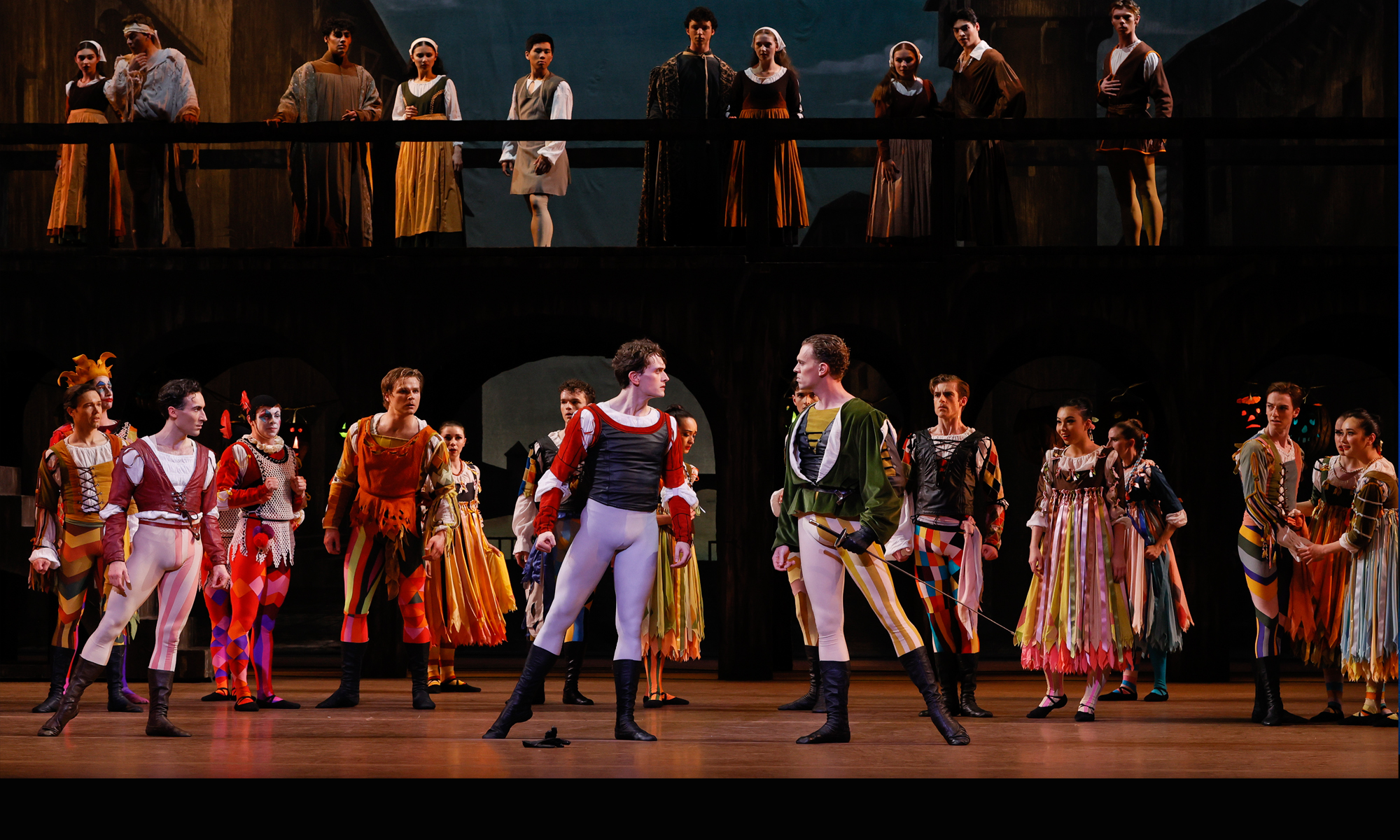
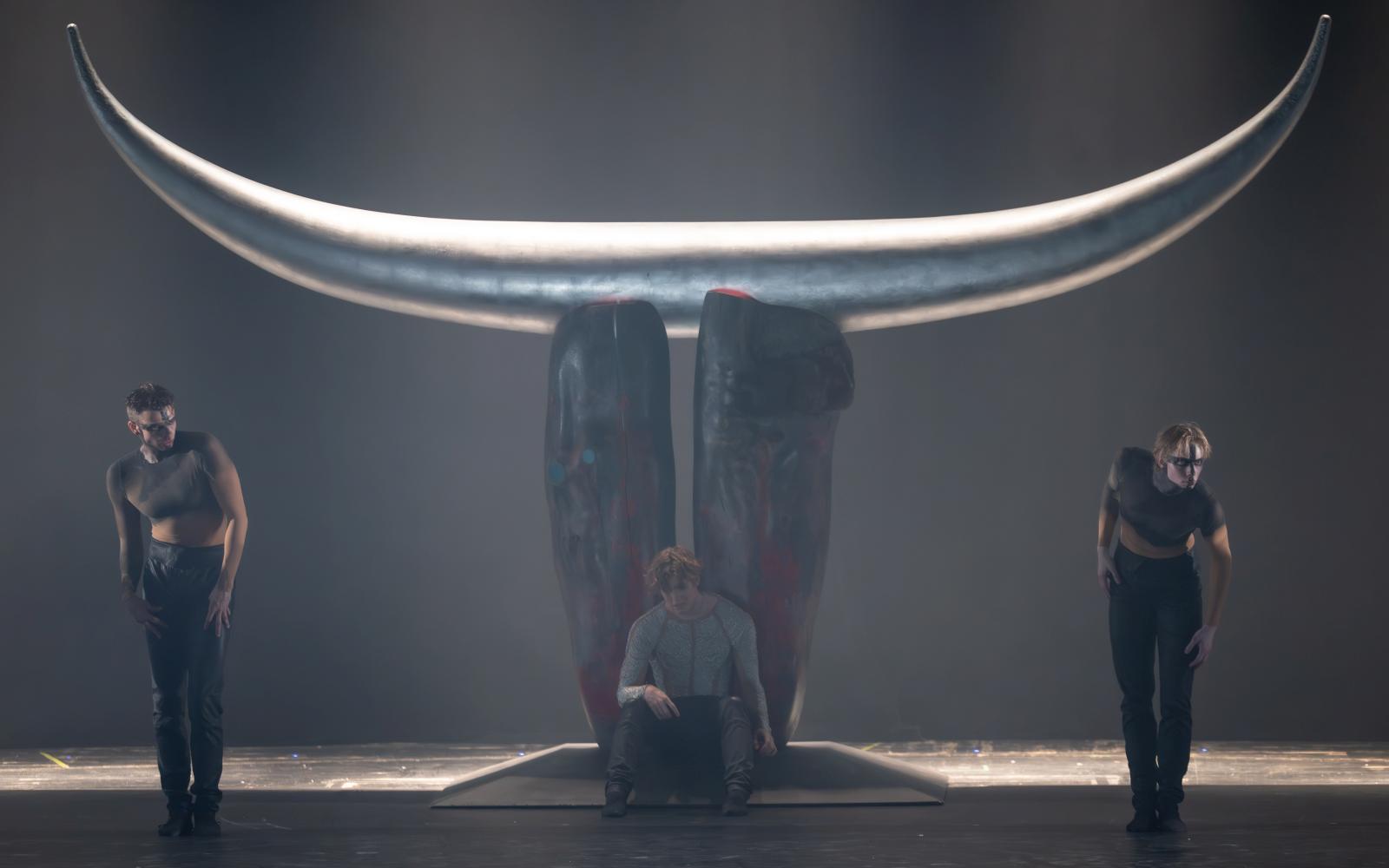
1. D.Potaptsev (Minotaur) and ensemble, “Minotaur” by P.De Bana, MuzArts 2026 © MuzArts/A.StepanovIn mid-June, Moscow’s production company MuzArts premiered the double bill Elláda at the Maly Theatre. Moscow’s local press called MuzArts’ director, Yuri Baranov, “Russia’s current top ballet producer with an excellent grasp on the global ballet scene who knows how to create ideas, discover and recruit talent, and attract sponsors,”—in short, a Diaghilev 2.0. So I was glad that MuzArts’ executive producer, Daria Faezova, sent video recordings of both performances. If a company is in the vanguard of a dance scene as vibrant as Russia’s, you won’t want to miss their productions. Continue reading “Torn Between Two”

Believe in Miracles

“The Nutcracker. Waiting for a Miracle”
Bolshoi Ballet
Bolshoi Theatre
Moscow, Russia
December 29, 2025 (documentary)

by Ilona Landgraf
Copyright © 2026 by Ilona Landgraf

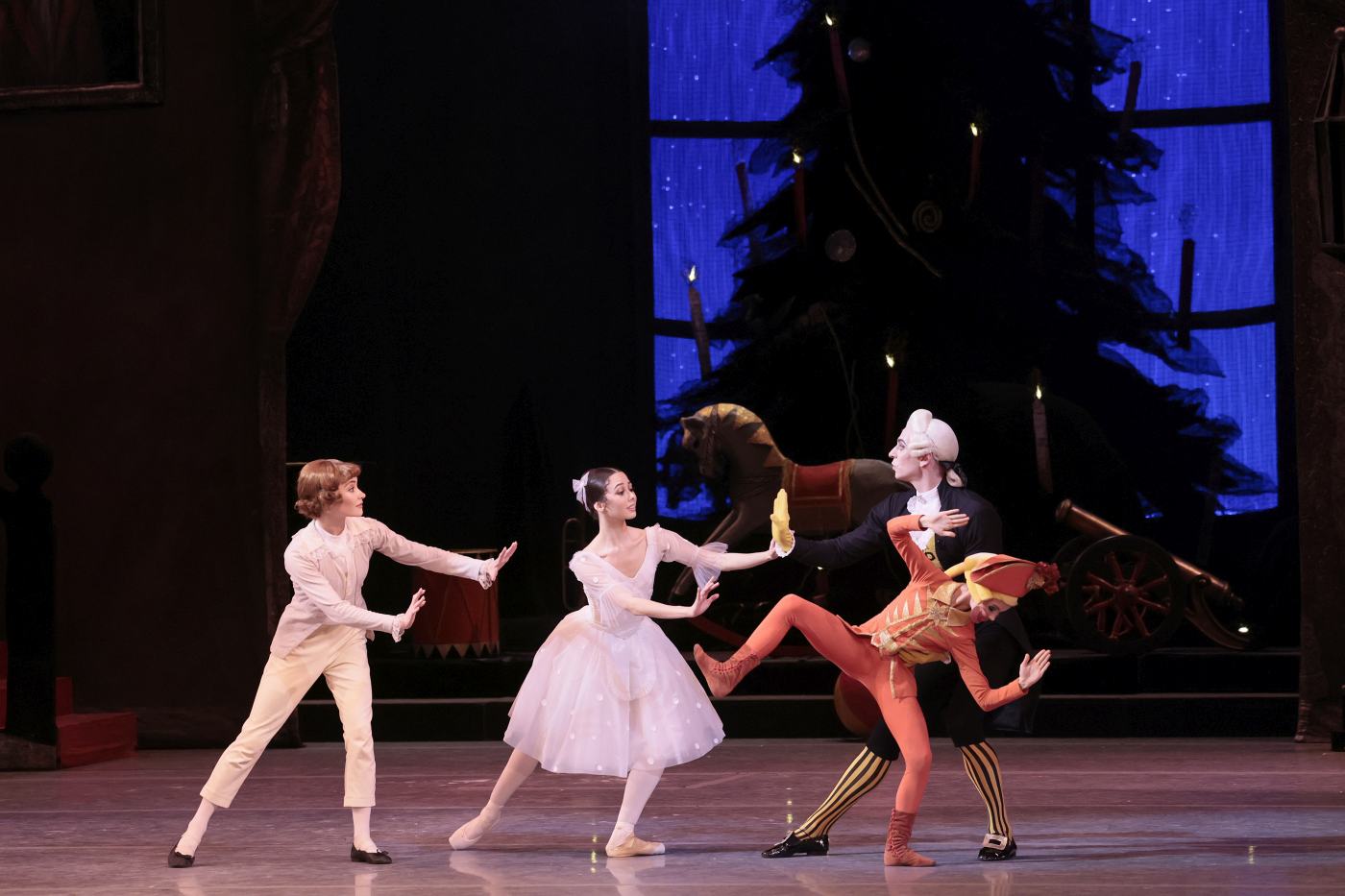
1. E.Kokoreva (Marie), D.Savin (Drosselmeier), and ensemble, “The Nutcracker” by Y.Grigorovich, Bolshoi Ballet 2025 © Bolshoi Theatre/D.YusupovOf the many special moments in Yuri Grigorovich’s The Nutcracker, there’s one you shouldn’t miss: when the Christmas tree is growing, and Marie’s transformation takes place. Then you need to make a wish. At least, that’s the insiders’ tip from the Bolshoi Ballet’s artists involved in the production.

Grigorovich’s The Nutcracker premiered at the Bolshoi Theatre in 1966 and was performed for the eight hundredth time earlier in December. Perhaps that’s why the Russian Channel One broadcast a one-hour documentary about The Nutcracker at the end of December. The film outlines the plot, provides insight into the music, set, and costumes, and looks at sixty years of performance history, during which nothing changed. Numerous coaches and ballet masters guarantee that Grigorovich’s legacy is preserved and kept alive. Continue reading “Believe in Miracles”

Lasting Icons

“Two Annas” (“Akhmatova”/”Pavlova”)
MuzArts
Tovstonogov Bolshoi Drama Theatre
St. Petersburg, Russia
December 2025 (video)

by Ilona Landgraf
Copyright © 2025 by Ilona Landgraf

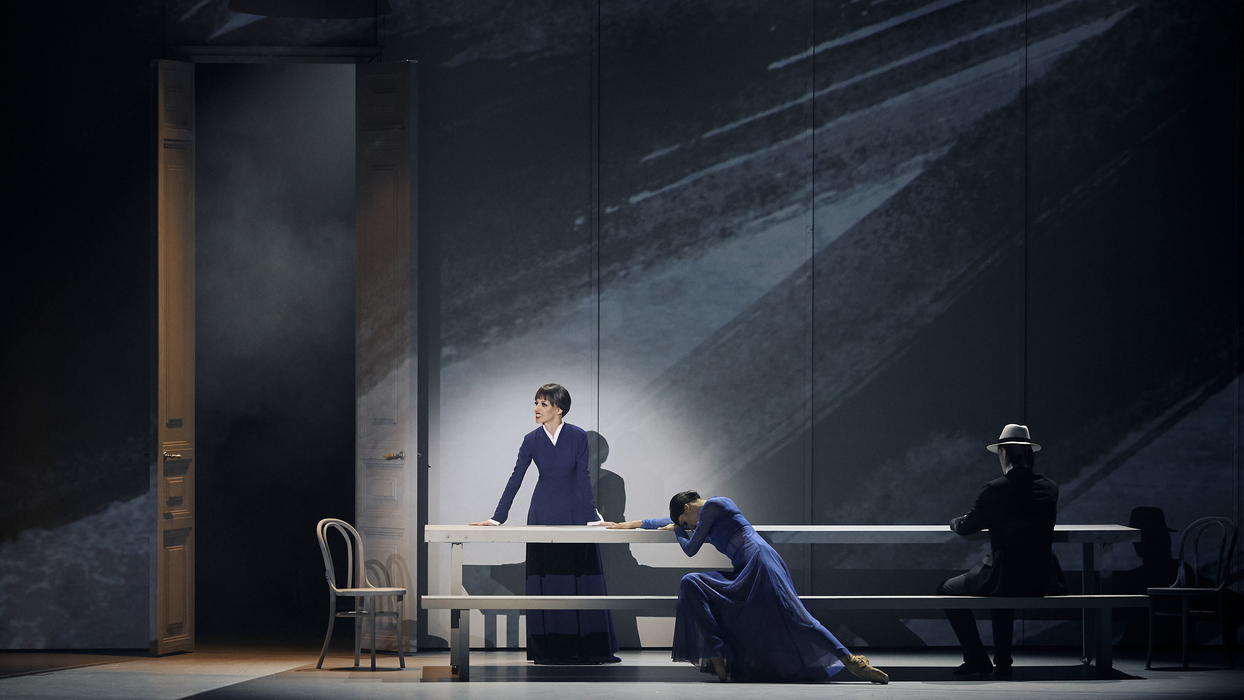
 1. P.Malikova (Anna Akhmatova), E.Sevenard (Anna Akhmatova), and D.Potaptsev (Nikolai Gumilev), “Akhmatova” by Y.Possokhov, MuzArts 2025 © Diaghilev P.S. Festival/M.Vilchuk The production company MuzArts, founded in 2014 to showcase the Bolshoi Ballet’s prima ballerina, Svetlana Zakharova, has grown into a vital force of Russia’s ballet scene. Their recent production, Two Annas, was supported by the Diaghilev P.S. International Festival of Arts, a prominent, intercultural, cross-genre event that has been held in St. Petersburg since 2009. Two Annas premiered at St. Petersburg’s Tovstonogov Bolshoi Drama Theatre this February and received its Moscow premiere at the Maly Theatre. Thanks to the MuzArts’s director, Yuri Baranov, I was able to watch a video of the production. Continue reading “Lasting Icons”

TV Talent Scouts

“Ազգային պարեր” (National Dances), Shant TV, Armenia
“Большой Балет” (Bolshoi Ballet), Rossiya-Kultura TV, Russia
May 2024

by Ilona Landgraf
Copyright © 2024 by Ilona Landgraf

1. S.Matevosyan (host), A.Haxverdyan, L.Hakobyan, M.Mkhitaryan, G.Karapetyan (jury), A.Julhakyan (jury), A.Davtyan (Shant TV), H.Ghukasyan (director and producer), S.Mikayelyan (jury), T.Mnoyan (jury), A.Khangeldyan, S.Margaryan, M.Babayan, S.Barseghyan (host); “Ազգային պարեր” (National Dances), Shant TV, Armenia © Shant TVWhile German TV programs rarely promote the art of dance, dance is part and parcel of media abroad. The sequels of two dance competitions—Ազգային պարեր (Azgayin Parer/National Dances) on Shant TV, Armenia, and Большой Балет (Bolshoi Ballet) on Rossiya-Kultura TV, Russia—were broadcast recently. Both competitions are textbook examples of how to foster talent while simultaneously nourishing and cherishing dance culture.

Folk dance is a pillar of Armenia’s culture, and the Armenian State Barekamutyun Dance Ensemble has presented it professionally since 1987. Its founder and artistic adviser, Norayr Mehrabyan, is the father of Arsen Mehrabyan, who made his career on Western ballet stages. Shant TV’s first run of a folk dance competition reinforces the status of national dance. Continue reading “TV Talent Scouts”

Intense

“Romeo and Juliet”
Bolshoi Ballet
Bolshoi Theatre (Historic Stage)
Moscow, Russia
April 04, 2024 (video)

by Ilona Landgraf
Copyright © 2024 by Ilona Landgraf

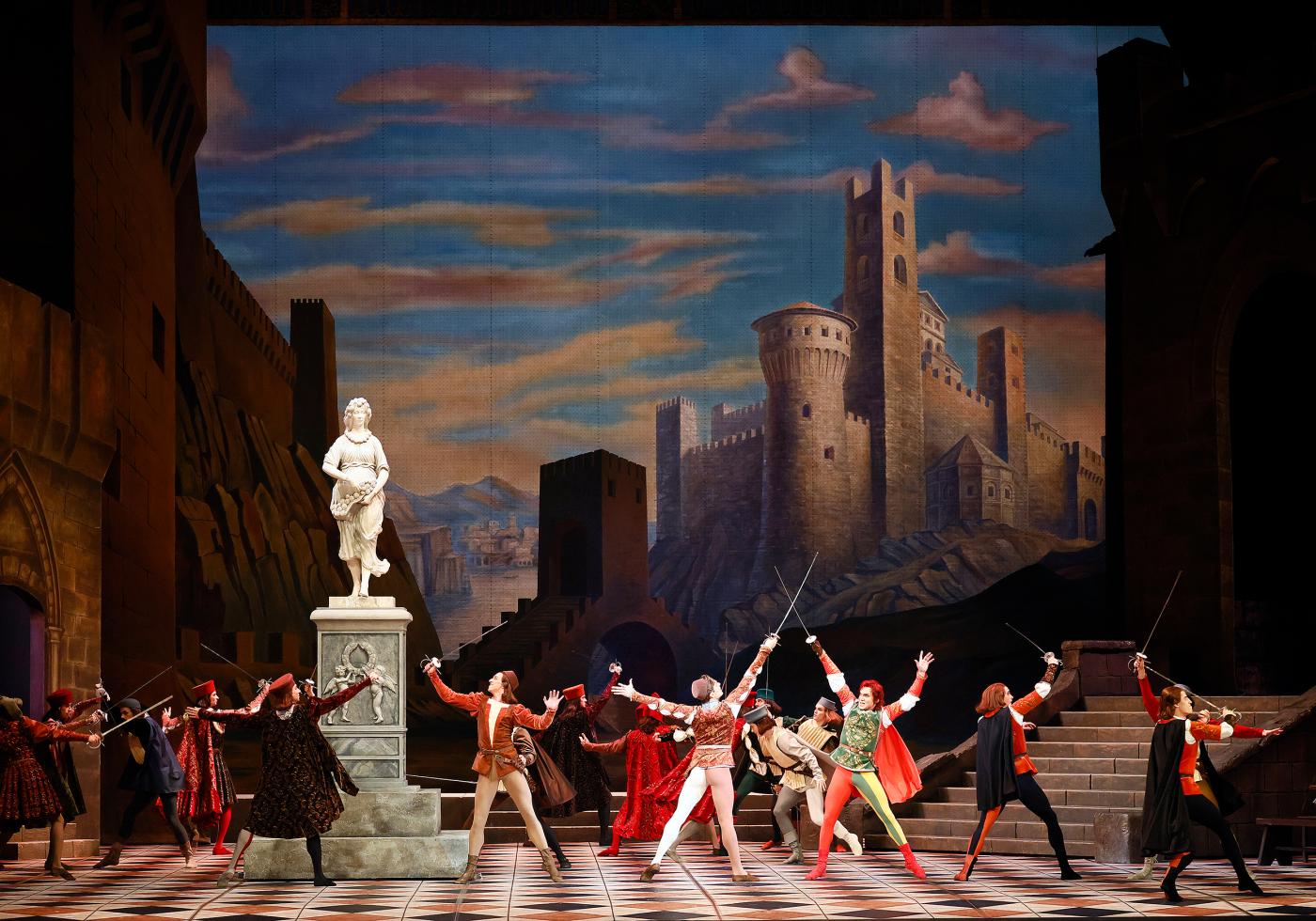
1. D.Efremov (Montague's Servant), I.Alexeyev (Benvolio), M.Lobukhin (Tybalt), and ensemble; “Romeo and Juliet” by L.Lavrovsky, Bolshoi Ballet 2024 © Bolshoi Ballet / D.YusupovIn early April, the Bolshoi Ballet revived Leonid Lavrovsky’s Romeo and Juliet, which senior balletomanes may remember from the company’s famous tours of London and the Met in the 1950s and ‘60s. Galina Ulanova, Raisa Strutchkova, Vladimir Vasiliev, Maris Liepa, and many others wrote ballet history dancing the leading roles. I couldn’t attend the premiere in Moscow but was finally able to watch a video of the opening night. It made me wonder why the production had been dropped from the schedule. Continue reading “Intense”