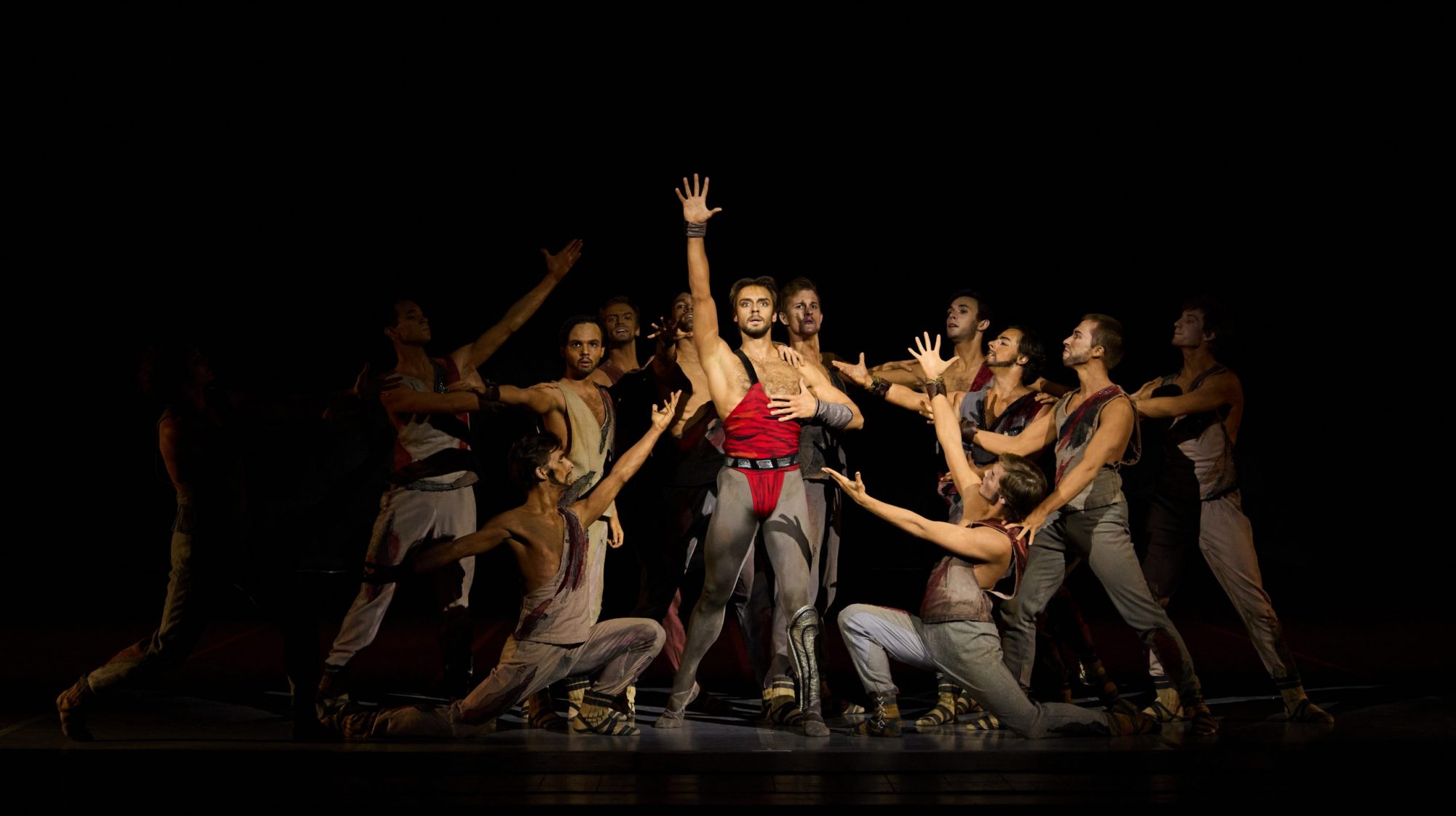
“A Splendor for the Eyes”

“The Sleeping Beauty”
The Australian Ballet
Sydney Opera House/Joan Sutherland Theatre
Sydney, Australia
December 16, 2025 (live stream)

by Ilona Landgraf
Copyright © 2025 by Ilona Landgraf
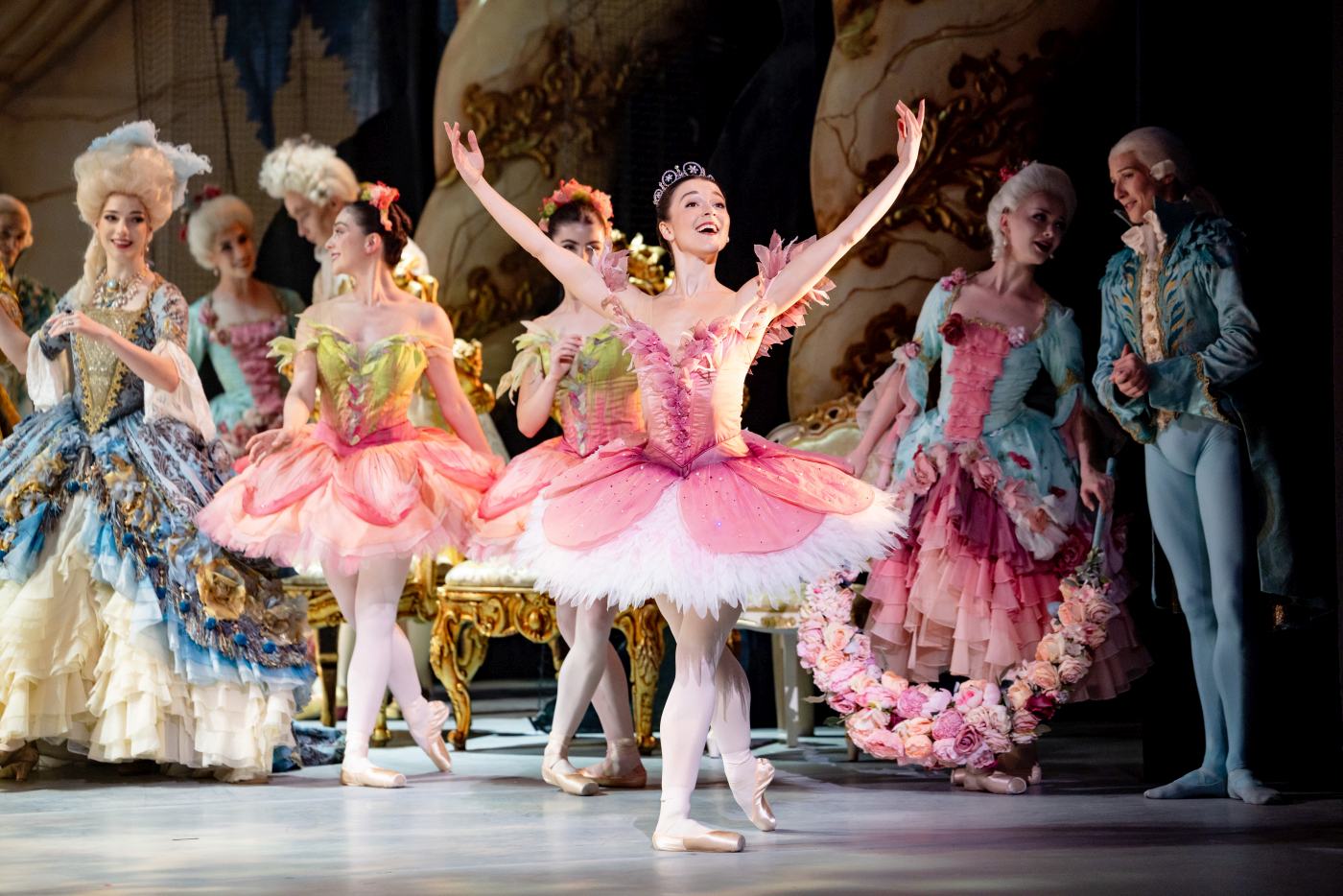
1. B.Bemet (Princess Aurora) and ensemble, “The Sleeping Beauty” by D.McAllister after M.Petipa, The Australian Ballet 2025 © D.Boud According to the Australian Ballet’s artistic director, David Hallberg, The Sleeping Beauty is “a splendor for the eyes.” The production, which originated ten years ago under the directorship of Hallberg’s predecessor, David McAllister (who also contributed choreography based on Petipa’s original), is more; it is food for the soul.

As if zooming in on the painting of a distant palace projected on the curtain, the first scene showed the royal writing cabinet, where the whimsical Catalabutte (Jarryd Madden) omitted Carabosse from the list of invitees to Princess Aurora’s christening party. The curve of the painting’s frame recurred in the shape of the banisters that led down to the royal hall. Jon Buswell’s lighting increased the impression of paintings in motion. Continue reading ““A Splendor for the Eyes””

Other than Bright

“Four Temperaments” (“The Four Temperaments” / “The Chairman Dances” / “Frank Bridge Variations” / Full Frontal” / extra: “After the Rain”)

Dutch National Ballet
Dutch National Opera & Ballet
Amsterdam, The Netherlands
September 17, 2023 (matinee)

by Ilona Landgraf
Copyright © 2023 by Ilona Landgraf

1. F.Eimers and J.Spunda, “The Four Temperaments” by G.Balanchine, Dutch National Ballet 2023 © M.Haegeman 2. J.Xuan and D.Ramos, “The Four Temperaments” by G.Balanchine, Dutch National Ballet 2023 © M.Haegeman 3. M.Makhateli and V.Caixeta, “The Four Temperaments” by G.Balanchine, Dutch National Ballet 2023 © M.Haegeman It’s unclear whether the Dutch National Ballet’s new mixed bill “Four Temperaments” took its title from one of the pieces – George Balanchine’s “The Four Temperaments” – or alludes to the different personalities of all choreographers involved. Next to Balanchine are the company’s artistic director Ted Brandsen, doyen Hans van Manen, and the Spaniard Juanjo Arqués, a regular contributor to the repertory. Let’s disclose later, why Christopher Wheeldon’s “After the Rain” was added as an extra to the matinee.

Balanchine’s “The Four Temperaments” relates to the Hippocratic medical concept of humourism that four bodily fluids (blood, yellow bile, black bile, and mucus) affect human personality traits and behaviors. Depending on which fluid dominates, an individual is melancholic, sanguine, phlegmatic, or choleric. For what would become his first piece for Ballet Society (the predecessor of New York City Ballet) in 1946, Balanchine commissioned a half-hour score by Paul Hindemith. Continue reading “Other than Bright”