It Is What It Is

“Nijinsky”
Vienna State Ballet
Vienna State Opera
Vienna, Austria
October 20, 2026 (live stream)

by Ilona Landgraf
Copyright © 2026 by Ilona Landgraf

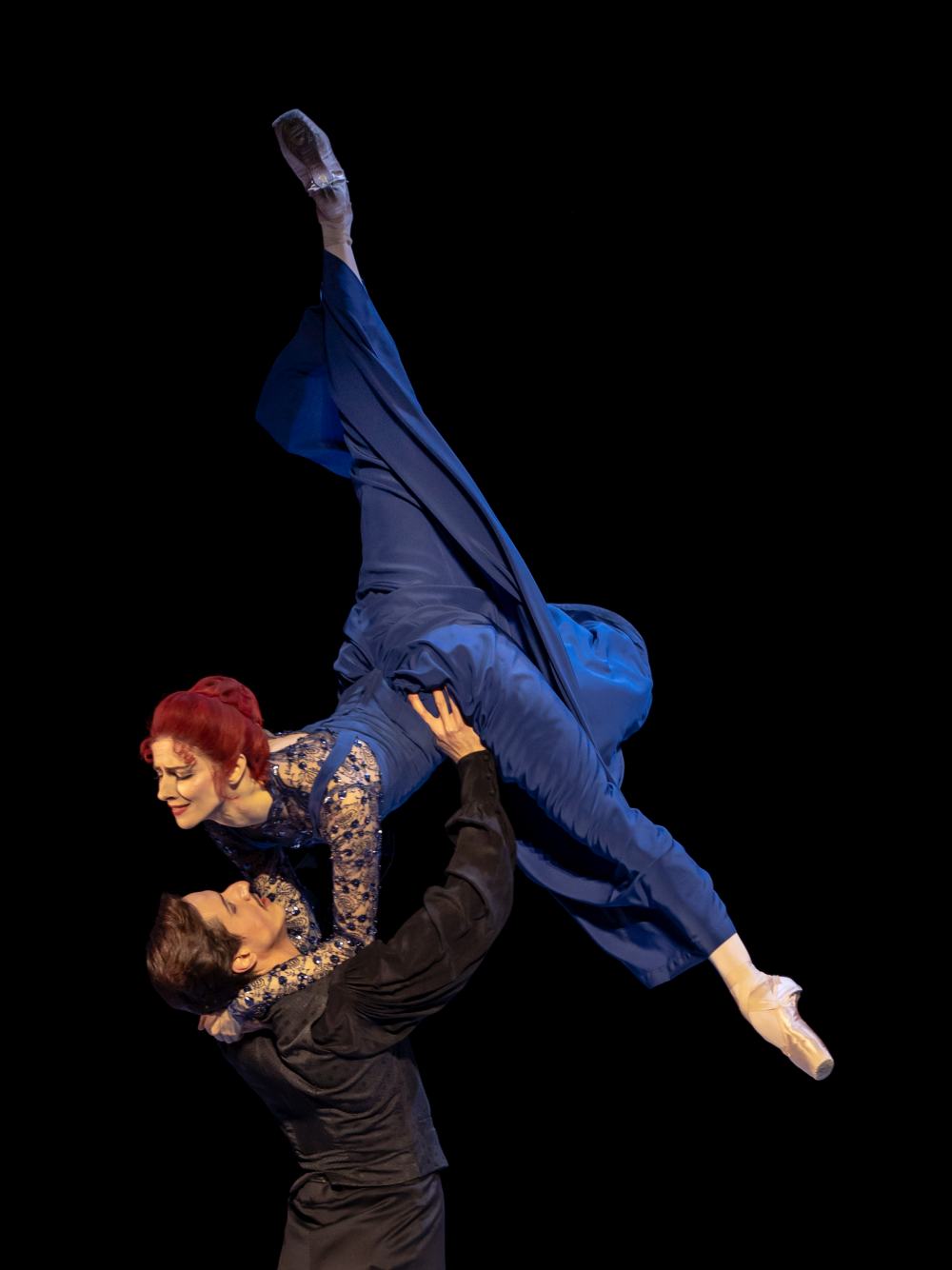
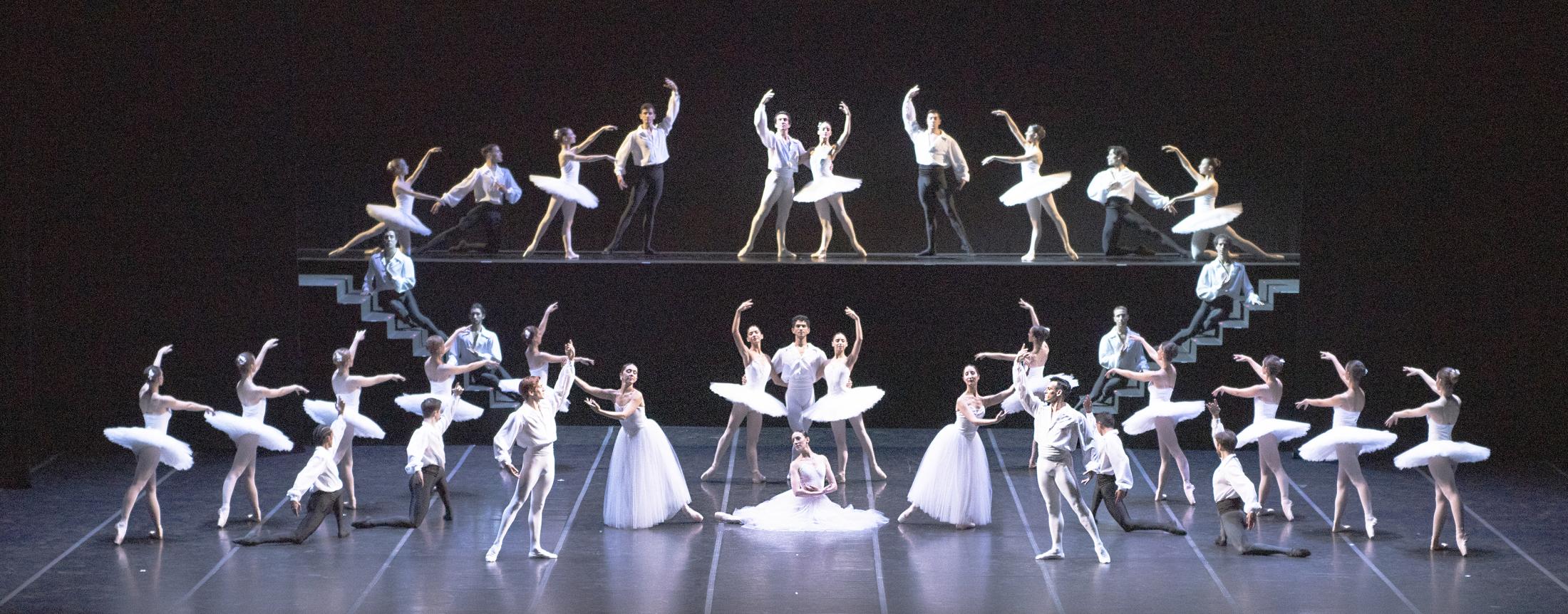
1. A.Frola (Vaslav Nijinsky) and ensemble, “Nijinsky” by J.Neumeier, Vienna State Ballet 2026 © Vienna State Ballet/A.Taylor The insight I gained from the Vienna State Ballet’s premiere of Nijinsky hit me at the curtain call when choreographer John Neumeier took his bow. He looks back on an oeuvre of more than 180 pieces, and though his foundation’s website announces a new choreography for 2027, his career is nearing its end. He held on past his prime and missed the right time to hand over his company. On stage, another career was over: Nijinsky’s. But he certainly hadn’t yet realized his full potential.
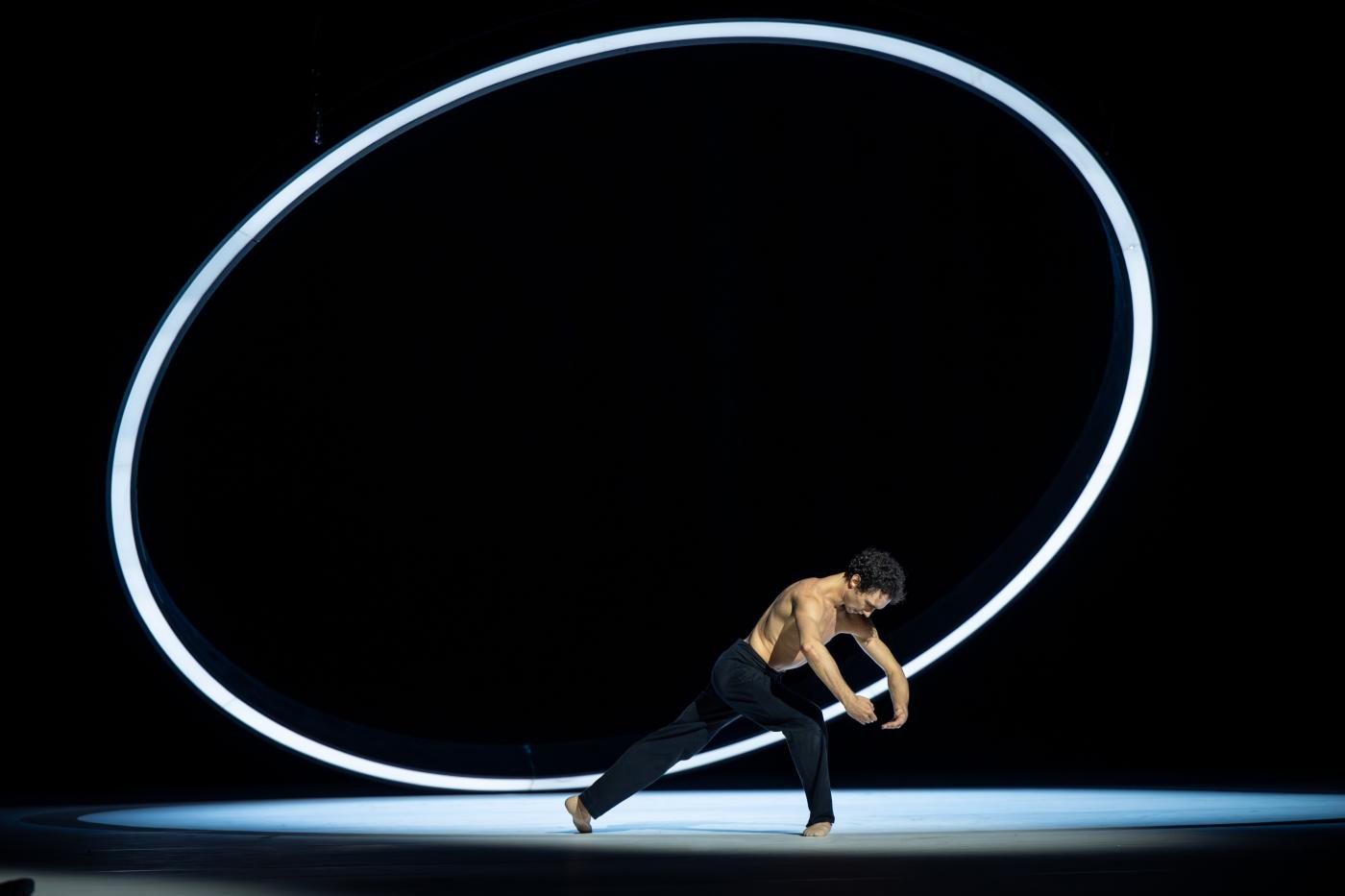
 

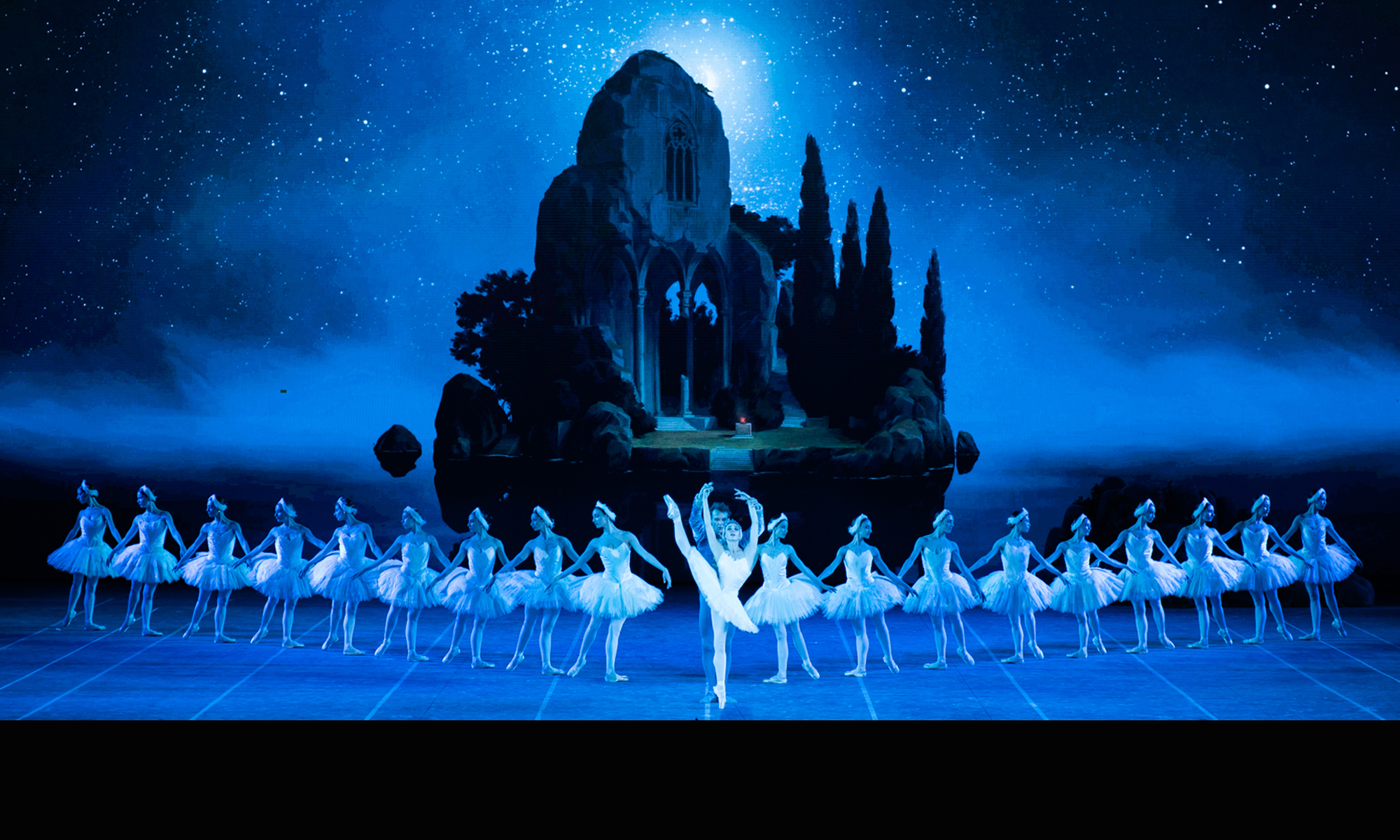
3. A.Frola (Vaslav Nijinsky), “Nijinsky” by J.Neumeier, Vienna State Ballet 2026 © Vienna State Ballet/A.Taylor2. A.Frola (Vaslav Nijinsky) and ensemble, “Nijinsky” by J.Neumeier, Vienna State Ballet 2026 © Vienna State Ballet/A.Taylor I saw Nijinsky several times in 2009 and 2011, always danced by Neumeier’s home company, The Hamburg Ballet, and each time Nijinsky’s misery preoccupied me. What was the final straw that shattered his mental health? That both his wife, Romola, and Diaghilev used him? The brutality of World War I? The untimely death of his older brother, Stanislav? Although Nijinsky does not show the hero’s stay at the sanatorium, I wondered what harm the high insulin doses he received there might have done to him.

4. A.Frola (Vaslav Nijinsky) and M.Young (Tamara Karsavina), “Nijinsky” by J.Neumeier, Vienna State Ballet 2026 © Vienna State Ballet/A.Taylor5. V.Caixeta (Faun), “Nijinsky” by J.Neumeier, Vienna State Ballet 2026 © Vienna State Ballet/A.Taylor6. D.Dato (Spirit of the Rose), “Nijinsky” by J.Neumeier, Vienna State Ballet 2026 © Vienna State Ballet/A.Taylor Fifteen years later at the premiere in Vienna, these questions have become secondary. To ruminate on the wherefore of Nijinsky’s sad fate is pointless. Nothing can be fixed anyway. And when watching the eighty-seven-year-old Neumeier, visibly touched and gratefully acknowledging the applause, I recognized that the same applies to Neumeier. He has done his best. The time for changes is over.

8. A.Frola (Vaslav Nijinsky), O.Esina (Eleonore Bereda, Vaslav’s mother), A.Casalinho (Stanislav Nijinsky), and I.Avraam (Bronislava Nijinska); “Nijinsky” by J.Neumeier, Vienna State Ballet 2026 © Vienna State Ballet/A.Taylor7. A.Frola (Vaslav Nijinsky), O.Esina (Eleonore Bereda, Vaslav’s mother), and ensemble, “Nijinsky” by J.Neumeier, Vienna State Ballet 2026 © Vienna State Ballet/A.TaylorNijinsky (2000) is one of his strong pieces. It recaps key moments of Nijinsky’s career in a flashback that lasts from the first bars of his 1919 farewell performance at the Suvretta House, St. Moritz, to its last. He remembers his famous roles and choreographies—L’Après-midi d’un faun, Jeux, Le Sacre du Printemps, and Till Eulenspiegel—the blossoming romance with Romola and her later betrayal, the romantic and professional entanglement with Diaghilev, his brother’s fatal decline, and the relentless approach of a crushing war. Countless associations and thoughts run through his mind, which Neumeier merged into two cleverly constructed acts.

9. A.Frola (Vaslav Nijinsky) and ensemble, “Nijinsky” by J.Neumeier, Vienna State Ballet 2026 © Vienna State Ballet/A.Taylor 10. K.Papava (Romola Nijinska), V.Caixeta (Faun), A.Frola (Vaslav Nijinsky), and M.Kimoto (Doctor Frenkel); “Nijinsky” by J.Neumeier, Vienna State Ballet 2026 © Vienna State Ballet/A.TaylorBack in 2000, he drew on a broader choreographic palette that allowed fascinating characterizations: Nijinsky’s Marriage to God solo, for example, his and Romola’s sultry encounter on a ship to South America, and Diaghilev’s power plays in which seduction and repulsion alternated at whim. I was mesmerized by the Golden Slave’s sensuality, suffered with Petrushka, and shared Nijinsky’s horror at Stanislav losing his mind. But being familiar with the works that followed Nijinsky and the movements and poses Neumeier increasingly used until they became hackneyed is a red rag to me. It’s like spoiling a fine menu with a stale ingredient.

12. L.Seidel (Léonide Massine), E.Peci (Sergey Diaghilev) and A.Frola (Vaslav Nijinsky), “Nijinsky” by J.Neumeier, Vienna State Ballet 2026 © Vienna State Ballet/A.Taylor11. E.Peci (Sergey Diaghilev) and A.Frola (Vaslav Nijinsky), “Nijinsky” by J.Neumeier, Vienna State Ballet 2026 © Vienna State Ballet/A.TaylorCompared with Hamburg Ballet’s doyen, Alexandre Riabko, who frequently danced the title role and set the standard high, Alessandro Frola’s performance in Vienna was impressive. A former principal of Hamburg Ballet, Frola has grown tremendously since he joined the Vienna State Ballet one year ago. Also, Ketevan Papava’s stony-faced Romola was convincing. Nijinsky’s erotically charged roles enamored her more than the man himself, but she deserves credit for taking care of him when his psyche cracked. (Let’s disregard that she later neglected him for years while pursuing her ambitions in the U.S.) Why she would cuckold Nijinsky with the aloof Doctor Frenkel of all people (Masayu Kimoto) was incomprehensible to me.

13. A.Frola (Vaslav Nijinsky) and ensemble, “Nijinsky” by J.Neumeier, Vienna State Ballet 2026 © Vienna State Ballet/A.Taylor14. A.Casalinho (Stanislav Nijinsky), “Nijinsky” by J.Neumeier, Vienna State Ballet 2026 © Vienna State Ballet/A.TaylorIonna Avraam portrayed Nijinsky’s sister, Bronislava (Avraam’s sculpted features made her a perfect cast). Tamara Karsavina (Madison Young) joined her in the dance scenes of Nijinsky’s choreographies and Bronislava’s Les Noces. Karsavina also appeared as the sylph, reminding Nijinsky of his role as the poet. Davide Dato crossed his mind as the Harlequin and the Spirit of the Rose, and Rinaldo Venuti scampered as the tragic Petrushka (but couldn’t match his Hamburg colleagues, Ivan Urban and Lloyd Riggins). Jerking as if electrocuted, António Casalinho’s Stanislav died a terrible death.

16. A.Frola (Vaslav Nijinsky), “Nijinsky” by J.Neumeier, Vienna State Ballet 2026 © Vienna State Ballet/A.Taylor15. K.Papava (Romola Nijinska) and A.Frola (Vaslav Nijinsky), “Nijinsky” by J.Neumeier, Vienna State Ballet 2026 © Vienna State Ballet/A.TaylorThe impenetrable facade and rigidity of Eno Peci’s thin-lipped Diaghilev made it hard to believe that Nijinsky—and later Massine (Laurids Seidel)—gave in to his sexual desires voluntarily. Victor Caixeta’s Faun convinced, but the way his Golden Slave switched between eye-dazzling speed and sensual wriggles looked calculated and lacked the eroticism that Hamburg’s Otto Bubeníček oozed.

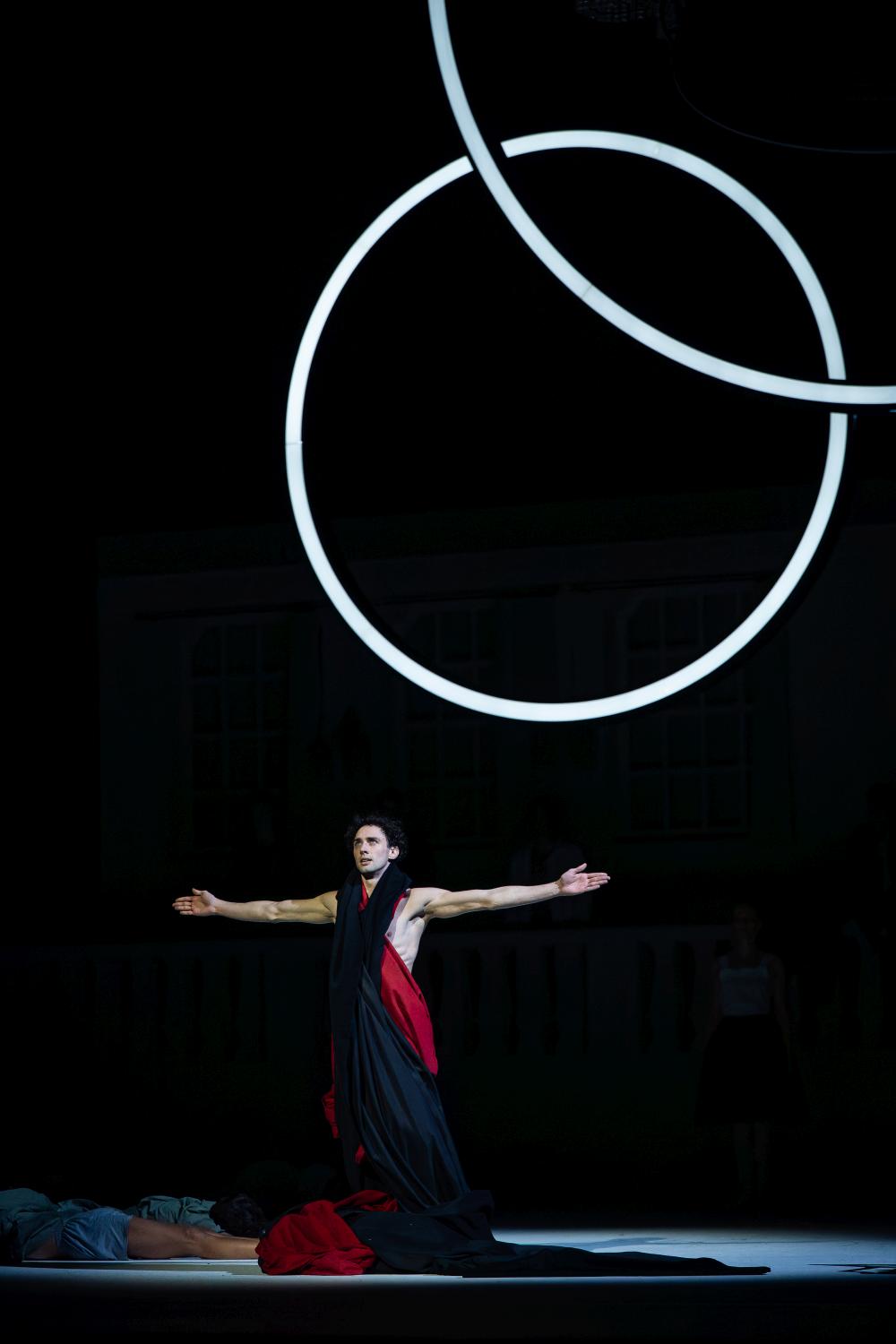
17. R.Venuti (Petrushka), “Nijinsky” by J.Neumeier, Vienna State Ballet 2026 © Vienna State Ballet/A.Taylor 18. A.Frola (Vaslav Nijinsky), “Nijinsky” by J.Neumeier, Vienna State Ballet 2026 © Vienna State Ballet/A.Taylor


The pretentious posturing of the Suvretta House’s audience reminded me of modern-day realities. Nijinsky is, in fact, highly topical. War today feels as close as then, and Nijinsky’s empty glance made me think of a shop owner in last week’s riot-battered Paris. He hunkered on the doorstep of his demolished shop with exactly the same look.


Links: Website of the Vienna State Ballet
Introductory matinée
Nijinsky—rehearsals
Nijinsky—trailer
Photos: 1. Alessandro Frola (Vaslav Nijinsky) and ensemble, “Nijinsky” by John Neumeier, Vienna State Ballet 2026
2. Alessandro Frola (Vaslav Nijinsky) and ensemble, “Nijinsky” by John Neumeier, Vienna State Ballet 2026
3. Alessandro Frola (Vaslav Nijinsky), “Nijinsky” by John Neumeier, Vienna State Ballet 2026
4. Alessandro Frola (Vaslav Nijinsky) and Madison Young (Tamara Karsavina), “Nijinsky” by John Neumeier, Vienna State Ballet 2026
5. Victor Caixeta (Faun), “Nijinsky” by John Neumeier, Vienna State Ballet 2026
6. Davide Dato (Spirit of the Rose), “Nijinsky” by John Neumeier, Vienna State Ballet 2026
7. Alessandro Frola (Vaslav Nijinsky), Olga Esina (Eleonore Bereda, Vaslav’s mother), and ensemble, “Nijinsky” by John Neumeier, Vienna State Ballet 2026
8. Alessandro Frola (Vaslav Nijinsky), Olga Esina (Eleonore Bereda, Vaslav’s mother), António Casalinho (Stanislav Nijinsky), and Ionna Avraam (Bronislava Nijinska); “Nijinsky” by John Neumeier, Vienna State Ballet 2026
9. Alessandro Frola (Vaslav Nijinsky) and ensemble, “Nijinsky” by John Neumeier, Vienna State Ballet 2026
10. Ketevan Papava (Romola Nijinska), Victor Caixeta (Faun), Alessandro Frola (Vaslav Nijinsky), and Masayu Kimoto (Doctor Frenkel); “Nijinsky” by John Neumeier, Vienna State Ballet 2026
11. Eno Peci (Sergey Diaghilev) and Alessandro Frola (Vaslav Nijinsky), “Nijinsky” by John Neumeier, Vienna State Ballet 2026
12. Laurids Seidel (Léonide Massine), Eno Peci (Sergey Diaghilev) and Alessandro Frola (Vaslav Nijinsky), “Nijinsky” by John Neumeier, Vienna State Ballet 2026
13. Alessandro Frola (Vaslav Nijinsky) and ensemble, “Nijinsky” by John Neumeier, Vienna State Ballet 2026
14. António Casalinho (Stanislav Nijinsky), “Nijinsky” by John Neumeier, Vienna State Ballet 2026
15. Ketevan Papava (Romola Nijinska) and Alessandro Frola (Vaslav Nijinsky), “Nijinsky” by John Neumeier, Vienna State Ballet 2026
16. Alessandro Frola (Vaslav Nijinsky), “Nijinsky” by John Neumeier, Vienna State Ballet 2026
17. Rinaldo Venuti (Petrushka), “Nijinsky” by John Neumeier, Vienna State Ballet 2026
18. Alessandro Frola (Vaslav Nijinsky), “Nijinsky” by John Neumeier, Vienna State Ballet 2026
all photos © Vienna State Ballet/Ashley Taylor
Editing: Kayla Kauffman


Enlightening

“American Signatures”
Vienna State Ballet & Volksoper Wien
Volksoper Wien
Vienna, Austria
May 30, 2026

by Ilona Landgraf
Copyright © 2026 by Ilona Landgraf

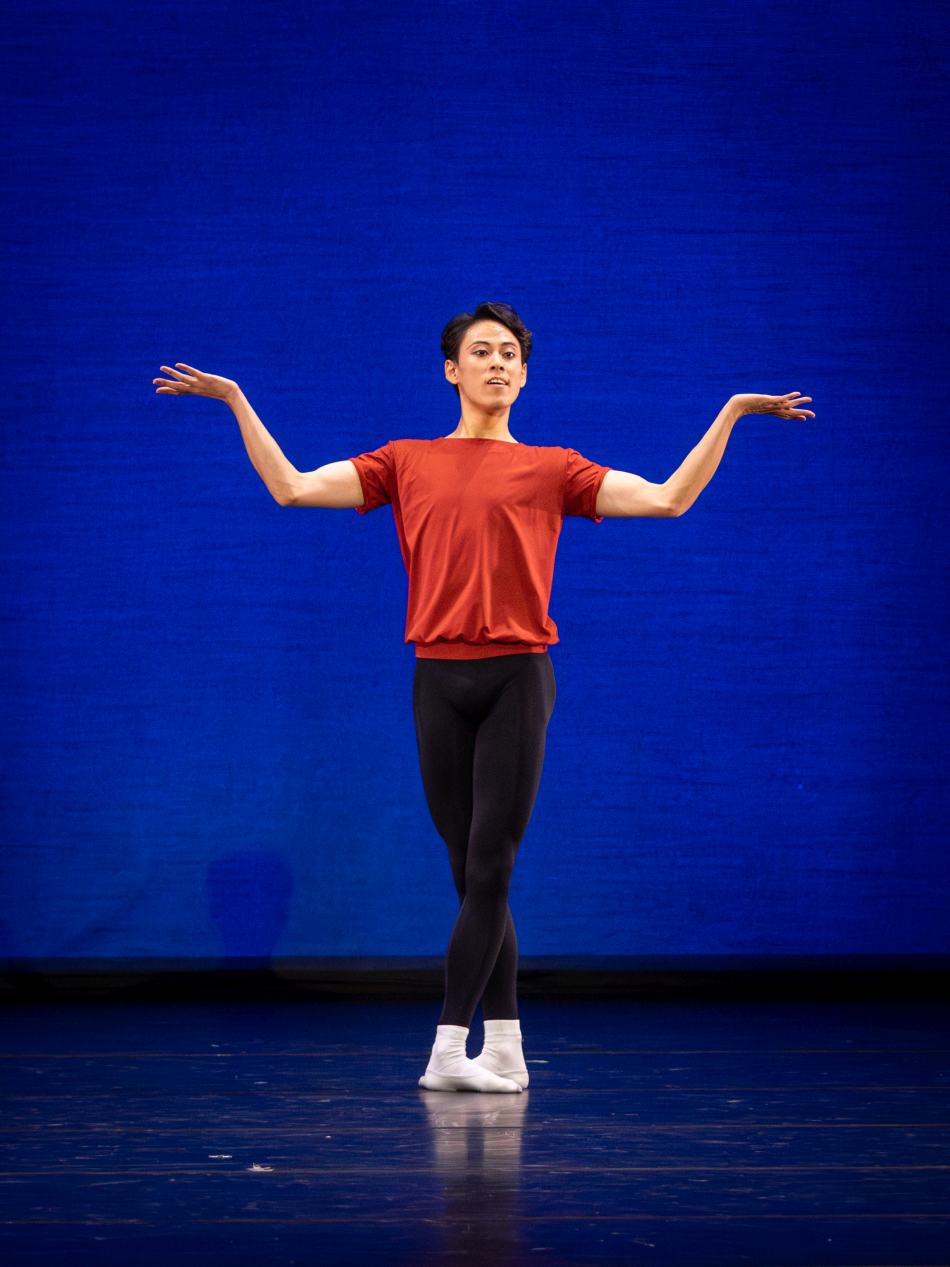
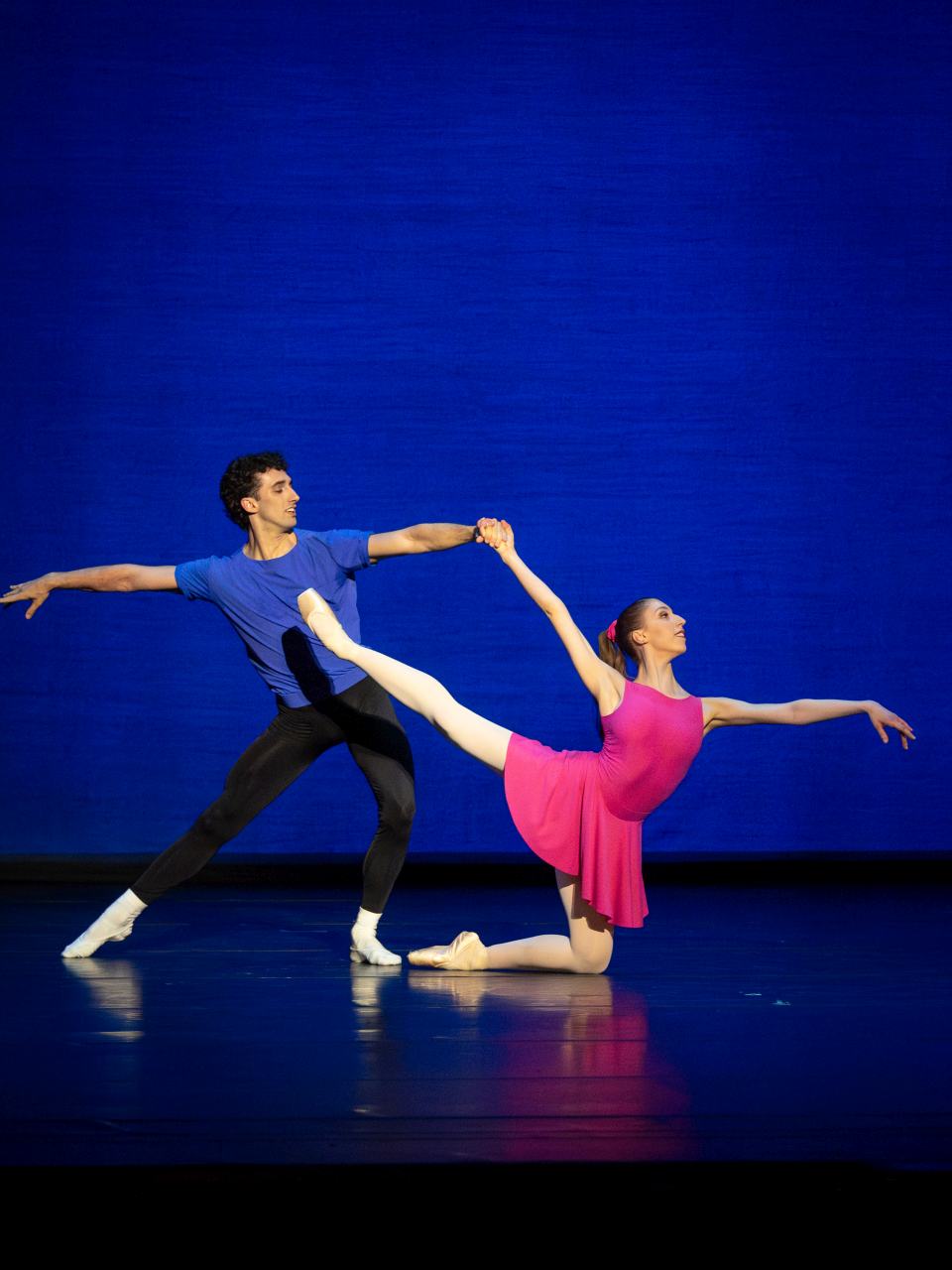
1. J.Nakamura, “Interplay” by J.Robbins, Vienna State Ballet 2026 © Vienna State Ballet/A.Taylor2. G.Aime and G.Fredianelli, “Interplay” by J.Robbins, Vienna State Ballet 2026 © Vienna State Ballet/A.Taylor Of the four American choreographers included in the Vienna State Ballet’s mixed bill, American Signatures, only Jerome Robbins is well known in mainland Europe. Works by Pam Tanowitz, Lar Lubovitch, and Jessica Lang are rarely staged. Hence, I was glad to see this season’s last performance.

Robbin’s Interplay premiered in autumn 1945, shortly after World War II, as the second choreography in his oeuvre. Absolutely nothing in the piece hints at war. Instead, its eight dancers (four women and four men) portray unburdened, fun-loving youth with contagious optimism and self-assurance. A backdrop as gloriously blue as a summer sky intensifies the bright colors of the men’s shirts (with which they wear black, skintight pants and white socks) and the girls’ short dresses. Of course, they wear ponytails. The American way of living that they represent reminds me of Continue reading “Enlightening”

Mockery

“Die Fledermaus” (“The Bat”)
Vienna State Ballet
Vienna State Opera
Vienna, Austria
November 21, 2025

by Ilona Landgraf
Copyright © 2025 by Ilona Landgraf

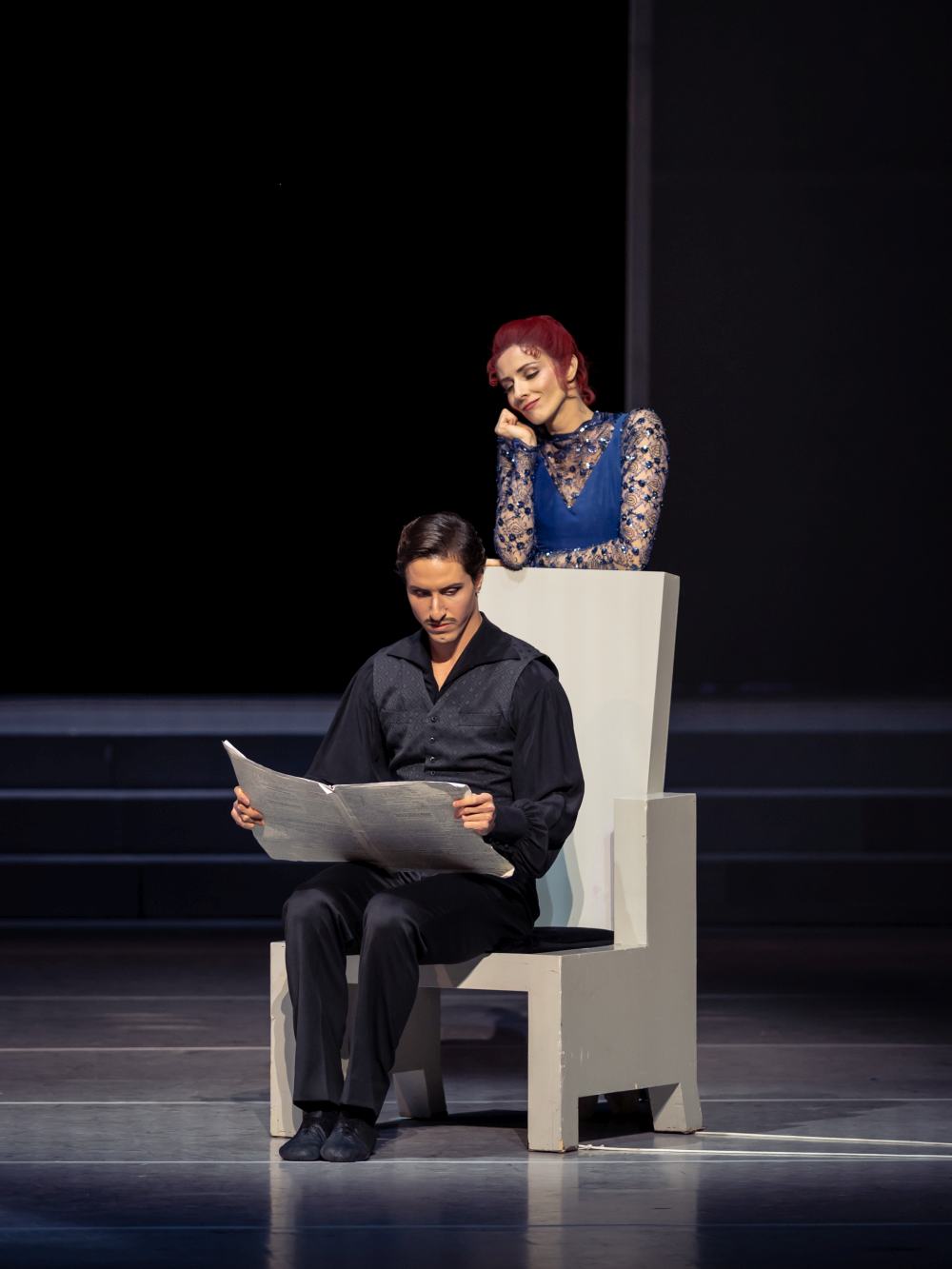
1. T.Afshar (Johann) and O.Esina (Bella), “Die Fledermaus” by R.Petit, Vienna State Ballet 2025 © Vienna State Ballet/A.Taylor2. T.Afshar (Johann) and O.Esina (Bella), “Die Fledermaus” by R.Petit, Vienna State Ballet 2025 © Vienna State Ballet/A.Taylor For Johann Strauss II’s bicentennial, the Vienna State Ballet revived Roland Petit’s 1979 ballet adaptation of Strauss’s famous operetta, Die Fledermaus (The Bat). It’s accompanied by a “best of” selection of compositions by Johann Strauss II, his father, Johann Strauss I, and his brother, Josef. The score’s oomph and gaiety are infectious. Strauss’ music, particularly the Viennese waltzes (of which Die Fledermaus has plenty), is part of the DNA of the Vienna State Opera’s orchestra, and under Luciano Di Martino’s baton, it fizzed like champagne. Melodies rose boisterously to a tipping point, balanced provocatively on the edge, and rippled down with relish as if on a rollercoaster ride. Continue reading “Mockery”

A Farewell Triplet

“Pathétique” (“Divertimento No. 15”/“Summerspace”/“Pathétique”)
Vienna State Ballet
Vienna State Opera
Vienna, Austria
April 09, 2025 (live stream)

by Ilona Landgraf
Copyright © 2025 by Ilona Landgraf

1. Ensemble, “Divertimento No. 15” by G.Balanchine © George Balanchine Trust, Vienna State Ballet 2025 © Vienna State Ballet/A.TaylorTriple bills have become a trademark of the Vienna State Ballet since Martin Schläpfer took over as artistic director in 2020. The latest, Pathétique, is titled after Schläpfer’s newest and last creation. As on previous occasions, the program’s safe and well-tested base was a Balanchine followed by Cunningham’s Summerspace. Continue reading “A Farewell Triplet”

Rekindled

“Shifting Symmetries” (“Concertante”/”Brahms-Schoenberg Quartet”)
Vienna State Ballet
Vienna State Opera
Vienna, Austria
December 23, 2023, (online: December 27, 2023)

by Ilona Landgraf
Copyright © 2024 by Ilona Landgraf

1. Ensemble, “Concertante” by H.van Manen, Vienna State Ballet 2023 © Vienna State Ballet/A.Taylor The Vienna State Ballet’s newest triple bill combines pieces by Hans van Manen, William Forsythe, and George Balanchine. As Forsythe doesn’t allow video streaming of his works, his In the Middle, Somewhat Elevated wasn’t part of the online broadcast on December 27th (which showed a recording of the premiere on December 23rd).
I’ve often been unhappy about the Viennese performances, but what’s to expect when the choreographies given to them are mediocre? This time though, a meaty dance-diet was on the menu, and the company rose splendidly to the occasion.

Concertante (1994) has the punchy elegance that van Manen is known for. It’s sophisticated (but without frills) and so densely energetic that my eyes stayed glued on the dancers. Van Manen doesn’t choreograph pretty steps. His dancers prance cooly and strongly, throw challenging glances, and are forcefully present on stage. Continue reading “Rekindled”

More, Please!

“Suite en blanc” / “Windgames”
Ballet Estable del Teatro Colón
Teatro Colón
Buenos Aires, Argentina
August 06, 2023 (livestream)

by Ilona Landgraf
Copyright © 2023 by Ilona Landgraf

1. Ensemble, “Suite en blanc” by S.Lifar, Ballet Estable del Teatro Colón 2023 © A.Colombaroli Recently, the Teatro Colón has expanded its online program which gives me hope to watch the company more often. This Sunday, the premiere of a new double bill was streamed live. It comprised Serge Lifar’s “Suite en blanc” (1943) and Patrick de Bana’s “Windgames” (2013). Continue reading “More, Please!”

A Gain

“Goldberg-Variationen” (“Tabula Rasa” / “Goldberg-Variationen”)
Vienna State Ballet
Vienna State Opera
Vienna, Austria
April 27, 2023 (livestream)

by Ilona Landgraf
Copyright © 2023 by Ilona Landgraf

1. A.Vandervelde, D.Dato, G.Fourés, and ensemble; “Goldberg-Variationen” by H.Spoerli, Vienna State Ballet 2023 © Vienna State Ballet / A.Taylor Since Martin Schläpfer took over the reins of the Vienna State Ballet in 2020, his pre-existing and new choreographies entered the company’s repertoire. Most of them I wouldn’t call assets. However, the most recent double bill is a gain. It combines Ohad Naharin’s “Tabula Rasa” (1986) and Heinz Spoerli’s “Goldberg-Variationen” (1993). Sadly, the livestream of the premiere began only after the break, omitting “Tabula Rasa”. Hence, I can only comment on “Goldberg-Variationen”.

I should have known better, but I was not prepared to read the name of Horst Koegler (1927 – 2012) in the piece description on the Vienna State Ballet’s website. It quotes Koegler who labeled “the Goldberg-Variationen as one of the works from Spoerli’s Bach ballet cathedral which describes people and life in a series of poetic, choreographed images and scenes (…)”. Koegler, one of Germany’s renowned ballet critics and the author of a book about Spoerli, was very well versed with the latter’s oeuvre. He loved “Goldberg-Variationen” – both Bach’s music and its interpretation through dance. Would he have liked Vienna’s one? Continue reading “A Gain”

Unpalatable

“The Sleeping Beauty”
Vienna State Ballet
Vienna State Opera
Vienna, Austria
October 24, 2022 (live stream)

by Ilona Landgraf
Copyright © 2022 by Ilona Landgraf

1. J.Carroll (Catalabutte) and ensemble, “The Sleeping Beauty” by M.Schläpfer and M.Petipa, Vienna State Ballet 2022 © Vienna State Ballet / A.TaylorA few months before the premiere of his “Sleeping Beauty” with the Vienna State Ballet, artistic director Martin Schläpfer stated that he did not intend to alter Petipa’s original – that he was not creating something “a bit Schläpfer and a bit Petipa”. There are already enough of these blended works in the canon; instead of adding another, he preferred to stick with the original. Back then, though, he did not have a detailed vision for his production. So – how did his version finally turn out?

I’ll make one thing immediately clear: Schläpfer did not deliver a radically new take on the fairy tale. The three-acter still unfolds at court, includes the key characters, and follows the well-known storyline. Florian Etti’s modern and unsophisticated set includes an open yard looking out on a king-sized garden of red roses. Nestled among the twigs is the crib of the newborn Aurora, her birth an airy dream. Continue reading “Unpalatable”

Haydn Makes it Possible

“Die Jahreszeiten” (“The Seasons”)
Vienna State Ballet
Vienna State Opera
Vienna, Austria
April 30, 2022 (live stream)

by Ilona Landgraf
Copyright © 2022 by Ilona Landgraf

1. D.Dato, H.-J.Kang, and M.Menha, “Die Jahreszeiten” by M.Schläpfer, Vienna State Ballet 2022 © Vienna State Ballet / A.TaylorThe third premiere of the Vienna State Ballet in this season – “Die Jahreszeiten” (“The Seasons”) – is entirely by Schläpfer. Past experience with his oeuvre made me skeptical of this new work, but I was pleasantly surprised.

The piece is set to Joseph Haydn’s 1801 oratorio “The Seasons” (which coincidentally also premiered in Vienna), for which Gottfried van Swieten penned lyrics based on extracts from a poem by James Thomson. Thomson’s verses describe the ordinary daily and seasonal life on the countryside: spring thaw and early field work, the lush countryside, harvest time, and a sudden thunderstorm, which cools down the sweltering summer heat. An autumnal hunt is followed by cheers for the new wine. Amidst winter gloom and the coziness of a warm cottage a fleeting romance blossoms. Continue reading “Haydn Makes it Possible”

Absurd

“Liebeslieder” (“Other Dances” / “Concerto” / “Liebeslieder Walzer”)
Vienna State Ballet
Vienna State Opera
Vienna, Austria
January 14, 2022 (live stream)

by Ilona Landgraf
Copyright © 2022 by Ilona Landgraf

1. D.Dato, “Other Dances” by J.Robbins © The Robbins Right Trust, Vienna State Ballet 2022 © Vienna State Ballet / A.Taylor2. H.-J.Kang, “Other Dances” by J.Robbins © The Robbins Right Trust, Vienna State Ballet 2022 © Vienna State Ballet / A.TaylorThe Vienna State Ballet’s new triple bill is an all-American one, combining works from staple choreographers (Robbins and Balanchine) with a short piece by Lucinda Childs, whose name is less familiar in Europe.

Robbins’s “Other Dances”, a pas de deux set to one waltz and four mazurkas by Chopin, was tailor-made for Natalia Makarova and Mikhail Baryshnikov in 1976. In Vienna, Hyo-Jung Kang and Davide Dato brought folksy playfulness to their roles as the carefree, happy-go-lucky couple. Their encounter is as lighthearted and upbeat as the light blue backdrop and the sheer blue fabric of Kang’s dress suggest (costumes by Santo Loquasto). After swaggering about with macho energy in a solo, Dato attends to Kang’s every step with buttery care. Continue reading “Absurd”

In Seventh Heaven?

“Im Siebten Himmel” (“In Seventh Heaven”): “Marsch, Walzer, Polka” / “Fly Paper Bird” / “Symphony in C”)
Vienna State Ballet
Vienna State Opera
Vienna, Austria
November 14, 2021 (live stream)

by Ilona Landgraf
Copyright © 2021 by Ilona Landgraf

1. S.Gargiulo, “Marsch, Walzer, Polka” by M.Schläpfer, Vienna State Ballet 2021 © Vienna State Ballet / A.Taylor“Im Siebten Himmel” (“In Seventh Heaven”), the Vienna State Ballet’s second new triple bill this season, follows the formula of the previous one: one piece by Balanchine + one by Martin Schläpfer (the company’s artistic director) + one by a contemporary choreographer. Last time, this third choreographer was Ratmansky; this time, it’s Marco Goecke.

For the music, Schläpfer’s “Marsch, Walzer, Polka” – created for the Ballett Mainz in 2006 – was a fitting choice. What could be more engaging for the Viennese audience than popular melodies by Johann Strauss I and his two sons, Josef and Johann? Schläpfer uses “The Blue Danube”, “Annen- Polka”, “Sphärenklänge”, and “Radetzky March” – and, to expand the existing choreography, draws in the “New Pizzicato-Polka” as well. Continue reading “In Seventh Heaven?”