Traumata

“Planida” (“Russian Character”/“Nerve”/“Francesca da Rimini”)
MuzArts
Maly Theatre/Alexandrinsky Theatre
Moscow/St. Petersburg, Russia
September/November 2025 (video)

by Ilona Landgraf
Copyright © 2026 by Ilona Landgraf

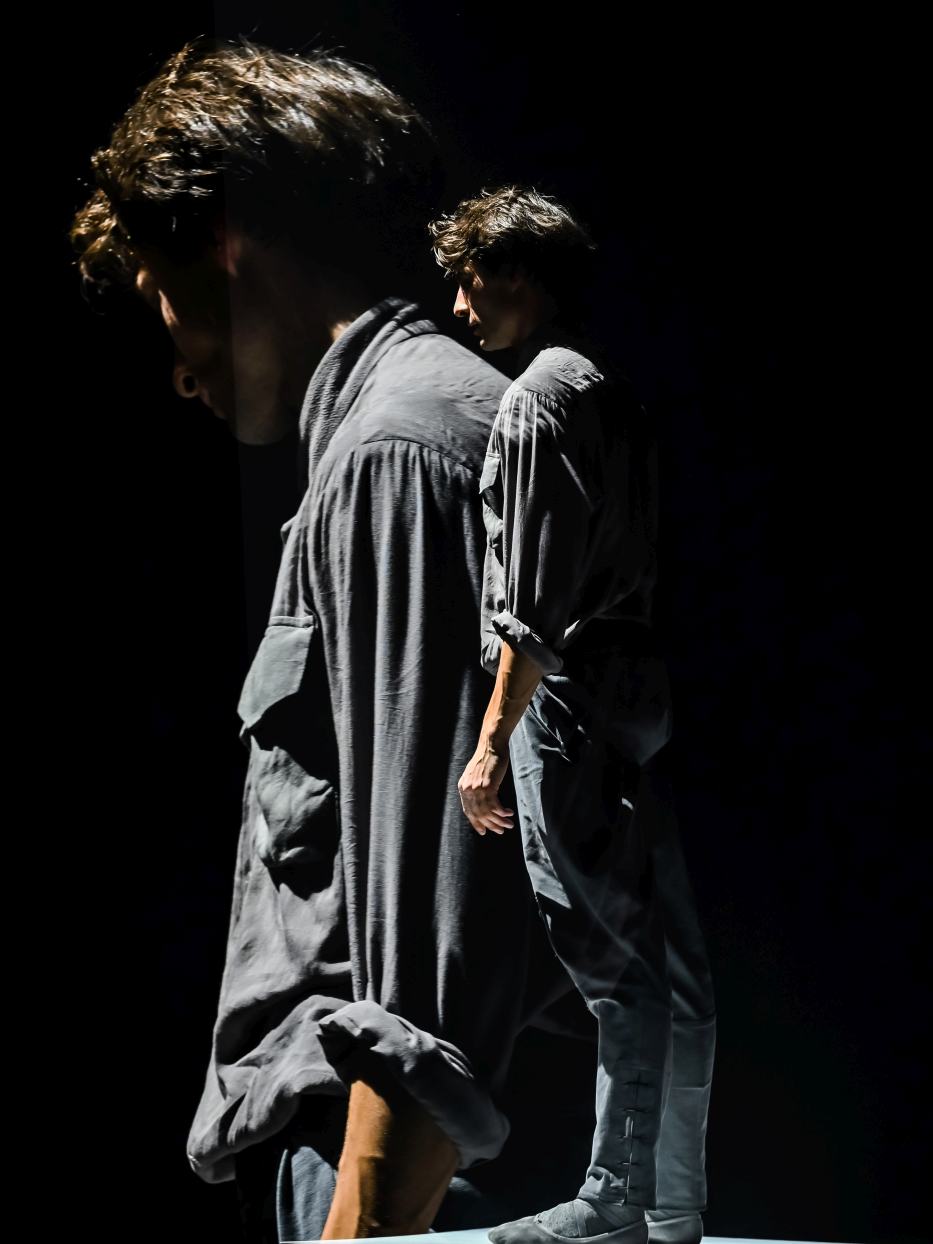
1. A.Putintsev (Yegor Dryomov), “Russian Character” by P.Glukhov, MuzArts 2026 © MuzArts/B.Annadurdiev2. A.Putintsev (Yegor Dryomov), “Russian Character” by P.Glukhov, MuzArts 2026 © MuzArts/B.Annadurdiev Tomorrow, MuzArts’ triple bill Planida returns to Moscow’s Maly Theatre where it premiered in September 2025. It combines two old pieces—Nerve by Anna Shchekleina and Francesca da Rimini by Yuri Possokhov—along with Russian Character, a then-new creation by Pavel Glukhov. As in previous productions, dancers of the Bolshoi Ballet will be on stage. Thanks to MuzArts’ executive producer, Daria Faezova, I was able to watch videos of the program recorded at the Maly Theatre and St. Petersburg’s Alexandrinsky Theatre.


All three pieces deal with the concept of “Planida,” the predetermined course of life that is realized regardless of human action. Planida is roughly synonymous with fate, but while fate refers to unfolding events, Planida focuses on final results.

4. G.Gusev (Yegor`s comrade), A.Putintsev (Yegor Dryomov), and P.Sorokin (Yegor’s comrade); “Russian Character” by P.Glukhov, MuzArts 2026 © MuzArts/B.Annadurdiev3. E.Kokoreva (Katya Malysheva), E.Krysanova (Maria Polikarpovna), A.Putintsev (Yegor Dryomov), and M.Lobukhin (Yegor Egorovich); “Russian Character” by P.Glukhov, MuzArts 2026 © MuzArts/B.Annadurdiev Glukhov’s Russian Character is based on Alexei Tolstoy’s eponymous war story and is dedicated to the heroism and fortitude of the Soviet people during the Great Patriotic War. It premiered last year for the eightieth anniversary of the war’s end. The hero of Tolstoy’s story is the young tanker, Yegor Dryomov, whose face was badly burnt when his tank was knocked out at the Battle of Kursk. On recovery leave at home, he visits his parents but does not dare to frighten them. Instead, he pretends to be their son’s friend. Internally, however, he hopes that they will recognize him anyway.

5. G.Gusev (Yegor`s comrade) and A.Putintsev (Yegor Dryomov), “Russian Character” by P.Glukhov, MuzArts 2026 © MuzArts/B.Annadurdiev6. Ensemble, “Russian Character” by P.Glukhov, MuzArts 2026 © MuzArts/B.AnnadurdievBut they say nothing, though his mother senses the deception. The meeting with Yegor’s beautiful bride, Katya Malysheva, is even more painful. She not only fails to identify him but also staggers back at the sight of his disfigured face. Resolved to bury his feelings, Yegor returns to his comrades at the frontline. There, he receives a letter from his mother asking for the truth. Yegor confesses his deceit and begs for forgiveness. His mother and bride visit him later, and all ends well.

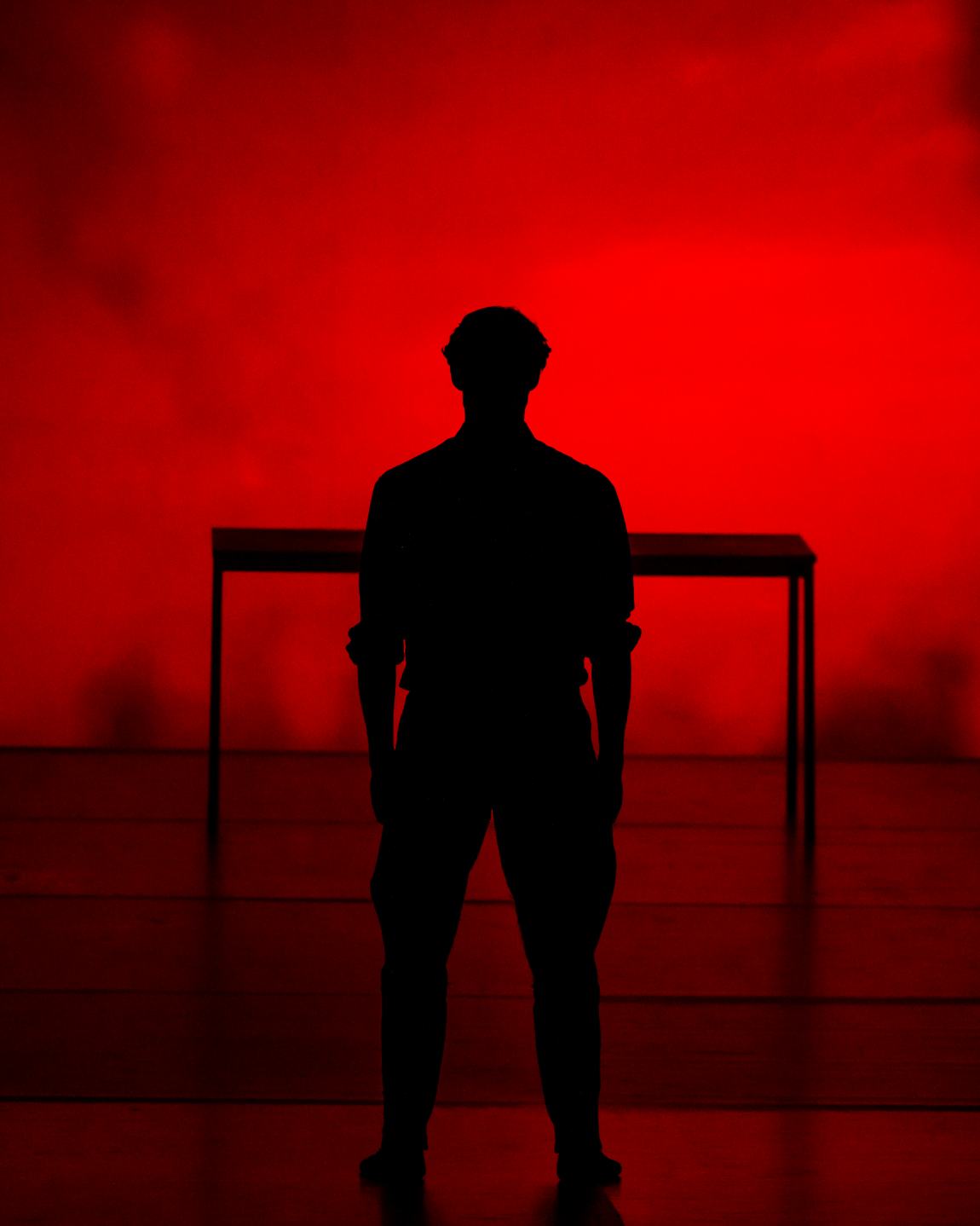
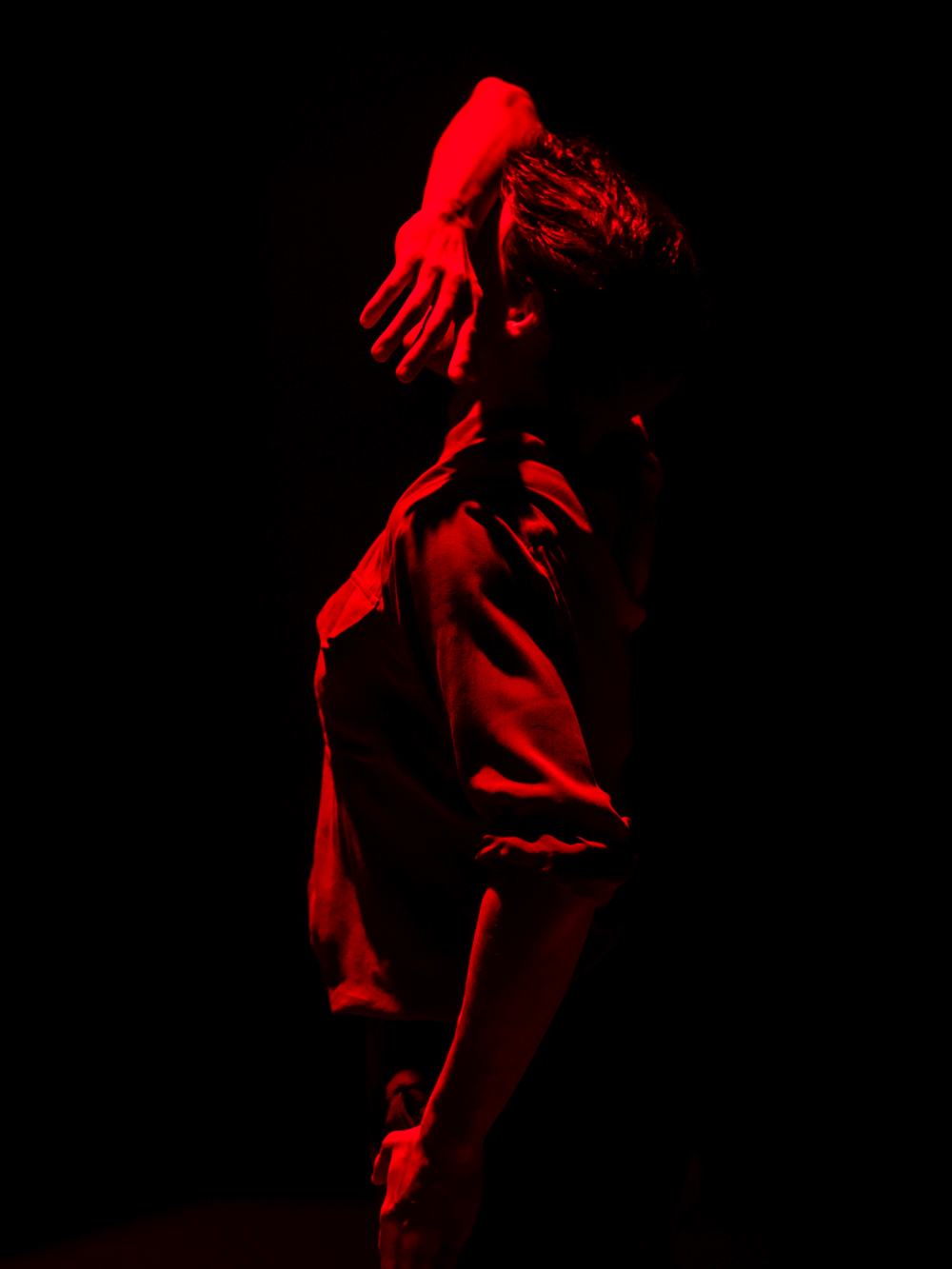
8. P.Sorokin (Yegor’s comrade), “Russian Character” by P.Glukhov, MuzArts 2026 © MuzArts/B.Annadurdiev 7. G.Gusev (Yegor`s comrade), A.Putintsev (Yegor Dryomov), and P.Sorokin (Yegor’s comrade); “Russian Character” by P.Glukhov, MuzArts 2026 © MuzArts/B.Annadurdiev The black silhouette of Glukhov’s Yegor (Alexei Putintsev) stood motionless in the darkness, watching a huge window slide open. Behind it, a blaze roared. The simple table in front of the fire later turned out to signify his family’s home. Accompanied by grave piano music, clanging metal (played by the Moscow Youth Chamber Orchestra under the baton of Andrei Kolyasnikov from a shallow pit on the right side of the cross-shaped stage), and monotonal sacral singing (performed by the Ippolitov-Ivanov Chamber Choir of the Moscow State Pedagogical Institute, which stood in the left pit), Yegor’s elbow shielded his eyes, and then his hand rested reassuringly behind his back. His breathing eased, then his fist clenched.

9. E.Krysanova (Maria Polikarpovna) and A.Putintsev (Yegor Dryomov), “Russian Character” by P.Glukhov, MuzArts 2026 © MuzArts/B.Annadurdiev 10. E.Krysanova (Maria Polikarpovna) and M.Lobukhin (Yegor Egorovich), “Russian Character” by P.Glukhov, MuzArts 2026 © MuzArts/B.Annadurdiev11. E.Krysanova (Maria Polikarpovna) and M.Lobukhin (Yegor Egorovich), “Russian Character” by P.Glukhov, MuzArts 2026 © MuzArts/B.AnnadurdievThe sound of a bell put an end to the fire, leaving a gray scene that, except for white and red scarves and Katya’s (Elizaveta Kokoreva) modest red lipstick, remained gray throughout. To the first rattling sounds of an accordion (played by Aidar Gainullin—a renowned Russian musician and Honored Artist of the Republic of Tatarstan—who sat at the stage’s right front side), Yegor turned toward the audience. As if to calculate the fire range and angle of his tank’s gun, his arms stretched and bent in various angles, and his feet measured their range of motion. Finally, he gathered his courage and ran toward the table against the edges of which his parents (Ekaterina Krysanova and Mikhail Lobukhin) supported themselves.
14. A.Putintsev (Yegor Dryomov) and E.Krysanova (Maria Polikarpovna), “Russian Character” by P.Glukhov, MuzArts 2026 © MuzArts/B.Annadurdiev 13. A.Putintsev (Yegor Dryomov) and E.Krysanova (Maria Polikarpovna), “Russian Character” by P.Glukhov, MuzArts 2026 © MuzArts/B.Annadurdiev12. A.Putintsev (Yegor Dryomov) and E.Krysanova (Maria Polikarpovna), “Russian Character” by P.Glukhov, MuzArts 2026 © MuzArts/B.AnnadurdievIn front of a tall lattice window behind which leafless trees swayed in the wind, the family kitchen suddenly resembled a sanctuary. The encounter was like a ritual during which the three knotted themselves in complicated poses as if to avoid straightforward questions. Yegor’s true identity was almost revealed, but his head eluded the grip of his parents’ hands in the very last moment, and though he danced at length with Katya, one couldn’t read her thoughts. Pushed by the urging score, their and his parents’ synchronous pas de deux conveyed the strains of wartime relationships but didn’t relate specifically to Yegor.

15. M.Lobukhin (Yegor Egorovich) and A.Putintsev (Yegor Dryomov), “Russian Character” by P.Glukhov, MuzArts 2026 © MuzArts/B.Annadurdiev16. A.Putintsev (Yegor Dryomov), E.Kokoreva (Katya Malysheva), G.Gusev (Yegor`s comrade), and P.Sorokin (Yegor’s comrade); “Russian Character” by P.Glukhov, MuzArts 2026 © MuzArts/B.AnnadurdievAs the kitchen window briefly turned into a hell of fire again, Yegor was back with his comrades (Georgy Gusev and Ivan Sorokin), sharing a cigarette, some laid-back, off-duty time, and combat. Later, they teased Yegor with the white scarf that Katya had given him as a keepsake. It was replaced by a red one that covered Yegor’s face once his comrades had carried him off the battlefield, circled by huge ravens. When his mother’s quivering hands tore the scarf away, Yegor ran off.

18. A.Putintsev (Yegor Dryomov) and ensemble, “Russian Character” by P.Glukhov, MuzArts 2026 © MuzArts/B.Annadurdiev 17. A.Putintsev (Yegor Dryomov) and ensemble, “Russian Character” by P.Glukhov, MuzArts 2026 © MuzArts/B.AnnadurdievFacing reality tormented his mother and revealed the strength of his father (Krysanova and Lobukhin danced a fabulously strong pas de deux at this point). It also reminded her of the affectionate relationship she had with her young son.

Only three-quarters of the way through the piece did bloody scarves disfigure Yegor’s face. His hands and arms frantically covered them, even though his father forcefully pulled them off again and again. This was his son, and he stood with him. However, Yegor needed to come to terms with his own past. He finally took his place among his family, next to Katya.

19. Ensemble, “Nerve” by A.Shchekleina, MuzArts 2026 © MuzArts/B.Annadurdiev20. “Nerve” by A.Shchekleina, MuzArts 2026 © MuzArts/B.Annadurdiev21. “Nerve” by A.Shchekleina, MuzArts 2026 © MuzArts/B.AnnadurdievIn Shchekleina’s Nerve (2022), a man’s course of life is fundamentally changed by some unknown, deeply disturbing event. Only once did the shadow of his head pass by on the backdrop, but he certainly was the owner of the brain, the gray matter of which we were permitted to peep into. It showed seven black dancer-neurons in a harmonious workflow. Rhythmic electronic pulses (music by Vasily Peshkov) induced their gentle undulations.

24. “Nerve” by A.Shchekleina, MuzArts 2026 © MuzArts/B.Annadurdiev23. “Nerve” by A.Shchekleina, MuzArts 2026 © MuzArts/B.Annadurdiev22. “Nerve” by A.Shchekleina, MuzArts 2026 © MuzArts/B.Annadurdiev Black fabric tubes pulled over their heads symbolized axons. Their network kept each neuron in place. Suddenly, an unnerving sound unleashed flashing signals that generated spiky movements. Seconds later, the dancers’ limbs lashed mechanically sideways, indicating a cerebral deadlock. Neural degeneration was underway. One after the other, the dancers pulled the axons off their heads and fled, their arms flailing. Ripped from their cell bodies, the axons deteriorated.

25. “Nerve” by A.Shchekleina, MuzArts 2026 © MuzArts/B.Annadurdiev26. “Nerve” by Anna Shchekleina, MuzArts 2026 © MuzArts/B.Annadurdiev The robot-like man who appeared from the fathomless, black space must have been the one whose nerves we had just witnessed suffering. He was not merely thin-skinned, but skinless up to his bones and muscles. Raw and unprotected, the sheer existence of his body alienated him. The woman who entered the dark stage from the opposite side was similarly exposed and disturbed. When she touched the man’s arm, both pulled back reflexively as if burned. Initially wavering between curiosity and attraction, their encounter quickly turned into a shadowboxing-like attack. Although the woman never touched the man, he crawled on all fours, shirking from her blows and kicks. She had already receded into the distance, but his arms continued to clench his chest.
28. I.Gainutdinov, “Nerve” by A.Shchekleina, MuzArts 2026 © MuzArts/B.Annadurdiev27. “Nerve” by A.Shchekleina, MuzArts 2026 © MuzArts/B.AnnadurdievOnce he felt safe and recovered to his feet, the black tentacles of a huge polyp appeared on the left side of the backdrop. Perhaps, they represented the level to which the traumatized spirits had declined?

Six people who replaced the maltreated man accomplished the first step of mental restoration. Although still skinless and strutting like spiders, their arms reaching out like tentacles for prey, they had the brains for an acrobatic pas de trois. One man, with legs straddling at the front of the stage and his arms stretched into a V-shape, thrust his chest toward heaven, collapsed, and struggled back onto his feet. His flailing arms and kicking legs seemed to fend off the thickening knot of tentacles on the backdrop. His gaping mouth gave him a helpless look, but he persevered. While he jerked and his hands gripped his neck as if he were choking, the tentacles vanished.

29. I.Gainutdinov, “Nerve” by A.Shchekleina, MuzArts 2026 © MuzArts/B.Annadurdiev30. A.Kovaleva and I.Gainutdinov, “Nerve” by A.Shchekleina, MuzArts 2026 © MuzArts/B.AnnadurdievHuge progress was made when he brought the others, who had turned into awkward pillars of salt, into the warm spotlight. Their sense of beauty and togetherness was restored and healing completed when, upon a woman’s solo, a man (Ildar Gainutdinov) slumped on stage like a newborn, his hair tousled and skin wet with oil. His legs buckled under his weight as he attempted to walk, and, while gazing at his arms, he slowly became conscious of himself.

32. Ensemble, “Nerve” by A.Shchekleina, MuzArts 2026 © MuzArts/B.Annadurdiev 31. Ensemble, “Nerve” by A.Shchekleina, MuzArts 2026 © MuzArts/B.AnnadurdievWhen a woman (Alena Kovaleva) joined him, their movements complemented each other’s like yin and yang. Accompanied by spherical sounds, harmony came to the group. Actions and reactions merged into a gentle flow. Being together and being human was precious. After swimming through invisible waters, which they seemed to pour twice over their heads like a baptismal ritual, their hands rested in front of their necks, flickering from the pulse of life. Just as they assembled around a circle of light, the stage went dark.

33. A.Stashkevich (Francesca) and E.Gerashchenko (Giovanni), “Francesca da Rimini” by Y.Possokhov, MuzArts 2026 © MuzArts/B.Annadurdiev 34. I.Gainutdinov (Paolo), A.Stashkevich (Francesca), E.Gerashchenko (Giovanni), and ensemble; “Francesca da Rimini” by Y.Possokhov, MuzArts 2026 © MuzArts/B.AnnadurdievPossokhov’s Francesca da Rimini was created for San Francisco Ballet in 2012 and added to MuzArts’ repertory in 2016. It’s accompaniment, Tchaikovsky’s symphonic poem of the same title, is rich and colorful.
Francesca da Rimini, an Italian noblewoman of Ravenna, had an affair with Paolo Malatesta, the stepbrother of her husband, Giovanni. Upon discovering the adultery, Giovanni murdered both.

36. A.Stashkevich (Francesca), I.Gainutdinov (Paolo), and ensemble; “Francesca da Rimini” by Y.Possokhov, MuzArts 2026 © MuzArts/B.Annadurdiev35. I.Gainutdinov (Paolo), E.Gerashchenko (Giovanni), A.Stashkevich (Francesca), and ensemble; “Francesca da Rimini” by Y.Possokhov, MuzArts 2026 © MuzArts/B.Annadurdiev Dante Alighieri, a contemporary of Francesca, included her fate in his Divine Comedy, in which she and Paolo were banished to the second circle of the Inferno reserved for the lustful. There, she explained to Dante that love overpowered her while she was reading a chivalric romance about Lancelot du Lac, “We yielded to our passions because of one single line in that book… A pimp was that book, and a pimp was the one who wrote it.”

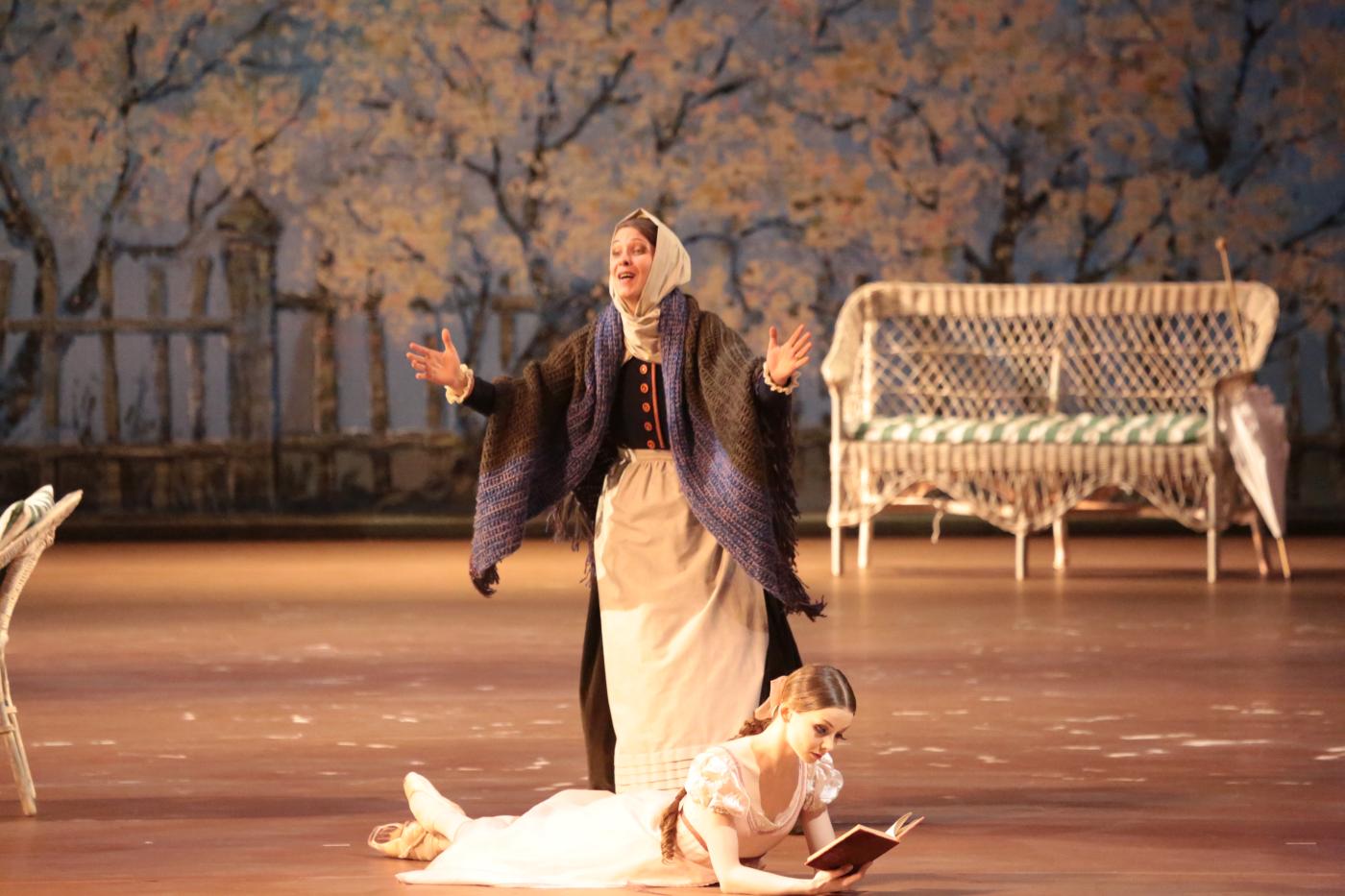
37. I.Gainutdinov (Paolo) and A.Stashkevich (Francesca), “Francesca da Rimini” by Y.Possokhov, MuzArts 2026 © MuzArts/B.Annadurdiev 38. I.Gainutdinov (Paolo) and ensemble, “Francesca da Rimini” by Y.Possokhov, MuzArts 2026 © MuzArts/B.Annadurdiev Possokhov’s Francesca (Anastasia Stashkevich), wearing a silky, pristine white dress (costume design by Igor Chapurin), was similarly reading a book—Dante’s Divine Comedy. Next to her on a broken, marble fresco sat Giovanni (Egor Gerashchenko), his half-red, half-olive colored shirt perhaps indicating that he had both loving and hateful sides. In all probability, he would end up in hell as well, but for now, he was part of Francesca’s tormenting memories. Paolo (Ildar Gainutdinov) stood behind them in the semi-darkness, looking away.
41. I.Gainutdinov (Paolo) and A.Stashkevich (Francesca), “Francesca da Rimini” by Y.Possokhov, MuzArts 2026 © MuzArts/B.Annadurdiev40. I.Gainutdinov (Paolo) and A.Stashkevich (Francesca), “Francesca da Rimini” by Y.Possokhov, MuzArts 2026 © MuzArts/B.Annadurdiev39. A.Stashkevich (Francesca), I.Gainutdinov (Paolo), and ensemble; “Francesca da Rimini” by Y.Possokhov, MuzArts 2026 © MuzArts/B.Annadurdiev Five court ladies in floor-length, red dresses (Olga Marchenkova, Ekaterina Besedina, Ekaterina Smurova, Anna Zakaraia, and Anna Grigireva) and three guardians of hell (Vasily Danilchuk, Anton Gainutdinov, and Karim Abdullin), their pale white, full-body leotards darkened from soot, joined them in the cavernous, gloomy blue of hell.
42. A.Stashkevich (Francesca) and I.Gainutdinov (Paolo), “Francesca da Rimini” by Y.Possokhov, MuzArts 2026 © MuzArts/B.Annadurdiev43. A.Stashkevich (Francesca) and I.Gainutdinov (Paolo), “Francesca da Rimini” by Y.Possokhov, MuzArts 2026 © MuzArts/B.Annadurdiev From all sides, fragments of marble statues (among them amorous couples) protruded into the foggy air like remnants of a shattered past (set design by Maria Treguba). The relationship between Francesca and Giovanni wasn’t yet shattered but was bloodless and one-sided. Giovanni was staid and earnestly loving, whereas the sensitive Francesca seemed to live in a dream world. Although her eyes avoided Giovanni at all times and she disliked his kiss on her neck, he was her anchor.

46. A.Stashkevich (Francesca) and I.Gainutdinov (Paolo), “Francesca da Rimini” by Y.Possokhov, MuzArts 2026 © MuzArts/B.Annadurdiev 45. A.Stashkevich (Francesca) and I.Gainutdinov (Paolo), “Francesca da Rimini” by Y.Possokhov, MuzArts 2026 © MuzArts/B.Annadurdiev44. A.Stashkevich (Francesca) and I.Gainutdinov (Paolo), “Francesca da Rimini” by Y.Possokhov, MuzArts 2026 © MuzArts/B.AnnadurdievBefore leaving the scene, Giovanni put a protective hand on his wife’s head and a brotherly one on Paolo’s shoulder, but, abruptly turning around and glancing at Paolo, he must have apprehended what was to come. With Giovanni gone, the court ladies whispered when Paolo approached Francesca. They mimicked her attempts to resist his advances or crossed the stage with quick steps, stirring the air with flurries of port de bras. Often, their crossed-over hands held their skirts chastely folded or, sitting on the floor, their crossed legs shielded their loins. The moment Francesca fell for Paolo, the ladies sank to the feet of the guardians of hell.
47. E.Gerashchenko (Giovanni) and A.Stashkevich (Francesca), “Francesca da Rimini” by Y.Possokhov, MuzArts 2026 © MuzArts/B.Annadurdiev48. A.Stashkevich (Francesca) and I.Gainutdinov (Paolo), “Francesca da Rimini” by Y.Possokhov, MuzArts 2026 © MuzArts/B.Annadurdiev49. A.Stashkevich (Francesca) and E.Gerashchenko (Giovanni), “Francesca da Rimini” by Y.Possokhov, MuzArts 2026 © MuzArts/B.Annadurdiev Paolo rotated around Francesca like a windmill, directing his hasty, passionate jumps at her. Bypassing his outstretched arms was impossible. She tried to run away but then stopped helplessly and gave in. As he carried her erect body, she stretched her arms sideways like the crucified Christ, then she collapsed over his shoulder, emptied of all strength. Abhorred by the lovers’ kiss, the ladies shielded their eyes behind their elbows. Only when Francesca bowed her head submissively to them did the arrogant, contemptuous lot back out.

51. A.Stashkevich (Francesca), I.Gainutdinov (Paolo), and E.Gerashchenko (Giovanni); “Francesca da Rimini” by Y.Possokhov, MuzArts 2026 © MuzArts/B.Annadurdiev 50. I.Gainutdinov (Paolo), E.Gerashchenko (Giovanni), and ensemble; “Francesca da Rimini” by Y.Possokhov, MuzArts 2026 © MuzArts/B.Annadurdiev The following scene portrayed the love triangle and the disloyal court as a sober chess game, shedding light only on those few squares where action took place. The second Paolo stepped onto Francesca’s square, the two found themselves back in hell. Portentous brass sounds heralded Giovanni’s return. He rolled in like a thunderbolt, propelling himself high and landing in a deep lunge, from where his disbelieving yet furious gaze caught Francesca and Paolo in an intimate embrace. Paolo’s head hung guiltily as Giovanni leapt toward him, his outstretched arm asking why. Mad with anger, Giovanni jumped toward the lovers twice. The invisible dagger in his hand first killed Francesca, then Paolo. Still raging with ire, Giovanni stepped over the corpses, scornfully kicking them. Then the three guardians of hell put a robust noose over his head and, pulling him away by the rope, ensured that guilt would strangle him forever.
52. E.Gerashchenko (Giovanni), I.Gainutdinov (Paolo), A.Stashkevich (Francesca), V.Danilchuk, A.Gainutdinov, and K.Abdullin (Guardians of Hell); “Francesca da Rimini” by Y.Possokhov, MuzArts 2026 © MuzArts/B.Annadurdiev

Links: Website of the Maly Theatre
Trailer Planida
Photos: 1. Alexei Putintsev (Yegor Dryomov), “Russian Character” by Pavel Glukhov, MuzArts 2026
2. Alexei Putintsev (Yegor Dryomov), “Russian Character” by Pavel Glukhov, MuzArts 2026
3. Elizaveta Kokoreva (Katya Malysheva), Ekaterina Krysanova (Maria Polikarpovna), Alexei Putintsev (Yegor Dryomov), and Mikhail Lobukhin (Yegor Egorovich); “Russian Character” by Pavel Glukhov, MuzArts 2026
4. Georgy Gusev (Yegor`s comrade), Alexei Putintsev (Yegor Dryomov), and Pavel Sorokin (Yegor’s comrade); “Russian Character” by Pavel Glukhov, MuzArts 2026
5. Georgy Gusev (Yegor`s comrade) and Alexei Putintsev (Yegor Dryomov), “Russian Character” by Pavel Glukhov, MuzArts 2026
6. Ensemble, “Russian Character” by Pavel Glukhov, MuzArts 2026
7. Georgy Gusev (Yegor`s comrade), Alexei Putintsev (Yegor Dryomov), and Pavel Sorokin (Yegor’s comrade); “Russian Character” by Pavel Glukhov, MuzArts 2026
8. Pavel Sorokin (Yegor’s comrade), “Russian Character” by Pavel Glukhov, MuzArts 2026
9. Ekaterina Krysanova (Maria Polikarpovna) and Alexei Putintsev (Yegor Dryomov), “Russian Character” by Pavel Glukhov, MuzArts 2026
10. Ekaterina Krysanova (Maria Polikarpovna) and Mikhail Lobukhin (Yegor Egorovich), “Russian Character” by Pavel Glukhov, MuzArts 2026
11. Ekaterina Krysanova (Maria Polikarpovna) and Mikhail Lobukhin (Yegor Egorovich), “Russian Character” by Pavel Glukhov, MuzArts 2026
12. Alexei Putintsev (Yegor Dryomov) and Ekaterina Krysanova (Maria Polikarpovna), “Russian Character” by Pavel Glukhov, MuzArts 2026
13. Alexei Putintsev (Yegor Dryomov) and Ekaterina Krysanova (Maria Polikarpovna), “Russian Character” by Pavel Glukhov, MuzArts 2026
14. Alexei Putintsev (Yegor Dryomov) and Ekaterina Krysanova (Maria Polikarpovna), “Russian Character” by Pavel Glukhov, MuzArts 2026
15. Mikhail Lobukhin (Yegor Egorovich) and Alexei Putintsev (Yegor Dryomov), “Russian Character” by Pavel Glukhov, MuzArts 2026
16. Alexei Putintsev (Yegor Dryomov), Elizaveta Kokoreva (Katya Malysheva), Georgy Gusev (Yegor`s comrade), and Pavel Sorokin (Yegor’s comrade); “Russian Character” by Pavel Glukhov, MuzArts 2026
17. Alexei Putintsev (Yegor Dryomov) and ensemble, “Russian Character” by Pavel Glukhov, MuzArts 2026
18. Alexei Putintsev (Yegor Dryomov) and ensemble, “Russian Character” by Pavel Glukhov, MuzArts 2026
19. Ensemble, “Nerve” by Anna Shchekleina, MuzArts 2026
20. “Nerve” by Anna Shchekleina, MuzArts 2026
21. “Nerve” by Anna Shchekleina, MuzArts 2026
22. “Nerve” by Anna Shchekleina, MuzArts 2026
23. “Nerve” by Anna Shchekleina, MuzArts 2026
24. “Nerve” by Anna Shchekleina, MuzArts 2026
25. “Nerve” by Anna Shchekleina, MuzArts 2026
26. “Nerve” by Anna Shchekleina, MuzArts 2026
27. “Nerve” by Anna Shchekleina, MuzArts 2026
28. Ildar Gainutdinov, “Nerve” by Anna Shchekleina, MuzArts 2026
29. Ildar Gainutdinov, “Nerve” by Anna Shchekleina, MuzArts 2026
30. Alena Kovaleva and Ildar Gainutdinov, “Nerve” by Anna Shchekleina, MuzArts 2026
31. Ensemble, “Nerve” by Anna Shchekleina, MuzArts 2026
32 Ensemble, “Nerve” by Anna Shchekleina, MuzArts 2026
33 Anastasia Stashkevich (Francesca) and Egor Gerashchenko (Giovanni), “Francesca da Rimini” by Yuri Possokhov, MuzArts 2026
34. Ildar Gainutdinov (Paolo), Anastasia Stashkevich (Francesca), Egor Gerashchenko (Giovanni), and ensemble; “Francesca da Rimini” by Yuri Possokhov, MuzArts 2026
35. Ildar Gainutdinov (Paolo), Egor Gerashchenko (Giovanni), Anastasia Stashkevich (Francesca), and ensemble; “Francesca da Rimini” by Yuri Possokhov, MuzArts 2026
36. Anastasia Stashkevich (Francesca), Ildar Gainutdinov (Paolo), and ensemble; “Francesca da Rimini” by Yuri Possokhov, MuzArts 2026
37. Ildar Gainutdinov (Paolo) and Anastasia Stashkevich (Francesca), “Francesca da Rimini” by Yuri Possokhov, MuzArts 2026
38. Ildar Gainutdinov (Paolo) and ensemble, “Francesca da Rimini” by Yuri Possokhov, MuzArts 2026
39. Anastasia Stashkevich (Francesca), Ildar Gainutdinov (Paolo), and ensemble; “Francesca da Rimini” by Yuri Possokhov, MuzArts 2026
40. Ildar Gainutdinov (Paolo) and Anastasia Stashkevich (Francesca), “Francesca da Rimini” by Yuri Possokhov, MuzArts 2026
41. Ildar Gainutdinov (Paolo) and Anastasia Stashkevich (Francesca), “Francesca da Rimini” by Yuri Possokhov, MuzArts 2026
42 Anastasia Stashkevich (Francesca) and Ildar Gainutdinov (Paolo), “Francesca da Rimini” by Yuri Possokhov, MuzArts 2026
43. Anastasia Stashkevich (Francesca) and Ildar Gainutdinov (Paolo), “Francesca da Rimini” by Yuri Possokhov, MuzArts 2026
44. Anastasia Stashkevich (Francesca) and Ildar Gainutdinov (Paolo), “Francesca da Rimini” by Yuri Possokhov, MuzArts 2026
45. Anastasia Stashkevich (Francesca) and Ildar Gainutdinov (Paolo), “Francesca da Rimini” by Yuri Possokhov, MuzArts 2026
46. Anastasia Stashkevich (Francesca) and Ildar Gainutdinov (Paolo), “Francesca da Rimini” by Yuri Possokhov, MuzArts 2026
47. Egor Gerashchenko (Giovanni) and Anastasia Stashkevich (Francesca), “Francesca da Rimini” by Yuri Possokhov, MuzArts 2026
48. Anastasia Stashkevich (Francesca) and Ildar Gainutdinov (Paolo), “Francesca da Rimini” by Yuri Possokhov, MuzArts 2026
49. Anastasia Stashkevich (Francesca) and Egor Gerashchenko (Giovanni), “Francesca da Rimini” by Yuri Possokhov, MuzArts 2026
50. Ildar Gainutdinov (Paolo), Egor Gerashchenko (Giovanni), and ensemble; “Francesca da Rimini” by Yuri Possokhov, MuzArts 2026
51. Anastasia Stashkevich (Francesca), Ildar Gainutdinov (Paolo), and Egor Gerashchenko (Giovanni); “Francesca da Rimini” by Yuri Possokhov, MuzArts 2026
52. Egor Gerashchenko (Giovanni), Ildar Gainutdinov (Paolo), Anastasia Stashkevich (Francesca), Vasily Danilchuk, Anton Gainutdinov, and Karim Abdullin (Guardians of Hell); “Francesca da Rimini” by Yuri Possokhov, MuzArts 2026
all photos © MuzArts/Batyr Annadurdiev
Editing: Kayla Kauffman


Fiendishly Fine

“Master and Margarita”
Bolshoi Ballet
Bolshoi Theatre (New Stage)
Moscow, Russia
October 29, 2023 (matinee)

by Ilona Landgraf
Copyright © 2023 by Ilona Landgraf

1. A.Ovcharenko (Master) and E.Krysanova (Margarita), “Master and Margarita” by E.Clug, Bolshoi Ballet 2023 © Bolshoi Ballet / Batyr Anadurdiev I was skeptical whether Edward Clug was the right choice to tackle Mikhail Bulgakov’s novel “The Master and Margarita”. A Russian choreographer seemed better equipped to adapt this landmark of Soviet literature for the ballet stage than a Romanian-born working in Maribor, Slovenia. Two years after its premiere at the Bolshoi Theatre, I was able to watch Clug’s “Master and Margarita” – and my reservations were proven thoroughly wrong. It’s a fabulous blend of entertainment and food for thought, brimful of metaphors and allusions. Yuri Possokhov, Clug’s Russian colleague, currently preparing a new piece for the Bolshoi, is full of appreciation for “Master and Margarita” as well. I met him at another performance where he told me that Clug understands the Russian soul perfectly well.

Interestingly, Clug, together with Christian Spuck (then artistic director of Zurich Ballet) intended to stage “Master and Margarita” in Zurich in 2015, but their plan was thwarted when the theater’s research revealed that ticket sales would be uncertain because the Zurich audience wasn’t familiar with Bulgakov’s novel. Destiny brought the Bolshoi Ballet’s artistic director Makhar Vaziev to the scene who decided to stage the piece in Moscow.

A lifetime could be spent exploring Bulgakov’s political and social satire and the biblical questions raised by the novel. In short “The Master and Margarita” (published only after Bulgakov’s death in 1940, first in an edited serial form in 1966/67 and uncensored in 1973) intertwines two plots: (1) the mayhem caused by the Satan (alias Professor Woland) and his entourage when visiting Moscow in the 1930s, and (2) the trial of Jesus of Nazareth in Jerusalem during Pontius Pilate’s governance. The connecting link is the Master, a Muscovite author (and Bulgakov’s alter ego) whose latest manuscript tells the Jerusalem plot. Margarita is the woman who loves him and – unlike Moscow’s critics – his work. Continue reading “Fiendishly Fine”
Universal Love

“Romeo and Juliet”
Bolshoi Ballet
Bolshoi Theatre
Moscow, Russia
November 25, 2017

by Ilona Landgraf
Copyright © 2017 by Ilona Landgraf

1. V.Lopatin and A.Stashkevich, "Romeo and Juliet" by A.Ratmansky, Bolshoi Ballet 2017 © Bolshoi Ballet / E.Fetisova Last week the Bolshoi Ballet added a second version of “Romeo and Juliet” to its repertoire. By Alexei Ratmansky, it premiered at the National Ballet of Canada in 2011 and is being performed on the New Stage of the Bolshoi Theatre. As during recent years, Yuri Grigorovich’s adaption will be shown on the Bolshoi’s Historic Stage.
Ratmansky cast three leading couples: Ekaterina Krysanova & Vladislav Lantratov; Anastasia Stashkevich & Vyacheslav Lopatin; and Evgenia Obraztsova & Artemy Belyakov; however the pairings switched in the course of the first run. I saw the fourth performance after the premiere; Stashkevich was Juliet alongside Lopatin’s Romeo. Continue reading “Universal Love”

Room for Improvement

“Onegin”
Bolshoi Ballet
Bolshoi Theatre
Moscow, Russia
March 11, 2017

by Ilona Landgraf
Copyright © 2017 by Ilona Landgraf

1. E.Obraztsova and N.Semizorova, “Onegin” by J.Cranko, Bolshoi Ballet © Bolshoi Theatre / D.YusupovConditions were the same overall on the second of the three evening performances of “Onegin” at the Bolshoi. The sky above the garden of the Larina family’s country house was bright blue, domestic bliss was as yet unclouded, the village folk were in an expansively jolly mood. The Bolshoi Orchestra under Pavel Sorokin, reliable as always, ensured a fine rendition of Tchaikovsky’s music. Yet unlike the evening before the story didn’t gain momentum.

“Onegin” needs four dancers of equal or complementary strength in the leading roles. The role of Olga is smaller than the other three, but her part is pivotal for the dramatic turn the story takes. Saturday’s cast had only one consistently strong dancer, Evgenia Obraztsova as Tatiana. Continue reading “Room for Improvement”

Still Elusive: The Eternal Feminine

“Ondine”
Bolshoi Ballet
Bolshoi Theatre
Moscow, Russia
March 04, 2017

by Ilona Landgraf
Copyright © 2017 by Ilona Landgraf

1. I.Tsvirko and E.Krysanova, “Ondine” by V.Samodurov, Bolshoi Ballet 2017 © Bolshoi Theatre / D.YusupovIn 1958 Frederick Ashton choreographed the story of “Ondine” for The Royal Ballet in London. This three-act work is about the water nymph Ondine – a role Ashton made specially for Margot Fonteyn – who becomes the object of a worldly prince’s desire. Upon finding the prince unfaithful, Ondine kills him with a kiss. German composer Hans Werner Henze was commissioned with the “Undine” music. Other choreographers subsequently used Henze’s score for their own productions, the most recent dating from the summer of 2016 by Vyacheslav Samodurov for the Bolshoi Ballet. Continue reading “Still Elusive: The Eternal Feminine”

A Dutch Program at the Bolshoi

“Frank Bridge Variations / Short Time Together / Symphony of Psalms”
Bolshoi Ballet
Bolshoi Theatre
Moscow, Russia
March 02, 2017

by Ilona Landgraf
Copyright © 2017 by Ilona Landgraf

1. D.Rodkin and E.Shipulina, “Frank Bridge Variations” by H.van Manen, Bolshoi Ballet 2017 © M.Logvinov / Bolshoi TheatreReading the names of choreographers Hans van Manen, Paul Lightfoot and Jiří Kylián as part of the same program one immediately thinks of a performance in Amsterdam or Den Haag, or maybe also in Germany. Yet this triple bill was the Bolshoi’s. It’s a menu that’s not quite so familiar for the Moscow audience. Applause was respectable, though not overwhelming. The dancers, however, were in great shape! Continue reading “A Dutch Program at the Bolshoi”

“I feel like Lensky”

Semyon Chudin, Bolshoi Ballet
Royal Opera House
London, Great Britain
August, 2016

by Ilona Landgraf
Copyright © 2016 by Ilona Landgraf

1. S.Chudin © Bolshoi TheatreI first saw Semyon Chudin dance in Stuttgart Ballet’s end-of-the season gala this July. He had danced the Wedding Pas de Deux from “Sleeping Beauty” next to Anna Osadcenko and immediately caught my attention. Chudin has an aura, which only a great personality is able to radiate.

As it happens the Bolshoi toured London for three weeks during this summer. One and a half weeks after the Stuttgart gala I sat in the Royal Opera House, watching the company in Jean-Christophe Maillot’s “The Taming of the Shrew”. The following day I met Chudin in the Opera House’s cafeteria to talk about his career and his life offstage. We spoke twice, first in the afternoon, and, after rehearsals and with translation support by Sonia Serduk, a longstanding friend of Chudin from St. Petersburg’s Mikhailovsky Theatre, again in the evening. Chudin’s English is good but he feels more at ease when speaking Russian. I guess our group of three attracted attention as we had much fun.

Chudin is natural, kind and easy-going. He does not make the slightest attempt to cultivate a glossy image of himself or to feign a conformist mindset. Telling people what they want to hear isn’t his. The timbre of his voice simply reveals his true opinions. Centered in himself Chudin radiates calmness but at the same time is very self-critical. After the Stuttgart gala he asked Filip Baranciwicz and Mikhail Kaniskin to give him corrections. How many principals act in the same way? “One could always improve something. When you’re satisfied with yourself you should stop,” he later stated. Continue reading ““I feel like Lensky””

Maillot’s Idea of How to Tame

Taming of the Shrew”
Bolshoi Ballet
Royal Opera House
London, Great Britain
August 03, 2016

by Ilona Landgraf
Copyright © 2016 by Ilona Landgraf

1. E.Krysanova and V.Lantratov, “The Taming of the Shrew” by J.-C.Maillot, Bolshoi Ballet © M.Logvinov/Bolshoi TheatreThe Bolshoi Ballet’s three-week tour to London draws crowds of ballet aficionados to the Royal Opera House. Every evening each of the five productions is sold out. Those include the much-loved classics, “Swan Lake”, “Don Quixote” and “Le Corsaire”, as well as “The Flames of Paris” by Alexei Ratmansky and Jean-Christophe Maillot’s “The Taming of the Shrew” which premiered two years ago at the Bolshoi. “Shrew” was scheduled only twice. I saw the first performance.

Similar to Kurt-Heinz Stolze’s Scarlatti-pastiche for John Cranko’s “Shrew”, Maillot also cobbled together the score. He assembled less well known film music and excerpts of symphonies by Dmitri Shostakovich which go along with the events on stage like lubricating oil. Whether swooshing or romantic, the Orchestra of the Bolshoi Theatre under Igor Dronov’s baton played with verve.

The story sets off at the estate of Baptista, a wealthy lord in Padua. But the two broad, curved outdoor stairs arching over the house’s entrance, designed by Ernest Pignon-Ernest, don’t relate to any specific town. Baptista is beset with two daughters, the prickly Katharina and her younger sister, the much-adored Bianca. But the latter will not be allowed to marry until Katharina first wears her wedding ring. Continue reading “Maillot’s Idea of How to Tame”