The Benchmark

“Coppélia”
Bolshoi Ballet
Bolshoi Theatre (New Stage)
Moscow, Russia
February 21, 2026 (evening performance)

by Ilona Landgraf
Copyright © 2026 by Ilona Landgraf

1. E.Kokoreva (Swanilda) and D.Zakharov (Frantz), “Coppélia” by S.Vikharev after M.Petipa and E.Cecchetti, Bolshoi Ballet 2026 © Bolshoi Theatre/P.RychkovMy hopes on a new video release were raised when I noticed the cameraman at the Bolshoi Ballet’s performance of Coppélia, until he explained that the recording was for internal use only. It’ll set the bar high for future generations of dancers.

Sergei Vikharev’s production, which he said is the most complete and exact rendition of what Nicholas Sergeyev noted from his St. Petersburg memories (his manuscripts are stored at Harvard University), has been in the Bolshoi’s repertory since 2009. It preserves all the details that fell victim to artistic, financial, and producing conditions in many Western stagings. As designated by the original creators, Marius Petipa and Enrico Cecchetti, the Bolshoi’s Swanilda has eight girlfriends, and Act III’s Waltz of the Hours is danced by twenty-four ballerinas, one for each hour of the day. 2. D.Zakharov (Frantz), E.Kokoreva (Swanilda), and ensemble; “Coppélia” by S.Vikharev after M.Petipa and E.Cecchetti, Bolshoi Ballet 2026 © Bolshoi Theatre/P.RychkovThe order of their four lines of six dancers each (which represent dawn, morning, twilight, and night) is overseen by the old, bearded Chronos (Dmitry Grishin), who rests atop a huge clock that has to stand exactly center stage. The Royal Ballet’s Coppélia, by comparison, employs only eight dancers in the waltz, which subverts the scene’s meaning.

Each time I see a performance of Coppélia at the Bolshoi, the artistic director, Makhar Vaziev, is in the rear auditorium during Act III’s Fete of the Bell, his eyes scrutinizing the corps’ unity, the clarity of its patterns, and the purity of the variations. As tiny as they may be, he usually finds details to hone.
The leading couple, Swanilda (Elizaveta Kokoreva) and Frantz (Denis Zakharov), had nothing to perfect. Each step, each port de 3. E.Kokoreva (Swanilda) and D.Zakharov (Frantz), “Coppélia” by S.Vikharev after M.Petipa and E.Cecchetti, Bolshoi Ballet 2026 © Bolshoi Theatre/P.Rychkovbras, each jump, and each turn of Kokoreva represented the ideal of classical ballet and was imbued with meaning. Her acting was fresh and convincing, her pantomime unambiguous, and the show she delivered at Coppélius’s (Gennady Yanin) workshop terrific. Her fiancé, Frantz, was an unreliable lover, though. Once unobserved, he eagerly climbed through another sweetheart’s (i.e., Coppélia’s (Maria Rasskazova)) balcony door. Worse, even as he was caught red-handed by Coppélius, he affirmed his intention to marry her. What a wretch of a swain!


4. E.Kokoreva (Swanilda) and ensemble, “Coppélia” by S.Vikharev after M.Petipa and E.Cecchetti, Bolshoi Ballet 2026 © Bolshoi Theatre/P.RychkovOnly after Swanilda got him off the hook from Coppélius’s alchemic experiments did Frantz man up. His time had come for their wedding pas de deux, with both dressed in majestic red and the cleanest of white and with jewels sparkling at Swanilda’s décolleté and in her tiara (costumes by Tatiana Noginova). A brilliant solo, including spick and span legwork and pinpoint landings, testified to Frantz’s qualities. A gem of a woman, Swanilda sped through pirouettes, landed from split jumps in stupendous balances, and masterfully played with the tempo, smiling all the while, as if excelling on stage was exactly what she relished most. The beauty that Kokoreva and Zakharov brought to life was the performance’s most precious takeaway.

5. E.Kokoreva (Swanilda), D.Zakharov (Frantz), and ensemble; “Coppélia” by S.Vikharev after M.Petipa and E.Cecchetti, Bolshoi Ballet 2026 © Bolshoi Theatre/P.Rychkov In Act III, Elizaveta Kruteleva’s L’Aurore solo became more fluid over time as if warmed by the rising sun. Antonina Chapkina delivered a solemn, graceful La Prière solo, and Ekaterina Varlamova a zippy one as Folie. Maria Mishina led the pas de cinq Le Travail. The corps’ czardas and mazurka had verve, and Swanilda’s friends seemed ready to follow in her footsteps.

The orchestra of the Bolshoi Theatre played under the baton of Pavel Klinichev. Their rendition of Leo Delibes’s score was vibrant, creamy, and perfectly in tune with the dancers.

Link: Website of the Bolshoi Theatre
Photos: 1. Elizaveta Kokoreva (Swanilda) and Denis Zakharov (Frantz), “Coppélia” by Sergei Vikharev after Marius Petipa and Enrico Cecchetti, Bolshoi Ballet 2026
2. Denis Zakharov (Frantz), Elizaveta Kokoreva (Swanilda), and ensemble; Coppélia” by Sergei Vikharev after Marius Petipa and Enrico Cecchetti, Bolshoi Ballet 2026
3. Elizaveta Kokoreva (Swanilda) and Denis Zakharov (Frantz), “Coppélia” by Sergei Vikharev after Marius Petipa and Enrico Cecchetti, Bolshoi Ballet 2026
4. Elizaveta Kokoreva (Swanilda) and ensemble, “Coppélia” by Sergei Vikharev after Marius Petipa and Enrico Cecchetti, Bolshoi Ballet 2026
5. Elizaveta Kokoreva (Swanilda), Denis Zakharov (Frantz), and ensemble;Coppélia” by Sergei Vikharev after Marius Petipa and Enrico Cecchetti, Bolshoi Ballet 2026
all photos © Bolshoi Theatre/Pavel Rychkov
Editing: Kayla Kauffman


Intense

“Romeo and Juliet”
Bolshoi Ballet
Bolshoi Theatre (Historic Stage)
Moscow, Russia
April 04, 2024 (video)

by Ilona Landgraf
Copyright © 2024 by Ilona Landgraf

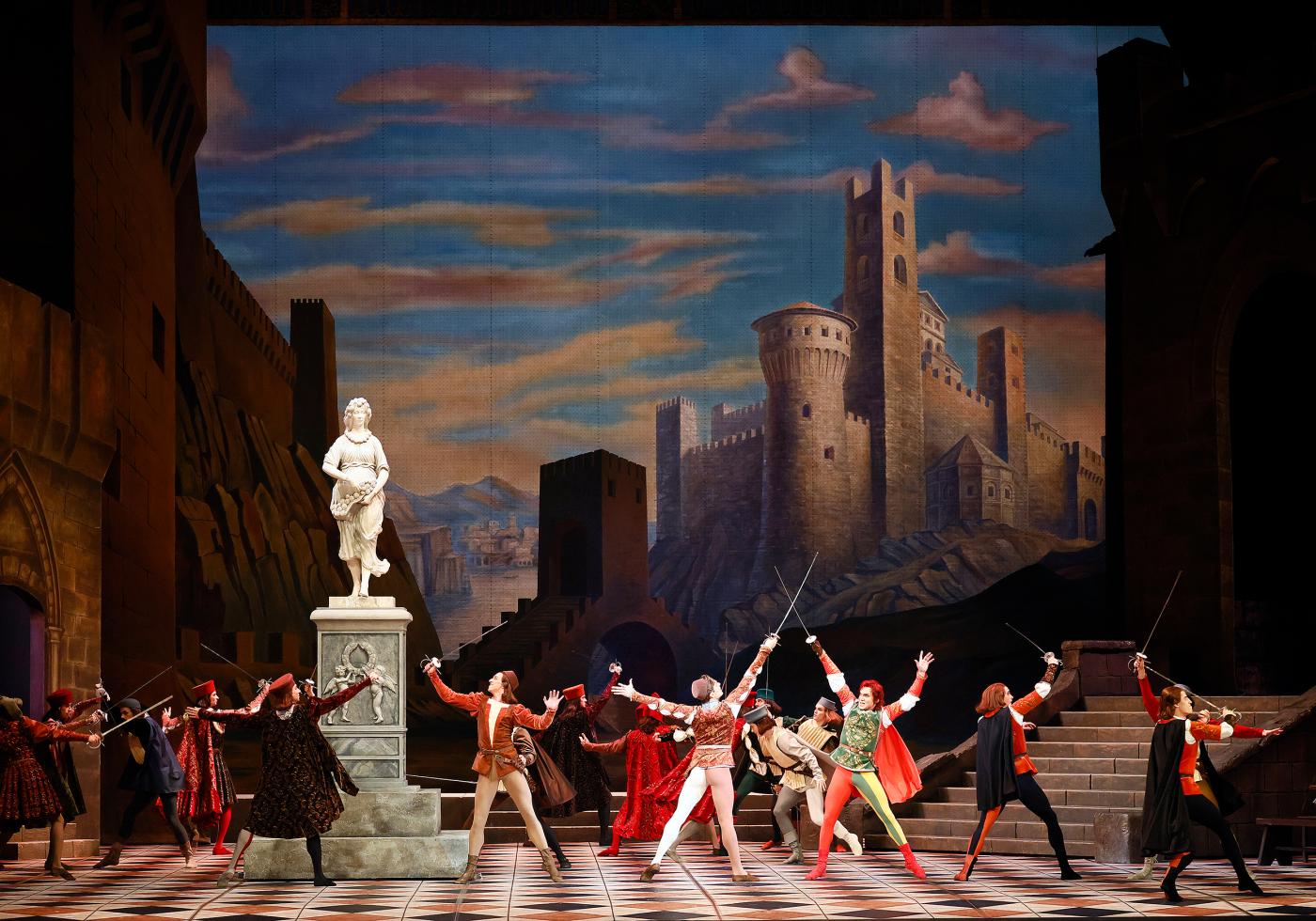
1. D.Efremov (Montague's Servant), I.Alexeyev (Benvolio), M.Lobukhin (Tybalt), and ensemble; “Romeo and Juliet” by L.Lavrovsky, Bolshoi Ballet 2024 © Bolshoi Ballet / D.YusupovIn early April, the Bolshoi Ballet revived Leonid Lavrovsky’s Romeo and Juliet, which senior balletomanes may remember from the company’s famous tours of London and the Met in the 1950s and ‘60s. Galina Ulanova, Raisa Strutchkova, Vladimir Vasiliev, Maris Liepa, and many others wrote ballet history dancing the leading roles. I couldn’t attend the premiere in Moscow but was finally able to watch a video of the opening night. It made me wonder why the production had been dropped from the schedule. Continue reading “Intense”

Reassuring

“Chopiniana”/“Grand Pas from the Ballet Paquita
Bolshoi Ballet
Bolshoi Theatre (Historic Stage)
Moscow, Russia
February 14, 2024

by Ilona Landgraf
Copyright © 2024 by Ilona Landgraf

 1. A.Denisova, “Chopiniana” by M.Fokine, Bolshoi Ballet 2024 © Bolshoi Ballet / D.Yusupov The musicians of the Bolshoi Orchestra are on their toes. After acknowledging the welcoming applause, conductor, Pavel Klinichev, raised his baton in the same instant that he turned around to face them. The vigorous bars that he prompted belonged to a Polonaise by Chopin. It opened Mikhail Fokine’s romantic Chopiniana (1908), which the Bolshoi Ballet revived in November 2022. It’s the first part of a double bill the second piece of which – the Grand Pas from Petipa’s Paquita – has been a landmark of classical dance since its creation in 1881.

There’s no need to discuss how Fokine’s choreography was performed. The Bolshoi is a guarantor of sublime performances. Indeed, the unity of the corps was nothing less than staggering; every step was measured yet effortless like an outpouring of natural decency. Perfect proportions soothed the eye. As the leading sylphs, Anastasia Stashkevich, Elizaveta Kruteleva, and Anastasia Denisova paid great attention to detail, adding the right tinge of buoyancy, melancholy, or playfulness to their solos. Vyacheslav Lopatin’s poet combined sensitivity and decisiveness. His clean and – at times mighty – jumps earned applause. Alyona Pikalova’s set design – an arch of gnarled treetops opening onto a sunny water meadow – invited the mind to dream.
I’ve watched several companies dance Chopiniana, but no performance was as complete as the Bolshoi’s. Perhaps due to experiencing messy times in my home country of Germany (and in the West in general), the refined order and serenity of Chopiniana felt especially comforting. It seemed like the epitome of civilization. Continue reading “Reassuring”
A Patchy Beginning

“The Taming of the Shrew”
Bavarian State Ballet
National Theater
Munich, Germany
September 30, 2017

by Ilona Landgraf
Copyright © 2017 by Ilona Landgraf

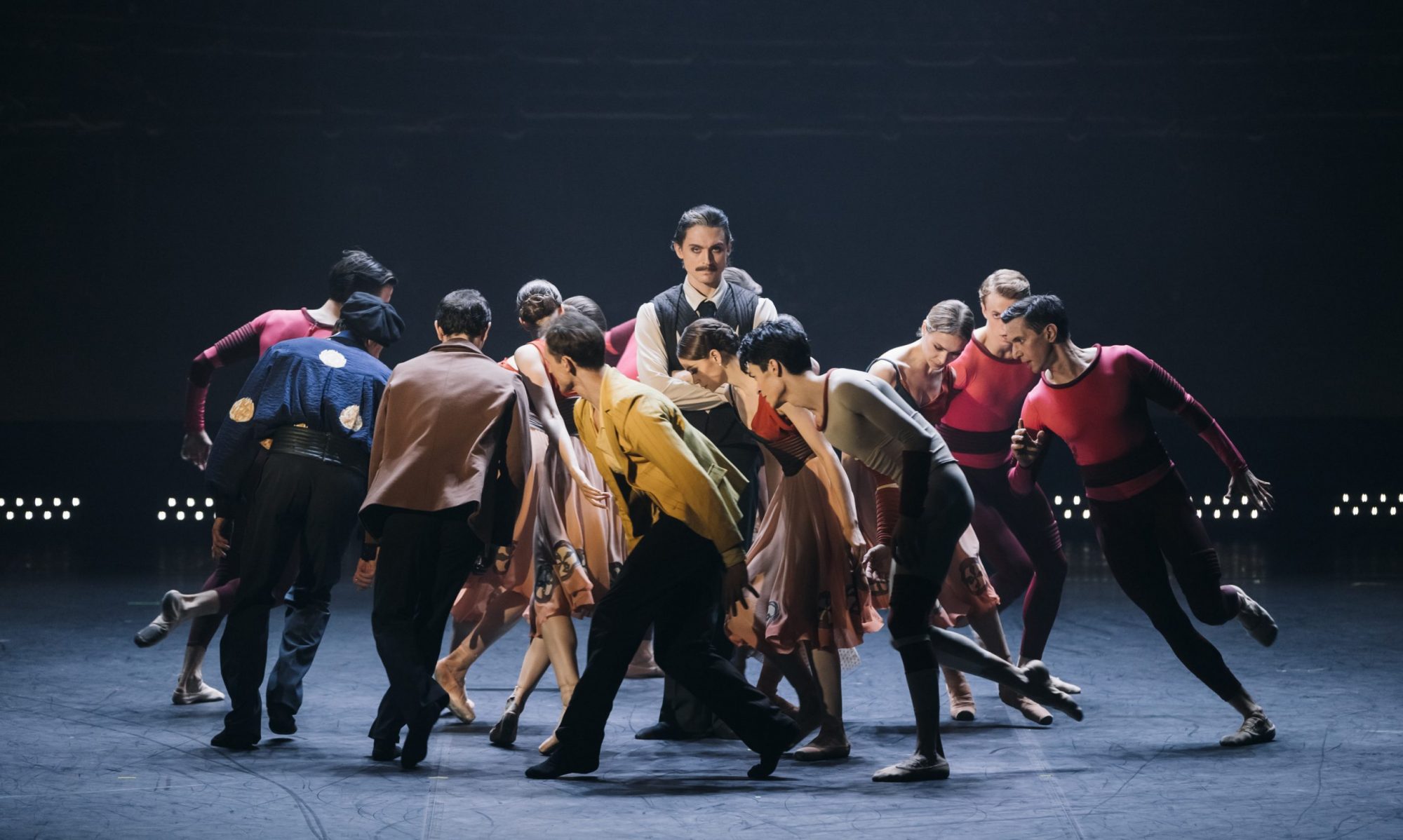
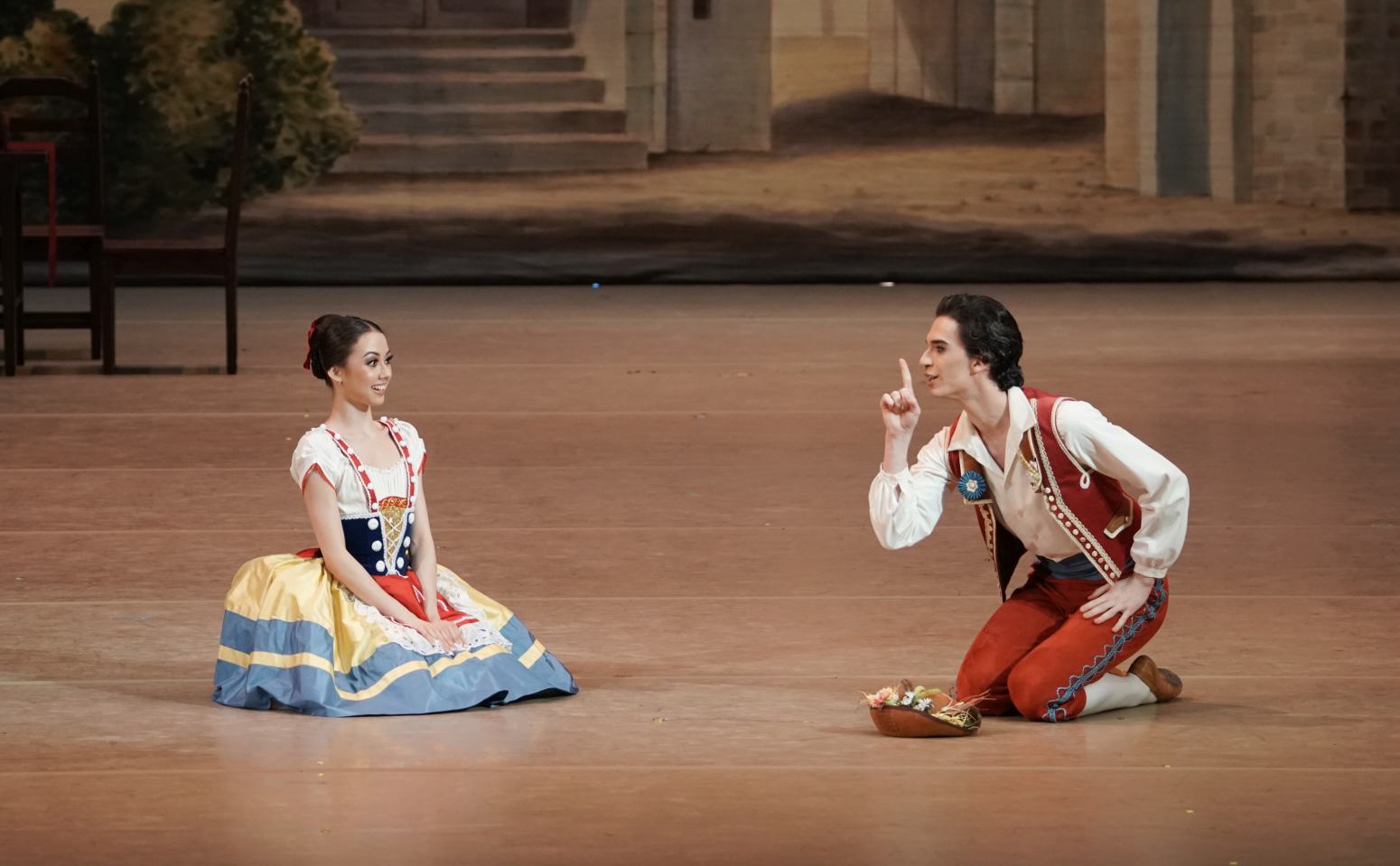
1. J.Amo and E.Kruteleva, “The Taming of the Shrew” by J.Cranko, Bavarian State Ballet 2017 © W.Hösl This August John Cranko would have celebrated his 90th birthday. Stuttgart Ballet honors its founder with several programs, beginning with the triple bill “Cranko Pur” that premiers on October 3rd. The Bavarian State Ballet, which Cranko directed in addition to his Stuttgart company from 1968 – 1972, revives his three big narratives. “The Taming of the Shrew” opened the season. “Onegin” and “Romeo and Juliet” are scheduled for February and April 2018. During the Ballet Festival Weeks next April all three ballets will be danced on three consecutive evenings.
I saw the second performance of “Shrew” led by Natalia Osipova and Sergei Polunin, both guest dancers of the Munich company.

Cranko’s characterization of the figures follows Shakespeare’s comedy closely. We are in Padua in the 17th century. Poor Baptista is kept in suspense by his two daughters. No less than three suitors buzz around the pretty Bianca like bees around the honey pot, but her older sister, the strident Katherina, fights getting married tooth and nail. Bianca is not allowed to marry until Katherina is wed, declares Baptista unceremoniously. But how to marry her off? By accident, Bianca’s suitors – Lucentio, Hortensio and Gremio – run into the young Petruchio and recruit him to court Katherina. Continue reading “A Patchy Beginning”

A Gala without Glamor

“Gala With Stars of the Bavarian State Ballet”
Bavarian State Ballet
Prinzregententheater / Prince Regent Theatre
Munich, Germany
January 15, 2017

by Ilona Landgraf
Copyright © 2017 by Ilona Landgraf

1. M.Shirinkina and V.Shklyarov, “Parting“ by Y.Smekalov, Bavarian State Ballet © W.Hösl 2017Half a year after Igor Zelensky assembled his new company in Munich, a gala seemed like the ideal opportunity to showcase his dancers’ individual talents. The gala was scheduled for three evenings in the city’s Prince Regent Theatre; the third evening, the one I saw, was even streamed live on the internet. Sadly, the Bavarian State Ballet didn’t take advantage of this opportunity. That wasn’t due to the dancers but mainly because of organizational failures. From the outside, it appeared the gala was a necessary ingredient to promote the repertory for this season, but when the time came, resources were inadequate to make the event special. Continue reading “A Gala without Glamor”

Behind the Scenes at the Bavarian State Ballet

“Ballet Extra: A Day of Rehearsals”
Bavarian State Ballet
Ballet Rehearsal Premises, Platzl 7
Munich, Germany
September 10, 2016

by Ilona Landgraf
copyright © 2016 by Ilona Landgraf

1. K.Ryzhkova and O.Gouneo rehearsing “Giselle”, Bavarian State Ballet © S.Ballone 2016Igor Zelensky’s directorship at the Bavarian State Ballet kicked off for the public last Saturday with a “Ballet Extra”. The doors of the rehearsal studios in Munich’s City Center were open from 9:45 AM well into the afternoon. The company – or more precisely its principals, soloists and demi-soloists – rehearsed “Giselle”, the season’s first production, and “Spartacus”. Corps dancers weren’t involved.

People queued up in front of the entrance that morning and it seemed a sizeable crowd although, according to new press spokesperson Annette Baumann, it was slightly smaller than last year’s. Given that it was a lovely late summer day, people may have preferred to spend their free time outdoors rather than in stuffy studios full of hard working dancers. Continue reading “Behind the Scenes at the Bavarian State Ballet”