“Romeo and Juliet”
Bolshoi Ballet
Bolshoi Theatre
Moscow, Russia
December 15, 2018
by Ilona Landgraf
Copyright © 2018 by Ilona Landgraf
 I saw the Bolshoi Ballet in Alexei Ratmansky’s “Romeo and Juliet” for the first time in November 2017, though the choreography premiered in Toronto at the National Ballet of Canada in 2011. The piece is intense, seething with emotions and laden with turmoil. If there is a moment of peace and tranquility it is swiftly swept away by the rush of events. The story feels like a river-boat ride: once you’ve boarded, there’s no stopping or changing course. Instead, the passengers quickly find themselves carried from placid waters to heavy currents and towards a torrential waterfall.
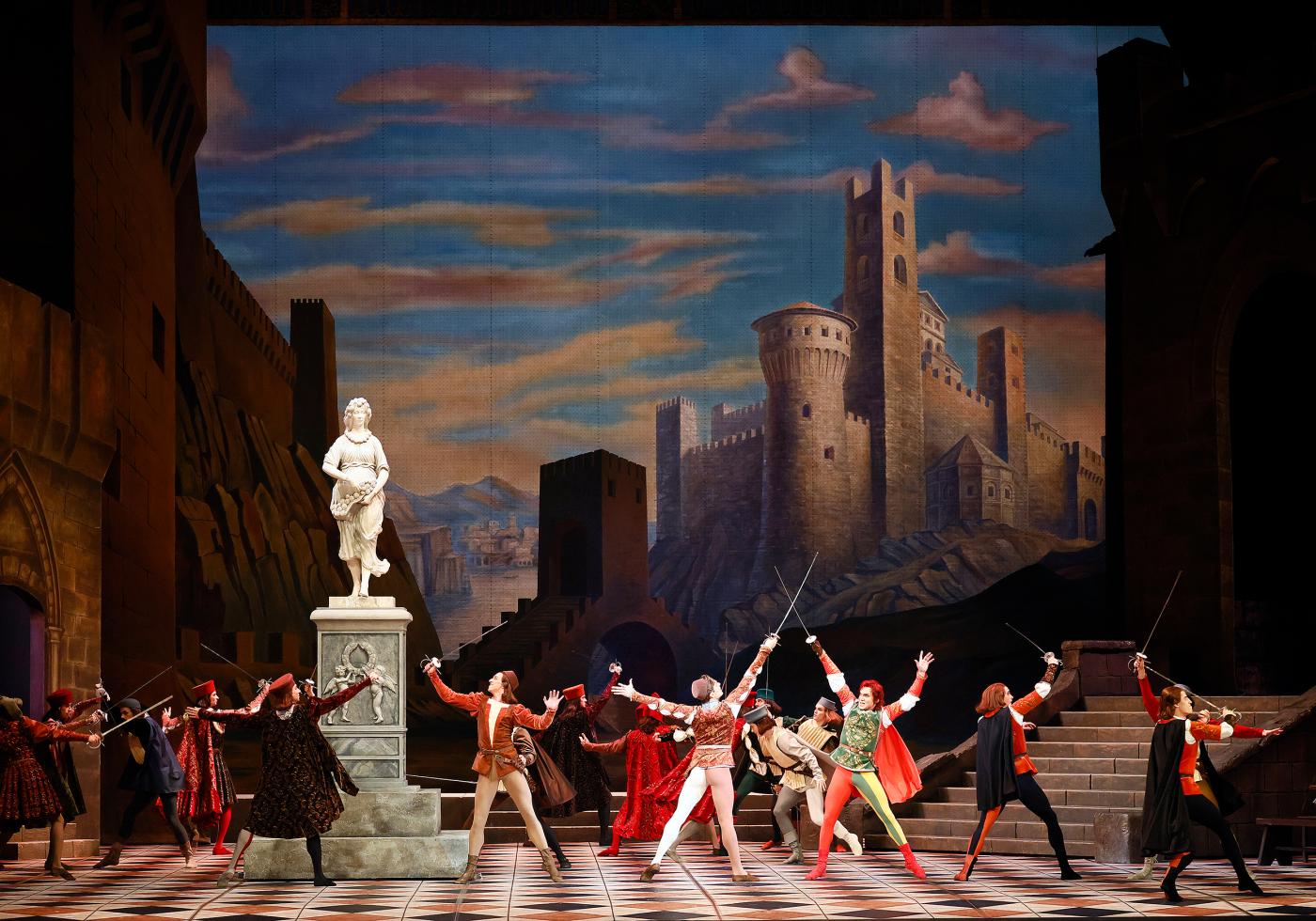
 Of all the ballet productions of “Romeo and Juliet” that I’ve seen, Ratmansky’s rendering captures the essence of Shakespeare’s tragedy best. Ratmansky’s choreography is as complex as Shakespeare’s characters are multi-faceted. Every sequence is telling and meaningful. None of the movements are decorative embellishments. The same applies to Richard Hudson’s unadorned set—though Hudson’s costumes, in contrast, revel in colors, patterns, lavish brocade and velvet, recalling Early Renaissance fashion. It was customary in Verona for rich families to parade their outfits when they gathered; as such, this production is filled with brocade, velvet, bold patterns, fur-trimmed cuffs and headdresses that are daring by today’s standards. Lighting by Jennifer Tipton cleverly underscores the atmosphere.
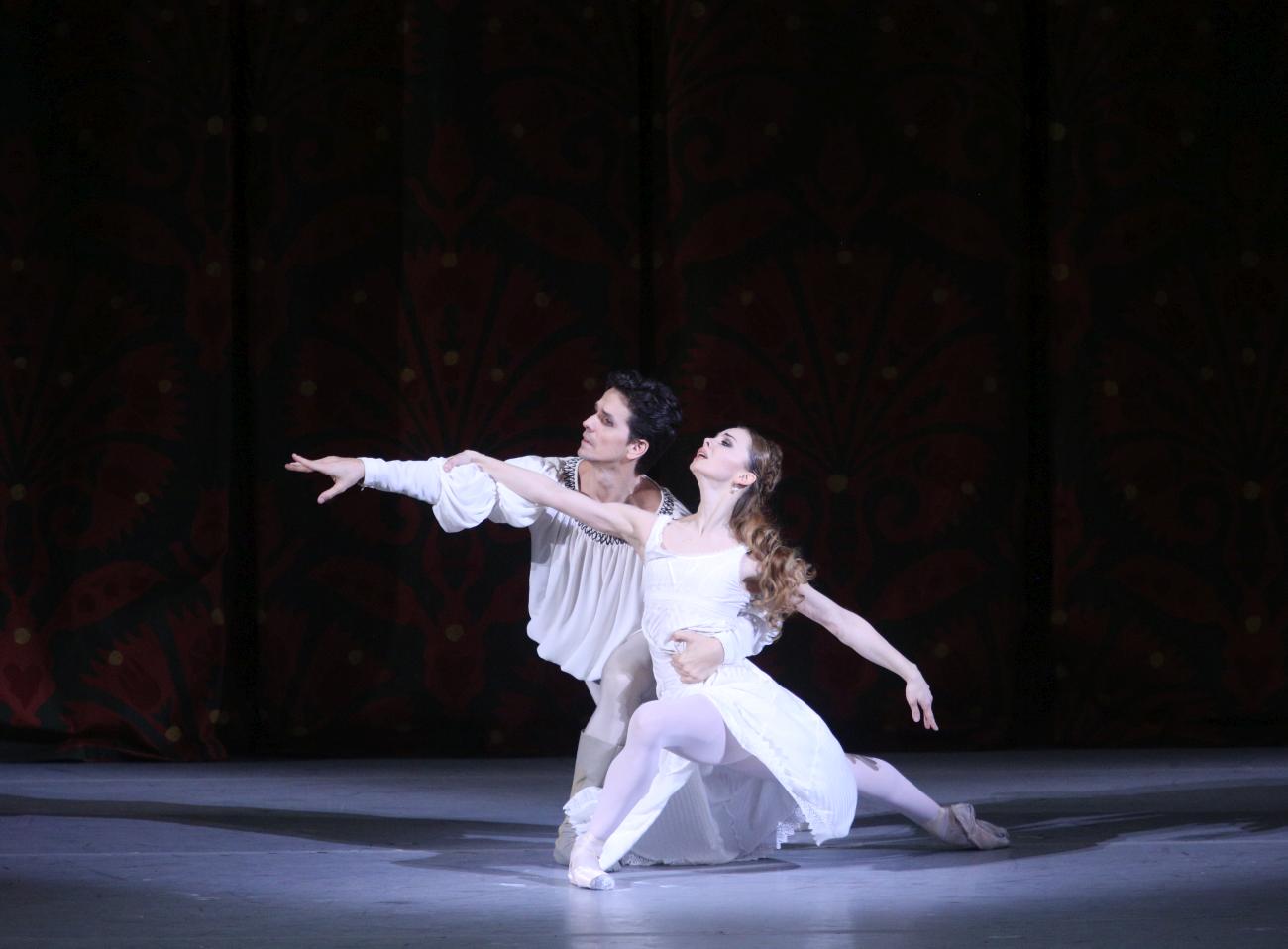
 Last year, I saw Anastasia Stashkevich and Vyacheslav Lopatin perform the titular couple. This time Evgenia Obraztsova danced Juliet, while Guillaume Côté, principal dancer of the National Ballet of Canada (guesting with the Bolshoi for the first time) was her Romeo. Ratmansky originally created the role on Côté in 2011.
Unlike Stashkevich and Lopatin’ Romeo & Juliet—whose love seemed fulfillment—Côté and Obraztsova’s lovers seemed doomed to fail from the start. It seemed as though heaven had chosen two young people as a paragon of ideal love so that those in their surroundings could be reminded of what love is. Apart from Yuri Ostrovsky’s Friar Laurence, a faithful and bold heavenly aide, everyone understood love differently.
 Juliet’s parents Lady and Lord Capulet (Kristina Karasyova and Nikita Elikarov) certainly wanted their daughter to be happy, but within the frame of social decency. Looming Lord Capulet, who by height alone overpowered the petite Juliet, hoped to curb her disobedience by using physical force. Did he ever realize that she might have her own desires? Lady Capulet, despite nearly relenting, decidedly pushed away any compassion and reverted to cold parental authority.
Juliet’s nurse (Anastasia Vinokur) couldn’t have been more kind-hearted, but she did not have the power (and presumably also lacked the courage) to act against social norms. For her, Juliet remained a child. How much it must have hurt her to be rejected by her foster-daughter! And yet the nurse stoically swallowed her grief, made the sign of the cross towards Juliet, and left. It was the strongest moment of Vinokur’s performance.

 Could we assume that Count Paris (Ivan Alexeyev) loved Juliet? Compliant and well-behaved as he was, he would have made a reputable groom-to-be. However, his intentions to marry were motivated by social considerations rather than by deep-running emotions. In reality, he hardly knew her. And Tybalt (Vitaly Biktimirov)? Can one even consider “love” when thinking about him? Who could possibly have been won over by this man whose communicative abilities were limited to ridiculous haughtiness and unprompted aggression? A man who would point his sword at any chest to make himself feel superior? Falling in love might have rescued Tybalt from his fate, but no female candidate, near or far, was interested.
 The love affairs of Mercutio (Anton Savichev) and Benvolio (Mikhail Kochan), Romeo’s best buddies, revolved more around the body than the soul. Mercutio, in particular, pranced, hopped, and jumped with quick sassy energy—and plenty of that energy to spare. All three would have gone through hell and high water for the others, and so maybe their friendship was fueled by a sort of love—but if so, it was a love wrapped in nonstop tomfoolery.
Obraztsova’s Juliet was a source of pure positivity – beauty, charm, joie de vivre, lightness, inborn grace, naturalness—and was loved by everyone. Although she was struck by love as if by lightning, faced with existential decisions that forced her to grow up with little notice, this Juliet never lost her inner balance.

 She always stayed true to herself. All the moments of off-balance that Ratmansky included only highlighted the resilience and determination of her soul. And besides, Obraztsova’s dancing can’t help but seem harmonious: she has ideal proportions and, most importantly, she gives herself fully to every moment. Obraztsova is all dance.

 Côté puts his Romeo through an emotional roller-coaster, wavering between confidence and moments of insecurity. For him, falling in love with Juliet is completely different than his infatuation with Rosaline—and it’s clear that Romeo finds the depth of this love a bit intimidating at first. However, you should have seen how he livened up after stealing a kiss and how blissfully and triumphantly he soared offstage after the balcony rendezvous. Côté credibly portrayed Romeo’s radical change. Twice he hesitated to fight against Tybalt. The third time his rage won over. It was a maturing fight for Romeo, done with clear, focused eyes against an opponent whose eyeballs bulged with blind fury. Côté was especially strong in the crypt scene when finding the supposedly dead Juliet. One felt wretched watching his infinite grief.

 One might presume that minus the unhappy ending, this is kind of love that many of the Veronese folk (and the audience) might wish to experience. So why didn’t it work out for Romeo and Juliet? Is it because there’s always one meanie who doesn’t allow others their bliss? Or maybe because ideal love cannot survive daily routine? Would narrow-mindedness and social etiquette have stifled their love regardless? Besides, when considering the raw force with which the Lords of the Capulet and Montague families crossed their swords (Lord Montague was performed by Alexander Fadeyechev), did tender feelings really have a place in this society?
Moreover, wasn’t Friar Laurence’s plan with the potion unrealistic from the start? As we watched him explain the potion to Juliet, it was obvious that his idea wouldn’t work. When at a dead-end, one clings to the most absurd fantasies that everything will turn out well in the end.

 One might presume that minus the unhappy ending, this is kind of love that many of the Veronese folk (and the audience) might wish to experience. So why didn’t it work out for Romeo and Juliet? Is it because there’s always one meanie who doesn’t allow others their bliss? Or maybe because ideal love cannot survive daily routine? Would narrow-mindedness and social etiquette have stifled their love regardless? Besides, when considering the raw force with which the Lords of the Capulet and Montague families crossed their swords (Lord Montague was performed by Alexander Fadeyechev), did tender feelings really have a place in this society?
Corps scenes were fresh and brimming with energy. The atmosphere of Verona’s town square flowed seamlessly between liveliness and compassion to aggression and hate. Four fools in black and white costumes featuring grotesque masks entertained the masses with several plain and slightly boring numbers. Their primitive capers seemed to mirror the scope of mind of the common folk.
The engine of the performance was Prokofiev’s thumping score—of which Pavel Klinichev and the Bolshoi Orchestra gave a skillful rendition.

| Links: |
|
Website of the Bolshoi Theatre |
|
|
Website of the National Ballet of Canada |
| Photos: |
1. |
Evgenia Obraztsova (Juliet) and Guillaume Côté (Romeo), “Romeo and Juliet” by Alexei Ratmansky, Bolshoi Ballet 2018
|
| |
2. |
Mikhail Kochan (Benvolio), Guillaume Côté (Romeo) and Anton Savichev (Mercutio), “Romeo and Juliet” by Alexei Ratmansky, Bolshoi Ballet 2018 |
| |
3. |
Anton Savichev (Mercutio), Guillaume Côté (Romeo) and Mikhail Kochan (Benvolio), “Romeo and Juliet” by Alexei Ratmansky, Bolshoi Ballet 2018 |
| |
4. |
Guillaume Côté (Romeo), “Romeo and Juliet” by Alexei Ratmansky, Bolshoi Ballet 2018 |
|
5. |
Mikhail Kochan (Benvolio), Guillaume Côté (Romeo) and Anton Savichev (Mercutio), “Romeo and Juliet” by Alexei Ratmansky, Bolshoi Ballet 2018 |
|
6. |
Anton Savichev (Mercutio), Guillaume Côté (Romeo) and Mikhail Kochan (Benvolio), “Romeo and Juliet” by Alexei Ratmansky, Bolshoi Ballet 2018 |
|
7. |
Evgenia Obraztsova (Juliet), Ivan Alexeyev (Count Paris) and corps de ballet, “Romeo and Juliet” by Alexei Ratmansky, Bolshoi Ballet 2018 |
|
8. |
Guillaume Côté (Romeo), Yuri Ostrovsky (Friar Laurence) and Evgenia Obraztsova (Juliet), “Romeo and Juliet” by Alexei Ratmansky, Bolshoi Ballet 2018 |
|
9. |
Guillaume Côté (Romeo), “Romeo and Juliet” by Alexei Ratmansky, Bolshoi Ballet 2018 |
|
10. |
Guillaume Côté (Romeo) and Evgenia Obraztsova (Juliet), “Romeo and Juliet” by Alexei Ratmansky, Bolshoi Ballet 2018 |
|
11. |
Guillaume Côté (Romeo) and Evgenia Obraztsova (Juliet), “Romeo and Juliet” by Alexei Ratmansky, Bolshoi Ballet 2018 |
|
12. |
Kristina Loseva (Prostitute), Vitaly Biktimirov (Tybalt) and corps de ballet, “Romeo and Juliet” by Alexei Ratmansky, Bolshoi Ballet 2018 |
|
13. |
Guillaume Côté (Romeo), Anton Savichev (Mercutio) and corps de ballet, “Romeo and Juliet” by Alexei Ratmansky, Bolshoi Ballet 2018 |
|
14. |
Yuri Ostrovsky (Friar Laurence) and Evgenia Obraztsova (Juliet), “Romeo and Juliet” by Alexei Ratmansky, Bolshoi Ballet 2018 |
|
15. |
Evgenia Obraztsova (Juliet), “Romeo and Juliet” by Alexei Ratmansky, Bolshoi Ballet 2018 |
|
16. |
Evgenia Obraztsova (Juliet) and Guillaume Côté (Romeo), “Romeo and Juliet” by Alexei Ratmansky, Bolshoi Ballet 2018 |
|
|
all photos © Bolshoi Ballet / Elena Fetisova |
| Editing: |
|
Jake Stepansky |
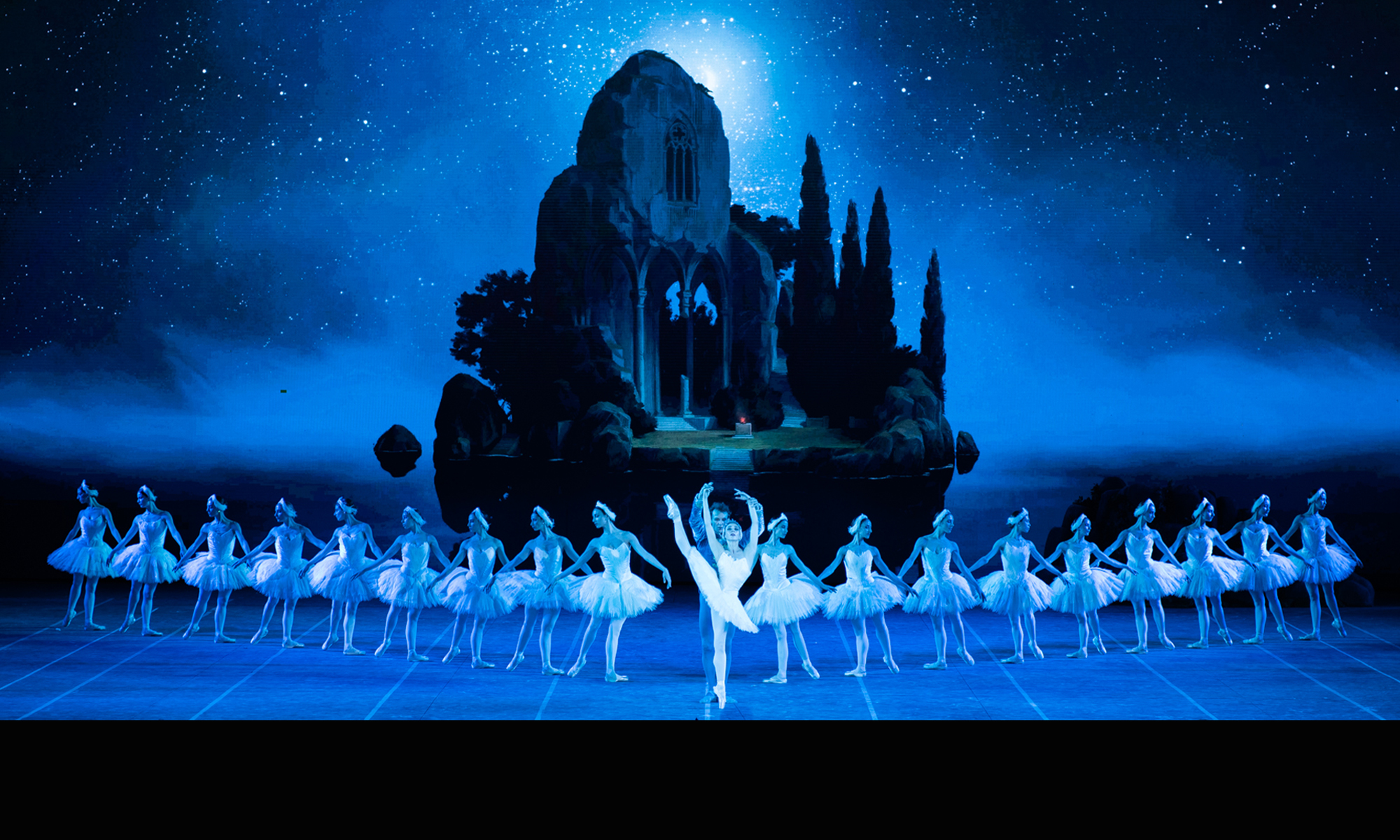
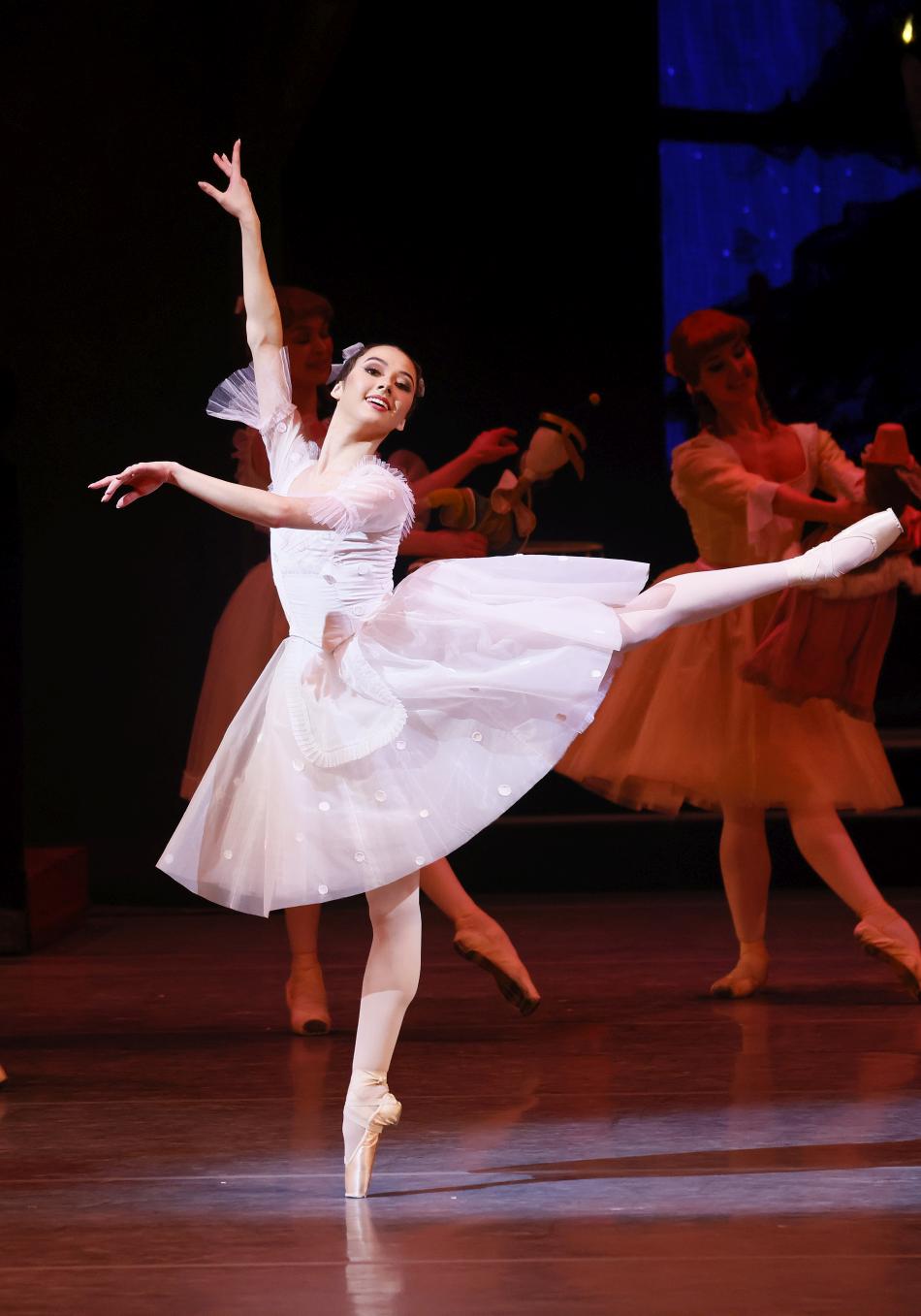
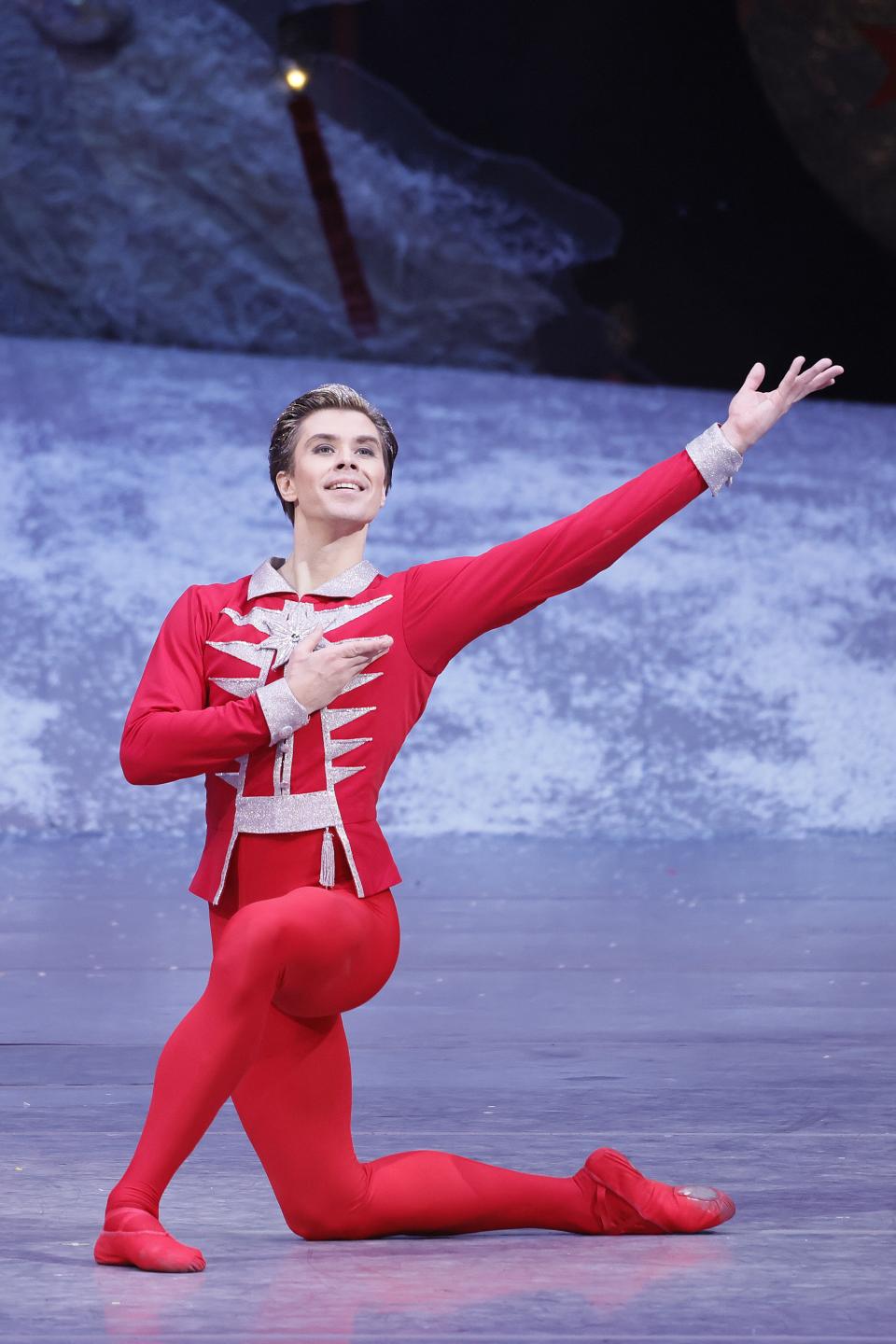 During this year’s Christmas sermon, my pastor asked which moment should best represent Christmas. The Christmas dinner? The lighting of the candles? Or, perhaps, unwrapping the presents? For me, this moment was the moment during the Bolshoi Ballet’s performance of The Nutcracker when the newlywed Marie (Elizaveta Kokoreva) and the Nutcracker Prince (Artem Ovcharenko) were lifted by their court toward the star at the top of the Christmas tree. It was the climax of their spiritual journey and of Yuri Grigorovich’s choreography for which I had been waiting since I last saw his Nutcracker live in Moscow in 2022.