“Pushkin”
Ballet of the Krasnoyarsk State Opera and Ballet Theatre
Hvorostovsky Krasnoyarsk State Opera and Ballet Theatre
Krasnoyarsk, Russia
March 15, 2026 (video)
by Ilona Landgraf
Copyright © 2026 by Ilona Landgraf
 Three years after Catharsis Dante, the Moscow-based choreographer Nikita Dmitrievsky created a second piece, Pushkin, for the Krasnoyarsk Ballet. Its two densely pact acts deal with Russia’s literary hero, Alexander Pushkin (1799-1837), and his inner life and spiritual being. Except for the music, which is by Konstantin Borosov (his first ballet composition), Dmitrievsky was in charge of the entire production (i.e., the choreography, libretto, lighting, and set, costume, and video design). I had the opportunity to watch a video of the premiere, which took place on March 15th.
As the libretto comprises no fewer than twenty-seven scenes, becoming familiar with the synopsis in advance is highly recommended. It spans the period from 1599, two hundred years before Pushkin’s birth, to the far future of 2237, when his energy will still be out there in the universe. His incarnation was only a transient period in the course of providence. Dmitrievsky’s Pushkin zaps through its hero’s providence and leaves us to conclude that there’s a higher design men cannot circumvent. I especially liked the piece’s vision for the near future of 2030: a paradise on earth where existence is beautiful.
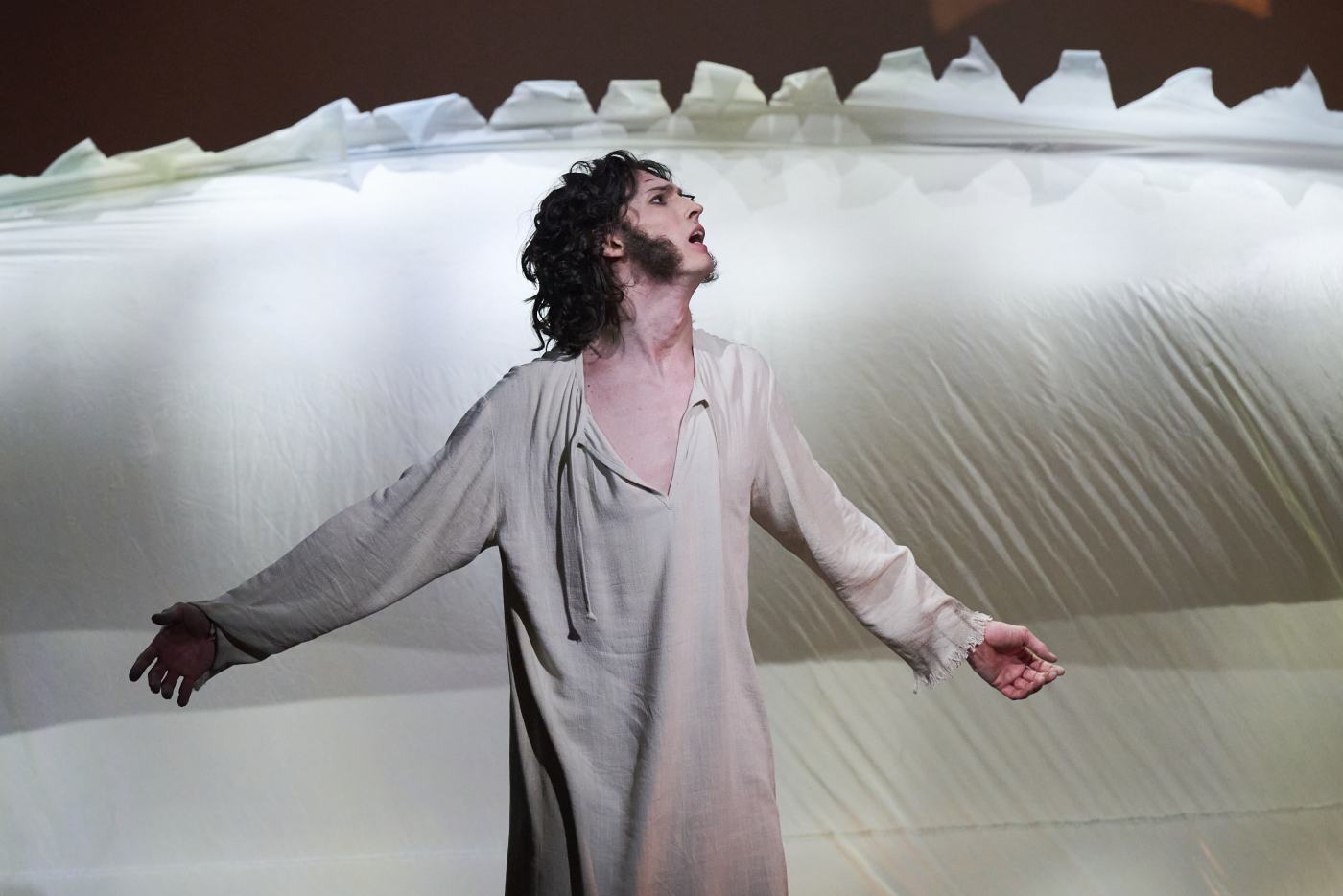
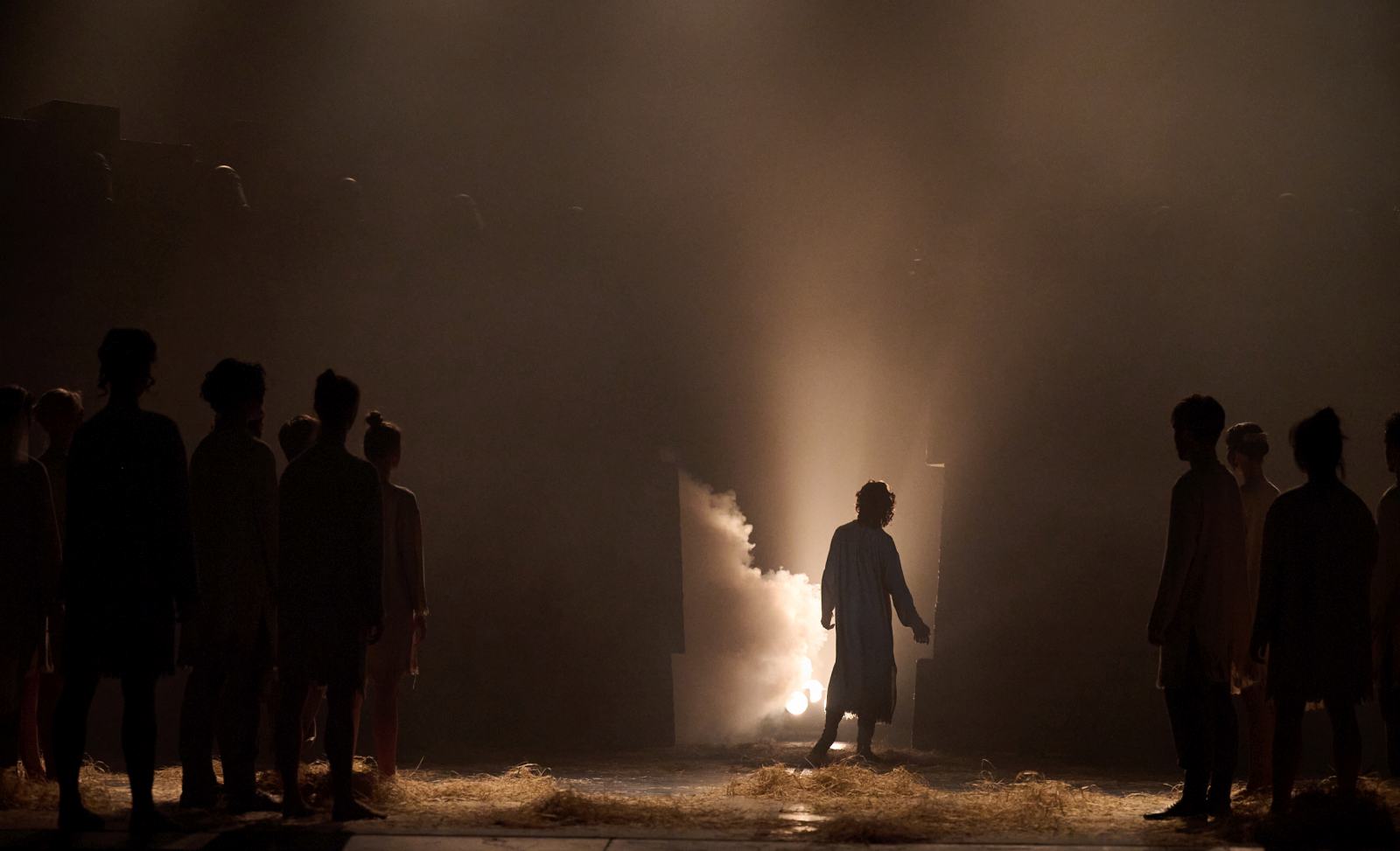
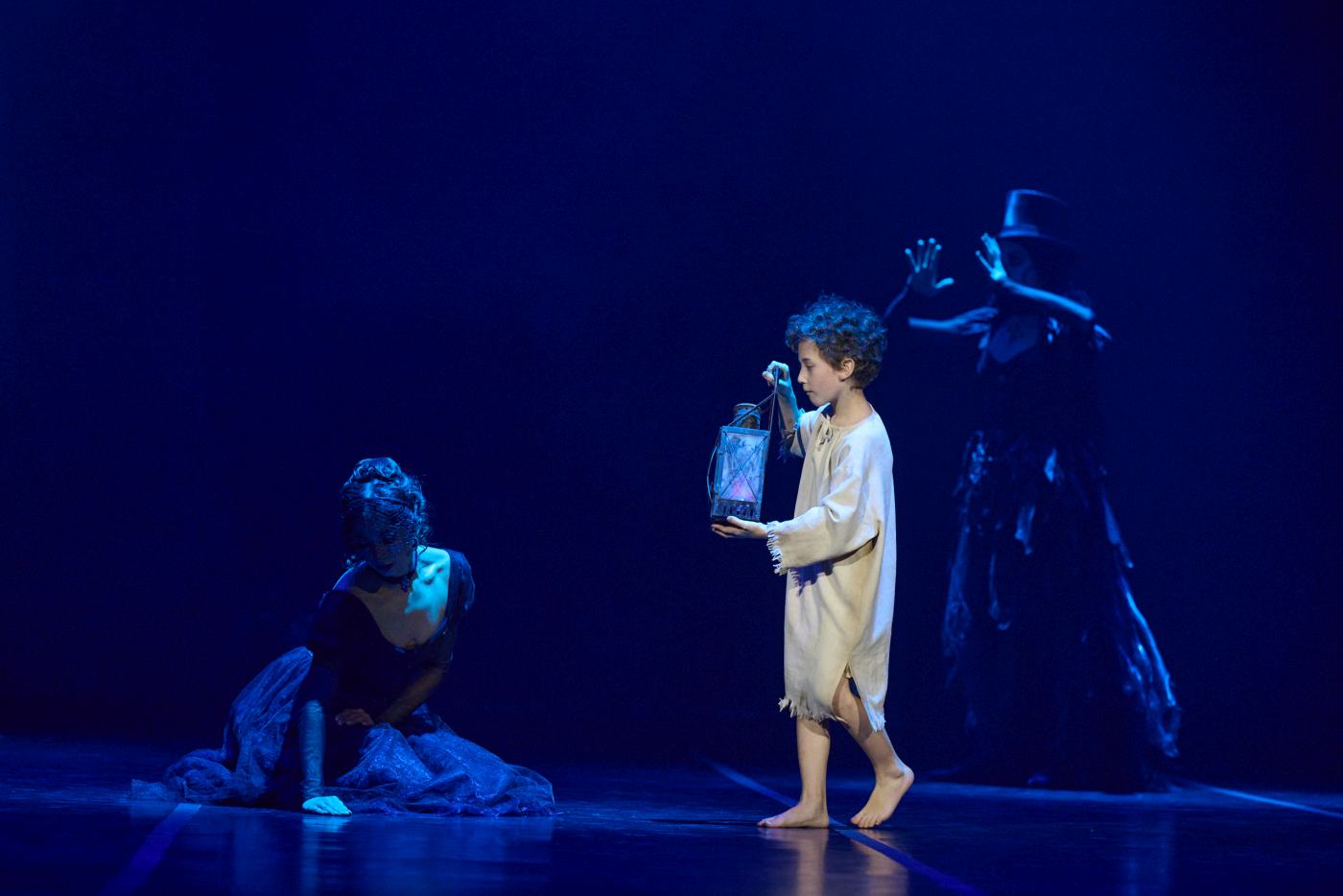 The first scene plays in 1699, one hundred years before Pushkin was born. His young self (the libretto calls him “prophet”), a frizzy-haired boy in a white night gown (Stepan Smirnov), wanders between motionless people, examining them with a lantern in hand. The time to choose his future path and companions has not yet come.
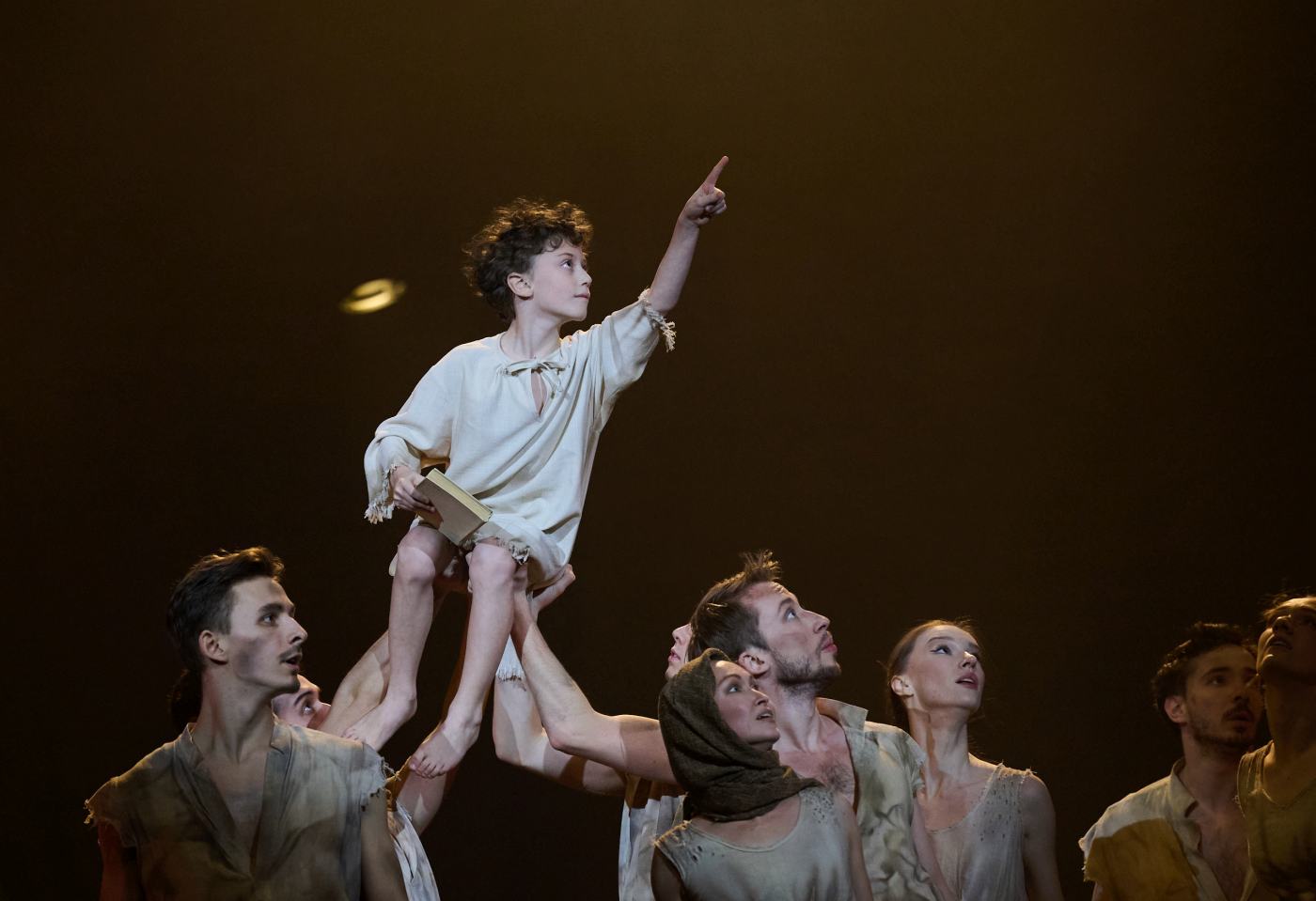
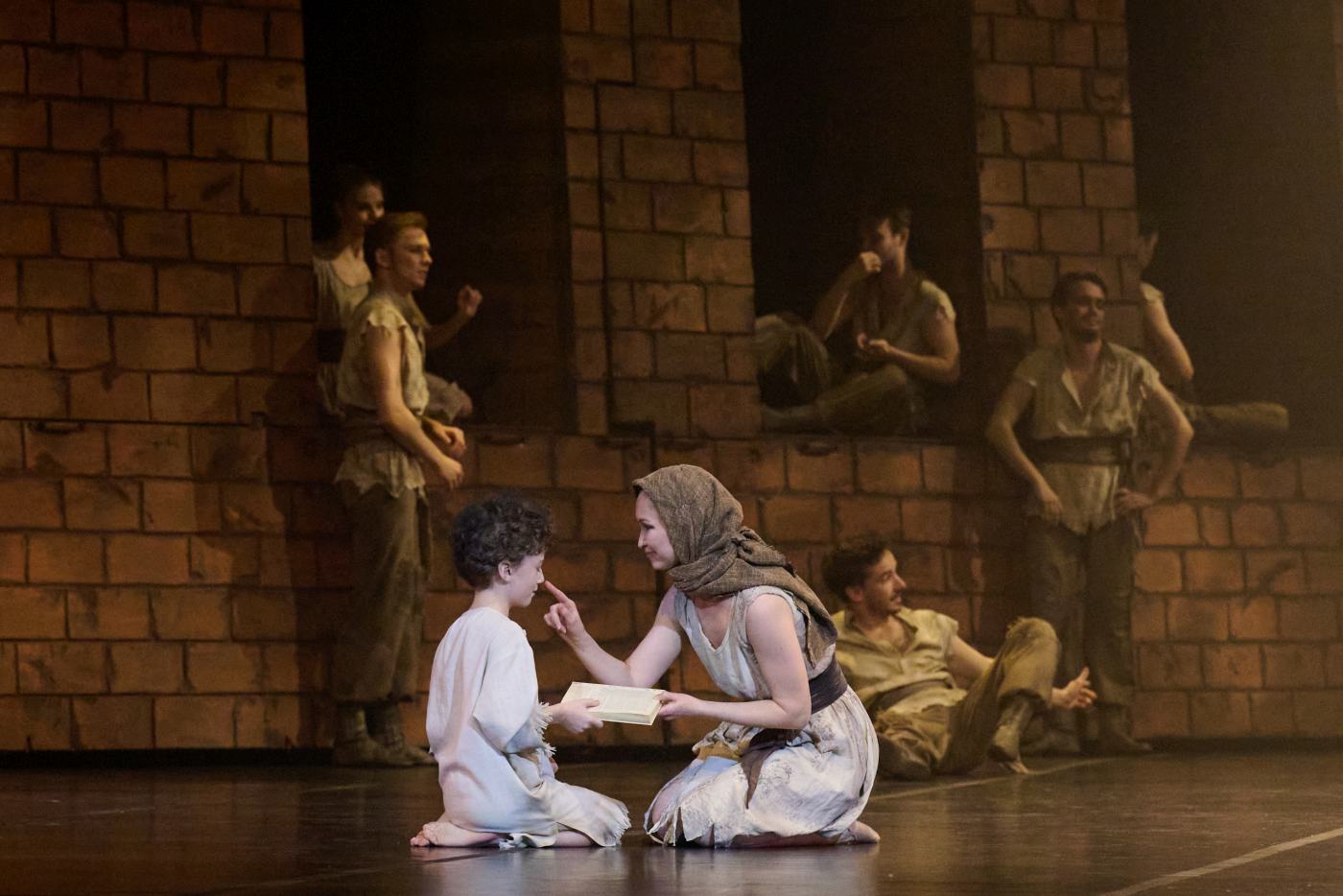
 The second scene transports us to 1805 when Pushkin is already six years old (and still played by Stepan Smirnov). Two men accompany him as he watches an earthy, boisterous folk dance from the sidelines. There, he meets his future nanny (Yana Glukhova), who sparks his interest in reading. The book she gives him unlocks his mental power. Suddenly, an aura of genius surrounds the boy, and his index finger leads the way. All glance in its direction.
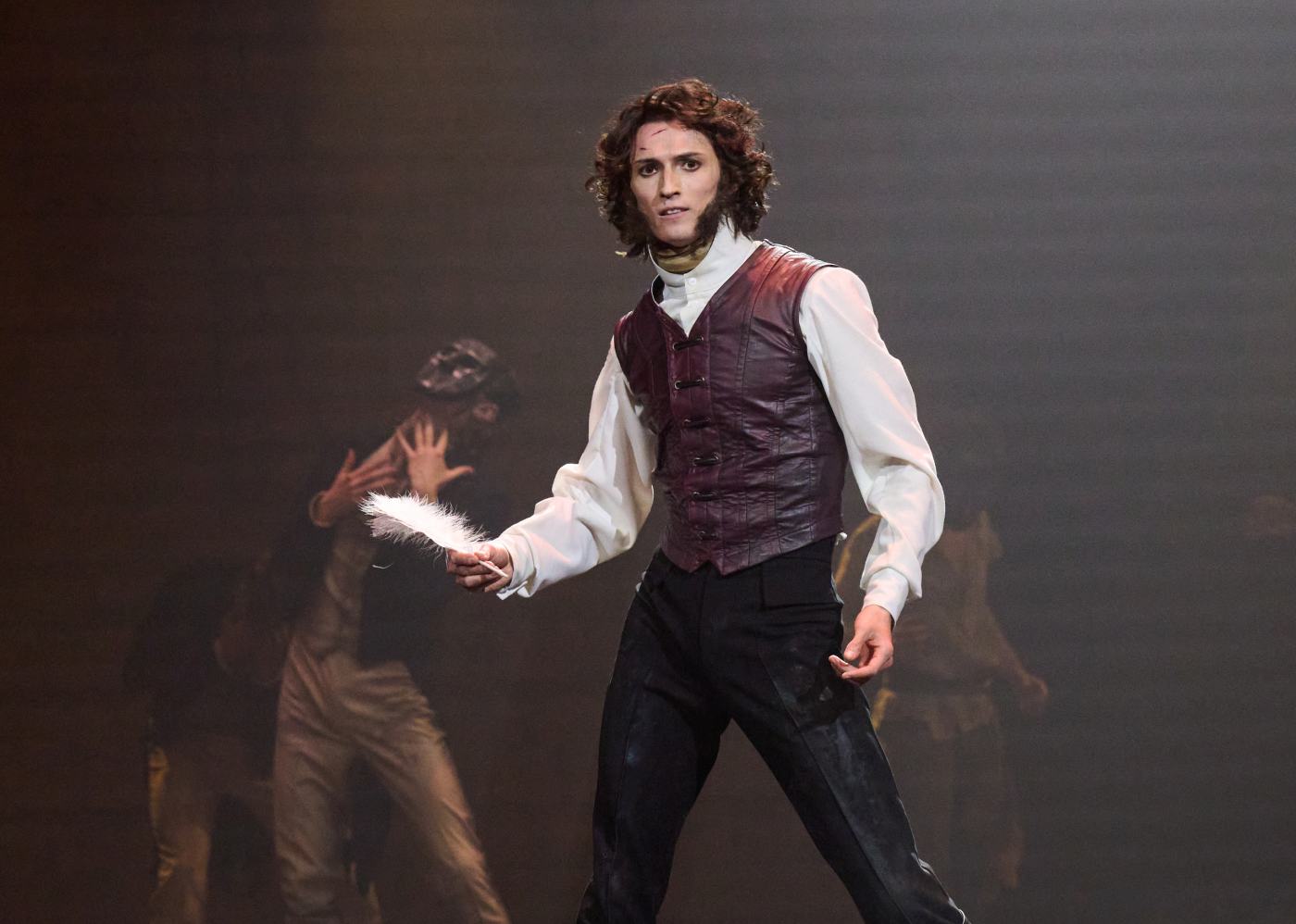
 Four years later, in 1809, at the Imperial Lyceum near St. Petersburg, the boy has grown into a young man (Yury Kudryavtsev, sporting the poet’s characteristic sideburns). In the next scene, he’s in the paradise mentioned earlier (i.e., Boldino, a family estate in the countryside). According to his biography, Pushkin spent three extraordinarily productive months there in 1830. Nothing about the set or costume design reveals that the ballet fast-forwarded the Boldino period by two hundred years. But that’s irrelevant compared to the love of life and joy (which the locals savor with almost breathless eagerness) and the time Pushkin and his wife, Natalya (Anna Kudryavtseva), take to enjoy their love in a sensual pas de deux.
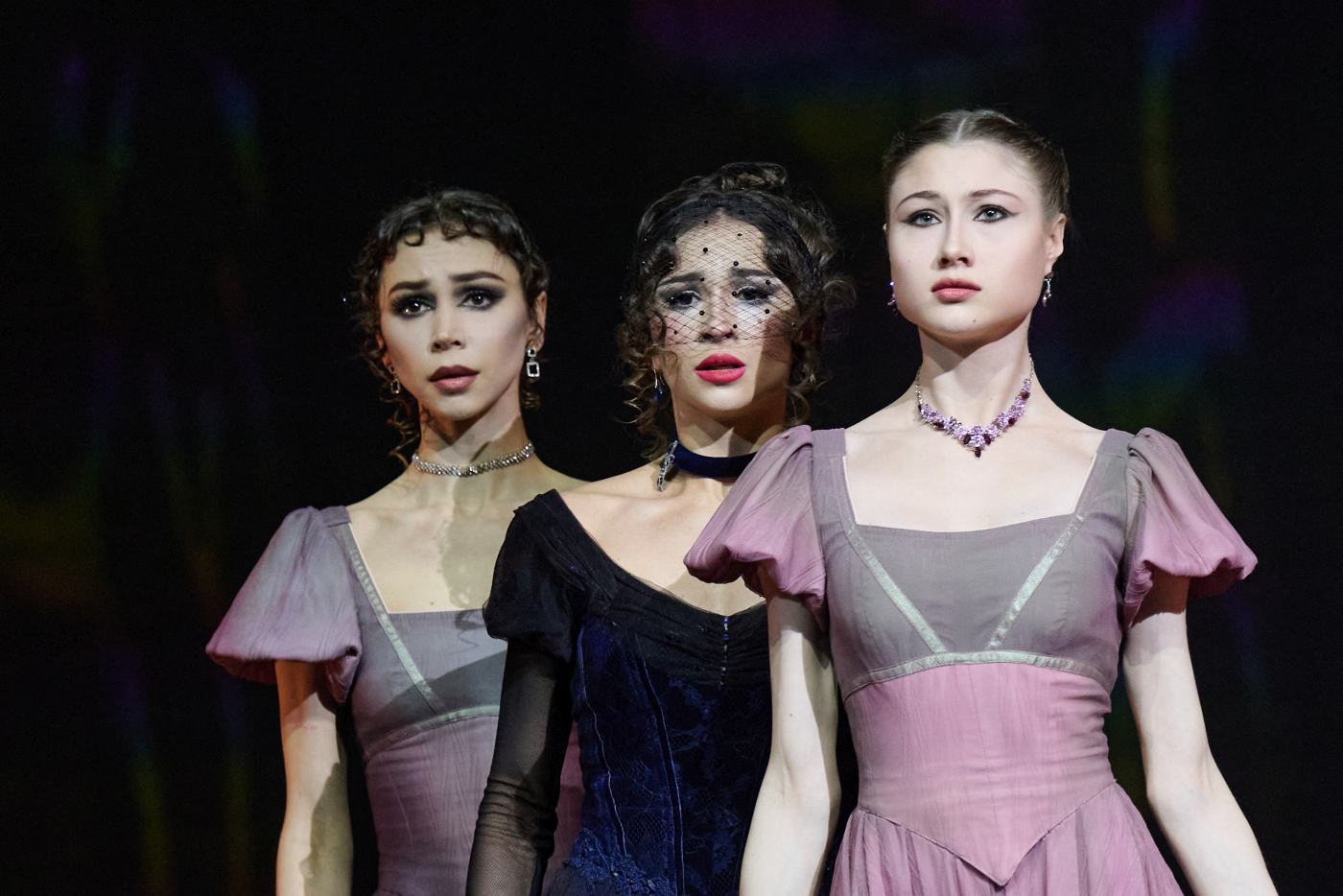
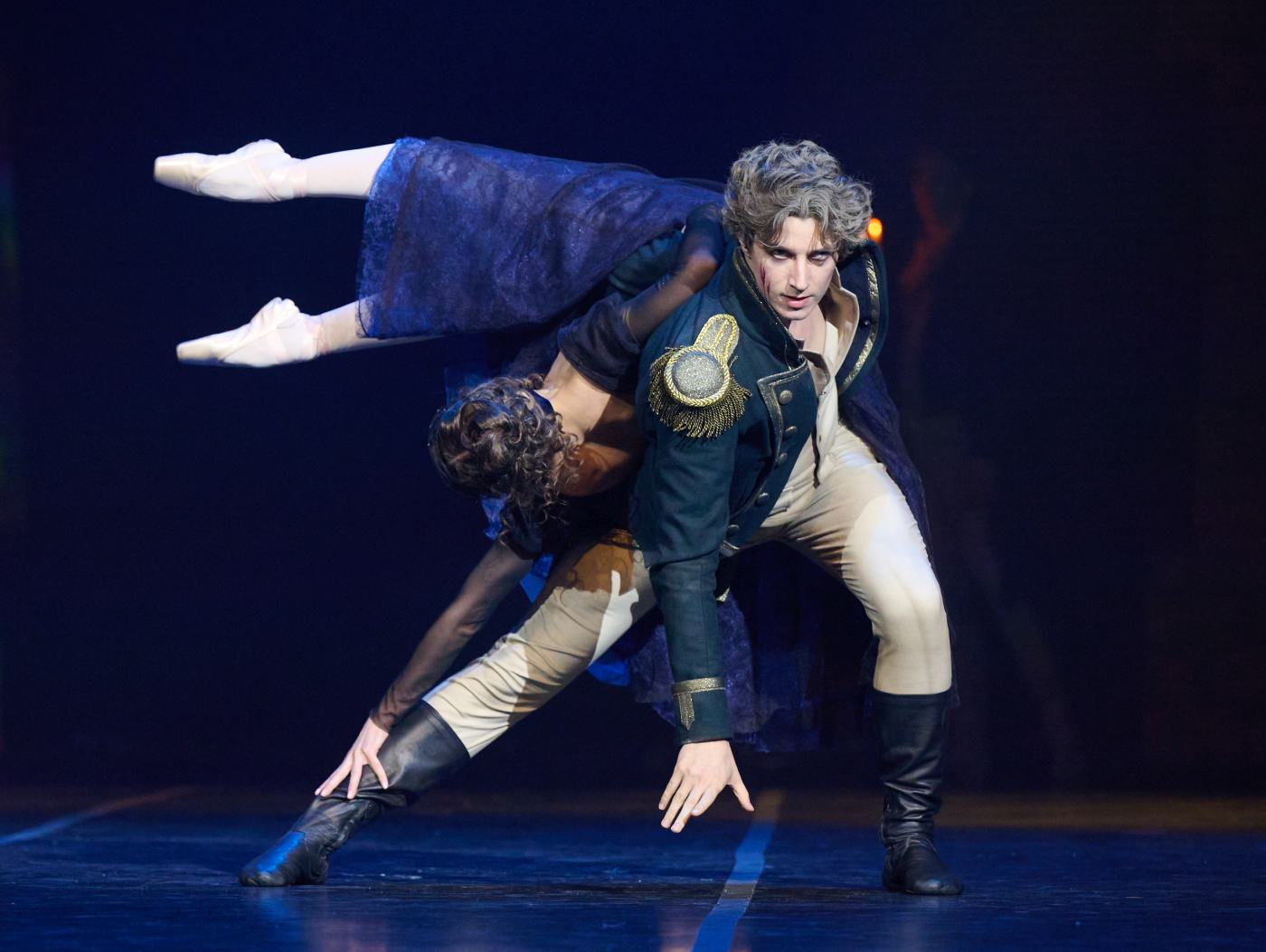
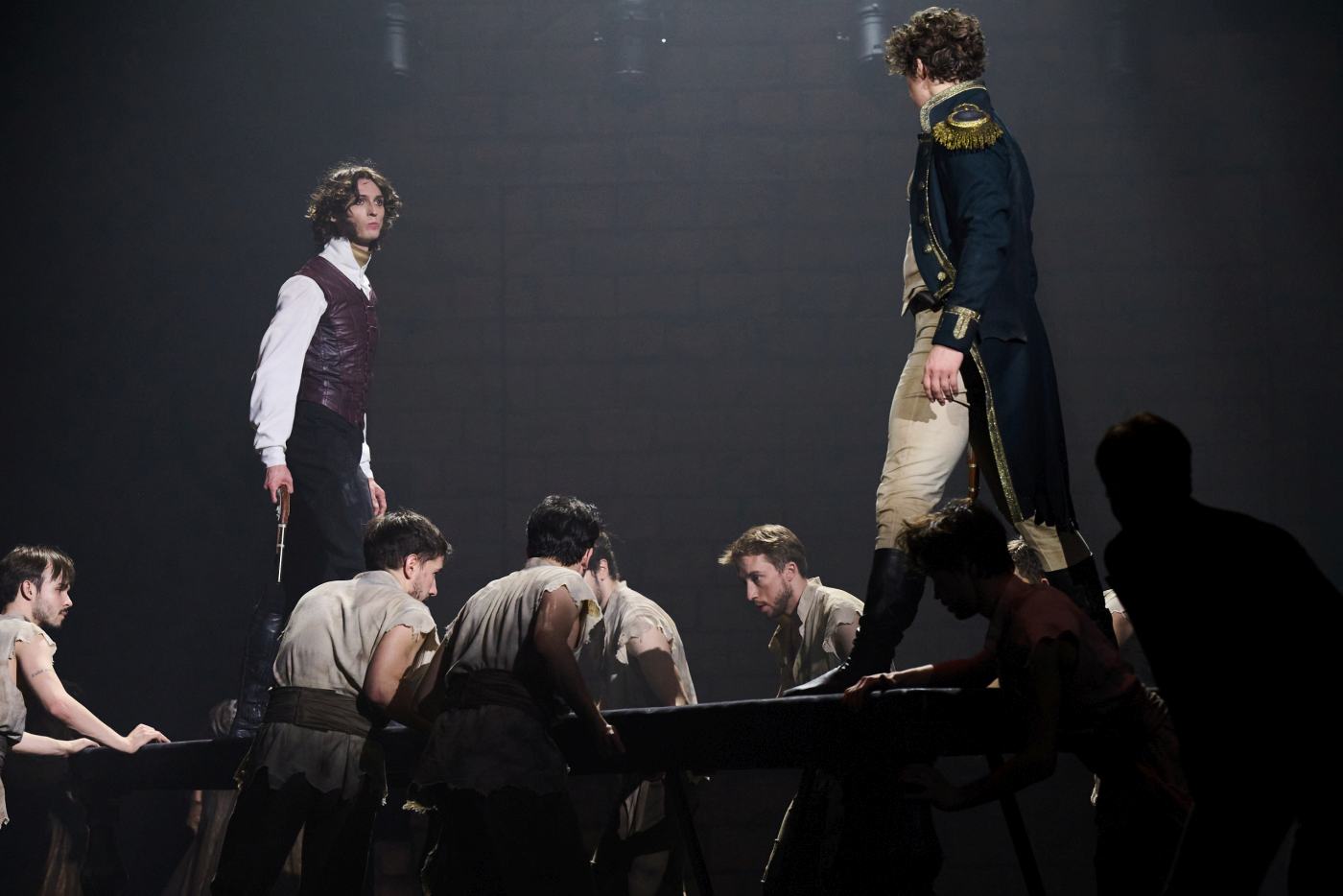
 Thirteen years younger than her husband and a Moscow beauty, Natalya attracts men’s desires, and above all, that of Georges D’Anthès, which ultimately leads to the duel in which Pushkin is fatally wounded. Opinions differ as to whether Natalya reciprocated D’Anthès’s feelings. Dmitrievsky’s Natalya is thoroughly faithful and resolved to defend herself against D’Anthès’s (Grigory Botenkov) assaults. But aided by two potent accomplices, he successfully plots against her marriage and Pushkin.
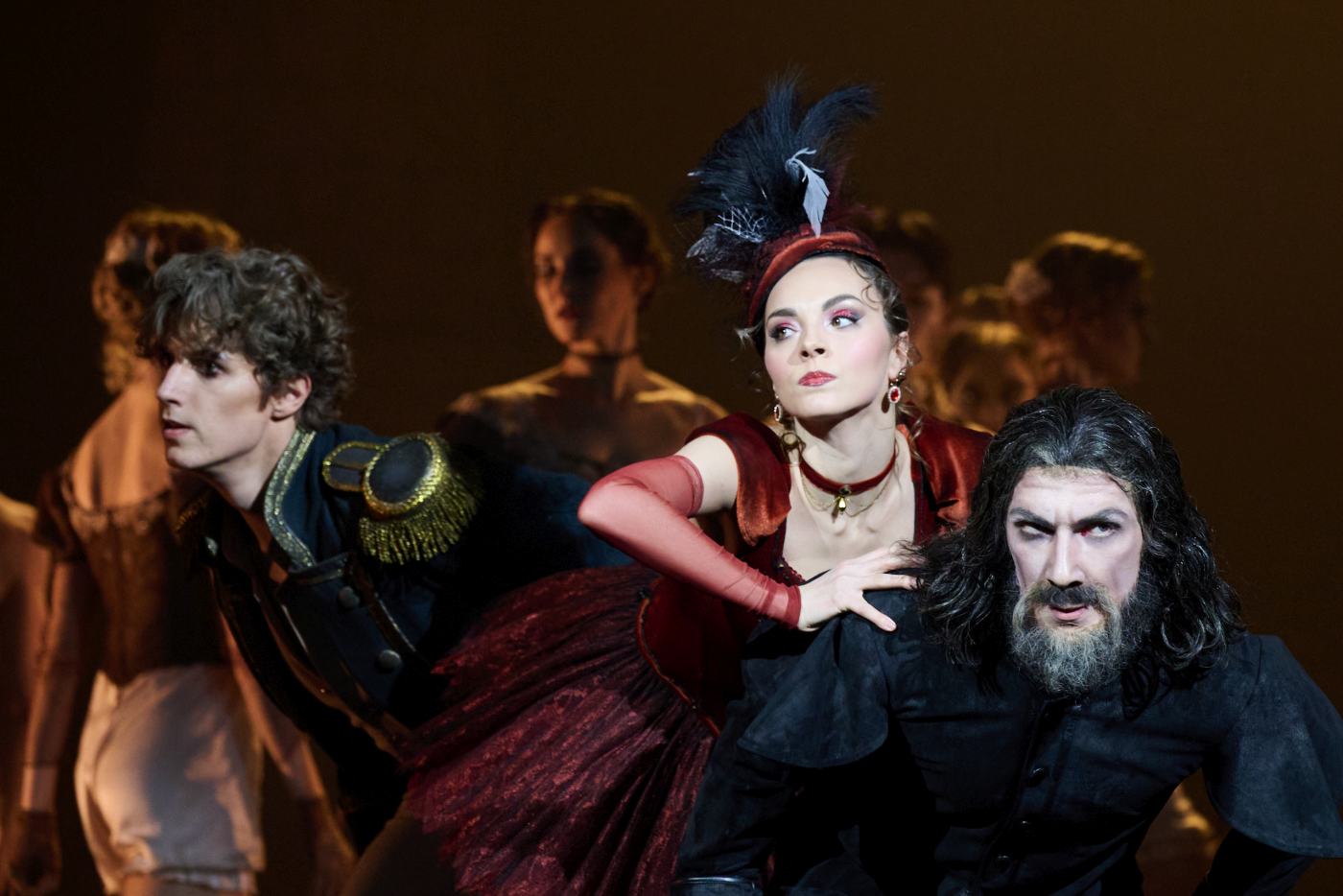
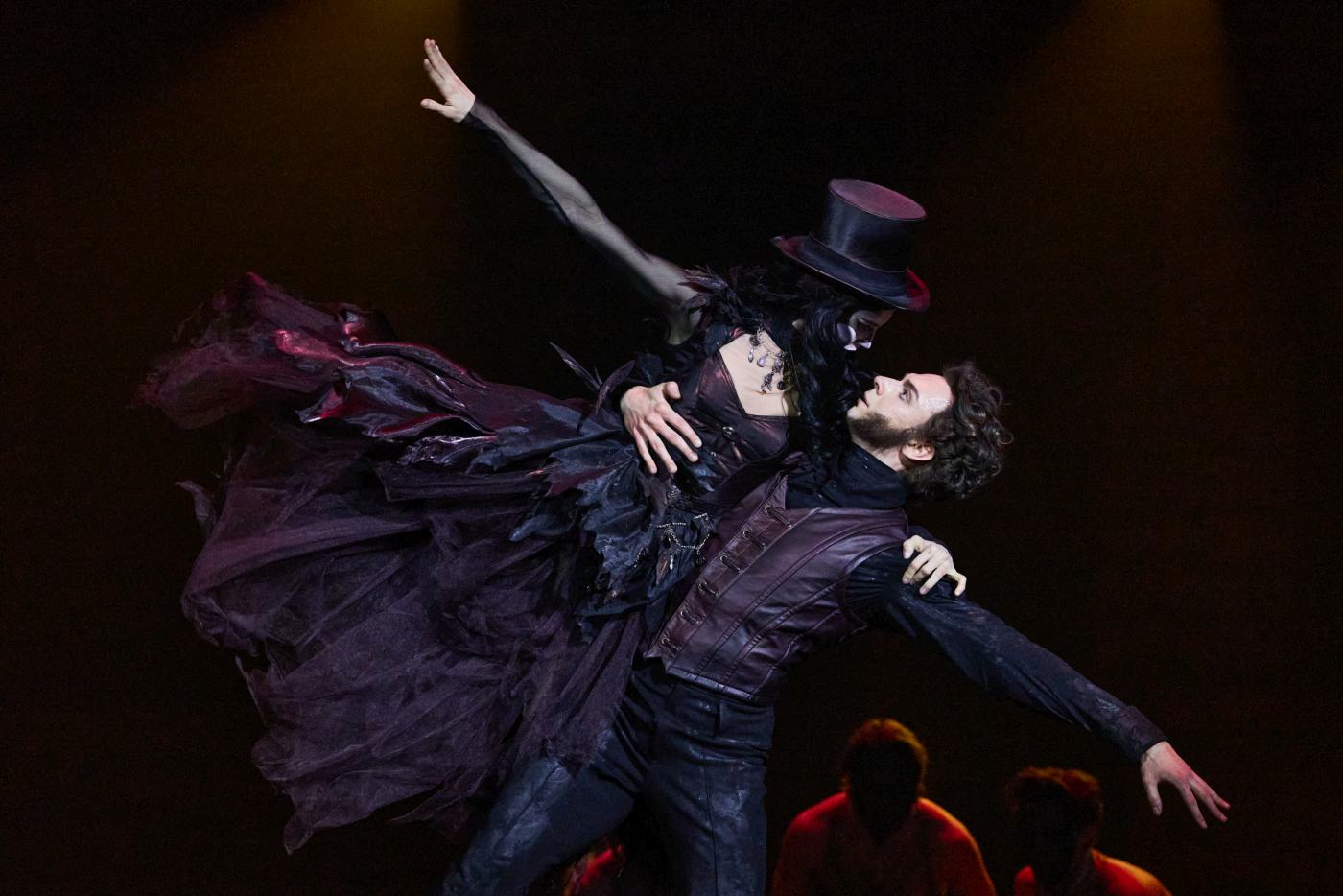
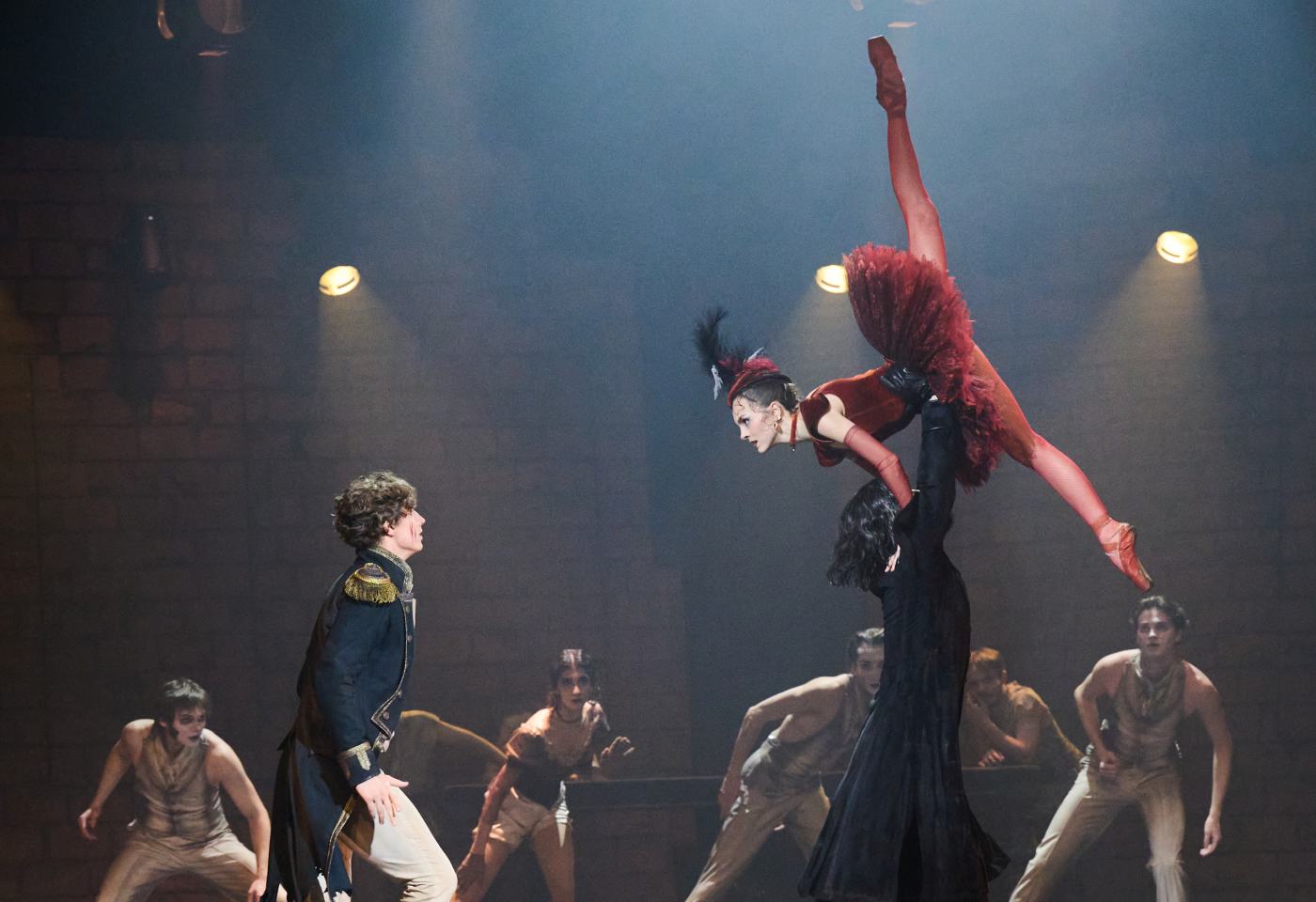
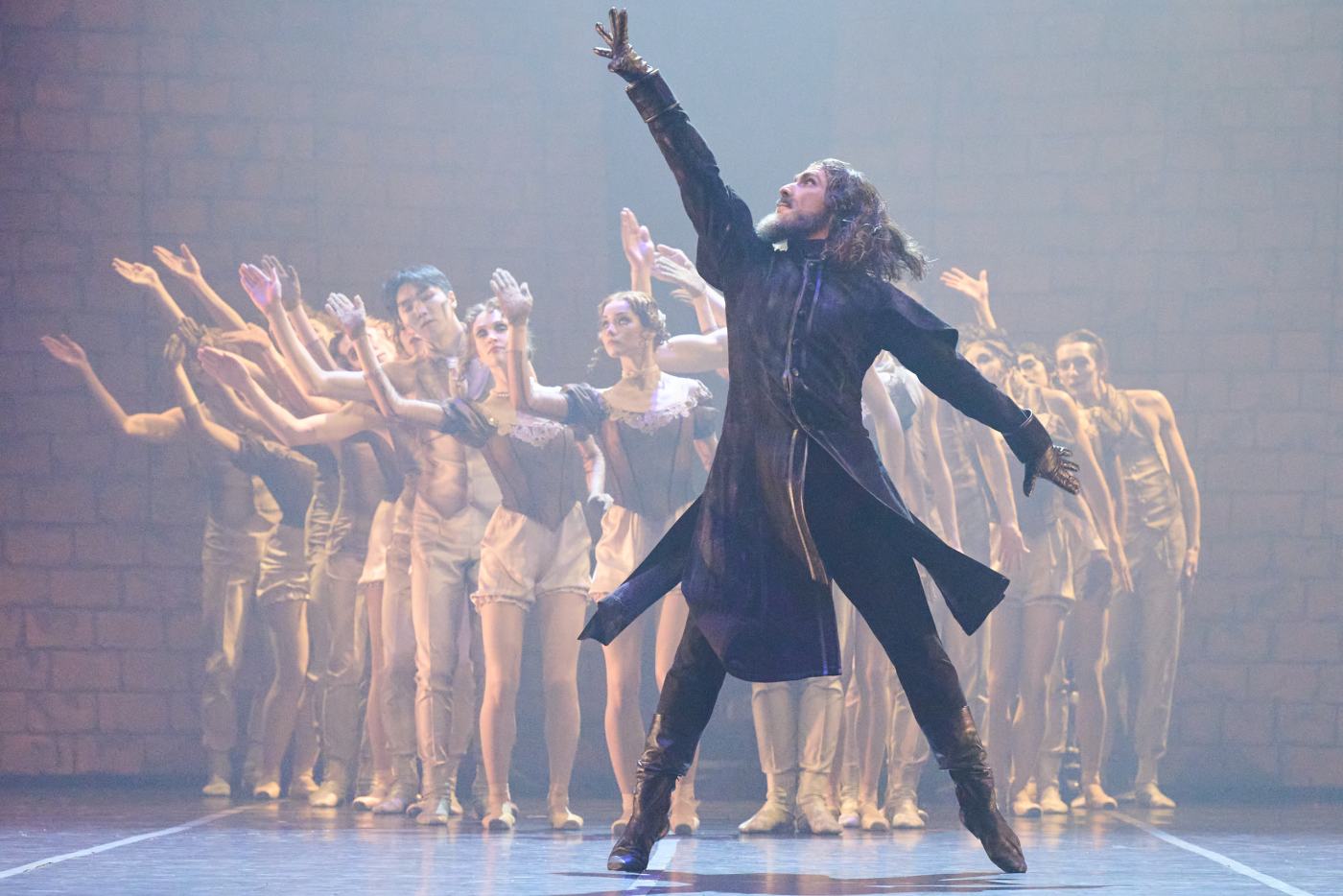
 The main machinator was Idalia (Elena Mikheecheva, wearing a red tutu and a feather headdress), Natalya’s third cousin and a frequent guest at the Pushkins’ home. She wrote the anonymous lampoon to Pushkin that suggested Natalya’s unfaithfulness. D’Anthès’s stepfather, Baron Heeckeren (George Bolsunovsky, called “The Elder” in the ballet), was the other plotter. A Rasputin lookalike, he turned a la seconde like a devil on steroids and had a gaze as cold as an iceberg.

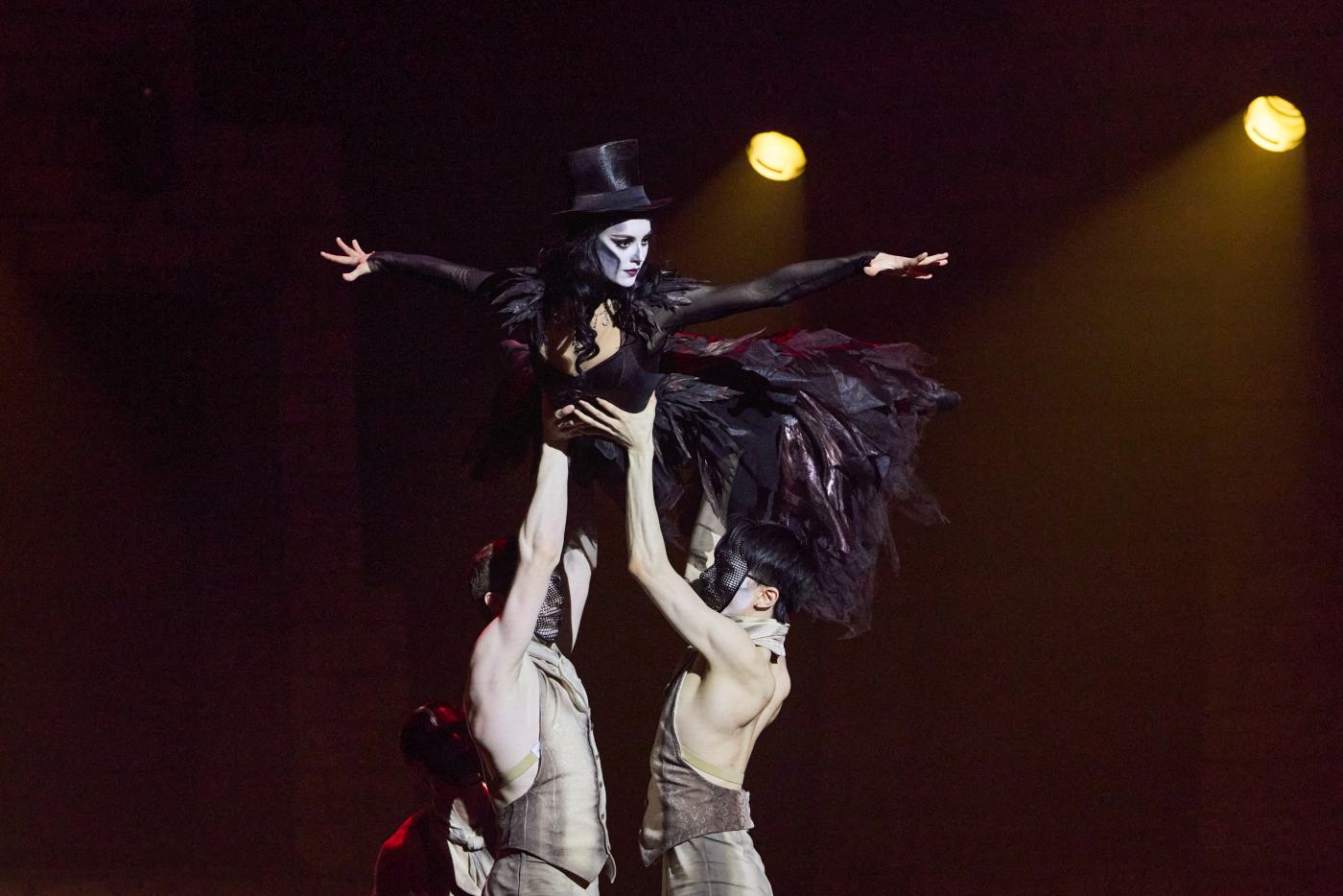
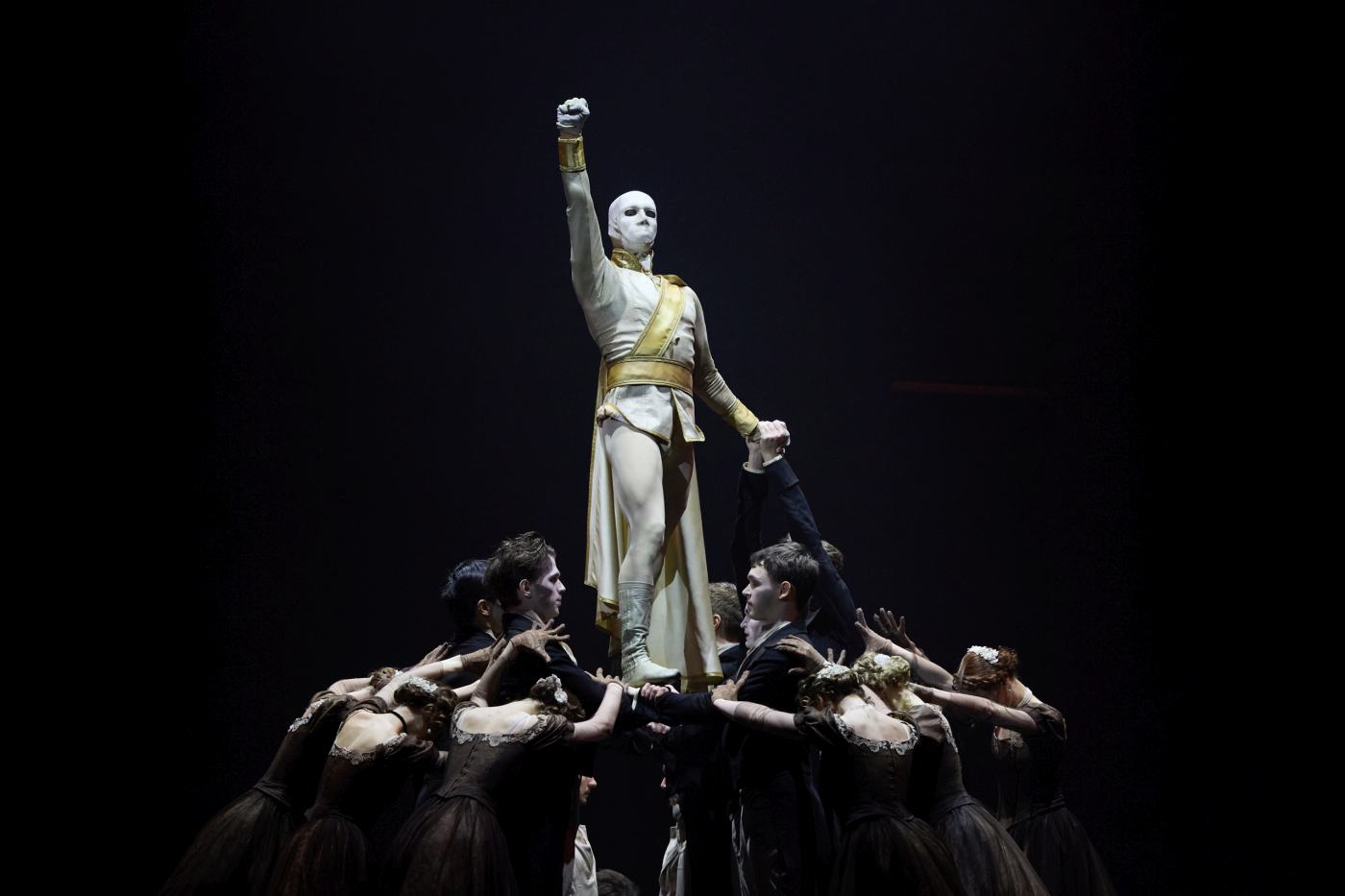
 Among the other protagonists who crossed Pushkin’s path were Charlotte (Elena Mikheecheva), better known as Madame Kirchhof, a St. Petersburg fortune teller who prophesied Pushkin’s fame and early death. Kirill Litvinenko doubled as the Emperor (Tsar Nicholas I), a harsh dictator who moved as mechanically as a soldier with his face hidden behind a white mask, and the priest who married Pushkin and Natalya.
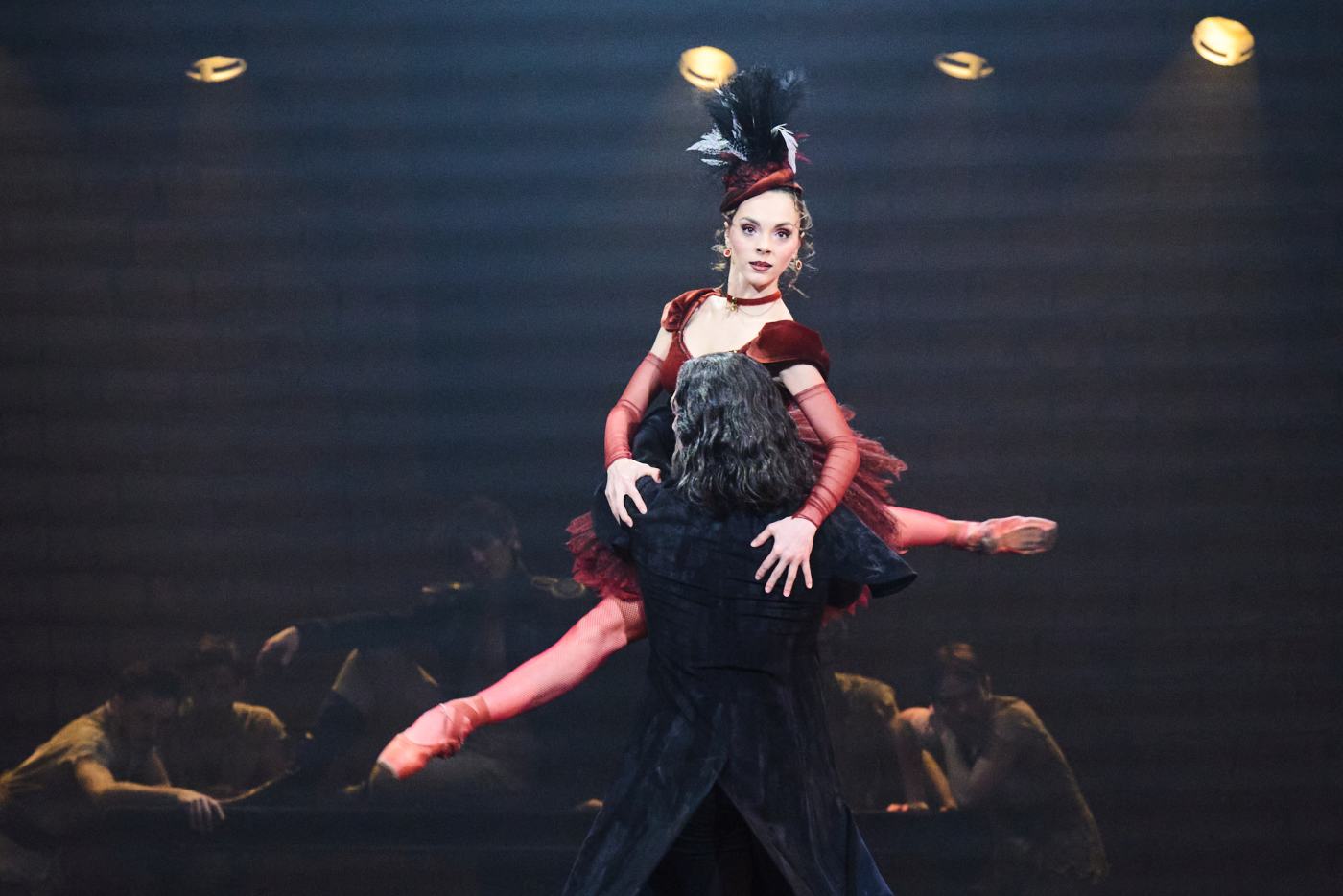 Their pas de deux made me think of two souls who had waited for one another and were infinitely relieved at reuniting. Interestingly, the synopsis describes this scene as the moment when Pushkin finally unites with his worldly life and irrevocably enters on his path.
 Spirituality featured throughout the piece. On his deathbed, Pushkin meets his younger self, and their index fingers touch like the subjects in Michelangelo’s painting The Creation of Man. I don’t know if the bride Pushkin danced with after his death stood for his soul’s fusion with the otherworld, but I recognized the round symbols on either side of the path that led his soul toward the light as dharmachakras.
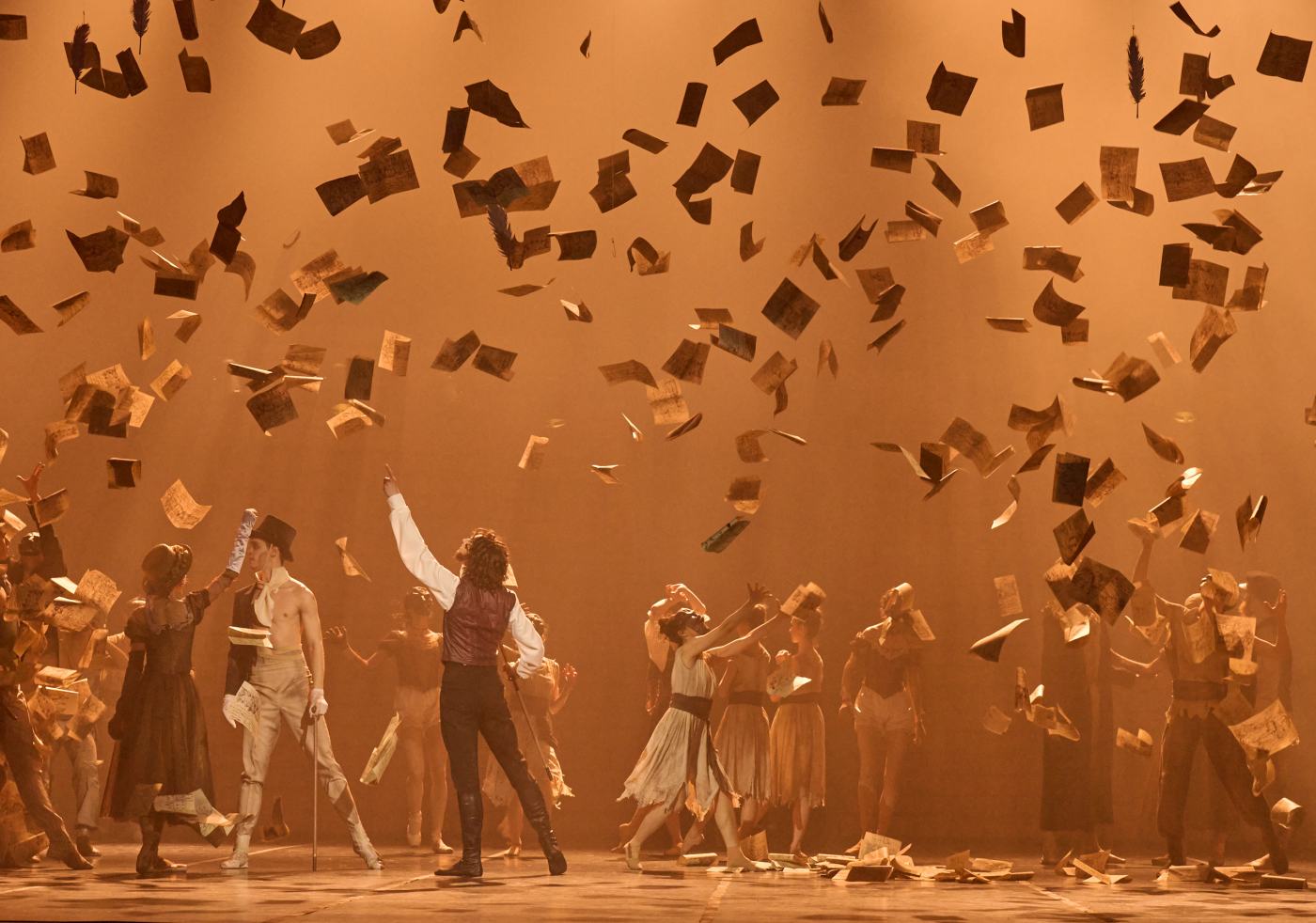
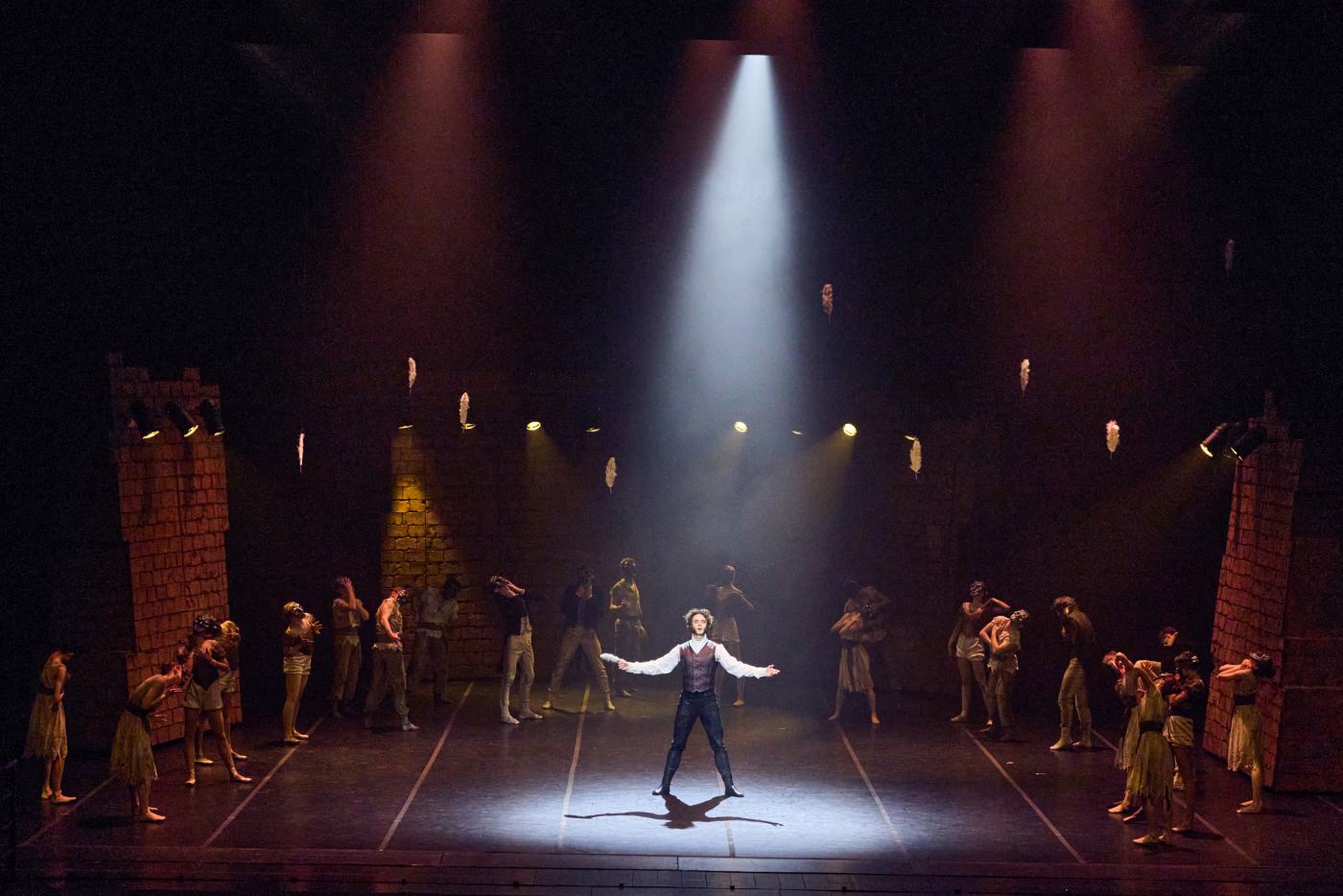 Although the intrigue against Pushkin is prominent and many scenes focus on him (we learn about his humor and fondness for roleplaying, how he came into himself in the countryside, and how he fine-tuned his writings and dealt with the expectations of a gutless but aggressive crowd), the ballet also sheds light on other protagonists. For example, Natalya’s personality changes when she becomes a tool of intrigue. She turns into a submissive puppet
 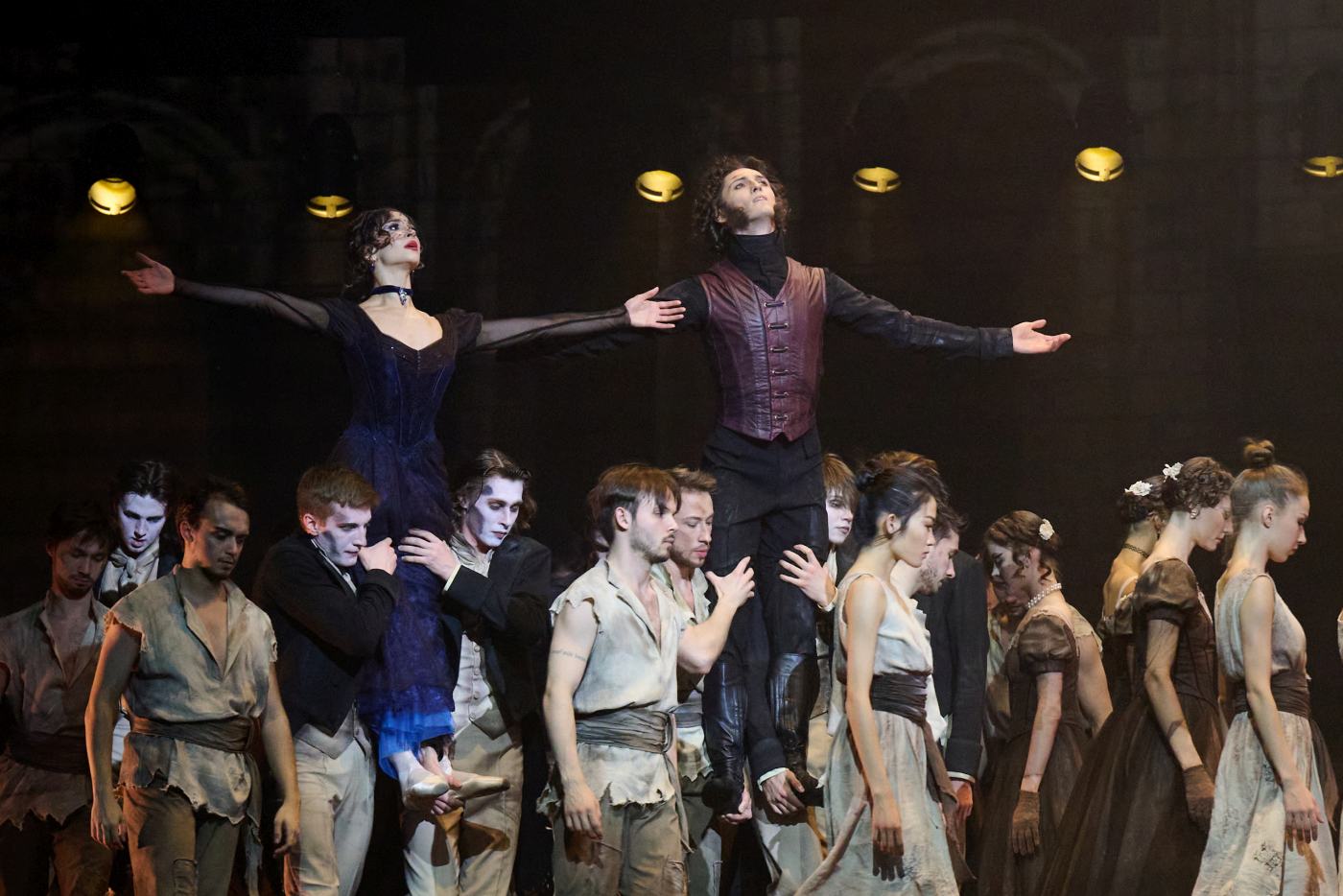 once her mind is infiltrated. D’Anthès was brutal toward her, but when he treated his wife, Ekaterina (Anastasia Svetlishina), similarly, Ekaterina stared at him as if he were a monster. Obviously, he had transformed beyond recognition.
Throughout the piece, time marched on as steadily as the surf surges toward the shore. And always, Pushkin and Natalya rode the first wave side by side. They faced the future head-on.
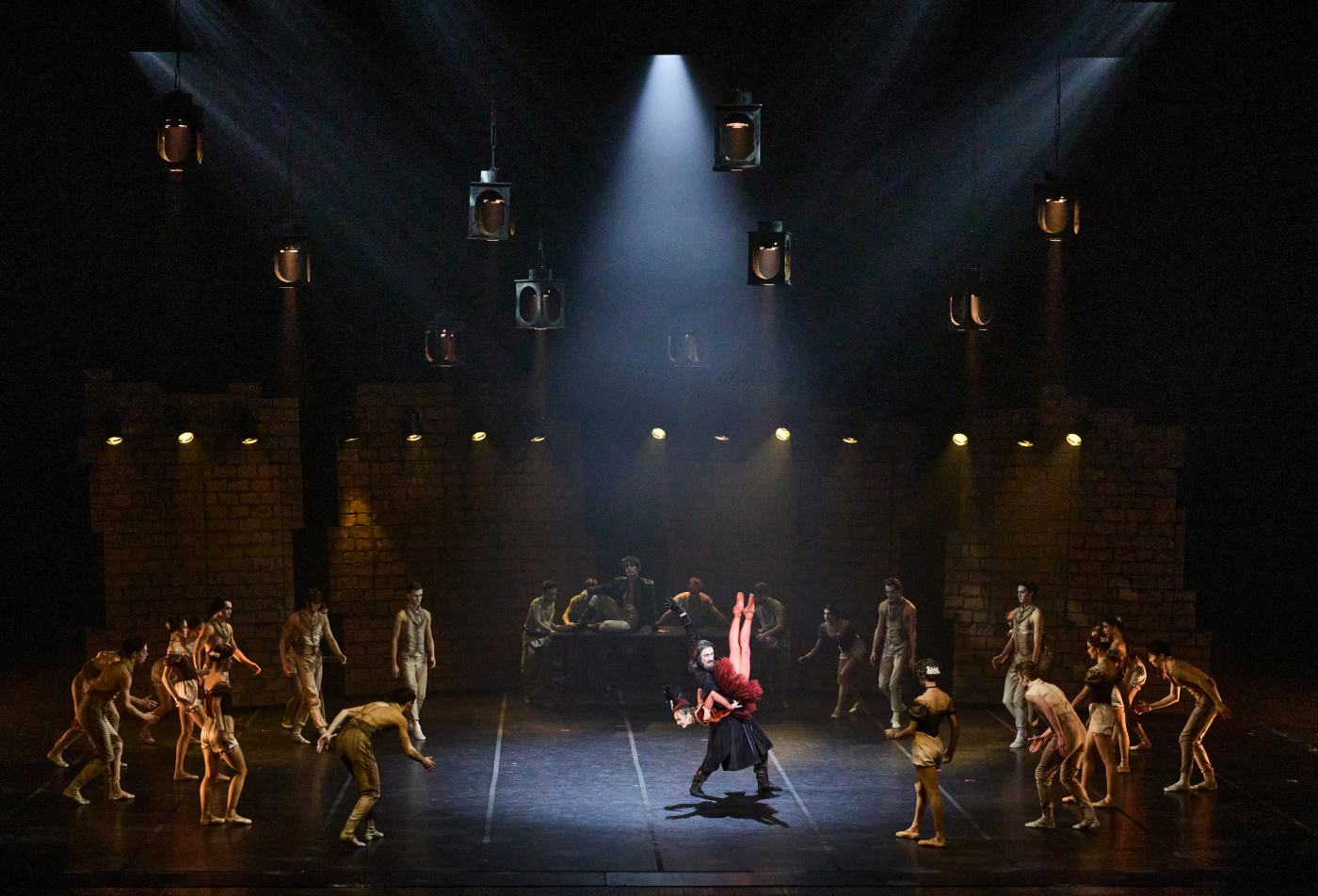
While Dmitrievsky used a broad palette of choreographic styles (his employment of the corps is especially effective), he needed only a few set elements—movable fragments of brick walls, some lanterns, a wooden table that extended to a platform for the duel and later served as a bier, and some banners. Lighting was his main design element.
 Borisov’s cinematic score swiftly shifts in scale, register, and emotional coloring. At times, the music rolls forward like a tidal wave powered by the universe. At other times, it seems it arises from the creaking depths of the past. Borisov combined a live orchestra (conducted by Eldar Nagiyev), a recorded soundtrack, and separate sound effects, such as birds’ chirping. Several times, folk choral singing accompanied the dancers.
| Links: | Website of the Hvorostovsky Krasnoyarsk State Opera and Ballet Theatre | |
| Website of Nikita Dmitrievsky | ||
| Photos: | 1. | Yury Kudryavtsev (Pushkin) and ensemble, “Pushkin” by Nikita Dmitrievsky, Krasnoyarsk Ballet 2026 |
| 2. | Stepan Smirnov (the young Pushkin) and ensemble, “Pushkin” by Nikita Dmitrievsky, Krasnoyarsk Ballet 2026 | |
| 3. | Stepan Smirnov (the young Pushkin), Yana Glukhova (Nanny), and ensemble; “Pushkin” by Nikita Dmitrievsky, Krasnoyarsk Ballet 2026 | |
| 4. | Stepan Smirnov (the young Pushkin) and ensemble, “Pushkin” by Nikita Dmitrievsky, Krasnoyarsk Ballet 2026 | |
| 5. | Elena Mikheecheva (Charlotte) and ensemble, “Pushkin” by Nikita Dmitrievsky, Krasnoyarsk Ballet 2026 | |
| 6. | Elena Mikheecheva (Charlotte) and Yury Kudryavtsev (Pushkin), “Pushkin” by Nikita Dmitrievsky, Krasnoyarsk Ballet 2026 | |
| 7. | Kirill Litvinenko (Emperor) and ensemble, “Pushkin” by Nikita Dmitrievsky, Krasnoyarsk Ballet 2026 |
|
| 8. | Anastasia Nigmatulina (Alexandra), Anna Kudryavtseva (Natalya), and Anastasia Svetlishina (Ekaterina); “Pushkin” by Nikita Dmitrievsky, Krasnoyarsk Ballet 2026 | |
| 9. | Yury Kudryavtsev (Pushkin), Anna Kudryavtseva (Natalya), and ensemble; “Pushkin” by Nikita Dmitrievsky, Krasnoyarsk Ballet 2026 | |
| 10. | Grigory Botenkov (D’Anthès) and Anna Kudryavtseva (Natalya), “Pushkin” by Nikita Dmitrievsky, Krasnoyarsk Ballet 2026 | |
| 11. | Grigory Botenkov (D’Anthès), Elena Mikheecheva (Idalia), George Bolsunovsky (The Elder), and ensemble; “Pushkin” by Nikita Dmitrievsky, Krasnoyarsk Ballet 2026 | |
| 12. | Elena Mikheecheva (Idalia), “Pushkin” by Nikita Dmitrievsky, Krasnoyarsk Ballet 2026 | |
| 13. | Grigory Botenkov (D’Anthès), Elena Mikheecheva (Idalia), and ensemble; “Pushkin” by Nikita Dmitrievsky, Krasnoyarsk Ballet 2026 | |
| 14. | Elena Mikheecheva (Idalia) and George Bolsunovsky (The Elder), “Pushkin” by Nikita Dmitrievsky, Krasnoyarsk Ballet 2026 | |
| 15. | George Bolsunovsky (The Elder) and ensemble, “Pushkin” by Nikita Dmitrievsky, Krasnoyarsk Ballet 2026 | |
| 16. | George Bolsunovsky (The Elder), Elena Mikheecheva (Idalia), and ensemble; “Pushkin” by Nikita Dmitrievsky, Krasnoyarsk Ballet 2026 |
|
| 17. | Grigory Botenkov (D’Anthès) and Anastasia Svetlishina (Ekaterina), “Pushkin” by Nikita Dmitrievsky, Krasnoyarsk Ballet 2026 |
|
| 18. | Yury Kudryavtsev (Pushkin) and ensemble, “Pushkin” by Nikita Dmitrievsky, Krasnoyarsk Ballet 2026 | |
| 19. | Yury Kudryavtsev (Pushkin) and ensemble, “Pushkin” by Nikita Dmitrievsky, Krasnoyarsk Ballet 2026 |
|
| 20. | Anna Kudryavtseva (Natalya), Yury Kudryavtsev (Pushkin), and ensemble; “Pushkin” by Nikita Dmitrievsky, Krasnoyarsk Ballet 2026 | |
| 21. | Yury Kudryavtsev (Pushkin), Grigory Botenkov (D’Anthès), and ensemble; “Pushkin” by Nikita Dmitrievsky, Krasnoyarsk Ballet 2026 | |
| 22. | Yury Kudryavtsev (Pushkin), “Pushkin” by Nikita Dmitrievsky, Krasnoyarsk Ballet 2026 | |
| 23. | Yury Kudryavtsev (Pushkin) and ensemble, “Pushkin” by Nikita Dmitrievsky, Krasnoyarsk Ballet 2026 | |
| all photos © Evgeny Koryukin | ||
| Editing: | Kayla Kauffman |