Legendary

“Swan Lake”
Bolshoi Ballet
Bolshoi Theatre
Moscow, Russia
September 7 and 8, 2026 (Historic Stage)

by Ilona Landgraf
Copyright © 2026 by Ilona Landgraf
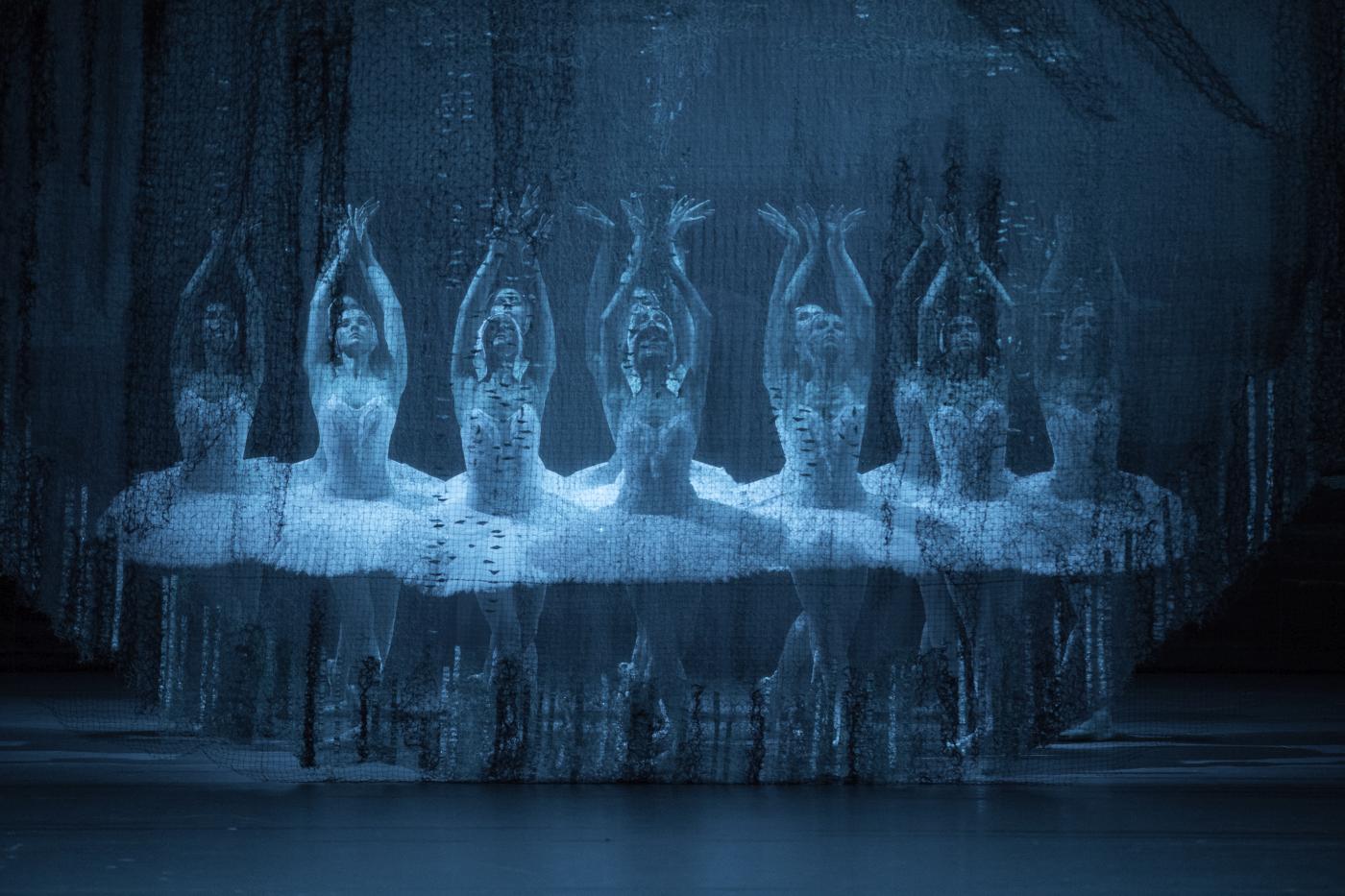
1. Ensemble, “Swan Lake” by Y.Grigorovich, Bolshoi Ballet 2026 © Bolshoi Theatre/N.VoronovaThe Bolshoi Ballet is legendary for its Swan Lake. The first performance took place in 1877, almost one hundred and fifty years ago. This September, the swans danced for the 1,868th time, which translates to roughly thirteen Swan Lakes per year. Since 2001, the company has performed Yuri Grigorovich’s version, which includes scenes by Marius Petipa, Lev Ivanov, and Alexander Gorsky.

Grigorovich’s Swan Lake is grand. Its concepts and ideals represent the highest achievements of humanity and culture—dignity, decorum, grace, love, and unmatched beauty—and it shows how easily human nature can be led awry. Compared to Vladimir Bourmeister’s Swan Lake at the Stanislavsky Theatre, a ballet that reveals the protagonists’ inner life like none I’ve seen so far, Grigorovich portrays them as emblematic figures in an allegory, the sad ending of which Tchaikovsky’s prologue forebodes.

3. A.Denisova (Odile), “Swan Lake” by Y.Grigorovich, Bolshoi Ballet 2026 © Bolshoi Theatre/M.Logvinov 2. D.Moseyeva (Odette), “Swan Lake” by Y.Grigorovich, Bolshoi Ballet 2026 © Bolshoi Theatre/D.Yusupov For the first act, Simon Virsaladze designed a Gothic castle of majestic height. Its trombone players are positioned in mirror image and wear partly red livery that conveys the court’s harmonious order. The entrance of twelve couples, along the line of which Prince Siegfried jetés in, infuses the stage with dynamism. Soaring high, he combines prowess with elegance. The lakeside to which Rothbart (“The Evil Genius”) directs him like a puppeteer is lit by gray moonlight and streaked with wisps of cloud. From a rock at he rear, the Evil Genius oversees his spell. Like a yin-yang symbol, his emblem, a curtain in the shape of a coat of arms, shows white and black swans opposite one another. It has a vicious look and, when lowered, hides the Evil Genius’s machinations or serves as a screen for the Prince’s visions. For Act II’s ball, the retinue swapped their red garments for turquoise. The non-dancing court society wore medieval-ish robes, including pageboy wigs for the men (costumes also by Virsaladze). My favorite part of the outfit was the Russian delegation’s pearl hair accessories.

4. D.Vyskubenko (Prince Siegfried) and ensemble, “Swan Lake” by Y.Grigorovich, Bolshoi Ballet 2026 © Bolshoi Theatre/E.FetisovaOn September 7th, Darina Moseyeva’s Odette was a fragile swan woman who seemed to live on the air she breathed. A highly sensitive creature, Dmitry Vyskubenko’s Prince treated her with utmost care. Moseyeva immersed herself so deeply into the role that she really seemed to transform into a bird-human chimera. Unfortunately, for undisclosed reasons, she didn’t dance in the second act, and Yaroslava Kuprina replaced her after a prolonged break and an announcement. Kuprina’s Odile was a perfect masquerade of wickedness—sharp and calculating, yet alluring. Presumably having rehearsed all day for her actual Swan Lake on the evening after next, Kuprina ran out of steam during the fouetées but regained her energy in the final scene at the lakeside. She was met with intense applause at the curtain calls, and the Vietnamese delegation that attended the performance in the Imperial Box expressed its appreciation with an announcement and a flower basket for the company.
Vysubenko was an impeccable partner throughout. His entrechats were stunningly filigree, and in the vision scene, his port de bras turned the air velvety.

5. M.Mikhalkin (Prince Siegfried), “Swan Lake” by Y.Grigorovich, Bolshoi Ballet 2026 © Bolshoi Theatre/P.RychkovSeptember 8th’s Odette (Arina Denisova) and her Prince (Makhar Mikhalkin) were mesmerizing in their adagio pas de deux. It touched the soul in a way that cannot be grasped intellectually. Denisova’s Odette was calmer than Moseyeva’s and most aflutter when the Prince swore his love. Her sparkling Odile’s arms undulated like a snake; her gaze was compelling and her smile sure of victory. Of Mikhalkin’s solos, I especially admired his picture-book manège of tours en l’air.
Egor Gerashchenko’s Evil Genius darted along the line of his black swans like Spartacus; on the following evening, Igor Tsvirko danced the role, spreading menacing vibes far into the auditorium.

6. Ensemble, “Swan Lake” by Y.Grigorovich, Bolshoi Ballet 2026 © Bolshoi Theatre/M.LogvinovAkib Anvar’s jester jumped and capered fabulously, his tours, split jumps, and daredevil combinations propelling the energy at the right moments like an engine. Of the Prince’s two friends, Kristina Petrova and Margarita Shrayner danced more polished than Antonina Chapkina and Elizaveta Kruteleva. However, the latter had to deal with the quick tempo that Alexey Bogorad set at the conductor’s podium (Pavel Sorokin’s tempo on the previous evening was more moderate). At times, he also hastened the swans.

Of the brides-to-be, Ana Turazashvili’s was a self-assured, top-notch Hungarian bride who paid remarkable attention to every detail of her variation. Elizaveta Gaponenko, by comparison, made me think of Raymonda. Both Russian brides (Antonina Chapkina and Maria Konkova) were warm and giving, their arms as soft as the most gentle breeze. The Spanish brides (Anastasia Smirnova and Kristina Petrova) 7. Ensemble, “Swan Lake” by Y.Grigorovich, Bolshoi Ballet 2026 © Bolshoi Theatre/N.Voronova glided across the stage with space consuming steps, which showed off their full, flowing skirts. The Neapolitan dance led by Valeria Bespalova was vivacious, whereas on the following evening, Sofia Maimula and her Neapolitan companions hurried to keep up with Bogorad’s brisk pace. Taisia Konovalova’s Polish bride’s male entourage faced the same challenge. On the previous evening, Olga Marchenkova and her men were unremarkable.

Nelli Kobakhidze and Anastasia Meskova portrayed the Princess-Mother; Alexey Loparevich and Alexander Fadeyechev played the Prince’s tutor; Nikita Elikarov was the Master of Ceremonies at both performances.
The swan corps moved with impeccable precision and grace. Watching its beautiful patterns felt like a gift.

Link: Website of the Bolshoi Theatre
Photos: 1. Ensemble, Swan Lake” by Yuri Grigorovich, Bolshoi Ballet 2026 © Bolshoi Theatre/Natalia Voronova
2. Darina Moseyeva (Odette), Swan Lake” by Yuri Grigorovich, Bolshoi Ballet 2026 © Bolshoi Theatre/Damir Yusupov
3. Arina Denisova (Odile), Swan Lake” by Yuri Grigorovich, Bolshoi Ballet 2026 © Bolshoi Theatre/Mikhail Logvinov
4. Dmitry Vyskubenko (Prince Siegfried) and ensemble, Swan Lake” by Yuri Grigorovich, Bolshoi Ballet 2026 © Bolshoi Theatre/Elena Fetisova
5. Makhar Mikhalkin (Prince Siegfried), Swan Lake” by Yuri Grigorovich, Bolshoi Ballet 2026 © Bolshoi Theatre/Pavel Rychkov
6. Ensemble, Swan Lake” by Yuri Grigorovich, Bolshoi Ballet 2026 © Bolshoi Theatre/Mikhail Logvinov
7. Ensemble, Swan Lake” by Yuri Grigorovich, Bolshoi Ballet 2026 © Bolshoi Theatre/Natalia Voronova
Editing: Kayla Kauffman


The Hub

“The Nutcracker”
Bolshoi Ballet
Bolshoi Theatre
Moscow, Russia
December 31, 2024 (live stream)

by Ilona Landgraf
Copyright © 2025 by Ilona Landgraf

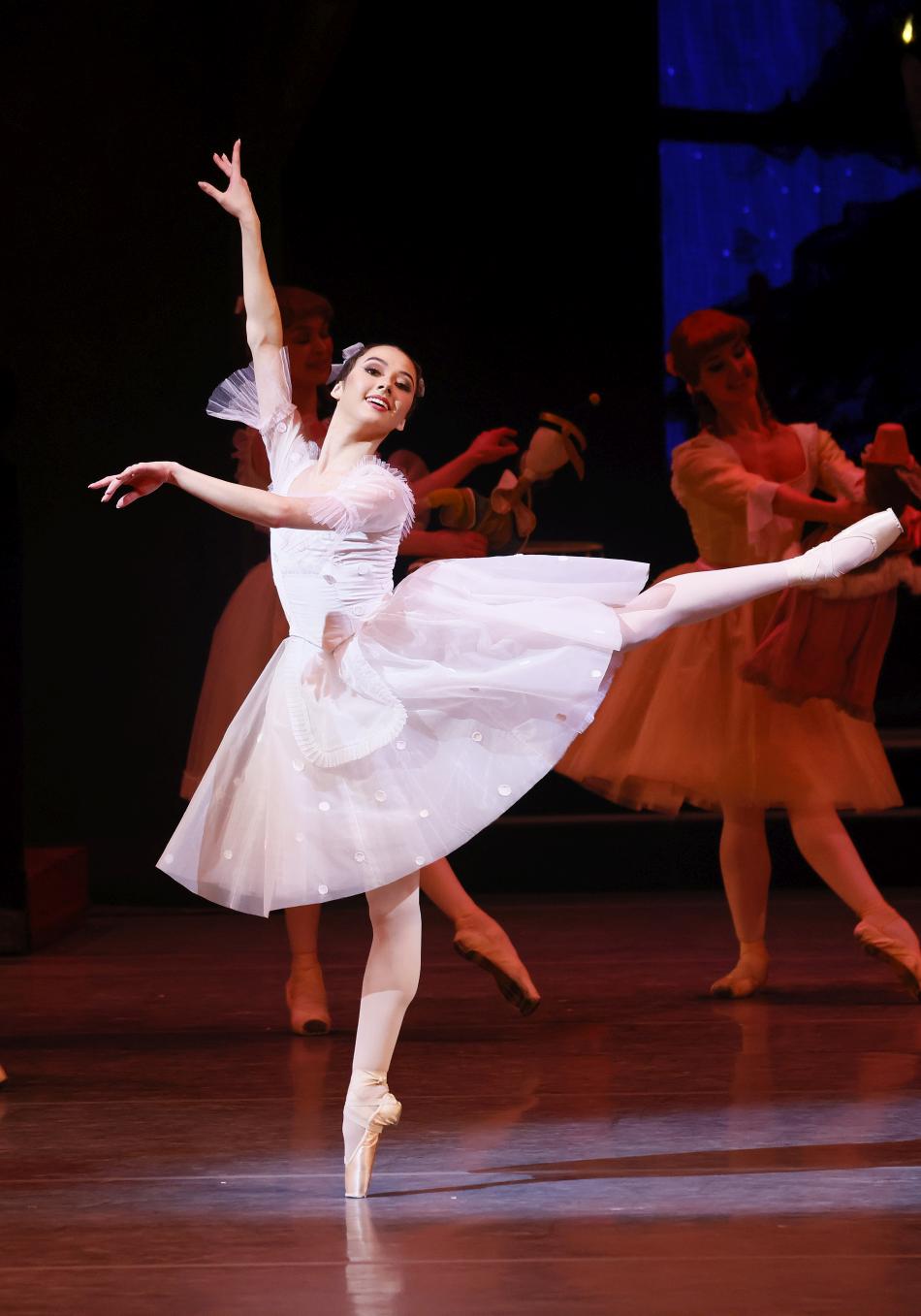
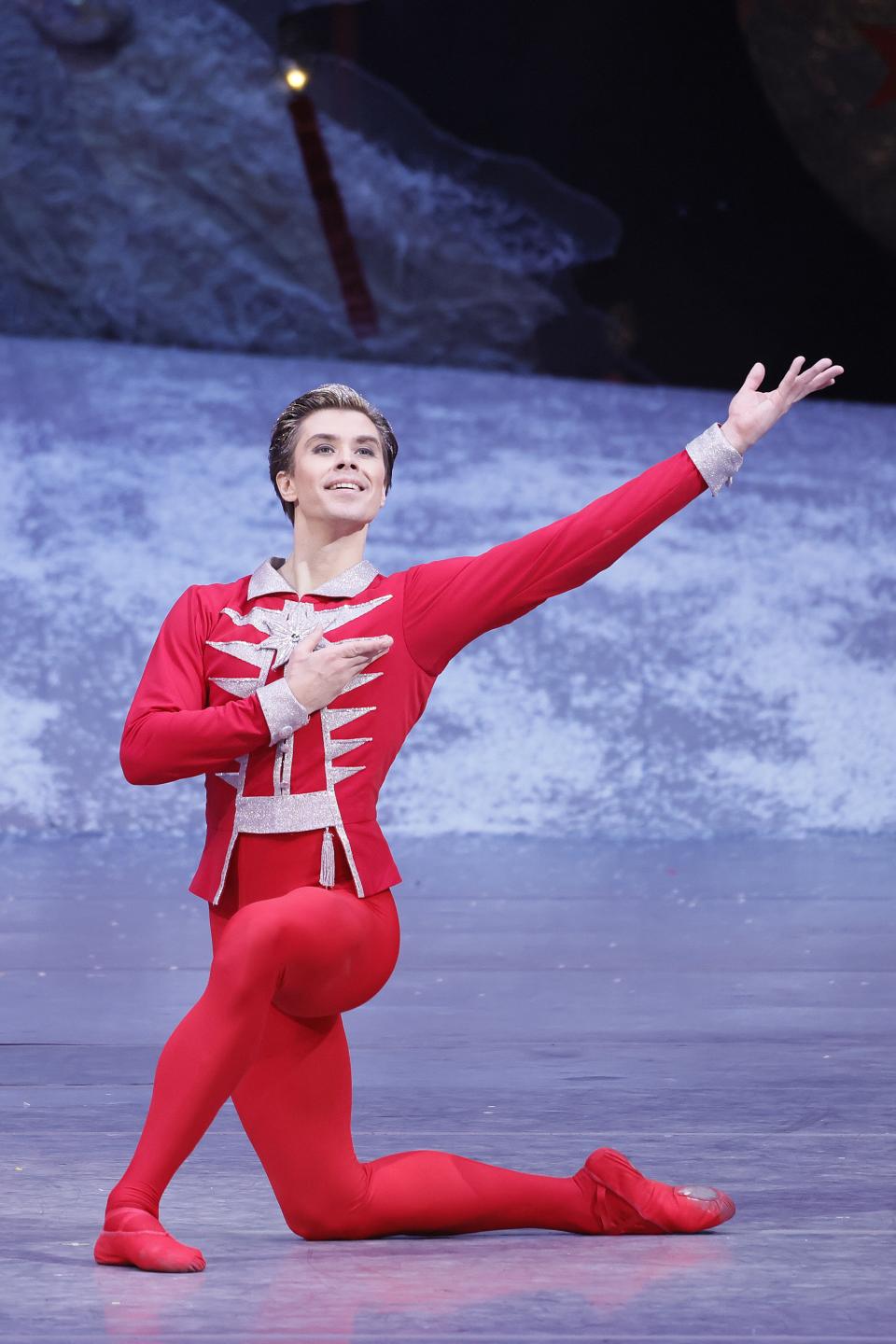
1. E.Kokoreva (Marie) and ensemble, “The Nutcracker” by Y.Grigorovich, Bolshoi Ballet 2024 © Bolshoi Ballet/D.Yusupov2. A.Ovcharenko (Nutcracker Prince), “The Nutcracker” by Y.Grigorovich, Bolshoi Ballet 2024 © Bolshoi Ballet/D.Yusupov During this year’s Christmas sermon, my pastor asked which moment should best represent Christmas. The Christmas dinner? The lighting of the candles? Or, perhaps, unwrapping the presents? For me, this moment was the moment during the Bolshoi Ballet’s performance of The Nutcracker when the newlywed Marie (Elizaveta Kokoreva) and the Nutcracker Prince (Artem Ovcharenko) were lifted by their court toward the star at the top of the Christmas tree. It was the climax of their spiritual journey and of Yuri Grigorovich’s choreography for which I had been waiting since I last saw his Nutcracker live in Moscow in 2022.

Two live streams on December 30th (evening performance) and December 31st (matinee) enabled a vast audience to follow the heroes’ journey. To meet the demand, the number of cinemas offering live broadcasts grew from one hundred to three hundred in December. Most were located in Russia, but cinemas in Belarus, Armenia, and the United Arab Emirates also participated. I was able to watch the matinee on the Bolshoi’s vk video platform. Continue reading “The Hub”

An Opening Salute

“The Sleeping Beauty”
Bolshoi Ballet
Bolshoi Theatre
Moscow, Russia
September 07, 2024 (live stream)

by Ilona Landgraf
Copyright © 2024 by Ilona Landgraf

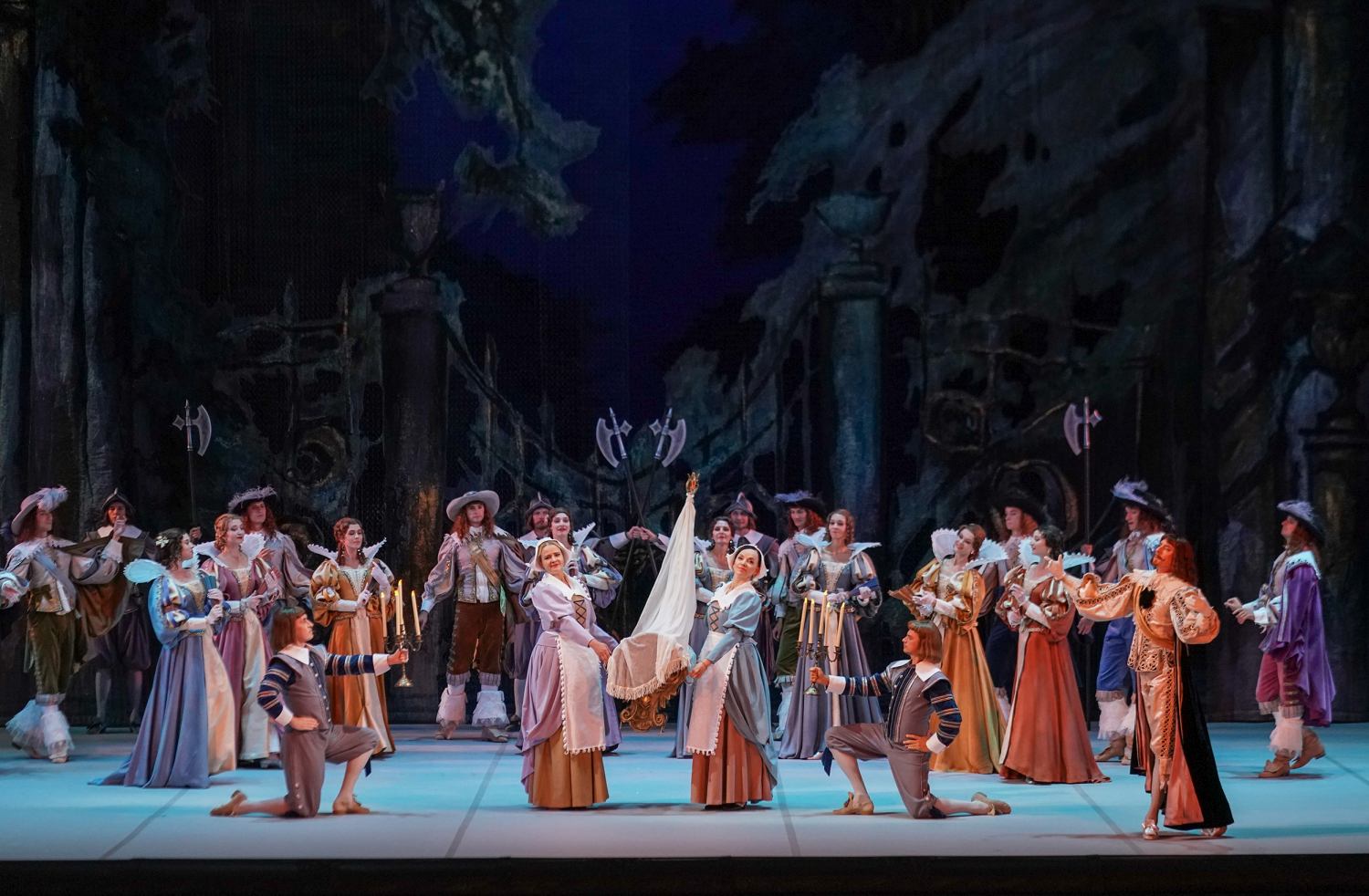
 1. Y.Ostrovsky (Catalabutte) and ensemble, “The Sleeping Beauty” by Y.Grigorovich after M.Petipa, Bolshoi Ballet 2024 © Bolshoi Theatre/P.Rychkov The Bolshoi Ballet opened its 249th season with a revival of Yuri Grigorovich’s The Sleeping Beauty, which has been absent from the stage for four years. Because of the thorough change of décor, the production was announced as a premiere. It swapped the opulent (and often criticized) sets and costumes that Ezio Frigerio and Franca Squarciapino designed for the 2011 revival (celebrating the reopening of the theater’s Historic Stage after six years of refurbishment) for the restrained décor that Simon Virsaladze (1909–1989) created for Grigorovich’s second version of the ballet in 1973. The subdued hues and aquarelle-ish style of its courtly surroundings direct the gaze toward the colorful costumes (recalling French court fashion from King Louis XIII’s to the Sun King, Louis XIV’s, reign), beautiful flower garlands and bouquets at Aurora’s birthday party, and, most importantly, the dancers and their performances. Raising the curtain didn’t elicit oohs and aahs from the audience as, for example, Jürgen Rose’s décor for Marcia Haydée’s Sleeping Beauty regularly has done on Western stages. Continue reading “An Opening Salute”

A Grand Spectacle

“La Fille du Pharaon”
Bolshoi Ballet
Bolshoi Theatre
Moscow, Russia
February 16, 2024

by Ilona Landgraf
Copyright © 2024 by Ilona Landgraf

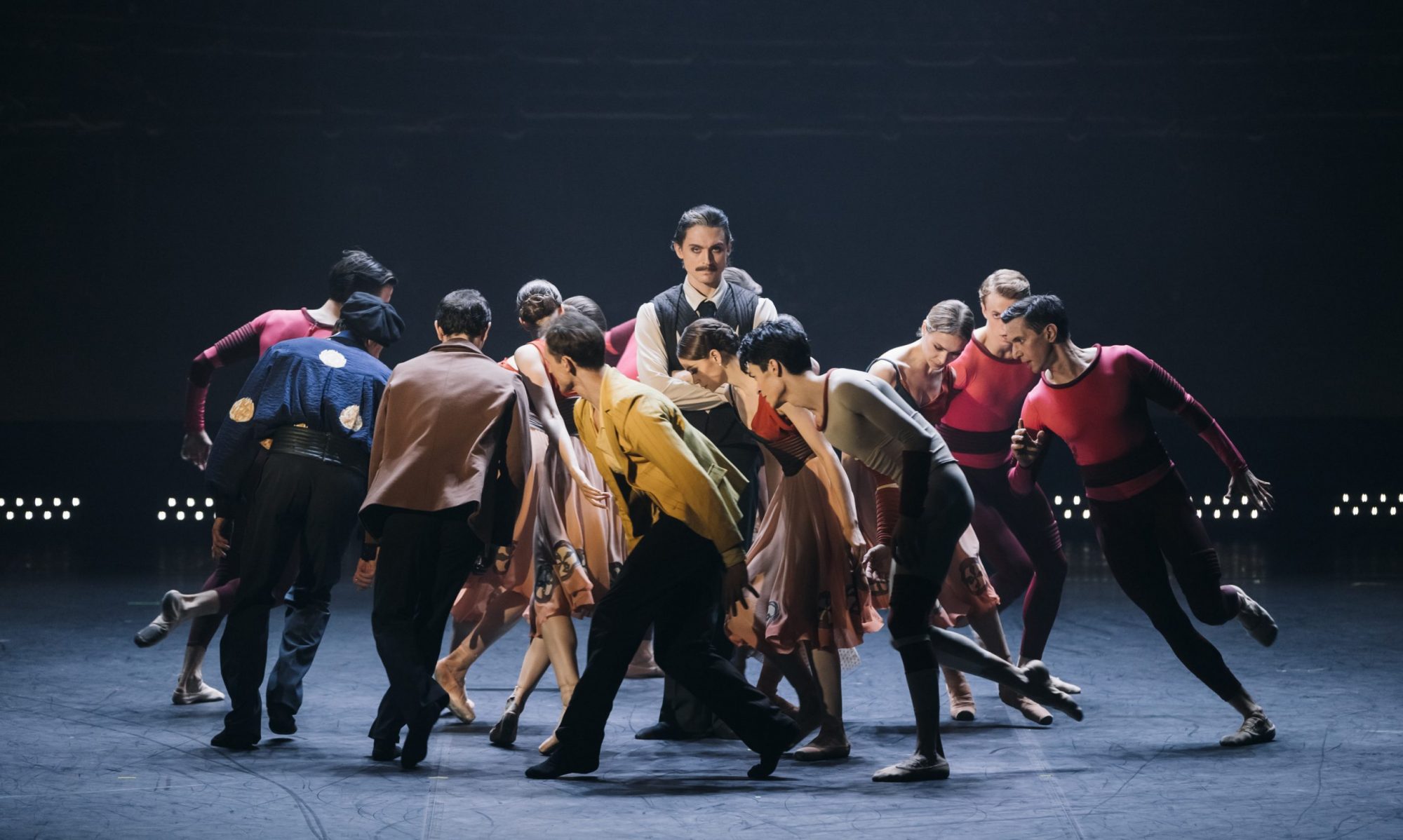
1. M.Mishina (Ramze), E.Kokoreva (Aspicia), and ensemble; “La Fille du Pharaon” by P.Lacotte, Bolshoi Ballet 2024 © Bolshoi Ballet / D.Yusupov The Bolshoi Ballet’s La Fille du Pharaon is about an Egyptian pipe dream—and it felt like a dream indeed. I was already impressed in 2019 when I watched it for the first time. Five years later, the cultural landscape has changed so much that its magnificence seems surreal. It highlights the extent to which the paths of Western and Russian cultures have diverged. While European culture finds itself on shaky grounds, the Bolshoi stands firm as a rock. The critics who argue that Pierre Lacotte’s recreation of Marius Petipa’s La Fille du Pharaon (1862) is like unearthing a dusty ballet mummy are wrong. True, the piece’s libretto (which is based on Theophile Gautier’s 1857 Le Roman de la Momie and was edited by Lacotte) is flimsy. Hearty drags on an opium pipe transport a traveling Englishman and his servant to the pyramids during the reign of a mighty pharaoh. This pharaoh has a daughter who instantly falls in love with the Englishman. After some adventurous trouble (including the dispatch of a lion, a last-minute escape, a nearly murderous assault, a suicide attempt, and the hero’s near execution), the lovers are happily united. But – alas! Upon awakening, Continue reading “A Grand Spectacle”