Enlightening

“American Signatures”
Vienna State Ballet & Volksoper Wien
Volksoper Wien
Vienna, Austria
May 30, 2026

by Ilona Landgraf
Copyright © 2026 by Ilona Landgraf
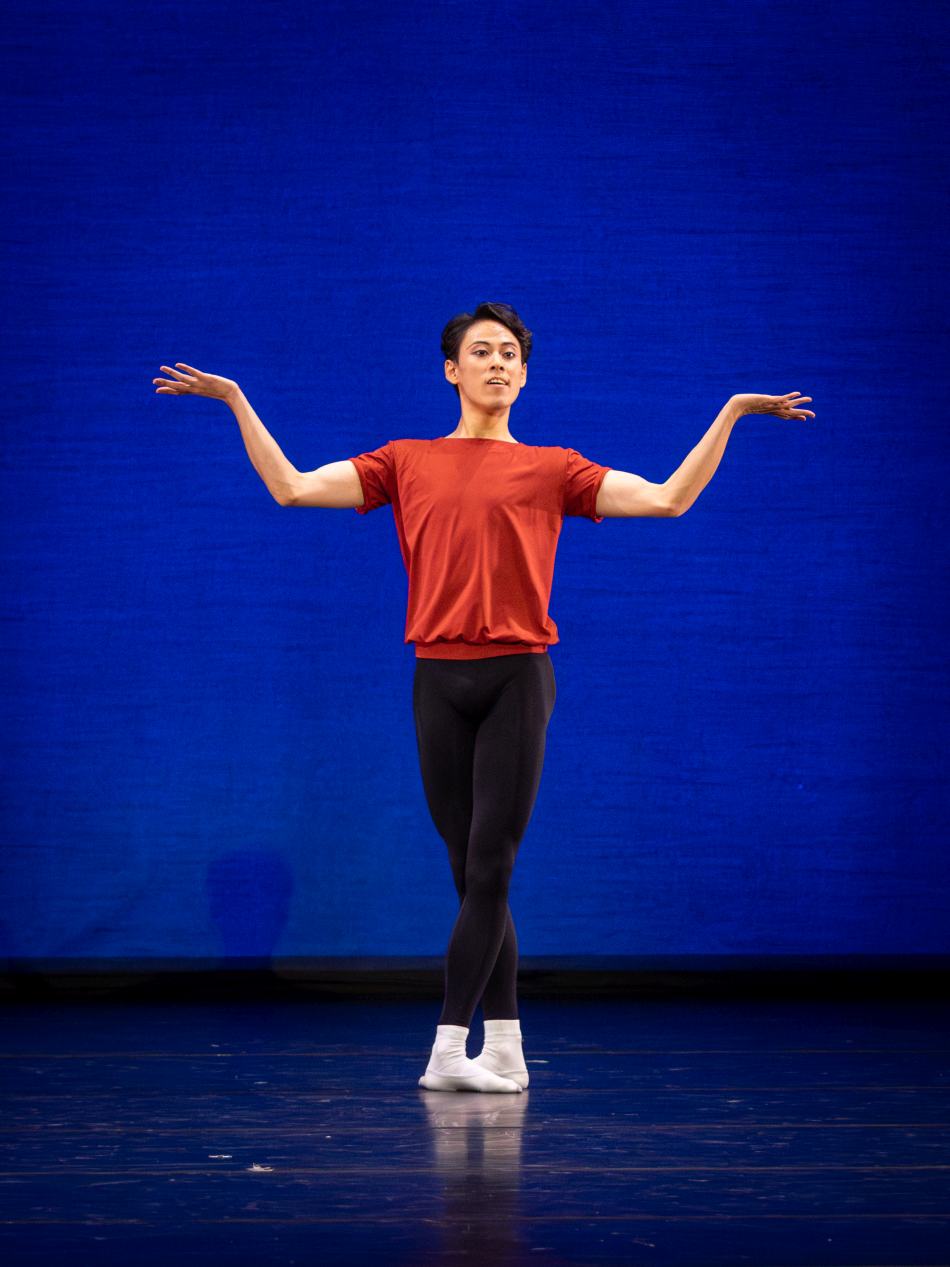
1. K.Mitsumori, “Interplay” by J.Robbins, Vienna State Ballet 2026 © Vienna State Ballet/A.Taylor2. G.Aime and G.Fredianelli, “Interplay” by J.Robbins, Vienna State Ballet 2026 © Vienna State Ballet/A.Taylor Of the four American choreographers included in the Vienna State Ballet’s mixed bill, American Signatures, only Jerome Robbins is well known in mainland Europe. Works by Pam Tanowitz, Lar Lubovitch, and Jessica Lang are rarely staged. Hence, I was glad to see this season’s last performance.

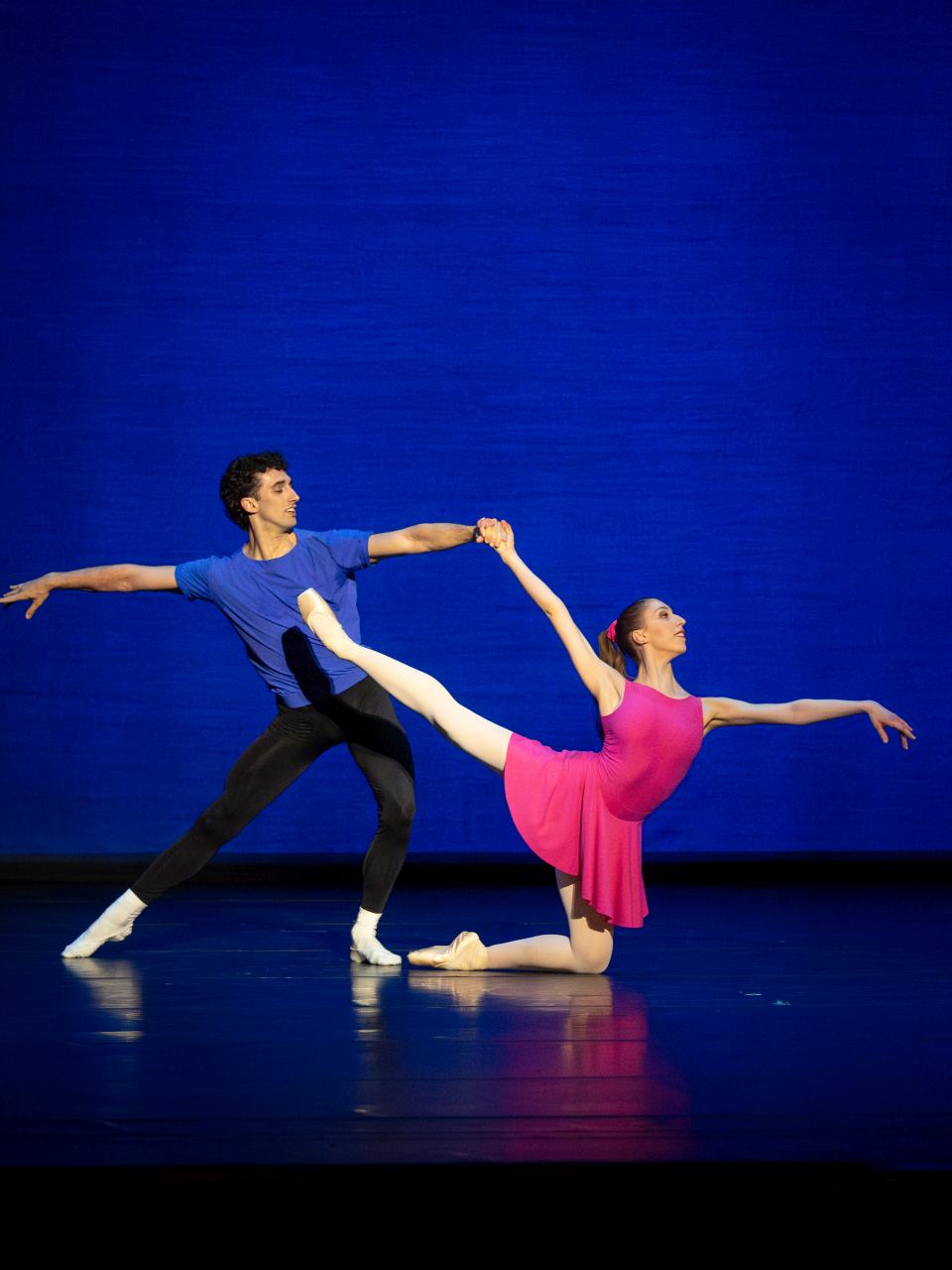
Robbin’s Interplay premiered in autumn 1945, shortly after World War II, as the second choreography in his oeuvre. Absolutely nothing in the piece hints at war. Instead, its eight dancers (four women and four men) portray unburdened, fun-loving youth with contagious optimism and self-assurance. A backdrop as gloriously blue as a summer sky intensifies the bright colors of the men’s shirts (with which they wear black, skintight pants and white socks) and the girls’ short dresses. Of course, they wear ponytails. The American way of living that they represent reminds me of stylish Cadillac coupes and petticoats, though both only came into fashion later.

3. P.Liggins and M.Lynch, “Interplay” by J.Robbins, Vienna State Ballet 2026 © Vienna State Ballet/A.Taylor Standing feet apart and hands resting at the hips, the young men ooze determination and recklessness. One brags by jumping tours en l’air; others frog jump or hop about. Although pretending to be men, they lie on their bellies like little boys, their feet bent upwards, watching the girls. The moment Morton Gould’s jazzy composition (also titled Interplay) changes its rhythm, they pause, try some steps, find a new routine, and let it rip again. A Farandole dance transitions into rock ‘n’ roll-like acrobatics before Kentaro Mitsumori’s parody of classical ballet attracts everybody’s attention. Sitting on the floor and taking a break, he puts off Gaia Fredianelli’s invitation to dance, but Gabriele Aime is ready to step in. The quiet tinkling of the piano that accompanies their tender pas de deux evokes a balmy summer night. As both finally sit side by side and Aime rests his head on Fredianelli’s shoulder, Mitsumori returns on turbo feet. His arms swivel like electric whiskers, obviously he is fussing intensely over the budding romance. The brouhaha he creates brings everyone back to their feet and kicks off a series of exuberant solos that only the blackened light stops.

4. N.Butchko and A.Frola, “Dispatch Duet” by P.Tanowitz, Vienna State Ballet 2026 © Vienna State Ballet/A.Taylor5. N.Butchko and A.Frola, “Dispatch Duet” by P.Tanowitz, Vienna State Ballet 2026 © Vienna State Ballet/A.TaylorTanowitz’s Dispatch Duet premiered in 2022 at the Royal Ballet, London. Back then, Anna Rose O’Sullivan and William Bracewell danced the pas de deux. In Vienna, Natalya Butchko and Alessandro Frola walk from the rear stage casually but purposefully toward the front stage. Their white boxers and white/red and white/black shirts, respectively, look sporty. The scene reminds me of an informal rehearsal. Strange ringing and creaking sounds elicit the first sharp movements. As the rhythm becomes monotonous, the couple delivers quick, clockwork-like steps. Clearly, Ted Hearne’s fragmentary and at times cacophonous composition Dispatches (from which Tanowitz uses excerpts) dictates the dancers’ movements. The fact that the music is not pleasing but rather sounds like an irritating progression of dodecaphonism is negligible.

8. A.Frola and N.Butchko, “Dispatch Duet” by P.Tanowitz, Vienna State Ballet 2026 © Vienna State Ballet/A.Taylor7. A.Frola, “Dispatch Duet” by P.Tanowitz, Vienna State Ballet 2026 © Vienna State Ballet/A.Taylor6. A.Frola and N.Butchko, “Dispatch Duet” by P.Tanowitz, Vienna State Ballet 2026 © Vienna State Ballet/A.TaylorDispatch Duet is no cozy entertainment but is provocative. A fascinating piece! Chilled ease and steely, mechanical precision alternate as abruptly as a flipped switch. Unorthodox actions keep the tension high. After a series of turns, for example, as Frola stands with his leg a la seconde and already begins to wobble, Butchko strolls toward him and nonchalantly nudges his leg down. Although their interaction is impassive on the surface, there are moments when the perfection has a touch of teasing. Perhaps Frola’s princely kiss on Butchko’s hand is mockery as well? At any rate, they embrace as the last tone of Hearne’s score dies away.

9. R.Venuti, D.Dato, and S.Takizawa, “Each in Their Own Time” by L.Lubovitch, Vienna State Ballet 2026 © Vienna State Ballet/A.TaylorLubovitch’s Each in Their Own Time is a pas de deux for two men set to piano music by Brahms. It was commissioned by Adrian Danchig-Waring and Joseph Gordon, both principals of the New York City Ballet, for their own company, with which it premiered in 2021. In Vienna, Davide Dato and Rinaldo Venuti dance the piece. Pianist Shino Takizawa joins them at the rear center of the stage where her piano stands in front of a night-blue section of the backdrop, the opposing sides of which are black. In their white pants and shirts, Dato and Venuti are the only bright spots.


11. D.Dato, R.Venuti, and S.Takizawa, “Each in Their Own Time” by L.Lubovitch, Vienna State Ballet 2026 © Vienna State Ballet/A.Taylor 10. R.Venuti, “Each in Their Own Time” by L.Lubovitch, Vienna State Ballet 2026 © Vienna State Ballet/A.TaylorThe clear-cut set design contrasts with the intimacy and depth of the silent dialogue that unfolds between the dancers as they watch and are inspired by each other’s solos. Both are strongly responsive to the music (and at times watch Takizawa), the softness and sensitivity of which seems to run through their bodies. The fluidity of their movements looks absolute and is complemented by port de bras all-encompassing enough to embrace emotions in their entirety. The line to erotism is fine but never crossed. Instead, there’s a great trust between the men. After their outstretched hands touch for a moment, they reunite in a mirror-imaged dance until an inexplicable agitation disturbs the harmony. Dato is about to leave, but the kneeling Venuti grasps his ankle, holding him back. How they get along afterwards is up to our imagination.

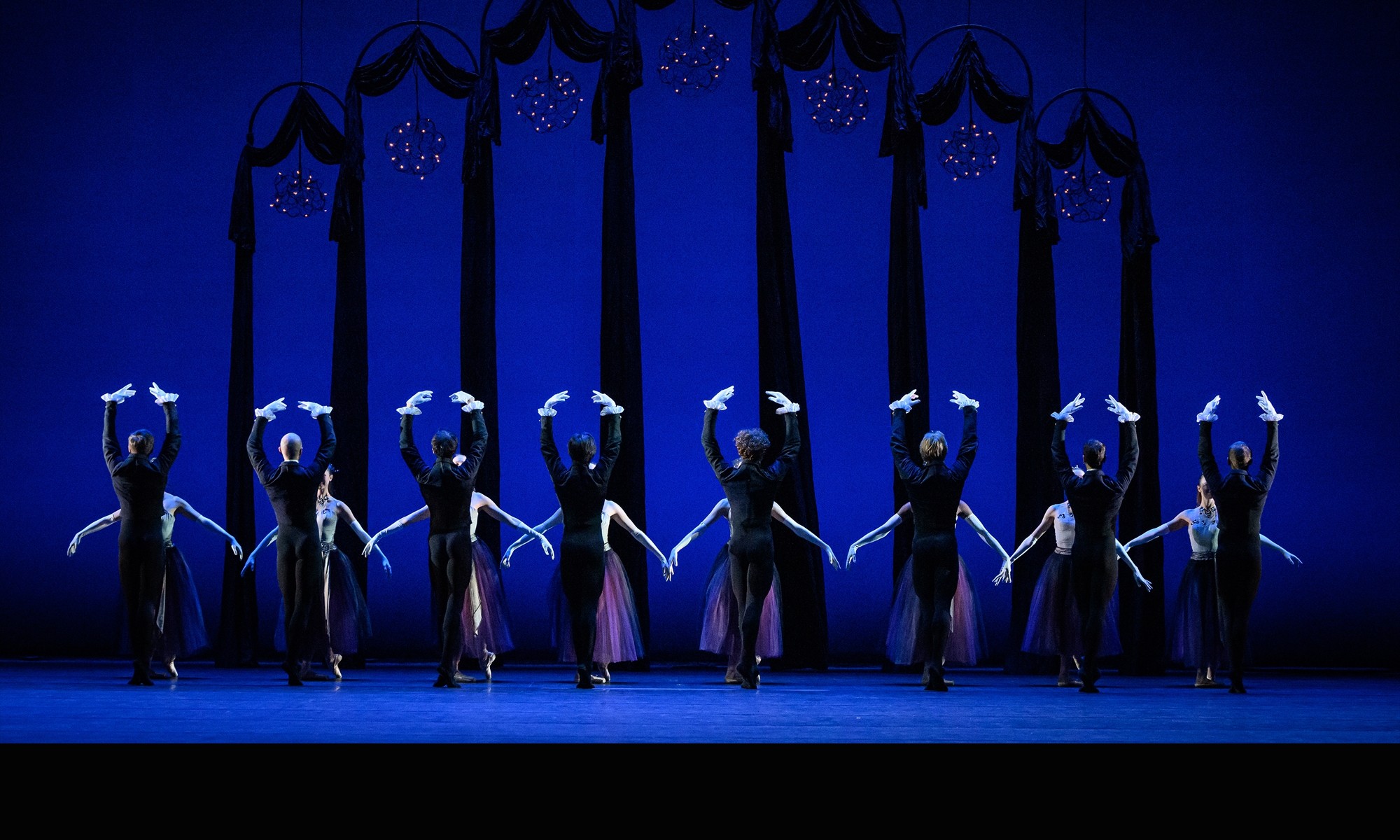
12. E.Bottaro, O.Esina, and Z.Török, “Let Me Mingle Tears with Thee” by J.Lang, Vienna State Ballet 2026 © Vienna State Ballet/A.Taylor13. I.Avraam and M.Kimoto, “Let Me Mingle Tears with Thee” by J.Lang, Vienna State Ballet 2026 © Vienna State Ballet/A.TaylorThe title of Lang’s Let Me Mingle Tears with Thee is a line from Stabat mater and her third engagement with Giovanni Battista Pergolesi’s musical setting of the Christian hymn. The piece premiered with the Pacific Northwest Ballet in 2023. She divided it into two parts, the first of which is dominated by grief and mourning; the second wavers between a solemn celebration and triumphant rejoicing (its colorful costumes and boisterous energy connect it to Robbin’s Interplay). None of the five women and five men who Lang employs has a specific role, though Olga Esina, wearing a fluttering dress in signal red, stands out (costumes by Jillian Lewis).

15. O.Esina, “Let Me Mingle Tears with Thee” by J.Lang, Vienna State Ballet 2026 © Vienna State Ballet/A.Taylor 14. Ensemble, “Let Me Mingle Tears with Thee” by J.Lang, Vienna State Ballet 2026 © Vienna State Ballet/A.Taylor Lang’s choreography is aesthetic and full of symbolism. Scenes change with each of the music’s twelve movements. A visually attractive set and costume elements (in Part One, an oversized version of the Holy Mary’s shawl wrinkles decoratively; in Part Two, a huge cross of light on the backdrop changes color) complement the overall tasteful picture. But like other choreographies to sacral music, Let Me Mingle Tears with Thee lacks genuine energy. Only Godwin Merano projects the essence of his solo toward the audience, and the singers—soprano Anita Götz and alto Jasmin White—deliver a superb rendition of Stabat mater.

Excellent, too, is the Volksoper Wien orchestra’s musical accompaniment under the baton of Maayan Franco.

Links: Website of the Vienna State Ballet 
American SignaturesTrailer
American SignaturesRehearsal sneak peek
Photos: (Some photos show a different cast.)
1. Kentaro Mitsumori, “Interplay” by Jerome Robbins, Vienna State Ballet 2026
2. Gabriele Aime and Gaia Fredianelli, Interplay” by Jerome Robbins, Vienna State Ballet 2026
3. Phoebe Liggins and Meghan Lynch, Interplay” by Jerome Robbins, Vienna State Ballet 2026
4. Natalya Butchko and Alessandro Frola, “Dispatch Duet” by Pam Tanowitz, Vienna State Ballet 2026
5. Natalya Butchko and Alessandro Frola, “Dispatch Duet” by Pam Tanowitz, Vienna State Ballet 2026
6. Alessandro Frola and Natalya Butchko, “Dispatch Duet” by Pam Tanowitz, Vienna State Ballet 2026
7. Alessandro Frola, “Dispatch Duet” by Pam Tanowitz, Vienna State Ballet 2026
8. Alessandro Frola and Natalya Butchko, “Dispatch Duet” by Pam Tanowitz, Vienna State Ballet 2026
9. Rinaldo Venuti, Davide Dato, and Shino Takizawa, “Each in Their Own Time” by Lar Lubovitch, Vienna State Ballet 2026
10. Rinaldo Venuti, “Each in Their Own Time” by Lar Lubovitch, Vienna State Ballet 2026
11. Davide Dato, Rinaldo Venuti, and Shino Takizawa, “Each in Their Own Time” by Lar Lubovitch, Vienna State Ballet 2026
12. Elena Bottaro, Olga Esina, and Zsolt Török, “Let Me Mingle Tears with Thee” by Jessica Lang, Vienna State Ballet 2026
13. Ioanna Avraam and Masayu Kimoto, “Let Me Mingle Tears with Thee” by Jessica Lang, Vienna State Ballet 2026
14. Ensemble, “Let Me Mingle Tears with Thee” by Jessica Lang, Vienna State Ballet 2026
15. Olga Esina, “Let Me Mingle Tears with Thee” by Jessica Lang, Vienna State Ballet 2026
all photos © Vienna State Ballet/Ashley Taylor
Editing: Kayla Kauffman


A Vocation

Rose Eichenbaum:
“Inside the Dancer’s Art”
220 pages, color and b/w photos
Wesleyan University Press, July 2017
ISBN 978-0819577009
August 2017

by Ilona Landgraf
Copyright © 2017 by Ilona Landgraf

1. “Inside the Dancer's Art,” book cover © Wesleyan University Press Originally, Rose Eichenbaum trained to become a dancer. Her plans were thwarted by family duties, but her longing to re-enter the dance world remained. She did return – not wearing dance shoes, but instead equipped with a camera. Having discovered her talent for photography while a young mother, Eichenbaum studied with renowned photographers until her first own pictures were published in a children’s book in 1987. Eight years later, she began to photograph dance, circling her career back to its origins. Six years of work went into her debut book, “Masters of Movement”, which portrays around sixty American choreographers from various dance genres. A significant amount of time spent on taking photos, but Eichenbaum additionally conducted interviews with each and every choreographer – and those interviews are treasures to read. Continue reading “A Vocation”