Fostering Ballet’s Future

Noverre Society Stuttgart
Stuttgart, Germany
December 2014

by Ilona Landgraf
Copyright © 2014 by Ilona Landgraf

1. Logo of the Noverre Society Stuttgart © Noverre Society 2014The dance critic Horst Koegler once compared him with a F1 World Champion who – second to none – has held his title for more than half a century: Fritz Höver, founder and longstanding chairman of Stuttgart’s Noverre Society. How would the Stuttgart Ballet have developed without Höver? Back in the early 1960s no one knew John Cranko in Stuttgart, not even Stuttgart Opera’s general director Walter Erich Schäfer. It’s hard to believe these days but in the late 1950s Stuttgart’s audience had not yet acquired a taste for ballet. The genre’s main function, since 1957 in the hands of artistic director Nicholas Beriozoff, ex-dancer of the Ballet Russe de Monte Carlo, still was to take part in opera productions. Beriozoff, paving the way for the company’s ascent, put considerable effort in promoting ballet. It was due to the relentless persuasive power of Höver, that the young Cranko was invited to Baden-Wuerttemberg’s capital. In 1960 Cranko staged his first work in Stuttgart, “The Prince of the Pagodas” which had premiered three years earlier atNich The Royal Ballet. One year later he took over the reigns of “The Stuttgart Ballet”. Continue reading “Fostering Ballet’s Future”
Differences in Quality

“Notations”
Ballet Zurich
Opernhaus Zurich
Zurich, Switzerland
June 15, 2014

by Ilona Landgraf
Copyright © 2014 by Ilona Landgraf

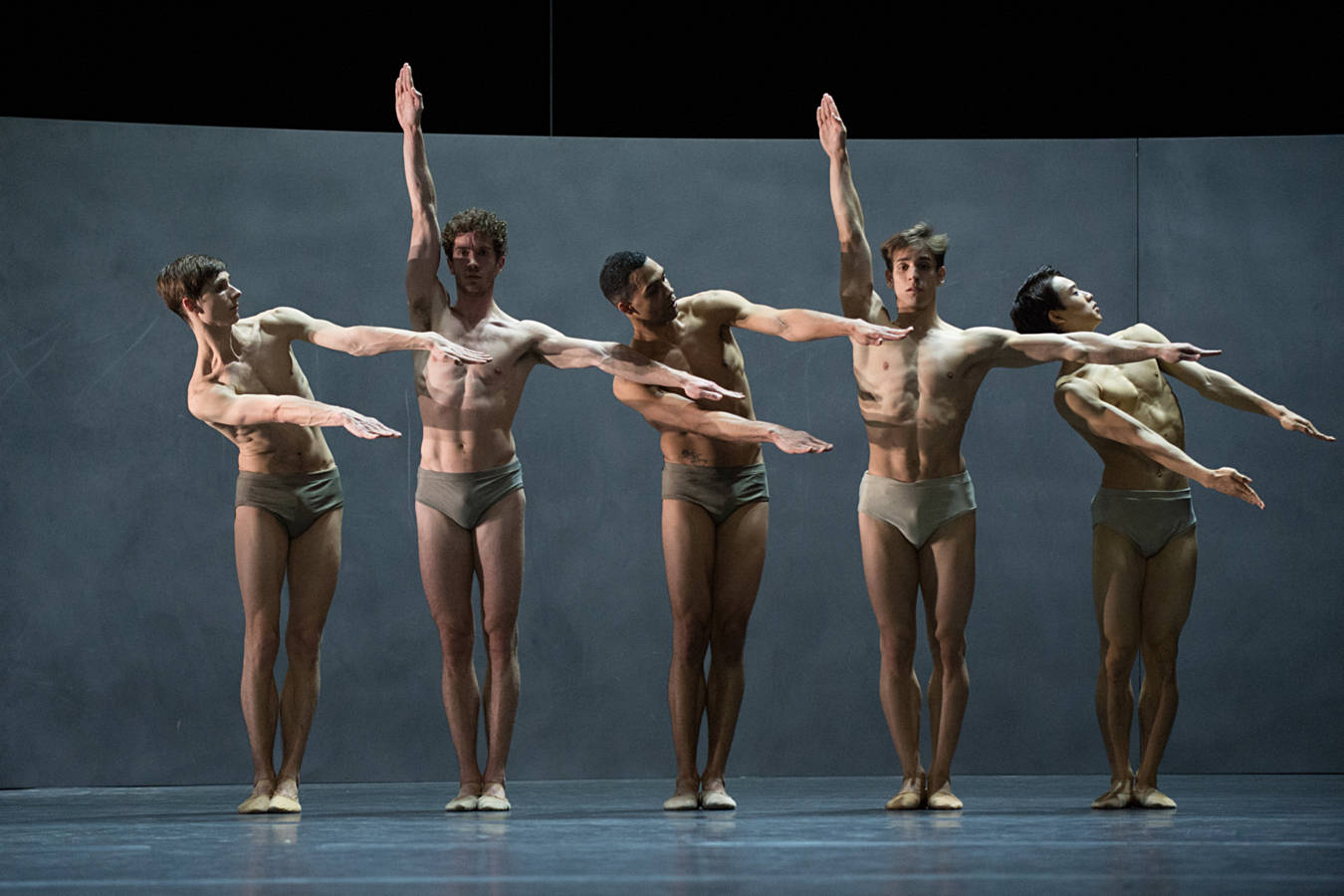
1. Jan Casier, William Moore, Manuel Renard, Denis Vieira and Surimu Fukushi, Kairos by Wayne McGregor, Ballet ZurichA huge, metallic green gleaming ant decorates the playbill and the advertising posters of Ballet Zurich’s ballet evening “Notations”, which premiered in April this year. What kind of connection is between the ant and the dance? A riddle! But maybe I’ll get it later.
“Notations” unites no less than three world premieres: Wayne McGregor, working for the first time with the Swiss company, created “Kairos”. The second piece, “Sonnet”, was contributed by Ballet Zurich’s artistic director Christian Spuck and “Deer Vision”, the third piece, is by Marco Goecke, Stuttgart Ballet’s resident choreographer. Continue reading “Differences in Quality”

In a Gray and Surreal World

“Choreographies by Sol León and Paul Lightfoot”
Nederlands Dans Theater (NDT 1)
Festspielhaus Baden-Baden
Baden-Baden, Germany
March 08, 2014

by Ilona Landgraf
Copyright © 2014 by Ilona Landgraf

1. Sehnsucht by Sol León and Paul Lightfoot, NDT 1 Nederlands Dans Theater showed only “Choreographies by Sol León and Paul Lightfoot” on its two day visit to Baden-Baden. Perhaps this was a test run for the coming time of not dancing anything by Jiří Kylián, the company’s former artistic director. Kylian is withdrawing the performing rights to all of his pieces for a three year period that begins in the fall of 2014. Is the idea to boost new creativity? Certainly the repertory’s one-sidedness surprised. NDT is supposed to be at the heart of European modern dance, ever since the company was founded 55 years ago. Instead of showing off NDT’s fascinating vibrancy and diversity (in works by the four associate choreographers – Marco Goecke, Crystal Pite, Johan Inger and Alexander Ekman), we were subjected to much the same fare three times over. A pity! Continue reading “In a Gray and Surreal World”

Bleak Prospects for the Future

“Ground Breakers”
Stuttgart Ballet
Stuttgart State Opera
Stuttgart, Germany
December 15, 2013, 2pm

by Ilona Landgraf
Copyright © 2013 by Ilona Landgraf

1. P.von Sternenfels, H.MacIsaac, workwithinwork by William Forsythe, Stuttgart BalletStuttgart Ballet, seldom lacking self-assurance, titled its new ballet evening “Ground Breakers”. The German term “Fort//Schritt//Macher” better conveys this triple bill’s intention: Presented are works by three choreographers of different epochs, all driving forces behind European modern ballet’s progress, in short true trailblazers. And further all three – William Forsythe, Hans van Manen and Marco Goecke – are closely associated with the company or are even home-bred.

William Forsythe spread his choreographic wings in Stuttgart. There he made his debut at an evening of the Noverre Society, which promotes up-and-coming talent. Several pieces for Stuttgart Ballet followed and, after some years as freelance choreographer, Forsythe was appointed artistic director of Frankfurt Ballet in 1984. Striving after continual development, he modernized 20th century ballet by deconstructing all aspects of ballet, reassembling the fragments into abstract and speedy movements. Off-balances and overexpansions are his hallmarks. Forsythe also became more and more interested in other fields such as literature, philosophy, media and architecture, which he draws upon for inspiration. His approach is as cognitive as a researcher’s. Though Frankfurt Ballet was liquidated in 2004 for financial reasons, Forsythe continues his search for innovation with “The Forsythe Company”, founded in 2005, which resides in Dresden/Hellerau and in Frankfurt’s Bockenheimer Depot.

Continue reading “Bleak Prospects for the Future”

Who’s as Big?

“Made in Germany”
Stuttgart Ballet
Stuttgart Schauspielhaus
Stuttgart, Germany
October 10, 2013

by Ilona Landgraf
Copyright © 2013 by Ilona Landgraf

1. Constantine Allen in Fancy Goods by Marco Goecke, Stuttgart Ballet 2013, photo Stuttgart BalletOnce upon a time the label “Made in Germany” conveyed craftsmanship and reliability. Innovation, novelty and experimentation weren’t features associated with this phrase in any primary way. Now, Stuttgart Ballet has proven the opposite. “Made in Germany” is the ever so self-confident title of the company’s new ballet program which premiered earlier this month. A mixed bill of twelve little pieces, specially created for the dancers of Stuttgart Ballet by nine choreographers, it serves as nibbles for various tastes. In addition to these miniatures, a vast number of works have been made for the company since Reid Anderson’s directorship began in 1996: more than eighty, seven of them program-filling story ballets. Where else can one find such fertile creativity alongside the careful guardianship of tradition?

Crucial for spotting new choreographic talent is Stuttgart’s Noverre Society. Founded during Cranko’s era, it annually gives as yet unknown choreographers the opportunity to show their creations to an audience. For six of the current evening’s choreographers the Noverre presentations were the doorway to the big stages for which they have subsequently been making work. Continue reading “Who’s as Big?”