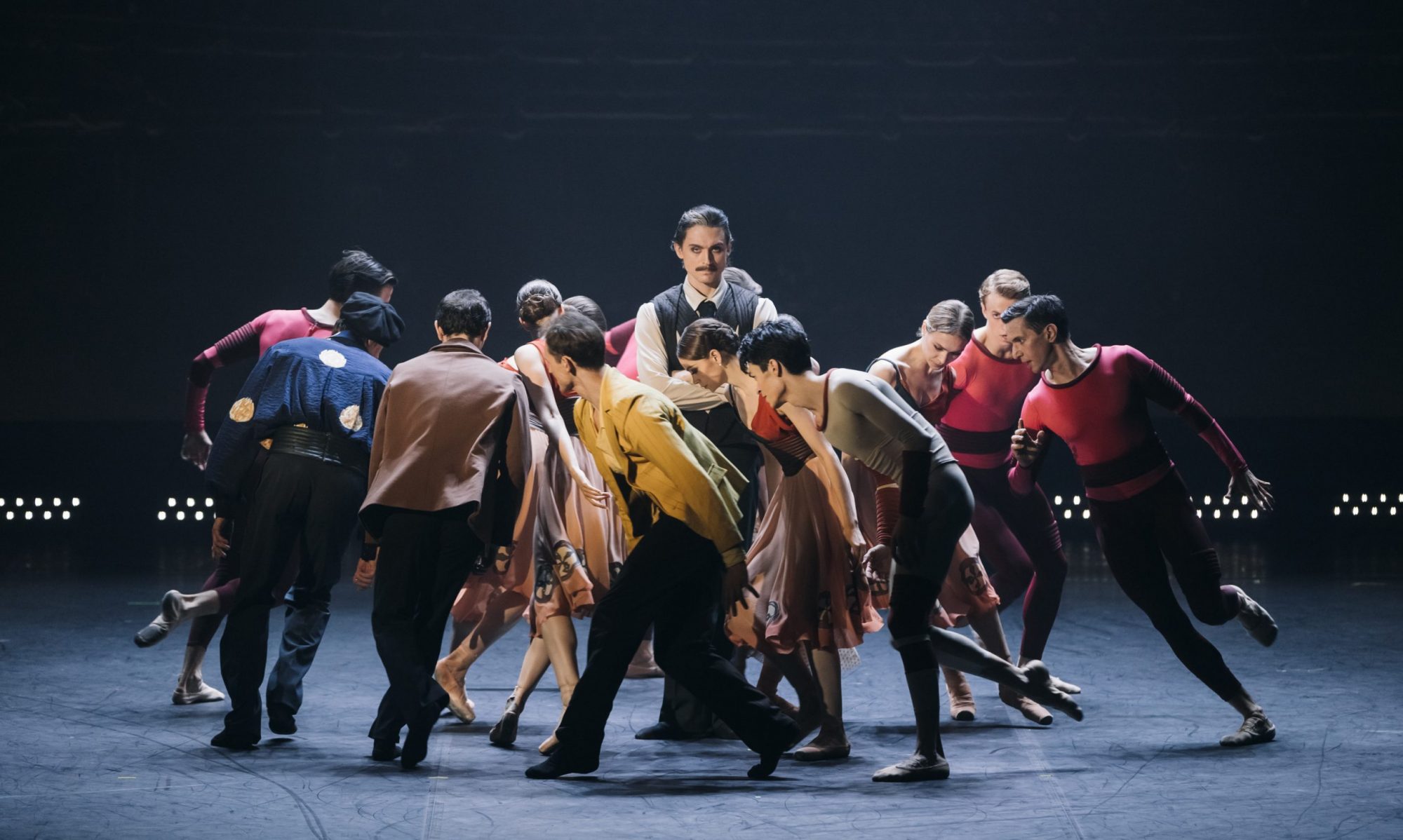
“More Than Theater: Celebrating the 250th Anniversary of the Bolshoi Theatre”
Museum of Contemporary Russian History
Moscow, Russia
November 01, 2026
by Ilona Landgraf
Copyright © 2026 by Ilona Landgraf
 The announcement of a large-scale exhibition to celebrate the Bolshoi Theatre’s 250th birthday made me reflect on the period from 1776 (when Empress Catherine the Great granted Prince Pyotr Urusov permission to establish a theater company in Moscow, the Bolshoi Theatre’s predecessor) to today, admittedly, a gigantic undertaking. But, after all, the Bolshoi is Russia’s most prestigious theater.
But the Museum of Contemporary Russian History’s exhibition More Than Theater takes a different approach. In collaboration with Moscow’s private MustART Gallery, the museum assigned sixteen contemporary Russian artists to “unravel the Bolshoi’s stage’s captivating and infinite mystery.” It is questionable whether the paintings, drawings, sculptures, and installations to which the theater added archived video performances achieved this goal. Many of the works show past and present artists, but the selection criteria remained unclear. I didn’t count the objects but had the impression that the ballet company was better represented than the opera company.
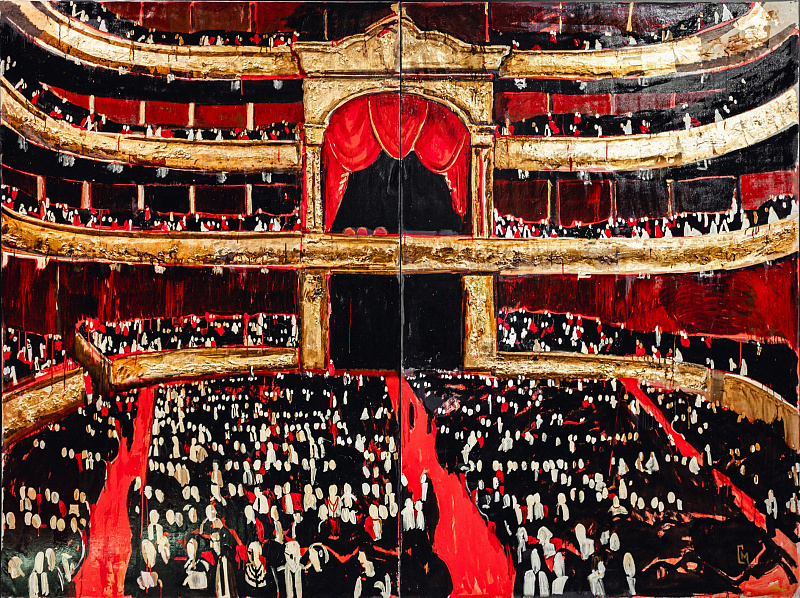
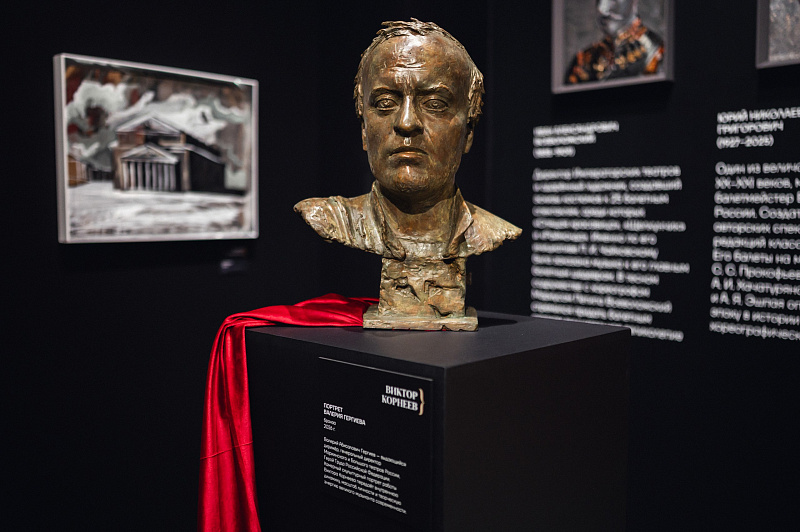 Maria Suvorova’s painting of The Bolshoi Theatre’s Apollo Quadriga at the pediment greets visitors as if they are approaching the real Bolshoi. A painting of the historic auditorium (also by Suvorova) flanks Apollo and his horses on the right and the Bolshoi’s key figures on the left. A bronze bust of general director Valery Gergiev (cast by Viktor Korneev) stands in front of a line of paintings of Ivan Vsevolozhsky (the director of Moscow’s Imperial Theaters from 1881-1886), Yuri Grigorovich (the Bolshoi Ballet’s defining choreographer and, until 1995, artistic director), and Makhar Vaziev (the Bolshoi Ballet’s current artistic director). Opposite them, a model of the Bolshoi Theater’s proscenium with a ceremonial curtain pays tribute to the Russian-Italian architect, Albert Cavos (1801-1863), who designed the Bolshoi’s reconstruction and extension after the devastating1853 fire.
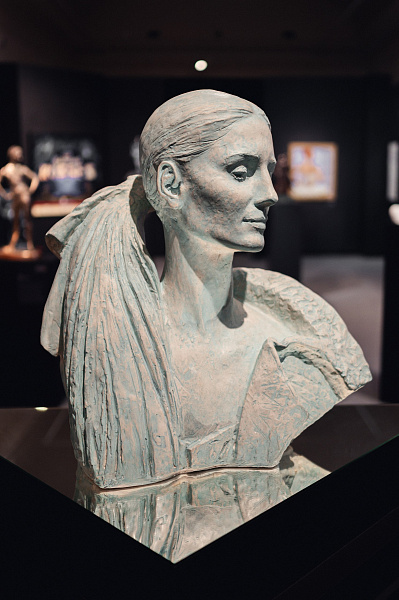
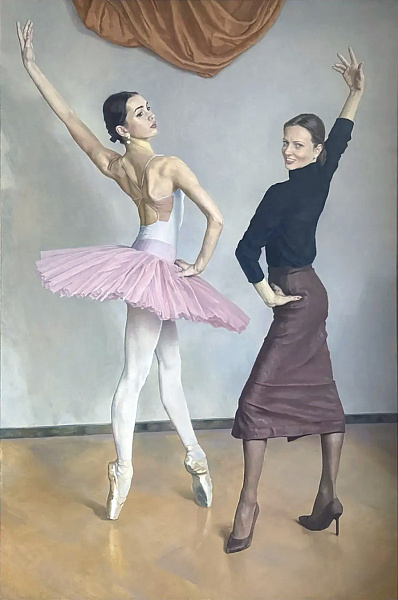
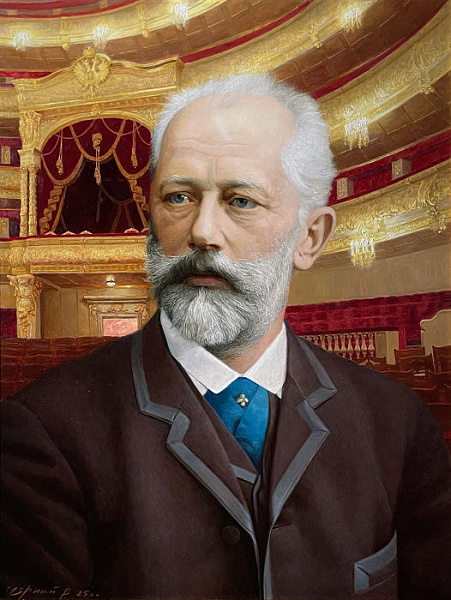
 In the second room, two objects immediately attract the eye: the large bust Anticipation of Dance of the Bolshoi Ballet’s prima ballerina, Svetlana Zakharova, and Nina Kaptsova’s smile and pose in a huge painting by Vladimir Cherny showing her rehearsing Darina Moseyeva. Only on a second glance did I notice the portrait of Pyotr Tchaikovsky (wearing a brown jacket with gray trimmings, he looks strangely out of date) and the huge painting of Yuri Grigorovich draped in a chair next to the stage curtain.
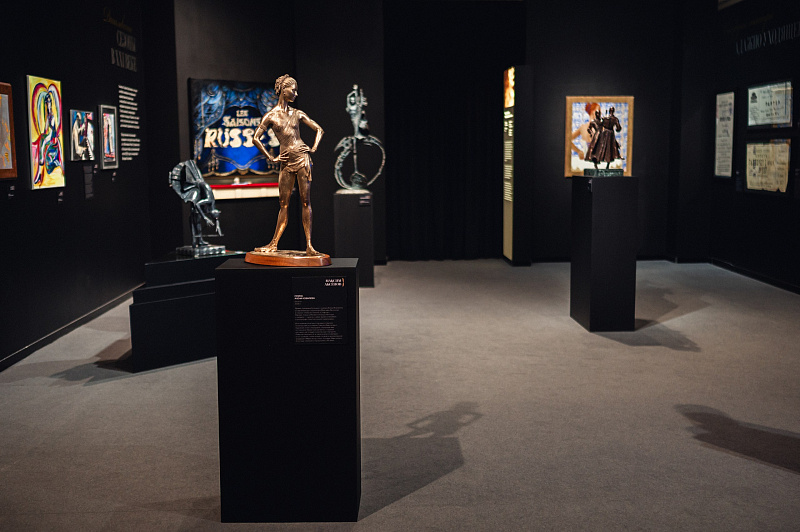
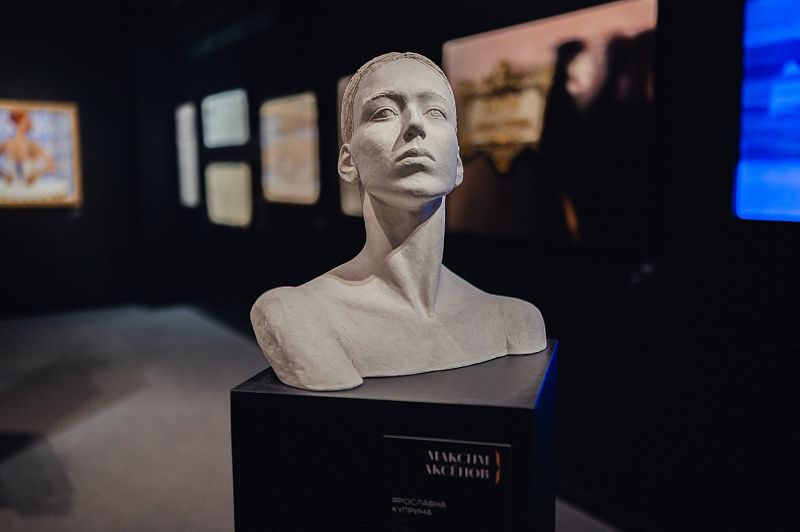
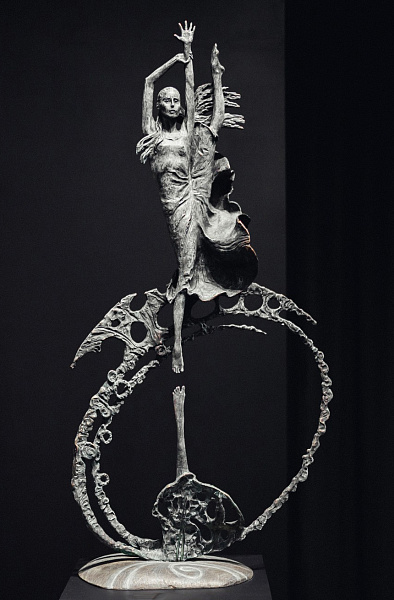
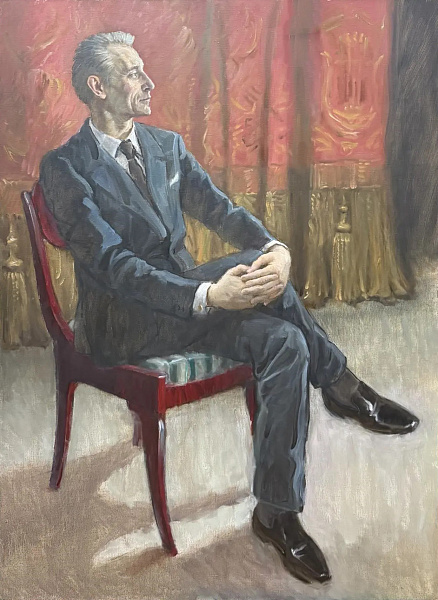 Among the smaller sculptures arranged behind Zakharova’s bust is one of Yaroslavna Kuprina, a bronze of Alyona Kovalyova as Aegina from Spartacus, and another sculpture of Zakharova performing a développé à la seconde. To capture the individuality of the Bolshoi’s artists, the painters and sculptors worked alongside them for a year.
Given the sideways glance of Artemy Belyakov’s Solor at colleagues from a subtle portrait (by Andrei Remnev), he must prefer restraint. On paintings next to him, Igor Stravinsky tinkles the ivories, and Tamara Karsavina sports a colorful Firebird costume.
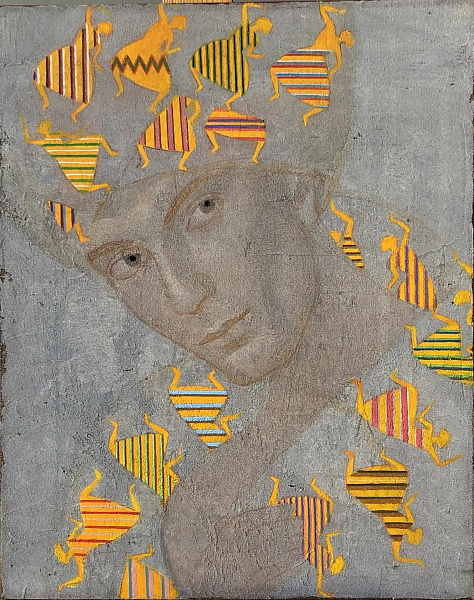
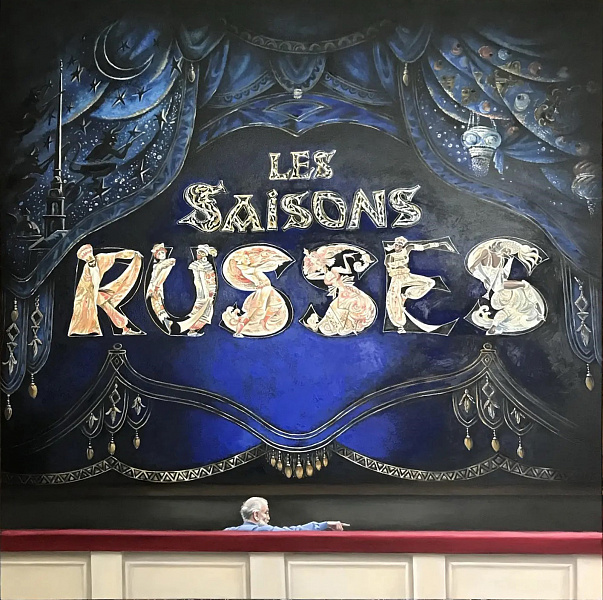 The letters of Les Saisons Russes on a blue theater curtain of a Bakst-like painting are built from rose-colored harem dancers. Enlarged tickets to the Bolshoi are displayed on the opposite wall, one dated 1916/17, seven years after the Ballets Russes’ sensational debut in Paris—a subscription ticket for ten performances costing forty rubles. By the standard of the time, going to the theater was expensive.
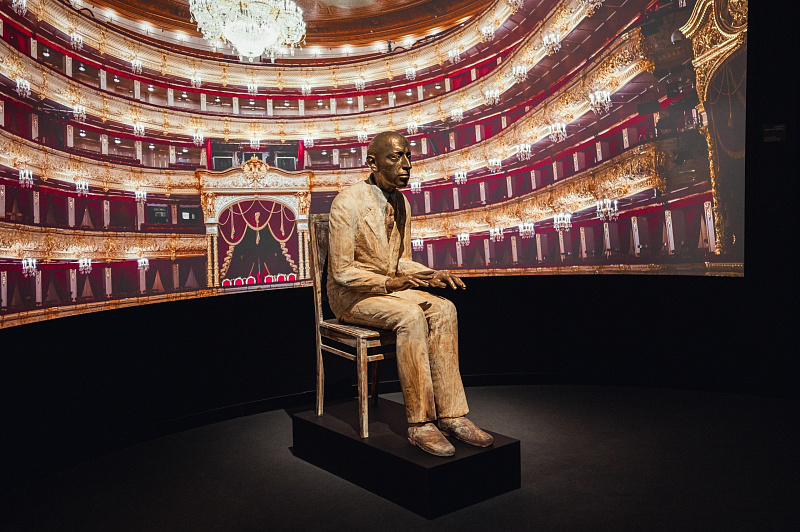 The center of the exhibition is a small round room that, due to the curtains at its entrance and exit, feels like a private box. Only one visitor sits in it (on a plain wooden chair rather than a red cushioned seat from the auditorium that spans behind him): a wood-carved Igor Stravinsky. His upper body leans forward as if the seat were hot. His hands hover tensely above his knees as if ready to intervene in the performance of his Firebird, which unravels on screen in front of him.
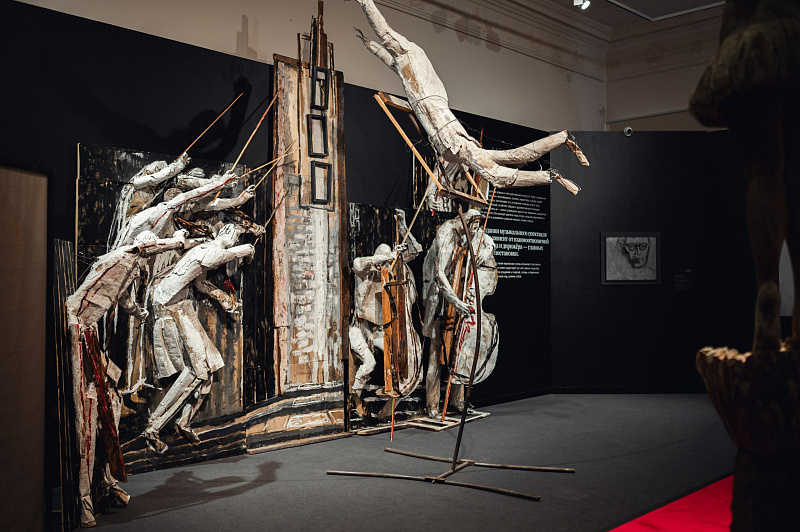 Maria Kulagina’s orchestra installation dominates the following room. Its bulky cellists bend over instruments made of wooden planks, the violinists poke their bows in the air like lances, and the conductor hangs angel-like above them, his body supported by a music stand. Maybe he’s conducting Dmitry Shostakovich’s Lady Macbeth of Mtsensk, an excerpt of which plays on the side wall. Maria Suvorova depicted Shostakovich twice: as a young man playing piano and as a mature artist. Of the two dance shoes in Olga Osnach’s painting, the braided bast shoe represents the connection to the ground, whereas the pointe shoe symbolizes aspiration toward heaven.
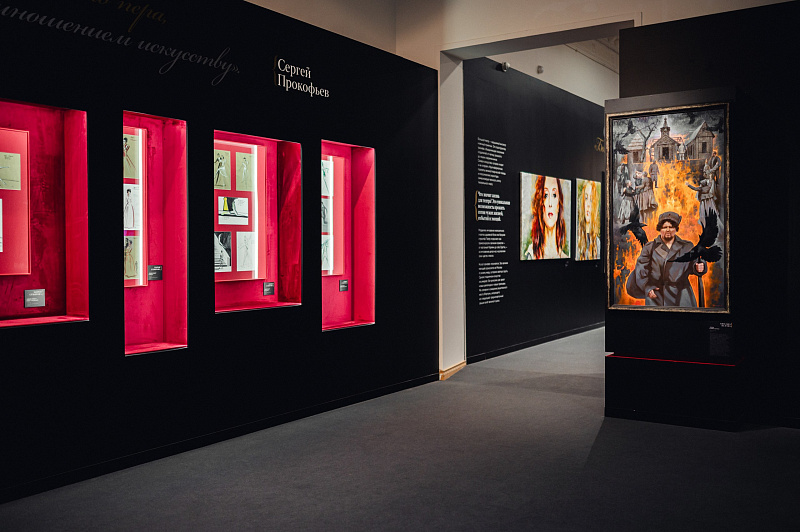
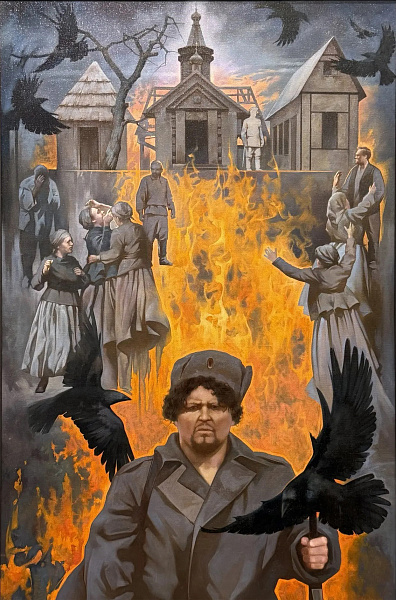 Sergei Prokofiev would have celebrated his 135th birthday this year. The Bolshoi’s schedule paid tribute to him last season, and this tribute extended to the exhibition, for which one room is reserved solely for Prokofiev. A video excerpt and the score of his opera Semyon Kotko are on display as well as sketches of the Bolshoi’s artists in Ivan the Terrible, Cinderella, Romeo and Juliet, and War and Peace.
The best vibes are in the final room, which features current leading artists. Sergei Bazilev’s strong color palette gives Svetlana Zakharova and Maria Vinogradova an intense presence, and Mikhail Novokshchenny’s broad brushstrokes catch Anastasia Stashkevich, Vyacheslav Lopatin, and Igor Tsvirko in rehearsals.
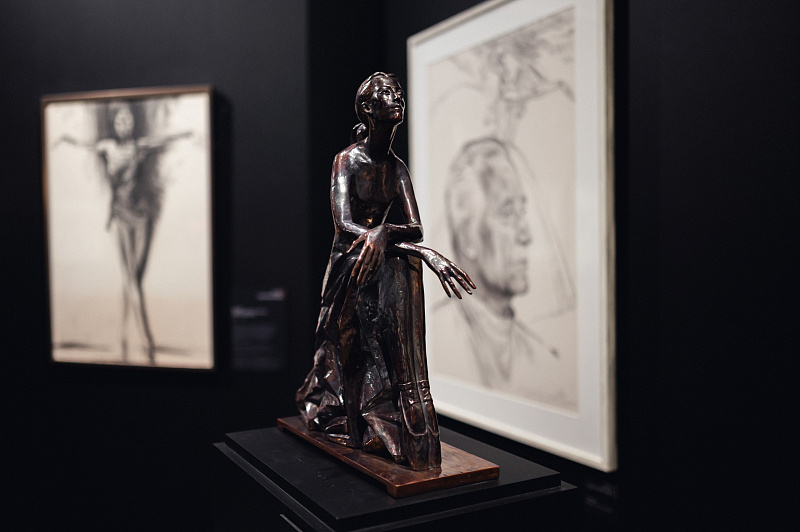
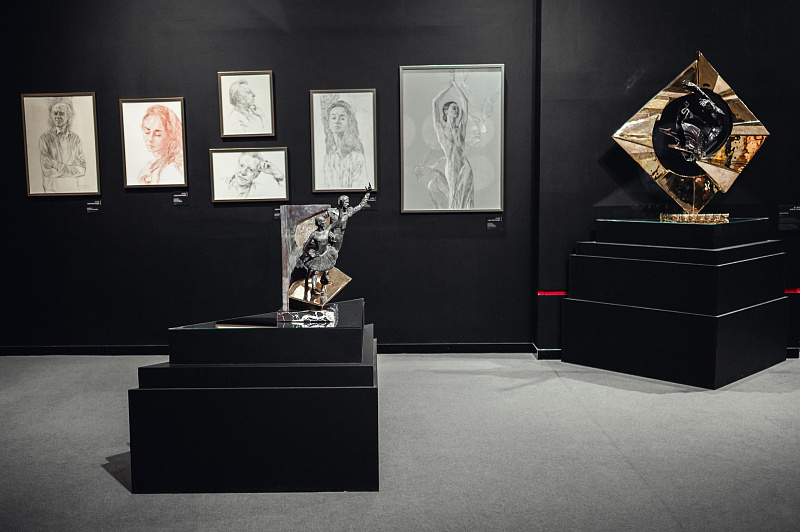
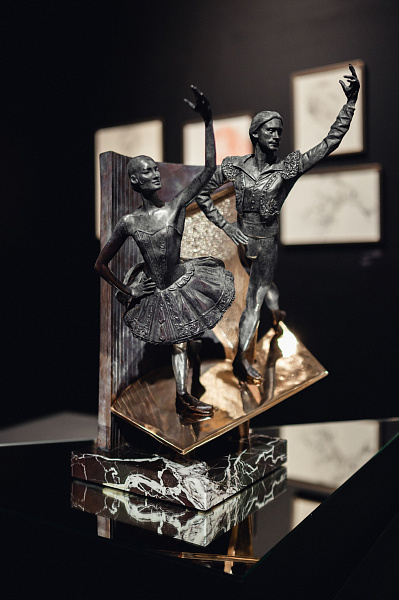 Drawings on the opposite wall portray Valery Gergiev, Boris Akimov, Alexander Vetrov, Ekaterina Krysanova, and, again, Svetlana Zakharova. Vadim Kirillov’s bronze depicts Eleonora Sevenard and Denis Rodkin as Kitri and Basilio. Behind them, Rodkin and Zakharova dance Carmen Suite. Carmen was Maya Plisetskaya’s signature role. Although she and Yuri Grigorovich are no longer physically present in the Bolshoi, they feel eternally present, and perhaps that’s why portraits of both hang in the last room as well.
More than Theater runs until January 10, 2027.
| Links: | Website of the Bolshoi Theatre | |
| Website of the MustART Gallery | ||
| Website of the Museum of Contemporary Russian History | ||
| More Than Theater: Celebrating the 250th Anniversary of the Bolshoi Theatre—video | ||
| Photos: | 1. | Maria Suvorova, “The Greatest Theater” |
| 2. | Viktor Korneev, bust of Valery Gergiev | |
| 3. | Exhibition “More Than Theater: Celebrating the 250th Anniversary of the Bolshoi Theatre” |
|
| 4. | Oleg Zakomorny, “Anticipation of Dance” | |
| 5. | Vladimir Shtein, “Nina Kaptsova and Darina Moseyeva” | |
| 6. | Maksim Aksenov, bust of Yaroslava Kuprina | |
| 7. | Dmitry Slepushkin, “Portrait of Choreographer Yuri Grigorovich” |
|
| 8. | Vladimir Cherny, “Pyotr Ilyich Tchaikovsky” | |
| 9. | Andrei Remnev, “Solor. Artemy Belyakov” | |
| 10. | Oleg Zakomorny, “A Ray of Light: Svetlana Zakharova” |
|
| 11. | Oleg Osnach, “Dress Rehearsal” |
|
| 12. | Viktor Korneev, “Igor Stravinsky” | |
| 13. | Maria Kulagina, “Music of Time: The Conductor” | |
| 14. | Svetlana Valuyeva, The Opera “Semyon Kotko” |
|
| 15. | Exhibition “More Than Theater: Celebrating the 250th Anniversary of the Bolshoi Theatre” |
|
| 16. | Sculpture of Maya Plisetskaya, Exhibition “More Than Theater: Celebrating the 250th Anniversary of the Bolshoi Theatre” | |
| 17. | Vadim Kirillov, “Denis Rodkin and Eleonora Sevenard” | |
| 18. | Exhibition “More Than Theater: Celebrating the 250th Anniversary of the Bolshoi Theatre” | |
| all photos © MustART Gallery | ||
| Editing: | Kayla Kauffman |

