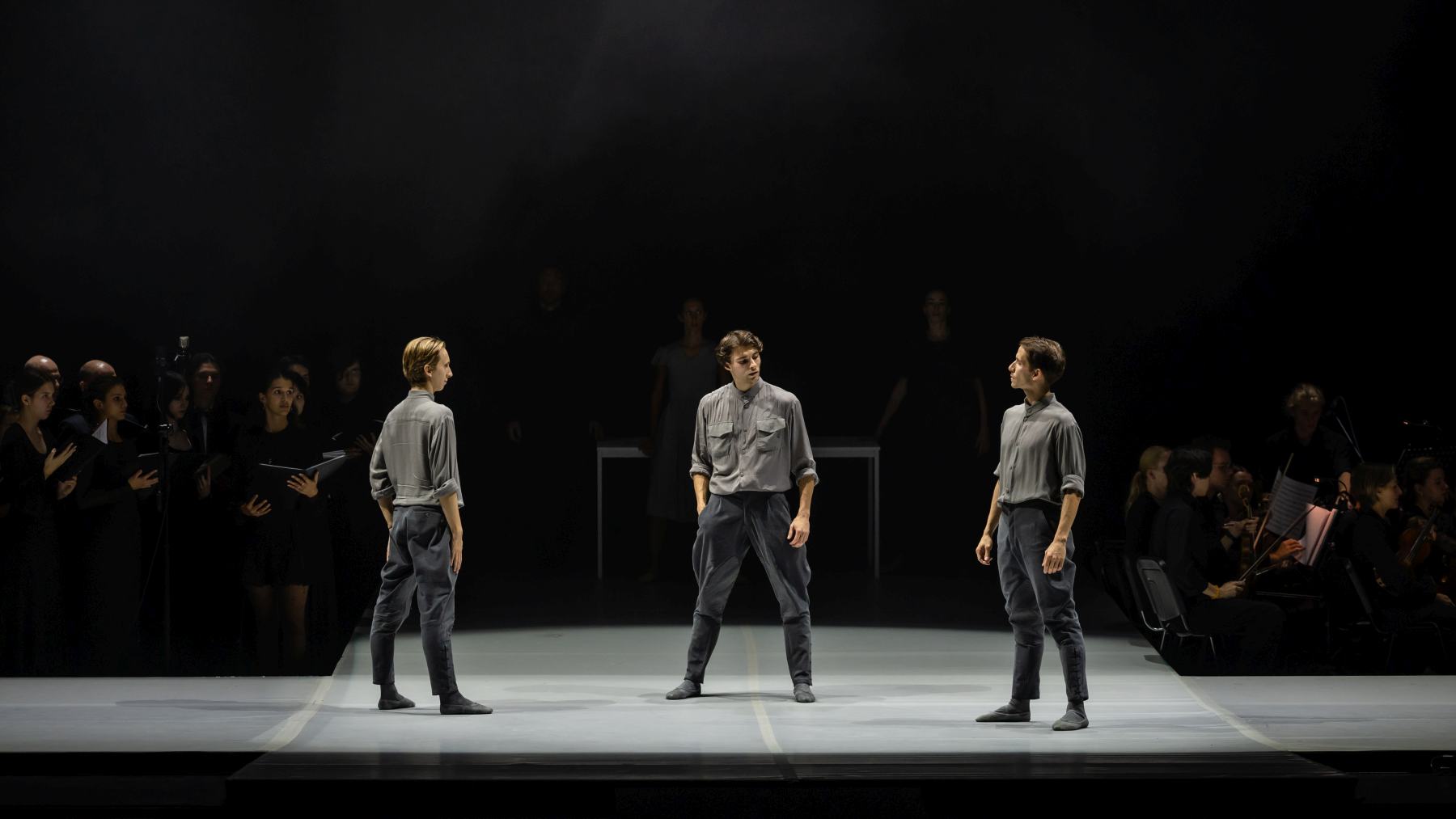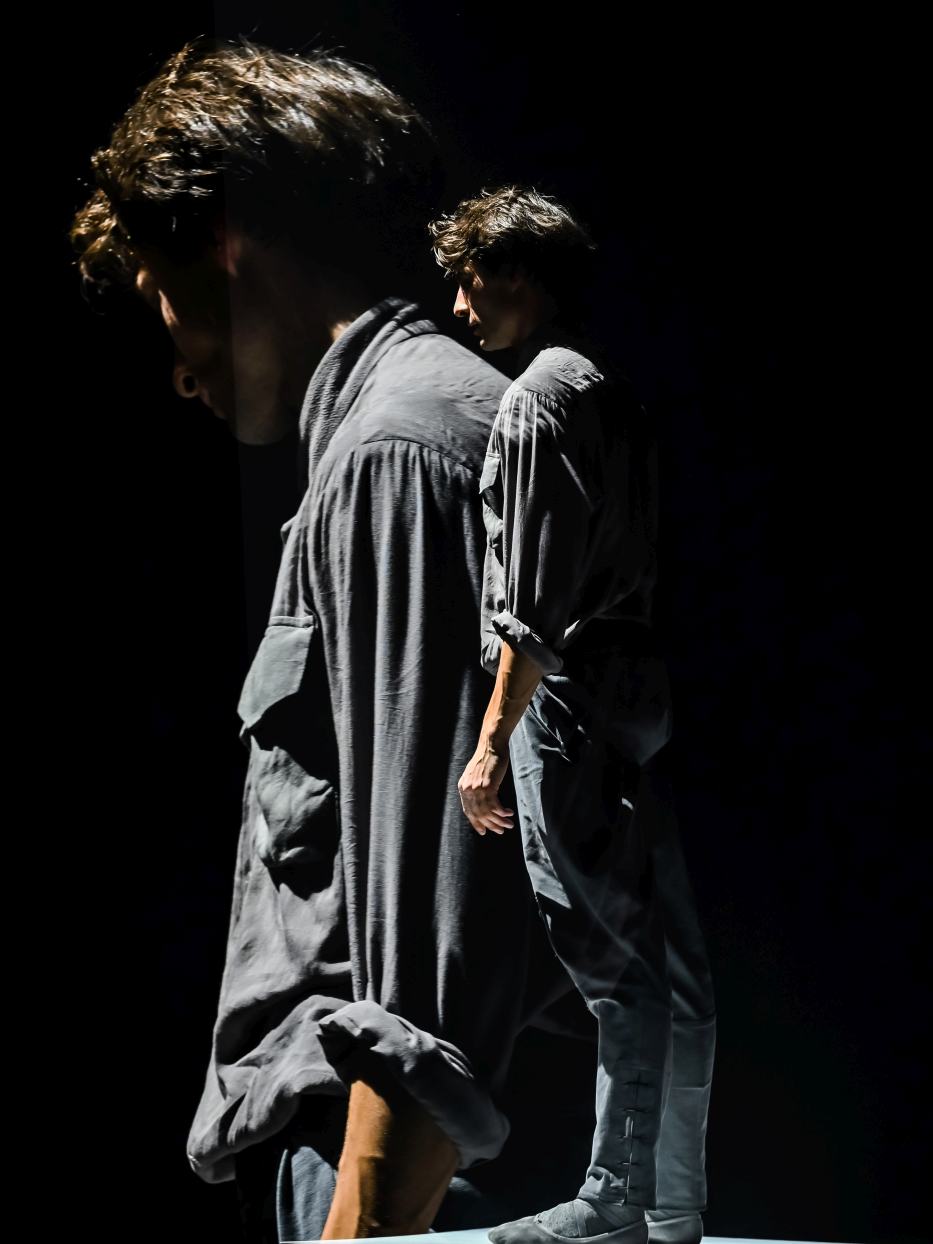
Believe in Miracles

“The Nutcracker. Waiting for a Miracle”
Bolshoi Ballet
Bolshoi Theatre
Moscow, Russia
December 29, 2025 (documentary)

by Ilona Landgraf
Copyright © 2026 by Ilona Landgraf
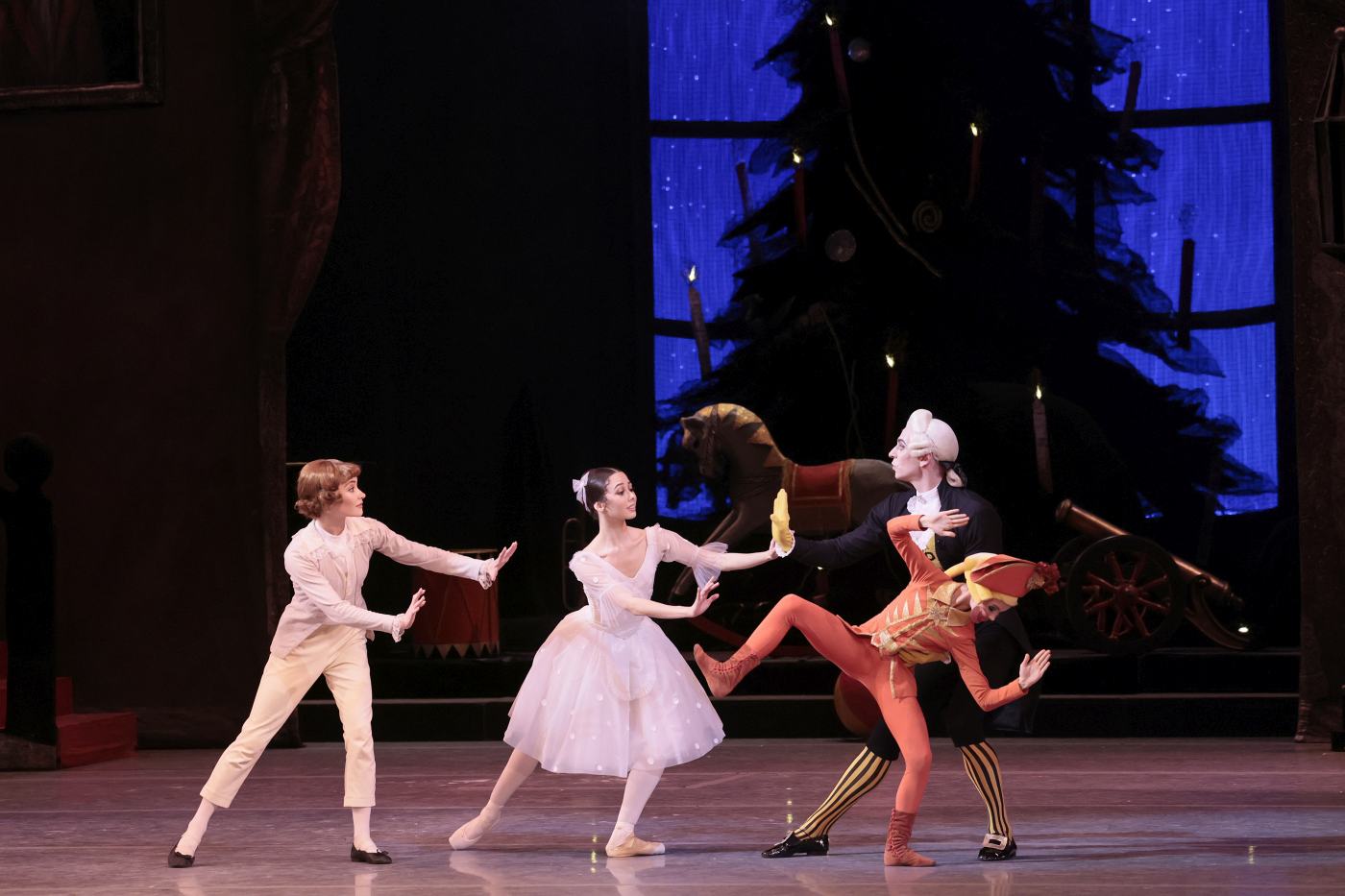
1. E.Kokoreva (Marie), D.Savin (Drosselmeier), and ensemble, “The Nutcracker” by Y.Grigorovich, Bolshoi Ballet 2025 © Bolshoi Theatre/D.YusupovOf the many special moments in Yuri Grigorovich’s The Nutcracker, there’s one you shouldn’t miss: when the Christmas tree is growing, and Marie’s transformation takes place. Then you need to make a wish. At least, that’s the insiders’ tip from the Bolshoi Ballet’s artists involved in the production.

Grigorovich’s The Nutcracker premiered at the Bolshoi Theatre in 1966 and was performed for the eight hundredth time earlier in December. Perhaps that’s why the Russian Channel One broadcast a one-hour documentary about The Nutcracker at the end of December. The film outlines the plot, provides insight into the music, set, and costumes, and looks at sixty years of performance history, during which nothing changed. Numerous coaches and ballet masters guarantee that Grigorovich’s legacy is preserved and kept alive. “Our profession is passed on from hand to hand, from foot to foot,” Maria Allash told. Regina Nikiforova, who has served the Bolshoi Ballet for sixty-five years, added: “Of course, we look at the records and ask the performers of past years what Yuri Nikolaevich told them. Though taking any liberties isn’t allowed, the individuality of each artist still shines through. Their charisma is what catches the audience.”

2. A.Ovcharenko (Nutcracker Prince), M.Kryuchkov (Mouse King), and ensemble, “The Nutcracker” by Y.Grigorovich, Bolshoi Ballet 2025 © Bolshoi Theatre/D.YusupovThe Bolshoi’s doyen, Boris Akimov, narrated the film, his voice wavering between excitement and appreciation. Aged seventy-nine, Akimov’s élan and warmth were as intense as always. Among others, he and the company’s artistic director, Makhar Vaziev, touched on one invariable ingredient in all The Nutcrackers: Tchaikovsky’s music. “There are no other composers whose works are performed thousands of times throughout the world per season,” Vaziev said. However, the Bolshoi’s (and presumably the Mariinsky’s) The Nutcracker is played quicker than elsewhere, as general director Valery Gergiev insists on conducting at exactly the pace Tchaikovsky determined.

Even its aerial shots of Moscow’s Christmas-lit Theatre Square and the fabulous camera work inside the theater make the film a must-watch. It also pays a visit to Moscow’s Choreographic Academy, where the Bolshoi’s principal, Mikhail Lobukhin, substituting 3. K.Efimov (Nutcracker Prince) and ensemble, “The Nutcracker” by Y.Grigorovich, Bolshoi Ballet 2025 © Bolshoi Theatre/M.Logvinovfor Drosselmeier, assisted in the selection of the youngest performer of the production, the student for the role of the Nutcracker doll. “Usually, the doll is just an ordinary toy in the hands of a dancer, and I’m surprised about the solution Yuri Nikolaevich found, a living doll with a unique dancing technique as the leitmotif of the entire production,” Vaziev explained. When Marie’s naughty brother, Fritz, accidentally breaks the doll, it is the springboard for Marie’s magical dream journey. She dreams the sort of dreams that are so strong that they might become true. Something similar happened to Lyudmila Semenyaka as a young girl in Leningrad when she first saw a photo of a ballerina in a tutu: Alla Sizova as Masha in Vasily Vainonen’s version of The Nutcracker. Semenyaka cut out the photo and pinned it to the piano, where it stayed. Twelve years later, in 1972, the twenty-year-old Semenyaka gave her debut as Marie in Grigorovich’s The Nutcracker on the Bolshoi’s stage.

4. Ensemble, “The Nutcracker” by Y.Grigorovich, Bolshoi Ballet 2025 © Bolshoi Theatre/M.LogvinovOf the many other dancers who shared their thoughts about The Nutcracker, Denis Rodkin revealed that “When watching the performance, you always expect some kind of miracle in your soul,” and Kristina Kretova admitted to getting goosebumps the moment the Nutcracker toy awakens as a real prince. About the same scene, Vladislav Lantratov said, “You know, love is born, and you just want it. Take Marie very carefully and lean her head onto your shoulder—this is the feeling.”

Love is at the core of Grigorovich’s The Nutcracker, and now and then, the dancers in the main roles fell in love with one another. Such was the case for Artem Ovcharenko and Anna Tikhomirova, for example, who got married in 2016. “At some point during the performance, you touch something sacred that you cannot put into words,” Ovcharenko explained. Sometimes, swearing love to each other on stage spurs real-life romances.

5. Ensemble, “The Nutcracker” by Y.Grigorovich, Bolshoi Ballet 2025 © Bolshoi Theatre/D.YusupovEkaterina Maximova and Vladimir Vasiliev were already a married couple when they danced the lead roles at The Nutcracker’s premiere in 1966. Their performance is the threshold for today’s generation of dancers. Shortly before stepping on stage, Elizaveta Kokoreva and Daniil Potaptsev were lucky enough to be coached by Vasiliev in a masterclass that ran like a golden thread through the documentary. Kokoreva gave her debut as Marie in 2019, and Potaptsev was about to dance the Nutcracker Prince for the first time. It was a pity that I couldn’t see their performances and missed the live stream on December 31 featuring Kokoreva alongside Dmitry Vyskubenko as the prince.

The live stream of December 2024 can be watched on the Bolshoi Theatre’s vimeo site until January 11.

Links: Website of the Bolshoi Theatre
The Nutcracker—live stream December 2024 (online until January 11, 2026)
The Nutcracker. Waiting for a Miracle—Channel One
Photos: 1. Elizaveta Kokoreva (Marie), Denis Savin (Drosselmeier), and ensemble, “The Nutcracker” by Yuri Grigorovich, Bolshoi Ballet 2025 © Bolshoi Theatre/Damir Yusupov
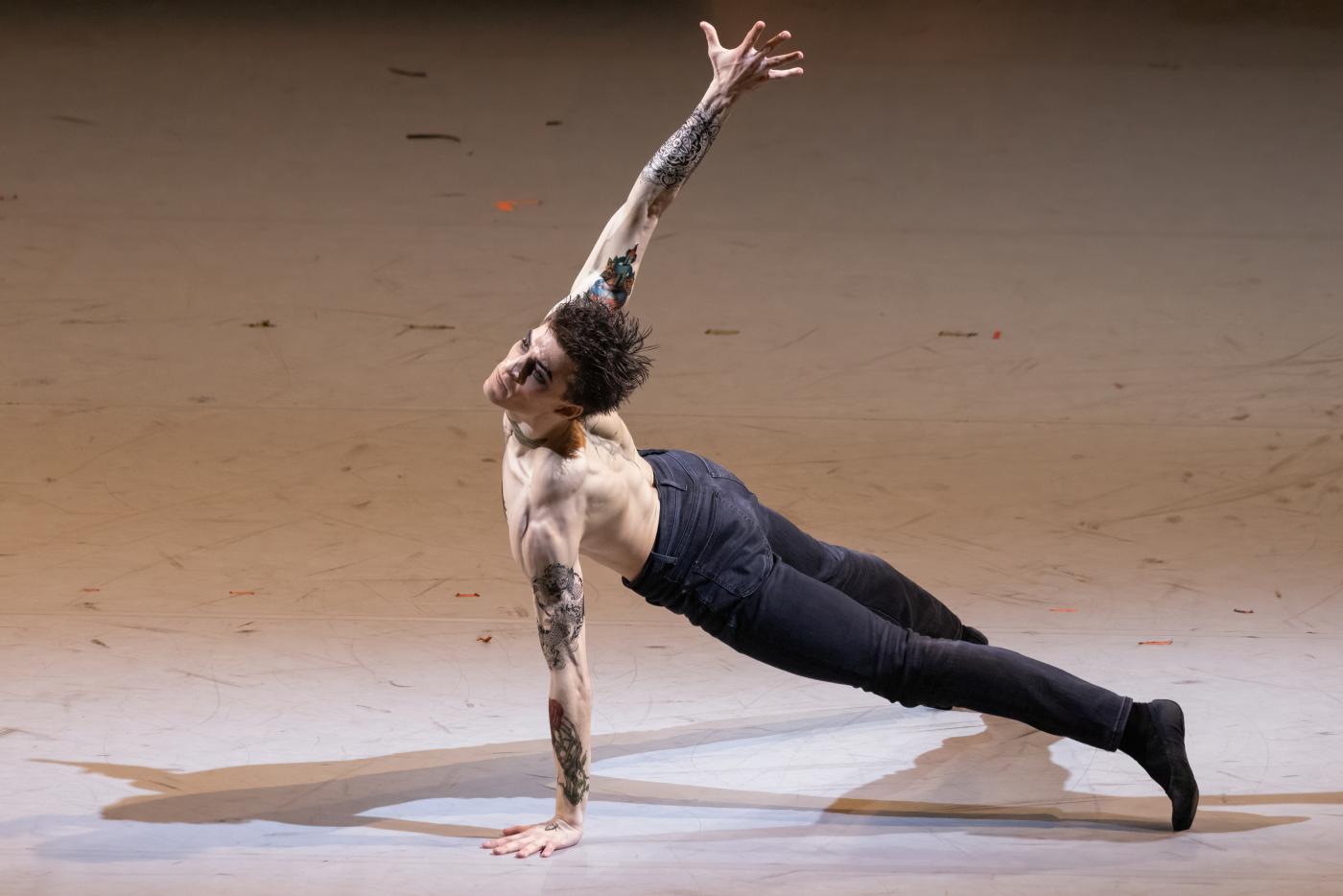
2. Artem Ovcharenko (Nutcracker Prince), Mikhail Kryuchkov (Mouse King), and ensemble, “The Nutcracker” by Yuri Grigorovich, Bolshoi Ballet 2025 © Bolshoi Theatre/Damir Yusupov
3. Klim Efimov (Nutcracker Prince) and ensemble, “The Nutcracker” by Yuri Grigorovich, Bolshoi Ballet 2025 © Bolshoi Theatre/Mikhail Logvinov
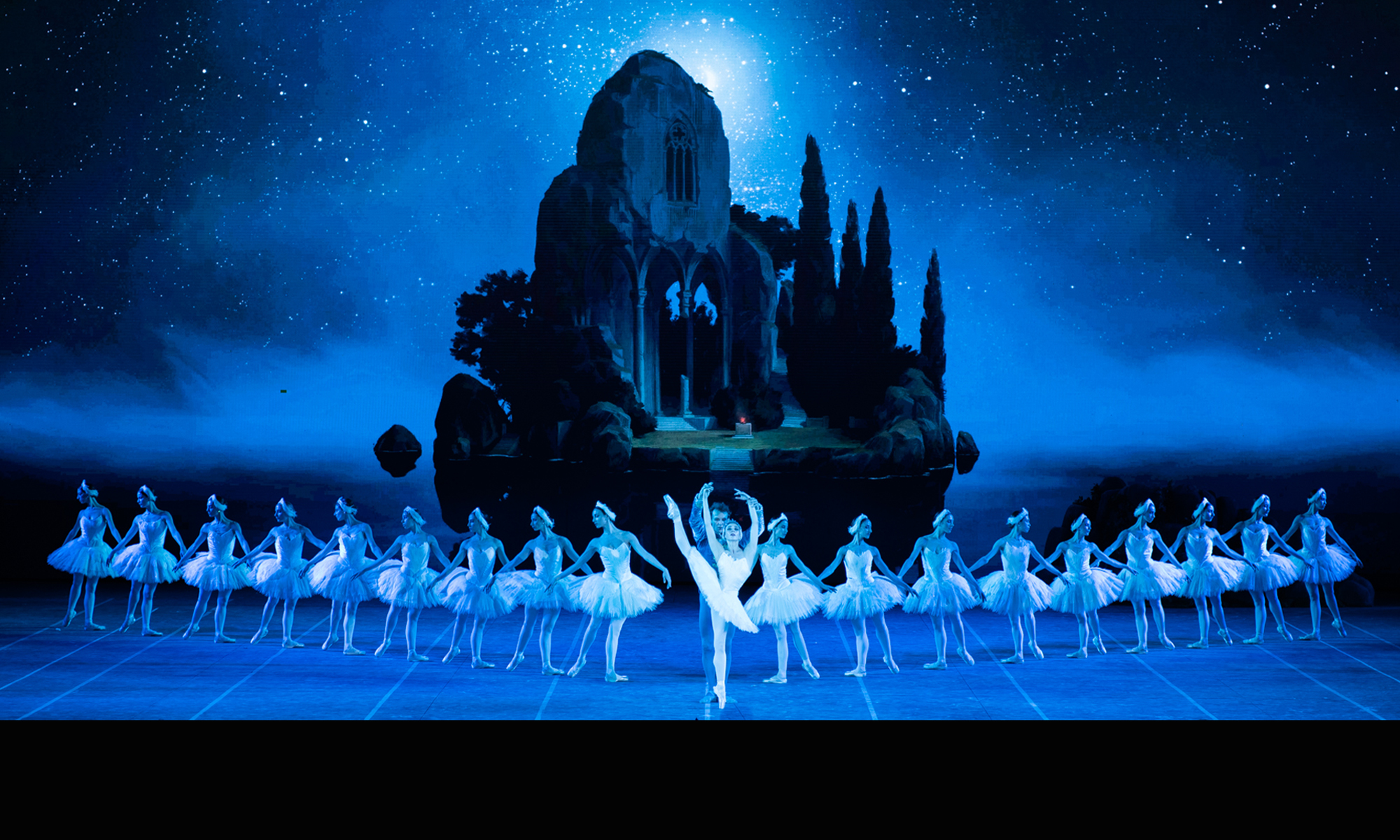
4. Ensemble, “The Nutcracker” by Yuri Grigorovich, Bolshoi Ballet 2025 © Bolshoi Theatre/Mikhail Logvinov
5. Ensemble, “The Nutcracker” by Yuri Grigorovich, Bolshoi Ballet 2025 © Bolshoi Theatre/Damir Yusupov
Editing: Kayla Kauffman

Dreams versus Reality

“The Seagull”
Bolshoi Ballet
Bolshoi Theatre (New Stage)
Moscow, Russia
March 06, 2025

by Ilona Landgraf
Copyright © 2025 by Ilona Landgraf

1. A.Putintsev (Konstantin Treplev), “The Seagull” by Y.Possokhov, Bolshoi Ballet 2025 © Bolshoi Theatre/M.Logvinov Almost four years after its premiere in summer 2021, I finally saw Yuri Possokhov’s The Seagull at the Bolshoi Theatre. It was his sixth creation for the company (his seventh and latest, The Queen of Spades, premiered in 2023), and the fourth time, he teamed up with composer Ilya Demutsky. The artistic team included costume designer Emma Ryott (a longstanding collaborator of choreographer Christian Spuck) and set designer Tom Pye (who also created the designs for Possokhov’s Anna Karenina). David Finn contributed the lighting, Sergei Rylko the video design.

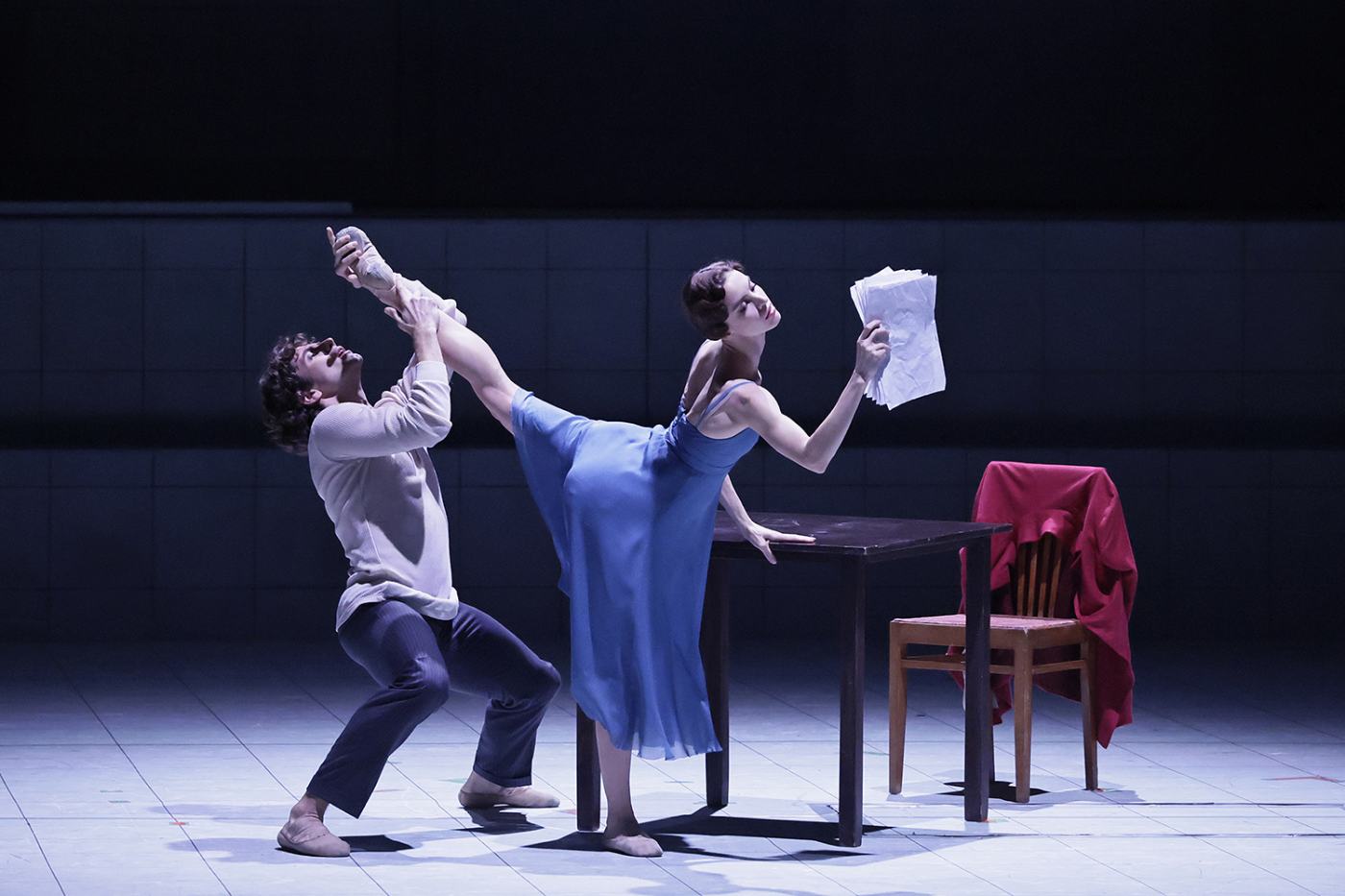
Chekhov’s The Seagull is labeled as a comedy, but its humor is bitter at best. Not a single protagonist leads a fulfilled life. Everybody runs after a dream world or tries to construct their realities. Family relationships are strained, and love is unrequited, quickly exhausted, or phony. Possokhov’s interpretation throws more light on some characters, and less on others, and differs in some respects from the original. Irina Arkadina (Kristina Kretova)—an actress in Chekhov’s version, a renowned ballerina in Possokhov’s—is not merely a fashionable yet greedy diva and dysfunctional mother. She shows her empathetic side when she recalls childhood memories with her elderly brother, Pyotr Sorin (Mikhail Lobukhin), whose unrealized dreams of marriage and artistic career Possokhov omitted. Like in the text, events largely unfolded at Sorin’s country estate. Continue reading “Dreams versus Reality”

Intense

“Romeo and Juliet”
Bolshoi Ballet
Bolshoi Theatre (Historic Stage)
Moscow, Russia
April 04, 2024 (video)

by Ilona Landgraf
Copyright © 2024 by Ilona Landgraf

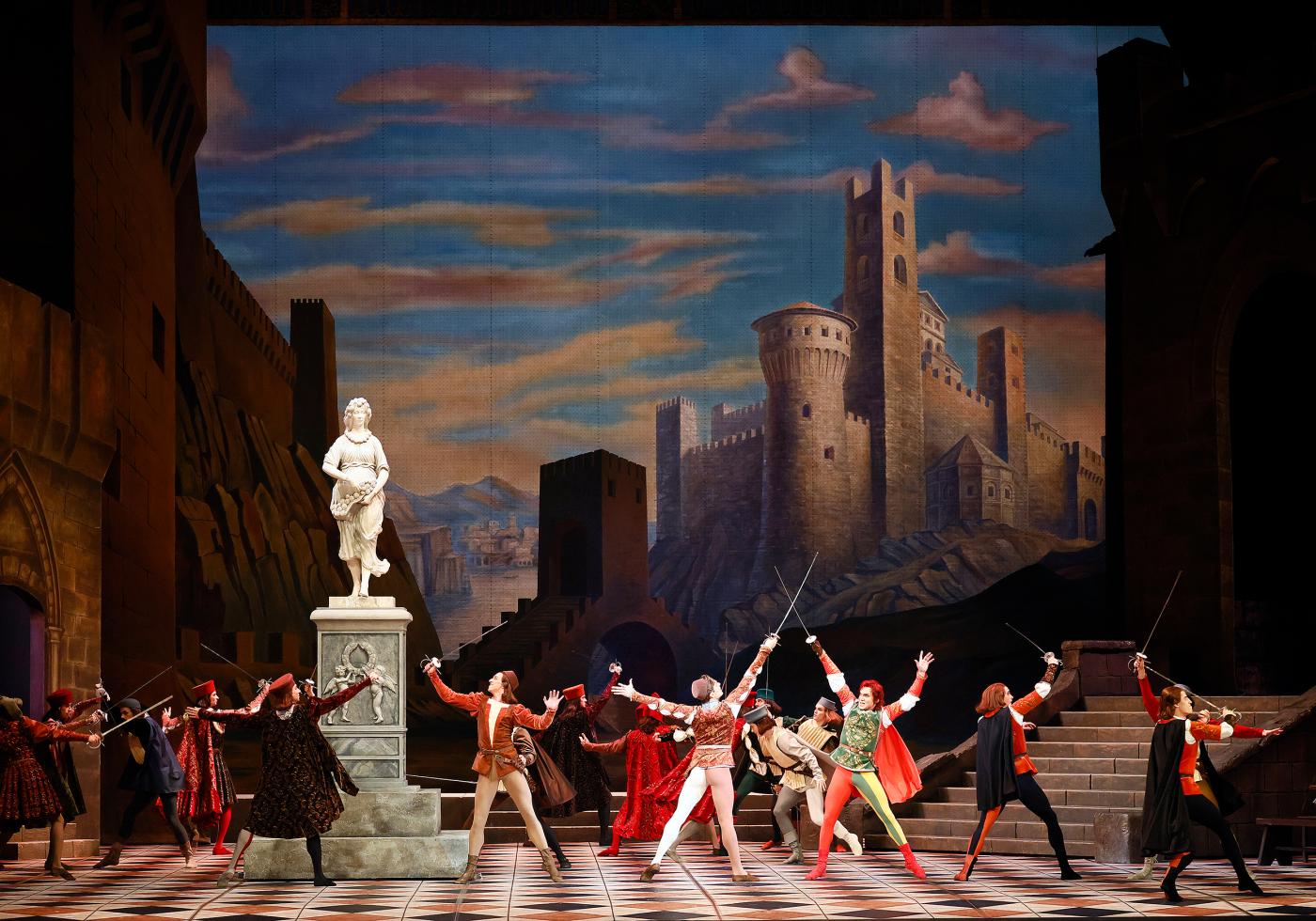
1. D.Efremov (Montague's Servant), I.Alexeyev (Benvolio), M.Lobukhin (Tybalt), and ensemble; “Romeo and Juliet” by L.Lavrovsky, Bolshoi Ballet 2024 © Bolshoi Ballet / D.YusupovIn early April, the Bolshoi Ballet revived Leonid Lavrovsky’s Romeo and Juliet, which senior balletomanes may remember from the company’s famous tours of London and the Met in the 1950s and ‘60s. Galina Ulanova, Raisa Strutchkova, Vladimir Vasiliev, Maris Liepa, and many others wrote ballet history dancing the leading roles. I couldn’t attend the premiere in Moscow but was finally able to watch a video of the opening night. It made me wonder why the production had been dropped from the schedule. Continue reading “Intense”

In Commemoration of Ekaterina Maximova

“Fragments of One Biography”
Bolshoi Ballet and Guests
Bolshoi Theatre
Moscow, Russia
February 01, 2024 (video)

by Ilona Landgraf
Copyright © 2024 by Ilona Landgraf

1. Ensemble, “Fragments of One Biography” staged by V.Vasiliev, Bolshoi Ballet 2024 © Bolshoi Ballet / E.FetisovaOn February 1st, the Bolshoi Ballet’s prima ballerina, Ekaterina Maximova (1939-2009), would have celebrated her 85th birthday. A phenomenally successful (and multi-decorated) artist, Maximova’s fame reached far beyond Russia’s borders. After retiring from the stage of the Bolshoi in 1988, she continued to dance with other Russian and international companies—and sometimes even returned home to the Bolshoi. From 1990 on, Maximova worked as a coach, teacher, and member of several arts councils and committees. Every five years, Maximova’s husband, Vladimir Vasiliev, stages a gala at the Bolshoi in honor of his late wife. I was able to watch this year’s event on video. Continue reading “In Commemoration of Ekaterina Maximova”

Style Over Substance

Modanse”
Svetlana Zakharova Evening

Bolshoi Theatre (Historic Stage)
Moscow, Russia
October 31, 2023

by Ilona Landgraf
Copyright © 2023 by Ilona Landgraf

1. S.Zakharova, “Come un respiro” by M.Bigonzetti; Svetlana Zakharova Evening, MuzArts 2023 © A.Stepanov The title “Modanse” sounds like an à la mode ballet – classy, extravagant, and fashionable. It belongs to a double bill featuring the Bolshoi Ballet’s prima ballerina Svetlana Zakharova. The external production includes dancers of the Bolshoi Ballet’s roster, and since 2019 has guested regularly on the Bolshoi Theatre’s stage and abroad.

As a seasoned artist, Zakharova must have an instinct about what suits her on stage. Hence I’m flabbergasted that she has kept Mauro Bigonzetti’s “Come un respiro” (“Like a Breath”) in the program. The 2009 creation, of which Zakharova acquired a reworked version, is ill-suited to make her and her co-dancers (among them Anastasia Stashkevich, Ana Turazashvili, Mikhail Lobukhin, Vyacheslav Lopatin, and Denis Savin) look good. Moreover, its succession of bland solos, pas de deux, and group dances fails to excite. Continue reading “Style Over Substance”

Invincible

“The Flames of Paris”
Bolshoi Ballet
Bolshoi Theatre (New Stage)
Moscow, Russia
June 04, 2023 (matinee)

by Ilona Landgraf
Copyright © 2023 by Ilona Landgraf

1. E.Kokoreva (Jeanne), V.Lantratov (Philippe), and ensemble; “The Flames of Paris” by V.Vainonen, Bolshoi Ballet 2023 © Bolshoi Ballet / E.Fetisova “A highly unlikely work” – commented the late Clement Crisp in his Financial Times review about “The Flames of Paris”, which the Bolshoi Ballet performed at the Royal Opera House as part of their 2016 London tour. He argued that the dramatic scheme was papery and the chief roles were predictable.
I checked myself, watching the 85th performance of the latest production at the Bolshoi Ballet’s home base in Moscow.

“The Flames of Paris”, first staged in 1932 at the Kirov Theater in Leningrad (today’s Mariinsky Theater in St. Petersburg) is about how French revolutionaries turned politics and society upside down. Its rousing score by Boris Asafiev draws on music by Lully and Rameau, including the Marseillaise, and climaxes in the powerful revolutionary song “Ça ira”. In 2008, the Bolshoi Ballet’s then artistic director Alexey Ratmansky restored and revised Vasily Vainonen’s original choreography. Nikolai Volkov’s and Vladimir Dmitriev’s libretto, initially spanning four acts, was condensed to two acts. It tells the story of the revolutionaries’ march to Paris and their storming of the Bastille in July 1789. Oblivious to the people’s fury, the monarchy and its representatives continue to debauch in festivities (including a court ballet) at Versailles, but eventually apprehend the looming danger. Puppets of King Louis XVI and Queen Marie Antoinette are already mangled by the crowd, soon to seize the palace. Continue reading “Invincible”

From “Ballet Falsity” to Long-Runner

“The Bright Stream”
Bolshoi Ballet
Bolshoi Theatre
Moscow, Russia
February 10 and 11, 2018

by Ilona Landgraf
Copyright © 2018 by Ilona Landgraf

1. Front Curtain, “The Bright Stream” by A.Ratmansky, Bolshoi Ballet © Bolshoi Theatre / D.Yusupov“The Bright Stream” was Shostakovich’s third score for ballet. After his previous ballets, “The Golden Age” (1930) and “Bolt” (1931), were banned from the stage, Shostakovich attempted to create a new composition that would please everyone. Fyodor Lopukhov (1886 – 1973) was in charge of the choreography, the libretto was by Adrian Pyotrovsky and Lopukhov, and indeed, “The Bright Stream” was enthusiastically received at its premiere in Leningrad – today’s St. Petersburg – in 1935. Continue reading “From “Ballet Falsity” to Long-Runner”