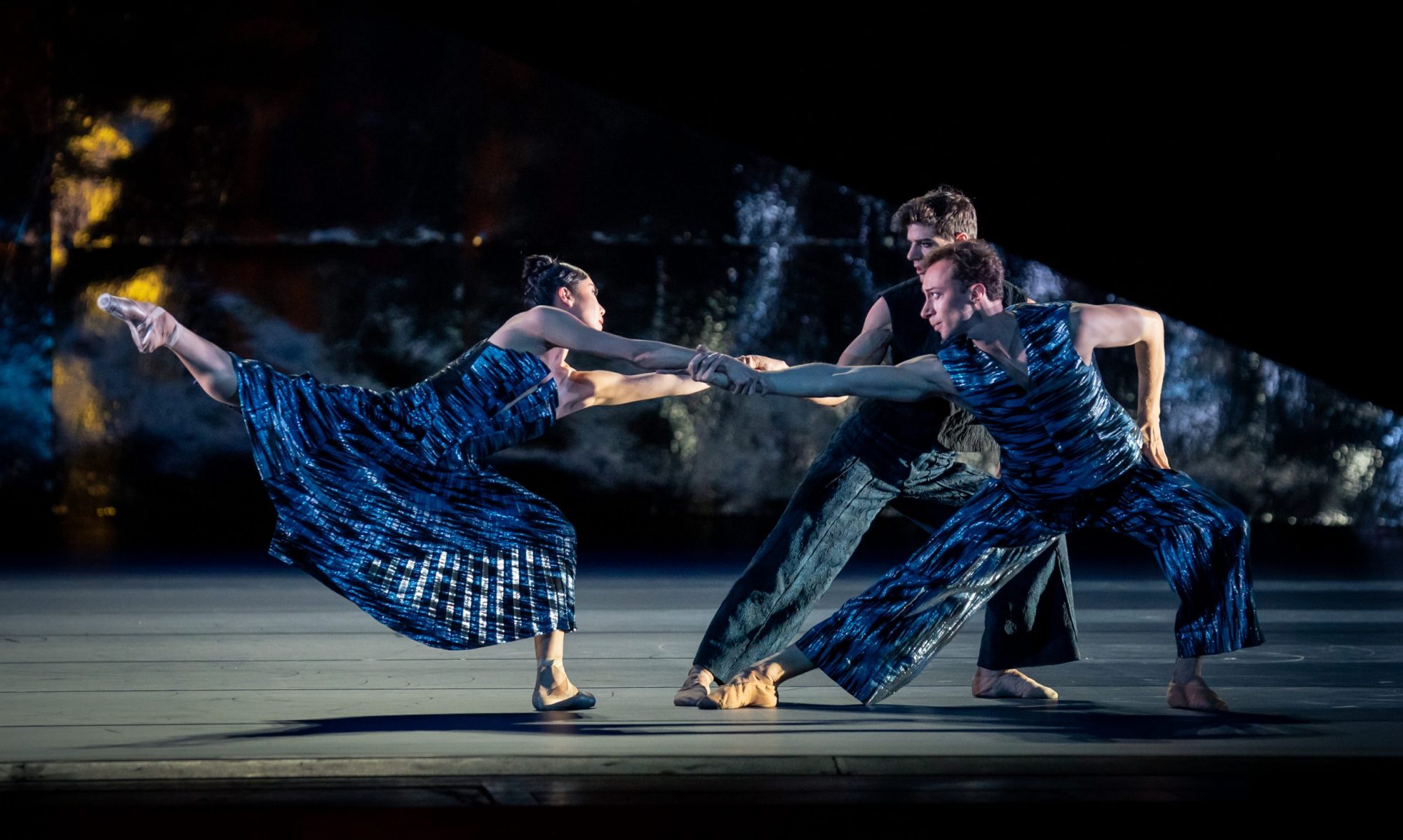
“Scirocco” (“Death in Venice”/“Bridge of Sighs”)
WINNDance
Teatro Malibran
Venice, Italy
August 01, 2026
by Ilona Landgraf
Copyright © 2026 by Ilona Landgraf
 “When if not now” (WINN) is the attitude of movers and shakers. Earlier this year, two such movers and shakers, Slava Tutukin (former soloist of the Mikhailovsky Ballet, St. Petersburg, and the Aalto Ballet, Essen) and Marijn Rademaker (choreographer and ex-principal of Stuttgart Ballet and Dutch National Ballet) founded WINNDance, a Stuttgart-based dance company for dancers forty years old and older. It attracted renowned names: People’s Artist of Russia, Diana Vishneva; the late Hans van Manen’s muse, Igone de Jongh; Hamburg Ballet’s Ivan Urban, Silvia Azzoni, and Oleksandr Ryabko; the Royal Ballet’s former principal, Mara Galeazzi; and Polina Semionova (who didn’t perform in Venice). The new enterprise includes an educational platform (WINN&Learn) and an exploratory platform for collaboration with different industries (WINNLab). Continue reading “Squandered”
