“Nureyev”
State Ballet Berlin
Deutsche Oper
Berlin, Germany
March 21, 2026
by Ilona Landgraf
Copyright © 2026 by Ilona Landgraf
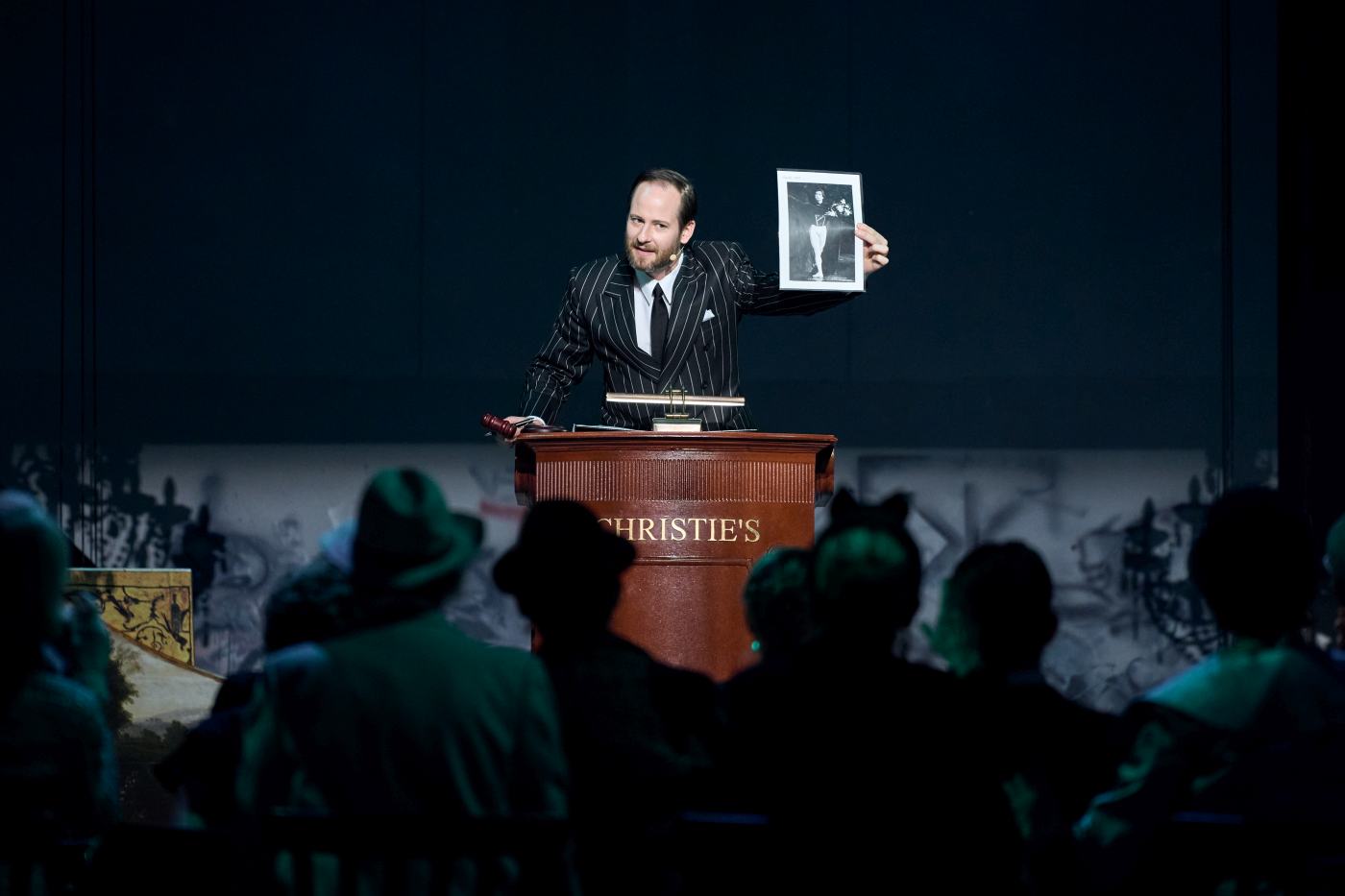 Last weekend, Yuri Possokhov’s and Kirill Serebrennikov’s joint production Nureyev premiered with the State Ballet Berlin. I remember well the piece’s 2017 world premiere at the Bolshoi Theatre and the troubles preceding it. In 2022, Nureyev was removed from the Bolshoi’s repertory following new Russian anti-LGBTQ+ legislation that made it illegal to promote the success and power of queer personalities, per Serebrennikov’s explanation.
Bringing this ballet back to life could have been a tribute to not only Rudolf Nureyev but also Russian ballet as well as a gift to the Bolshoi, which celebrates its 250th anniversary this year.
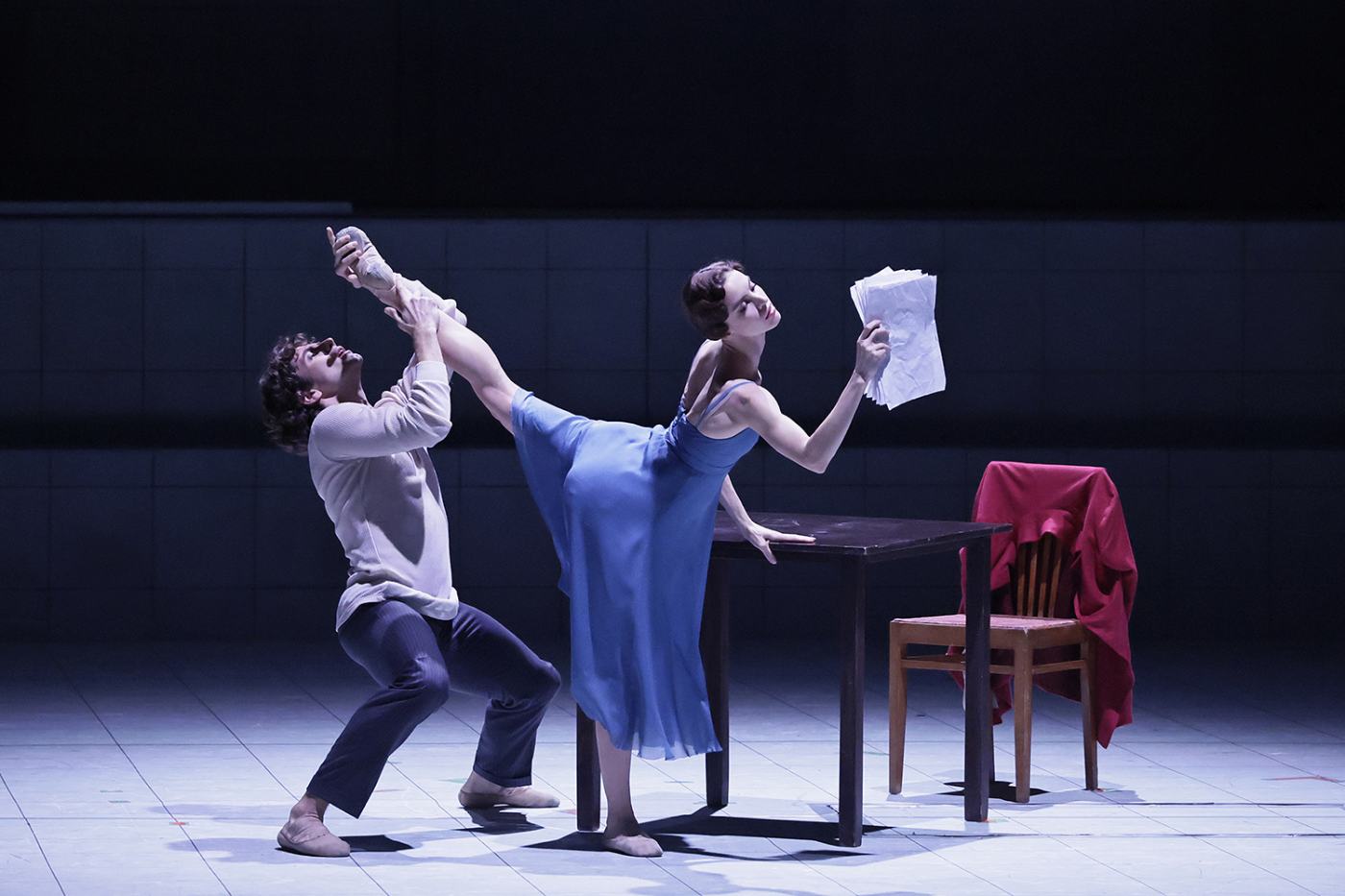
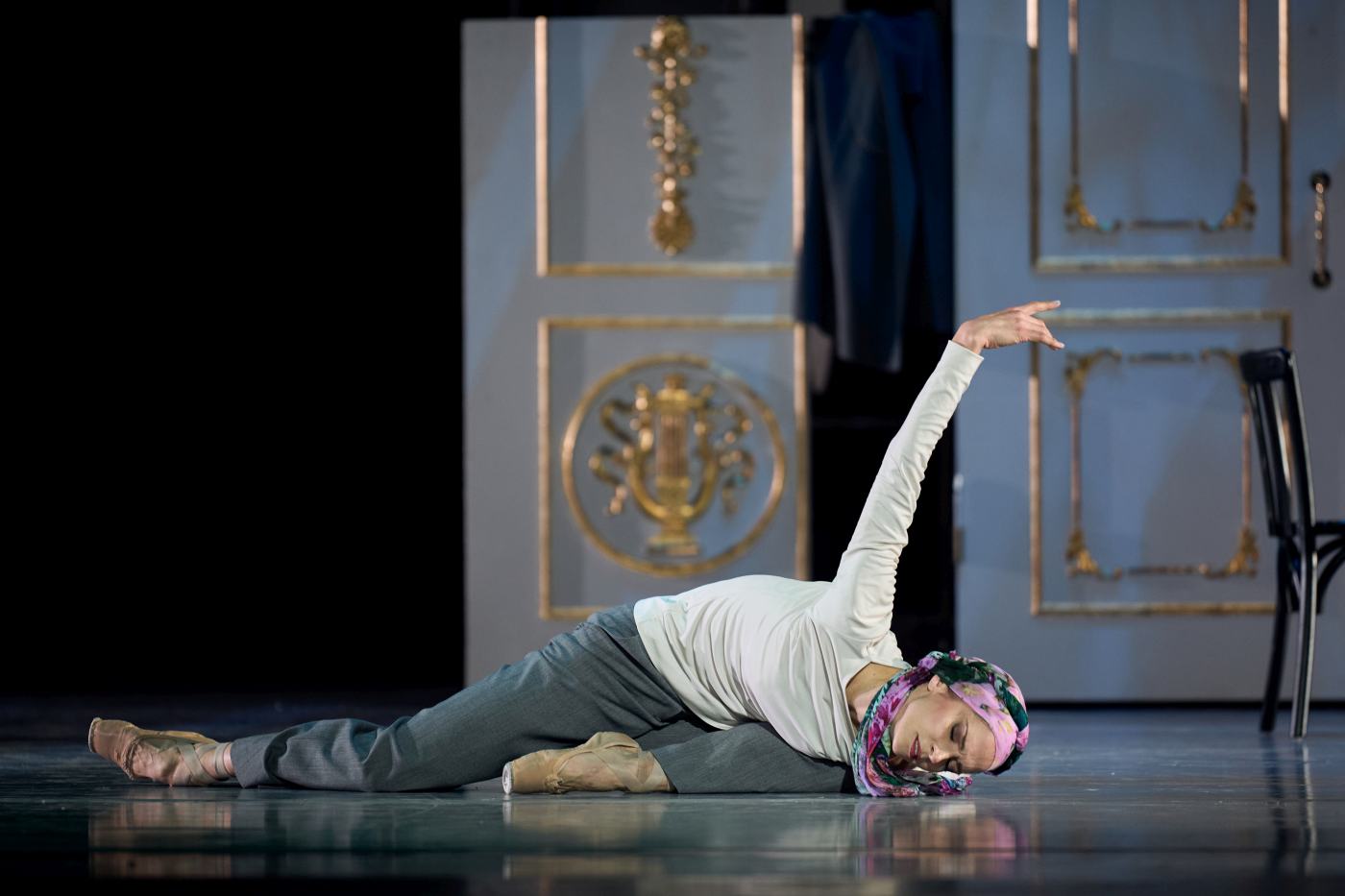
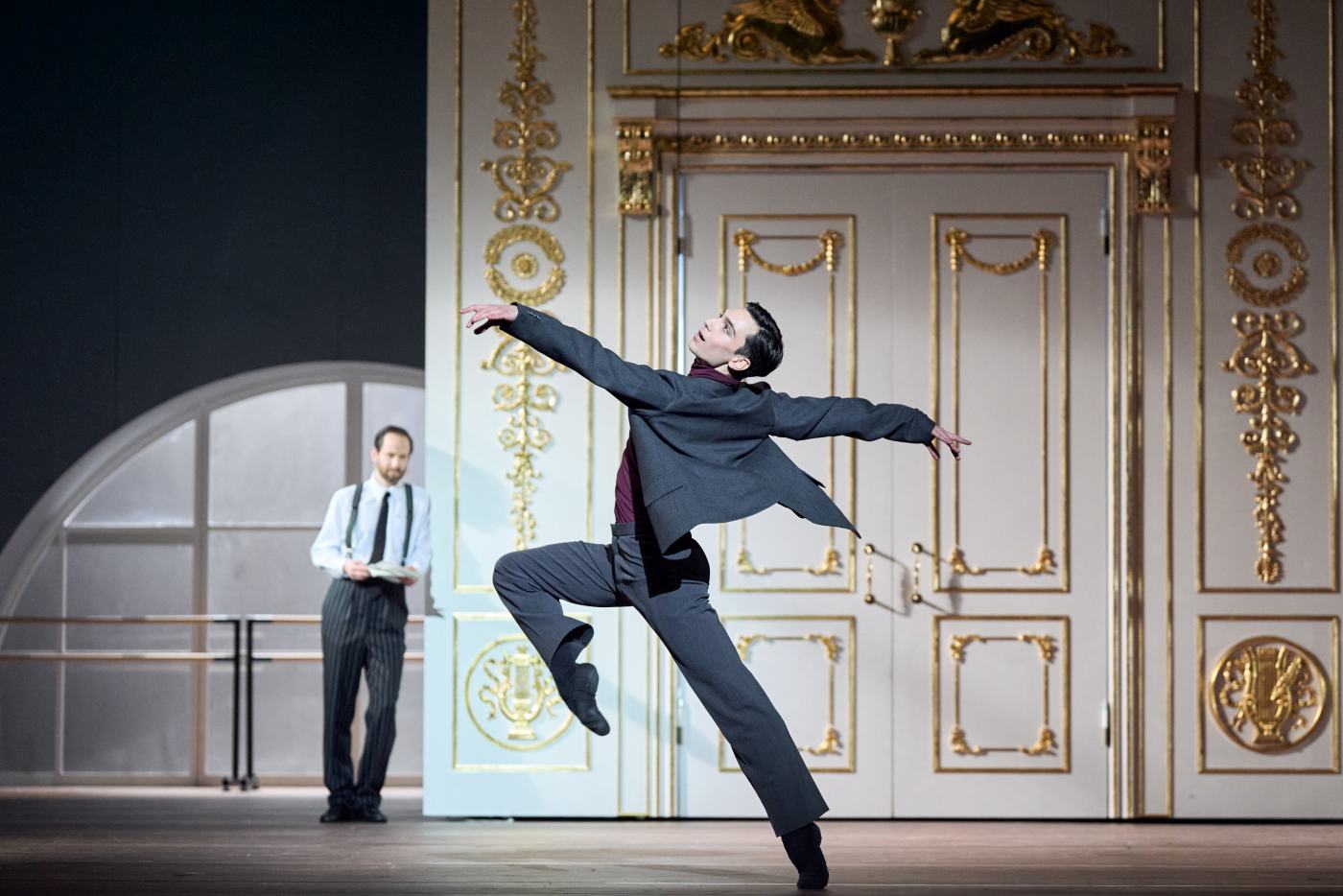
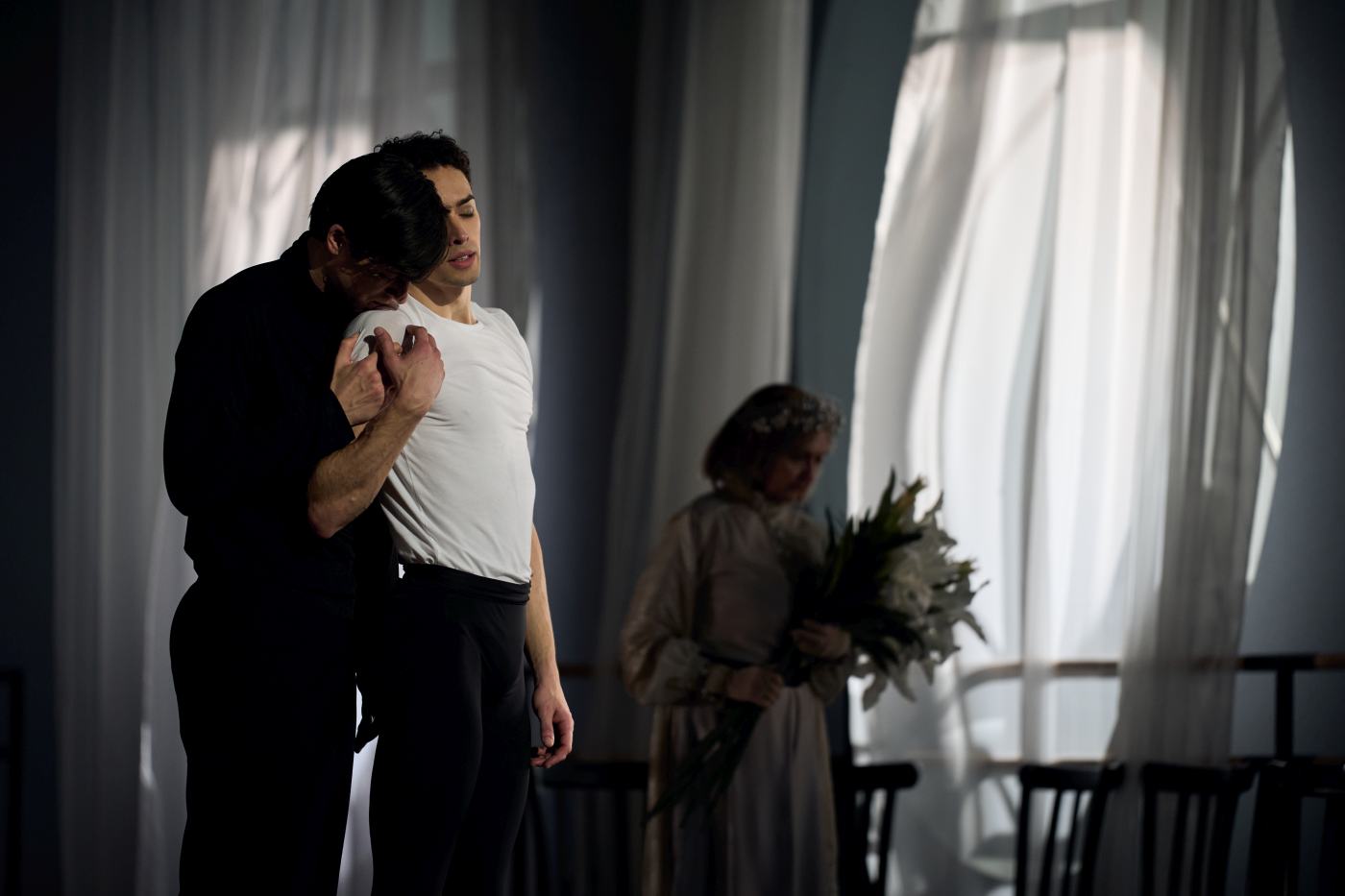
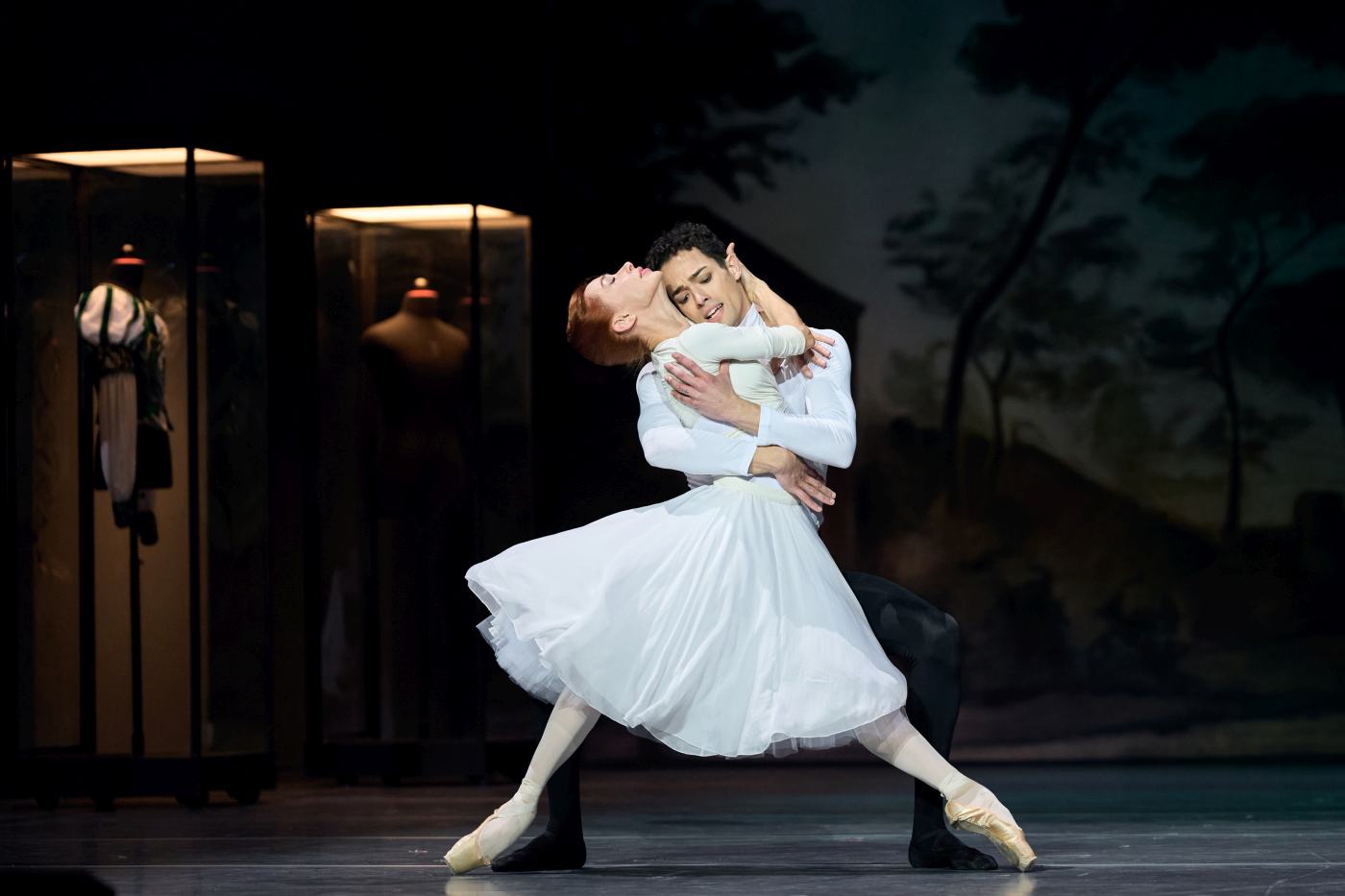
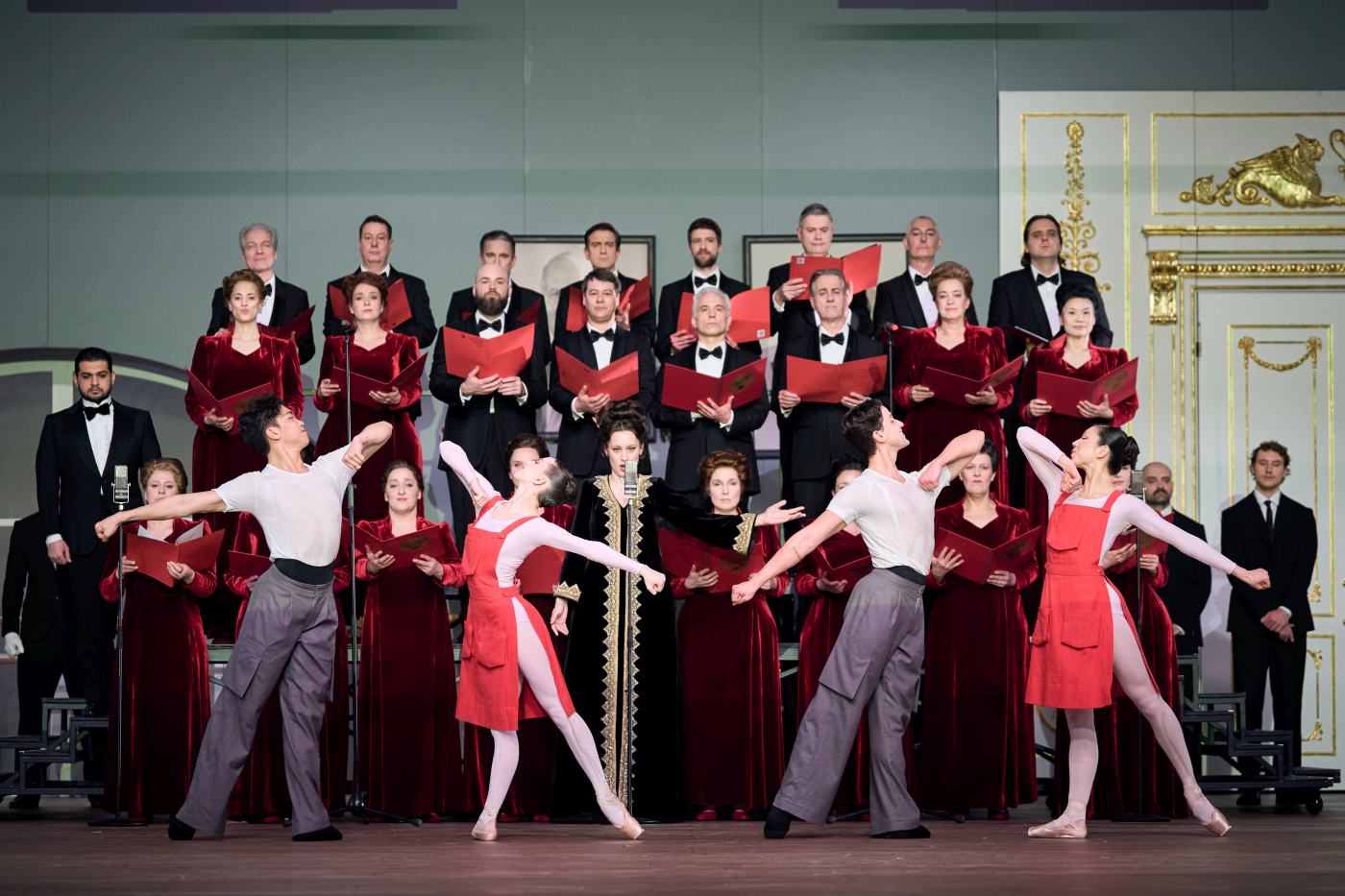 It could have been but wasn’t. The State Ballet Berlin lacks the dancers to do justice to Nureyev and the world-class dancers who crossed his life. Why the company’s artistic director, Christian Spuck, acquired this piece of all options is incomprehensible to me. It was clear from the onset that the project was a non-starter. Only two dancers lived up to the standard: Iana Salenko and Anthony Tette. Salenko revived the grandeur of Nureyev’s long-time stage partner, Margot Fonteyn, whose vibes transcended the stage for a moment. As the pupil, Tette represented the male dancers Nureyev honed (among them Manual Legris and Laurent Hilaire) and, when repeatedly running up against the wall, seemed to play the young Nureyev, who was torn between “hatred for the Soviet system and love for Russia.” That’s how Charles Jude described him in a letter that was—as several others—read aloud. Polina Semionova’s diva (a figure inspired by Alla Osipenko and Natalia Makarova) was lackluster and miles away from Svetlana Zakharova’s performance at the Bolshoi. In Martin ten Kortenaar’s Erik [Bruhn], I missed the sensuality that attracted Nureyev and the noble line that Bruhn was known for.
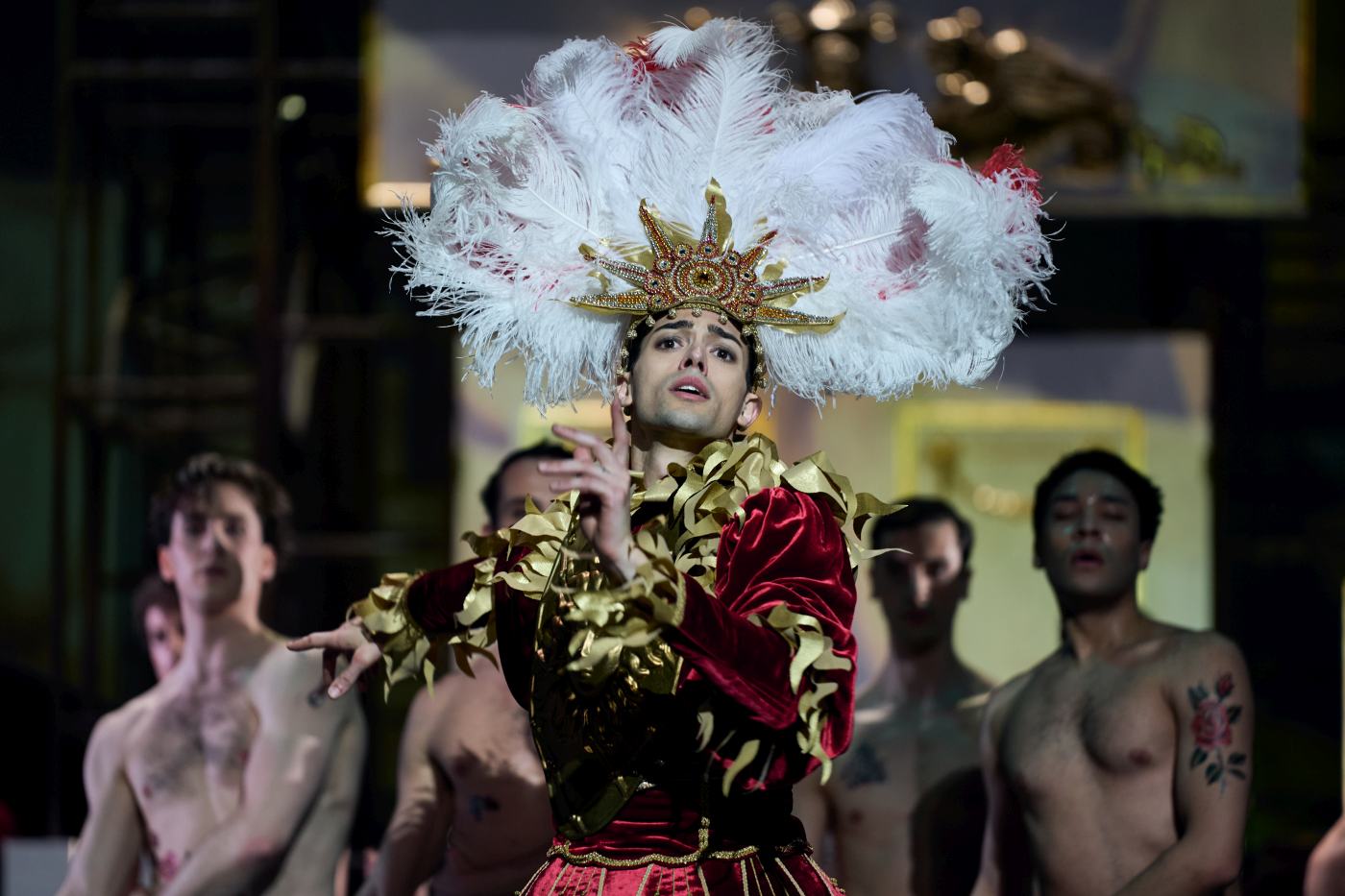
 The title role was entrusted to David Soares, a graduate of the Moscow State Choreographic Academy who was a leading soloist of the Bolshoi Ballet until 2022 when he joined the State Ballet Berlin. I saw his first performance in Berlin as Prince Désiré, where he seemed to be the only one on stage who knew that dance has a soul and was able to project that soul to the audience. This ability had vaporized in Nureyev. Soares’s title hero was handsome but in no way spectacular, arresting, or forceful. What a difference from Vladislav Lantratov’s Nureyev at the Bolshoi! His very glance radiated Tartarian willpower.
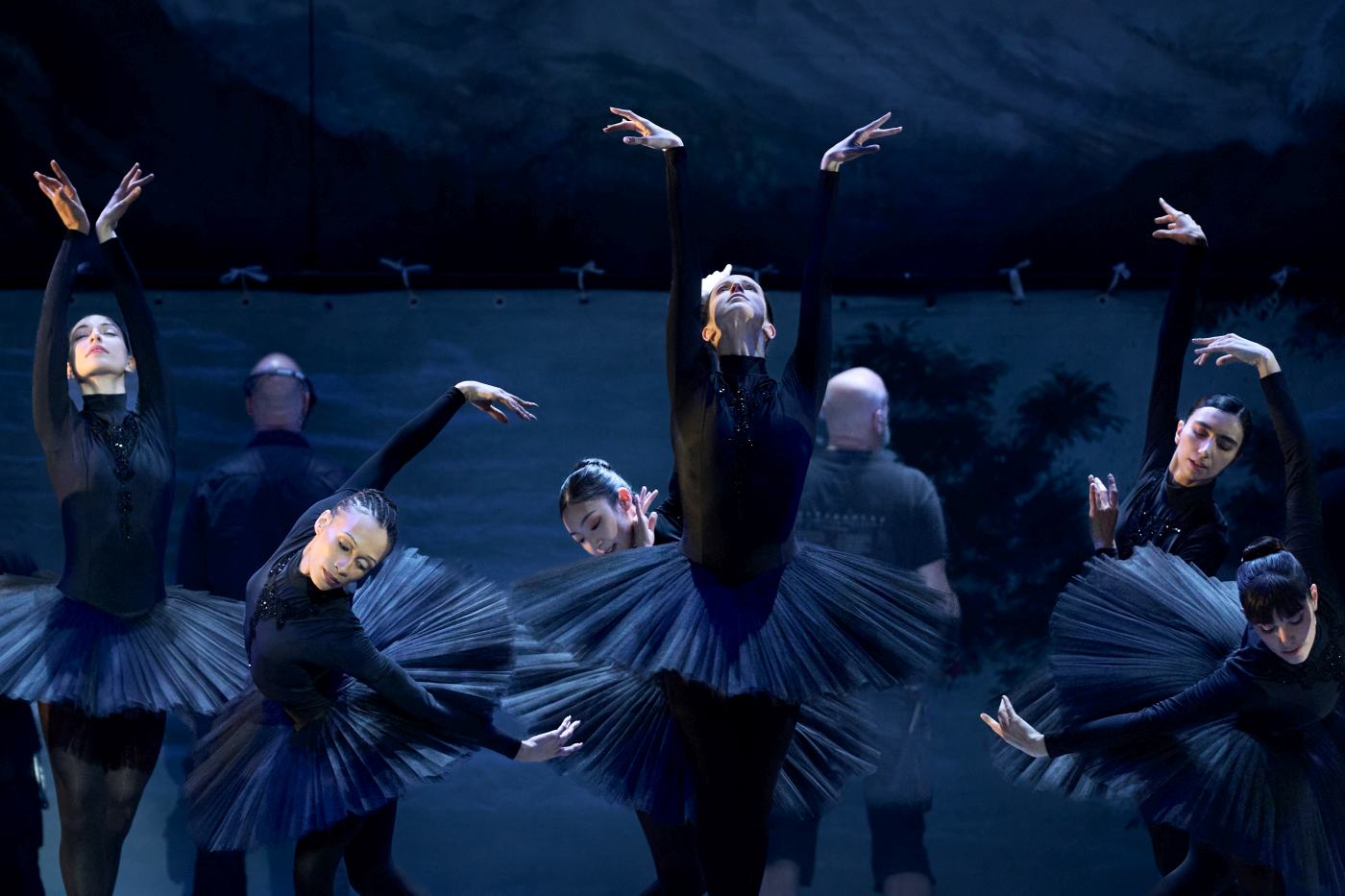
 Berlin’s corps de ballet was convincing as Komsomol youth and in the Parisian waltz. The portrayal of Vaganova students lacked grace and proper training, and what they delivered in the second act’s grand gala was worthy of the tantrums Nureyev threw. Surprisingly, even their drag queen scene was lame and looked awkward. Clunky high heels didn’t secure their steps but rather made them even clumsier. In Moscow, that scene was so hot that the audience shouted bravos.
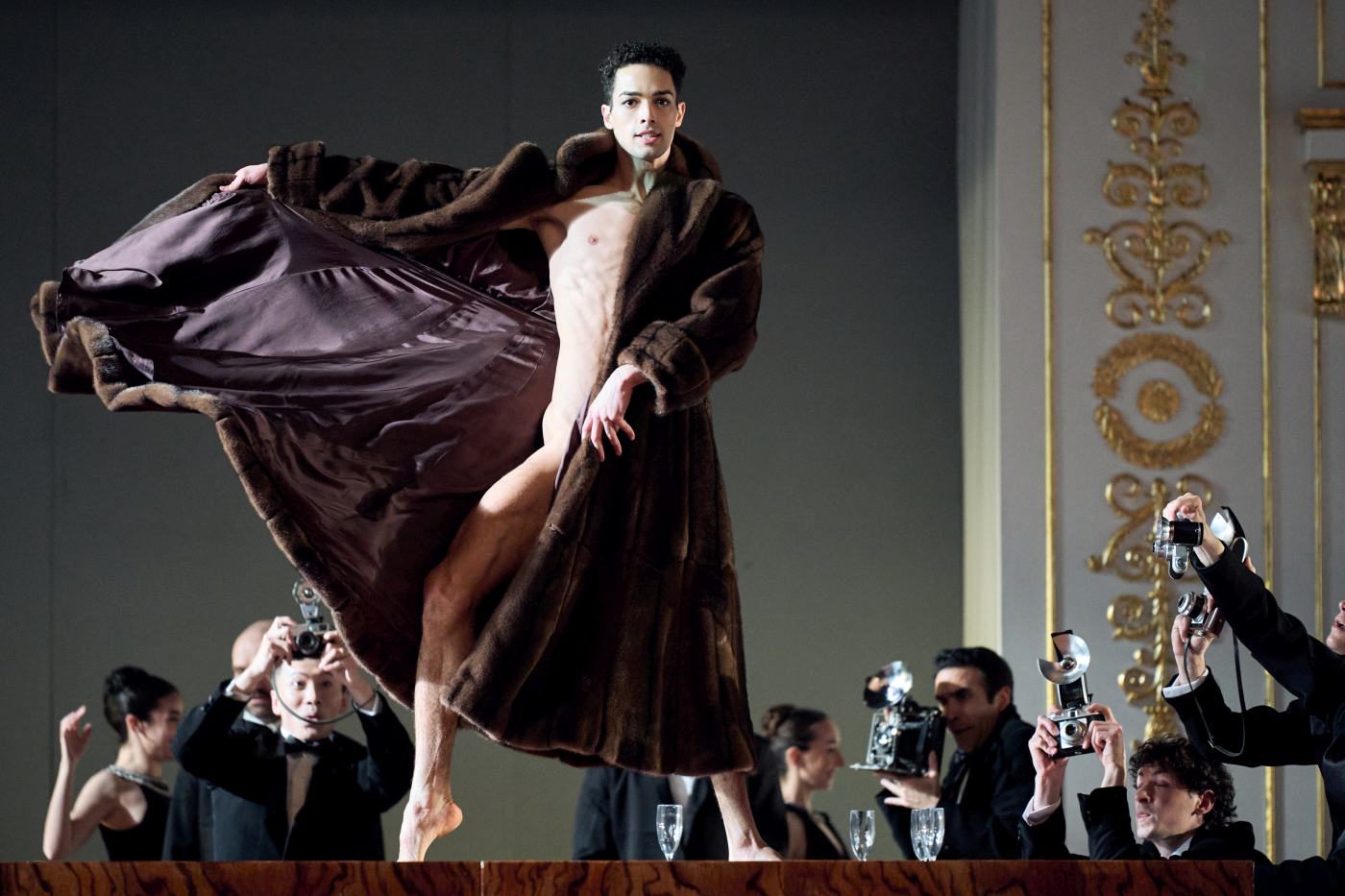
 Given the lack of strong dance parts, it was up to the actor Odin Lund Biron to maintain the piece’s momentum. He played the crafty Christie’s auctioneer selling off Nureyev’s belongings, the Gray Man who reported Nureyev to the KGB, and the rattling photographer Richard Avedon, whose nude photographs were extensively on display. At the Bolshoi, they vanished within milliseconds. In general, it seemed that however much of Nureyev’s sexual life had been scaled back in Moscow, Berlin went on about. Salacious comments mingled with the auctioneer’s appraisal of the nude female and male portraits on sale, and Soares had to perform completely naked while posing for Avedon. The same applies to some other men during the Le Roi Soleil scene.
The singers (mezzo-soprano Aleksandra Meteleva, baritone Navasard Hakobyan, and countertenor Ivan Borodulin) performed well, whereas the Bolshoi Orchestra’s rendition of Ilya Demutsky’s score outshone that of the Deutsche Oper Berlin orchestra.
| Links: | Website of the State Ballet Berlin | |
| Nureyev—rehearsal teaser | ||
| arte live stream Nureyev | ||
| Photos: | 1. | Odin Lund Biron (Christie’s auctioneer) and ensemble, “Nureyev” by Yuri Possokhov and Kirill Serebrennikov, State Ballet Berlin 2026 |
| 2. | Ensemble and Vocalconsort Berlin, “Nureyev” by Yuri Possokhov and Kirill Serebrennikov, State Ballet Berlin 2026 | |
| 3. | Polina Semionova (The Diva), “Nureyev” by Yuri Possokhov and Kirill Serebrennikov, State Ballet Berlin 2026 |
|
| 4. | Anthony Tette (The Pupil) and Odin Lund Biron (Christie’s auctioneer), “Nureyev” by Yuri Possokhov and Kirill Serebrennikov, State Ballet Berlin 2026 | |
| 5. | Iana Salenko (Margot) and David Soares (Nureyev), “Nureyev” by Yuri Possokhov and Kirill Serebrennikov, State Ballet Berlin 2026 | |
| 6. | Martin ten Kortenaar (Erik), David Soares (Nureyev), and Venera Blumert-Gilmutdinova; “Nureyev” by Yuri Possokhov and Kirill Serebrennikov, State Ballet Berlin 2026 | |
| 7. | David Soares (Nureyev) and ensemble, “Nureyev” by Yuri Possokhov and Kirill Serebrennikov, State Ballet Berlin 2026 | |
| 8. | Ensemble, “Nureyev” by Yuri Possokhov and Kirill Serebrennikov, State Ballet Berlin 2026 |
|
| 9. | David Soares (Nureyev) and ensemble, “Nureyev” by Yuri Possokhov and Kirill Serebrennikov, State Ballet Berlin 2026 | |
| all photos © Carlos Quezada | ||
| Editing: | Kayla Kauffman |