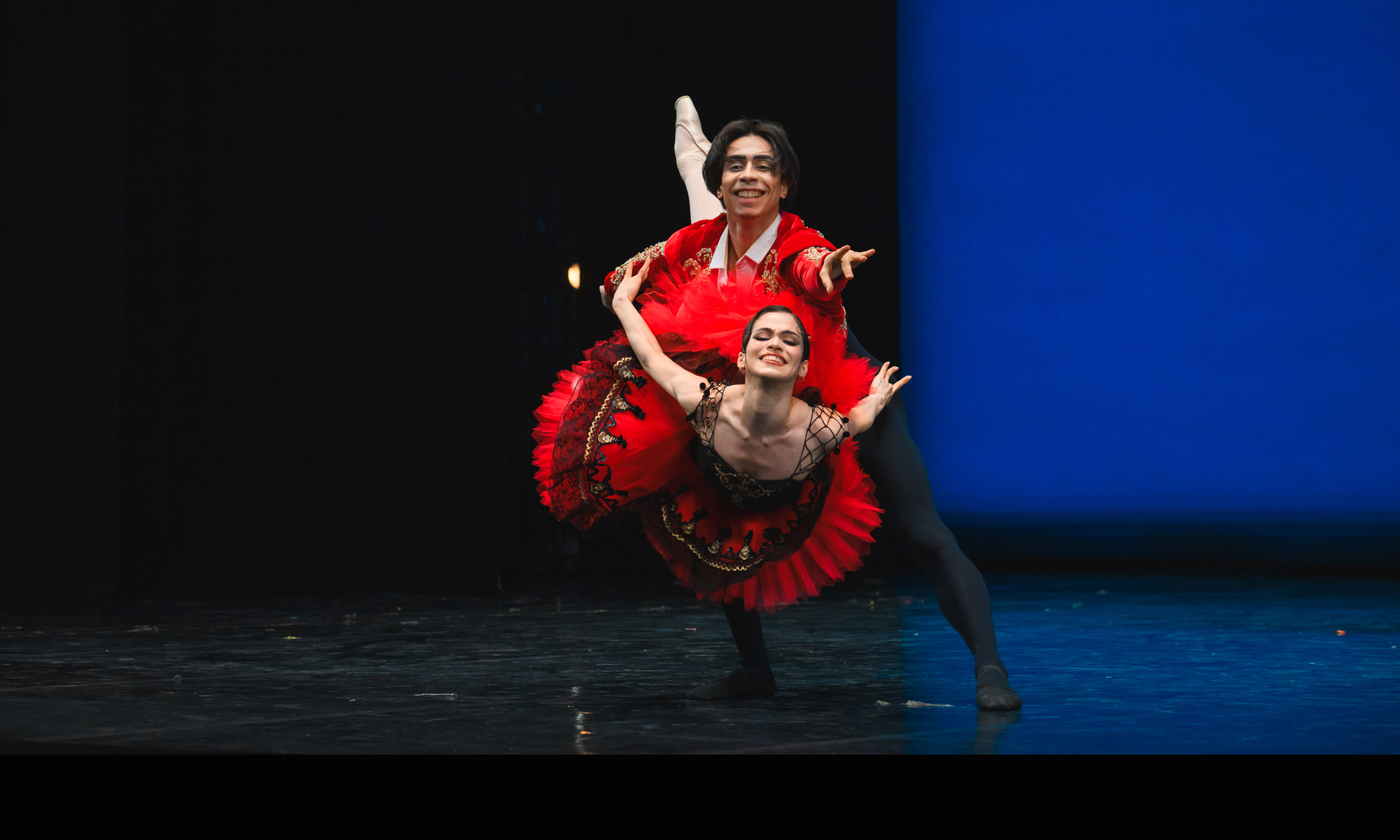
“The Sleeping Beauty”
Bolshoi Ballet
Bolshoi Theatre
Moscow, Russia
November 3, 2026 (Historic Stage)
by Ilona Landgraf
Copyright © 2026 by Ilona Landgraf
 Only as I sat in the Bolshoi Theatre’s auditorium did I realize that this was my first time seeing Yuri Grigorovich’s The Sleeping Beauty live. A 2017 live stream was impressive, but Ezio Frigerio’s and Franca Squarciapino’s opulent set and costumes distracted from the piece’s essence: the awakening of an inner beauty. Of all the choreographies of The Sleeping Beauty I know, Grigorovich’s most successfully projects spirituality.
In 2024, the Bolshoi revived the far more restrained décor of Simon Virsaladze created for Grigorovich’s revised 1973 version of The Sleeping Beauty. It was streamed live at the season’s opening. But on screen, a ballet looks different.
For example, during the live stream, I didn’t notice the frame of green-gray legs turning the stage into a peep-box to a fairy realm. I also missed the effect of the backdrops’ loose brushstroke technique. The palace garden’s hazy vegetation offers nothing that sticks in the mind. One doesn’t think much about the staircase beyond that it leads somewhere pleasant. The mysterious lake in the forest hints at depths our consciousness does not plumb.
Taken together, the set, the Historic Stage’s enormous breadth, and the decorum and grace at court induce an inner calm that allows true beauty to reach the soul. It happens subtly with Princess Aurora’s awakening. Tchaikovsky’s brisk prologue heightens anticipations for a fabulous dance piece.
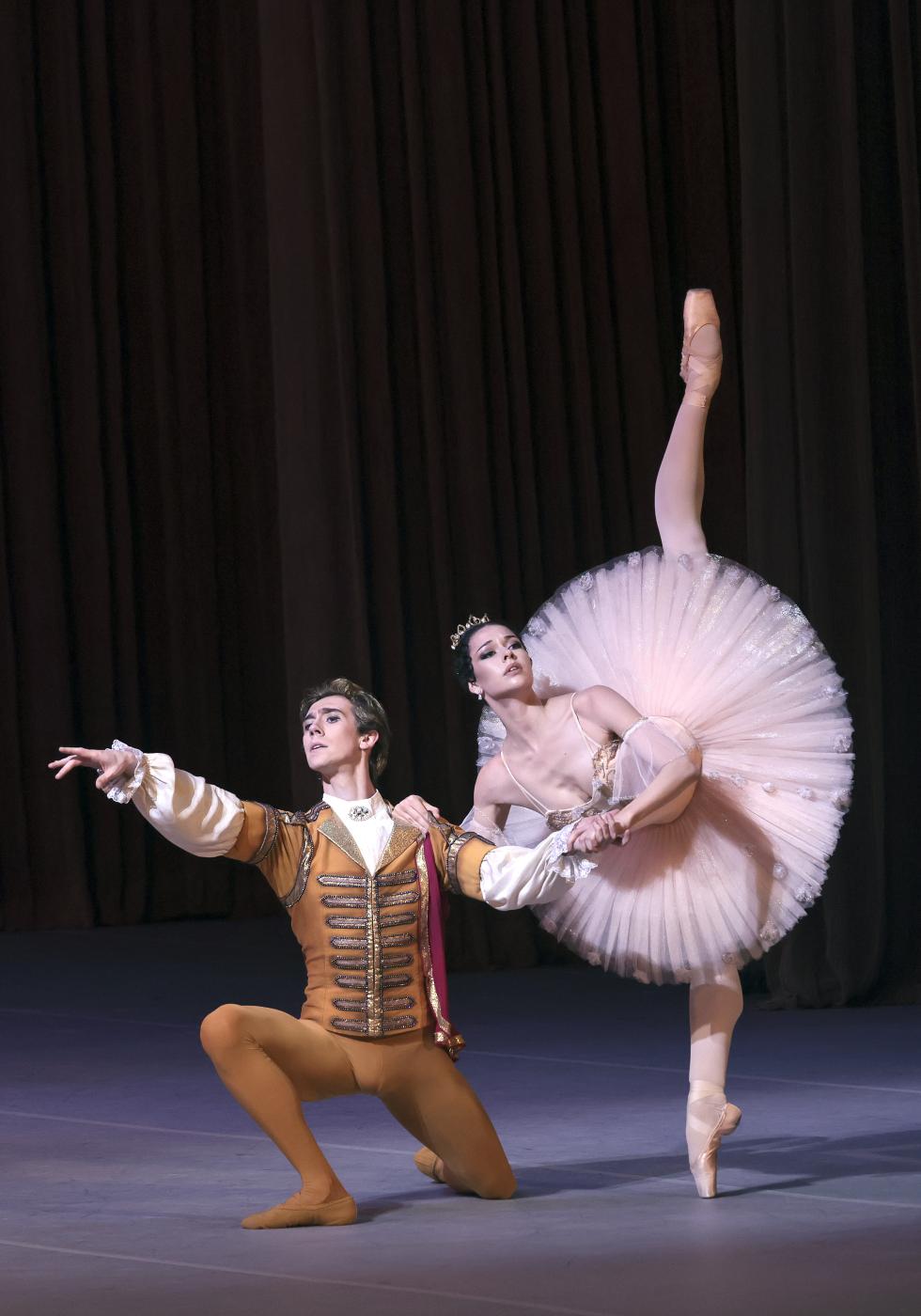
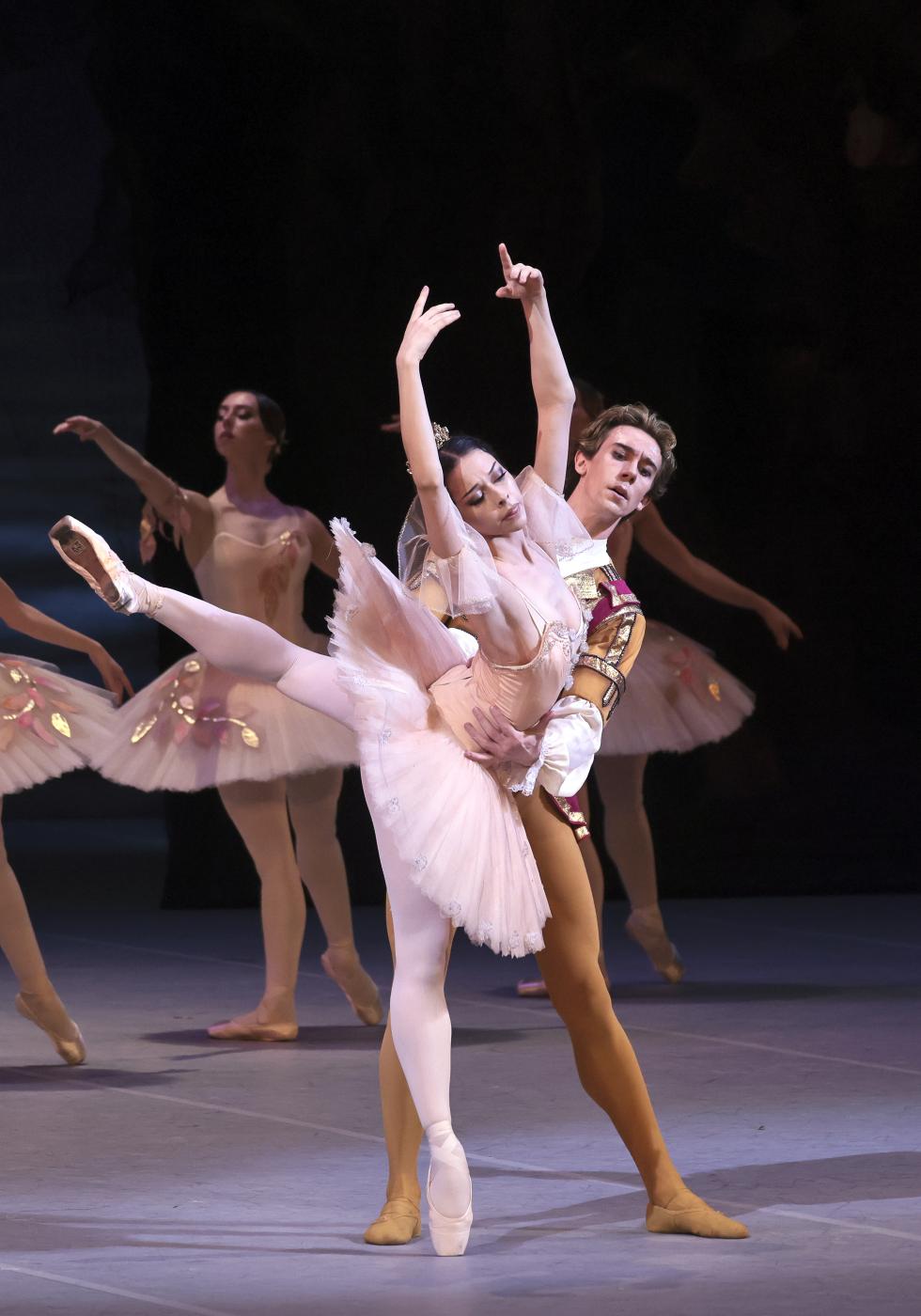 Maria Koshkaryova’s Princess Aurora was a graceful, delicate young woman with innate modesty. Glamour wasn’t part of her character. As she played with the spindle presented to her by the wicked Carabosse (Gennady Yanin), the entire court watched her as though she carried a defused bomb. High flying grand jetés carried Prince Désiré (Dmitry Vyskubenko) on stage (Prince Siegfried in Grigorovich’s Swan Lake enters in the same sweeping way). Vyskubenko has elegant lines, excellent jumps, and a likable nature. His performance was polished to perfection. In the hunting scene, each step of his solo spoke to the superb coaching he went through.
Alyona Kovalyova’s mature Lilac Fairy stood above all evil. Her calm and unwavering kindness reduced Carabosse to an incorrigible (but manageable) troublemaker. Except for Angelina Vlashinet’s Fairy of Audacity, the good fairies who bestowed their well-wishes on the newborn Aurora exaggerated their characters. Yuri Ostrovsky, whom I often saw in the role of a churchman, played Catalabutte, the Master of Ceremonies who hardly ever got it right.
Of the fairy tale characters, I especially liked Makar Mikhalkin’s powerfully soaring Blue Bird. Anastasia Smirnova was his lightweight Princess Florine.
The star of the evening was the corps whose perfect lines enraptured me. Regardless of the pace, their unity in the vision scene was impeccable and surpassed everything I’ve seen elsewhere.
The Bolshoi Orchestra played under the baton of Pavel Sorokin and was, as always, outstanding.
| Link: | Website of the Bolshoi Theatre | |
| Photos: | 1. | Dmitry Vyskubenko (Prince Désiré) and Maria Koshkaryova (Princess Aurora), “The Sleeping Beauty” by Yuri Grigorovich, Bolshoi Ballet 2026 |
| 2. | Dmitry Vyskubenko (Prince Désiré) and Maria Koshkaryova (Princess Aurora), “The Sleeping Beauty” by Yuri Grigorovich, Bolshoi Ballet 2026 | |
| all photos © Bolshoi Theatre/Damir Yusupov | ||
| Editing: | Kayla Kauffman |