“Curtain Call”
Leonid Yacobson Ballet
Alexandrinsky Theatre
St. Petersburg, Russia
June 01, 2026 (video)
by Ilona Landgraf
Copyright © 2026 by Ilona Landgraf
 Few ballets have been so ingenious and gripping that I stopped taking notes so as not to miss a single moment. Vyacheslav Samodurov’s new choreography, Curtain Call, for the Leonid Yacobson Ballet, St. Petersburg, was one of them. Luckily, I received a video that I could replay.
The one-act piece premiered in early June as part of a triple bill alongside a new creation by Igor Bulytsyn’s (Bruch. Suite) and Samodurov’s 2024 award-winning 598 Beats. In mid-July, the company assembled all three pieces Samodurov has created for them so far (including the 2022 Cheeky Chastushki) in a new triple bill.
 At times, the red curtain of Curtain Call was closed and neatly pleated; at others, it rose, or a small gap permitted voyeuristic peeps. Regardless of the perspective, the episodes thrilled the eye. Samodurov’s ability to transform wit, irony, and mockery into choreography and the tailor-made score (based on the French composer Darius Milhaud’s Provençal Suite) yielded great entertainment.
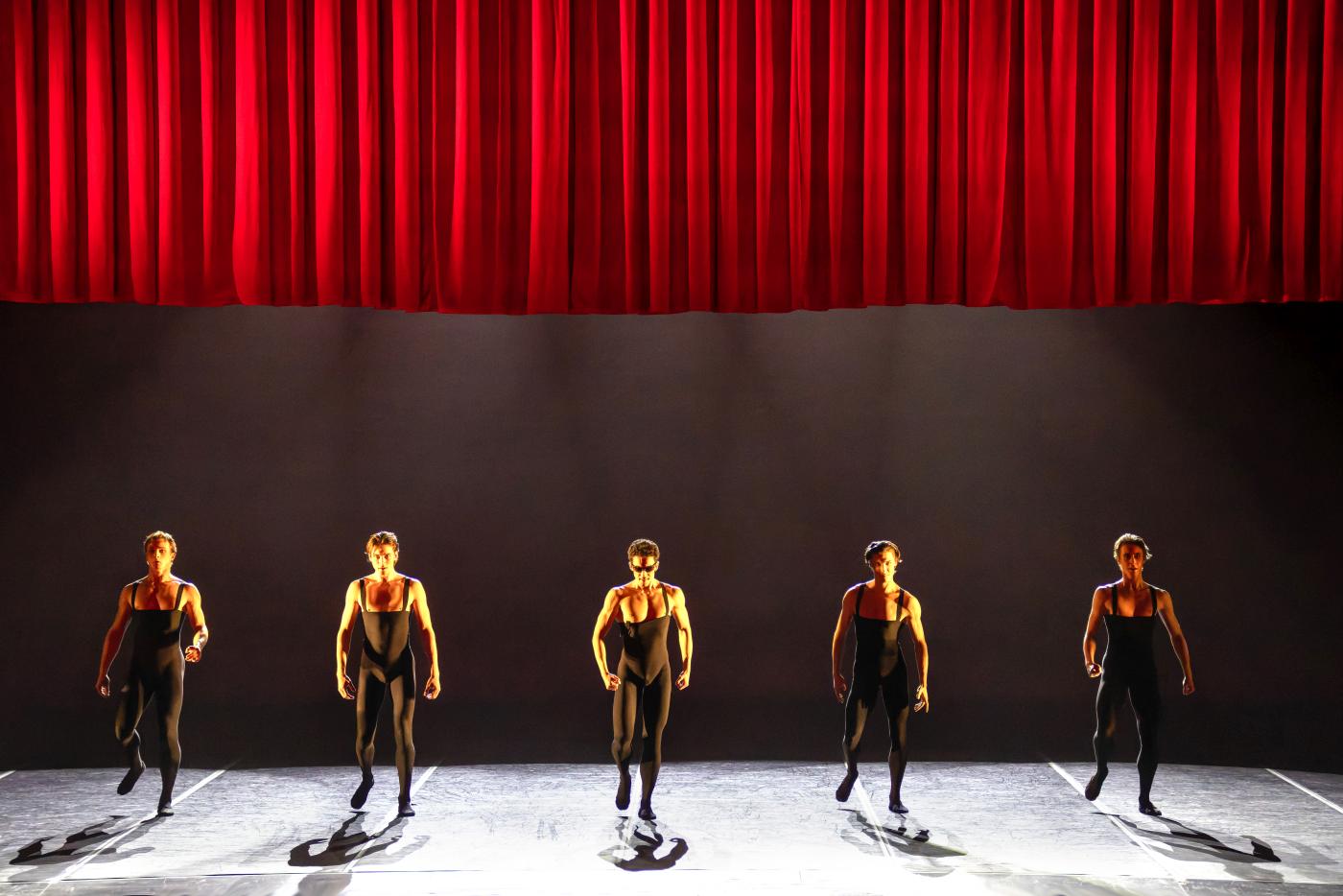
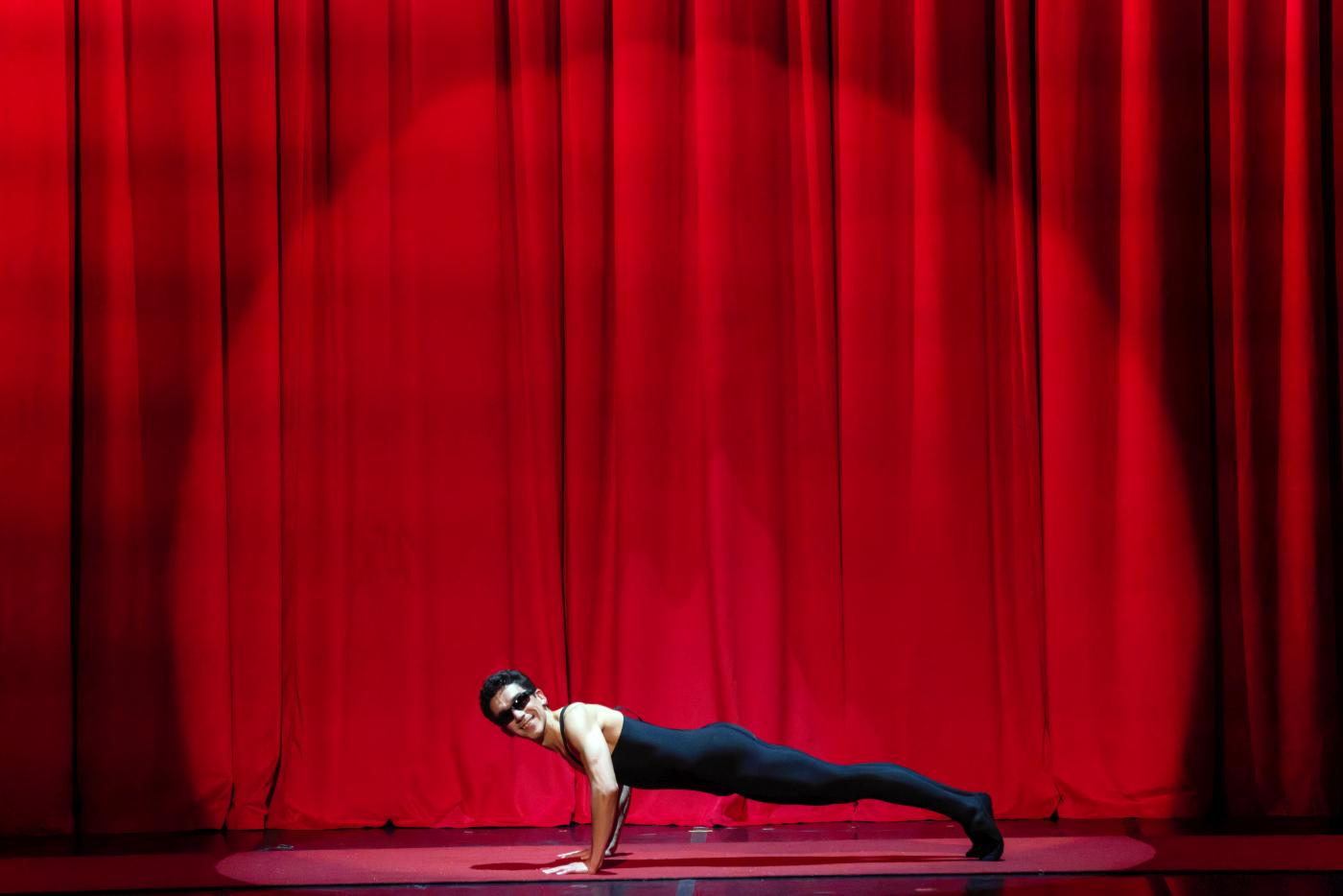
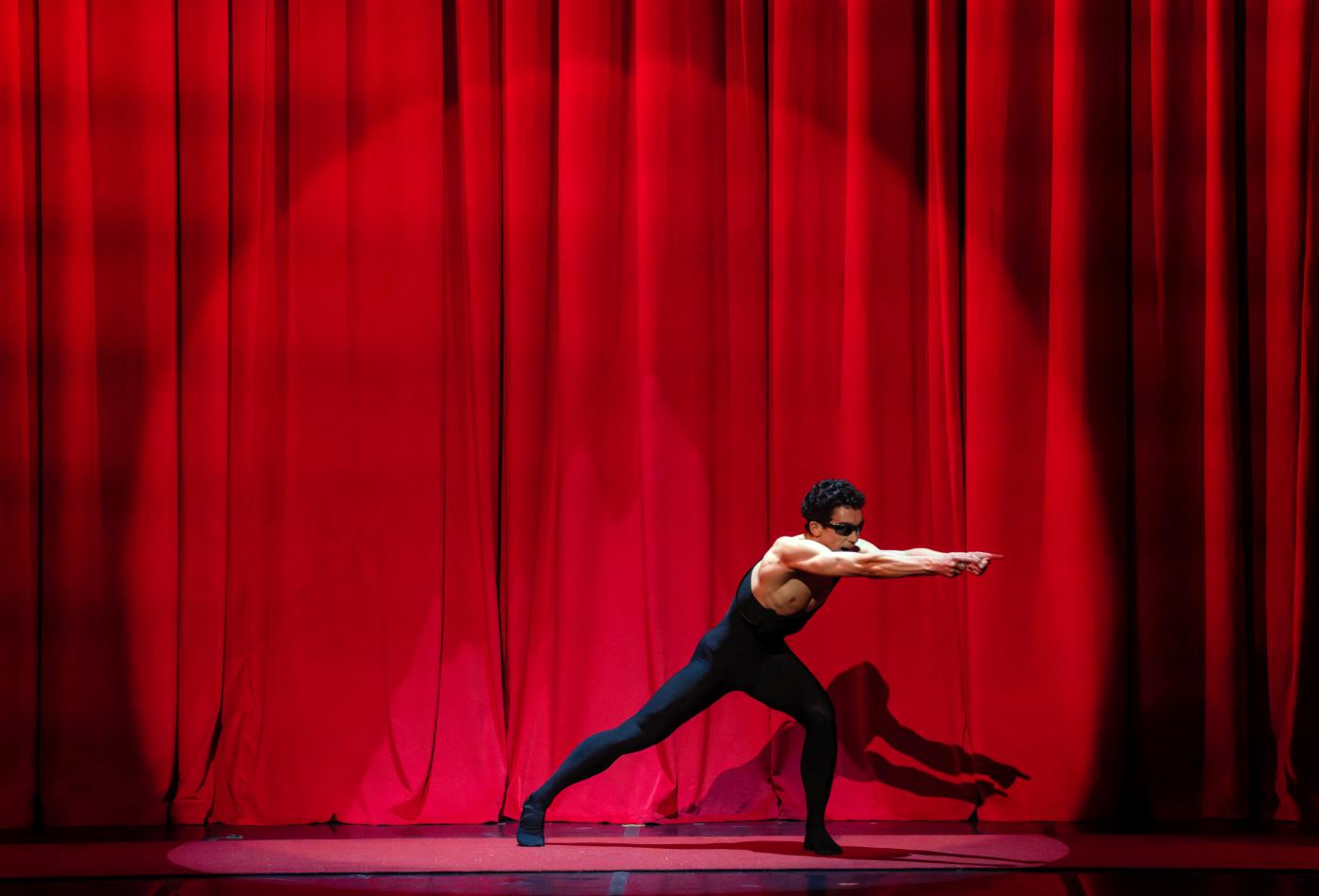
 The sexy boaster (Victor Surkov) waiting for the spotlight at the front stage resembled an Italian macho blinded by his own greatness (that’s presumably why he wore black sunglasses). A skintight, black, and single-strapped leotard showed off his bronzed pecs. Noise interference almost spoiled his claim to ovations, but then the sound system obeyed, churning out heroic tunes to accompany his trampolinist-like bounces in between which his outstretched arms encouraged applause.
 As the curtain rose, four men of the same caliber joined him. Ostentatiously provocative, they stomped forward, each step a testimony to their manliness and punch. Their arms swiveled as if to make a big deal of…nothing(?), but they also flapped limply, in contrast to their peacock-esque chests.
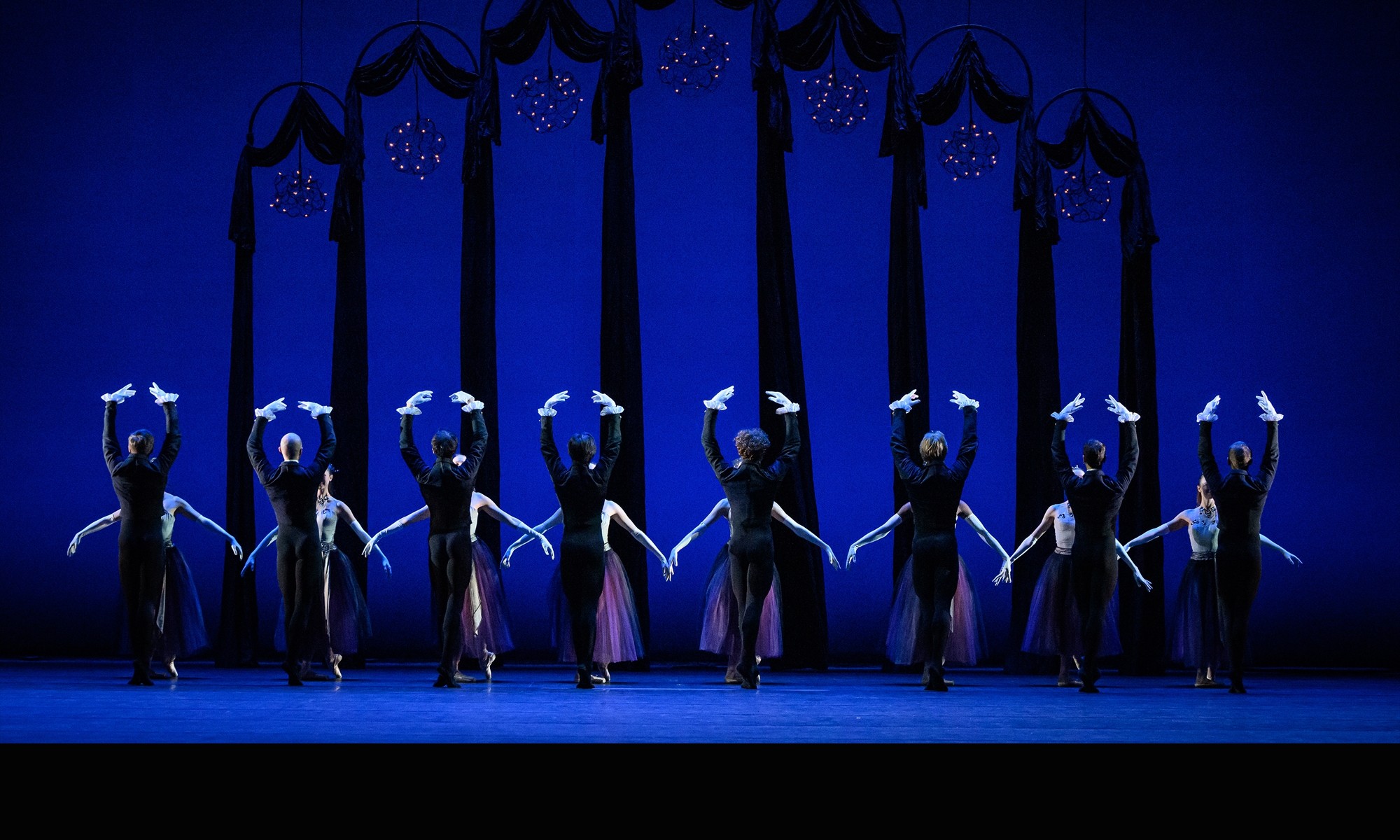
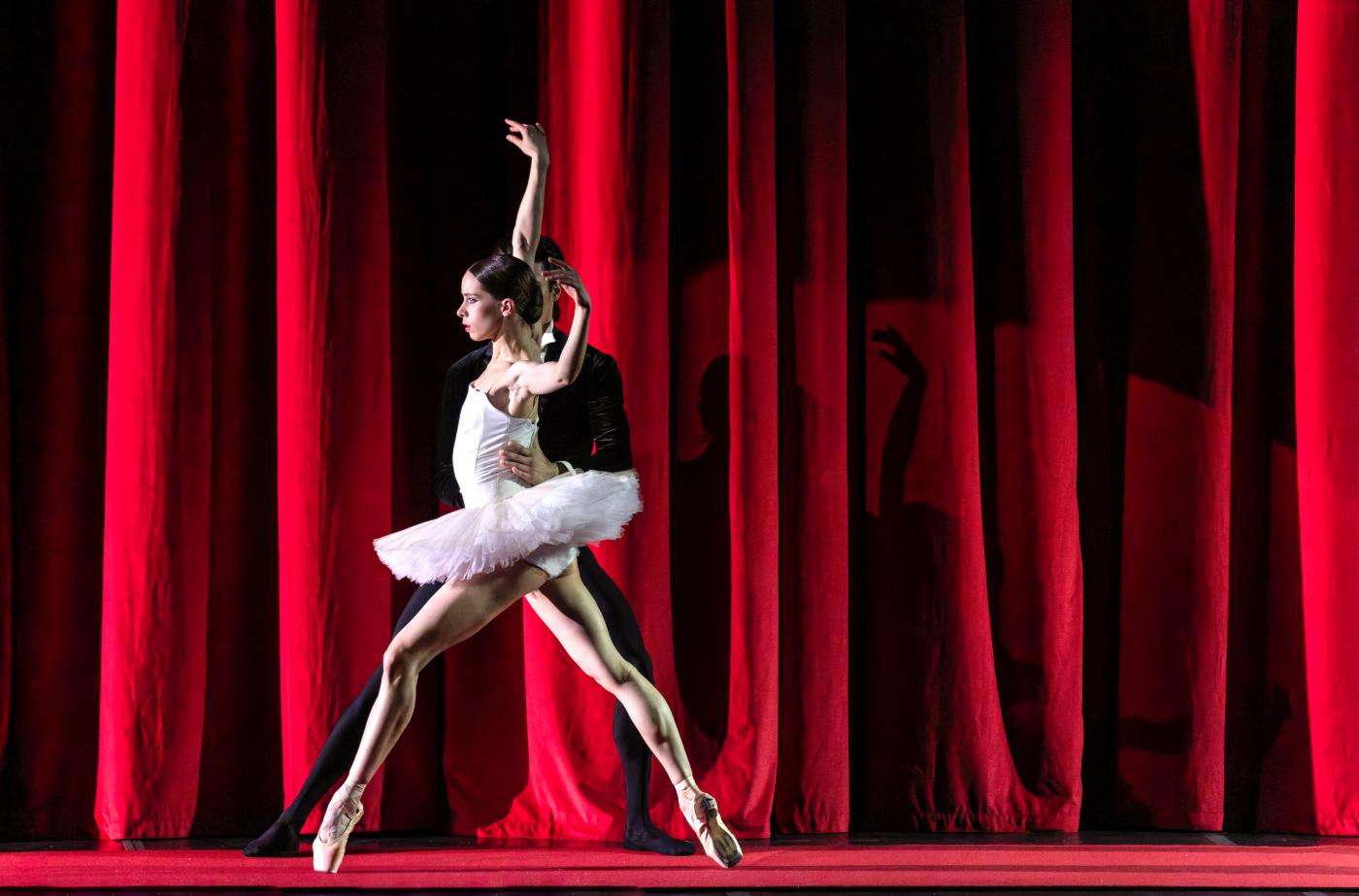
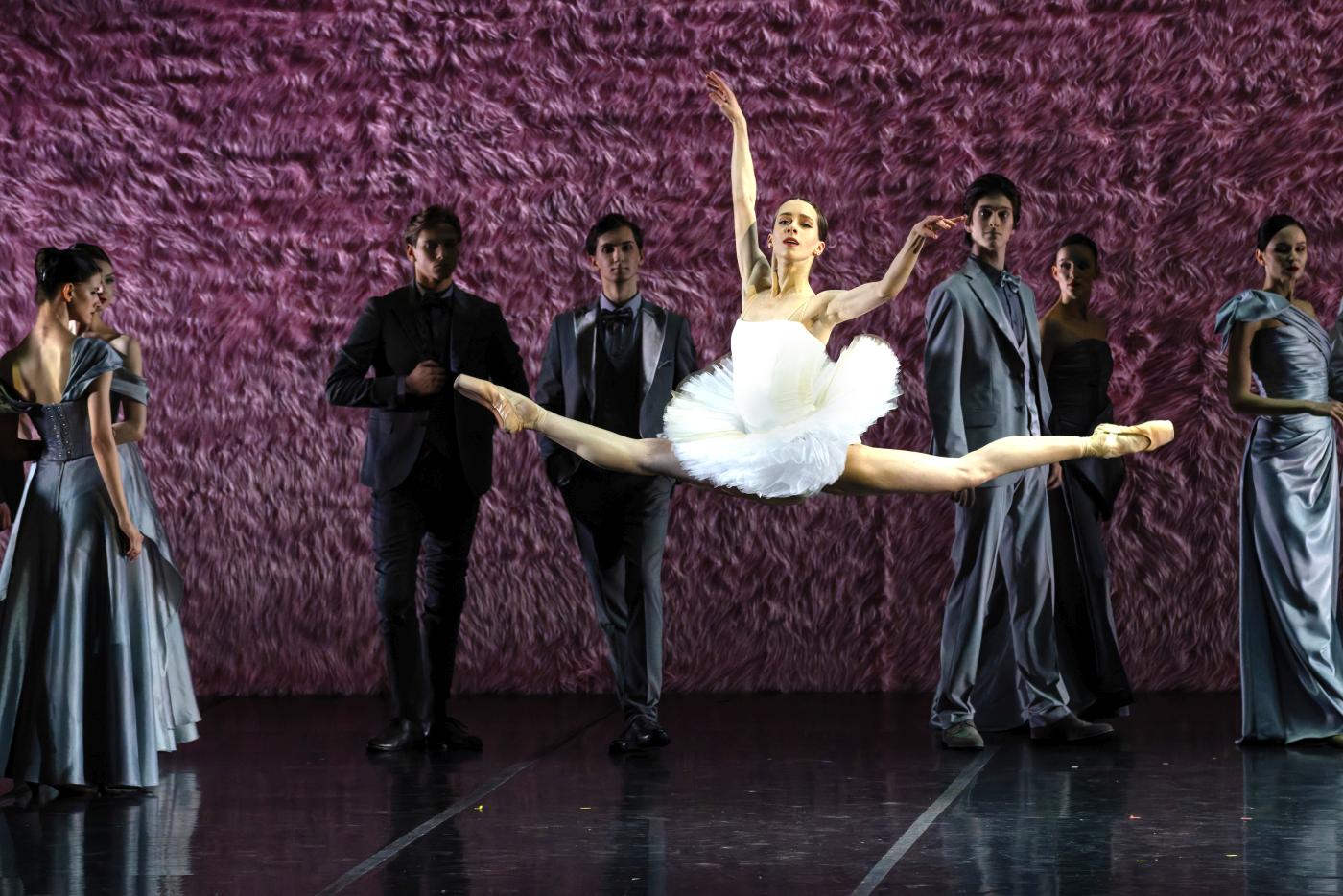
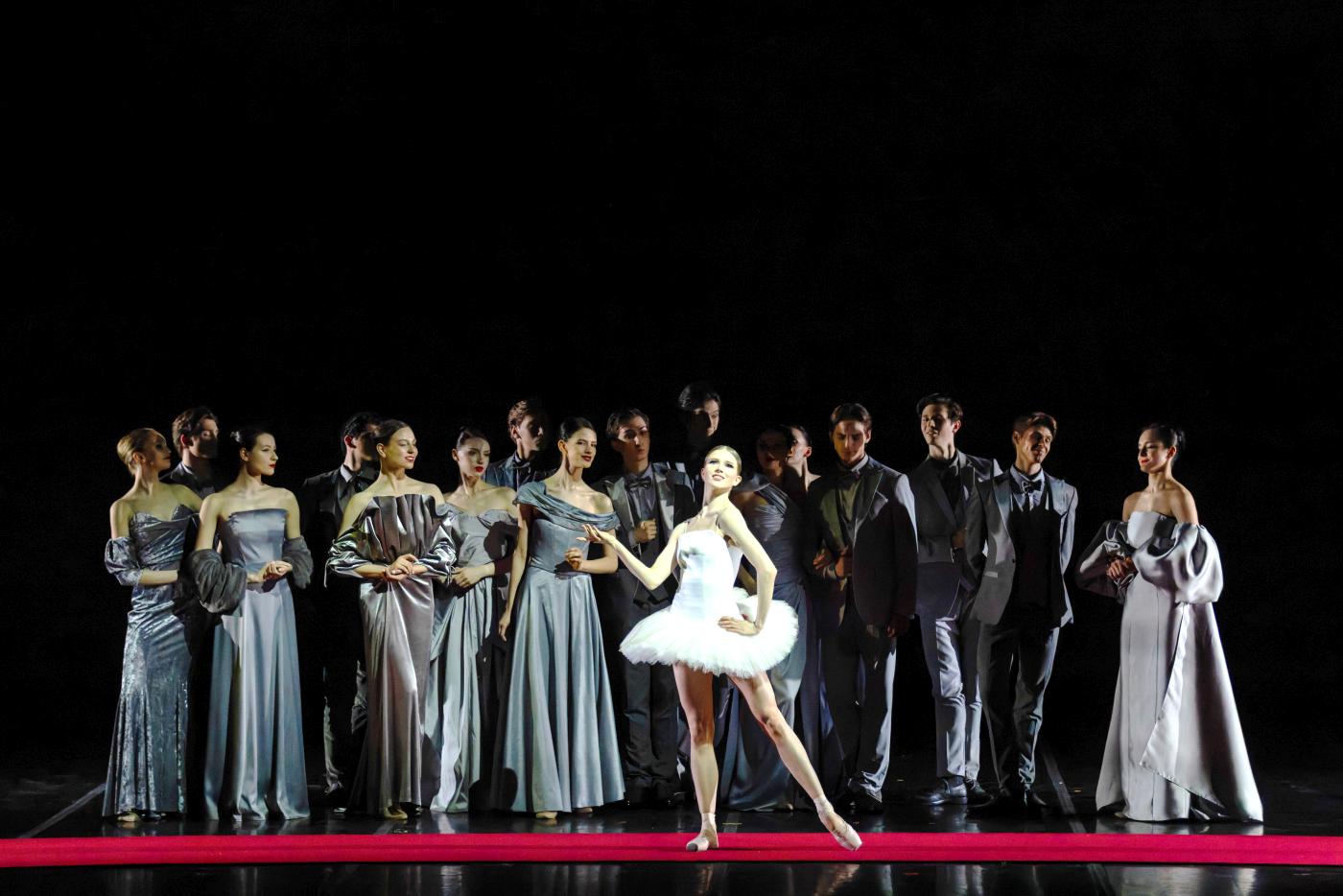
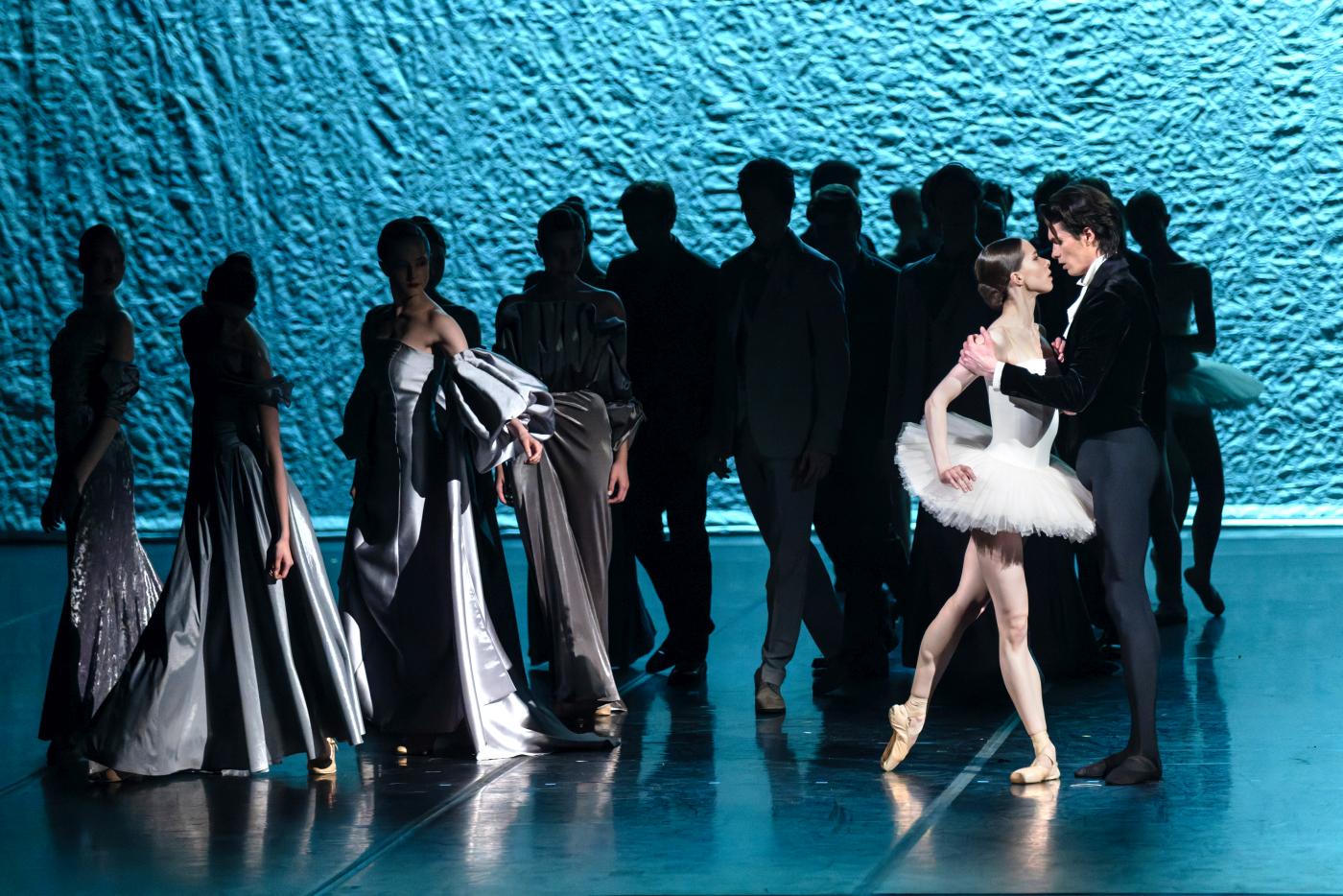
Two zealous stagehands bringing out the red carpet for a ballerina in a white tutu (Galina Mikhireva) and her noble companion (Vyacheslav Spilchevsky) terminated the men’s self-promotion. Strutting like a stork, Mikhireva had almost reached the opposite wing when the curtain rose, revealing an on-stage audience whose pearl-gray evening gowns looked especially chic against the mauve fur backdrop (set design by Maria Tregubova).
 She bouréed, claimed her space with a series of pirouettes, ignored condescending and approving glances alike, and swept her arms resolutely sideways as if to cut short any comment. Drum rolls reminiscent of a rattling motor added importance to her fellow ballerinas, who sashayed on the red carpet to pose for a snapshot like Instagrammers. But when she appeared on the rear stage, Mikhireva redirected the attention to herself. After miming the grand heroine in a solo, she then led all the ladies like ducklings to the front stage for a final lineup.
When the men, headed by Surkov’s macho, replaced them in the next scene, the backdrop turned dark red as if to herald Béjart’s Boléro. Instead, the lowering curtain suddenly separated Surkov from his entourage, and his put-on smile incurred confusion.

 Glossing over his shivering knees, he flirted with the audience, did some push-ups, and pumped and kissed his biceps until he stumbled backward over the red carpet, which the stagehands diligently rolled up.
Boléro was off the table, and La Bayadère was the next to toss barbs at. Four fluorescent blue fans rotating on a pitch-black stage heralded the Indian love drama, of which the next scene showed an alternate version of the Scarf Pas de Deux. Rather than a tender bond, the scarf was a pull rope for Mikhireva’s Nikiya and Spilchevsky’s Espada-like Solor.
 Nikiya had barely run off before she was paraded back in a solemn procession with her hands tied with the very same scarf. Surkov, lounging on a palanquin like a tourist, followed her, taking photos. In Nureyev’s era, Solor at least rode an elephant in the procession—what a decline! Alas, times have changed, and cheap, short-term effects matter. That’s why the stagehands rolled up the procession’s red carpet on the heels of the last plume fan carrier.
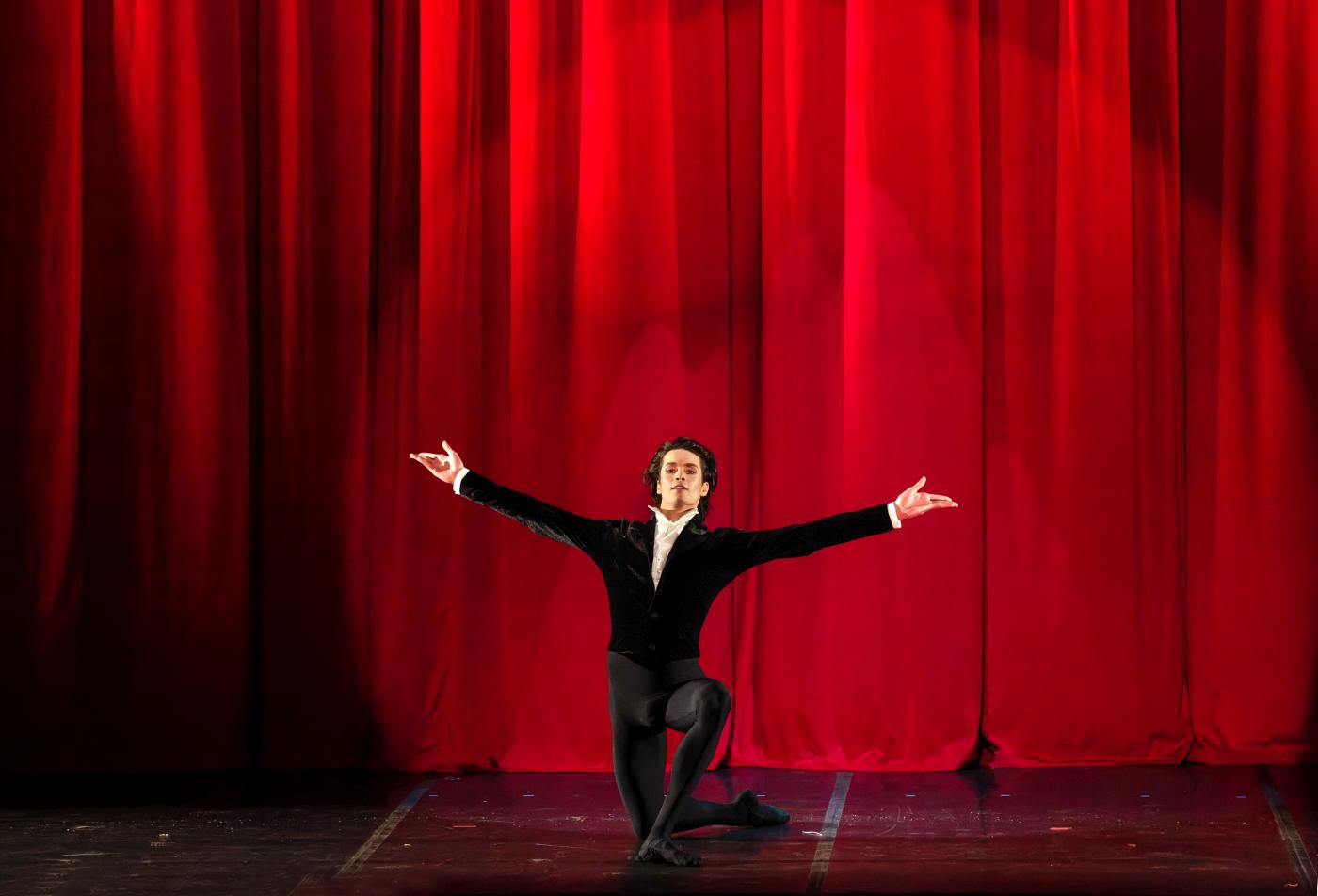
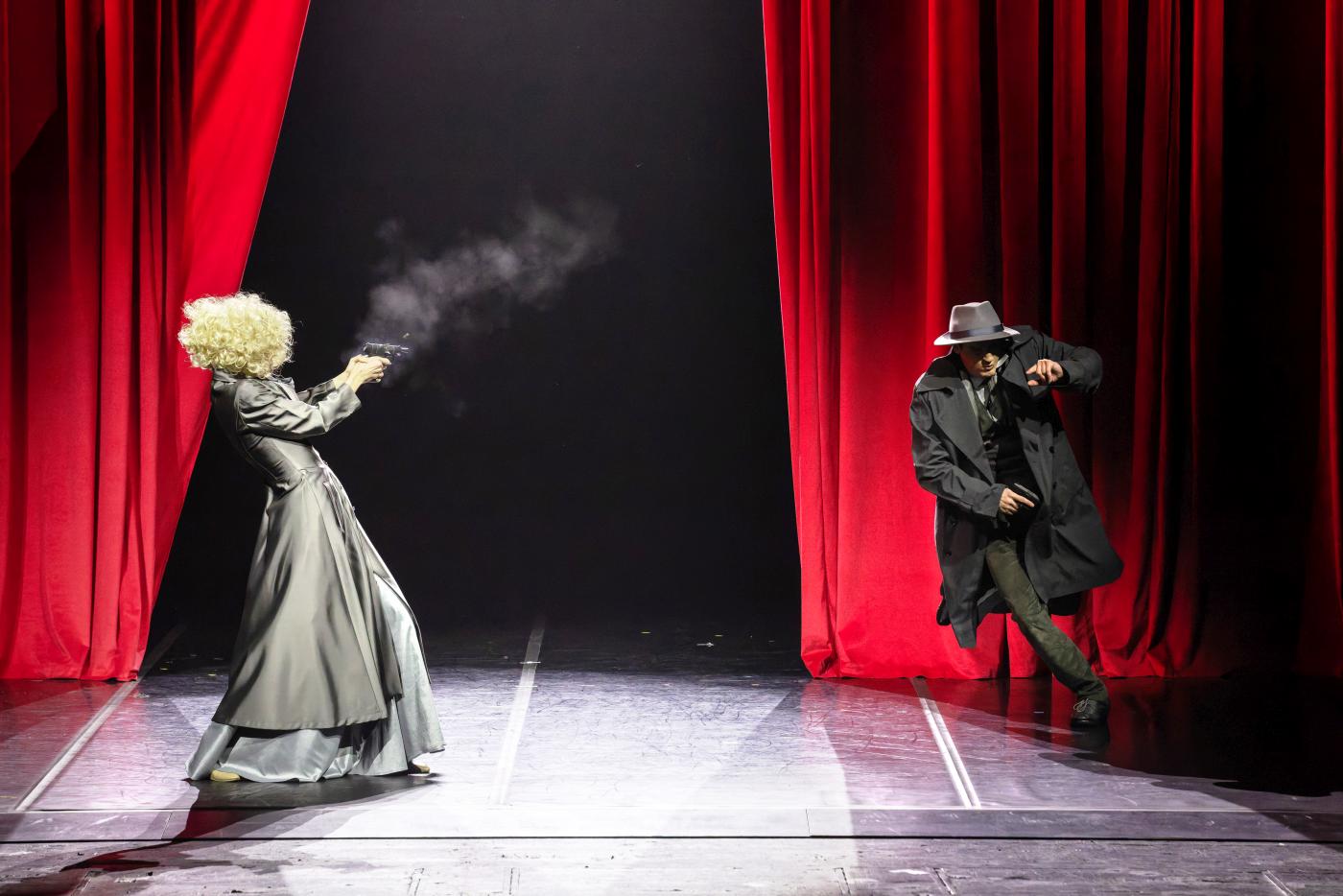
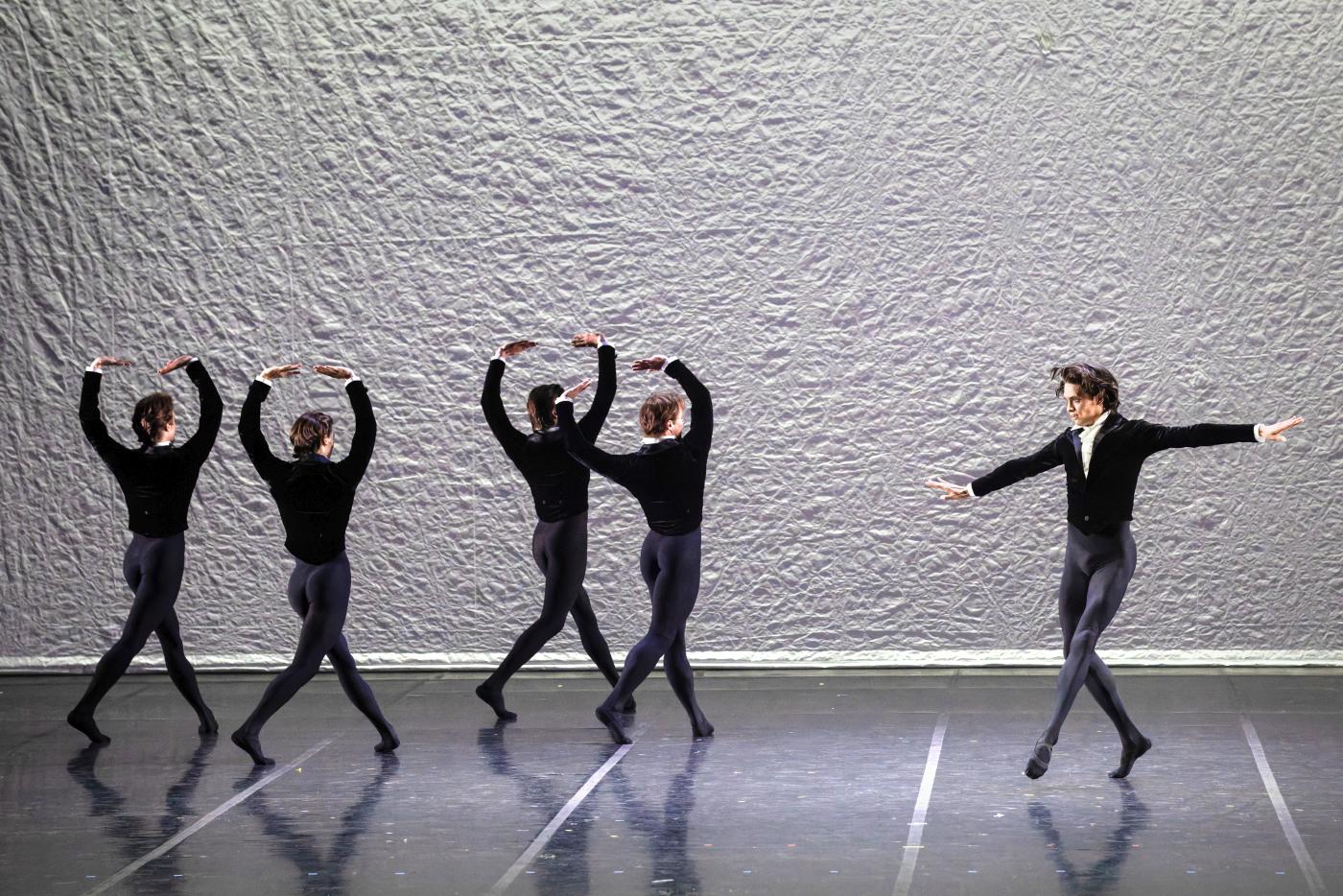 Spilchevsky, meanwhile, seemed to parody a Russian aristocrat of Onegin’s time. Puffing up his chest, he burst into a snappy solo with swooshing arms and resolute turns, but his showmanship suffered from reluctant, stuttering between steps. He was soon to bid a painful goodbye to Mikhireva, whom the on-stage audience carried away. (Whether she still portrayed Nikiya at that point or was a nondescript ballerina was unclear.) Beforehand, a couple from a vintage gangster comedy got lost on stage and, hotheadedly, engaged in a shooting duel. As the blonde beauty sank into her companion’s arms in Hollywood style, I expected a final kiss. But no, she died from the shot in her back. In the end, her killer supplicated heaven before dragging her behind the curtain.
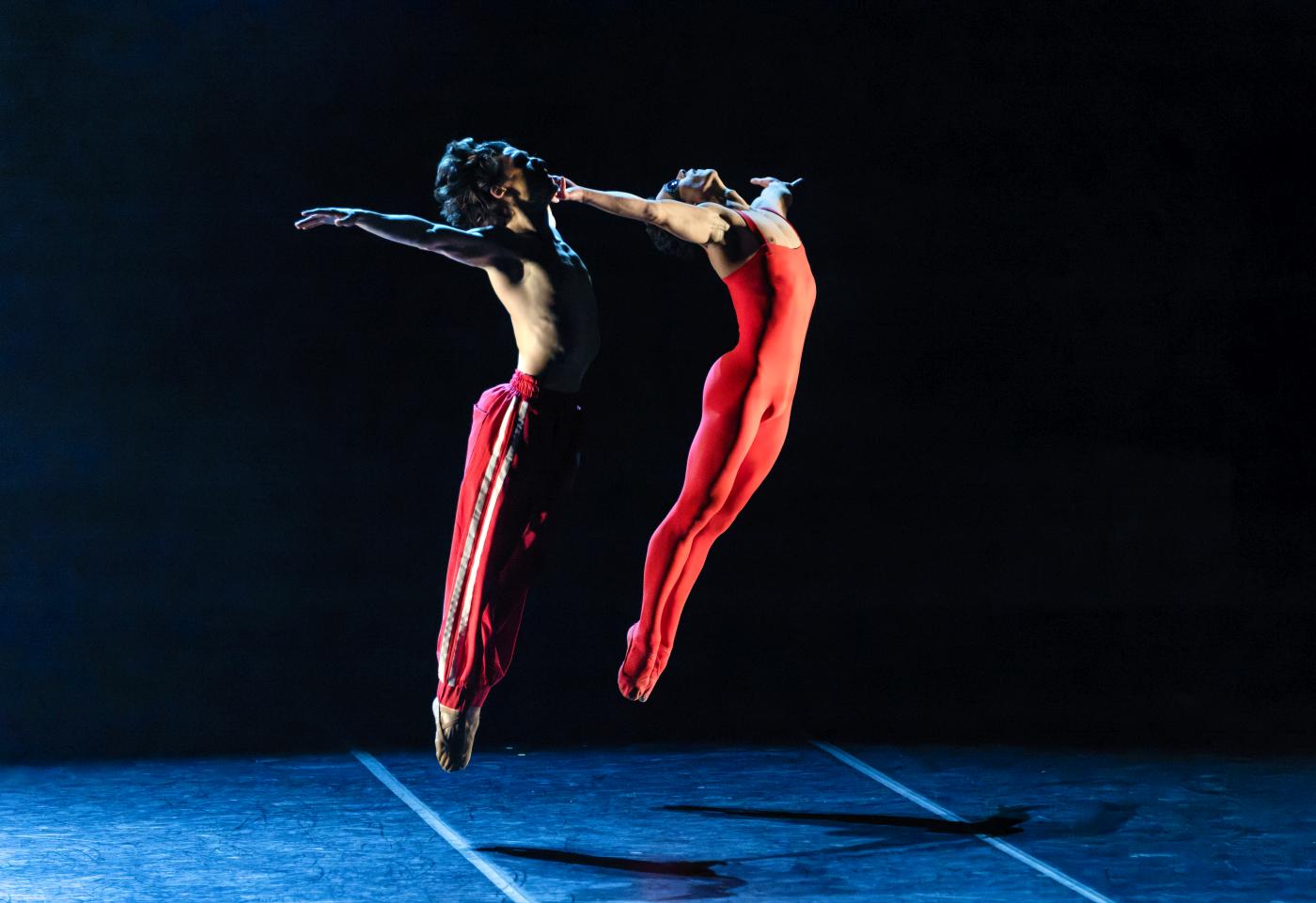
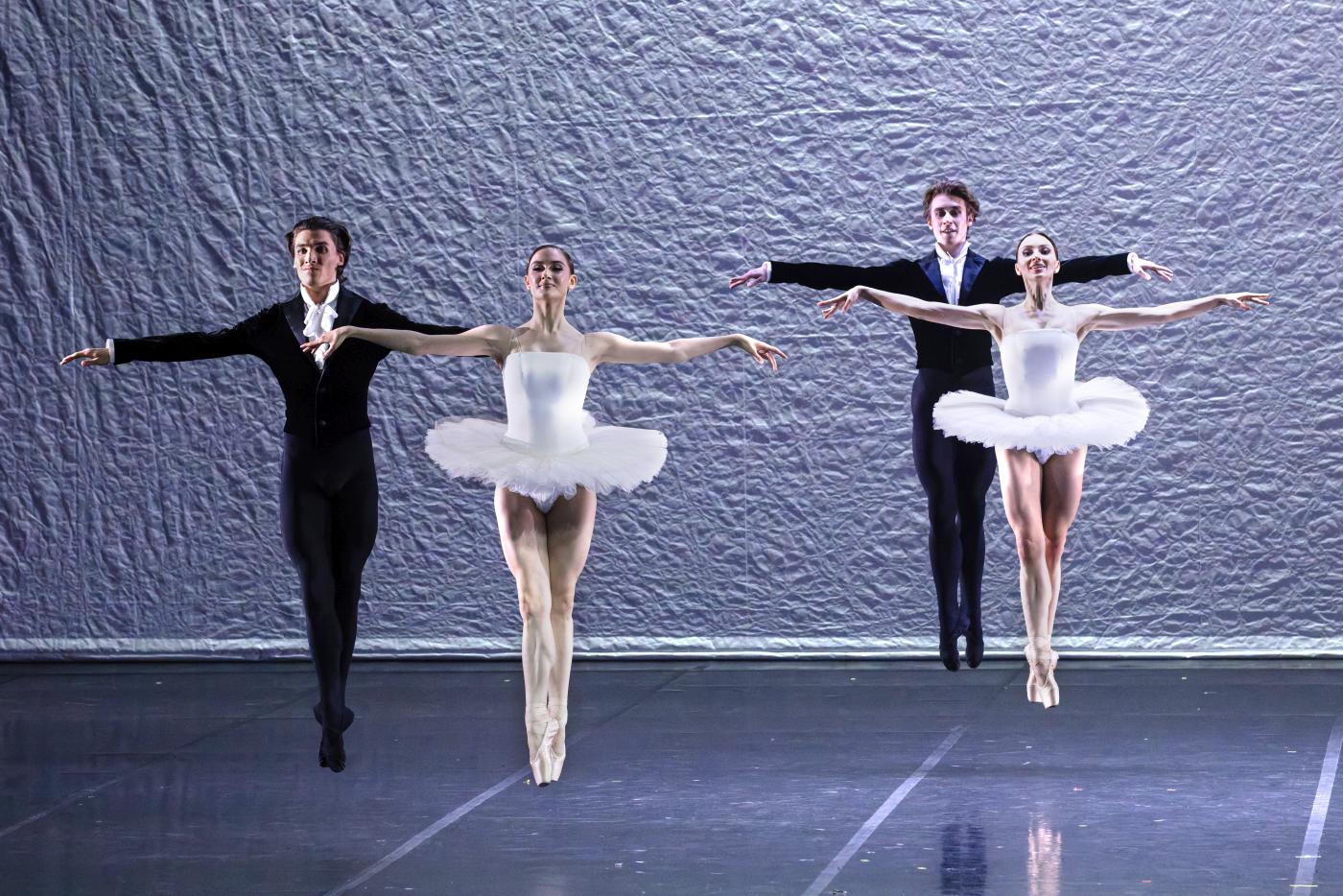
 A pas de huit to courtly Renaissance music was the last good-natured jab at ballet history. Fingers wiggled as if to add flourish to the arms or flicked in tune with the music, hips kinked sideways, and relentless jumps soared like on a trampoline again. The dancers’ pluck must have encouraged the onstage audience to line up at the front stage, where they grimaced, stuck out their tongues, and made fools of themselves in any way possible. Luckily, the curtain closed on them.
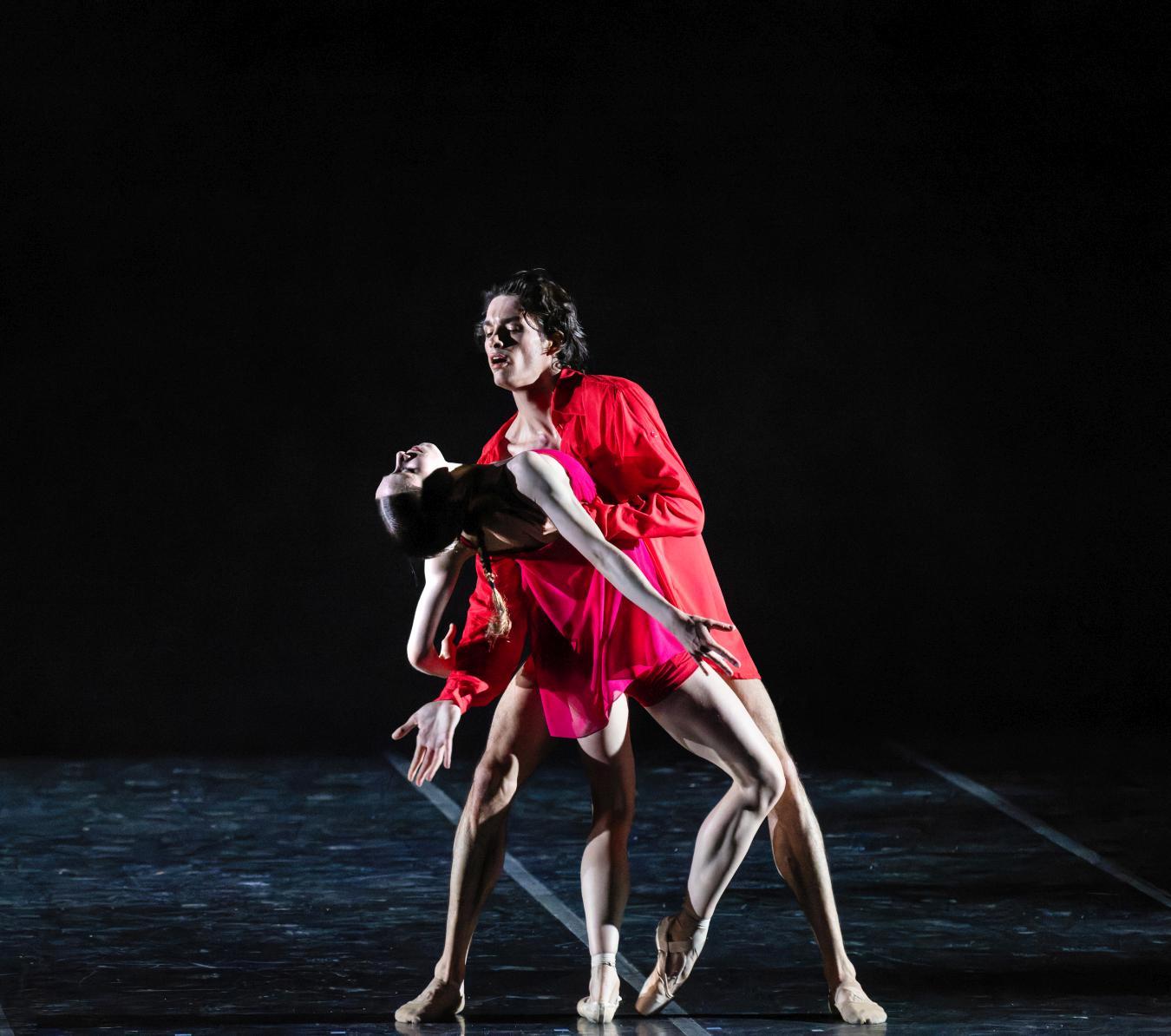
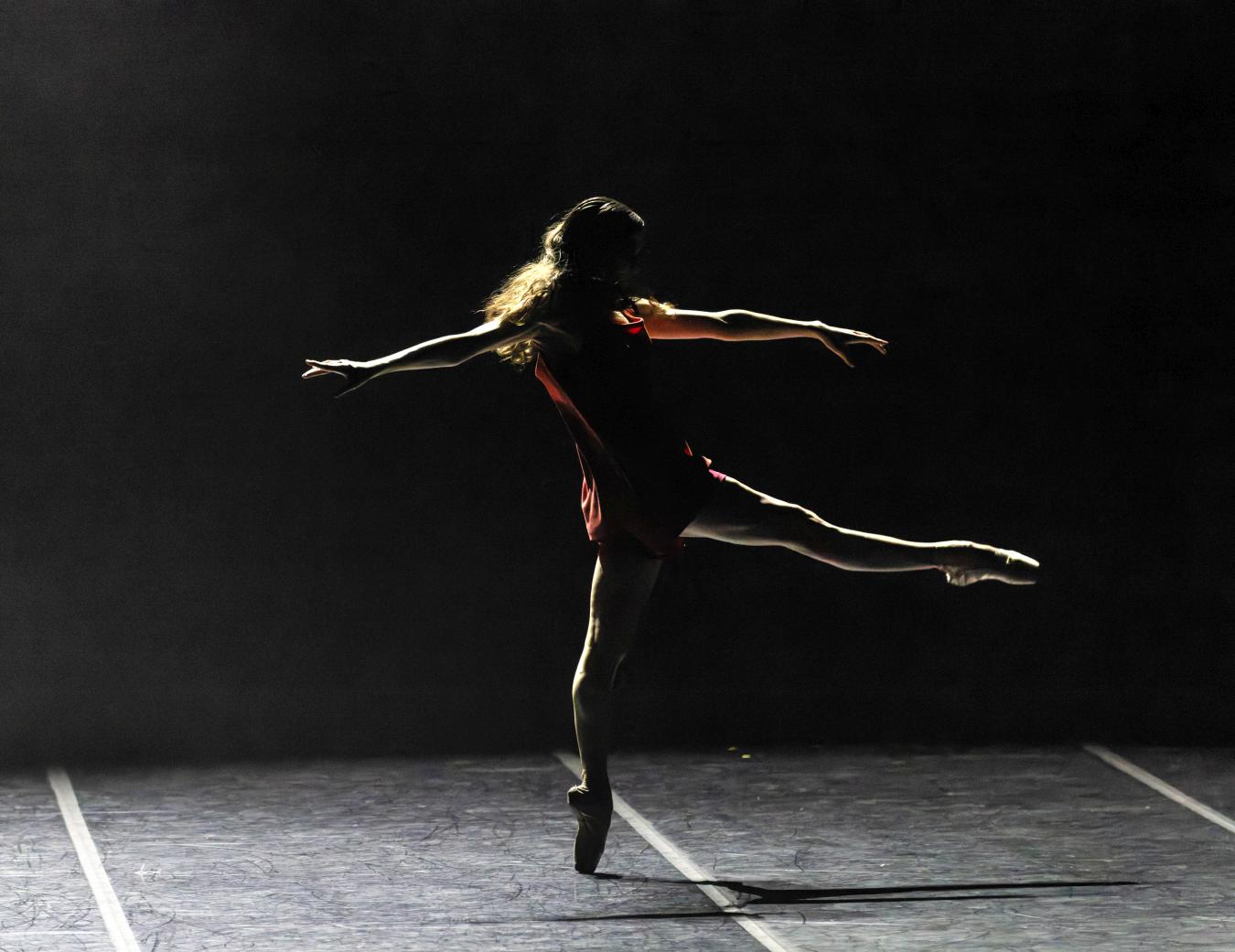 Furthermore, the sound system had reached rock bottom, spluttering shreds of music and humming noise. It was time for a fresh start, which came in the person of Surkov, this time wearing his sunglasses with a firebird-red leotard. He ripped down the curtain and exposed the dark, naked stage, his outstretched arms and fluttering fingers shivering as if to sense its vibes. His fleet foot measured the terrain with the softness of a panther; at certain points, tours en l’airs soared as if to mark a new construction.
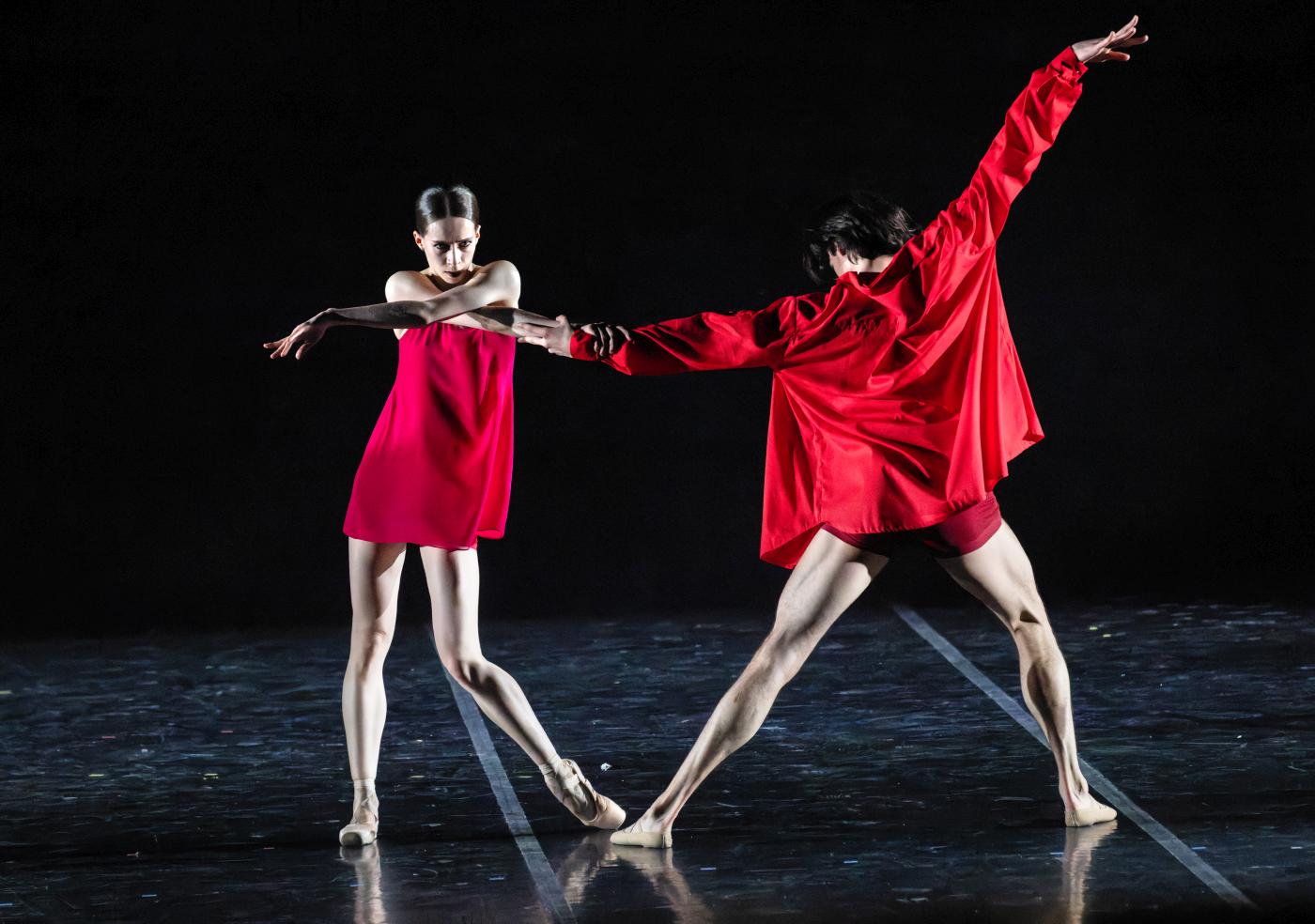
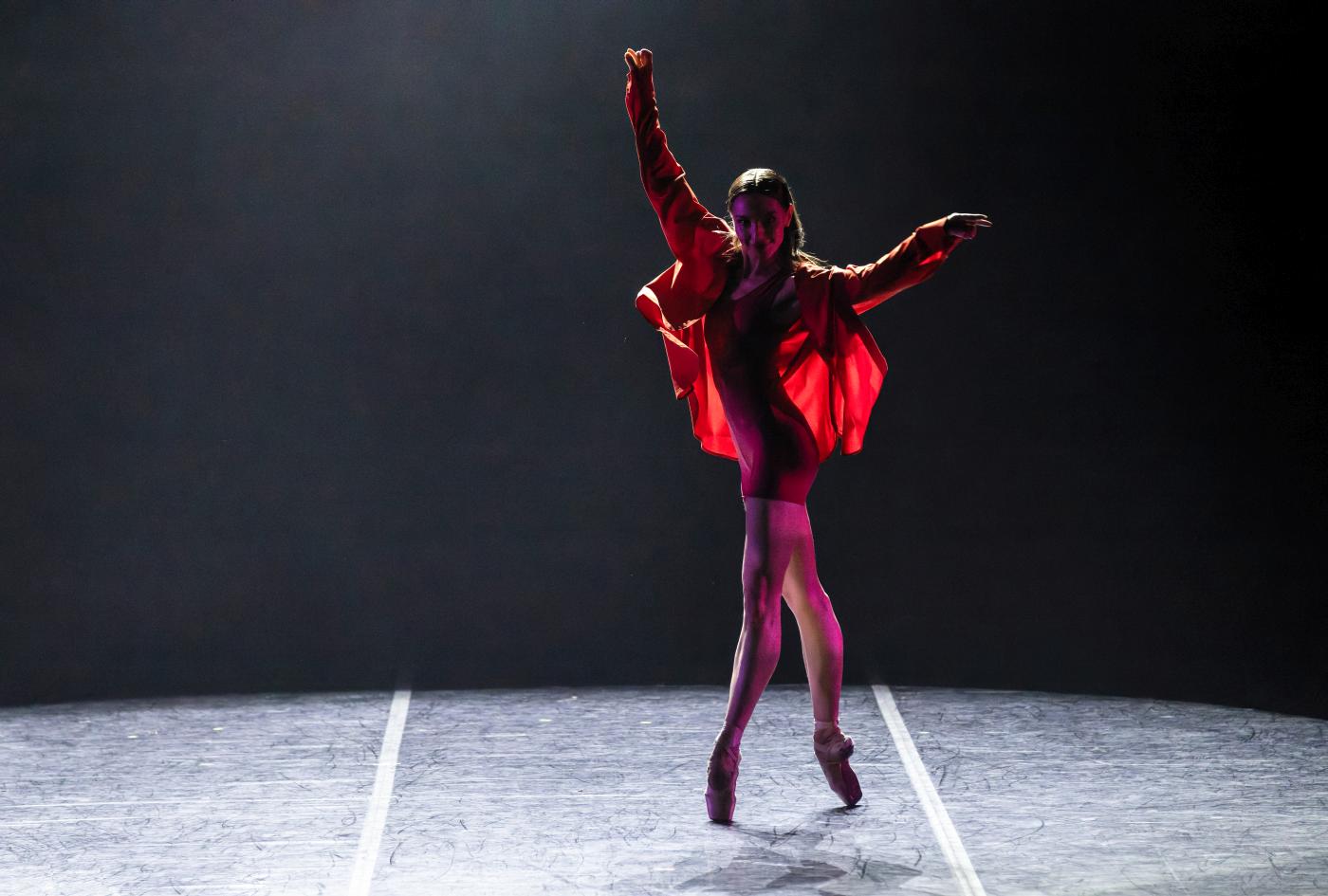
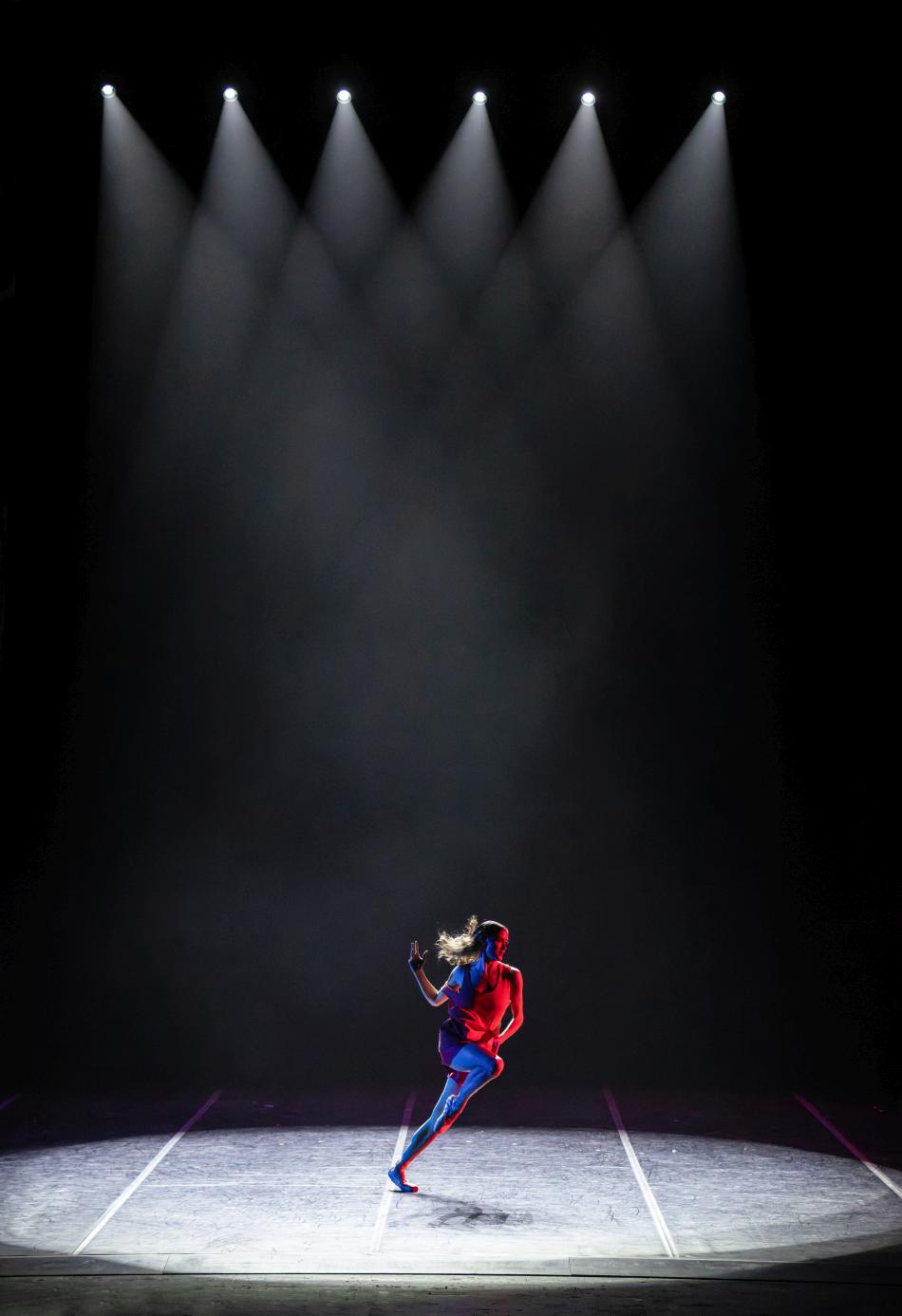 By then, the sound system had resorted to looping a catchy tune, to which one couldn’t help but dance. And what a firework it elicited! Each dancer swirled, ran, or hopped right in the center of the single, foggy spotlight and let it rip. As the music’s pace turned frantic, the solos became shorter and more frenetic. Sirens and the horn of Russian police indicated an emergency, their blue light tinging the fiery red of the dancers’ modern style outfits. But no one wanted to quit. Like freaks, they jumped about and hopped into the spotlight, mimicking a rabbit too bold to flee. Only when the lighting went dark and the music fell silent did they stop. Although I like to believe that they secretly continued.
| Links: | Website of the Leonid Yacobson Ballet Theatre | |
| Website of the Alexandrinsky Theatre | ||
| Interview with Galina Mikhireva and Vyacheslav Spilchevsky; May 26, 2026 (video) | ||
| Photos: | 1. | Victor Surkov and ensemble, “Curtain Call” by Vyacheslav Samodurov, Leonid Yacobson Ballet 2026 |
| 2. | Galina Mikhireva and Vyacheslav Spilchevsky, “Curtain Call” by Vyacheslav Samodurov, Leonid Yacobson Ballet 2026 | |
| 3. | Vyacheslav Spilchevsky, “Curtain Call” by Vyacheslav Samodurov, Leonid Yacobson Ballet 2026 | |
| 4. | Galina Mikhireva and ensemble, “Curtain Call” by Vyacheslav Samodurov, Leonid Yacobson Ballet 2026 | |
| 5. | Ensemble, “Curtain Call” by Vyacheslav Samodurov, Leonid Yacobson Ballet 2026 | |
| 6. | Victor Surkov, “Curtain Call” by Vyacheslav Samodurov, Leonid Yacobson Ballet 2026 | |
| 7. | Victor Surkov, “Curtain Call” by Vyacheslav Samodurov, Leonid Yacobson Ballet 2026 | |
| 8. | Victor Surkov and ensemble, “Curtain Call” by Vyacheslav Samodurov, Leonid Yacobson Ballet 2026 | |
| 9. | Ensemble, “Curtain Call” by Vyacheslav Samodurov, Leonid Yacobson Ballet 2026 | |
| 10. | Ensemble, “Curtain Call” by Vyacheslav Samodurov, Leonid Yacobson Ballet 2026 | |
| 11. | Galina Mikhireva, Vyacheslav Spilchevsky, and ensemble; “Curtain Call” by Vyacheslav Samodurov, Leonid Yacobson Ballet 2026 | |
| 12. | Ensemble, “Curtain Call” by Vyacheslav Samodurov, Leonid Yacobson Ballet 2026 | |
| 13. | Vyacheslav Spilchevsky and ensemble, “Curtain Call” by Vyacheslav Samodurov, Leonid Yacobson Ballet 2026 | |
| 14. | Victor Surkov and ensemble, “Curtain Call” by Vyacheslav Samodurov, Leonid Yacobson Ballet 2026 | |
| 15. | Victor Surkov and ensemble, “Curtain Call” by Vyacheslav Samodurov, Leonid Yacobson Ballet 2026 | |
| 16. | Ensemble, “Curtain Call” by Vyacheslav Samodurov, Leonid Yacobson Ballet 2026 | |
| 17. | Galina Mikhireva and Vyacheslav Spilchevsky, “Curtain Call” by Vyacheslav Samodurov, Leonid Yacobson Ballet 2026 | |
| 18. | Galina Mikhireva and Vyacheslav Spilchevsky, “Curtain Call” by Vyacheslav Samodurov, Leonid Yacobson Ballet 2026 | |
| 19. | Ensemble, “Curtain Call” by Vyacheslav Samodurov, Leonid Yacobson Ballet 2026 | |
| 20. | Ensemble, “Curtain Call” by Vyacheslav Samodurov, Leonid Yacobson Ballet 2026 | |
| all photos © Leonid Yacobson Ballet/Sergei Tyagin | ||
| Editing: | Kayla Kauffman |